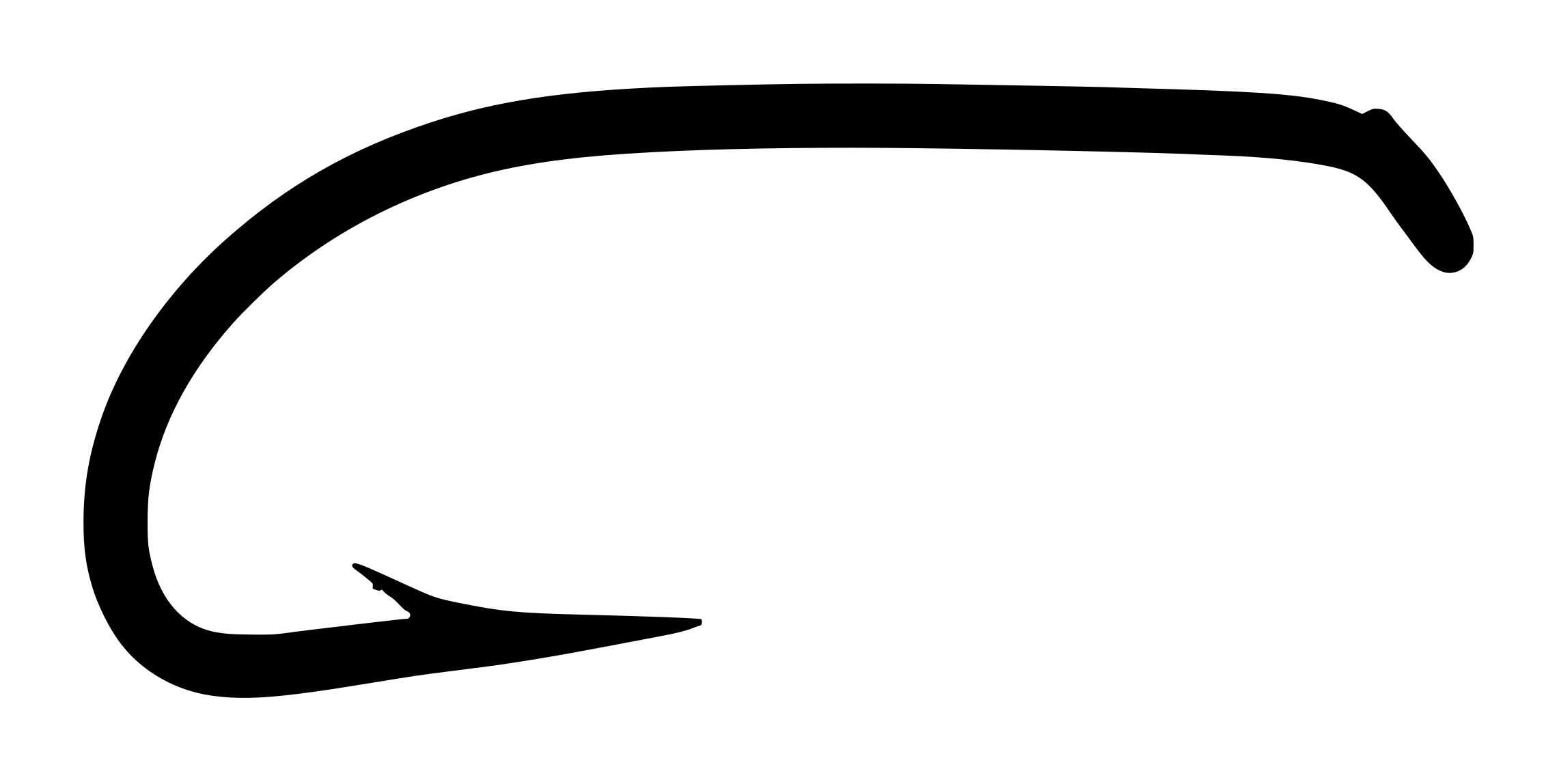
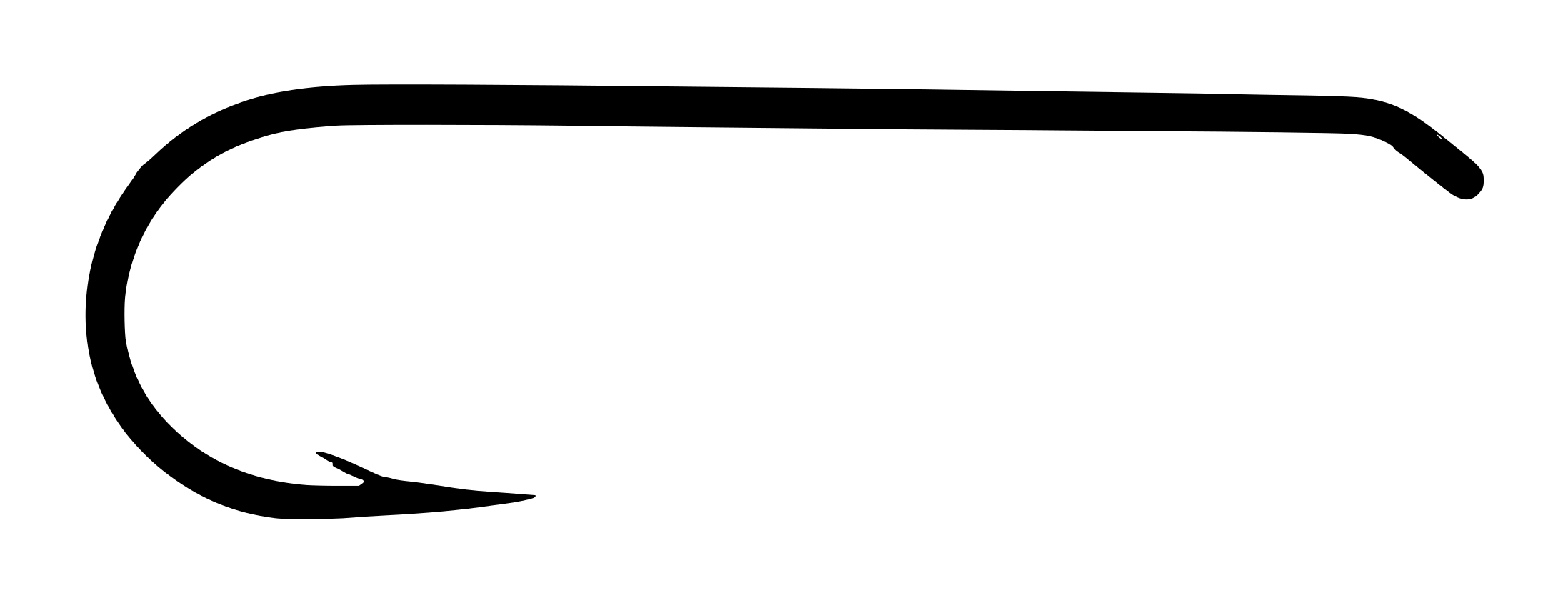
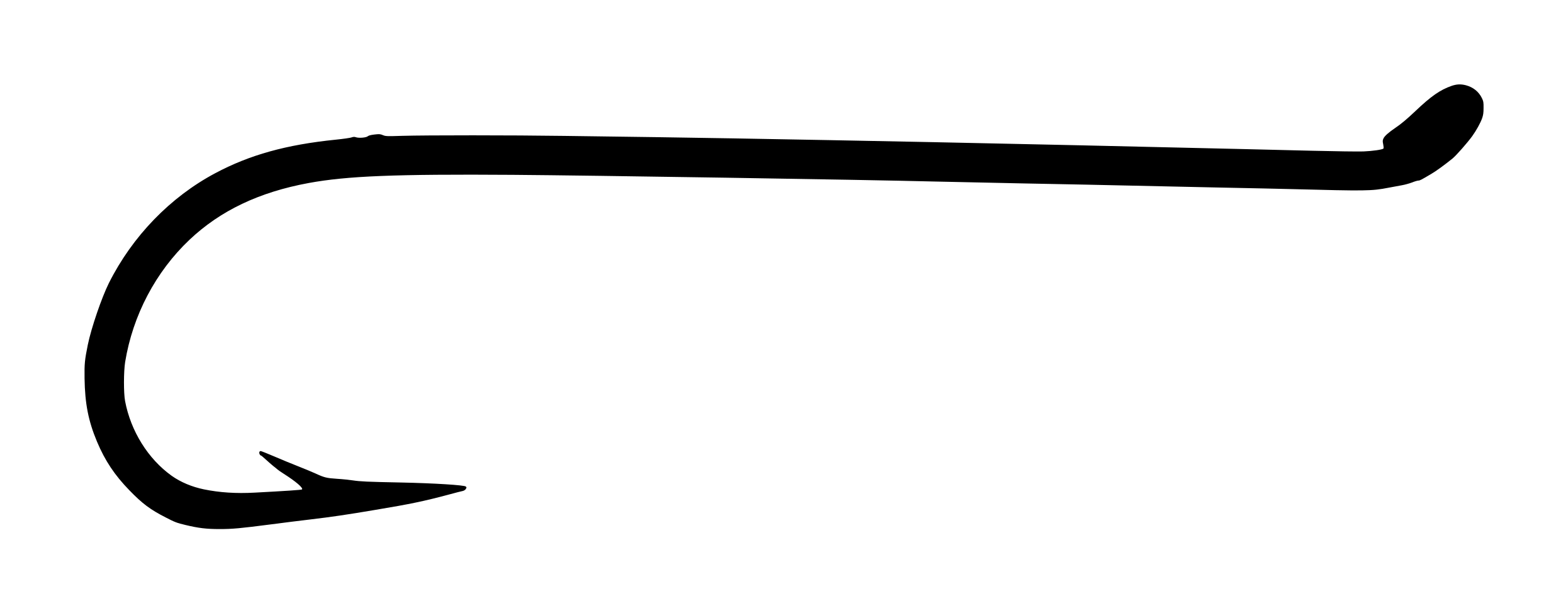
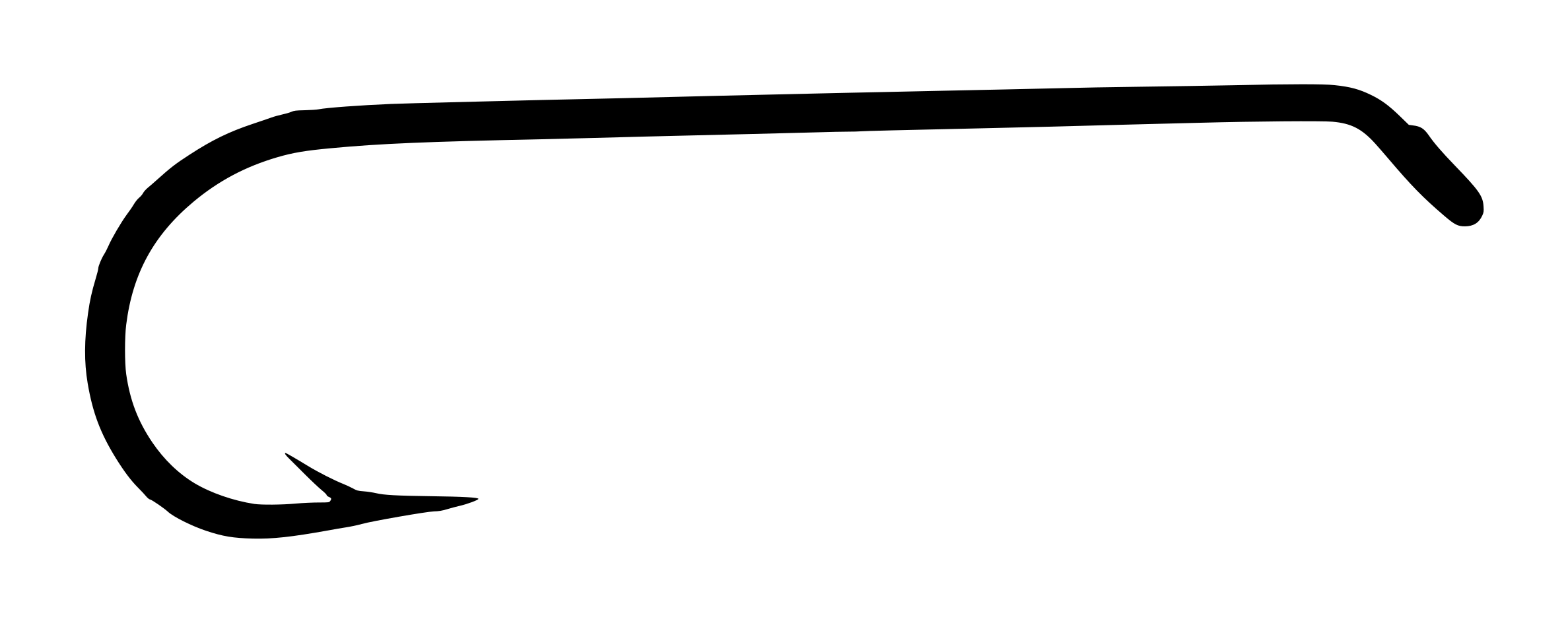
The Wright & McGill Model 100 is an American-made trout hook from the 1950s-1960s, representing the mainstream American approach to fly hook design during the golden age of dry fly fishing. Manufactured by Wright & McGill in Denver, Colorado, this standard-wire Sproat-bend hook with straight ring eye exemplifies the utilitarian elegance of mid-century American tackle.
The Model 100 carries a handwritten label confirming bronzed finish and ring eye construction, housed in the original clear plastic clamshell packaging typical of that era. The moderate Sproat bend and proportional gap make it suitable for dry flies, wet flies, and nymphs in sizes 6-12. The hook’s defining feature is its straightforward, no-nonsense engineering — a practical working tool rather than a specialty pattern.
The package’s handwritten inventory codes and lack of barcode place it firmly in the pre-1974 era, making it a genuine artifact of American tackle manufacturing before industrial standardization. Complete original packaging in this condition is increasingly uncommon and valued by collectors of mid-century American fly tackle.
Side profile view of the Wright & McGill Model 100 Sproat-bend hook showing the rounded bend geometry, straight ring eye, and bronzed finish. Photographed on 1/10-inch measurement grid for scale reference.
Photographic record
3 cataloged imagesSelect any record to load it above.
3 images shown
Wright & McGill Model 100 Size 8 Side ProfileSide profile view of the Wright & McGill Model 100 Sproat-bend hook showing the rounded bend geometry, straight ring eye, and bronzed finish. Photographed on 1/10-inch measurement grid for scale reference.Open originalWright & McGill Model 100 Size 8 Front FaceFront-facing view of the Model 100 showing the standard spear point geometry, gap width, and overall hook proportions. The slightly concave curvature of the bend and straight eye orientation are clearly visible in this angle.Open originalWright & McGill Model 100 Size 8 Original PackagingOriginal clear plastic clamshell packaging containing 100 bronzed Model 100 hooks, size 8, with handwritten distributor inventory labels and printed cardboard insert. Characteristic of 1950s-1960s American tackle packaging.Open original
Technical profile
American Sproat bend trout hook | 1950s-1960s | ring eye | bronzed
Eye
Ball Eye, Straight / Inline
Wire
Heavy (1X Heavy), Round
Shank
3X Long — Plain
Bend
Limerick, Standard gap
Point
Beak / Reversed (incurving)
Finish
Bronzed — Confirmed (stated on packaging)Specimen hooks show excellent preservation — bright bronzed finish with uniform color, no corrosion or spotting visible in direct light. Barbs are sharp and undamaged. All hooks appear intact and present (full visual count of 100 present in organized rows). Clear plastic clamshell shows light cloudiness typical of age but remains transparent and functional. Cardboard insert backing is intact with printed color still vibrant. Handwritten exterior labels are clear and legible. Overall condition rates as Very Good to Excellent — package could be displayed or stored without remedial work.
The Model 100 employs a standard spear point — a moderate inner taper that balances penetration ease with barb holding power. This geometry was universal in American mid-century trout hooks and remains effective. The wire is round-profile standard gauge, neither particularly heavy nor light, optimized for the size range it serves.
The Sproat bend provides a rounded bottom with moderate depth-to-gap ratio (approximately 1.8-2.0 : 1 in this size 8), making it suitable for both upright dry fly presentation and effective nymph suspension. The ring eye is a loose ring — not welded or closed — reflecting manufacturing economy and the American preference for this eye style even as European closed-eye designs gained market share.
The bronzed finish provides mild corrosion resistance while maintaining good hook visibility underwater. Bronzing was the standard American finish during this era, more economical than japanning and less prone to lacquer flaking than blued finishes on freshwater hooks.
We don't have measured sizes for this hook yet. Own one? Submit calipered measurements and we'll review and add them. Thank you!
Historical context
wright_mcgill
Wright & McGill was founded in 1925 in Denver, Colorado by Charles F. Webb and Arthur N. McGill, two innovative American tackle designers. The company established itself as a producer of high-quality fly rods, reels, and hooks with particular emphasis on Western fly fishing traditions. Wright & McGill distinguished itself through reliable engineering and extensive product lines serving the American trout fishery.
The Denver factory became known for consistent quality control and product innovation throughout the mid-20th century. The company’s product numbering system (Model 100, Model 200, etc.) created a catalog of accessible, well-engineered hooks that competed directly with Eastern manufacturers like Mustad and dominated regional Western tackle shops. By the 1950s-1960s, Wright & McGill hooks were considered reliable workhorses — not luxury items, but trusted tools.
The company remained independent until 1999, when it was acquired by Griffith’s Industries. This acquisition ended the Denver manufacturing era, though the Wright & McGill name continues under corporate ownership. The vintage hooks from the 1955-1965 era represent the company’s peak period of independent operation and highest design refinement.
Series History
The Model 100 was Wright & McGill’s flagship general-purpose trout hook, positioned as the standard option for American fly fishermen. Introduced in the 1920s-1930s and refined through the 1950s-1960s, the Model 100 remained in continuous production throughout the mid-century era. The Sproat bend geometry was chosen for its balance — rounded enough for traditional dry flies, yet deep enough for effective hook sets in nymphs and wet patterns.
The Model 100 appears to have been offered across a full range of sizes (typically 4-16) and in multiple finishes (bronzed, japanned, possibly nickel). Ring eye construction was standard, reflecting American manufacturing traditions and market preference over European turned-eye designs during this period. The hook was frequently packed in quantity (50-100 per card or box) for retail and wholesale distribution.
No formal discontinuation date is documented, though production appears to have declined after the 1970s as modern hook designs and foreign competition reshaped the American market. The Model 100 never achieved the iconic status of Mustad’s Aberdeen or Limerick, but it remains recognizable to collectors familiar with American tackle heritage.
Named Collaborator
Not applicable — no designer or collaborator is credited on this packaging.
Era and Packaging Dating
No barcode present (standard barcode adoption began 1974, making this pre-1974). Clear plastic clamshell packaging with printed cardboard insert typical of 1950s-1960s American hook packaging. Handwritten wholesale inventory codes and manual price marking consistent with mid-century distributor stock practices. Offset litho printing quality and letterpress label style point to 1950s-1960s era. No postal ZIP code format visible. Design aesthetic and typography consistent with Wright & McGill product lines of the 1950s-1960s. Sproat bend design remained in continuous production throughout this period.
Denver's Challenge to Eastern Imports
Wright & McGill's headquarters in Denver made them uniquely positioned to serve Western fly fishermen, and the company developed a strong loyalty among Rocky Mountain anglers who mistrusted Eastern (particularly Norwegian) imports. The Model 100 was positioned as the 'made right here' alternative to Mustad's international offerings. Interestingly, Wright & McGill never formally marketed individual hook models with fly patterns — they relied on generic positioning ('General Purpose Trout Hook') and let regional fly fishing clubs and tackle shops associate patterns with the hooks through local tradition. This approach meant that the Model 100 never became linked to famous flies the way Mustad hooks did, contributing to its fade from collective memory even as thousands remain in tackle boxes.
Design lineage and influence
The Model 100 Sproat represents the standard American approach to general-purpose trout hook design, rooted in 19th-century Redditch traditions adapted for American preferences. The Sproat bend itself was formalized by English makers in the 1870s-1880s but became America’s default choice for versatility. Wright & McGill’s interpretation maintains classical Sproat geometry — rounded bend, proportional depth, no special forging or offset.
The straight ring eye reflects American manufacturing convention and tackle tradition distinct from the European preference for turned-eye designs. By the 1950s, the ring eye was considered old-fashioned by progressive designers, yet remained standard in American production for cost economy and market conservatism.
The Model 100 occupied the middle ground between specialized patterns (salmon hooks, bass hooks) and the utilitarian ‘all-purpose’ cheapest-option hooks. It influenced later American designs but was never copied extensively; by the 1970s-1980s, Japanese imports (Tiemco, Daiichi) and refined American designs (Orvis, Mustad Streamer Specialist) eclipsed the Model 100’s relevance.
Best matchRelated by Attribute
Computed automatically from catalog data — updated as new hooks are added.
Matches: Bend, Wire, Gap, Finish, Forging +4 moreDiffers: Shank: 3X Long vs Standard; Eye: Ball Eye vs Tapered Eye; Eye Orient.: Straight / Inline vs Turned Down +1 more
Matches: Bend, Wire, Gap, Finish, Forging +3 moreDiffers: Shank: 3X Long vs Short (1X–2X Short); Eye: Ball Eye vs Tapered Eye; Eye Orient.: Straight / Inline vs Turned Down +1 more
Matches: Bend, Wire, Gap, Finish, Forging +2 moreDiffers: Shank: 3X Long vs 1X Long; Eye: Ball Eye vs Tapered Eye; Eye Orient.: Straight / Inline vs Turned Down +2 more
Matches: Bend, Gap, Finish, Forging, Shank Feat. +1 moreDiffers: Shank: 3X Long vs 2X Long; Wire: Heavy (1X Heavy) vs Standard; Eye: Ball Eye vs Tapered Eye +3 more
A general-purpose trout hook designed for both dry and wet fly fishing. The Model 100 Sproat bend with standard wire and ring eye is well-suited to traditional North American fly patterns of the mid-20th century. The moderate bend depth and proportional gap make it effective for nymphs and small streamers as well as standard dry flies up to size 6.
Secondary Applications
While primarily designed for dry and wet fly fishing, the Model 100 in size 8 could accommodate small streamer patterns and light bait presentations. The ring eye accommodates 2X and 3X tippets without restriction. Not suitable for saltwater or heavy salmon work.
Classic Fly Patterns
Not typically documented as pattern-specific. The Model 100 was a generic blank used across many regional fly patterns, particularly traditional Western dry flies and nymphs. Common associations include basic dry fly dressings (Adams, Elk Hair Caddis variants) and common nymph patterns (Gold Ribbed Hare's Ear), though no definitive pattern list appears in cataloging literature.
Modern Equivalents
Hook
Match Quality
Notes
Tiemco TMC100
Good
Modern Sproat-bend design with superior wire strength and sharpness, comparable bend geometry but finer point execution
Daiichi 1180 Orvis Superfine
Good
Standard-wire trout hook with similar versatility, updated forging and finish, preferred by modern tyers for precision
Mustad 3906 Sproat
Moderate
Direct Sproat competitor from Mustad, modern production, similar performance profile but different wire profile
Collector notes
Rated 4.0/10 — uncommon but not rare. Wright & McGill hooks were widely distributed and remain available, but complete original packaging from the 1950s-1960s era is increasingly scarce. Collector demand is moderate, primarily among American tackle historians and mid-century manufacturing enthusiasts rather than active fly tyers.
Reference value
$6 – $16 USD estimate
Packaging format
GW-WM-100-CLAM-1950sCatalog code
What makes this hook collectible: Complete original clamshell packaging with handwritten institutional labels from the 1950s-1960s era is the primary appeal. This example demonstrates genuine vintage American tackle manufacturing and distribution practices. The bronzed finish on the hooks themselves remains bright and corrosion-free — excellent field specimens. Handwritten inventory codes (‘1925′, ’25’) suggest this came from a wholesale distributor’s stock, adding provenance documentation.
Limiting factors: Wright & McGill hooks never achieved iconic collector status comparable to Partridge of Redditch or early Mustad. The Model 100 is a utilitarian design without the specialization that commands premium pricing. Manufacturing volumes were high throughout the 1950s-1960s, ensuring that loose hooks remain abundant even if packaged examples are scarce. No designer or collaborator name appears on the packaging, reducing historical narrative appeal.
Most desirable variants: Complete clamshell packages with all 100 hooks intact and clear plastic still transparent. Size 8 with ring eye is standard availability; sizes 4, 6, and 10-16 command modest premiums for rarity. Bronzed finish is most common; if japanned or nickel variants exist, they are uncommon. Packages retaining handwritten distributor codes add provenance value.
Condition factors: Plastic clamshell condition is critical — clouding, cracking, or discoloration reduces value. Hooks themselves are highly durable; corrosion is rare in dry storage. Missing hooks reduce value proportionally (missing 5 hooks = ~5% deduction). Original cardboard insert and tissue (if present) add modest premium.
Packaging
Clear plastic clamshell (bivalve blister pack) with die-cut pockets holding 100 hooks in organized rows. Printed cardboard insert backing featuring blue-background card with stylized Wright & McGill duck logo and printed text 'Ultra 100 Deluxe' (top section). Hooks retained by small plastic tabs. External paper label affixed to clamshell exterior with handwritten inventory codes ('1925', '25') in purple crayon/marker. Printed label text: 'SIZE 8 & STYLE 100 / BRONZE FINISH HOOKS / 100'. Clamshell dimensions approximately 4.5" × 3.5" × 0.75". Overall package is characteristic of 1950s-1960s American tackle packaging — functional retail display format transitional between traditional cardboard cards and modern thermoformed packaging.
Market Value Notes
Low ($6): Good condition — complete 100-hook package, clear plastic intact with minor cloudiness, cardboard insert present, all hooks bright with no corrosion, handwritten labels visible.<br />
High ($16): Excellent condition — clear plastic virtually transparent, all 100 hooks intact, no visible wear, original tissue wrapper present if applicable, handwritten distributor codes clear and legible.<br />
Premium factors: Complete hook count (missing hooks reduce value 5-10%), original plastic clamshell clarity, legible handwritten codes documenting provenance, factory packaging in saleable condition, pre-1965 manufacture date confirmed by label style.<br />
Platforms: eBay (US), vintage tackle dealer websites, regional tackle collector groups. Occasionally found at estate sales and antique dealer lots, usually underpriced due to lack of brand recognition.<br />
Confidence: E estimated — limited comparable sales data. American mid-century hooks generally sell below European equivalents. Estimate assumes complete package; loose hooks from same lot typically $0.10-0.25 per hook ($10-25 per full card of 100).
Where to Find
eBay (US) — search 'Wright McGill 100' or 'vintage trout hook'. Vintage tackle dealers specializing in American fly fishing. Estate sales and antique malls in Western US states (Colorado, Wyoming, Utah, California) where Wright & McGill had strongest market presence. Regional fly fishing swap meets and collector gatherings. Less common on UK eBay or European platforms due to American domestic market focus.
Collector's Identification Tips
Model 100 hooks are marked by straightforward design with no flourishes. The defining identifier is the printed ‘100’ style designation on the original label. Distinguish from the Model 200 (heavier wire, different bend geometry) and other Wright & McGill patterns by checking the package label or comparing bend profiles. Size 8 ring eye models are the most commonly encountered; smaller sizes (12-16) are somewhat scarcer. Original packaging with handwritten inventory codes adds significant collector appeal.
Preservation
Storage and Preservation
Store the complete package in a cool, dry environment away from high humidity and temperature fluctuations. The clear plastic clamshell is the primary protective barrier — keep it intact and avoid stacking heavy objects on top that could stress the plastic or bend the hooks.
If the clamshell begins to crack, carefully transfer hooks to archival acid-free paper sleeves (avoid PVC-based plastic bags, which promote corrosion). Preserve original handwritten labels separately if package condition deteriorates; these institutional codes document important provenance and should not be lost.
The bronzed finish is stable and will develop a natural patina over decades, which many collectors find desirable. Avoid polishing or attempting to restore the finish — this reduces historical authenticity. Do not store hooks in contact with other metal types (copper, brass), which can cause galvanic corrosion even in dry conditions.
Store in a location where the plastic remains transparent and colors visible — display-quality packaging in this condition is significant and should not be hidden away. If you elect to remove and use the hooks, photograph and document the original package first for reference.
Marking Analysis
Handwritten Inventory Codes and Provenance
The exterior label bears two handwritten notations in purple crayon/marker: ‘1925’ and ’25’. These codes were almost certainly applied by a wholesale distributor or tackle shop during inventory management. The format and writing style (loose, rapid cursive) are consistent with mid-century warehouse marking practices.
The ‘1925’ likely represents a wholesale lot number, acquisition date, or internal stock code. The ’25’ may indicate a price ($25 wholesale, presumably for the full 100-hook package) or a secondary lot identifier. Unfortunately, without access to the specific distributor’s records, the exact meaning cannot be definitively determined — these codes were informal notations unlikely to have been standardized across different dealers.
This evidence strongly suggests the package was part of institutional wholesale stock (e.g., a fly shop chain, sporting goods distributor, or mail-order catalog supplier in the 1950s-1960s) rather than a retail consumer purchase. The preservation of the complete package unopened or lightly opened suggests this lot may have been overstock or inventory liquidation, stored in a warehouse and eventually discovered by a collector.
The presence of handwritten codes significantly enhances collectability because it documents the commercial history and chain of custody, transforming this from an abstract ‘old hook package’ into a tangible artifact of American tackle distribution practices.
Primary Source
Label Text and Packaging Claims
Source: Wright & McGill Model 100 exterior label and cardboard insert, specimen package dated c. 1955-1965
The printed label text ‘SIZE 8 & STYLE 100 / BRONZE FINISH HOOKS / 100’ provides several data points. The phrase ‘STYLE 100’ (rather than ‘MODEL 100’) was Wright & McGill’s official designation, consistent with their practice of referring to hook designs by style number in internal documentation and catalogs.
‘BRONZE FINISH’ is stated explicitly, confirming the finish specification independent of the hook appearance. This is significant because many mid-century American hooks used this finish nomenclature, and the warm brown tone visible in the photograph directly corresponds to bronzed surface characteristics (as opposed to japanned black or nickelled silver).
The quantity ‘100’ is clearly stated, indicating standard factory packaging in a full hundred. This was typical for wholesale and distributor orders; retail consumer packages were more commonly 50 or 25-hook assortments. The notation ‘100’ appearing twice (once in the quantity, once in ‘Ultra 100 Deluxe’ text on the cardboard insert) may indicate branding or a product line name rather than redundancy.
The overall label design — simple typography, minimal graphics beyond the Wright & McGill duck logo, utilitarian layout — is characteristic of 1950s-1960s American tackle packaging before slick color photography and marketing-driven designs became standard. This aesthetic consistency supports the era dating of 1955-1965.
Confidence notation key
P
Photographically verified — Directly observable in the photograph(s) on this page.
V
Verified by documentation — Confirmed by manufacturer catalog, spec sheet, or published reference.
I
Inferred — A logical deduction from observable or documented evidence, not directly stated.
E
Estimated — An approximation based on visual comparison, proportional analysis, or limited data.
S
Speculative — A reasoned hypothesis that cannot be confirmed from available evidence.
Claims with no notation are confirmed by multiple independent sources. All photographs on garrenwood.com are taken on a measurement grid where each square equals 1/10 inch (0.1″ / 2.54 mm).