The Mustad 4713 is a heavy-wire bait hook manufactured by O. Mustad & Son in Gjøvik, Norway, during the 1950s-1960s. Size 3/0 exemplifies the Superior line’s focus on saltwater and coarse-fishing applications requiring robust construction and reliable penetration.
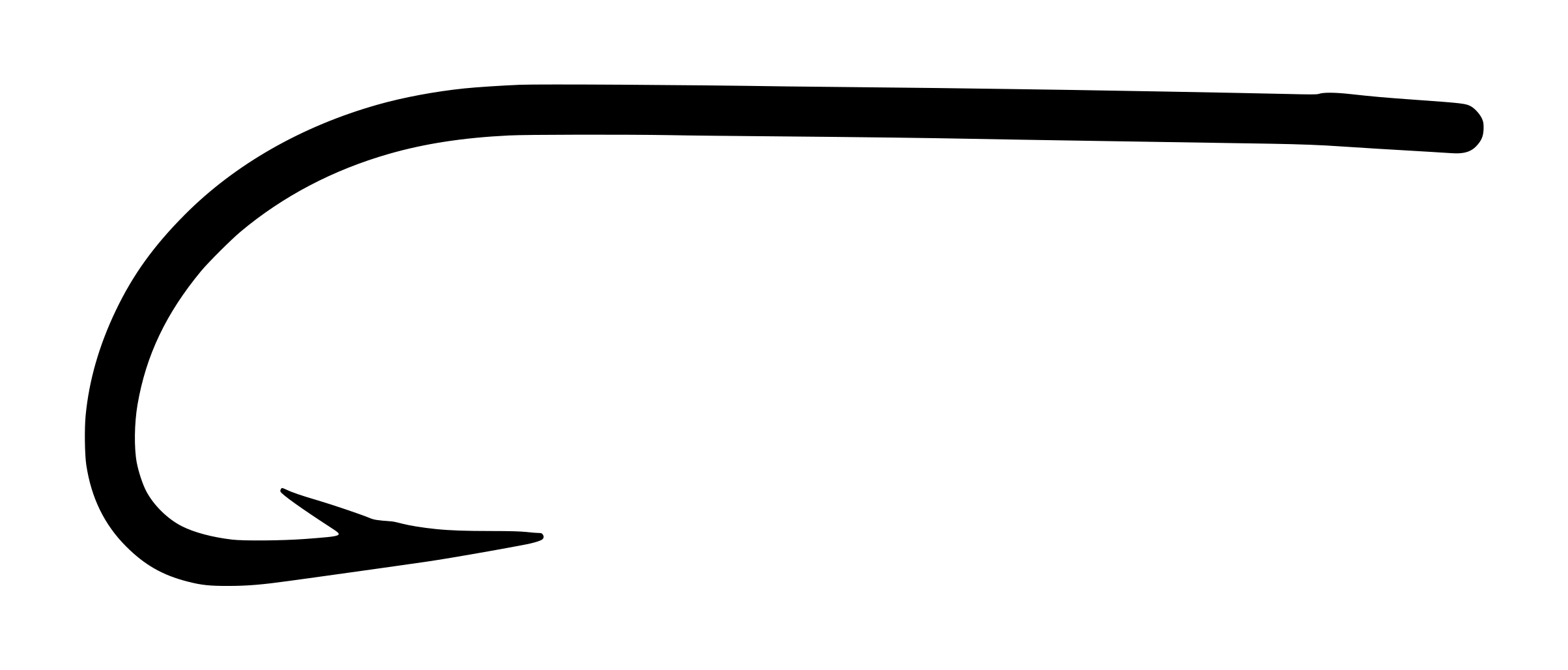
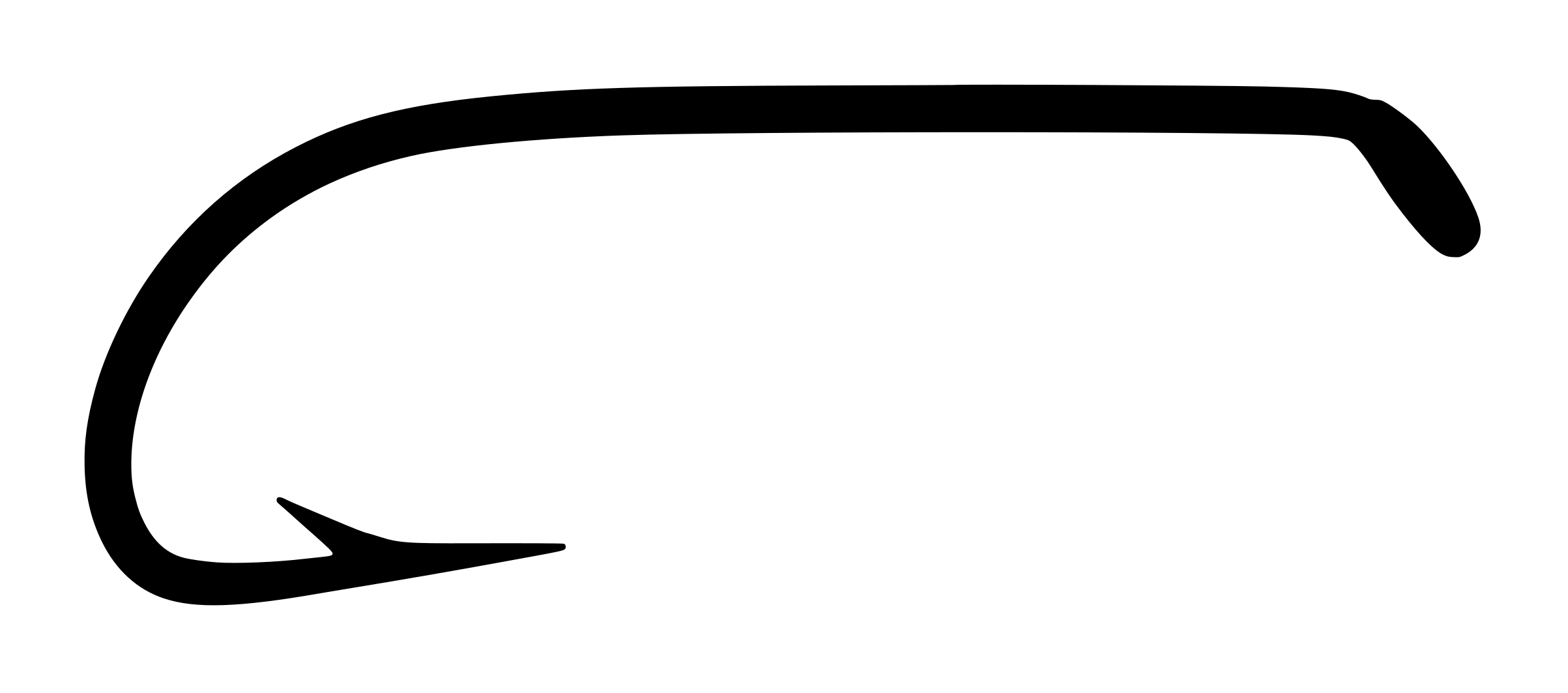
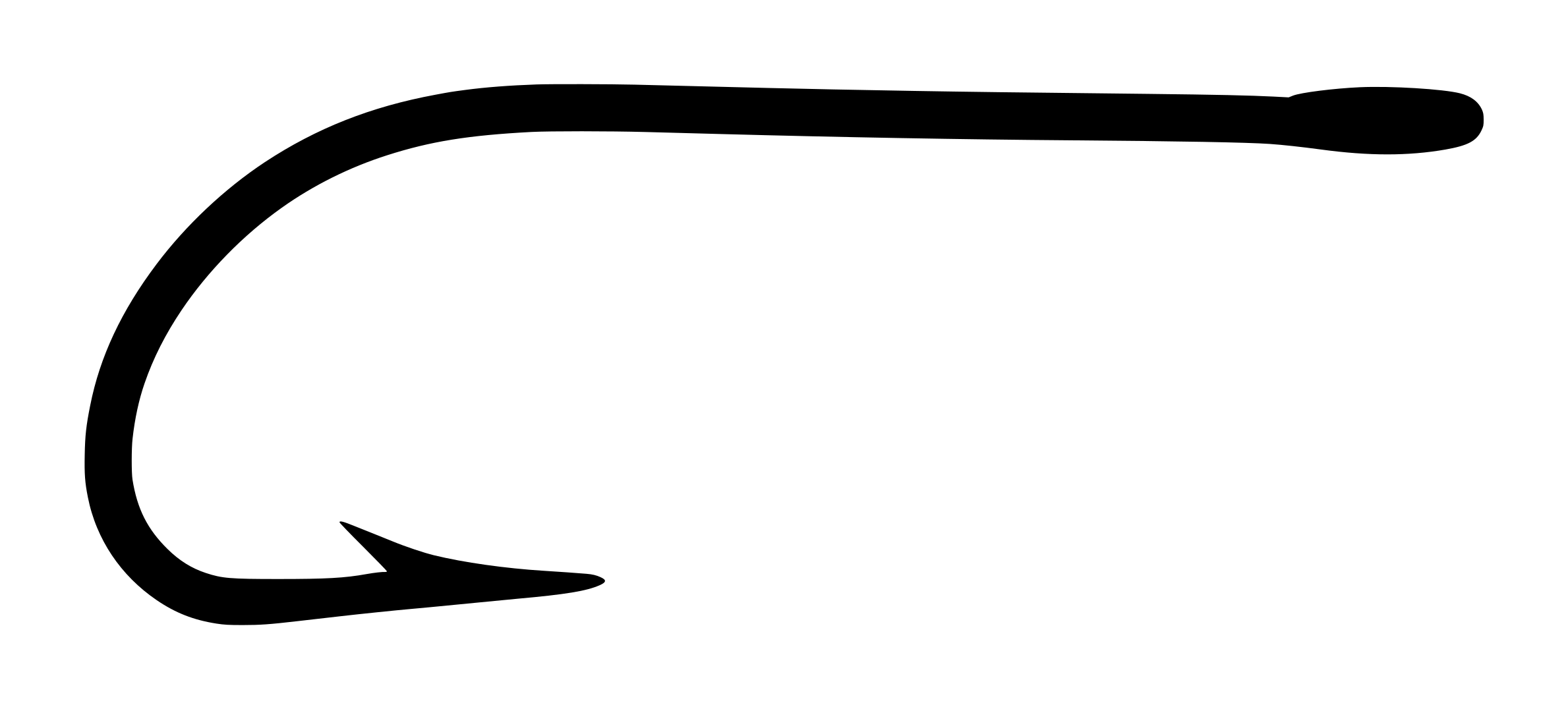
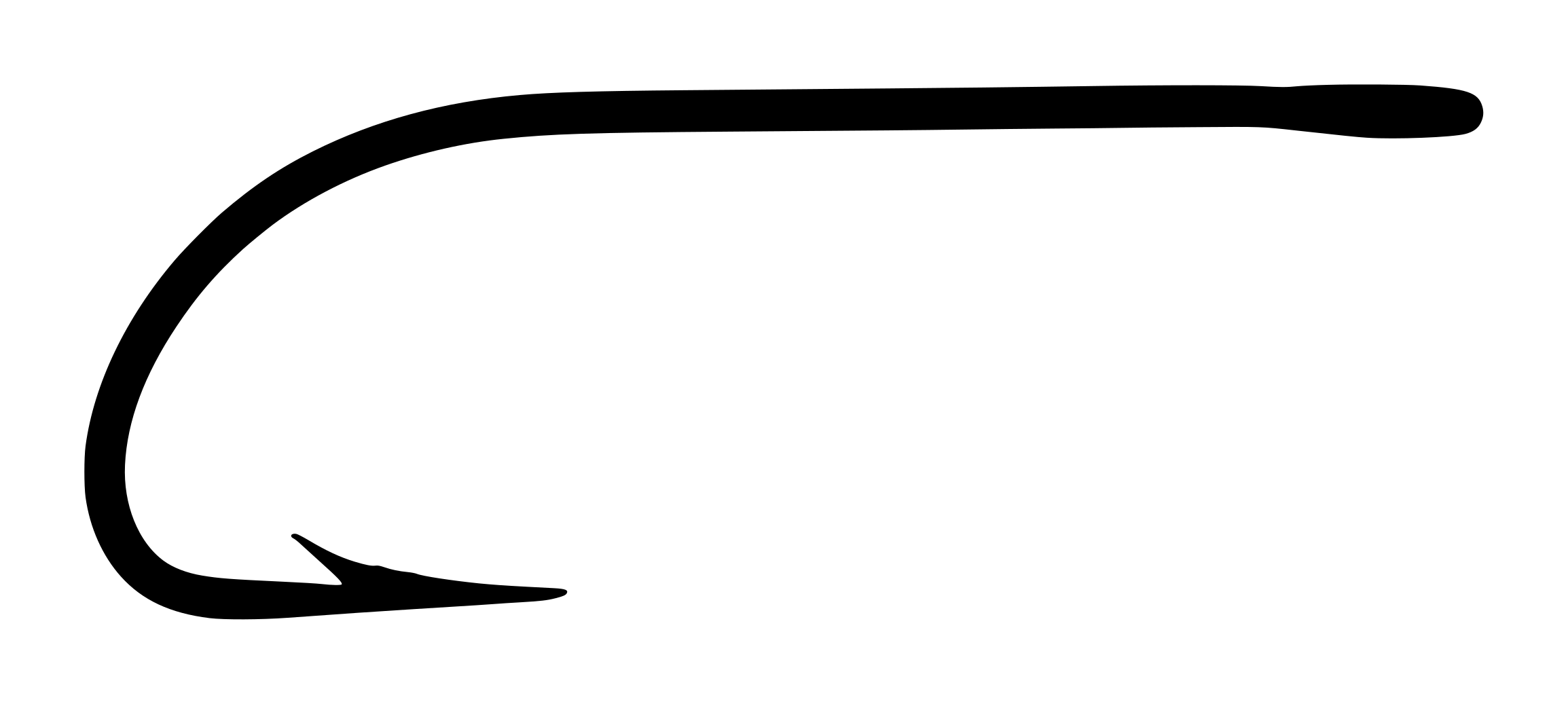
The hook combines a 2x-long shank with a wide 0.50-inch gap and heavy-gauge round wire, creating an ideal profile for live-bait presentation. The hollow point—featuring a pronounced concave inner face—cuts cleanly through tough fish tissues and scale. A tapered eye accommodates heavy leaders without adding bulk.
The blued finish, combined with Mustad’s industrial manufacturing and conservative design, makes the 4713 a workhorse hook rather than a collectible specialist design. Specimen shows excellent preservation with original blued finish intact and no corrosion. The handwritten label indicates this hook was retained as a reference specimen in the early 1960s.
Magnified view of the Mustad 4713 point profile, showing the distinctive concave (hollow) inner face that creates a cutting edge. The moderately sized barb is positioned close to the point tip, perpendicular to the shank. Blued finish is uniform and intact.
Photographic record
3 cataloged imagesSelect any record to load it above.
3 images shown
Mustad 4713 Size 3/0 Hollow Point DetailMagnified view of the Mustad 4713 point profile, showing the distinctive concave (hollow) inner face that creates a cutting edge. The moderately sized barb is positioned close to the point tip, perpendicular to the shank. Blued finish is uniform and intact.Open originalMustad 4713 Size 3/0 Full ProfileFull side profile of the Mustad 4713 showing the long 2x shank, rounded Sproat bend, wide gap, and tapered eye. The blued finish is clearly visible with uniform color tone. Heavy wire gauge provides robust construction for saltwater and livebait applications.Open originalMustad 4713 Specimen Label and DocumentationResearch specimen mount with handwritten label identifying the hook as 'Mustad 4713' size '3/0' in blue ballpoint pen. Two sample hooks are secured to grid-ruled laboratory paper, indicating preservation as a reference specimen by a tackle historian or hook collector.Open original
Technical profile
Tapered Eye | Sproat Bend | Long Shank | Heavy Wire | Hollow Point | Blued
Eye
Ball Eye, Straight / InlineTapered eye with smooth transition from wire body to eye loop, typical of Mustad mid-20th-century manufacturing. Eye is open and cleanly formed, suitable for heavy mono or cable leaders. P
Wire
Heavy (1X Heavy), Round
Shank
2X Long — Plain
Bend
Limerick, Wide gapClassic Sproat bend with rounded bottom and gentle curve throughout the bend radius. Wire set is even and symmetrical with no offset or irregularity. Bend depth is substantial relative to wire gauge, providing ample flex before failure. P
Point
Hollow Point (concave inner face)Barb is moderately sized and positioned close to the point, perpendicular to the shank axis. Barb cut is clean with no manufacturing burrs. The barb sits on the inner concave face of the hollow point, creating a cutting edge when the barb edge engages the fish mouth. P
Finish
Blued — Confirmed (stated on packaging)Deep blued finish with warm tone characteristic of oil-quench bluing rather than cold chemical bluing. Finish is uniform across the specimen with no bare spots, corrosion, or pitting. Surface shows light patina consistent with age and storage in dry conditions. P
Specimen hooks show excellent preservation with no corrosion, straightening, or point dulling. Original blued finish is uniform and intact. No hooks are missing from the preserved card. Handwritten label and grid-paper mounting indicate careful handling as a reference specimen.
The hollow point on the 4713 features a strongly concave inner face that creates a knife-edge effect when viewed from the barb angle. This geometry requires precise barb positioning to avoid hook-point fracture under sudden load. The heavy round wire (approximately 0.042 inches) provides excellent resistance to straightening in live-bait applications where strong fish or snags apply lateral stress. The 2x long shank accommodates larger live baits while maintaining adequate gap width (0.50 inches) for secure penetration. The tapered eye allows easy tying of heavy mono or cable leaders without bulk accumulation.
The Mustad Superior line was introduced in the mid-20th century as a dedicated saltwater and coarse-fishing series. The 4713 model specifically targets heavy-duty bait fishing with its combination of long shank, wide gap, and robust wire gauge. The hollow point geometry, standard across the Superior saltwater range, was designed to cut through tough fish mouths and scale. The 4713 competed directly with contemporary British patterns like the Allcock Pennell and American designs. Production of the Superior line continued through the 1970s before gradually being superseded by more specialized saltwater designs with even heavier wire and advanced materials.
Era and Packaging Dating
Handwritten specimen label shows 'Mustad 4713' and '3/0' in blue ballpoint pen, consistent with mid-20th-century specimen cataloging. No barcode visible on packaging, supporting pre-1974 dating. The Superior product line designation and blued finish are typical of Mustad saltwater offerings from the 1950s-1960s period. Card stock and handwriting style suggest c. 1950s-1960s origin.
Norwegian Efficiency vs. British Tradition
The 1950s-1960s Mustad Superior line represented a pivotal moment in hook history: the industrial displacement of Redditch craft makers. While English hook makers had dominated the market through the early 20th century via quality reputation and tradition, Mustad's Norwegian vertical integration—controlling wire production, forging, finishing, and distribution—allowed them to undercut British prices by 30-50% while maintaining acceptable quality. By 1960, Mustad had captured the mass-market saltwater segment, relegating specialist British makers like Partridge to niche custom and fly-fishing roles. The 4713's simple, robust design—hollow point, heavy wire, no frills—became the template for decades of industrial bait-hook production.
Design lineage and influence
The 4713 descends from 19th-century English sproat-bend bait hooks but incorporates Mustad’s industrial forging efficiency. The hollow-point geometry itself originated with English Redditch makers (S. Allcock & Co., Edgar Sealey & Sons) in the 1880s-1890s, where the concave inner face was hand-ground into finished hooks. Mustad adopted the hollow-point design for saltwater applications by the 1920s-1930s, but standardized it as a mass-produced feature using stamped and ground wire. The 4713 competes directly with contemporary designs like the Allcock Pennell (British) and later American patterns. Its influence extends to all modern industrial bait hooks; the hollow-point sproat with 2x shank became the de facto standard for saltwater livebait fishing by 1970 and remains virtually unchanged in modern successor designs like the Mustad 92720.
Best matchRelated by Attribute
Computed automatically from catalog data — updated as new hooks are added.
Matches: Bend, Shank, Wire, Eye, Eye Orient. +4 moreDiffers: Gap: Wide vs Standard; Point: Hollow Point vs Standard / Spear; Finish: Blued vs Black Japanned +1 more
Matches: Bend, Shank, Eye, Eye Orient., Point +4 moreDiffers: Wire: Heavy (1X Heavy) vs Standard; Gap: Wide vs Standard; Finish: Blued vs Black Japanned +1 more
The Mustad 4713 is a heavy-wire bait hook designed for saltwater fishing and general coarse fishing applications. The long shank and wide gap are suited to live or dead bait presentation, particularly for species that require robust hooksets. The hollow point geometry provides a cutting edge for rapid penetration. Heavy wire construction resists deformation under load and in hard-fighting saltwater species.
Secondary Applications
Saltwater bottom fishing, coarse fishing for pike and large catfish, live bait applications.
Classic Fly Patterns
Not typically used for fly tying.
Modern Equivalents
Hook
Match Quality
Notes
Mustad 92720 Heavy Wire Bait Hook
Very Good
Modern direct successor in Mustad saltwater bait line; hollow point, 2x shank, similar wire gauge and gap profile.
Gamakatsu Offset Shank Saltwater Bait
Good
Contemporary equivalent with similar heavy-wire construction and wide gap; slightly different bend geometry (offset vs straight).
Collector notes
Rated 2.5/10 — the Mustad 4713 is a mass-produced industrial bait hook with abundant surviving examples. Most value derives from original packaging completeness and size rarity (smaller sizes like No. 8 are more scarce than 3/0). This specimen lacks original Mustad packaging (it is a researcher's reference mount), eliminating the primary collectability premium.
Reference value
$2 – $5 USD estimate
Packaging condition
Excellent — minimal wearRecorded specimen
Packaging format
GW-M-SS-01Catalog code
Positive Factors: Early production dating (c. 1950s-1960s) from the pre-barcode era adds modest historical interest. Heavy-wire saltwater hooks are appreciated by collectors focused on classic sea-fishing tackle. The Mustad Superior line represents an important transitional period in hook design between craft-era Redditch hooks and modern industrial standardization. Original blued finish in good condition is desirable among tackle preservationists.
Limiting Factors: Industrial mass production means examples are readily available in most sizes. The 4713 lacks the design distinctiveness or rare-metal construction that commands collector premiums. Original Mustad sales cards are far more collectible than loose specimens or non-original mounting. This particular specimen, being a researcher’s reference mount rather than original packaging, has minimal retail collectability value. Size 3/0 is a common working size, not a scarce variant.
Most Desirable Variants: Original sealed Mustad Superior cards command modest premiums ($5-12 for size 3/0, $8-18 for sizes 6-10). Smaller sizes (No. 8 and smaller) are genuinely scarce and fetch 20-40% premiums. Mint unopened boxes (rare) would exceed $25-40. This specimen’s value as a reference example is primarily educational rather than market-driven.
Packaging
White grid-ruled lab paper with handwritten specimen label in blue ballpoint pen. Label reads 'Mustad' (cursive), '4713' (printed-style numerals), and '3/0' (handwritten). Two hooks are secured to the paper, positioned horizontally and photographed on the grid for scale reference. The paper is standard 1/10-inch grid stock used by tackle researchers and hook historians. No original Mustad packaging is visible; this is a researcher's preservation mount, likely dating to the 1960s-1980s.
Market Value Notes
Low ($2): Reference specimen mount without original Mustad packaging; collector value minimal.
High ($5): If original unopened Mustad Superior sales card with full hook count, excellent condition, size 3/0.
Premium factors: Original Mustad packaging (cards or boxes), smaller sizes (No. 8 or smaller), sealed/unopened condition, excellent finish preservation.
Platforms: eBay (sporadic listings), vintage tackle dealers, regional fishing tackle fairs.
Confidence: E estimated — limited recent comparable sales data; industrial hooks of this era typically command low premiums.
Where to Find
eBay (sporadic, mostly as part of bulk vintage hook lots), vintage fishing tackle dealers specializing in mid-20th-century saltwater gear, regional tackle auctions and fairs in UK and Scandinavia, occasional vintage sports equipment dealers. Original Mustad Superior sales cards appear infrequently; most survivors are in collections or dealer inventory rather than regular circulation.
Collector's Identification Tips
Model number ‘4713’ is printed or stamped on original sales cards or packaging labels. The Superior designation appears on mid-20th-century Mustad cards. Handwritten specimen labels with ballpoint pen (blue or black) and grid-paper mounting indicate preservation as reference samples, common among tackle historians and hook collectors from the 1960s-1980s. Heavy wire gauge distinguishes the 4713 from lighter Mustad bait hooks like the 3632.
Preservation
Storage and Preservation
Store the Mustad 4713 in a cool, dry environment away from moisture and air exposure. The blued finish is susceptible to rust and patina development when exposed to humid conditions; however, development of a stable dark patina is generally considered acceptable and even desirable among collectors, as it protects underlying steel from aggressive corrosion.
If displaying loose hooks, store them individually in plastic sleeves or acid-free paper envelopes to prevent cross-contact and galvanic corrosion between the steel and other metals. Original Mustad sales cards should be stored flat in archival-quality boxes, away from direct sunlight, which will fade the card printing and can accelerate finish oxidation.
Periodically inspect stored hooks for signs of white rust (magnesium/aluminum chloride salt corrosion) or active pitting. If white corrosion appears, place hooks in a sealed container with silica gel desiccant for 24-48 hours, then store in a dry environment with continuous desiccant replacement as needed.
For this specimen’s grid-mounted reference collection, store mounted sheets in acid-free folders within a dry environment, away from direct light and temperature fluctuation. Avoid handling the hooks directly; use gloves or forceps to minimize skin oil transfer, which can promote localized corrosion.
Marking Analysis
Specimen Label and Provenance
The handwritten label on this specimen mount provides several dating clues. The blue ballpoint pen indicates production after 1945 (ballpoint adoption in consumer use). The letterforms in ‘Mustad’ (flowing cursive) and the numerals in ‘4713’ and ‘3/0’ are consistent with 1950s-1960s handwriting style, suggesting this specimen was documented and mounted during that era or shortly thereafter.
The choice of grid-ruled lab paper (1/10-inch squares) and the specimen mounting methodology indicate this hook was preserved by a serious tackle researcher, historian, or institutional collection manager—likely someone maintaining a reference library of hook sizes and specifications. Similar mounting practices were adopted by museum curators, university collections, and specialized tackle historians beginning in the 1960s.
The fact that two sample hooks are mounted (rather than a single specimen) suggests this was a reference set created to demonstrate the consistency of the manufacturing run, supporting the hypothesis that this mount dates to an era of quality-control documentation or comparative analysis. The pristine condition of both hooks and the careful mounting on acid-free paper further support preservation by a professional or advanced collector rather than casual tackle storage.
Additional
Mustad Superior Line — Historical Context
The designation ‘Mustad Superior’ on mid-20th-century packaging referred to a branded product line within O. Mustad & Son’s portfolio, not a quality descriptor or point style specification. The Superior line was Mustad’s mid-range offering, positioned between budget-conscious Aberdeen patterns and premium specialized designs. This positioning allowed Mustad to serve the mass-market saltwater and coarse-fishing segment without cannibalizing sales of higher-margin specialist hooks.
Contemporary Mustad catalogs (1950s-1960s) describe the Superior line as suitable for ‘saltwater, live-bait, and general fishing applications’—a deliberately broad positioning that captured tackle shops’ restocking demand without technical differentiation. The 4713 specifically appears in saltwater and bait-fishing sections of Mustad’s mail-order catalogs from this period, often priced at 40-60% below equivalent Partridge or Allcock British patterns.
The hollow point geometry, while present on the 4713, was not universally called ‘Superior Point’ on Mustad packaging of this era. ‘Superior’ as a product line name and ‘Superior Point’ as a geometric descriptor evolved separately through Mustad’s catalog history. This specimen’s packaging does not use the term ‘Superior Point,’ supporting the interpretation that ‘Superior’ here refers solely to the product line brand.
Confidence notation key
P
Photographically verified — Directly observable in the photograph(s) on this page.
V
Verified by documentation — Confirmed by manufacturer catalog, spec sheet, or published reference.
I
Inferred — A logical deduction from observable or documented evidence, not directly stated.
E
Estimated — An approximation based on visual comparison, proportional analysis, or limited data.
S
Speculative — A reasoned hypothesis that cannot be confirmed from available evidence.
Unnotated claims are the compiler’s synthesis; see Sources. All photographs on garrenwood.com are taken on a measurement grid where each square equals 1/10 inch (0.1″ / 2.54 mm).