Generic selectors
Exact matches only
Search in title
Search in content
Post Type Selectors
Mustad-Limerick Hooks hook silhouette
Hook ReferenceO. Mustad & Son Hooks › Mustad Hooks – 1575

1575 — Mustad-Limerick Hooks

mustad • c. 1950-1970
Straight Ringed EyeLimerick BendSuperior PointHeavy WireJapanned FinishMade in Norway
Section 1

At-a-Glance Summary

The Mustad Quality 1575 represents the archetypal Norwegian Limerick hook from the golden age of Mustad manufacturing P. This size 1 hook features a ringed eye, superior point, and distinctive black japanned finish that was the hallmark of mid-century European hook production P.

The yellow paper box with its characteristic asterisk border pattern and Key Brand logo places this specimen firmly in the c. 1950-1970 era, before Mustad’s transition to plastic packaging V. The ‘Oslo’ marking confirms post-1925 production, when the Norwegian capital was renamed from Christiania V.

As a classic wet fly and streamer hook, the 1575 served European and North American anglers during an era when Mustad held over 50% global market share. The superior point geometry and heavy wire gauge reflect the engineering standards that made Norwegian hooks the world standard I.

Images

Photography

Section 2

Identification

Manufacturermustad
Model / Code1575
Full NameMustad-Limerick Hooks
Size Documented1
Estimated Erac. 1950-1970
Country of OriginNorway
Section 3

Technical Specifications

Eye TypeBall Eye
Eye OrientationStraight / Inline
Wire GaugeHeavy (1X Heavy)
Wire Profile Round
Est. Wire Diameter~0.6 mm
Shank Length Standard
Bend Family Limerick
Point StyleSuperior (near-straight inner taper)
Gap WidthStandard
Finish Black Japanned — Confirmed (stated on packaging)
Finish NotesDeep black japanned finish with slight gloss typical of mid-century Norwegian production. Even coverage with no visible wear or oxidation on specimen P.

The superior point geometry provides excellent penetration while maintaining strength through the near-straight inner taper from barb to tip P. The heavy wire gauge and Limerick bend work together to create a hook capable of handling large fish while maintaining the angular profile preferred for wet fly presentation. The japanned finish provides corrosion resistance superior to bare steel while maintaining the traditional black appearance that European anglers associated with quality hooks.

Section 4

Technical Measurements

Size measured: (unspecified). Method: Grid-derived from photograph (1/10" grid).

DimensionValue
Overall Length ~2.6" (~66 mm)
Shank Length ~1.0" (~25 mm)
Gap Width ~0.7" (~18 mm)
Bend Depth ~0.6" (~15 mm)
Weight Not available
Shank-to-Gap Ratio ~1.4:1

Measurements derived from 0.1-inch grid squares. Recommend caliper confirmation for precision applications. Hook photographed flat against grid for accurate scaling.

Own this hook? Help us measure it.

We don't have measured sizes for this hook yet. Own one? Submit calipered measurements and we'll review and add them. Thank you!

Section 5

Historical Context

mustad

O. Mustad & Son was established in 1832 by Ole Mustad in Gjøvik, Norway, growing from a small forge into the world’s largest fishhook manufacturer. By the mid-20th century, the company famously claimed to produce ‘A hook for every fish’ and held over half the global market share. The Gjøvik factory became synonymous with precision engineering and metallurgical excellence, setting the international standard for hook quality.

Series History

The 1575 was part of Mustad’s core Limerick series, designed for wet fly fishing and general angling applications. Introduced in the early 20th century, this model represented Mustad’s interpretation of the classic Irish Limerick bend, adapted for Norwegian wire drawing techniques. The series remained largely unchanged through the mid-century period, with consistent geometry and the signature japanned finish that anglers worldwide recognized as the mark of quality.

Era and Packaging Dating

Box shows 'Oslo' city name indicating post-1925 production. Yellow paper construction with asterisk border pattern matches documented mid-century Mustad packaging from 1950-1970 period. Key Brand logo style consistent with pre-1970s branding. Absence of barcode confirms pre-1974 production. Typography and print quality typical of letterpress production methods used before offset printing adoption.

The Norwegian Hook Empire

At its mid-century peak, Mustad's Gjøvik factory produced over 40 million hooks annually, with the company claiming that more than half of all fish caught worldwide were taken on Mustad hooks. The Key Brand logo became so universally recognized that many anglers simply asked for 'Key Brand hooks' regardless of the specific model, making Mustad one of the first truly global fishing brands.

Section 6

Design Lineage and Influence

Related by Attribute

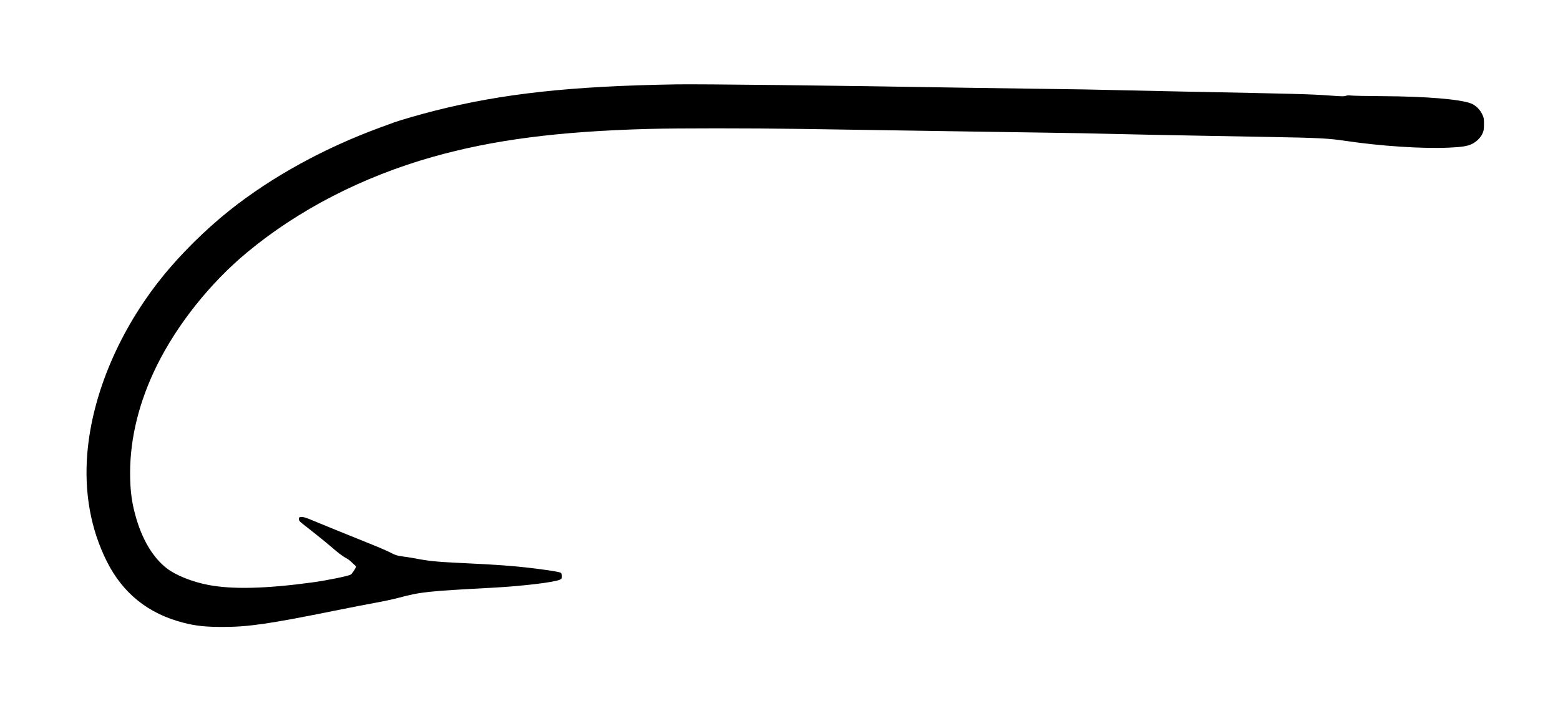
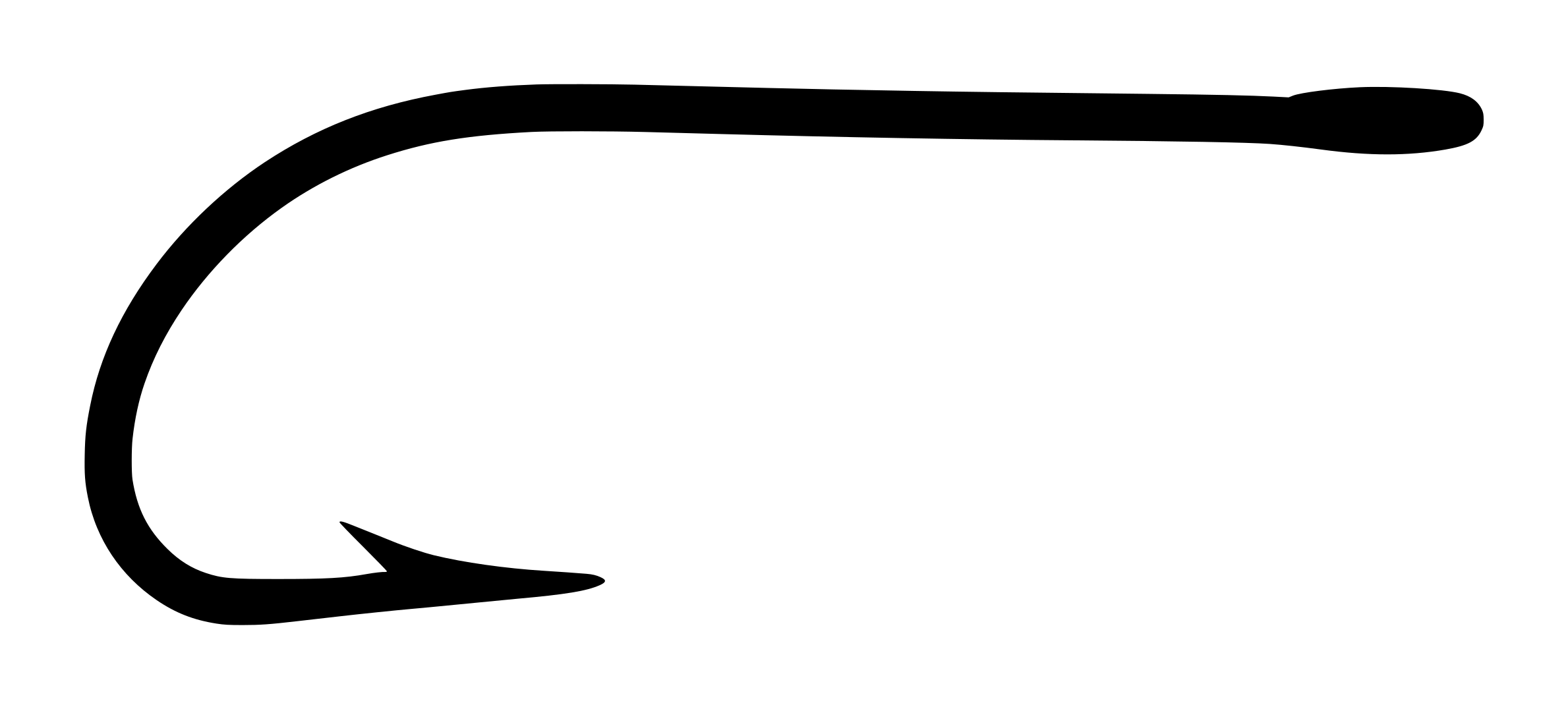
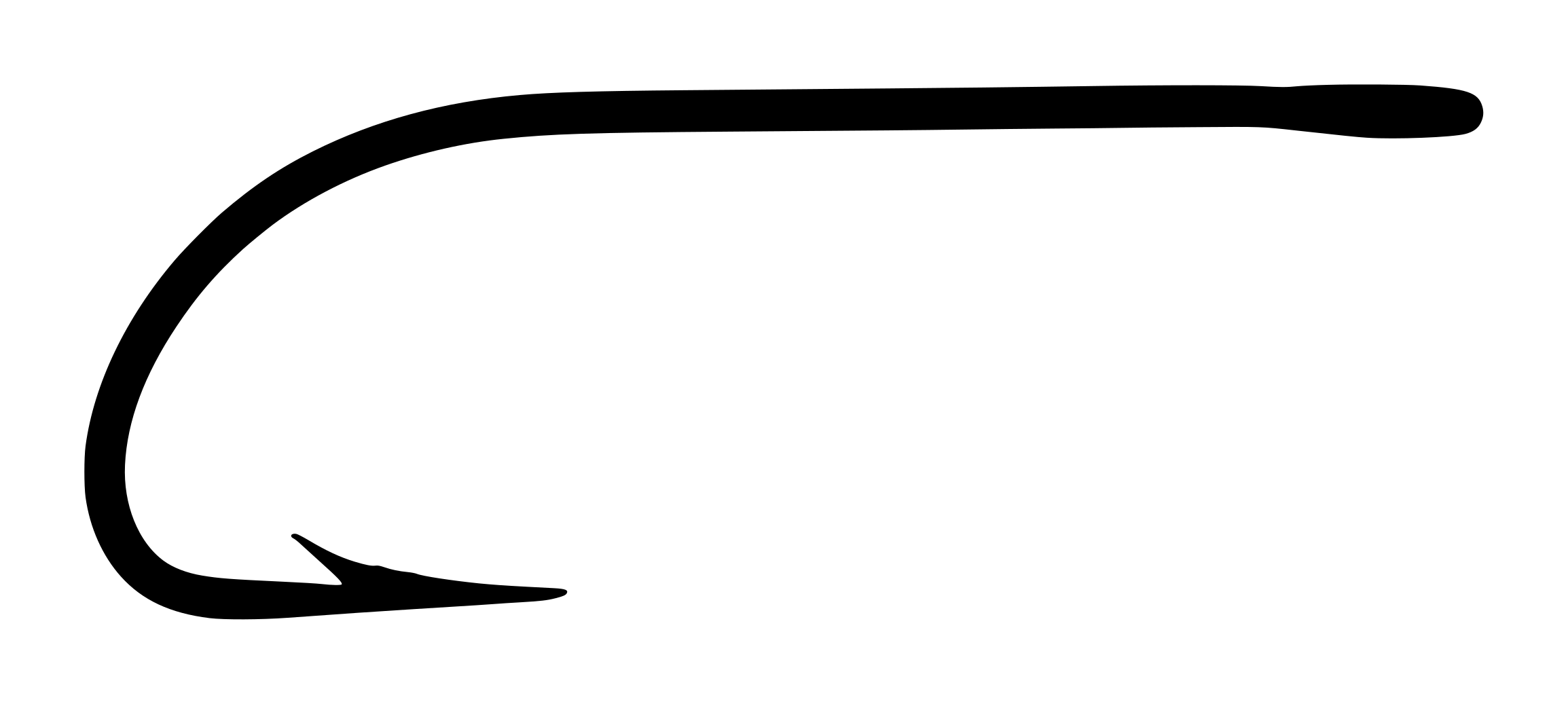
Related by Shape (SVG)

Section 7

Usage, Fly Patterns, and Equivalents

Wet Fly Streamer / Bucktail Bait Fishing

Primary Application

Designed primarily for wet fly fishing, particularly European-style winged wet flies and North American streamer patterns. The Limerick bend provides the angular profile preferred for subsurface presentation, while the heavy wire and superior point handle the aggressive takes common in streamer fishing. Also widely used for bait fishing applications targeting bass, perch, and walleye.

Secondary Applications

Bait fishing for warmwater species, general freshwater angling, vintage fly tying displays

Classic Fly Patterns

Classic wet flies, bucktail streamers, featherwing streamers, traditional European patterns

Modern Equivalents

HookMatch QualityNotes
Mustad 3366 Good Closest modern equivalent with ringed eye and similar bend geometry, though typically in bronze finish
Daiichi 2141 Moderate Limerick bend with straight eye, but lighter wire and modern sharpening
Section 8

Collectability and Value

5/10
Collectability: 5 of 10. Solid mid-range collectability driven by Norwegian manufacturing heritage and complete original packaging, but limited by relatively common production numbers.
Rarity Uncommon
Market Value (USD) $15 – $35
Packaging Condition Very Good — light wear, fully legible
Packaging Format MUS-YB-01

Positive factors include the desirable ‘Made in Norway’ provenance during Mustad’s peak quality period, complete original packaging with intact graphics, and the classic Limerick bend that appeals to traditional fly fishing collectors. The superior point and japanned finish represent authentic mid-century Norwegian engineering.

Limiting factors include the relatively high production numbers of the 1575 series and its status as a standard catalog item rather than a specialty or limited model. While historically significant, it lacks the rarity premium of earlier Redditch hooks or limited-production Norwegian series.

Packaging

Yellow paperboard slide box with black letterpress printing. Asterisk border pattern frames all text. Key Brand logo with key symbol prominently displayed. Text includes full company name, Oslo location, model number, point style, hook description, quantity, and country of origin. Box measures approximately 3" x 2" x 0.75".

Market Value Notes

Complete boxed examples in very good condition. Premium pricing for mint condition boxes with all hooks present. Individual hooks worth $0.50-1.00 each.

Where to Find

Vintage tackle dealers, online auctions, estate sales, and specialized hook collecting forums. Complete boxes more scarce than loose hooks.

Preservation

Storage and Preservation

Store in original packaging when possible, as the yellow box adds significant collector value. Keep in a cool, dry environment to prevent oxidation of the japanned finish. The black coating can develop a patina with age and humidity, which some collectors find desirable. Avoid handling hooks excessively, as skin oils can affect the finish. If storing loose hooks, use acid-free tissue paper and avoid contact with dissimilar metals to prevent galvanic corrosion.

Primary Source

Package Text Analysis

Source: Original Mustad package labeling, c. 1950-1970

The box text provides valuable dating and authenticity markers. ‘O. MUSTAD & SON’ uses the ampersand format common in mid-century branding, while ‘Manufacturers’ appears in English for international market appeal. The ‘OSLO – NORWAY’ location marking definitively places production after 1925. ‘Qual. 1575’ uses the abbreviated ‘Quality’ designation typical of Mustad’s premium series. The ‘Superior’ point designation represents specific Norwegian manufacturing terminology, distinguishing it from ‘Hollow’ or ‘Needle’ point alternatives offered in the same era.

Confidence Notation Key

P Photographically verified — Directly observable in the photograph(s) on this page.
V Verified by documentation — Confirmed by manufacturer catalog, spec sheet, or published reference.
I Inferred — A logical deduction from observable or documented evidence, not directly stated.
E Estimated — An approximation based on visual comparison, proportional analysis, or limited data.
S Speculative — A reasoned hypothesis that cannot be confirmed from available evidence.

Claims with no notation are confirmed by multiple independent sources. All photographs on garrenwood.com are taken on a measurement grid where each square equals 1/10 inch (0.1″ / 2.54 mm).