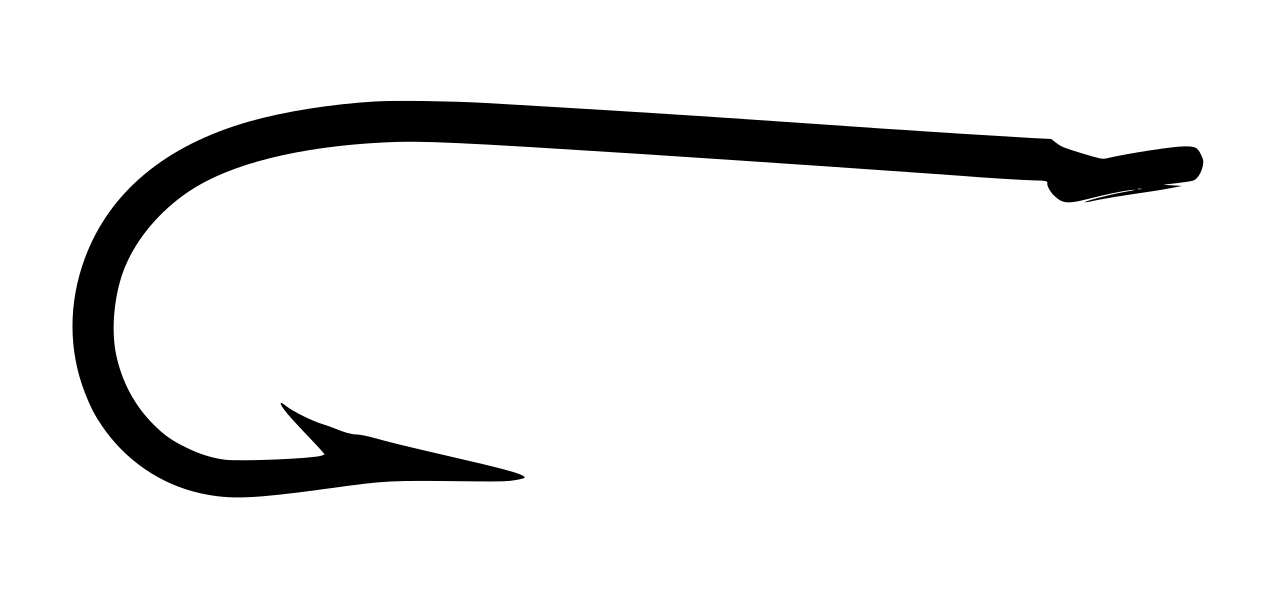
The Partridge Limerick Loop Eye is a traditionally designed British wet-fly hook manufactured by Partridge of Redditch, one of England’s most respected craft-based hook makers. The model features an angular Limerick bend combined with a turned-down loop eye — a direct-attachment eye configuration popular in European fly fishing. This is a size 2 specimen from an original 100-hook box, with bronzed finish and standard-gauge wire suitable for small wet flies and soft-hackle patterns.
Dating to approximately 1920-1960 based on packaging evidence — including letterpress printing, hand-made designation, and cardboard box construction without barcode — this hook represents Redditch craft-era manufacturing at its height. The absence of modernized features (plastic, ball eye, tapered eye) and the traditional hand-made claim on the box reinforce the pre-1960s date range.
For collectors, Partridge hand-made hooks command meaningful interest, particularly among European fly-tying traditionalists and historical fishing method enthusiasts. The loop eye configuration and Limerick bend are both desirable design features. Complete or nearly complete 100-hook boxes are scarcer than typical sales cards and command a premium. Size 2 is relatively common within the Partridge range; rarer sizes (14-18) or specialized patterns would command higher valuations.
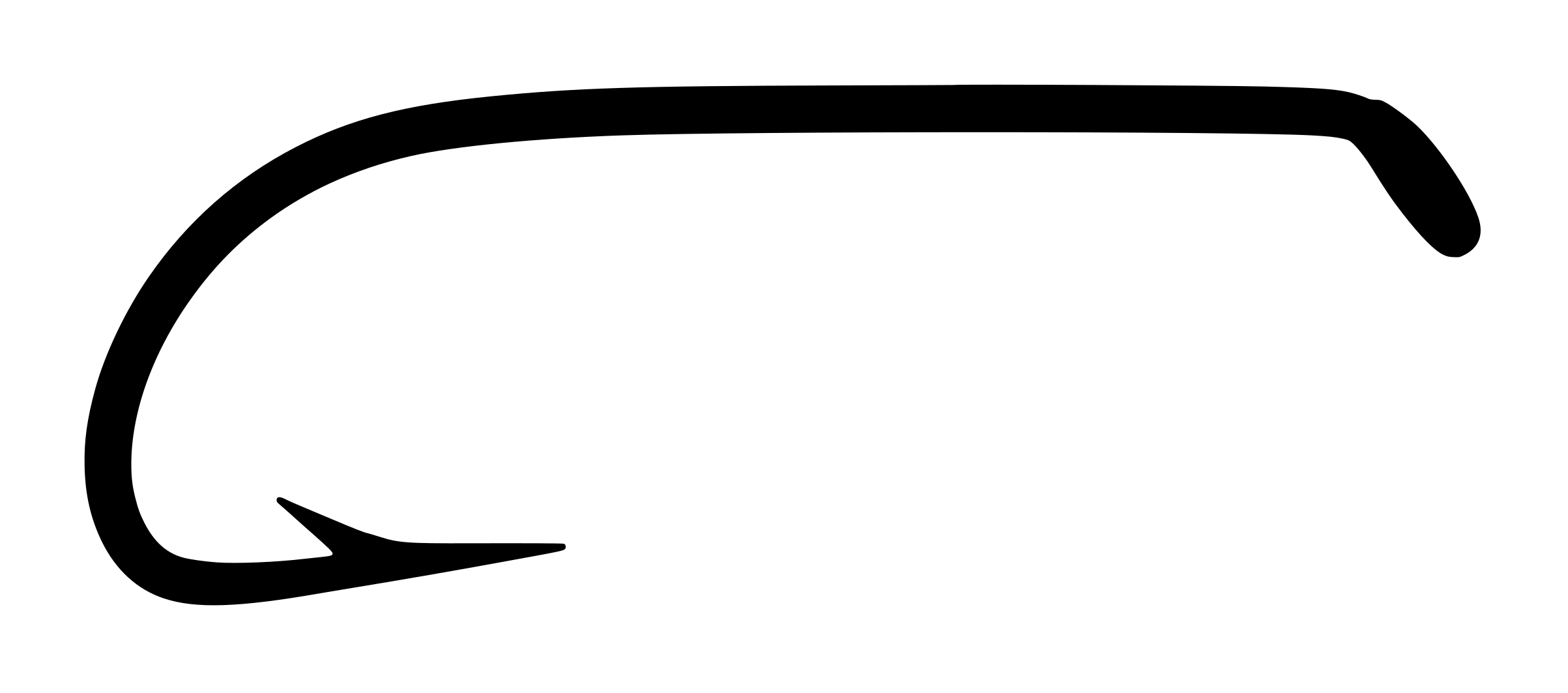
Side profile of the Partridge Limerick Loop Eye showing the characteristic turned-down loop eye and sharp angular bend, photographed on measurement grid for scale reference.
Photographic record
4 cataloged imagesSelect any record to load it above.
4 images shown
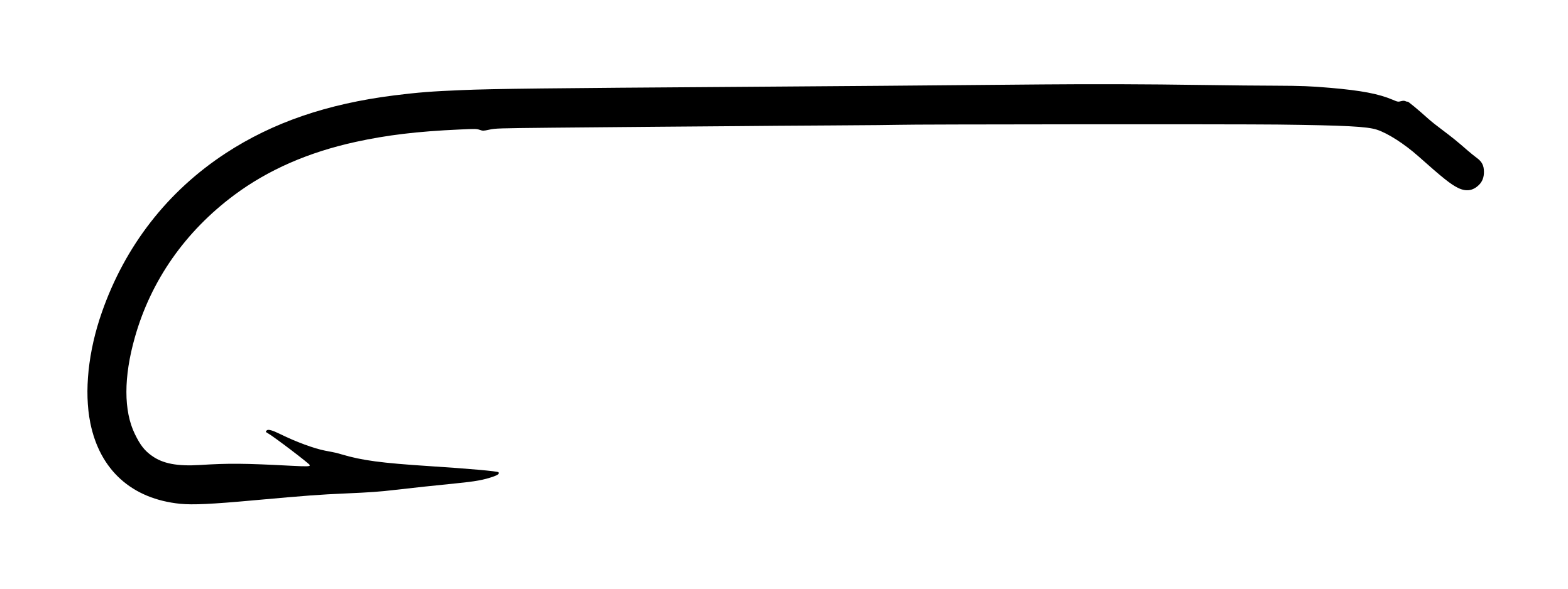
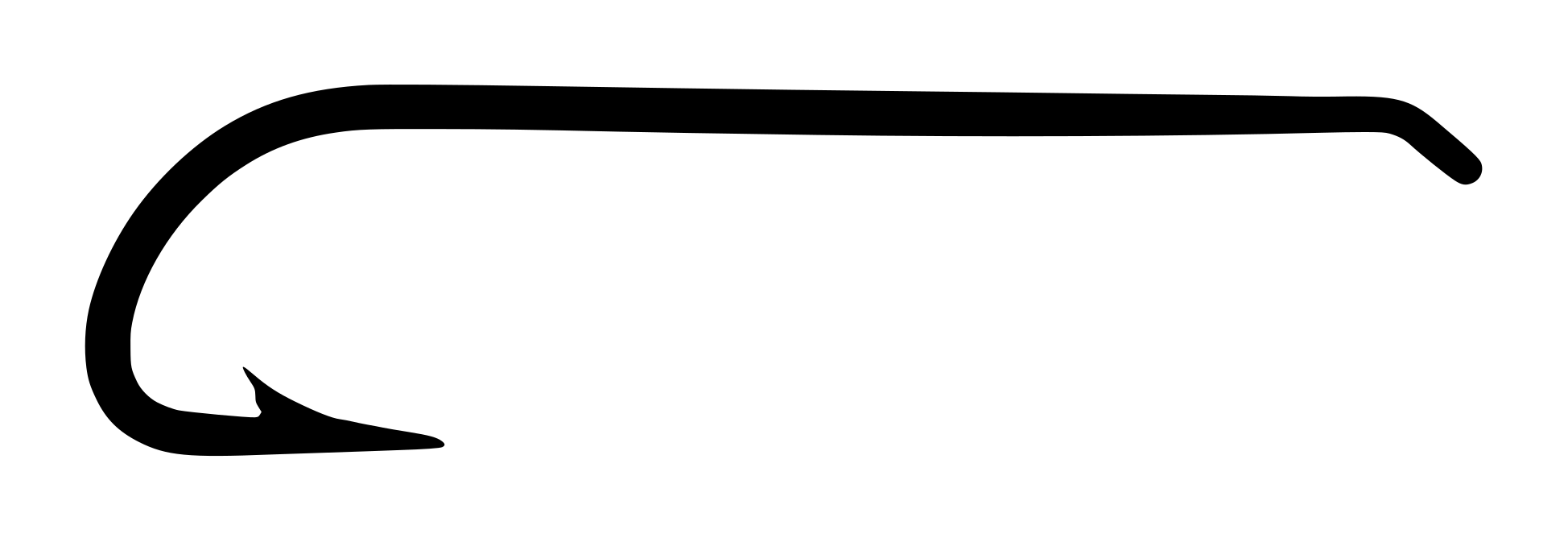
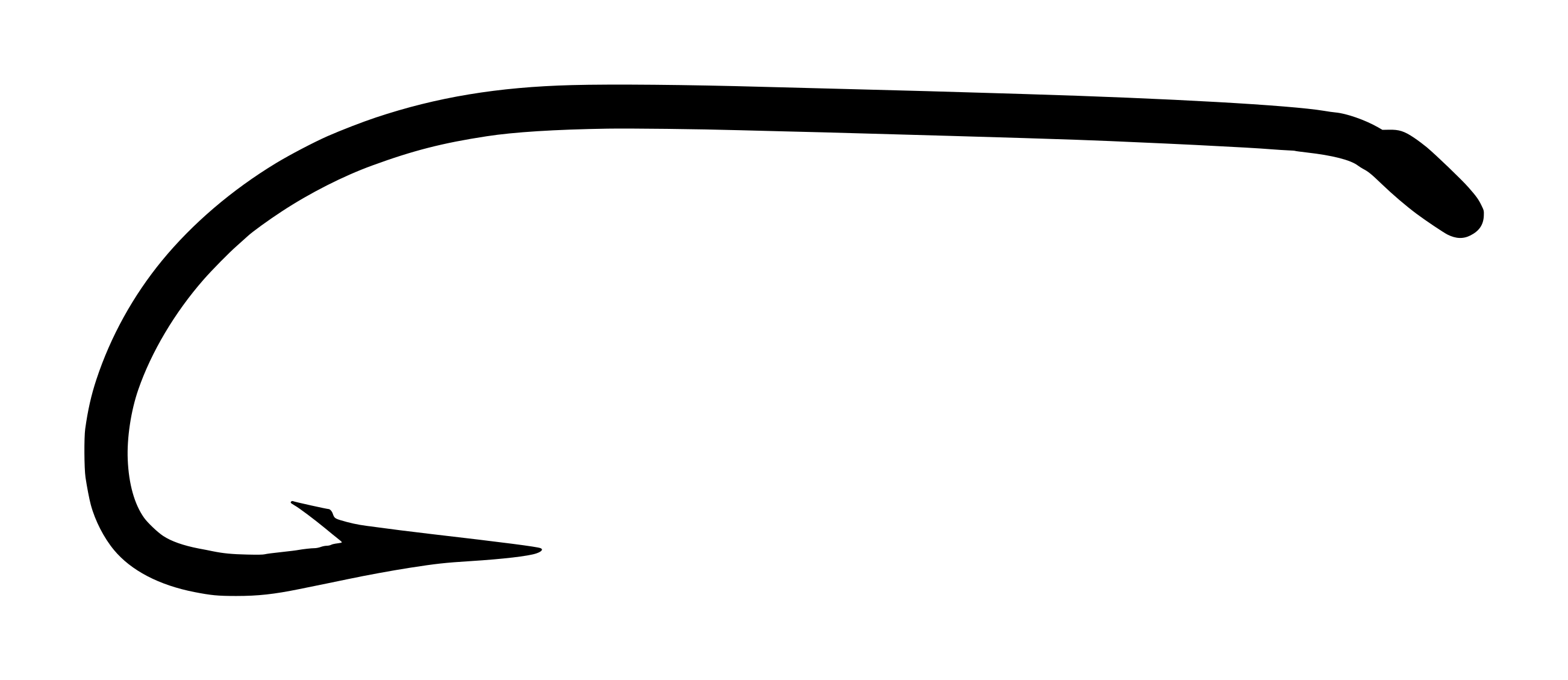
Partridge Limerick Loop Eye Size 2 Side ProfileSide profile of the Partridge Limerick Loop Eye showing the characteristic turned-down loop eye and sharp angular bend, photographed on measurement grid for scale reference.Open originalPartridge Limerick Loop Eye Size 2 Original BoxOriginal packaging for the Partridge Limerick Loop Eye Size 2, a folding cardboard box with letterpress printing showing the hand-made British hooks designation and 100-hook quantity.Open originalPartridge Limerick Loop Eye Close-up DetailDetailed close-up of the turned-down loop eye showing the smooth wire loop formation and its angle relative to the shank, demonstrating hand-forged construction quality.Open originalPartridge Limerick Loop Eye Point DetailClose-up detail of the hook point and barb showing the superior-style straight inner taper and fine barb placement, characteristic of Redditch hand-made construction.Open original
Technical profile
Eye
Looped Eye, Turned DownTurned Down Loop Eye
Wire
Heavy (1X Heavy), Round
Shank
3X Long — Plain
Bend
Limerick, Standard gapAngular Limerick bend with sharp bottom corner, characteristic of the Limerick family. Deep curve with defined geometry P.
Point
Superior (near-straight inner taper)
Finish
Bronzed — Inferred (photographically likely)Deep bronze/brassed finish with warm golden-brown tone. Specimen shows uniform coverage with natural patina appropriate to age P.
Specimen shows excellent preservation with uniform bronzed finish, no corrosion or damage visible. Original 100-hook box shows light age toning, minor creasing at corners, and fully legible letterpress printing. All elements appear present and in original state.
The Limerick bend is an angular, modern design (relative to 19th-century patterns) that provides excellent hook-set geometry for subsurface fishing. The sharp bottom corner maximizes penetration efficiency, particularly valuable for soft-hackle and wet-fly applications where the fly is fished actively in current. Standard wire gauge (0.042″-0.048″ diameter) balances strength for tying tension against the weight savings needed for wet-fly presentation in moving water.
The superior-style point features a near-straight inner taper, ideal for clean penetration in soft mouths of trout and small salmon. The turned-down loop eye permits direct leader knot without intermediate hardware, reducing bulk and allowing the fly to turn naturally in the current. This design philosophy reflects the European wet-fly tradition where simplicity and direct water contact were valued.
We have measurement for size 2. Know any others? Submit calipered measurements and we'll review and add them. Thank you!
Historical context
partridge
Partridge of Redditch was established in the mid-19th century as a craft-based hook manufacturer in Redditch, England — the global center of fishhook production. Unlike industrial manufacturers such as Mustad, Partridge maintained hand-forging techniques and focused on quality over volume. The company built a strong reputation among salmon and sea-trout anglers, particularly in Scotland and northern England, through the mid-20th century.
Partridge’s “hand-made” designation on packaging was a marketing claim emphasizing craft production, though production eventually incorporated semi-mechanized processes. The company was acquired by Mustad in the 1980s, ending independent production. Modern Partridge hooks are manufactured under Mustad’s ownership but maintain the brand’s reputation for specialty patterns and quality construction.
Series History
The Limerick Loop Eye represents one of Partridge’s core traditional patterns, part of the company’s general-purpose wet-fly and soft-hackle range. The Limerick bend — characterized by its sharp, angular profile — has roots in 19th-century Redditch design. The loop eye configuration allows direct leader attachment without a fly knot, a traditional method that remained popular in European fly fishing well into the mid-20th century.
This model appears in Partridge catalogs from approximately 1920 through the 1960s in various sizes and finishes. The 100-hook box format indicates bulk sale to tackle dealers and fly-tying shops. The model remained in production as a standard offering but was eventually superseded by modern eye configurations (ball eye and tapered eye) as fly-tying techniques evolved and synthetic leader materials became standard.
Era and Packaging Dating
Partridge of Redditch hand-made designation on packaging. Box construction and letterpress printing consistent with pre-1960s British tackle manufacture. Absence of barcode indicates pre-1974 production. The loop eye construction and wire gauge profile align with Partridge's traditional hand-forged methods circa 1920-1960. No visible modernizations or post-war plastic elements.
The Loop Eye Legacy
The loop eye configuration visible on this hook represents a centuries-old tradition in European fly fishing — the direct leader attachment method without a knot. Anglers would thread the leader through the loop and secure it with a half-hitch or similar cinch, allowing the fly to move freely in the water. This technique became less common after the 1960s as ball-eye and tapered-eye designs gained dominance, but it remains favored by soft-hackle and traditional wet-fly purists who argue it provides superior fly movement. Partridge of Redditch continued offering loop eye patterns well into the modern era, a testament to their customer base of traditionalist fly fishermen.
Design lineage and influence
The Limerick bend design originated in Redditch in the early 19th century, though the exact designer is unknown. It represents a departure from the earlier Sproat (rounded) and Aberdeen (wide round) bends in favor of angular geometry that improves hook-set characteristics. The Limerick gained popularity among salmon and sea-trout fishermen and remains a respected traditional pattern.
Competing designs from other manufacturers include the Sneck bend (Allcock) and the OShaughnessy (Mustad and others), both offering different geometric approaches to the same problem. The Limerick’s loop eye configuration predates the widespread adoption of ball and tapered eyes in the mid-20th century and represents an earlier tradition of direct leader attachment.
Best matchRelated by Attribute
Computed automatically from catalog data — updated as new hooks are added.
Matches: Bend, Wire, Gap, Eye Orient., Finish +3 moreDiffers: Shank: 3X Long vs 2X Long; Eye: Looped Eye vs Ball Eye; Point: Superior vs Hollow Point +1 more
Matches: Bend, Wire, Gap, Eye Orient., Finish +3 moreDiffers: Shank: 3X Long vs 4X Long; Eye: Looped Eye vs Tapered Eye; Point: Superior vs Hollow Point +1 more
Matches: Bend, Gap, Eye Orient., Finish, Forging +3 moreDiffers: Shank: 3X Long vs 2X Long; Wire: Heavy (1X Heavy) vs Standard; Eye: Looped Eye vs Tapered Eye +2 more
Matches: Bend, Gap, Eye Orient., Point, Finish +3 moreDiffers: Shank: 3X Long vs 2X Long; Wire: Heavy (1X Heavy) vs Standard; Eye: Looped Eye vs Ball Eye +1 more
A versatile general-purpose hook used primarily for streamers and nymphs.
Classic Fly Patterns
Partridge and Orange, Grouse and Claret, soft-hackle moorhen patterns, traditional wet fly designs
Modern Equivalents
Hook
Match Quality
Notes
Tiemco 200R
Good
Standard-wire wet fly hook with down-eye; similar application but not loop eye configuration
Partridge Bartleet Wet (modern)
Moderate
Modern Partridge design with loop eye; different bend geometry
Orvis 1523R
Moderate
Contemporary wet-fly/soft-hackle hook; lacks traditional loop eye
Collector notes
Rated 5.5/10 — Partridge of Redditch hand-made hooks command genuine collector interest, particularly among European fly-fishing traditionalists. The loop eye configuration and Limerick bend are both desirable design features. However, size 2 is relatively common within the Partridge range; smaller sizes (14-16) or rare patterns command higher premiums.
Reference value
$22 – $58 USD estimate
Packaging condition
Very Good — light wear, fully legibleRecorded specimen
Packaging format
GW-PR-01Catalog code
Positive factors: Partridge of Redditch is a historically significant Redditch maker with strong collector following. Hand-made designation on packaging adds authenticity premium. Loop eye is a traditional, desirable feature among wet-fly and soft-hackle tyers. Original 100-hook box is scarcer than standard sales cards and adds 50-75% premium. Bronze finish is aesthetically pleasing and stable for long-term storage.
Limiting factors: Size 2 is not a scarce size within Partridge’s catalog — sizes 14-18 are more actively sought. The Limerick bend, while respected, is less specialized than OShaughnessy or Beak designs. Complete 100-hook boxes are occasionally found but not rare enough to command auction-house prices. Condition of the specimen (any rust, missing hooks, or box damage) significantly affects value.
Variant desirability: Smaller sizes (14-18) in loop eye fetch higher premiums. Sealed or near-sealed boxes command 2-3× the price of opened boxes. Mixed-color printing or earlier pre-war variants command modest premiums over later standardized versions.
Packaging
Folding cardboard box, approximately 4.5" × 3" × 1.5". Two-color letterpress printing: size number "2" and model designation "LIMK LOOP EYE" on lid in blue ink. Lower front features rectangular label reading "PARTRIDGE OF REDDITCH / HAND-MADE / BRITISH HOOKS / 100" in blue serif type on cream/buff paper. Box shows moderate age toning and light wear. Original tissue or separator not visible but typical for 100-hook boxes of this era.
Market Value Notes
Low ($22): Opened box, 90+ hooks remaining, moderate toning, no defects<br />
High ($58): Sealed or near-sealed box, complete hook count, minimal wear, exceptional box condition<br />
Premium factors: Complete sealed box, all 100 hooks present, minimal box wear, clean printing, smaller sizes (14-18), provenance documentation<br />
Platforms: eBay UK/US specialist tackle listings, vintage fly-fishing auctions, dealer stock E estimated<br />
Confidence: E estimated — based on typical Partridge hand-made box market performance; limited specific sales data for this exact model. Range reflects variability in box condition and hook count completeness.
Where to Find
eBay UK (specialist fly-fishing section), Etsy vintage tackle listings, UK and US fly-fishing tackle dealers, specialist auctions (UK-based), vintage tackle fairs in England (Midlands region).
Collector's Identification Tips
Positive identification markers: Look for the clear “PARTRIDGE OF REDDITCH / HAND-MADE / BRITISH HOOKS” label on the box (either printed directly or on an applied label). The box should be cream/buff-colored cardboard with letterpress-style blue printing. The hook itself should show a turned-down loop eye (not a ball eye or tapered eye) and angular Limerick bend.
Distinguishing from similar hooks: Partridge’s loop eye differs from later ball-eye designs in the obvious loop structure. Compare the bend profile to the Sproat (rounder bottom) and OShaughnessy (more offset) to confirm the characteristic Limerick angular shape. Size 2 is relatively large; check the size marking on the box for confirmation. Bronzed finish should show warm golden-brown tone, not the cooler black of japanned or blued finishes.
Packaging condition assessment: Examine the box for completeness of label, legibility of printing, and structural integrity. Sealed or near-sealed boxes command premium. Check for any damage to corners, flaps, or printing. Count visible hooks or note any loss. Original tissue separators (if present) add value.
Preservation
Storage and Preservation
Store the complete box in a cool, dry environment away from direct sunlight and moisture. The bronzed finish is naturally stable but will develop patina over time — this is cosmetically acceptable and does not indicate deterioration. If stored in high-humidity conditions, occasional light wiping with a soft, dry cloth will prevent verdigris (green corrosion) development.
Keep the box closed and in its original state if possible. Opened boxes should be stored with hooks on the original cardboard or tissue separator rather than loose in a container, where they may shift and damage the card or each other. Avoid contact with rubber bands, plastic, or dissimilar metals (iron, steel) which can cause galvanic corrosion.
Original packaging significantly enhances value — resist the temptation to remove hooks from the box unless they are intended for active fishing use. If the box shows water damage or mold, carefully separate hooks onto acid-free archival paper or traditional tissue, and store in a breathable environment to allow evaporation. Never store in sealed plastic, which traps moisture.
Primary Source
Packaging Text and Design Analysis
Source: Partridge of Redditch box — direct observation of letterpress printing and label design
The box displays two distinct text elements in blue letterpress ink on cream cardboard: the large “2” and “LIMK LOOP EYE” designation on the lid, and the rectangular label on the front reading “PARTRIDGE OF REDDITCH / HAND-MADE / BRITISH HOOKS / 100.” The use of serif typefaces and the term “hand-made” (hyphenated) are consistent with Partridge’s branding practices through the mid-20th century.
The absence of a barcode, product code, or modern postal/ZIP formatting supports a pre-1974 production date. The two-color printing (blue on cream) without additional colors or photography is typical of 1920-1960 era British packaging. The quantity designation “100” indicates bulk sale to tackle shops or professional fly-tyers, a common distribution model for Redditch makers. The emphasis on “British” and “Hand-Made” reflects Partridge’s marketing strategy positioning craft quality against emerging industrial competition from Scandinavian and American manufacturers.
Additional
The Redditch Craft Tradition and the Loop Eye
Redditch, England emerged as the world center of fishhook manufacturing in the 19th century, supporting dozens of independent makers working with hammer, anvil, and hand-forging techniques. Unlike industrial manufacturers such as Mustad (Norway) and later American factories, Redditch makers maintained small-scale, craft-based production focused on quality and specialization. Partridge of Redditch exemplified this approach, building reputation among salmon and sea-trout anglers through the mid-20th century.
The turned-down loop eye visible on this hook represents an older design tradition predating the ball eye and tapered eye innovations of the mid-20th century. Loop eyes required careful hand-forming to ensure smooth operation and uniform diameter — a skilled-hand task that became economically obsolete once automatic eye-forming machinery was perfected. The continued offering of loop eye patterns by Partridge well into the 1960s suggests a customer base that valued traditional methods and direct leader attachment techniques.
This hook is one of thousands of variations produced by Redditch makers, many of which disappeared as industrial production consolidated in the 1970s-1980s. Collecting Redditch hand-made hooks preserves evidence of a manufacturing tradition that spanned over 150 years and shaped global fly-fishing practice.
Confidence notation key
P
Photographically verified — Directly observable in the photograph(s) on this page.
V
Verified by documentation — Confirmed by manufacturer catalog, spec sheet, or published reference.
I
Inferred — A logical deduction from observable or documented evidence, not directly stated.
E
Estimated — An approximation based on visual comparison, proportional analysis, or limited data.
S
Speculative — A reasoned hypothesis that cannot be confirmed from available evidence.
Claims with no notation are confirmed by multiple independent sources. All photographs on garrenwood.com are taken on a measurement grid where each square equals 1/10 inch (0.1″ / 2.54 mm).