Generic selectors
Exact matches only
Search in title
Search in content
Post Type Selectors
Hook ReferenceO. Mustad & Son Hooks › Mustad Hooks – 3101

3101 — 3101 Limerick Hook

mustad • c. 1925-1965
Straight Ringed EyeLimerick BendStandard ShankStandard WireSuperior PointBronzed Finish
Section 1

At-a-Glance Summary

The Mustad 3101 represents one of the most successful general-purpose hook designs in angling history, produced by O. Mustad & Son of Norway from the 1920s through the 1960s V. This straight-eye Limerick pattern combines the angular bend geometry prized for bait retention with robust construction suitable for both freshwater and light saltwater applications P.

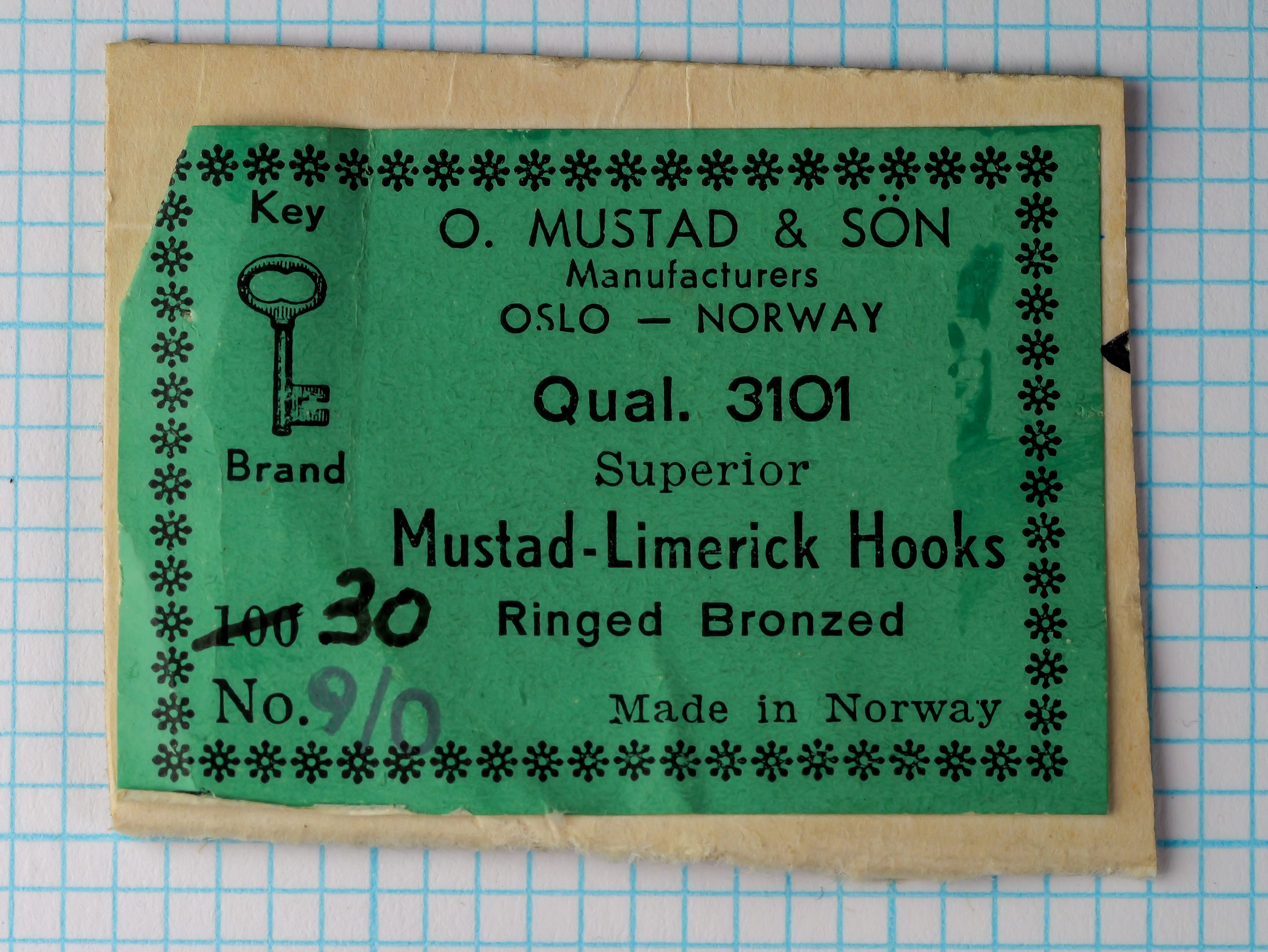
The specimen shows the classic green ‘Key Brand’ label that became synonymous with Mustad’s mid-century export market dominance P. The Superior point designation indicates Mustad’s precision manufacturing standards, while the ringed eye construction provides strength for heavy leader material V.

While common enough to be considered a standard reference, examples with intact original packaging represent an important chapter in the industrialization of fishing tackle and Norway’s emergence as a global fishing industry hub I.

Images

Photography

Section 2

Identification

Manufacturermustad
Model / Code3101
Full Name3101 Limerick Hook
Size Documented2
Estimated Erac. 1925-1965
Country of OriginNorway
Section 3

Technical Specifications

Eye TypeStraight / Ringed Eye
Wire GaugeStandard
Wire Profile Round (unforged)
Est. Wire Diameter~0.032-0.040" (~0.81-1.02 mm) E
Shank Length Standard
Bend Family Limerick
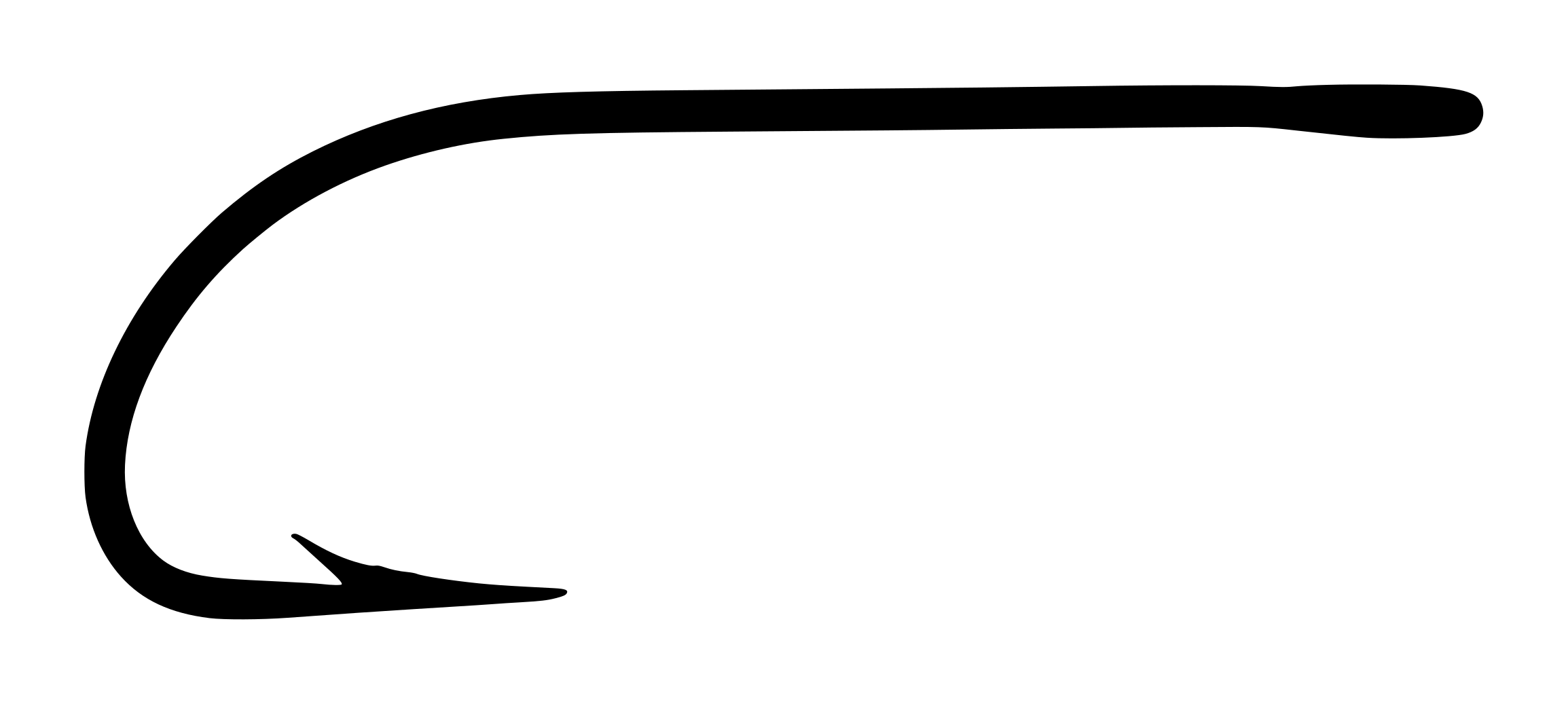
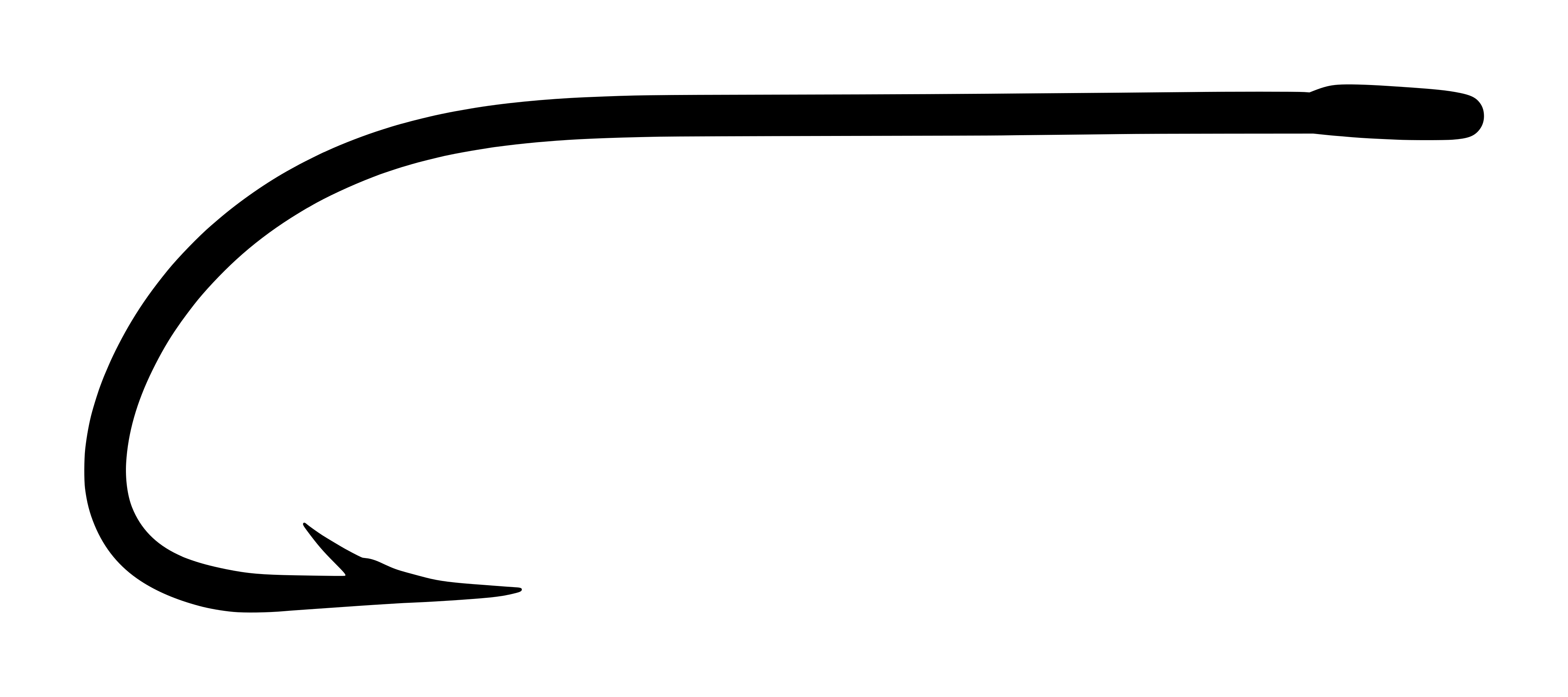
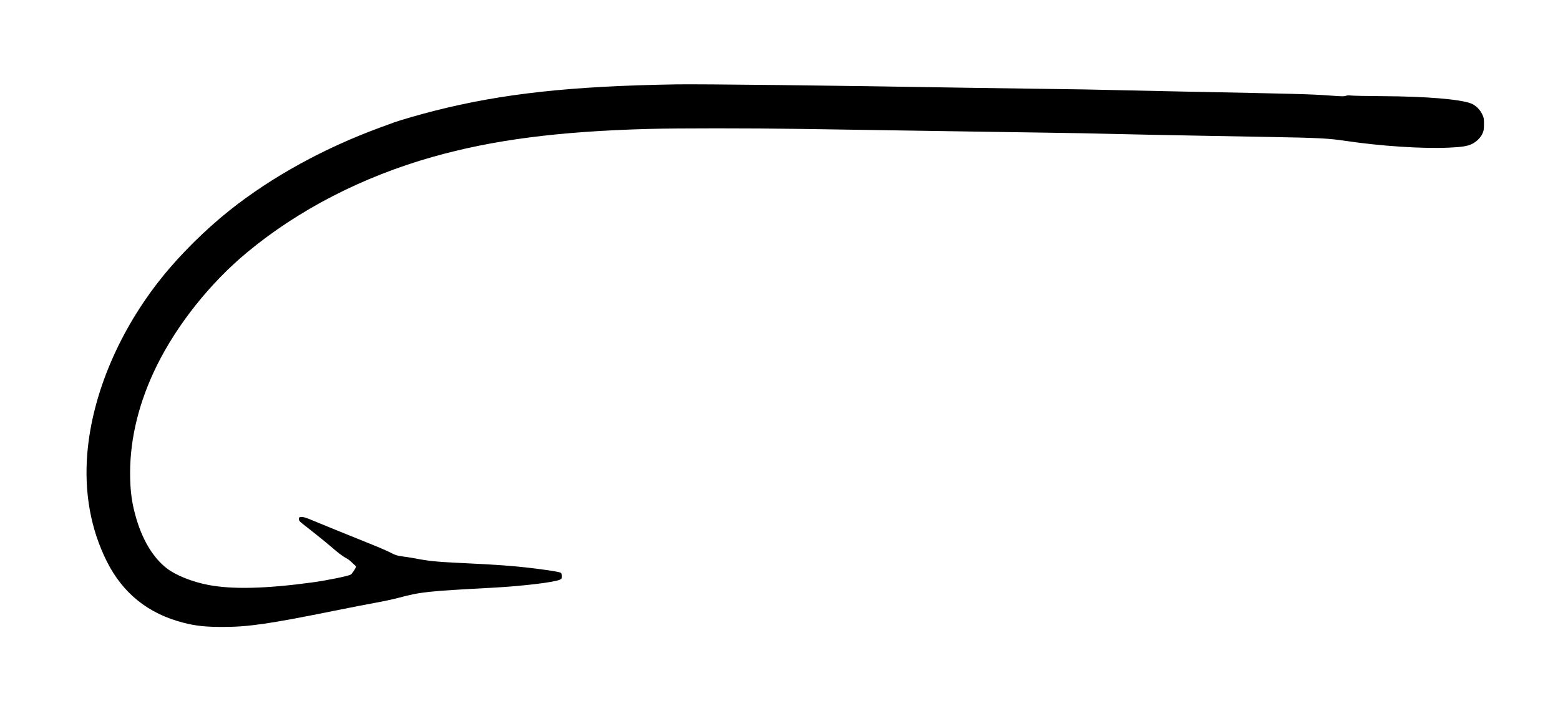
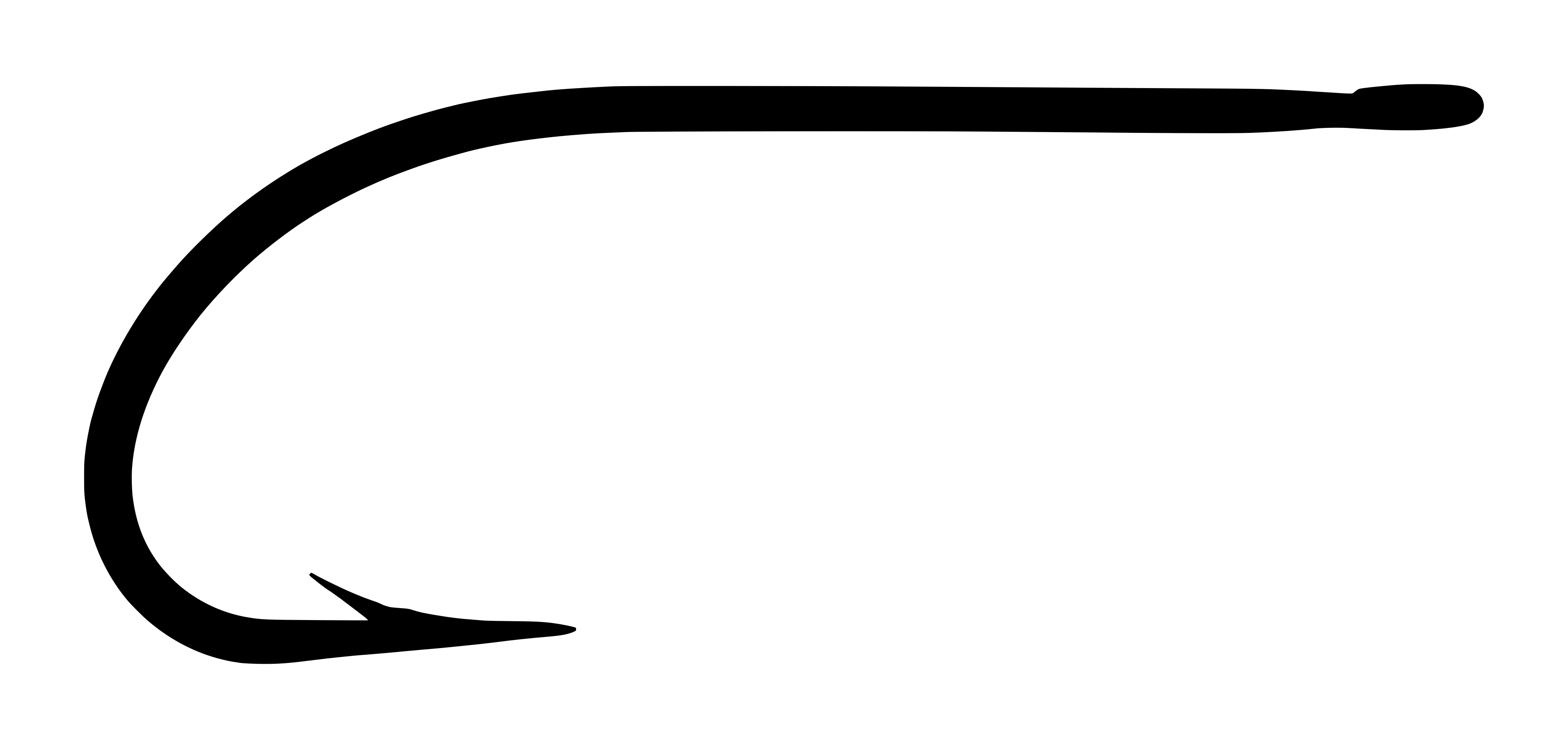
Bend NotesClassic Limerick geometry with sharp angular transition at bend apex and extended point section P. Bend depth proportional to gap width P.
Point StyleSuperior (near-straight inner taper)
Gap WidthStandard
Finish Bronzed — Confirmed (stated on packaging)
Finish NotesWarm bronze tone typical of traditional lacquer-based bronzing process P. Shows even coverage with slight patina development consistent with age P.
ConditionHook shows minimal corrosion with bright bronze finish intact. Card packaging exhibits age toning but remains structurally sound.

The Limerick bend’s angular geometry at the bottom creates a more secure bait hold than round bends like the Sproat, as the sharp corner prevents live baits from sliding off during casting or retrieve I. The Superior point features a nearly straight inner taper that penetrates cleanly while maintaining strength – a compromise between the knife-edge sharpness of hollow points and the durability needs of heavy bait fishing I.

The ringed eye construction, where the wire is looped back to form a complete circle, provides maximum strength for heavy leaders and wire traces common in saltwater applications. The standard wire gauge balances penetration ability with the strength needed for larger fish species I.

Section 4

Technical Measurements

Method: Grid-derived from photograph (1/10" grid).

DimensionValue
Overall Length~1.80-1.90" (~45.7-48.3 mm) E
Shank Length~1.20-1.30" (~30.5-33.0 mm) E
Gap Width~0.60-0.70" (~15.2-17.8 mm) E
Bend Depth~0.80-0.90" (~20.3-22.9 mm) E
Shank-to-Gap Ratio~1.8-2.0 : 1

Shank: ~12.5 squares = 1.25". Gap: ~6.5 squares = 0.65". Bend depth: ~8.5 squares = 0.85". Overall: ~18.5 squares = 1.85". Grid alignment moderate, ranges reflect uncertainty.

Section 5

Historical Context

mustad

O. Mustad & Son was founded in 1832 by Ole Mustad in Gjøvik, Norway, initially producing wire nails and horseshoe nails before becoming the world’s dominant fishhook manufacturer. The company’s transition to hook production began in the 1870s, leveraging Norway’s abundant iron ore and hydroelectric power to achieve unprecedented scale and consistency in hook manufacturing.

By the early 20th century, Mustad had established global distribution networks and was producing over 60,000 different hook patterns. The Key Brand label became their premium export marking, symbolizing quality and reliability across international markets. The company’s industrial approach revolutionized hook production, replacing traditional hand-forging with mechanized processes that maintained precision while achieving massive volume.

Series History

The 3101 was part of Mustad’s core Limerick series, introduced in the early 20th century to serve the global market for traditional English-style hooks. The Limerick bend had been refined in Ireland and England during the 19th century, and Mustad’s mechanized production made these previously expensive artisan hooks available to everyday anglers worldwide.

The series included a full size range from tiny trout patterns to massive 9/0 specimens for big game fishing. The Superior point designation was added to distinguish these precision-manufactured hooks from cruder competitors. Production continued through the 1960s when modern chemically-sharpened designs began to replace traditional forged patterns.

Era and Packaging Dating

Label shows Oslo Norway address indicating post-1924 when Christiania was renamed. Green paper label with Key Brand typography and decorative floral border is characteristic of Mustad mid-century export packaging before plastic slide boxes appeared in 1970s. No barcode indicates pre-1974.

Industrial Scale Success

At its peak in the mid-20th century, Mustad's Gjøvik factory produced over 40 million hooks per day, making it one of the most productive manufacturing facilities in Norway. The 3101 alone accounted for millions of hooks annually, shipped to every continent and used by everyone from weekend anglers to commercial fishing fleets.

Section 6

Design Lineage and Influence

Related Models — mustad

ModelDescriptionRelationship
31010 Modern continuation of Limerick series Later / successor
3366 Contemporary Sproat bend alternative Companion model
Section 7

Usage, Fly Patterns, and Equivalents

Wet Fly Bait Fishing Saltwater

Primary Application

Classic general-purpose hook designed for traditional wet flies and bait fishing P. The Limerick bend’s angular geometry provides superior bait retention compared to round bends, making it ideal for worm fishing and minnows I. Popular for Atlantic salmon wet flies and sea trout patterns in European traditions I.

Secondary Applications

Large streamers, bucktails, traditional salmon flies, heavy bait fishing

Classic Fly Patterns

Traditional wet flies, salmon patterns, bucktails, classic streamers

Modern Equivalents

HookMatch QualityNotes
Mustad 31010 Excellent Direct modern continuation of the Limerick series with updated metallurgy
Mustad 3366 Good Sproat bend alternative with similar eye and wire specifications
Daiichi 2141 Very Good Premium Limerick pattern for fly tying applications
Section 8

Collectability and Value

4/10
Collectability: 4 of 10. Common vintage workhorse with modest collector interest due to classic packaging and Limerick bend tradition.
Rarity Common
Market Value (USD) $8 – $25
Packaging Condition Very Good — light wear, fully legible
Packaging Format MUS-GL-02

Positive factors include the classic green Key Brand label design which represents Mustad’s golden age of export packaging, and the traditional Limerick bend which appeals to collectors interested in classic British angling traditions. The Superior point marking on the label adds technical interest.

Limiting factors include high production numbers making individual specimens common, and the utilitarian nature of the design which lacks the specialization that drives premium collecting interest.

Packaging

Cardboard slide-out box with green paper label. Label features decorative floral/star border pattern, Key Brand logo with skeleton key image, Oslo Norway address. Typography is bold black on green ground. Box shows age toning but label remains bright and legible.

Market Value Notes

Complete boxes with intact labels command premium. Individual hooks worth minimal amounts. Size 9/0 specimens mentioned in existing content would be significantly more valuable.

Where to Find

eBay, vintage tackle shows, estate sales, old tackle boxes

Collector's Identification Tips

Authenticate by the specific green Key Brand label typography and floral border pattern. Post-1924 Oslo address distinguishes from earlier Christiania markings. Superior point designation should be clearly printed on label.

Preservation

Storage and Preservation

Store in cool, dry environment away from humidity to prevent bronze finish degradation. The traditional lacquer bronzing is more susceptible to atmospheric corrosion than modern finishes, though light patina is often considered desirable by collectors. Keep hooks on original card rather than loose to maintain provenance value.

Protect the green paper label from light exposure to prevent fading. The card backing provides structural support – avoid separating hooks from card unless necessary. Store flat in archival boxes to prevent crushing of the slide-out box format.

Marking Analysis

Specimen Documentation

The handwritten annotations visible in the images appear to be collector’s notes comparing the 3101 to the 3391 model P. Red ink notations indicate this specimen was part of a comparative study or collection documentation project P. The note ‘good for Tom’s series’ suggests this was being evaluated for a specific collecting focus or publication I.

Primary Source

Label Text Analysis

Source: Original Mustad Key Brand label, c. 1925-1965

The label text ‘Qual. 3101 Superior Mustad-Limerick Hooks 100 No. 2 Ringed Bronzed Made in Norway’ provides complete technical specification in Mustad’s standard format V. The ‘Qual.’ abbreviation for ‘Quality’ was Mustad’s premium designation, distinguishing these from basic commercial grades I. The specific mention of ‘Superior’ point style indicates precision manufacturing standards beyond basic patterns V.

Confidence Notation Key

P Photographically verified — Directly observable in the photograph(s) on this page.
V Verified by documentation — Confirmed by manufacturer catalog, spec sheet, or published reference.
I Inferred — A logical deduction from observable or documented evidence, not directly stated.
E Estimated — An approximation based on visual comparison, proportional analysis, or limited data.
S Speculative — A reasoned hypothesis that cannot be confirmed from available evidence.

Claims with no notation are confirmed by multiple independent sources. All photographs on garrenwood.com are taken on a measurement grid where each square equals 1/10 inch (0.1″ / 2.54 mm).