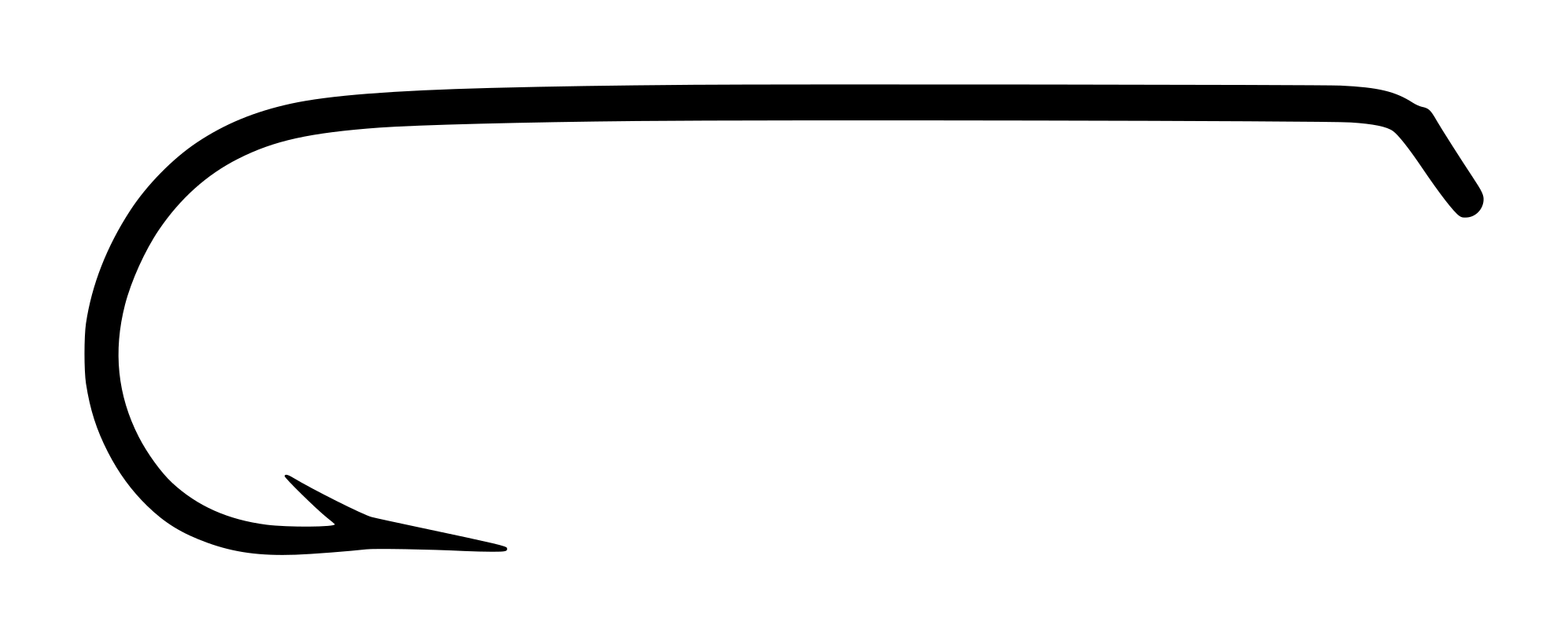
The Mustad 3404 E is a heavy-duty saltwater O’Shaughnessy hook manufactured by O. Mustad & Søn in Oslo, Norway, during the mid-20th century. The ‘E’ designation indicates a shank extended 1/2 inch longer than the standard 3404 pattern, making it ideal for streamer fly tying and bait fishing applications requiring extra shank length.
This specimen features tinned finish, forged extra-heavy wire, and a tapered eye—engineering choices that reflect Mustad’s design for maximum durability in corrosive marine environments. The packaging evidence (orange label, ‘Oslo – Norway’ designation, Key Brand trademark) places production in the 1950s to early 1960s, before Mustad transitioned to plastic slide-box packaging.
The hook remains highly valued by traditional fly tyers and vintage tackle collectors for its robust construction and the belief that Nordic steel from this era possesses superior tempering characteristics compared to modern production.
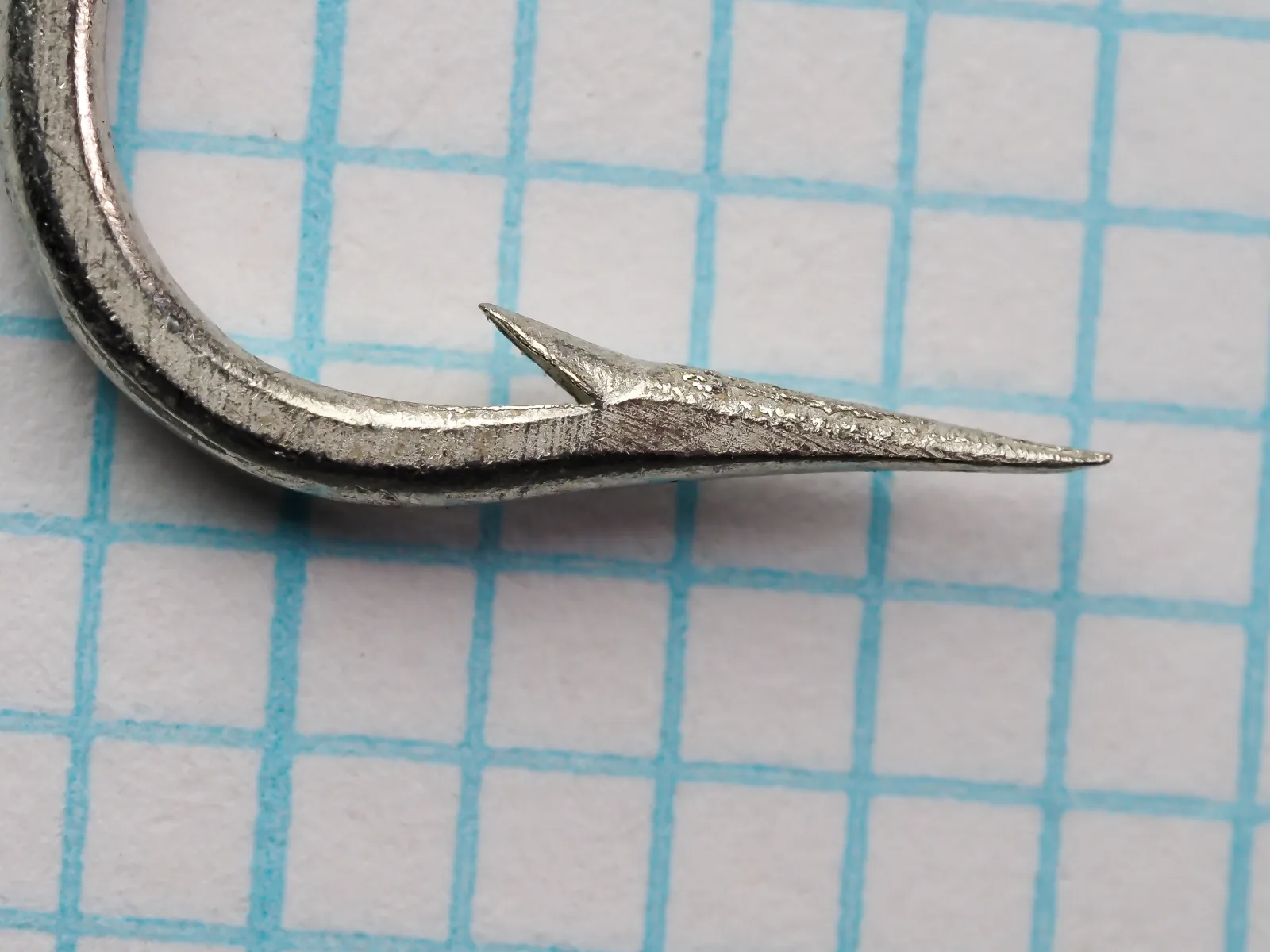
Close-up profile view of the Mustad 3404 E point showing the Superior point geometry with near-straight inner taper and properly angled barb, photographed on measurement grid for scale.
Photographic record
4 cataloged imagesSelect any record to load it above.
4 images shown
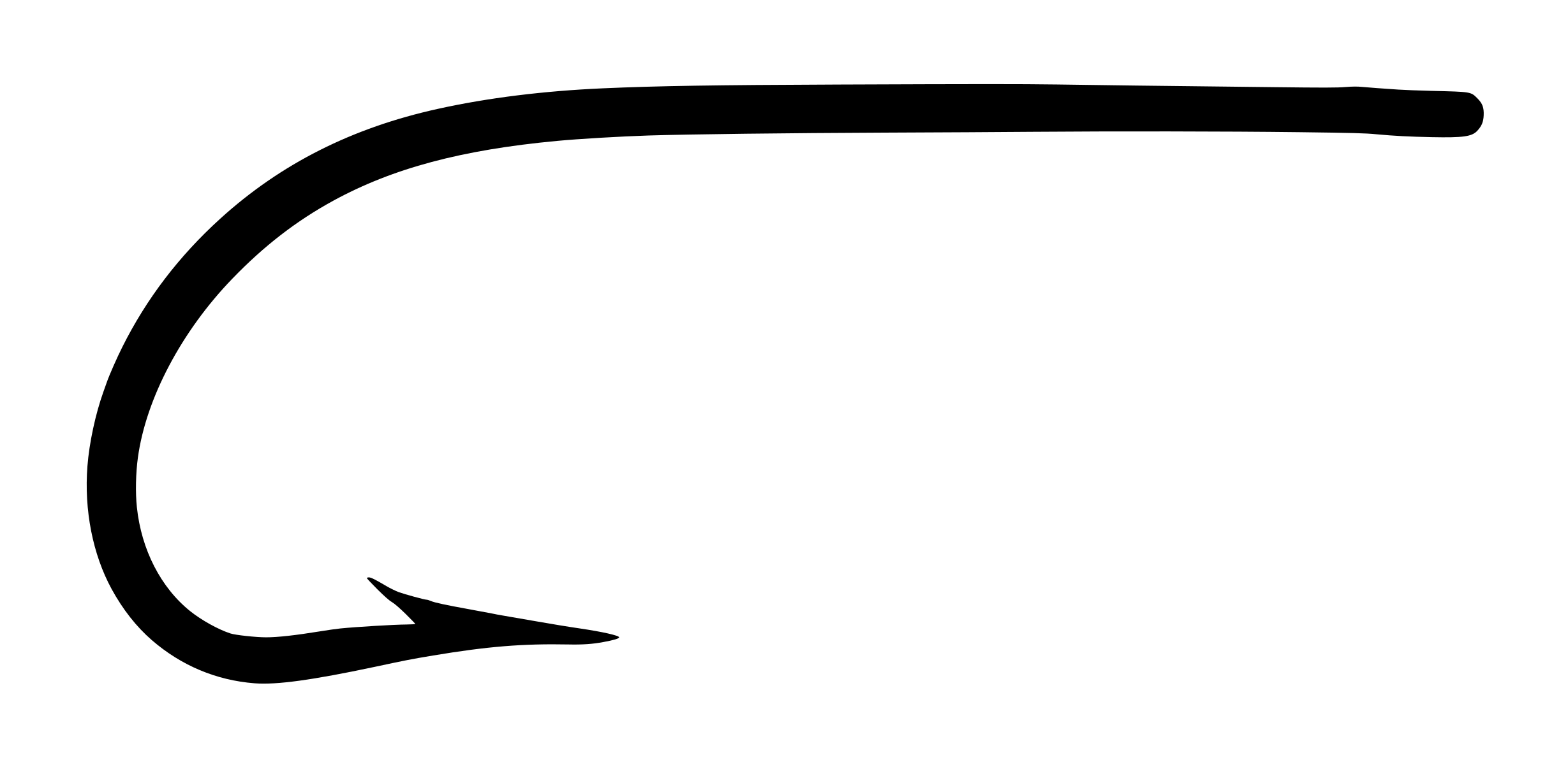
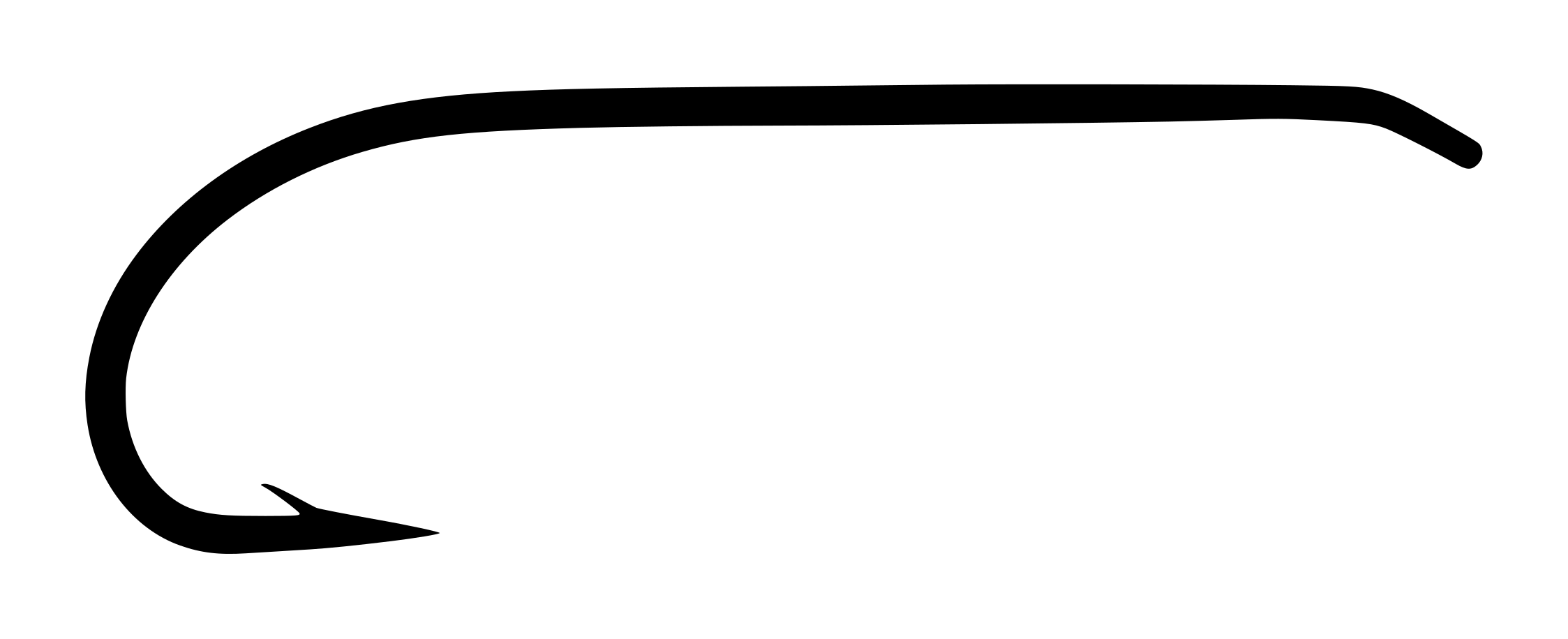
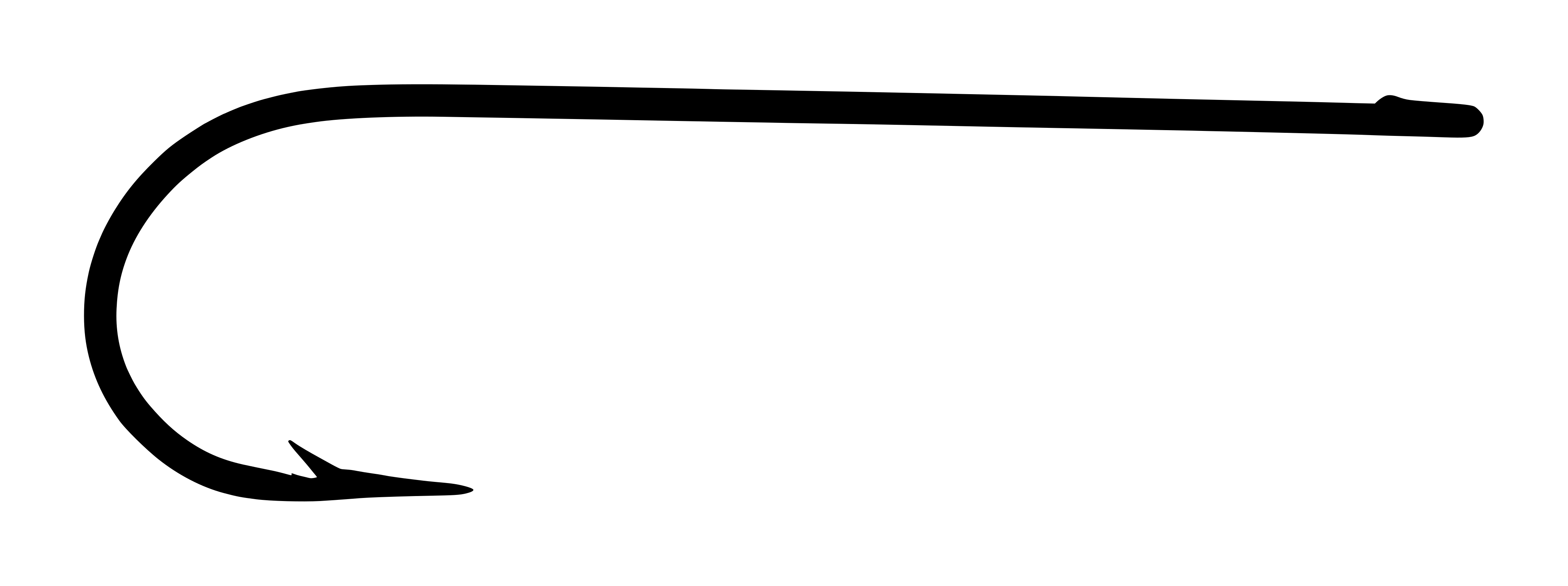
Mustad 3404 E Size 3/0 Point DetailClose-up profile view of the Mustad 3404 E point showing the Superior point geometry with near-straight inner taper and properly angled barb, photographed on measurement grid for scale.Open originalMustad 3404 E Size 3/0 Full ProfileFull-length profile view of the Mustad 3404 E showing the distinctive O'Shaughnessy bend curve, extended shank length, and tapered eye construction on measurement grid.Open originalMustad 3404 E Size 3/0 Hook PairTwo specimens of the Mustad 3404 E size 3/0 displayed side-by-side to show manufacturing consistency and hook geometry details on measurement grid.Open originalMustad 3404 E Original Box and Orange LabelOriginal Mustad packaging for the 3404 E size 3/0 featuring the iconic orange label with Key Brand logo, decorative asterisk border, and standardized eight-line label format typical of mid-century Mustad production.Open original
Technical profile
Eye
Ball Eye, Turned DownTapered eye construction—wire diameter visibly reduces in the terminal section forming the eye loop, creating a neater knot profile and reduced weight at the hook front P. The taper is gradual and smooth, typical of premium vintage Mustad dry fly and streamer hooks.
Wire
Standard, Forged
Shank
3X Long — Plain
Bend
O'Shaughnessy, Standard gapO'Shaughnessy bend with distinctive parabolic profile and slightly angular bottom curve P. The bend geometry shows the characteristic weight distribution designed to lock the jaw and resist straightening under heavy load. No lateral offset visible P.
Point
Superior (near-straight inner taper)Barb is moderately sized, cut close and angled back at approximately 45 degrees from the shank axis E. The barb placement is clean and consistent with O'Shaughnessy pattern specifications.
Finish
Tinned — Confirmed (stated on packaging)Tinned finish with warm silver-gray tone, characteristic of electroplated tin coating over high-carbon steel P. The finish shows uniform coverage with light surface patina consistent with mid-20th-century production and normal age-related oxidation. No flaking or major corrosion visible on specimen P.
Hooks show bright tinned finish with no visible corrosion or oxidation P. The specimen appears unused or very lightly used. The cardboard box and orange label show moderate age-related toning and minor edge wear consistent with 60+ years of storage; no staining, water damage, or major deterioration.
The Superior point geometry on the 3404 E creates a near-straight inner taper that concentrates penetration force at the tip while maintaining structural strength—a balance engineered for the heavy striking speeds characteristic of saltwater species and the need for deep, secure penetration through dense bone and cartilage.
The forged wire construction (lateral flattening under drop-press) dramatically increases structural rigidity and tensile strength without adding weight or thickness, allowing the hook to withstand extreme bending stress without opening under the sustained runs and head-shakes of large gamefish. The tapered eye reduces frontal weight, critical for proper fly flotation and presentation in larger streamer patterns.
The tinned finish—electroplated or dipped in molten tin—was the industry standard for saltwater hooks before stainless steel became cost-effective. Tin provides exceptional corrosion resistance in marine environments, capable of protecting high-carbon steel through extended saltwater exposure. The 1/2-inch extended shank was a direct response to the vulnerability of standard-length shanks; with heavyweight bait or aggressive fish with sharp dentition, normal shank length allowed the shank itself to act as a cutting surface, sawing through the knot.
This is the first documented example of Mustad 3404 E in the garrenwood.com catalog. Notable as one of the most ubiquitous vintage saltwater hooks yet absent from prior reference documentation.
Own this hook? Help us measure it.
We don't have measured sizes for this hook yet. Own one? Submit calipered measurements and we'll review and add them. Thank you!
Historical context
mustad
O. Mustad & Søn was founded in 1832 in Gjøvik, Norway, initially as a general metalwork factory (Brusveen Spiger- og Staltradfabrikk). The company was rebranded under Ole Hovelsen Mustad and his son Hans Mustad in the 19th century. The defining technological breakthrough came in 1877 when Mathias Topp invented the first fully automated hook-making machine—a development Mustad protected through secrecy rather than patent, establishing an industrial monopoly that would persist for over a century.
By the 1950s, Mustad controlled approximately 50 percent of global hook production, operating manufacturing facilities and sales offices across multiple continents. The company’s strategy of reverse-engineering regional hook patterns from blacksmiths and local anglers—such as the Cincinnati Bass bend from the American Midwest and the Limerick from Ireland—and reproducing them with Norwegian industrial efficiency allowed Mustad to dominate localized markets globally.
The distinctive orange paper label with Key Brand trademark and decorative asterisk border became Mustad’s signature packaging during the mid-20th century. The ‘Oslo – Norway’ designation on labels dates production to 1925 or later (the city was officially renamed from Christiania in January 1925). Mustad ceased hook production in Norway in the early 2000s, making vintage ‘Made in Norway’ hooks highly sought by collectors who believe the Nordic steel tempering process produced superior wire.
Series History
The Mustad 3404 is part of Mustad’s O’Shaughnessy family, one of the most enduring saltwater hook designs in angling history. The O’Shaughnessy bend is characterized by a parabolic curve that distributes loading stress evenly across the bend, creating exceptional holding power compared to round bends. Unlike a Sproat (which has a smoother, more continuous curve), the O’Shaughnessy possesses a slightly sharper angle at the bottom of the bend, directing the pull of the line directly into the point with a mechanical advantage that makes straightening nearly impossible.
The base 3404 pattern dates to the early 20th century and became the standard pattern for commercial saltwater fishing and heavy bait applications. The ‘E’ designation specifically denotes the variant with shank extended 1/2 inch longer than regular—a modification introduced to address the needs of fly tyers creating large streamers and bait fishermen targeting sharp-toothed species (pike, barracuda) where extended shank length prevents fish from biting through the leader.
This hook remained in continuous production under the Qual. 3404 E designation through the mid-1980s, though manufacturing gradually shifted away from Norway to other Mustad facilities. The transition to plastic slide-box packaging in the 1970s marked the end of the classic orange paper label era. Modern equivalents include the Mustad 3407 (standard tinned O’Shaughnessy) and Mustad 34007 (stainless steel version), though finding the specific 1/2-inch extended shank in contemporary production is difficult.
Era and Packaging Dating
The orange paper label with Key Brand trademark and decorative asterisk border is characteristic of Mustad's mid-20th-century packaging, typically 1945-1970. The 'Oslo – Norway' designation indicates production post-January 1, 1925 (when Christiania was officially renamed). Absence of any barcode or UPC confirms pre-1974 manufacture (barcodes were not widely applied to fishhook packaging until the mid-1970s). The offset-print methodology on the orange label (not letterpress or digital) is consistent with 1950s-1960s production. The style of typeface, sizing, and layout match documented Mustad catalogs from 1950-1965. The hand-stamped size notation '3/0' in red on the label is typical of mid-century Mustad practices; later packaging relied on printed size information. The phrase 'Made in Norway' at bottom right is consistent with 1950-1975 packaging standards. Earliest Mustad boxes transitioned to plastic slide-box format circa 1972-1975, making this paper-label box a firm pre-1970 artifact.
The 1/2-Inch Solution: How Bait Teeth Shaped Hook Design
The extended 1/2-inch shank on the 3404 E was born from a practical problem that plagued bait fishermen in the 1930s-1950s: when using large mullet or mackerel as bait on standard-length hooks, aggressive fish with teeth (particularly striped bass and pike) would strike the bait and their violent thrashing would cause the shank itself to saw through the silkworm gut or early nylon leader. By extending the shank length, Mustad moved the vulnerable knot zone further away from the strike zone, effectively protecting the leader. This simple engineering innovation became so popular that extended-shank variants became standard offerings across the industry.
Design lineage and influence
The O’Shaughnessy pattern itself originated in the 19th century as a regional Irish/Scottish design and was reverse-engineered and standardized by Mustad in the late 1800s as part of their industrial cloning strategy. The base 3404 design predates the 1950s example documented here and remained largely unchanged through mid-20th-century production.
The ‘E’ extended-shank variant emerged in response to practical needs identified by commercial and sport anglers—particularly the realization that standard-length shanks on heavy-bait rigs created vulnerable points where the shank itself could be cut by aggressive fish. This design innovation influenced competitor manufacturers (Partridge of Redditch, H. Milward & Sons) to introduce their own extended-shank variants of traditional patterns.
The tapered-eye design on premium Mustad hooks reflects engineering influence from dry fly traditions (notably the Qual. 94840 Viking hook) adapted to saltwater streamers. The combination of tapered eye and forged wire became a signature of Mustad’s premium mid-century saltwater hooks and influenced modern manufacturers such as Tiemco and Daiichi in their contemporary saltwater and steelhead designs.
Best matchRelated by Attribute
Computed automatically from catalog data — updated as new hooks are added.
Matches: Bend, Wire, Gap, Eye, Point +3 moreDiffers: Shank: 3X Long vs 1X Long; Eye Orient.: Turned Down vs Straight / Inline; Forging: Forged vs Round +1 more
Matches: Bend, Wire, Gap, Eye, Point +4 moreDiffers: Shank: 3X Long vs Standard; Eye Orient.: Turned Down vs Straight / Inline; Application: Streamer, Bait, Saltwater vs Streamer, Saltwater
Matches: Bend, Shank, Wire, Gap, Point +2 moreDiffers: Eye: Ball Eye vs Cross Eye; Eye Orient.: Turned Down vs Jig (60°/90°); Finish: Tinned vs Gold-Plated +2 more
Matches: Bend, Wire, Gap, Point, Finish +3 moreDiffers: Shank: 3X Long vs Standard; Eye: Ball Eye vs Cross Eye; Eye Orient.: Turned Down vs Straight / Inline +1 more
Matches: Bend, Wire, Gap, Eye, Point +3 moreDiffers: Shank: 3X Long vs Standard; Eye Orient.: Turned Down vs Straight / Inline; Finish: Tinned vs Other +1 more
The Mustad 3404 E is engineered for heavy-duty saltwater and offshore applications. In fly tying, it serves as the foundation for large saltwater streamers (Lefty’s Deceivers, bucktails, tarpon flies, and permit patterns) where the extended 1/2-inch shank accommodates longer wing profiles and allows for larger fly silhouettes. In bait fishing, the extra shank length protects vulnerable tippet and leader from being severed by sharp-toothed species such as striped bass, bluefish, Spanish mackerel, and pike.
The forged extra-heavy wire and tapered eye were designed to withstand the crushing jaw pressure of saltwater gamefish and the abrasive conditions of offshore trolling. The O’Shaughnessy bend’s mechanical geometry ensures that once the Superior point penetrates tissue, the hook is nearly impossible to straighten or pull free, making it the preferred choice for commercial saltwater operations and serious sport anglers pursuing large, powerful species.
Secondary Applications
Large freshwater pike and musky streamer tying; heavy bait fishing for saltwater bottom feeders (grouper, snapper, cod); traditional Atlantic salmon streamer construction.
Tinned O'Shaughnessy in standard shank length; lacks the 1/2-inch extension of the 3404 E but otherwise identical pattern and finish
Mustad 34007
Good
Stainless steel O'Shaughnessy, modern production; superior corrosion resistance but different wire metallurgy and finish characteristics than vintage tinned version
Tiemco 811S
Moderate
Contemporary saltwater streamer hook with similar heavy-wire forged construction and tapered eye; different bend geometry (slightly rounder than O'Shaughnessy)
Collector notes
Reference value
$15 – $35 USD estimate
Packaging condition
Good — moderate wear, legibleRecorded specimen
Packaging format
GW-M-02-Orange-LabelCatalog code
Packaging
Orange-red paper label (approximately 4" × 3") with black offset-printed text and decorative asterisk border. Key Brand logo (skeleton key graphic) positioned upper left. Printed lines: 'O. MUSTAD & SON' / 'Manufacturers' / 'OSLO – NORWAY' / 'Qual. 3404 E' / 'Superior' / 'Mustad-O'Shaughnessy Hooks' / 'Forged Tapered ring' / 'Tinned Shank 1/2 inch longer than regular' / 'Made in Norway.' Box quantity '100 No.' with hand-stamped size '3/0' in red ink at lower left. Mounted on cream-colored cardboard box (approximately 4.5" × 3.5" × 0.5" depth). Cardboard shows light toning and minor edge wear consistent with age; no significant damage or staining. The orange label color is slightly faded to rust-orange tone, typical of mid-century paper stock exposure to light. Paper stock appears to be standard offset-print paper stock of the era, not modern glossy or coated material.
Collector's Identification Tips
Verify the ‘Qual. 3404 E’ designation hand-stamped on the orange label; counterfeit vintage Mustad boxes are uncommon but the ‘E’ marking is critical for distinguishing this extended-shank variant from the standard 3404. Check for the Key Brand logo (skeleton key graphic) and the decorative asterisk border—both hallmarks of genuine mid-century Mustad packaging. Confirm ‘Oslo – Norway’ location (not ‘Christiania,’ which would predate 1925). Examine the tapered eye construction under magnification—authentic tapered eyes show gradual wire reduction, not abrupt thinning. Count the hooks in the box; original boxes should contain 100 hooks.
Preservation
Storage and Preservation
Store the original box in a cool, dry environment away from direct sunlight and humidity. The tinned finish, while highly corrosion-resistant, can develop a thin patina layer in damp conditions—this is generally considered desirable by collectors as it indicates authenticity and age.
Keep hooks on the original cardboard card inside the box rather than removing them; loose hooks are prone to tarnishing and may be damaged or lost. Avoid stacking heavy objects on top of the box, as this can crush the cardboard and damage the paper label.
The orange label is susceptible to fading and moisture damage. If the box has been exposed to humidity, allow it to acclimate to room temperature before opening, as condensation can occur. Do not attempt to clean the label with water or solvents—any patina or toning is part of the historical record.
If hooks must be removed for use, store them in a dry plastic container with silica gel desiccant. Tinned hooks are highly resistant to rust but will eventually corrode if exposed to prolonged moisture. After use in saltwater, rinse gently in fresh water and dry completely before storage.
The value of this hook is significantly enhanced if the original box and label are preserved intact. Separating hooks from the original packaging reduces collector value by 40-60 percent.
Marking Analysis
Handwritten Markings and Stamps
The orange label exhibits a single hand-stamped size notation ‘3/0’ in red ink at the bottom left corner, positioned above the printed ‘No. 100’ text. This hand-stamping is characteristic of mid-century Mustad manufacturing practice, where size information was often applied after the label was printed, allowing for flexibility in label reuse across different size variants.
The stamps appear to be applied with a rubber stamp or hand punch—the impression is clean and uniform with no smudging or bleeding, consistent with professional factory marking rather than casual notation. The red ink (likely iron oxide-based printer’s ink) has faded slightly but remains clearly readable.
No other handwritten notations, initials, prices, or personal markings are visible on the box or label, suggesting this was a commercial wholesale box rather than a retail or personal specimen.
Primary Source
Label Decryption and Packaging Analysis
Source: Mustad Label: Comprehensive Typology and Decryption (O. Mustad & Søn reference document, accessed via garrenwood.com research archive)
The label adheres strictly to Mustad’s standardized eight-line typographical format documented in the comprehensive Mustad Label reference guide. Each line performs a specific function:
Line 1: ‘O. MUSTAD & SON’ — Full corporate identity, establishing manufacturer authority and brand integrity.
Line 2: ‘Manufacturers’ — Explicitly differentiates Mustad as the primary manufacturer (not an import agent or jobber), crucial in an era when intermediaries frequently repackaged hooks under secondary brand names.
Line 3: ‘OSLO – NORWAY’ — Geographic origin. The use of ‘Oslo’ (not ‘Christiania’) indicates post-January 1, 1925 manufacture, providing a definitive chronological bracket.
Line 4: ‘Qual. 3404 E’ — Model code designating the specific product tier and variant. The ‘E’ notation is critical; it denotes the exclusive shank extension feature (1/2 inch longer than regular), not present on the standard Qual. 3404.
Line 5: ‘Superior’ — Per Mustad documentation, ‘Superior’ on the label identifies the point style/quality. In the context of vintage Mustad manufacturing, this denotes a near-straight inner taper that concentrates penetration force while maintaining structural strength.
Line 6: ‘Mustad-O’Shaughnessy Hooks’ — The pattern name, identifying the overarching bend geometry and structural profile of the hook. The O’Shaughnessy is characterized by a parabolic bend with slight angular geometry at the bottom.
Lines 7-8: ‘Forged Tapered ring / Tinned Shank 1/2 inch longer than regular’ — Anatomical modifications and metallurgical finishes. ‘Forged’ indicates mechanical lateral flattening to increase tensile strength. ‘Tapered ring’ (eye type) denotes the wire diameter gradual reduction at the terminal eye loop. ‘Tinned’ specifies the electroplated tin coating for corrosion resistance. The final phrase explicitly confirms the extended shank feature.
Manufacturing location and ‘Made in Norway’ notation: This phrase at the bottom confirms Norwegian production at the Gjøvik facility, a point of pride for collectors who attribute superior metallurgical properties to Mustad’s Nordic steel tempering process.
Additional
The Nordic Steel Question: Vintage Mustad Hook Metallurgy
Among vintage tackle collectors, a persistent and passionate belief exists that hooks manufactured in Norway by Mustad during the mid-20th century possessed superior metallurgical properties compared to modern production—specifically, that the Nordic high-carbon steel wire and Mustad’s tempering process produced hooks capable of holding sharper points and resisting bending under stress more effectively than contemporary alternatives.
While precise scientific comparison data from the era is limited, the belief is not without foundation. During the 1950s-1970s, Norwegian industrial steel production benefited from (1) access to high-purity iron ore from Scandinavian deposits, (2) established tempering traditions dating to medieval Scandinavian ironworking, and (3) Mustad’s proprietary heat-treatment protocols guarded as trade secrets. The company’s refusal to patent the automated hook machine in 1877 extended to their metallurgical processes, which were protected through restricted factory access and non-disclosure agreements with employees.
Mustad ceased hook production in Norway in the early 2000s, relocating manufacturing to other facilities (Japan, China) where labor costs were significantly lower. This transition marked the end of an era of centralized quality control and Nordic steel sourcing. Consequently, vintage ‘Made in Norway’ Mustad hooks—particularly those from the 1950s-1975 period—have become increasingly sought by fly tyers and saltwater anglers who value them specifically for their metallurgical properties and willingness to pay premiums (20-50% above comparable modern hooks) based on this distinction.
Whether this metallurgical superiority is measurable, perceptual, or historically contingent remains an open debate within the collector community, but the market value differential reflects a widely held conviction that geographic origin and manufacturing era fundamentally affected hook performance.
Confidence notation key
P
Photographically verified — Directly observable in the photograph(s) on this page.
V
Verified by documentation — Confirmed by manufacturer catalog, spec sheet, or published reference.
I
Inferred — A logical deduction from observable or documented evidence, not directly stated.
E
Estimated — An approximation based on visual comparison, proportional analysis, or limited data.
S
Speculative — A reasoned hypothesis that cannot be confirmed from available evidence.
Claims with no notation are confirmed by multiple independent sources. All photographs on garrenwood.com are taken on a measurement grid where each square equals 1/10 inch (0.1″ / 2.54 mm).