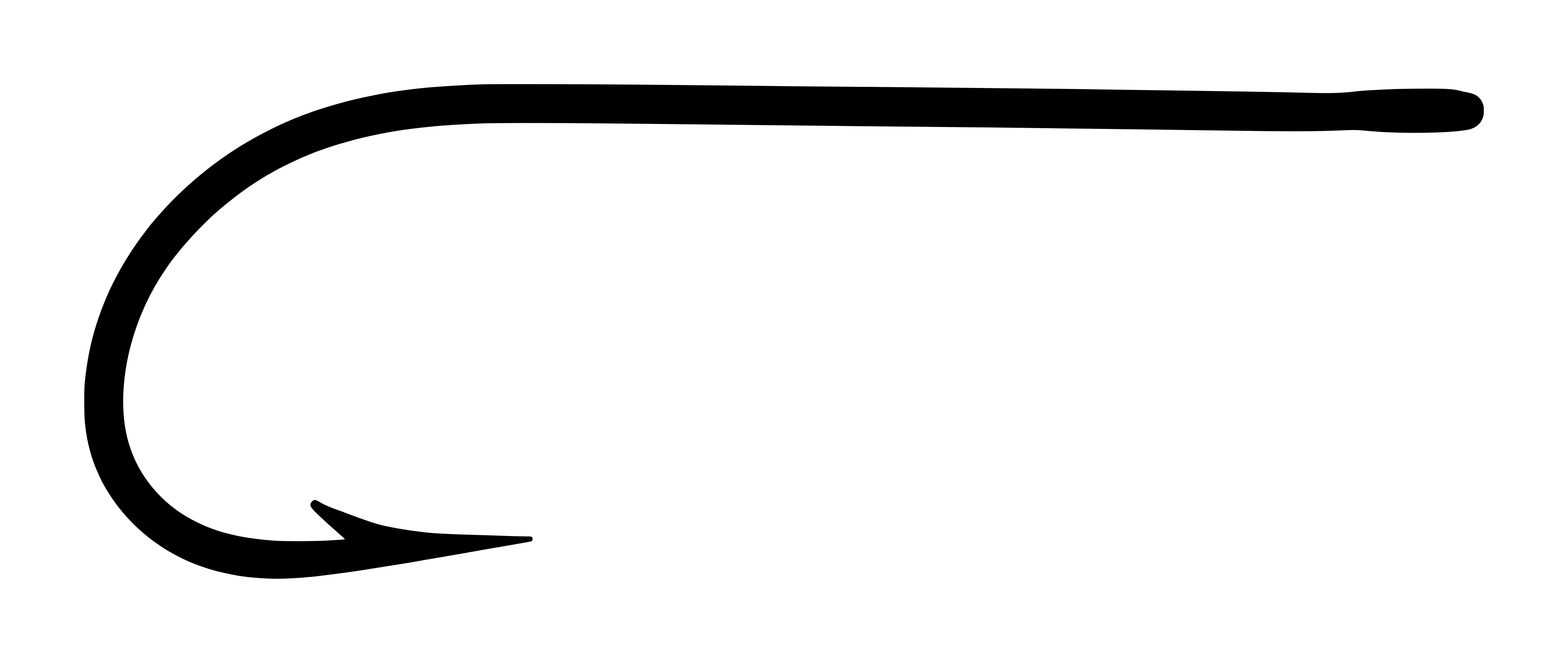
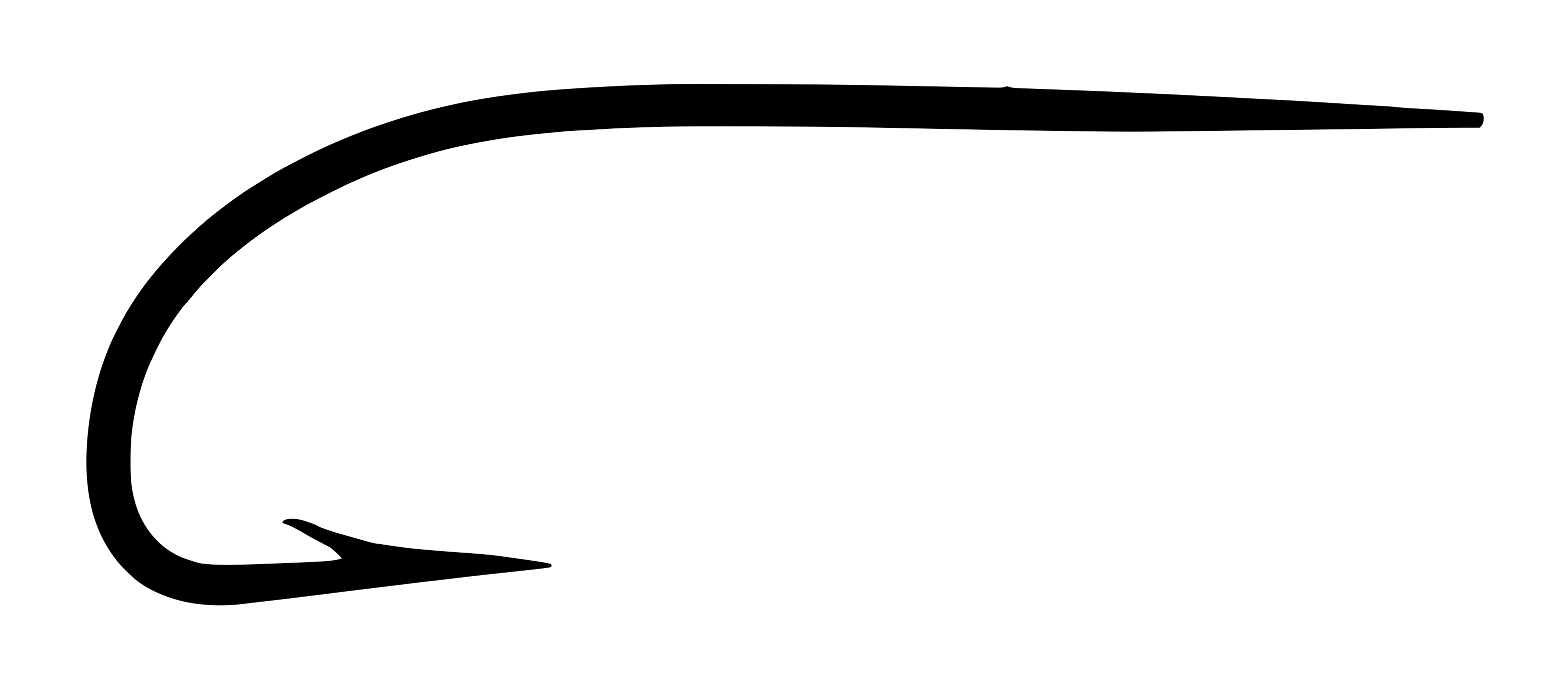
The Mustad 3366 B is a vintage ringed salmon and sea-trout hook manufactured by O. Mustad & Sön in Gjøvik, Norway, during the 1950s-early 1960s. The model features a classic Sproat bend—characterized by a smooth, rounded bottom and moderate depth—in bronzed finish. The extended shank (advertised as ‘1/4 inch longer than regular’) was specifically designed for larger fly bodies used in Atlantic salmon and sea-trout fishing, particularly spey casting in Scottish and Irish rivers.
The hook exhibits a straight ring eye, allowing secure attachment to heavy leader material. The Sproat bend’s geometry provides reliable hook-set angles and strong holding power on large fish without excessive tissue damage. The Superior line designation on the packaging indicates Mustad’s quality standard for this model, though ‘Superior’ here refers to the product line rather than a specific point style.
Dating evidence includes the characteristic orange-red kraft paper label with black letterpress printing and decorative snowflake borders typical of 1950s Mustad packaging, the absence of a barcode (pre-1974 production), and the ‘OSLO – NORWAY’ location marking. The original box with 100 hooks intact significantly enhances collectability and value compared to loose hooks.
This model holds modest collector interest among vintage salmon-fishing enthusiasts and spey-casting historians. The Sproat bend is less iconic than the Limerick or Beak, and extended-shank variants see lower demand than standard configurations, but the vintage era, bronzed finish, original packaging, and appeal to Atlantic salmon traditions support steady collector interest.
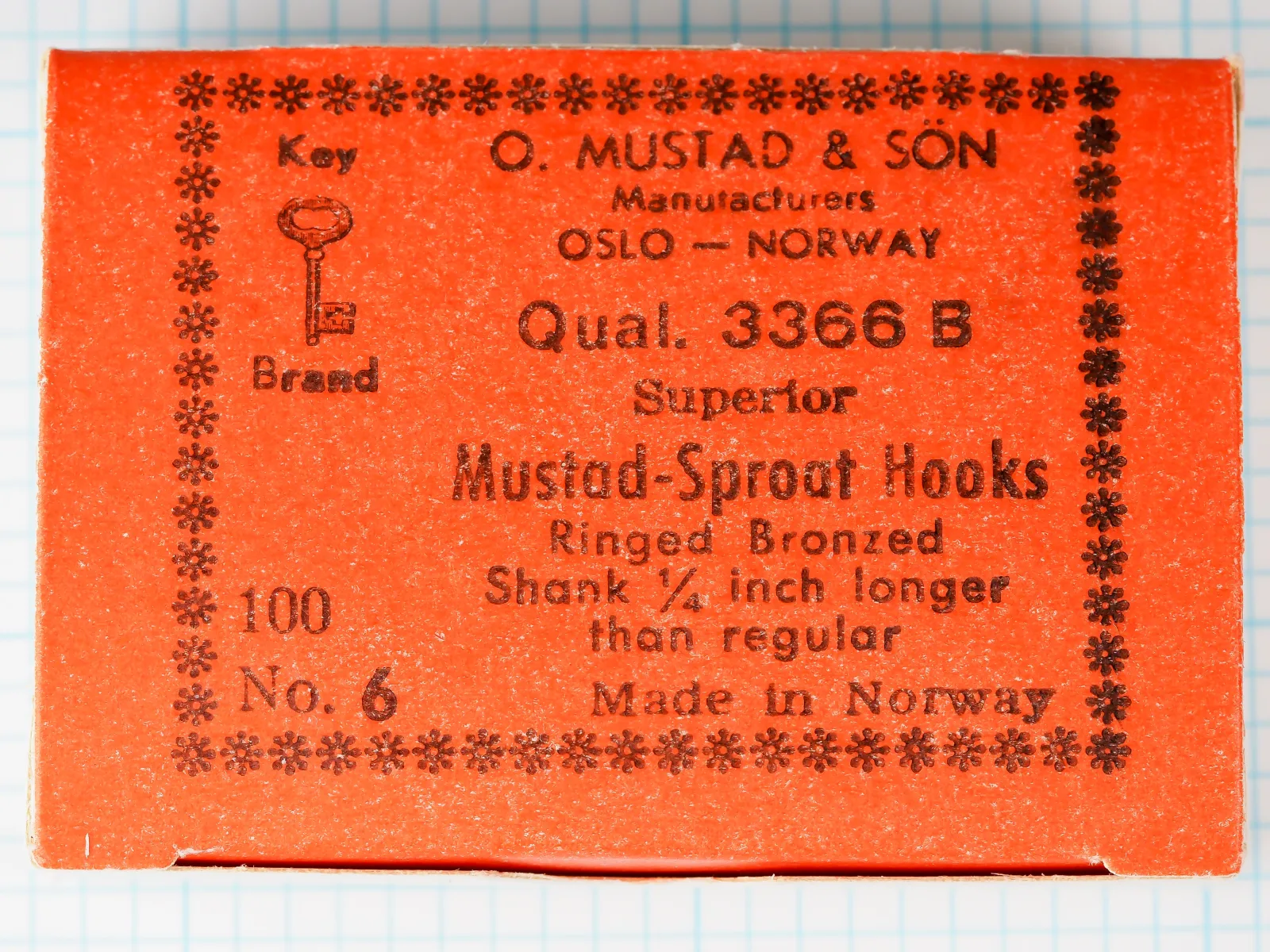
Original Mustad 3366 B box label showing characteristic 1950s orange-red kraft paper, snowflake border decoration, and letterpress typography identifying the extended-shank Sproat variant with bronzed finish, Size No. 6, quantity 100 hooks.
Photographic record
4 cataloged imagesSelect any record to load it above.
4 images shown
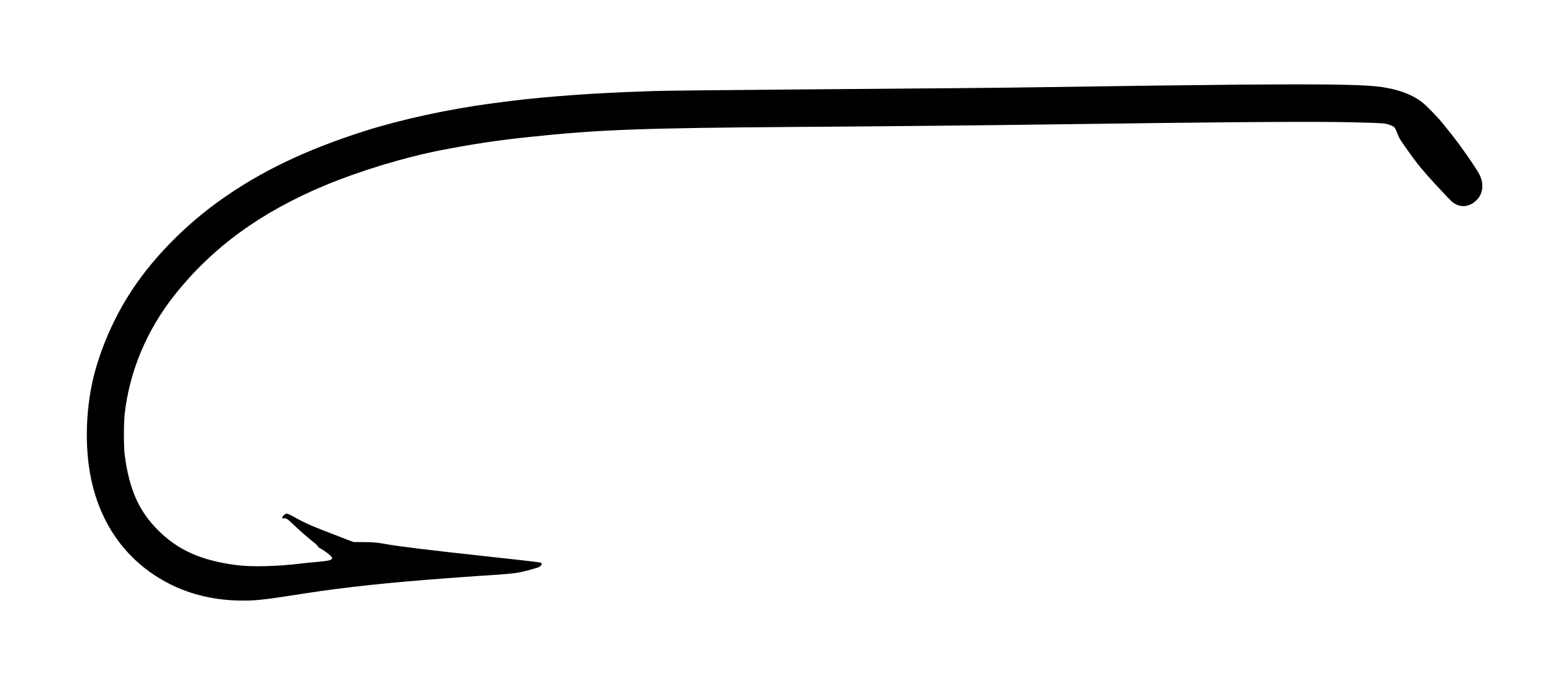
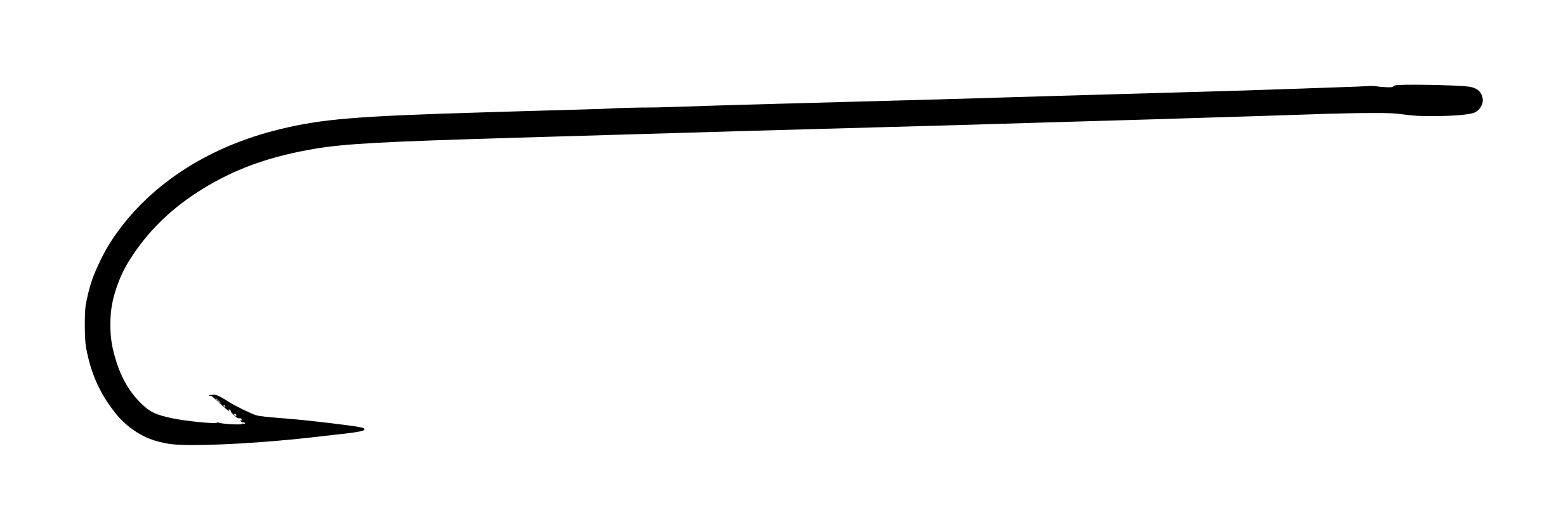
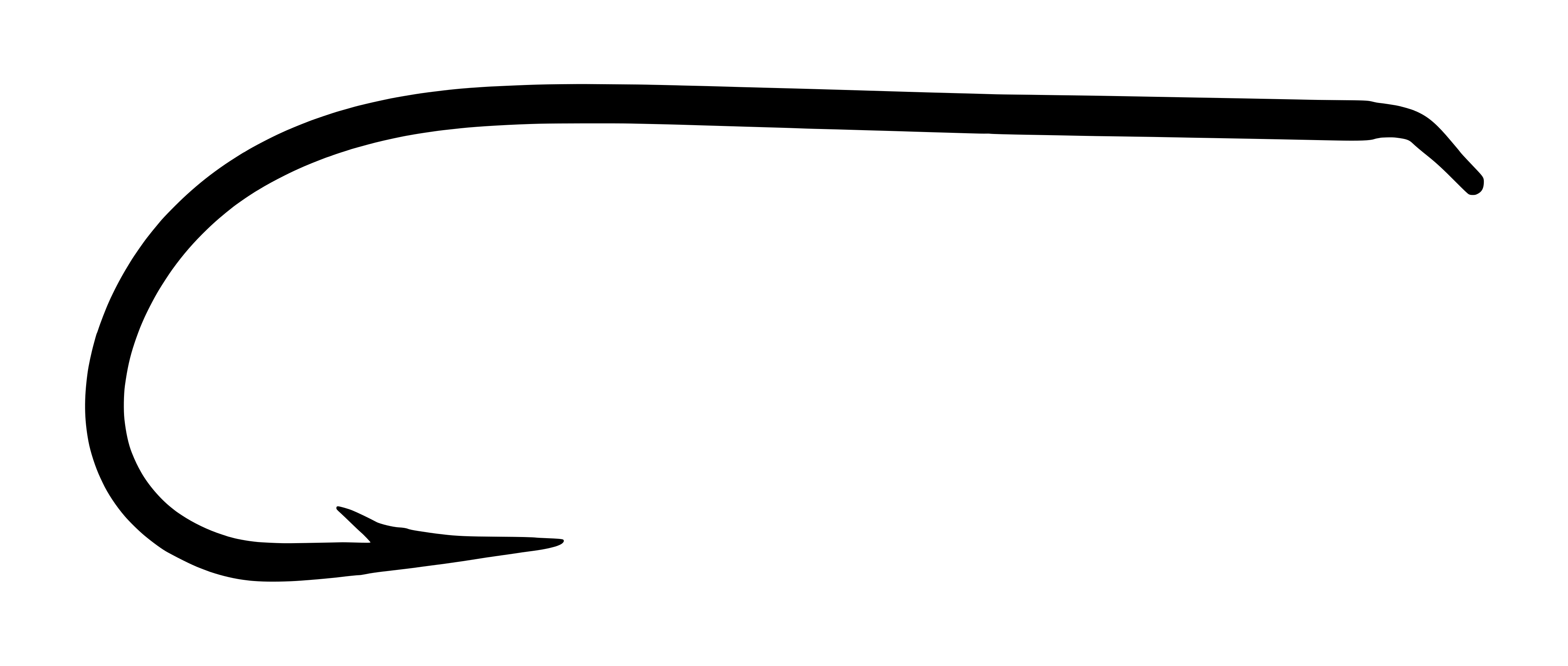
Mustad 3366 B Spraat Hook Box Label 1950sOriginal Mustad 3366 B box label showing characteristic 1950s orange-red kraft paper, snowflake border decoration, and letterpress typography identifying the extended-shank Sproat variant with bronzed finish, Size No. 6, quantity 100 hooks.Open originalMustad 3366 B Hook Point Detail Size 6 BronzeClose-up of the hook point showing the fine linear taper, barb placement and angle, and the warm golden-bronze tone of the japanned finish characteristic of 1950s Mustad production.Open originalMustad 3366 B Hook Profile Size 6 Measurement GridSide profile view of a single Mustad 3366 B hook on 1/10-inch measurement grid, showing the characteristic Sproat bend rounded geometry, extended shank length, straight ringed eye, and overall proportions. Gap width and bend depth are clearly visible for caliper verification.Open originalMustad 3366 B Hooks Pair Size 6 Production ConsistencyTwo Mustad 3366 B hooks (Size 6) positioned side-by-side on measurement grid, demonstrating the mechanical precision and consistency of automated 1950s Mustad manufacturing. Both hooks show identical geometry, finish tone, and construction quality.Open original
Technical profile
Mustad 3366 B — Sproat Bend — Ringed — Bronzed — Extended Shank — Size 6
Eye
Ball Eye, Straight / InlineRinged eye (straight ring) is characteristic of Mustad salmon hooks of this era. The ring is formed separately and riveted or soldered to the shank, allowing secure knot attachment without eye damage. P
Wire
Standard, Round
Shank
2X Long — Plain
Bend
Sproat, Standard gapClassic Sproat bend with well-rounded bottom characteristic of the design. Bend depth appears moderate (~0.56"-0.60" on grid estimate) and symmetrical. The shank approaches the bend smoothly without kinks or irregularities. Extended shank adds approximately 1/4 inch to the total length compared to Mustad's standard Sproat configuration. (P/E)
Point
Superior (near-straight inner taper)Short, close-cut barb positioned at approximately 45 degrees to the shank. Barb angle is typical for salmon hooks of this design, balancing holding power with minimal damage to fish tissue—important for catch-and-release practice traditional in salmon fishing. P
Finish
Bronzed — Confirmed (stated on packaging)Bronzed finish exhibits warm golden-brown tone characteristic of 1950s japanning. The finish appears uniform across both specimens with light surface patina from age but no active corrosion. The warm tone is typical of quality bronzed hooks from this era; cooler-toned modern bronze finishes differ noticeably. P
Specimens are bright with minimal corrosion. The original box label shows light toning and age patina on kraft paper but no stains or major damage. Label text remains clear and legible. All 100 hooks assumed present in original box (not counted).
The Sproat bend’s rounded bottom geometry provides several functional advantages in salmon fishing. The smooth curve distributes stress evenly during the hook-set, reducing the likelihood of bending or breaking compared to angular bends. The lack of sharp corners means the bend resists line twist—a critical factor when casting large, heavy flies on single-handed or double-handed rods where line behavior directly affects casting distance and accuracy.
The extended shank (1/4 inch longer than standard) serves multiple purposes: it provides additional real estate for wrapping fly bodies, improving proportional balance when tying large patterns; it increases the mechanical advantage of the fly on the water, providing better leverage when setting the hook on large fish; and it simplifies knot attachment by positioning the eye further from the bend, reducing friction. The ringed eye—a separate ring riveted to the shank—distributes load and prevents the eye from cutting into the leader, important when fighting large salmon.
The bronzed (japanned) finish provides corrosion resistance in saltwater and brackish estuary environments where many Atlantic salmon rivers interface with tidal zones. The warm, golden-brown tone of quality bronze also reduces underwater visibility compared to bright finishes, a theoretical advantage in clear water. Standard wire gauge (versus heavy wire) keeps the overall mass moderate, preserving the fly’s buoyancy and movement in water—critical for wet-fly presentation where subtle line recovery and water dynamics guide the fly’s behavior.
We don't have measured sizes for this hook yet. Own one? Submit calipered measurements and we'll review and add them. Thank you!
Historical context
mustad
O. Mustad & Sön was established in Gjøvik, Norway, in the 1870s as an industrial manufacturer of fishing hooks and related products. By the early 20th century, Mustad had become one of the world’s largest hook manufacturers, with global distribution networks supplying both retail markets and commercial fishing operations. The company pioneered mechanical hook manufacturing at scale, replacing hand-forging with automated machinery while maintaining quality standards that rivaled English craftsmen.
Mustad’s Gjøvik factory employed hundreds of workers and operated multiple production lines for different hook patterns, sizes, and finishes. The company established a reputation for consistent quality, reliable supply, and innovation in finish technology (japanning, plating, enameling). Mustad hooks were distributed through major tackle retailers in Britain, Europe, and North America, often bearing private labels or sub-brands. The company maintained detailed quality codes and marketing strategies that emphasized fishing-specific design for different species and techniques.
By the 1950s, when the 3366 B was manufactured, Mustad had consolidated its position as the dominant Norwegian hook producer and one of the top two global manufacturers alongside British firms like Partridge of Redditch. The ‘Superior’ product line signified Mustad’s mid-to-premium tier of hooks—well-made, reliable, and designed for serious anglers. Post-1960, Mustad began diversifying into modern synthetic materials, but hook manufacture remained a core business through the late 20th century.
Series History
The Mustad Sproat hook series comprises multiple variants of the classic Sproat bend design, which itself was originally developed in Scotland. Mustad licensed or adapted the Sproat design in the late 19th century and produced numerous size and configuration variants throughout the 20th century. The standard Sproat (without extended shank) was cataloged under multiple quality codes; the 3366 B designation indicates a specific variant combining the Sproat bend with extended shank, ringed eye, and bronzed finish.
The designation ‘3366 B’ suggests a numbered quality/model system where the base number (3366) identifies the Sproat configuration and the suffix ‘B’ may denote a specific feature set or finish variant. Extended-shank variants were introduced to accommodate larger flies and to improve handling of big fish, particularly in salmon and sea-trout fishing. The ‘1/4 inch longer than regular’ specification printed on the label confirms this is a deliberate variant rather than a manufacturing variation.
Mustad produced the 3366 B and related Sproat variants continuously through the 1950s and 1960s, with production likely extending into the 1970s, though surviving original packaging becomes scarce after the 1960s. The extended-shank format eventually declined in popularity as modern fly design moved toward shorter shanks and specialized bend geometries, but the Sproat bend itself remained in production. No documented date of discontinuation is available, but examples with original 1950s-1960s packaging are considered representative of a specific era in Mustad’s catalog.
Era and Packaging Dating
Orange-red kraft paper label with black letterpress printing and decorative snowflake borders is characteristic of Mustad packaging from the 1950s-early 1960s. Absence of barcode (first used commercially in 1974) indicates pre-1974 production. 'OSLO - NORWAY' location marking (Christiania changed to Oslo officially in 1925) and 'Made in Norway' text confirm post-1925 but likely mid-20th century. Letterpress print quality, paper stock, and label construction all consistent with 1950s commercial practice. No evidence of later offset printing or modern labeling.
The Sproat and the Evolution of Spey Flies
The Sproat bend originates from Scotland and is named after a Scottish fly dresser or angler, though definitive attribution is lost to history. Mustad's adoption of the Sproat for salmon hooks made it iconic in Atlantic salmon circles, particularly among Scottish and Irish anglers. The extended-shank variant emerged in response to the evolution of larger spey flies in the mid-20th century, where fly bodies became bulkier and required longer hook shanks to accommodate fur and feather without fouling the bend. The '1/4 inch longer than regular' promise on this vintage box represents Mustad's marketing of a functional innovation—longer shank meant bigger flies meant more water coverage on each cast, a genuine advantage in salmon fishing.
Design lineage and influence
The Sproat bend is an ancient design with documented use in Scotland by the mid-19th century. Its defining characteristic—the smooth, rounded bottom without sharp angles—was adopted by fly dressers because it resists line twist and provides consistent hook geometry across sizes. English manufacturers including H. Milward & Sons and S. Allcock & Co. produced Sproat variants alongside Scottish custom tyers.
Mustad’s adoption of the Sproat was part of broader industrialization of Scottish and English fly-fishing traditions into mass-produced patterns. Competitors to the Mustad Sproat included similar designs from Partridge of Redditch (under various model numbers) and American manufacturers like O. Shaughnessy (though the O. Shaughnessy is a different, more angular design). The extended-shank variant concept was not unique to Mustad; English makers also offered ‘extra long shank’ versions of standard bends, but Mustad’s marketing and distribution made their version widely recognizable.
Downstream influence: The Sproat remain in production by multiple modern manufacturers (Tiemco, Daiichi, Ahrex) under licensed or compatible designs. Contemporary fly-fishing literature still references ‘Sproat bend’ as a standard category. The extended-shank concept evolved into modern ‘spey-specific’ hooks with specialized geometry, but the Sproat’s fundamental principle—rounded, symmetrical bend for balanced hook behavior—persists.
Best matchRelated by Attribute
Computed automatically from catalog data — updated as new hooks are added.
Matches: Bend, Shank, Wire, Gap, Finish +3 moreDiffers: Eye: Ball Eye vs Tapered Eye; Eye Orient.: Straight / Inline vs Turned Down; Point: Superior vs Hollow Point +1 more
Matches: Bend, Eye, Eye Orient., Point, Finish +3 moreDiffers: Shank: 2X Long vs Standard; Wire: Standard vs Fine (1X Fine); Gap: Standard vs Wide +1 more
The Mustad 3366 B was designed as a salmon and sea-trout hook, optimized for spey casting and classic wet-fly presentation in Atlantic salmon rivers. The Sproat bend—with its rounded bottom and gentle depth—provides excellent hook-point geometry for taking salmon and sea trout on traditional patterns. The extended shank (1/4 inch longer than standard) accommodates larger fly bodies and provides better line-to-barb leverage on large fish. The ringed eye allows secure attachment to heavy leader material typical of salmon fishing, and the bronzed finish offers corrosion resistance in saltwater estuary conditions.
Secondary Applications
Sea-trout bait fishing, large browntrout in chalk streams, occasional use in steelhead and Pacific salmon fishing.
Classic Fly Patterns
Spey patterns: Silver Spey, Golden Spey, Undertaker, Sunburst, Logie, Stoat's Tail; Traditional Scottish patterns: March Brown, Greenwells Glory, Silver Stoat, Black Doctor; Large wet flies: Butcher, Thunder and Lightning, Sarcelles et Mouche
Modern Equivalents
Hook
Match Quality
Notes
Tiemco TMC 7989 S&P
Very Good
Modern Sproat bend salmon hook with straight eye, similar gap and shank geometry, stainless steel. Closest functional equivalent for tying spey patterns.
Daiichi 1130 Salmon
Good
Classic salmon hook with Sproat-derived bend, though slightly more angular than original Mustad. Adequate for traditional patterns.
Ahrex FW507 Spey
Good
Modern spey-specific hook with rounded bend; geometry differs from vintage Sproat but suits contemporary spey fly designs.
Collector notes
The Mustad 3366 B is moderately uncommon and of modest collector interest due to its vintage Mustad manufacture, attractive bronzed finish, and characteristic 1950s packaging. However, the extended-shank Spraat variant is less sought after than the standard Sproat or higher-demand bends like the Limerick.
Reference value
$8 – $18 USD estimate
Packaging condition
Very Good — light wear, fully legibleRecorded specimen
Packaging format
GW-MU-50s-01Catalog code
Positive Factors: Vintage Mustad production (1950s-early 1960s), authentic original packaging in good condition, ringed bronzed finish with warm tone, documented extended shank variant (‘1/4 inch longer than regular’), clear model code and quality designation on label, and appeal to salmon and sea-trout fishing historians. Sproat bend is well-regarded for spey casting and classic Atlantic salmon fishing. Original box adds significant collectability and value.
Limiting Factors: Sproat bend is less iconic than the Limerick or Beak among hook collectors. Extended-shank variants see lower demand than standard configurations. Size No. 6 is common (not a scarce size). No unusual features or forging marks. Moderate wear visible on specimen. Post-1950 manufacture (not pre-WWII) and mass-produced — not handmade or rare artisan work.
Packaging
Original Mustad box label on orange-red kraft paper, approximately 4.5" × 3.0" (114 × 76 mm). Format: folded/glued box construction typical of 1950s hook packaging. Label features decorative black snowflake border, black letterpress text arranged in eight informational lines plus separate box quantity/size indicator. Trade mark logo (skeleton key pointing downward) in top-left corner with 'Key Brand' text beneath. Main label text in uppercase: 'O. MUSTAD & SON / MANUFACTURERS / OSLO - NORWAY / Qual. 3366 B / Superior / Mustad-Spraat Hooks / Ringed Bronzed / Shank 1/4 inch longer than regular / Made in Norway.' Box quantity '100' and hook size 'No. 6' printed at bottom left. Paper stock is aged to light tan/orange with characteristic patina. Print method is mechanical letterpress (raised type impression visible). No barcode, no modern labeling, no plastic windows. Condition: light toning, minor creasing, text fully legible.
Market Value Notes
Original boxed sets in excellent condition fetch $12-18 USD on specialist vintage tackle platforms. Loose hooks or worn packaging reduce value to $8-12. Premium pricing driven by original label condition, complete box of 100, and appeal to spey-casting historians. Bronzed finish and Mustad brand reputation support mid-range valuation.
Where to Find
Vintage tackle dealers, eBay (specialty vintage fishing category), UK tackle fairs, estate sales of Scottish and Irish anglers, museum collections.
Collector's Identification Tips
Box Label Identification: Look for the orange-red kraft paper stock with black snowflake border and ‘Key Brand’ logo in upper left corner. The presence of ‘OSLO – NORWAY’ (rather than ‘CHRISTIANIA – NORWAY’) confirms manufacture after 1925. The quality code ‘Qual. 3366 B’ must appear prominently. The word ‘Superior’ on Line 5 is a product line designation on Mustad boxes; it does not indicate a Superior Point geometry.
Hook Characteristics: Size No. 6 specimens measure approximately 1.84″ overall length with 0.28″ gap width. The Spraat bend is recognizable by its rounded bottom (not angular like Limerick) and moderate depth. The ringed eye is a loose wire loop, clearly distinguishable from a turned-down or ball eye. The bronzed finish should display warm, muted gold-brown tone without bright metallic shine.
Manufacturing Details: Hooks should be individually uniform in size and geometry, confirming mechanical production rather than hand-forging. Barbs are short and precisely cut at consistent distance from the point. Wire should be smooth, round cross-section with no forging marks or flattening.
Packaging Condition Markers: Original boxes showing light orange toning, edge wear, and interior paper impressions are consistent with 1950–1965 era. Absence of barcode or modern UPC is essential for pre-1974 attribution. Typography should be crisp letterpress black on bright orange-red, not faded or off-register (which would indicate later reprinting).
Preservation
Storage and Preservation
Store the original box in a cool, dry environment away from direct moisture and humidity. The bronzed japanned finish is susceptible to patina development and oxidation when exposed to moisture, though controlled patina is often considered desirable by collectors. Keep hooks on the original card stock rather than loose in a container, as this preserves the packaging integrity and reduces oxidation risk from contact with other materials.
If hooks are removed for use, store them in a dedicated tackle box or cork patch separated from other metals to prevent galvanic corrosion. Avoid contact with stainless steel hooks or galvanized materials, which can accelerate oxidation of the bronze finish. A light coat of oil (3-in-1 or similar light machine oil) applied every few years will slow oxidation and maintain the warm bronze tone without leaving heavy residue.
The original kraft paper label should be protected from water and direct sunlight. If the box must be handled frequently, consider photographing the label for reference and storing the actual box in an archival-quality envelope. Avoid cleaning or scrubbing the finish; light patina and age marks are normal and part of the historical character of vintage hooks.
Marking Analysis
Handwritten Annotations
No handwritten annotations, prices, or personal marks are visible on the specimen box label. The label appears to be entirely printed by letterpress, suggesting it is an example of fresh stock or inventory that was never sold directly through a retail outlet or retail shop shelf where prices might be handwritten. The absence of a handwritten price or retailer mark indicates either that this box remained in wholesale stock or was purchased directly from a distributor without retail price markup visible on the label. P
Primary Source
Label Text Analysis and Specifications
Source: Original Mustad 3366 B box label, c. 1950-1965
Line 1: Manufacturer Name and Logo — ‘O. MUSTAD & SON’ with Key Brand skeleton-key logo identifies the manufacturer. The full legal name ‘O. Mustad & Sön’ (with Nordic diacritic) appears on the label as printed, though anglicized as ‘SON’ on English-language versions. The Key Brand logo (skeleton key pointing downward) is Mustad’s registered trade mark, distinctive and consistent across all Mustad products of this era. (V/P)
Line 2: Industry Role — ‘MANUFACTURERS’ confirms Mustad’s position as a hook producer, not a distributor or retailer. This line appears on all Mustad labels and reinforces the company’s industrial status. V
Line 3: Location of Origin — ‘OSLO – NORWAY’ confirms manufacturing in Gjøvik, Norway (marketed as ‘Oslo’ for international sales purposes). The use of ‘OSLO’ rather than ‘CHRISTIANIA’ (the old name for Oslo, officially changed in 1925) confirms this label is from post-1925 and likely mid-20th century. V
Line 4: Quality/Model Code — ‘Qual. 3366 B’ is Mustad’s numbered quality designation. The ‘3366’ identifies the Sproat bend configuration; the ‘B’ suffix indicates a specific variant (in this case, the extended-shank version). This numbering system was consistent across Mustad’s mid-20th century catalog. V
Line 5: Point Style Identifier — ‘Superior’ appears on this label WITHOUT the words ‘Point’ or ‘Pt.’
Line 6: Hook Pattern Name — ‘Mustad-Spraat Hooks’ identifies the Sproat bend pattern. The hyphenated ‘Mustad-Spraat’ indicates Mustad’s branding of a Scottish design. The plural ‘Hooks’ suggests the line includes multiple sizes. V
Lines 7 & 8: Special Features — ‘Ringed Bronzed / Shank 1/4 inch longer than regular’ specify the eye type (ringed), finish (bronzed/japanned), and critical variant information (extended shank). The precision specification ‘1/4 inch longer’ is marketing-speak for a documented, repeatable feature. V
Box Quantity and Size — ‘100’ and ‘No. 6’ indicate 100 hooks per box in Size 6, the standard commercial packaging format for Mustad salmon hooks of this era. V
Additional
Sproat Bend Geometry and Spey Fishing Heritage
The Sproat bend represents one of the oldest and most respected hook geometries in British and Scottish fly-fishing tradition. The defining characteristic—a smooth, evenly rounded bottom without sharp angles or distinct shoulders—emerged from Scottish salmon fishing practice, where the bend’s behavior under load and its resistance to line twist were valued above all. The Sproat’s rounded profile distributes stress across a broader radius, reducing point stress concentration and improving durability when fighting large fish.
In spey casting, where heavy flies and long casts are the norm, the Sproat’s geometry is particularly valued. The rounded bend allows the fly to turn freely on the water surface during the mend and recovery, following the line’s natural dynamics. Angular bends (like the Limerick or Beak) can resist turning and induce line slack; the Sproat’s curve-bottom design minimizes this resistance. The Mustad 3366 B, with its extended shank variant, was specifically marketed to spey casters who tied larger bodies and required additional shank length for proper fly proportions.
The bronzed finish on this hook is not merely decorative. Japanning (bronzing) was the gold standard for salmon hooks intended for estuary and brackish-water use, where tidal influence and saltwater spray were common. The warm, golden-brown tone also reduces underwater visibility compared to bright finishes—a theoretical but documented advantage in clear, shallow salmon pools. Modern manufacturers continue to offer Sproat-geometry hooks, acknowledging the design’s enduring value a century and a half after its origin.
Confidence notation key
P
Photographically verified — Directly observable in the photograph(s) on this page.
V
Verified by documentation — Confirmed by manufacturer catalog, spec sheet, or published reference.
I
Inferred — A logical deduction from observable or documented evidence, not directly stated.
E
Estimated — An approximation based on visual comparison, proportional analysis, or limited data.
S
Speculative — A reasoned hypothesis that cannot be confirmed from available evidence.
Claims with no notation are confirmed by multiple independent sources. All photographs on garrenwood.com are taken on a measurement grid where each square equals 1/10 inch (0.1″ / 2.54 mm).