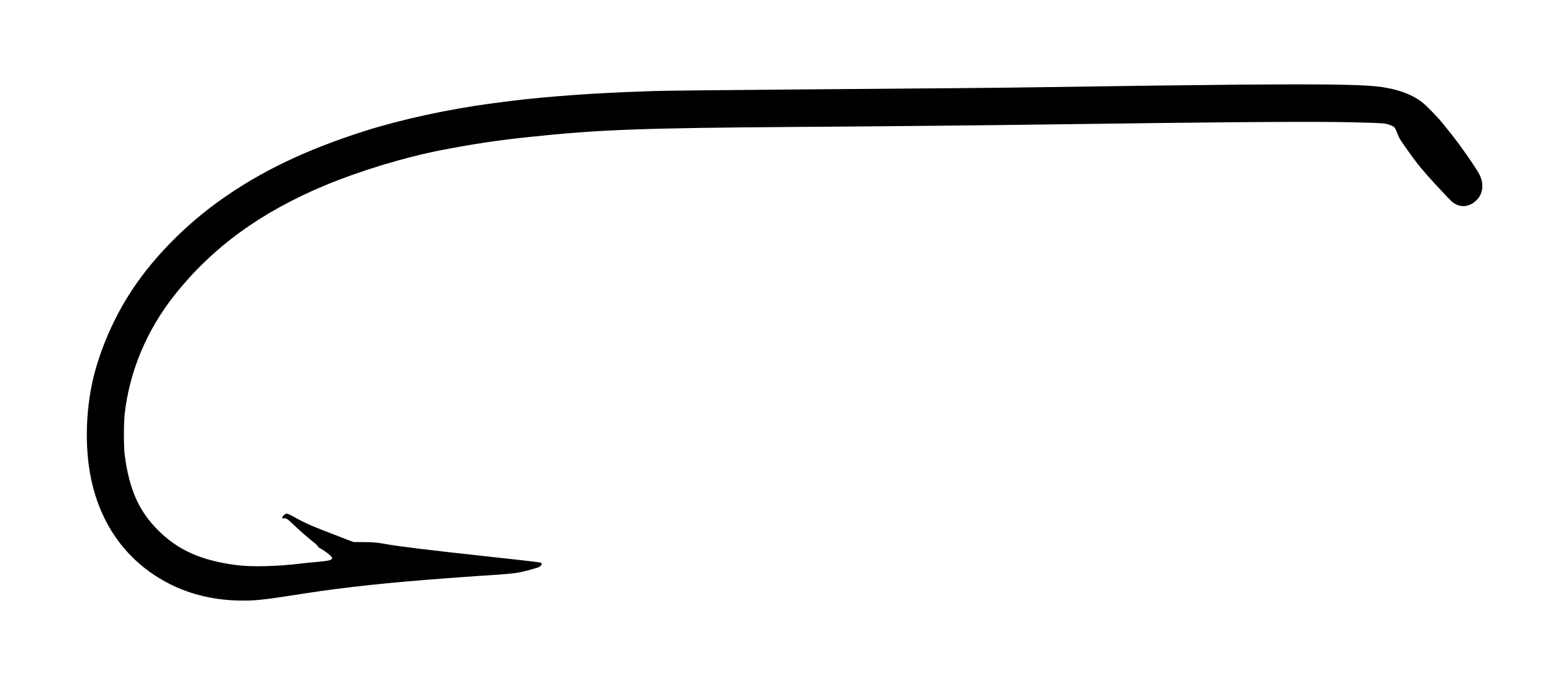
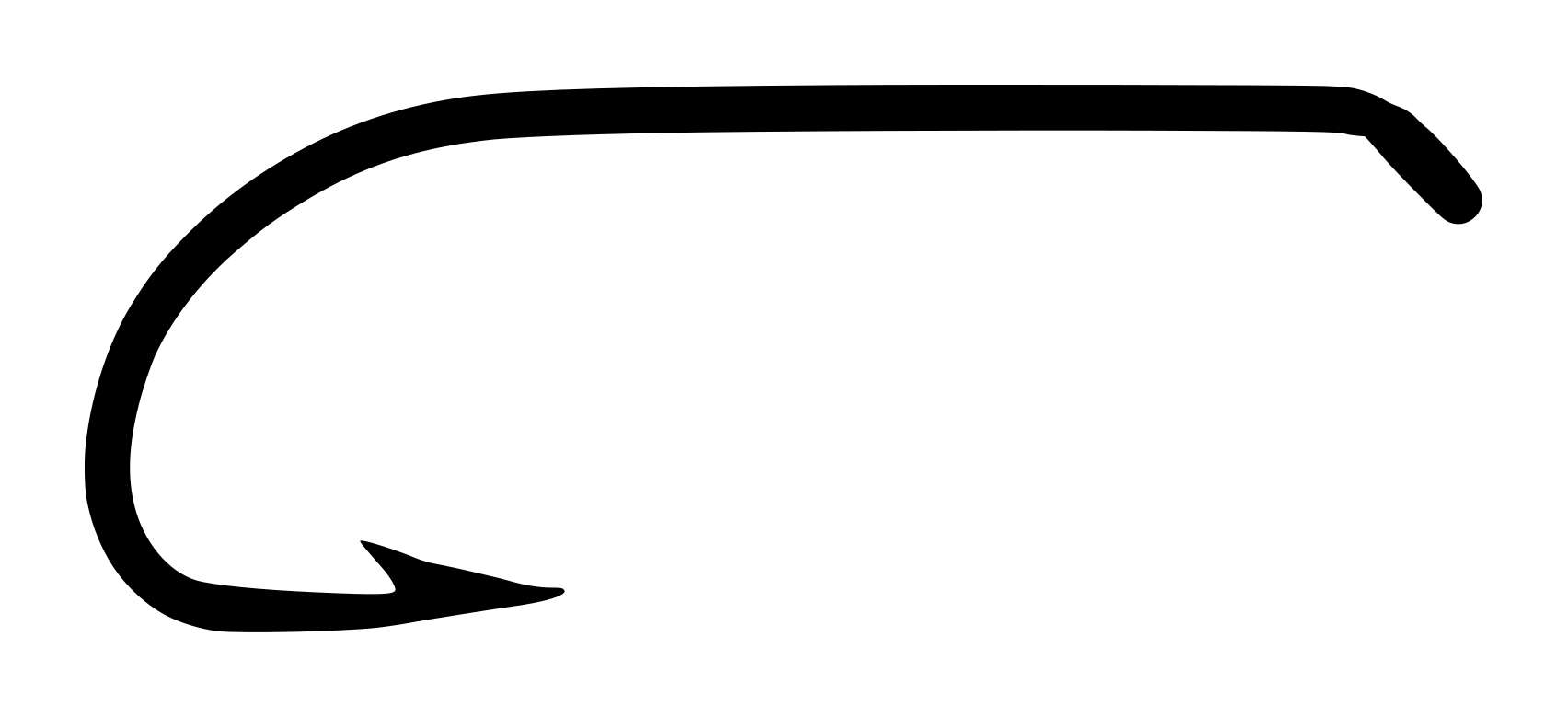
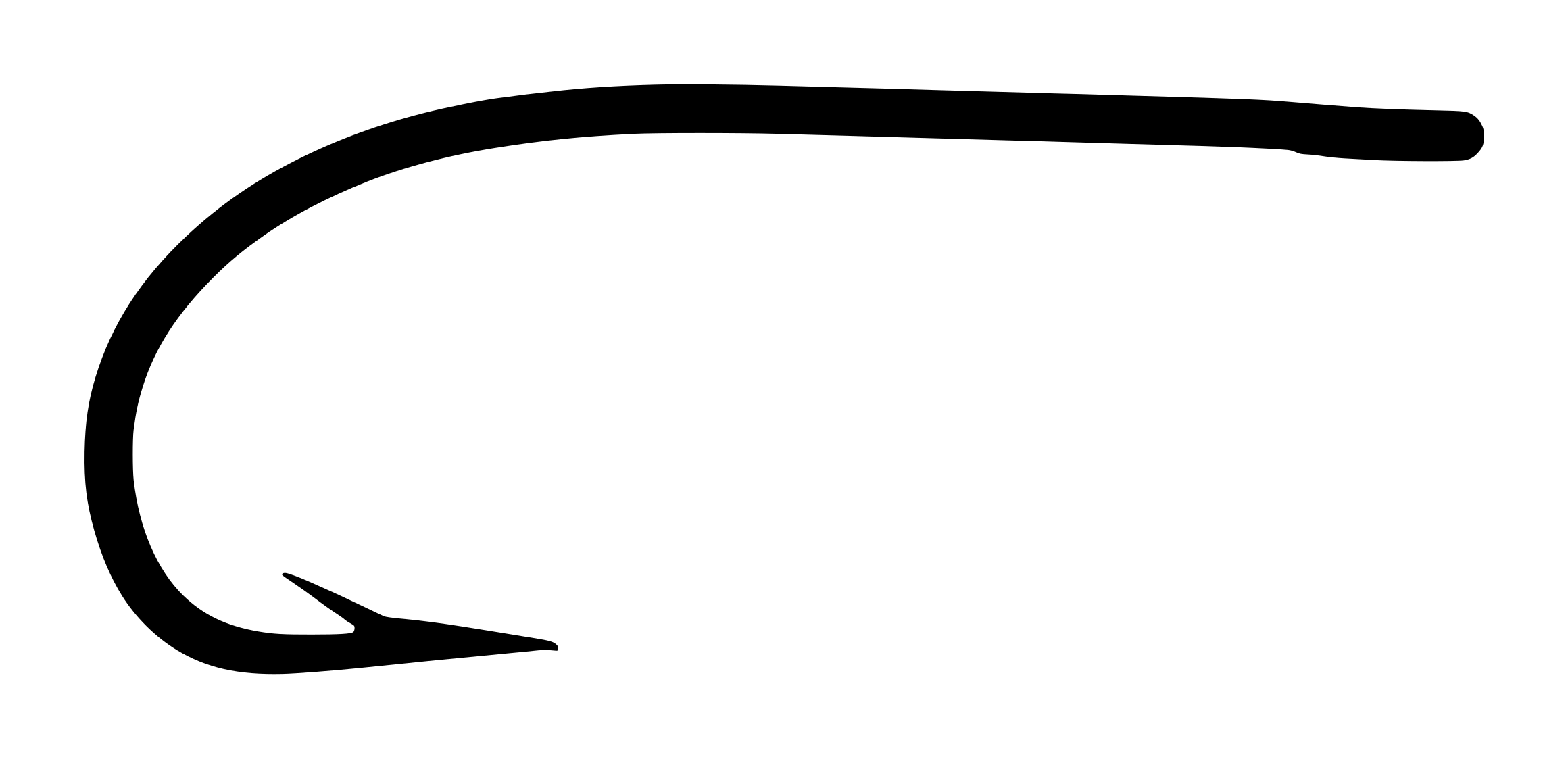
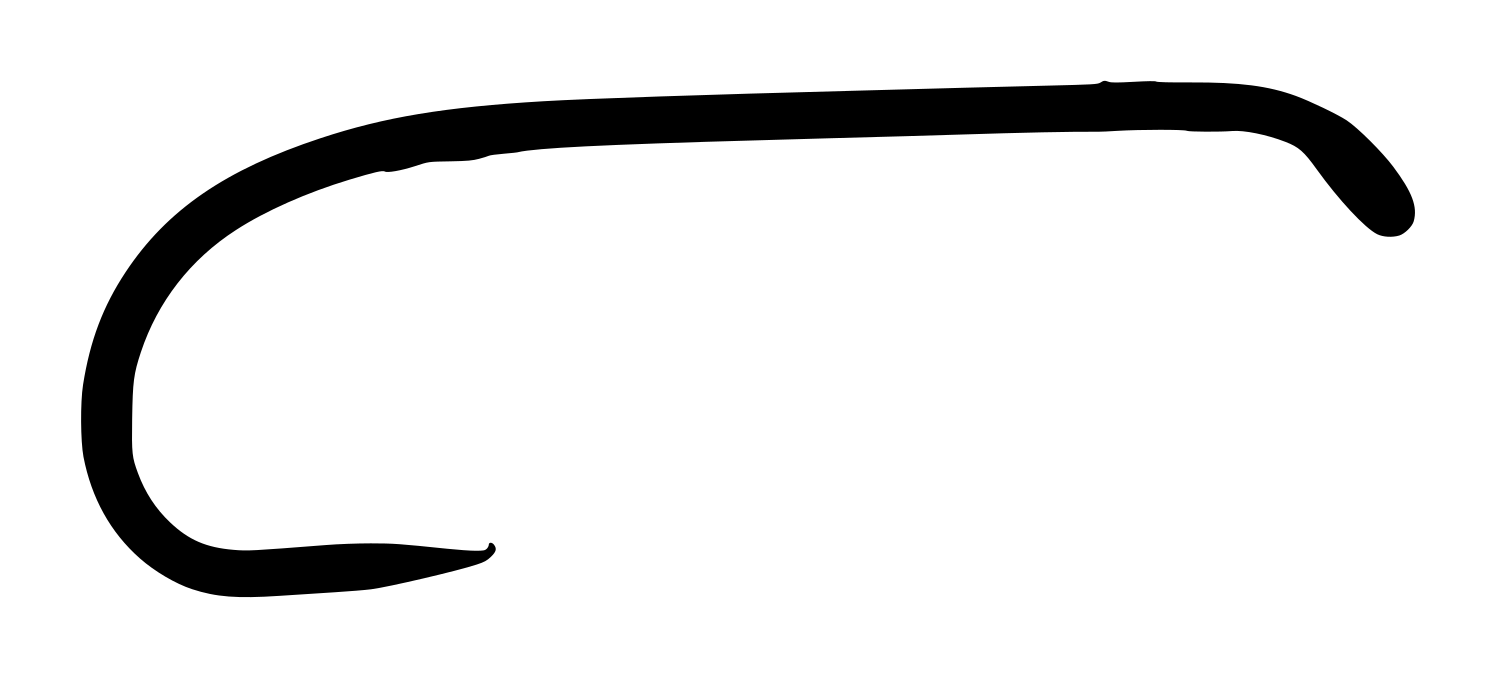
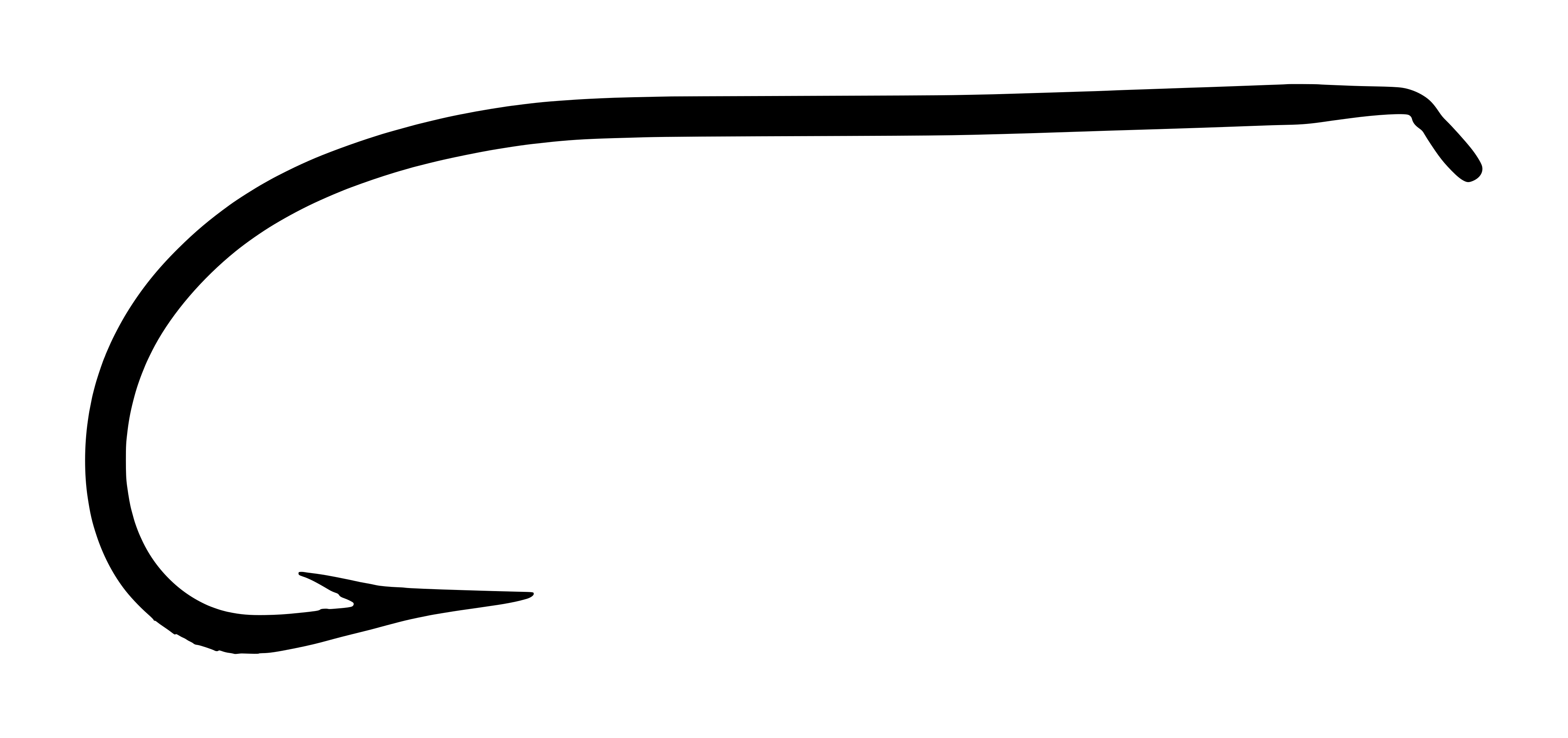
The Mustad 3399 is a mid-tier quality bait and general-utility hook produced by O. Mustad & Son in Gjøvik, Norway during the mid-twentieth century. This size 3/0 specimen exhibits the characteristic Superior point geometry — a near-straight inner taper that balances delicate penetration with structural durability — paired with a smooth Sproat bend profile and turned-down ball eye typical of the era.
The hook’s bronzed finish, standard-gauge round wire, and moderate shank length classify it as a reliable workhorse pattern suited to freshwater bait fishing and light saltwater applications. The presence of the arbitrary numeric quality code (3399) on the original packaging confirms vintage status predating Mustad’s transition to the Signature Series nomenclature around 2001–2009. VP
Collectors value the 3399 for its mechanical soundness and its representation of mid-twentieth-century manufacturing standards. The hook remains moderately scarce in original packaging, with surviving examples primarily found through estate sales and specialist hook dealers.
Profile view of a bronzed Mustad 3399 in size 3/0, displaying the characteristic sproat bend and tapered point.
Photographic record
6 cataloged imagesSelect any record to load it above.
6 images shown
Mustad 3399 Sproat Bend ProfileProfile view of a bronzed Mustad 3399 in size 3/0, displaying the characteristic sproat bend and tapered point.Open originalMustad 3399 Full Profile ViewComplete profile of the Mustad 3399 showing the full bend arc and straight shank proportions.Open originalMustad 3399 Size Comparison 3/0 and 6/0Two Mustad 3399 hooks in sizes 3/0 and 6/0, with handwritten identification label.Open originalMustad 3399 Point and Eye DetailDetailed side view emphasizing the tapered point geometry and eye configuration of the Mustad 3399.Open originalMustad 3399 Overhead ViewOverhead view of the Mustad 3399 sproat-bend hook showing symmetrical profile and bend geometry.Open originalMustad 3399 Original Package 6/0Mustad 3399 hooks in original yellow plastic box, size 6/0, showing period packaging and label.Open original
Technical profile
Mustad Quality 3399 | Sproat Pattern | Superior Point | Turned-Down Ball Eye | Bronzed | Size 3/0
Eye
Ball Eye, Turned DownThe turned-down ball eye is cleanly formed with good proportionality to the wire gauge. The eye sits at a slight downward angle characteristic of the period, facilitating line tie and reducing fouling on vegetation. P
Wire
Standard, Round, Est. ~0.052"-0.062" (~1.32-1.57 mm)
Shank
1X Long — Plain
Bend
Sproat, Standard gapThe Sproat bend exhibits the characteristic parabolic geometry — a smooth curve precisely intermediate between a sharp Limerick angle and a full round bend. The bend sits symmetrically centered beneath the shank with good geometric balance. The hook shows minimal lateral offset (not kirbed). P
Point
Superior (near-straight inner taper)The barb is moderately sized, cut at a slight backward angle — neither aggressively long nor minimal. Placement appears standard relative to the point taper, creating a barb depth of approximately 0.05–0.07 inches. E
Finish
Bronzed — Inferred (photographically likely)The bronzed finish exhibits a warm, dark brownish-gold patina consistent with aged lacquer-type coating. The finish is uniform across the hook with no visible flaking or delamination on the specimen examined. The tone suggests authentic period bronzing rather than modern electroplating. P
The specimen shows light wear consistent with vintage storage in original packaging. No corrosion, pitting, or discoloration. Wire retains lustre beneath the bronzed coating. Hooks are fully intact with no damage.
The “Superior” marking on Mustad packaging identifies a branded point style used widely across the company’s mid-century hook ranges. While surviving catalogs and packaging confirm the terminology itself, detailed engineering descriptions of the exact taper geometry are limited. Visually, the specimen exhibits a relatively straight inner point profile with moderate barb proportions typical of versatile bait hooks of the era. The hook also displays a standard-wire round cross-section and a conventional turned-down ball eye suitable for snelled or direct line attachment. No obvious forging flats are visible in the described specimen photography, suggesting standard round-wire construction.
Standard mid-tier Sproat hook with no catalog records for extreme dimensions or unusual features. Represents typical mid-twentieth-century Mustad production standards.
Own this hook? Help us measure it.
We have measurements for sizes 3/0, 2/0. Know any others? Submit calipered measurements and we'll review and add them. Thank you!
The Mustad 3399 belongs to Mustad’s long-running numeric “Qual.” pattern identification system used throughout the twentieth century. The designation “Qual. 3399” identifies the specific hook pattern and packaging specification rather than a clearly documented modern-style product tier. The 3399 was marketed as a general-purpose Sproat bait hook fitted with a Superior point and turned-down ball eye configuration. Surviving examples indicate it occupied the mainstream commercial sporting market during the mid-twentieth century, where Mustad emphasized standardized tempering, reliable wire consistency, and broad export availability.
Era and Packaging Dating
The arbitrary numeric “Qual. 3399” designation and eight-line Mustad packaging format are consistent with pre-Signature-Series production from the mid-twentieth century. The English-language export label, Key Brand logo, turned-down ball eye, and bronzed finish are all characteristic of Mustad packaging and hook production from roughly the 1950s through the mid-1970s. The absence of a barcode suggests manufacture before universal UPC adoption, though this alone does not securely establish a pre-1970 date because many Mustad export packages remained non-barcoded into the 1970s. Overall evidence supports an estimated production range of approximately c. 1950–1975.
The Arbitrary Quality Code System
The numeric quality codes used by Mustad — such as 3399, 3304, or 94840 — were entirely arbitrary and memorized through generations of anglers and professional tyers. Unlike modern hook naming conventions that explicitly encode hook geometry (e.g., 'R72' = Round bend, 2X strong, 2X long), vintage Mustad codes offered no intuitive descriptor of a hook's actual properties. A 3399 conveyed no information about its Sproat bend or Superior point to an uninformed buyer — knowledge was passed down orally or through paper catalogs. This memorization culture created a barrier to entry for newcomers but fostered deep expertise among serious anglers. The eventual discontinuation of these codes in favor of the transparent Signature Series system marked the end of an era where angling knowledge was inseparable from tacit, inherited wisdom.
Design lineage and influence
The Sproat bend predates Mustad’s adoption of the pattern and derives from nineteenth-century British hook-making traditions. By the early twentieth century, Mustad had incorporated the form into its industrialized global catalog system, producing large quantities for both domestic and export markets. The 3399 reflects the mature standardized interpretation of the Sproat profile: a balanced bend intermediate between strongly angular Limerick forms and fully rounded Kendal-style bends. The “Superior” designation refers to Mustad’s branded point style terminology used during the period, though surviving literature does not precisely define the geometry in modern engineering terms. The resulting hook occupied the broad middle ground between delicate specialist hooks and heavy saltwater patterns, making it suitable for general bait-fishing applications.
Best matchRelated by Attribute
Computed automatically from catalog data — updated as new hooks are added.
Matches: Bend, Wire, Gap, Eye, Finish +5 moreDiffers: Shank: 1X Long vs Standard; Eye Orient.: Turned Down vs Straight / Inline; Point: Superior vs Standard / Spear
Matches: Bend, Wire, Gap, Eye Orient., Finish +4 moreDiffers: Shank: 1X Long vs 2X Long; Eye: Ball Eye vs Tapered Eye; Point: Superior vs Hollow Point +4 more
Matches: Bend, Shank, Wire, Gap, Eye Orient. +3 moreDiffers: Eye: Ball Eye vs Tapered Eye; Point: Superior vs Standard / Spear; Forging: Round vs Forged +5 more
The Mustad 3399 was engineered for general freshwater bait fishing and light saltwater applications. The Superior point geometry and moderate gap width made it suitable for live minnow, crayfish, and worm presentations where reliable penetration without tissue damage was desired. The standard-length shank prevented sharp-toothed fish from easily severing the leader, while the Sproat bend profile provided exceptional mechanical holding power against heavy sudden loads. The bronzed finish offered good rust resistance in freshwater environments while maintaining a muted, natural appearance attractive to wary fish.
Secondary Applications
Light saltwater bait fishing, panfish and bass applications, small catfish, perch, and pike fishing.
Classic Fly Patterns
Not typically used for fly tying.
Modern Equivalents
Hook
Match Quality
Notes
Mustad 3906B
Very Good
Modern Sproat bend wet fly hook with similar bend geometry; uses modern Signature Series numbering.
Tiemco 5212
Good
Contemporary Sproat-style bend with standard wire and turned-down eye; slightly finer wire.
Partridge L3A
Good
Traditional down-eye bait hook with Sproat-style bend; UK manufacture.
* Barbless variant. Green entries are full records; amber entries are spec records.
Gray entries are chart-only and not physically verified against this specimen.
Collector notes
Reference value
$3 – $8 USD estimate
Packaging condition
Good — moderate wear, legibleRecorded specimen
Packaging format
GW-M-04Catalog code
Packaging
Eight-line vintage Mustad label on cardboard box measuring approximately 4.5" x 2.5" x 0.5". Label printed in black and gold on white/cream stock. Text includes: O. MUSTAD & SÖN (Line 1), MANUFACTURERS (Line 2), OSLO - NORWAY (Line 3), Qual. 3399 (Line 4), Superior (Line 5), Sproat Hooks (Line 6), Turned-Down Ball Eye Bronzed (Lines 7–8). Quantity notation shows '100 No. 3/0' in lower left corner. Key Brand logo (downward-pointing skeleton key) visible in upper left quadrant. Box shows light toning to cream, no visible moisture damage or delamination. Printing appears offset lithography typical of mid-twentieth-century production.
Market Value Notes
Surviving examples of the 3399 in original packaging typically command $3–8 USD per hook depending on size, finish condition, and packaging preservation. Larger sizes (2/0, 3/0, 4/0) are slightly more sought after than smaller sizes. Hooks with intact original packaging and minimal wear command premiums. Specimens showing corrosion, finish loss, or missing hooks sell at the lower end of the range. The general scarcity of pre-1970 Mustad bait hooks in original packaging supports moderate collectability pricing.
Where to Find
Surviving examples appear most commonly through estate sales, vintage fishing tackle dealers, and specialized online platforms (eBay, Etsy). Tackle fairs and antique sporting goods auctions occasionally feature unopened or partially-used boxes. Condition and completeness vary widely; pristine original packaging is substantially scarcer than loose individual hooks.
Collector's Identification Tips
Verify the presence of the eight-line Mustad label with the arbitrary numeric code ‘Qual. 3399’ — this distinguishes vintage hooks from modern reproductions. Examine the eye type to confirm it is a turned-down ball eye, not a tapered or looped eye. Check for the bronzed finish lacquer (warm brownish-gold tone) rather than modern tinning or other coatings. Confirm Sproat bend geometry: smooth parabolic curve intermediate between Limerick angular and Aberdeen round. Look for the absence of modern markings, barcodes, or synthetic packaging. Original packaging adds significant collector value.
Preservation
Storage and Preservation
Store the 3399 in a cool, dry environment away from humidity and direct sunlight. The bronzed lacquer finish is susceptible to patina development and micro-corrosion if exposed to moisture; keep hooks in their original cardboard packaging when possible, as the card provides passive protection. If removed from packaging, store individually in small glassine envelopes or wax paper to isolate from ambient humidity. Do not use plastic bags or modern sealed containers, which can trap condensation. Avoid contact with copper, brass, or other dissimilar metals that may induce galvanic corrosion. Inspect periodically for surface oxidation; if light surface patina develops, a gentle dry cloth cleaning is safe. Do not use steel wool, wire brushes, or chemical cleaners, as these will damage the lacquer coating and obliterate the historic finish. If the hook remains in original packaging, never attempt cleaning — the packaging itself is a critical artifact and should be preserved as-is. Store at 50–60°F relative humidity and 65–72°F temperature for optimal preservation.
Marking Analysis
Handwritten Annotations
The specimen images show handwritten notation on a label card: ‘Mustad / 3399 / 3/0’ in blue-black fountain pen or ballpoint ink. The handwriting exhibits careful, deliberate letterforms consistent with mid-twentieth-century cataloging practices — likely applied by a tackle dealer, collector, or fly tier for personal inventory purposes. The notation confirms the model code (3399) and size (3/0), suggesting the annotator was verifying or organizing a collection. Such annotations are common on vintage hook lots and indicate previous collector or angler ownership. The handwriting style does not appear to be manufacturer’s mark; this was an after-market annotation made to document the specific hook for personal reference.
Additional
Eight-Line Label Decryption
Line 1: O. MUSTAD & SÖN — Establishes manufacturer authority and origin V. Line 2: MANUFACTURERS — Differentiates Mustad as the primary maker, not a distributor or jobber V. Line 3: OSLO – NORWAY — Confirms Gjøvik-based production under Oslo geographic designation, implying manufacture post-January 1, 1925 (when Christiania was renamed to Oslo) V. Line 4: Qual. 3399 — Arbitrary numeric quality code in the 3000–3999 mid-tier range, denoting standard commercial/sport angling quality with exacting tempering standards V. Line 5: Superior — According to Mustad’s official point terminology, indicates near-straight inner taper geometry optimized for all-purpose penetration and durability V. Line 6: Sproat Hooks — Identifies the bend pattern as Sproat (parabolic, cloned from Irish precedent) V. Line 7–8: Turned-Down Ball Eye Bronzed — Specifies eye type (turned-down ball eye) and metallurgical finish (bronzed lacquer, not tinned or japanned) V.
Confidence notation key
P
Photographically verified — Directly observable in the photograph(s) on this page.
V
Verified by documentation — Confirmed by manufacturer catalog, spec sheet, or published reference.
I
Inferred — A logical deduction from observable or documented evidence, not directly stated.
E
Estimated — An approximation based on visual comparison, proportional analysis, or limited data.
S
Speculative — A reasoned hypothesis that cannot be confirmed from available evidence.
Unnotated claims are the compiler’s synthesis; see Sources. All photographs on garrenwood.com are taken on a measurement grid where each square equals 1/10 inch (0.1″ / 2.54 mm).