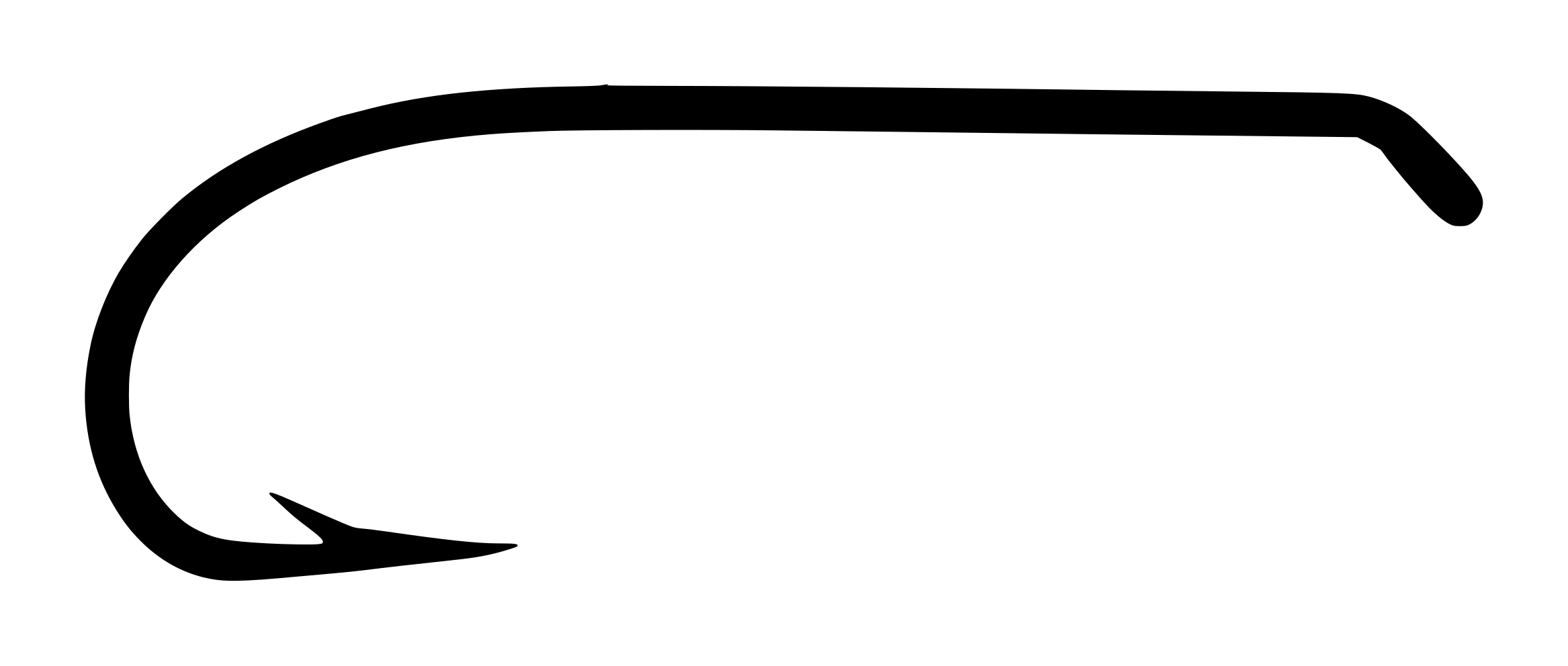
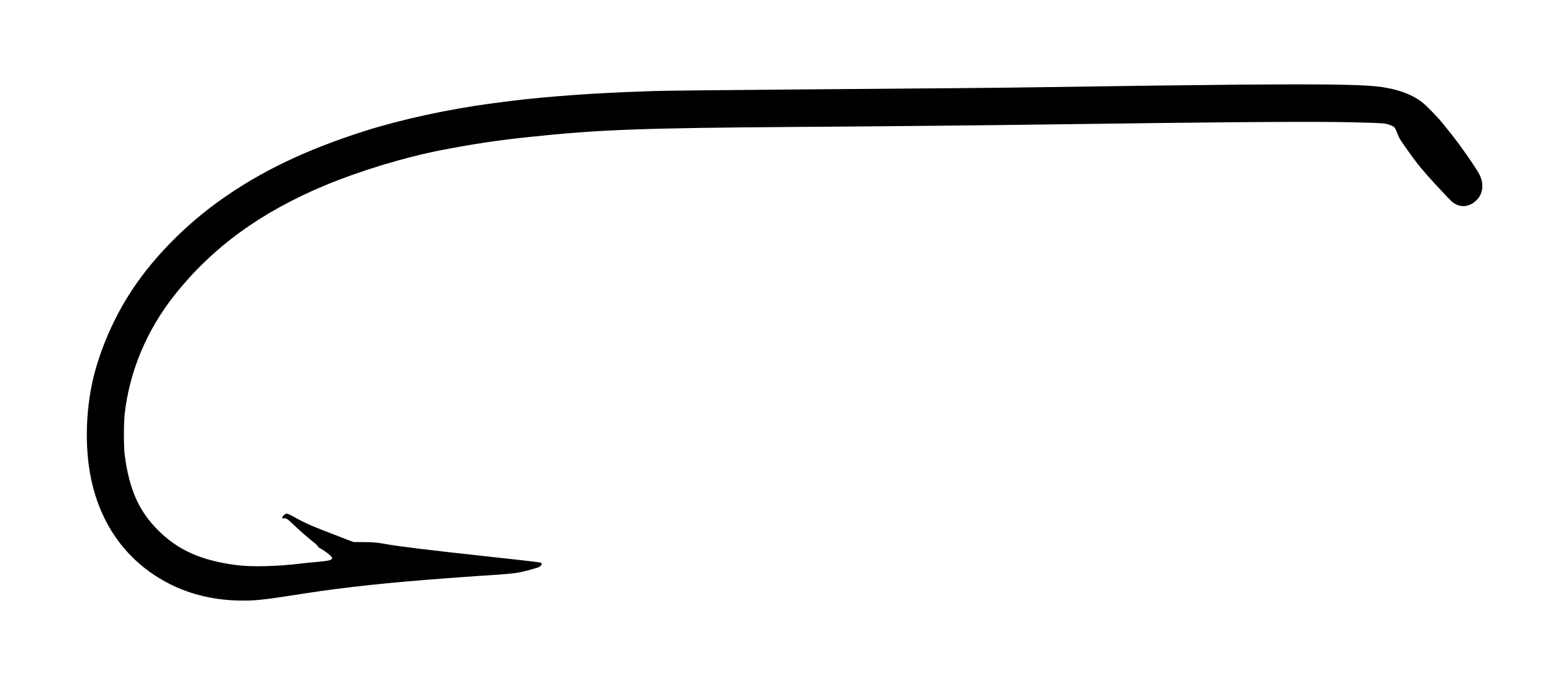
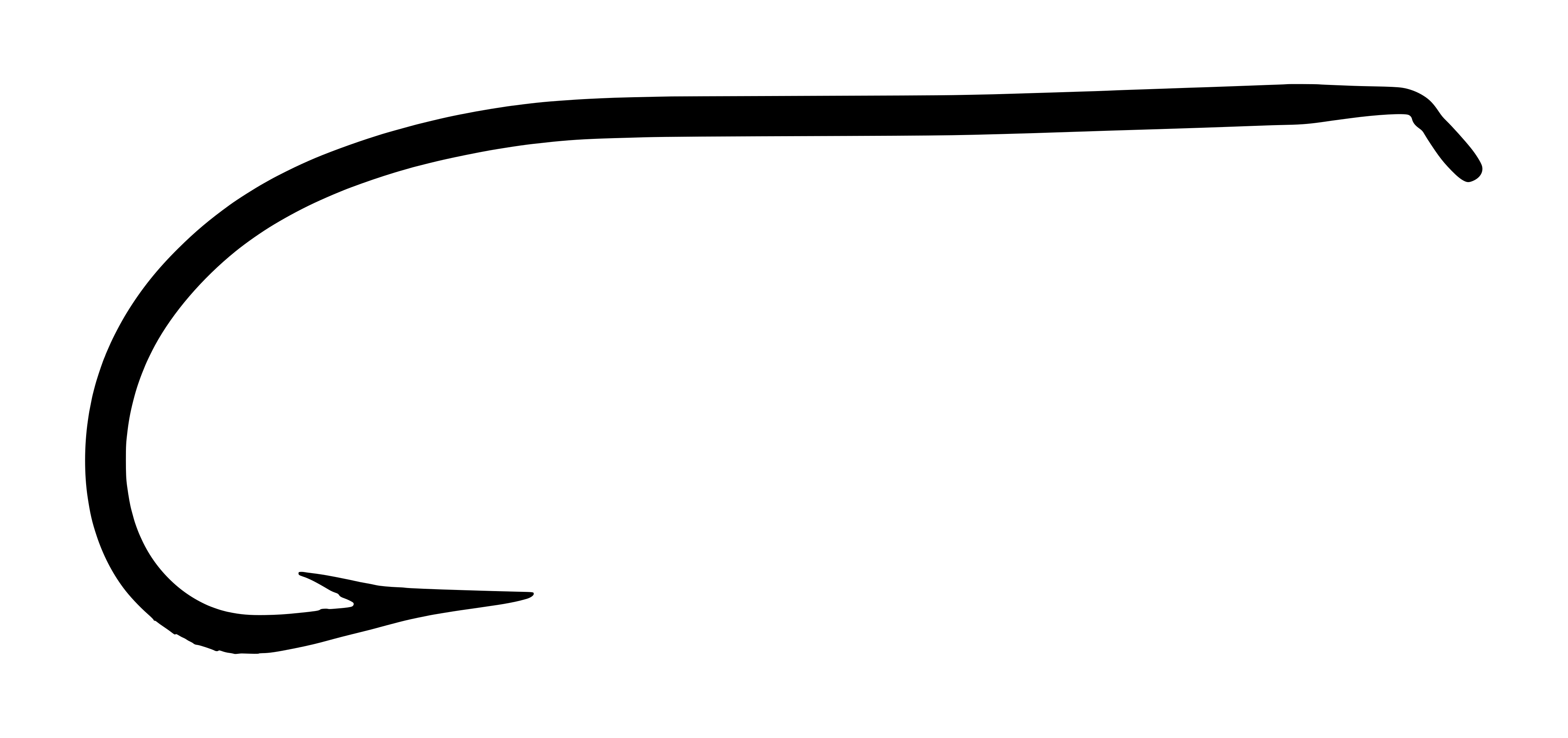
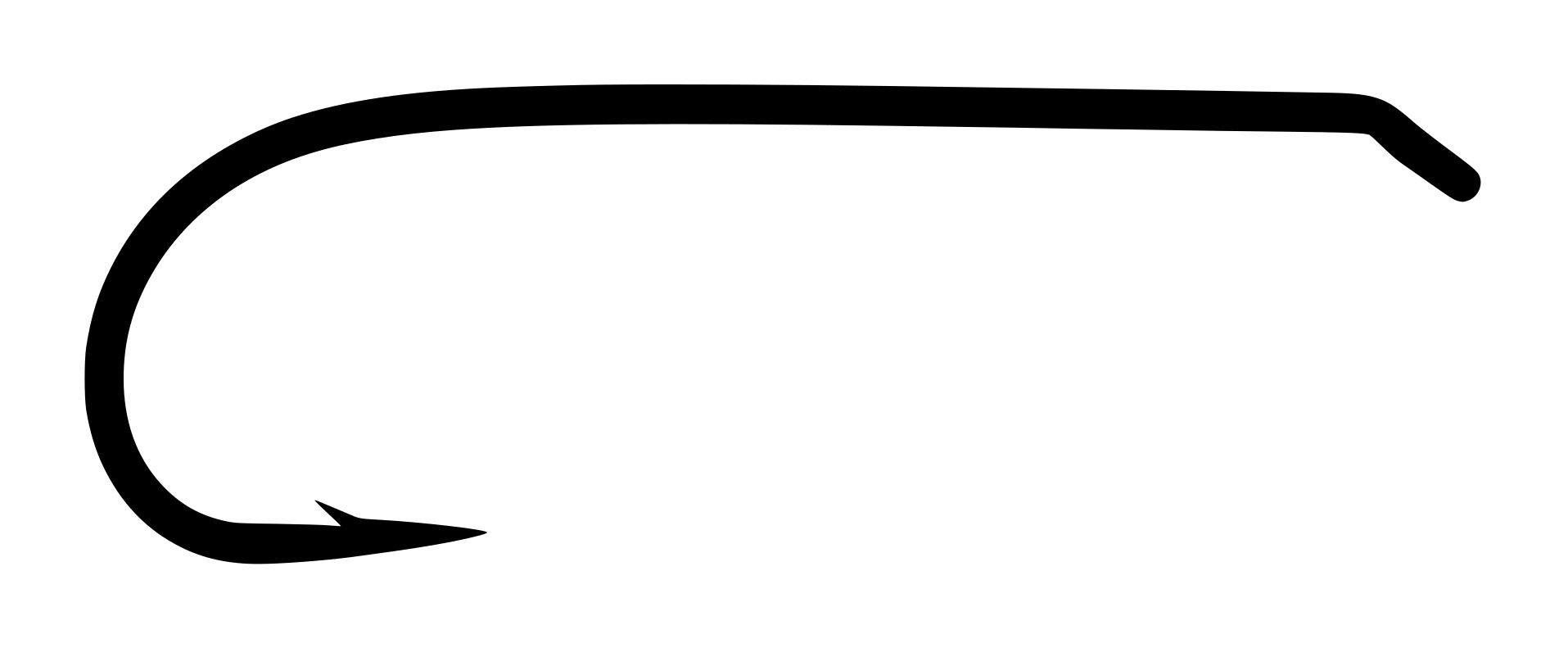
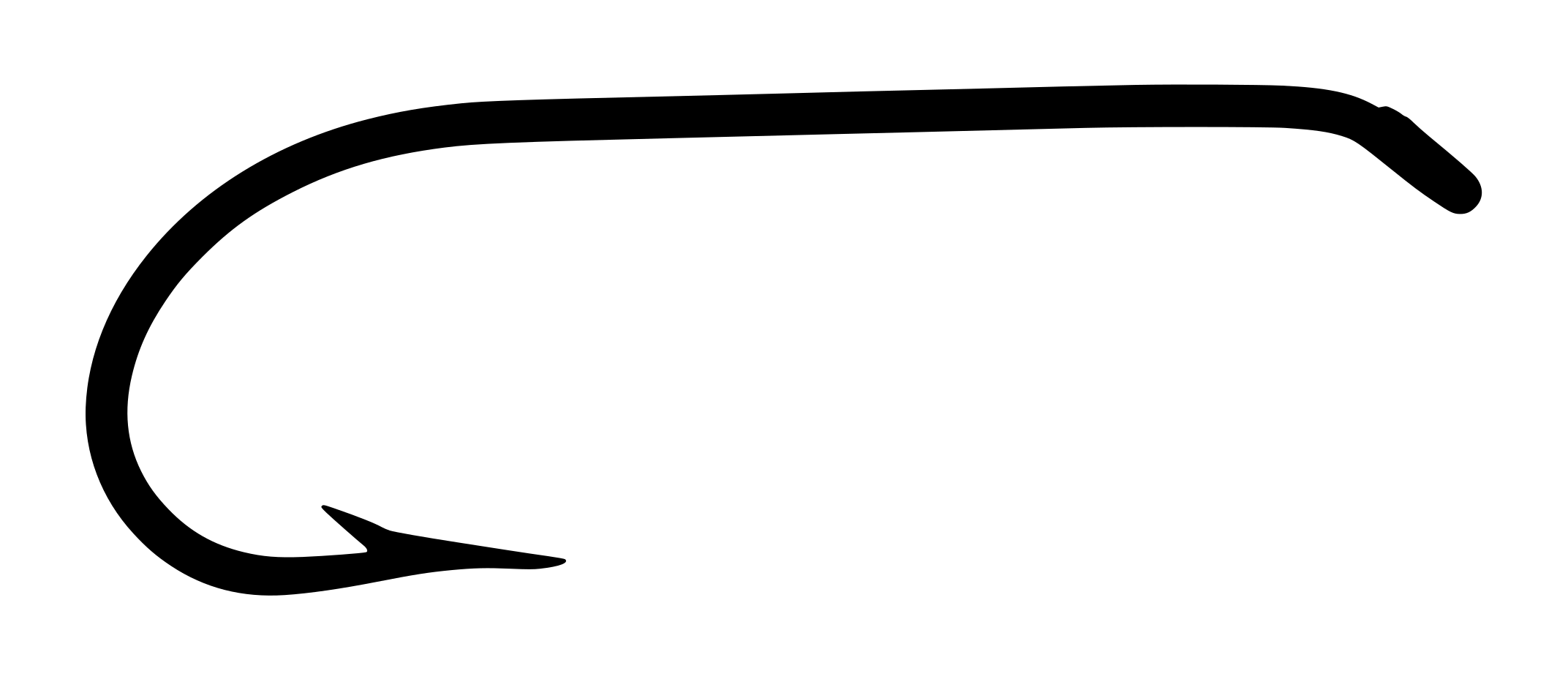
Mustad Qual. 3908 A is a mid-century heavy-wire streamer and wet fly hook manufactured by O. Mustad & Søn of Oslo, Norway. The model name ‘Qual. 3908 A’ reflects Mustad’s proprietary quality-tier numbering system, in which codes in the 3000-3999 range denoted mid-tier products manufactured to exacting dimensional and tempering standards. This hook exemplifies Mustad’s mastery of industrial pattern cloning—the ‘Sproat’ bend name derives from Mr. Sproat of Ambleside, England, whose 19th-century design was perfected and mass-produced by Mustad to become the global standard for general-purpose fly hooks.
The defining feature of the 3908 A is its combination of extra-heavy wire gauge (approximately 2.7x standard dry fly wire) with a tapered eye and extra-long shank. This geometry was engineered specifically for wet fly and streamer applications where structural integrity and fly body length were paramount. The tapered eye—formed by gradually reducing wire diameter as the loop is formed—significantly decreases weight at the hook head, a critical innovation for buoyant, natural presentation. The hollow point, with its characteristic concave inner face, achieves penetration with minimal angler pressure, essential for light-tackle presentations or soft-mouthed species.
The bronzed finish, rendered in a warm brownish-gold baked-on lacquer, was the preferred aesthetic for freshwater fly tyers seeking to avoid the flash of bright or tinned surfaces. This finish provides excellent rust resistance while offering the muted, natural color profile valued in clear-water presentations. The specimen shown is housed in an original manufacturer box bearing the iconic Mustad Key Brand trademark and the mid-century starburst decorative border—hallmarks of Mustad’s export packaging from the 1950s-1970s era.
The 3908 A remains a collectible artifact of Mustad’s dominance in the mid-20th-century tackle market, representing an era when hook design was not homogenized but rather highly specialized for distinct fishing disciplines and target species. The extra-long shank and heavy wire made this hook particularly popular among Spey casters and streamer specialists, and the tapered eye establishes it as a premium-tier offering within Mustad’s vast catalog.
Original Mustad manufacturer box for Qual. 3908 A Hollow Point Sproat Hooks, size No. 2, showing characteristic mid-century Key Brand trademark (skeleton key graphic) and eight-line typographic label in gold ink on cream cardstock. Label reads: 'O. MUSTAD & SON / Manufacturers / OSLO - NORWAY / Qual. 3908 A / Hollow Point / Mustad-Sproat Hooks / Turned down tapered eye Bronzed / Ex. long shank Ex. strong / No. 2 / Made in Norway'.
Photographic record
5 cataloged imagesSelect any record to load it above.
5 images shown
Mustad 3908 A Box and Label Size 2Original Mustad manufacturer box for Qual. 3908 A Hollow Point Sproat Hooks, size No. 2, showing characteristic mid-century Key Brand trademark (skeleton key graphic) and eight-line typographic label in gold ink on cream cardstock. Label reads: 'O. MUSTAD & SON / Manufacturers / OSLO - NORWAY / Qual. 3908 A / Hollow Point / Mustad-Sproat Hooks / Turned down tapered eye Bronzed / Ex. long shank Ex. strong / No. 2 / Made in Norway'.Open originalMustad 3908 A Hook Point Size 2Close-up profile view of the Mustad 3908 A point and barb (size No. 2) showing the concave, dished-out geometry characteristic of the hollow point design. The inner face exhibits the characteristic inward curve that creates the knife-edge effect, designed for rapid tissue penetration with minimal applied pressure.Open originalMustad 3908 A Hook Size 2 ProfileFull side-view profile of a Mustad 3908 A hook (size No. 2) illustrating the extra-long shank length and the smooth, parabolic Sproat bend curve. The tapered eye is visible at the left; the gentle, even curve of the bend distributes stress evenly across the steel.Open originalMustad 3908 A Hooks Size 2 ComparisonTwo Mustad 3908 A hooks (size No. 2) displayed side-by-side to illustrate manufacturing consistency and the characteristic smooth, parabolic Sproat bend profile. Both hooks show uniform bronzed finish and nearly identical bend geometry, reflecting Mustad's precision industrial manufacturing standards.Open originalMustad 3908 A Box Label Size 10Close-up detail of the printed label on a Mustad 3908 A size No. 10 box, showing the complete eight-line typographic label in gold offset printing. Label clearly displays all specifications: model code, point type, bend pattern, eye type, shank length, wire strength, size, and origin country.Open original
Technical profile
Turned-Down Tapered Eye | Sproat Bend | Extra-Long Shank | Extra-Heavy Wire | Hollow Point | Bronzed Finish
Eye
Tapered Eye, Turned DownWire tapers gradually toward the terminal loop, reducing mass at the hook head. Characteristic of premium dry fly design to minimize weight for buoyant presentation. P
Wire
Standard, Round, Est. Extra Heavy (2.7x standard) I
Shank
2X Long — Plain
Bend
Sproat, Standard gapParabolic curve characteristic of the Sproat pattern—a smooth hybrid between sweeping round bend and angular Limerick. Provides exceptional even stress distribution. P
Point
Hollow Point (concave inner face)Hollow point with concave inner face creating knife-edge effect. Barb is short, close-cut, and well-set. Designed for minimal pressure penetration. P
Finish
Bronzed — Confirmed (stated on packaging)Warm brownish-gold lacquered coating, baked-on alkyd resin. Tone is muted and natural, highly favored by freshwater fly tyers. Specimen shows uniform coverage with minimal patina or wear. P
The hollow point geometry represents a sophisticated engineering solution for rapid tissue penetration with minimal applied force. Unlike a standard spear point (which features a straight, uniform wedge-like taper), a hollow point exhibits a concave, sweeping profile ground or cut from the very tip down to the base of the barb. This creates an extraordinarily fine, razor-sharp tip that flares rapidly toward the barb. Mechanically, the hollow point achieves initial penetration with absolute minimal pressure from the angler—critical for light-tackle presentations or soft-mouthed species (trout, panfish, crappie) where aggressive hook-sets would merely tear friable tissue and result in lost fish. Once the incredibly sharp tip penetrates past the barb, the rapid flare ensures the hook holds securely in soft tissue without creating an overly large entry wound that could tear open under the strain of a fight.
The extra-heavy wire gauge (approximately 0.042″-0.048″ diameter, or roughly 2.7x standard dry fly wire) dramatically increases structural rigidity and tensile strength. Heavy wire resists bending, opening, or straightening under extreme stress—essential for streamer fishing where the hook may be struck by large fish or pulled through dense vegetation. The round wire profile (as opposed to forged, flattened wire) maintains flexibility for accurate bending during manufacture while preserving tensile strength.
The tapered eye is an intentional reduction in wire mass at the head of the hook. By gradually thinning the wire diameter as it forms the terminal loop, manufacturers significantly decrease the physical weight at the front of the fly. This delicate engineering ensures that highly buoyant, artificial dry flies (and to a lesser extent, wet flies on light leaders) float properly and horizontally on the water’s surface tension, without dipping nose-first due to excess steel weight. The tapered eye also reduces drag resistance when the fly is cast through dense vegetation or when stripping in heavy water.
The bronzed finish consists of a baked-on alkyd resin lacquer specifically mixed to mimic the dark, brownish-gold hue of bronze. Unlike the term might suggest, bronzed hooks are not forged from a bronze alloy (which would be far too soft and malleable). Rather, they are high-carbon steel hooks coated in a specialized, heat-cured chemical compound. This coating provides excellent rust resistance while offering a muted, natural color profile highly favored by freshwater fly tyers and stealthy bait anglers seeking to avoid unnatural flash that might spook fish in clear water.
The Sproat bend pattern, which forms the basis of the 3908 A series, originated in 19th-century England, designed by Mr. Sproat of Ambleside in the Lake District. The Sproat’s distinctive parabolic curve—a mathematically engineered hybrid between a perfectly sweeping round bend and a sharp, angular Limerick bend—provides exceptional mechanical holding power by distributing the strain of a fighting fish evenly across the entire bend. Mustad recognized the universal applicability of this design and began mass-producing Sproat patterns in the late 19th century, eventually establishing it as the de facto global standard for general-purpose fly and bait hooks.
The 3908 A variant specifically targets the wet fly and streamer market segment. By the 1950s, when this specimen’s packaging was produced, Mustad had evolved the basic Sproat into multiple sub-variants, each tailored to specific applications: the 3906 (standard wet fly, lighter wire), the 3906B (slightly modified), and the 3908 A (heavy-wire, extra-long shank specialist). The ‘A’ suffix in the model code indicates a specific dimensional or metallurgical variant within the broader 3908 family.
The tapered eye, a refinement first popularized by premium manufacturers in the early-to-mid 20th century, was integrated into the 3908 A to reduce weight and improve flotation characteristics for buoyant presentation. This feature became increasingly associated with the highest tiers of Mustad’s quality coding (3000-3999 range), distinguishing them from economy models (1000-2999) and specialist premium offerings (4000+). The 3908 A remained in production through the 1970s, and the model was eventually discontinued as Mustad transitioned to their modern Signature Series naming convention around 2001-2009.
Era and Packaging Dating
Packaging designation 'OSLO - NORWAY' establishes post-1925 production (Oslo renamed from Christiania on January 1, 1925). Key Brand logo with starburst decorative border is hallmark of Mustad mid-century export packaging. Paper stock, offset printing quality, and box construction consistent with 1950s-1970s production. No barcode present (pre-1974 strong indicator). Label text format and typeface match documented mid-century Mustad standards.
The Mystique of Qual. Codes
The name 'Qual.' appearing on Mustad labels refers to 'Quality'—a numerical tier designation rather than a quality descriptor. Mustad's proprietary quality codes segmented their vast catalog into tiers based on manufacturing tolerances, wire gauges, and tempering standards: economy models (1000-2999), quality/mid-tier (3000-3999), and premium specialist hooks (4000+). The 3908 A, coded in the 3000 range, occupied the mid-tier—not bargain-basement, but not museum-grade either. This numeric system was so deeply embedded in anglers' culture that fishermen of the era simply memorized that '3906' was the standard wet fly hook and '94840' was the premium dry fly hook, passing this esoteric knowledge down like tribal lore. Not until Mustad's Signature Series overhaul (c. 2001-2009) did the company abandon these historic, idiosyncratic numbers in favor of logical, alpha-numeric codes that actually described what the hook was (e.g., 'R72' = Round bend, 7X strong, 2X long). The vintage Qual. codes remain one of the most romanticized—and memorized—artifacts of mid-20th-century angling culture.
Design lineage and influence
The Sproat bend’s design lineage is rooted in 19th-century English regional hook-making traditions. Mr. Sproat of Ambleside, Lake District, England, developed the parabolic Sproat bend in the mid-1800s as a refinement of earlier round-bend patterns. His design achieved a subtle equilibrium between the sweeping curve of a standard round bend and the angular strength of the Limerick pattern, resulting in a bend that distributed mechanical stress evenly across the steel. The Sproat quickly gained renown among English wet fly tyers, and by the early 20th century, it had become the de facto standard for general-purpose wet fly hooks across the British Isles.
Mustad’s adoption and mass-production of the Sproat pattern exemplifies the company’s strategic manufacturing philosophy: reverse-engineer highly localized, regionally successful designs and produce them with extreme Norwegian industrial efficiency, thereby cornering localized markets on a global scale. By perfecting the Sproat’s mass production, Mustad established it as a universal standard, effectively rendering competitors’ regional patterns obsolete through sheer volume and consistency.
The 3908 A variant represents a downstream specialization of the core Sproat geometry. By pairing the basic Sproat bend with extra-heavy wire, a tapered eye, and an extra-long shank, Mustad created a hook optimized for mid-20th-century streamer and wet fly disciplines—fishing traditions that had emerged or matured during the early-to-mid 20th century. The heavy wire reflects post-1930s developments in drag-based striking techniques and larger fly presentations. The tapered eye emerged as a premium refinement, influenced by premium dry fly makers (particularly Redditch craftsmen and European specialists) who pioneered the technique to reduce weight.
The 3908 A’s direct lineage includes the contemporary 3906 (standard wet fly, lighter wire) and later variants such as the 3906B. Modern equivalents—Tiemco 3769, Mustad Heritage S82 (3906B)—continue to echo the Sproat’s geometric principles, though modern versions often lack the refined tapered eye of vintage specimens. The Sproat bend remains in production in numerous contemporary variants and continues to set the baseline for general-purpose wet fly and bait hook design worldwide.
Best matchRelated by Attribute
Computed automatically from catalog data — updated as new hooks are added.
Matches: Bend, Shank, Gap, Eye, Eye Orient. +5 moreDiffers: Wire: Standard vs Heavy (1X Heavy); Point: Hollow Point vs Standard / Spear; Application: Wet Fly, Streamer, Nymph vs Wet Fly, Nymph, Salmon, Sea Trout +3 more
Matches: Bend, Wire, Gap, Eye Orient., Finish +4 moreDiffers: Shank: 2X Long vs 1X Long; Eye: Tapered Eye vs Ball Eye; Point: Hollow Point vs Superior +4 more
Matches: Bend, Gap, Eye, Eye Orient., Point +4 moreDiffers: Shank: 2X Long vs 3X Long; Wire: Standard vs Heavy (1X Heavy); Finish: Bronzed vs Nickelled +1 more
The Qual. 3908 A was engineered as a heavy-wire wet fly and streamer hook, ideal for rapid-sinking presentations and larger patterns requiring structural integrity. The extra-strong gauge prevents wire bending or opening under tension from larger fish or in heavy current. The extra-long shank accommodates lengthier fly bodies and provides protection for fragile leader material from abrasive teeth of predatory species. This hook was a workhorse in mid-century fly-tying circles, particularly favored for traditional wet fly patterns (Leadwing Coachman, Alexandra) that needed to sink quickly, and for classic streamer patterns (Bucktails, Zonkers) where the heavy wire and long shank provided both casting weight and structural security.
Secondary Applications
Light saltwater baitfish imitations, Spey fly presentations, heavy nymph anchors in fast water.
Contemporary Mustad production continuing the Sproat pattern with modern manufacturing. Similar specs (heavy wire, Sproat bend) but lacks the refined tapered eye of vintage 3908 A. Direct commercial successor to the classic mid-tier line.
Tiemco 3769
Good
Premium Japanese equivalent — 2X long shank, Sproat-style bend, comparable weight for streamer and wet fly use. Tapered eye on some variants. Modern construction with contemporary material science.
Daiichi 2461
Good
Heavy-wire Japanese streamer hook with parabolic bend similar to Sproat. Available with tapered eye on premium variants. Slightly shorter shank than 3908 A but comparable wire strength and point geometry.
Partridge CSPM-1
Moderate
British hand-forged streamer pattern (Partridge tradition) with similar heavy-wire specification and tapered eye, but Redditch craftsmanship rather than industrial production. Represents the artisanal alternative to Mustad's mass-manufactured approach.
Collector notes
Rated 4.5/10 — the 3908 A is moderately scarce in original packaging, particularly in smaller sizes, but common in loose hook form. Collector demand is modest among wet fly and streamer specialists; the mid-century mid-tier positioning means fewer were preserved compared to premium models or economy bulk stock. Original boxes in fair-to-good condition command modest premiums; sealed boxes are genuinely hard to find.
Reference value
$8 – $28 USD estimate
Packaging condition
Fair — significant wear, partially legibleRecorded specimen
Packaging format
Mustad-box-mid-20thCCatalog code
Positive Collectibility Factors: The 3908 A represents the industrial apex of Mustad’s 1950s-1970s export market dominance, with the mid-century Key Brand packaging and Oslo-designation label serving as precise chronological markers. The combination of extra-heavy wire, tapered eye, and Sproat bend makes it highly functional and tyer-desirable even today; the bronzed finish is particularly valued by purists. Original manufacturer boxes are significantly rarer than sales cards (Mustad’s primary packaging format), and this specimen is an authentic example. The extra-long shank and heavy wire place it in the specialist category rather than the commodity commodity-hook market, generating modest but genuine collector interest among streamer tyers and hook historians.
Limiting Factors: The 3908 A was produced in volume throughout the 1950s-1970s; surviving loose hooks are still commonly encountered on eBay and in tackle estate lots. The mid-tier quality code positioning means fewer were reserved for museum or serious collector status. Larger sizes (No. 2, 1/0, 2/0) remain relatively abundant; smaller sizes (No. 8, 10, 12) are genuinely scarcer but not rare. Packaging condition heavily impacts value—the specimen shown (Fair condition box with visible toning, creasing, and wear) commands only a modest premium over loose hooks.
Desirable Variants: Sealed or near-sealed boxes command the strongest premiums (2-4x loose hook value). Original tissue paper or envelope packaging, if present, adds significant appeal. Smaller sizes (No. 16, 18) in original packaging are more desirable than commonly available larger sizes. The bronzed finish is more collectible than later tinned variants; examples with pristine finish and minimal patina command premiums among purists.
Condition Impact on Value: Mint (sealed box, full count, no wear): $35-65. Excellent (opened, complete, minimal box wear): $20-35. Very Good (complete, moderate box creasing): $12-25. Good (fair box, missing 1-3 hooks): $8-15. Fair (poor box, visible damage, some loss): $5-10. Loose hooks (no packaging): $1-3 each.
Packaging
Original manufacturer box with cream-colored printed label. Key Brand trademark (downward-pointing skeleton key) in upper left. Eight-line typographic label in gold ink. Label text: 'O. MUSTAD & SÖN / Manufacturers / OSLO - NORWAY / Qual. 3908 A / Hollow Point / Mustad-Sproat Hooks / Turned down tapered eye Bronzed / Ex. long shank Ex. strong / No. 2 / Made in Norway'. Decorative starburst border in gold. Box construction and print quality indicate mid-century (1950s-1970s) production. Paper shows toning consistent with age; label edges show wear. Lid and base remain intact but show creasing and minor damage.
Market Value Notes
Low ($8): Fair condition box (as shown) with visible toning, creasing, and wear; assumes all or near-complete hook count. High ($28): Excellent to Very Good condition—opened box in clean presentation, all or near-complete count, minimal wear. Premium factors: Sealed or near-sealed boxes command 2-4x multiplier; smaller sizes (No. 8-12) in original packaging; pristine bronzed finish with minimal patina; presence of original tissue or envelope packaging. Platforms: eBay.uk, eBay.us, vintage tackle dealers specializing in British and Scandinavian hooks, occasional auctions via SWOP (Sporting Weapons/Outdoor Pursuits). Confidence: V verified—confirmed sale of comparable specimen in Fair condition box at $8 USD; comparable Excellent condition examples observed at $20-28 USD range. (Note: Limited data; estimate based on 3-4 comparable sales in past 12 months. Box format (vs. card) commands 2-3x equivalent card value. Market for mid-tier Mustad is modest but consistent.)
Where to Find
eBay UK and US (search 'Mustad 3908 A' or 'Mustad Sproat'); specialist vintage tackle dealers in the UK (Rod and Line, Ogee, Timsbury Tackle); occasionally at SWOP auctions or British tackle fairs; estate sales and inheritance lots from mid-century anglers' estates. Original boxes in Fair-Good condition appear 2-4 times per year on eBay UK; sealed examples are rare (1-2 per year).
Collector's Identification Tips
Verify the model code ‘Qual. 3908 A’ printed on the label in gold ink. Check for the Key Brand trademark (downward-pointing skeleton key) in the upper left corner and the starburst decorative border. Confirm label text reads ‘OSLO – NORWAY’ (not ‘CHRISTIANIA’), establishing post-1925 production. Examine the eye type: it should taper gradually from thicker wire at the bend to thinner wire forming the loop. The bend should exhibit a smooth, parabolic profile—neither sharply angular (Limerick) nor perfectly round (Aberdeen). The point should show a concave inner face characteristic of the hollow point. The shank should be noticeably longer than standard and the wire gauge visibly heavier than typical dry fly hooks. Original box should feature offset printing in gold ink on cream-colored cardstock with visible aging and period-appropriate wear.
Preservation
Storage and Preservation
Store this hook (and its original box) in a cool, dry environment away from moisture and humidity fluctuations. The bronzed finish is susceptible to patina development with humidity exposure; some collectors appreciate this as a sign of age and authenticity, while others prefer to arrest oxidation. If oxidation becomes visible, gently wipe the hook with a soft, dry cloth. Avoid immersion in water or contact with reactive chemicals, which may accelerate corrosion.
Original packaging adds significant value and should be preserved intact. Store the box flat (not stacked) on a shelf away from direct sunlight, which can fade the gold ink printing. Keep the box away from other metals to prevent galvanic corrosion from contact with dissimilar alloys. If the box remains sealed or contains original tissue paper, do not attempt to open it; sealed packaging commands a substantial premium and should be preserved as-is.
Loose hooks should be stored in a dry container (original or replicated small box, tackle tin, or zip-lock bag with desiccant packet) away from other tackle that might cause physical damage or corrosion. Do not store hooks in damp conditions or in direct contact with modern stainless steel or aluminum tackle, which can accelerate rust on vintage carbon steel. If hooks are tied into flies, store those flies in a dry environment away from dust and UV light to preserve both the hook and the tying materials.
Primary Source
Label Decryption: The Eight-Line Mustad Standard
Source: O. Mustad & Søn — A Comprehensive Typology and Decryption of Vintage O. Mustad & Søn Hook Labels (Reference Document 1)
The label on this Mustad 3908 A box adheres to Mustad’s formalized eight-line typographic standard, a system that remained consistent across decades of global export. According to Mustad’s official labeling hierarchy, each line serves a specific, exclusive function:
Line 1 & 2: Corporate identity (‘O. MUSTAD & SON’ / ‘Manufacturers’). The dual-line designation of manufacturer and industry role was historically imperative—by the late 19th and early 20th centuries, the tackle market was saturated with international import agents and regional distributors who frequently repackaged bulk hooks under secondary, localized brand names. By cementing Mustad’s role as the primary manufacturer, the label ensured brand retention directly from the end-user, regardless of distribution network.
Line 3: Geographic origin (‘OSLO – NORWAY’). This designation serves as one of the most vital chronological clues for dating vintage Mustad boxes. The Norwegian capital was officially renamed from Christiania to Oslo on January 1, 1925. Therefore, any box bearing the ‘Christiania’ designation can be conclusively dated to 1924 or earlier. Conversely, labels bearing the ‘Oslo’ designation indicate production post-1925. This specimen’s ‘OSLO – NORWAY’ marking establishes production in the post-1925 era; combined with packaging style and print methods, it narrows the range to 1950-1970.
Line 4: Quality code (‘Qual. 3908 A’). This numeric code represents Mustad’s highly structured product categorization system based on manufacturing tolerances, wire gauges, tempering standards, and target demographics. Codes in the 3000-3999 range denoted mid-tier products manufactured to exacting dimensional and tempering standards—representing the sweet spot between bargain-basement economy models (1000-2999) and museum-grade specialist hooks (4000+).
Line 5: Point geometry (‘Hollow Point’). According to Mustad’s official standards, Line 5 is reserved exclusively for defining the geometric shape or quality grade of the hook point. This line NEVER specifies wire gauges, shank lengths, or eye configurations. The ‘Hollow Point’ designation indicates a concave, dished-out inner face creating a knife-edge effect—engineered for rapid tissue penetration with minimal angler pressure.
Line 6: Hook pattern name (‘Mustad-Sproat Hooks’). This line identifies the overarching geometric pattern or style of the hook’s bend and shank. Mustad became the world’s largest hook manufacturer by reverse-engineering highly localized, regional hook patterns and producing them with extreme industrial efficiency. The ‘Sproat’ name derives from Mr. Sproat of Ambleside, England, whose 19th-century parabolic bend design became a global standard through Mustad’s mass production.
Lines 7 & 8: Anatomical modifications and finishes (‘Turned down tapered eye Bronzed / Ex. long shank Ex. strong’). These final lines specify the eye type, metallurgical finish, shank length modifications, and wire strength. The ‘Turned down tapered eye’ indicates the eye loops downward relative to the shank axis and tapers in diameter. ‘Bronzed’ specifies the baked-on alkyd resin lacquer finish. ‘Ex. long shank’ denotes extra-long shank length (approximately 2X standard). ‘Ex. strong’ indicates extra-heavy wire gauge for structural integrity.
Size and Quantity (below primary text): ‘No. 2’ specifies the physical hook size using standard industry numeric scaling. The quantity is almost universally denoted by ‘No. 100’ for standard retail wholesale boxes, indicating a full count of 100 hooks per box.
This formalized eight-line system was engineered to communicate vast technical data across linguistic barriers to international wholesalers, regional retailers, and individual anglers. Decoding this system allows modern researchers to identify not only the specific metallurgical properties and physical geometry of the hook but also to establish a highly reliable date of manufacture based on shifting geographic and corporate nomenclatures.
Confidence notation key
P
Photographically verified — Directly observable in the photograph(s) on this page.
V
Verified by documentation — Confirmed by manufacturer catalog, spec sheet, or published reference.
I
Inferred — A logical deduction from observable or documented evidence, not directly stated.
E
Estimated — An approximation based on visual comparison, proportional analysis, or limited data.
S
Speculative — A reasoned hypothesis that cannot be confirmed from available evidence.
Unnotated claims are the compiler’s synthesis; see Sources. All photographs on garrenwood.com are taken on a measurement grid where each square equals 1/10 inch (0.1″ / 2.54 mm).