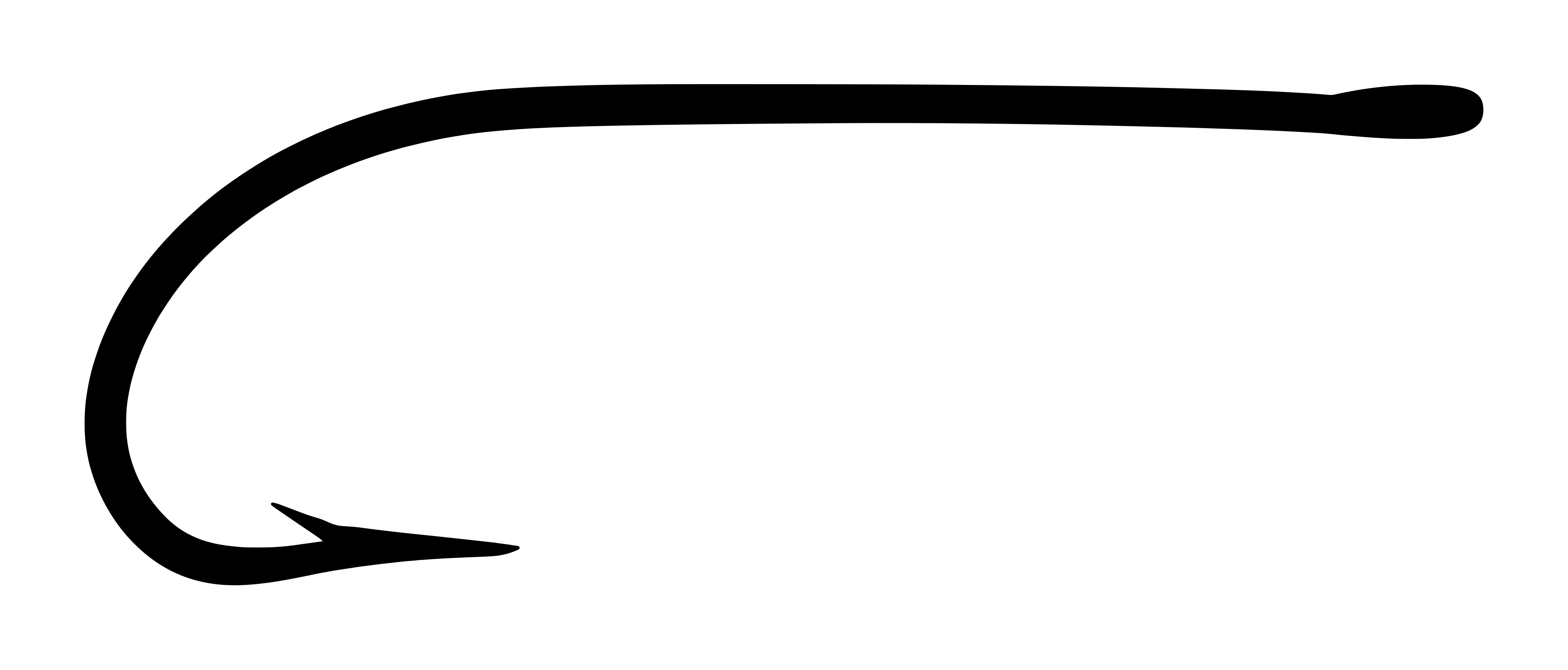
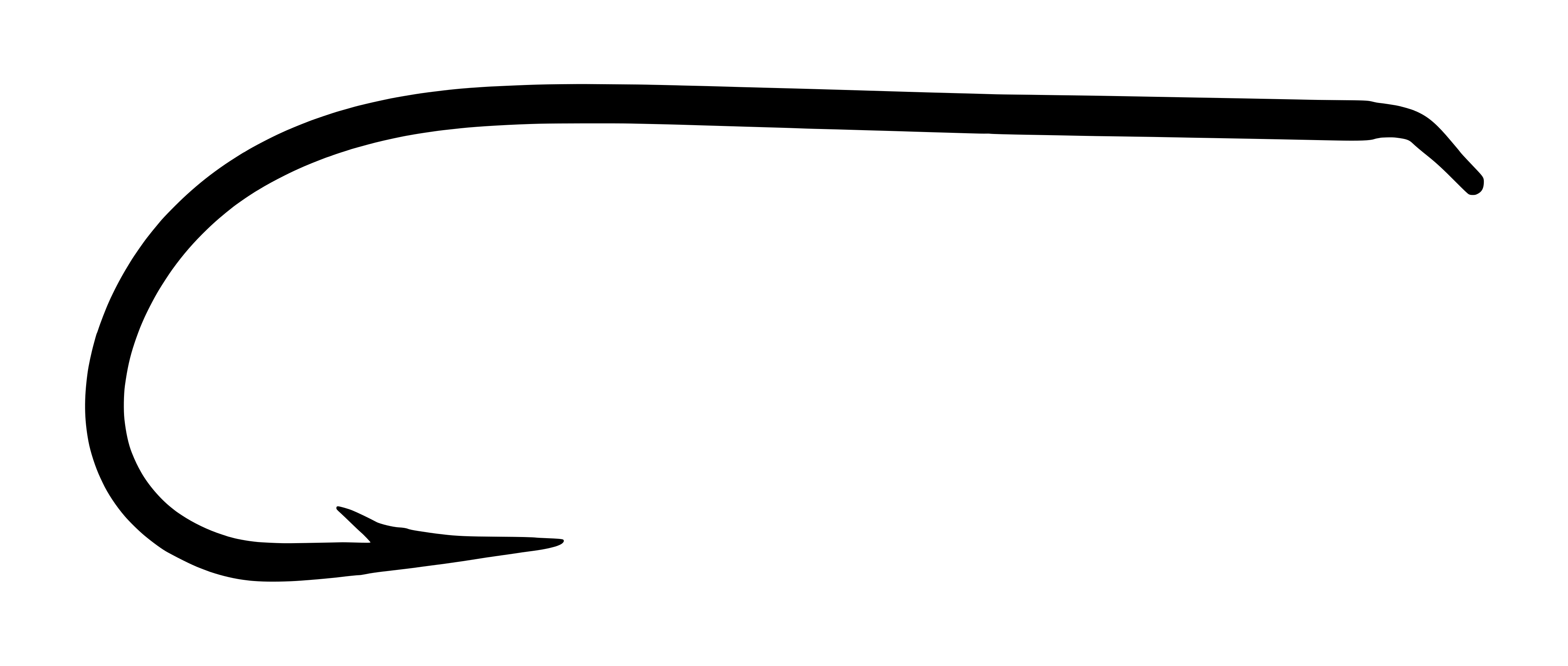
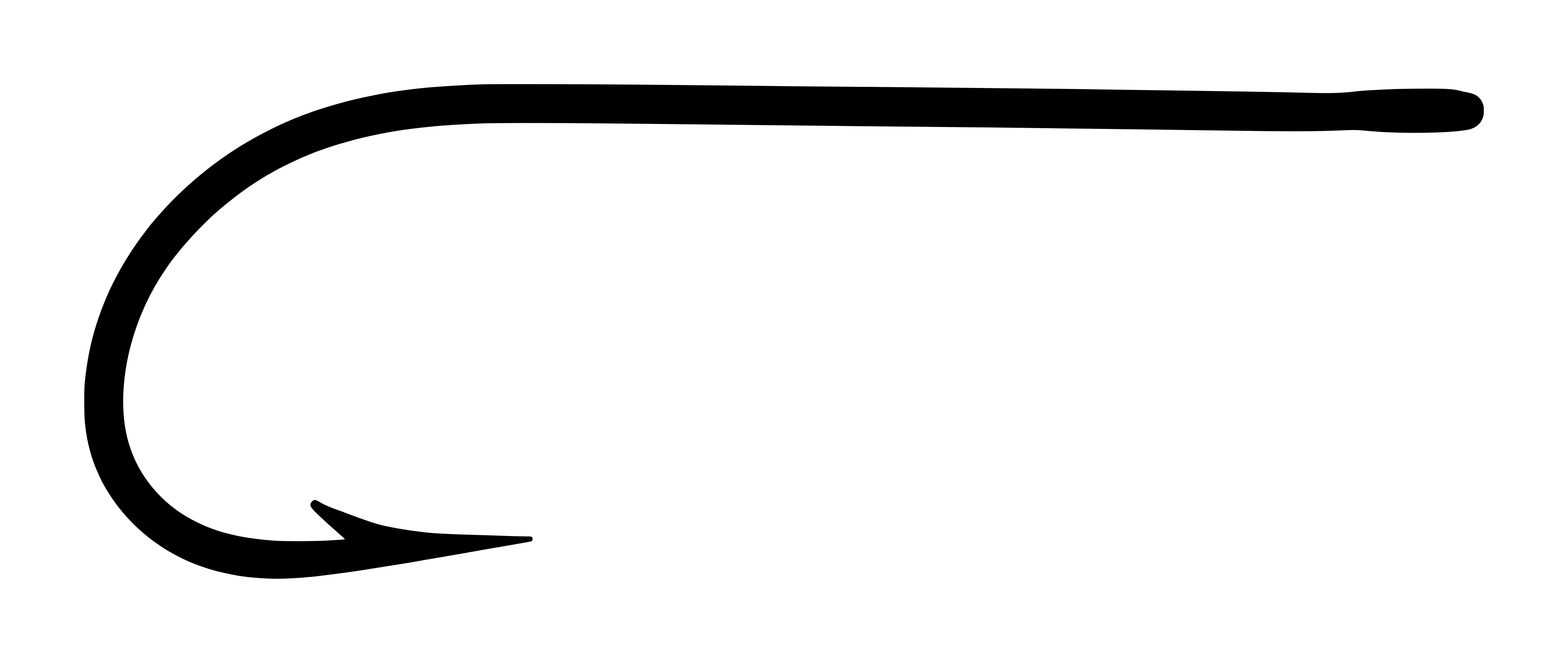
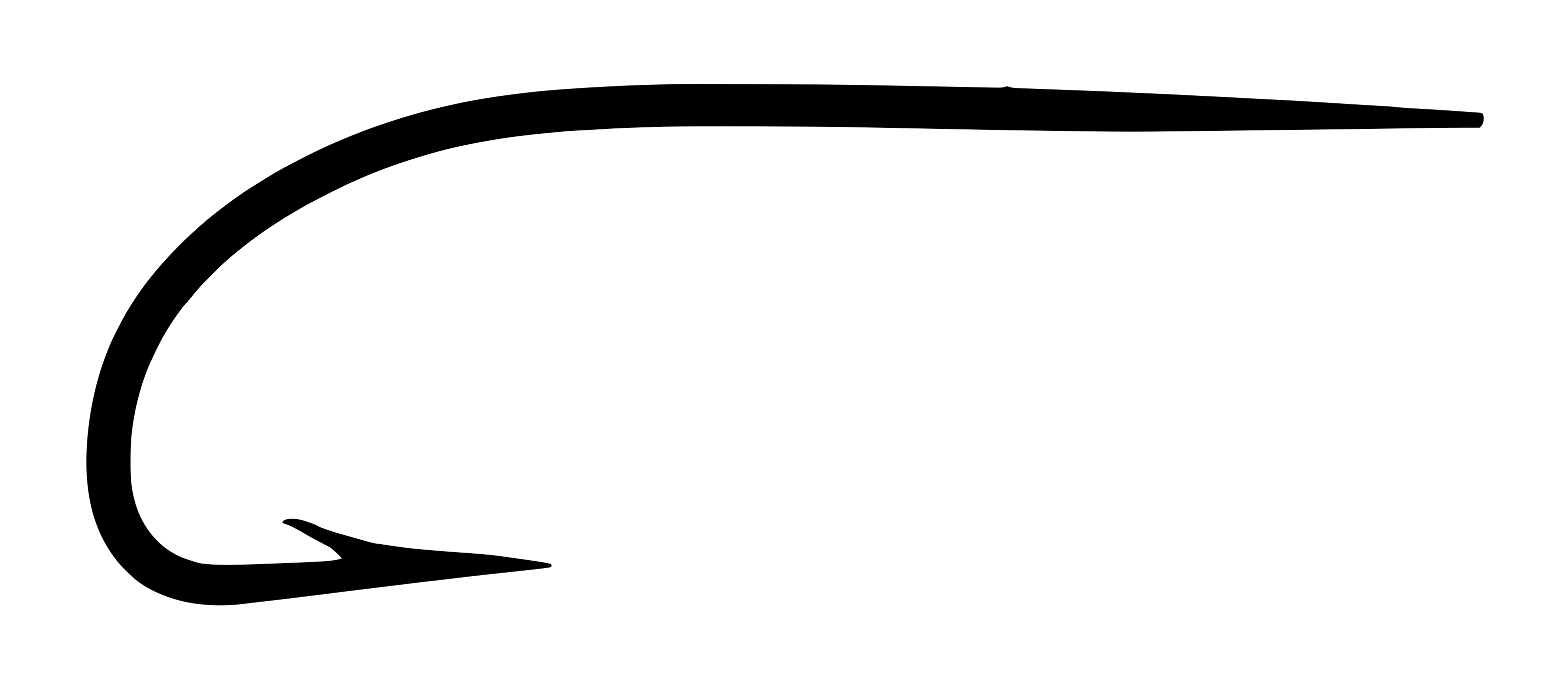
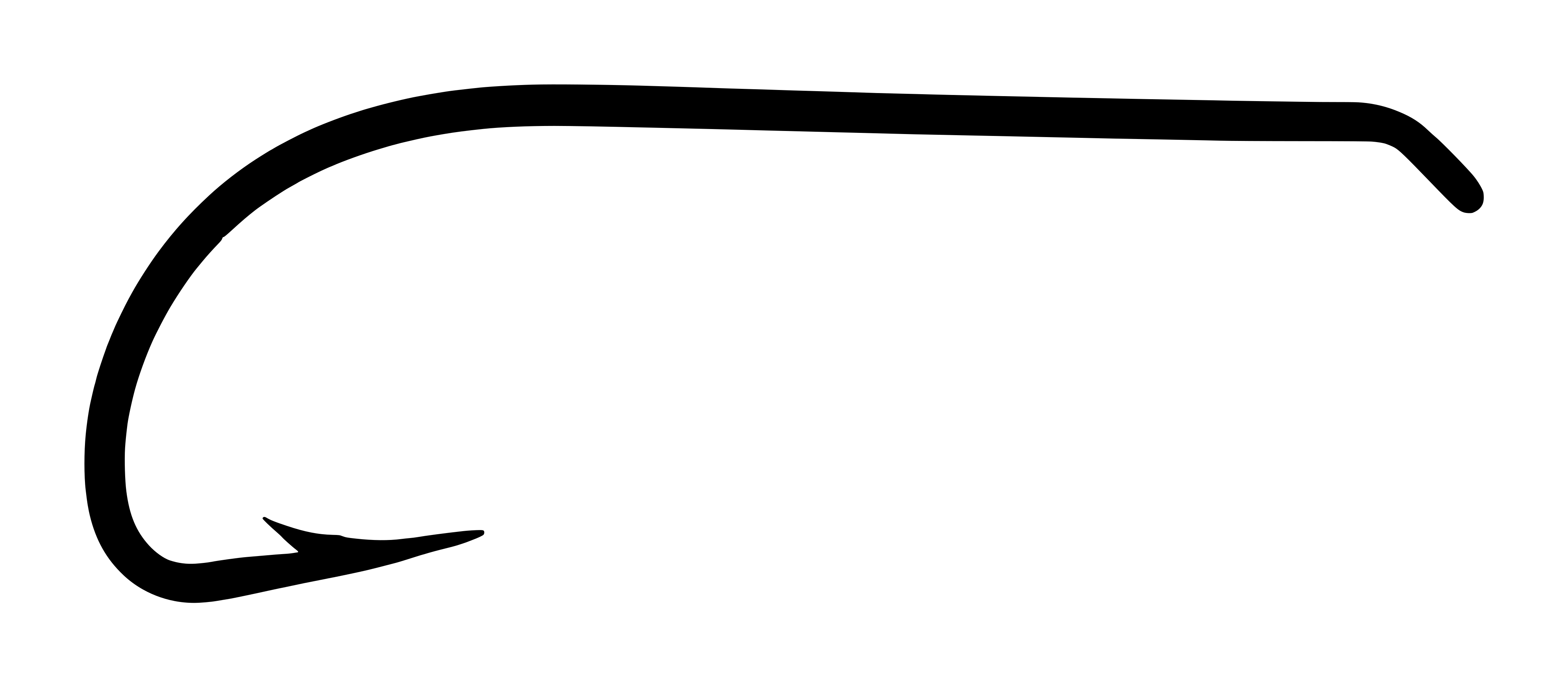
The Mustad 34040 is a mid-20th-century saltwater bait hook featuring the iconic O’Shaughnessy bend—a deep, parabolic design with heavily forged sides that provides exceptional structural strength. Manufactured in Oslo, Norway (post-1925), this premium variant offers a special long shank and the uncommon copperplate finish, distinguishing it from the millions of tinned 34007 variants produced in the same era.
The hook’s defining characteristic is its forged construction: the wire is mechanically flattened at the bend, dramatically increasing crystalline density and resistance to straightening under the crushing jaw pressure of large marine predators. The superior point geometry—with a near-straight inner taper—penetrates thick bone and cartilage efficiently, making it ideal for large, hard-mouthed species like Striped Bass, Bluefish, Tarpon, and Cod. The special long shank protects vulnerable line from sharp teeth and accommodates bulky natural baits.
Era evidence includes the red textured paper box with clear offset-printed label showing ‘OSLO – NORWAY,’ the absence of modern barcoding, and typography consistent with 1950s–1960s production. The copperplate (not tinned) finish is notably scarce compared to standard variants, making original examples with intact packaging increasingly sought by collectors of vintage saltwater tackle and industrial fishing heritage.
Mustad 34040 Box
Photographic record
4 cataloged imagesSelect any record to load it above.
4 images shown
Mustad 34040 BoxMustad 34040 BoxOpen originalMustad 34040 HookMustad 34040 HookOpen originalMustad 34040 PointMustad 34040 PointOpen originalMustad 34040 Label and HooksMustad 34040 Label and HooksOpen original
Technical profile
Eye
Ball Eye, Straight / InlineSpecial ring eye as labeled; simple circular loop formed by bending wire back onto shank. P
Wire
Heavy (1X Heavy), Forged
Shank
Special Long — Plain
Bend
O'Shaughnessy, Wide gapClassic O'Shaughnessy geometry with characteristic deep, parabolic bend and heavily flattened sides from forging. Near-symmetrical curve from eye to barb. P
Point
Superior (near-straight inner taper)Standard barb placement and size consistent with O'Shaughnessy pattern. Short, tightly cut barb at junction of point and shank. P
Finish
Gold-Plated — Confirmed (stated on packaging)Copperplated finish creates distinctive warm, reddish-bronze tone visible in photographs. Uniformly applied across entire hook. P
The O’Shaughnessy bend geometry distributes stress mathematically across a deep, parabolic curve—the lowest point of the bend concentrates maximum holding power during the violent strikes and sustained runs of large saltwater predators. The forged construction (flattened wire at the bend) increases crystalline density and tensile strength dramatically without adding weight. Cold-forging at the bend increases hardness to approximately 50–55 Rockwell C, making the hook exceptionally resistant to straightening under dynamic load. The superior point (near-straight inner taper with minimal barb undercut) penetrates thick bone and cartilage efficiently, critical for hard-mouthed species like tarpon and large striped bass. The special long shank provides protection for the leader or line from being severed by the abrasive teeth of the target species, and offers ample room for rigging bulky natural baits. The copperplate finish creates a warm, reddish-bronze surface that mirrors certain forage colors and provides moderate corrosion resistance in saltwater environments—less protective than tinning but offering visual and historical appeal for specific traditional baits.
We don't have measured sizes for this hook yet. Own one? Submit calipered measurements and we'll review and add them. Thank you!
Historical context
mustad
O. Mustad & Søn was founded in 1832 in Gjøvik, Norway, initially as a general metal goods factory (Brusveen Spiger- og Staltradfabrikk) producing nails, wire, and cast iron. In the 1870s, the company transitioned to hook manufacturing under the leadership of Ole Hovelsen Mustad and his son Hans Mustad. The defining innovation came in 1877 when Mathias Topp invented the first fully automated hook-making machine—a mechanized breakthrough that allowed continuous wire feeding, cutting, bending, barbing, and pointing at unprecedented speed. Mustad’s leadership deliberately avoided patent disclosure, instead protecting their advantage through strict corporate secrecy and factory access restrictions. This strategy proved devastatingly effective against rival centers in Redditch, England, and American manufacturers. By the 1950s, Mustad had captured approximately 50% of the global hook production market, with sales offices and manufacturing facilities across multiple continents. The company’s transition from Gjøvik factory headquarters to Oslo-based export operations during the mid-20th century reflects their expansion into international markets. Mustad hooks became virtually synonymous with the fishing hook itself during this era.
Series History
The O’Shaughnessy bend is a historic saltwater pattern that originated in Ireland and was perfected by English and Norwegian makers. Mustad’s O’Shaughnessy line (quality codes in the 3400–3407 range) became the industrial standard for commercial marine fisheries by the early 20th century. The design features an exceptionally deep, parabolic bend with heavily forged sides, creating a hook of unmatched structural integrity—the flattened wire at the bend resists straightening under the crushing jaw pressure of large marine species. Model 34040 represents a premium variant offering a special long shank configuration and specialized finish. The copperplate finish variant (34040) was produced in limited quantities, likely for specific regional markets or specialized bait-fishing applications where the warm-toned finish matched forage color or wire-leader visibility. The more common tinned variant (34007) dominated commercial production and remains widely available today as a stainless-steel modern equivalent. The 34040 was eventually superseded by the 34007 (Duratin stainless) as Mustad modernized their catalog and shifted away from carbon-steel finishes toward corrosion-resistant alternatives in the 1970s–1980s.
Era and Packaging Dating
Label shows 'OSLO - NORWAY' designation, which dates production to post-1925 (Oslo rename from Christiania occurred 1 January 1925). Quality code 34040 is mid-tier saltwater pattern numbering (4000+ range = premium/specialized). Red textured paper box, Key Brand logo, and offset address line are hallmarks of Mustad mid-20th-century export packaging. No barcode present, consistent with pre-1974 manufacture. Typography and paper stock indicate offset printing typical of 1950s-1960s. Copperplate finish was less common than tinned (34007) and suggests specialty market, typical of 1950s-early 1960s production run before standardization.
The O'Shaughnessy's Industrial Dominance
The O'Shaughnessy bend is named after a 19th-century Irish hook-maker, though O. Mustad & Søn's industrial production of the pattern transformed it from a regional specialty into the global standard for commercial marine fisheries. During the mid-20th century, when Mustad controlled approximately 50% of worldwide hook production, the O'Shaughnessy remained the absolute workhorse for offshore trolling and commercial bottom-fishing operations. Norwegian-made O'Shaughnessy hooks in tinned finish were standard issue aboard North Atlantic fishing vessels for Cod, Halibut, and other species—making Mustad's engineering synonymous with the profitability of entire fishing fleets. The copperplate finish on the 34040, rare compared to millions of tinned variants, likely represents a specialized market variant developed for specific regional preferences or bait-matching traditions now largely forgotten.
Design lineage and influence
The O’Shaughnessy bend traces its ancestry to Irish and Scottish fishing traditions, where heavy-duty saltwater hooks demanded exceptional structural strength. Mustad’s mechanized production of this pattern in the late 19th and early 20th centuries transformed it from a regional specialty into the global industrial standard for saltwater bait and commercial fishing. Competing designs from English makers (Partridge, S. Allcock) and American manufacturers (Pflueger, O. Shaughnessy originator) existed, but Mustad’s manufacturing efficiency and quality control made their version the preferred choice for wholesale markets. The 34040’s special long shank and forged construction represented an evolutionary refinement optimizing for specific bait-rigging and trolling applications. Modern successors include the Mustad 34007 (stainless steel), Tiemco 800S (modern big-game), and Gamakatsu Nautilus (saltwater specialist). The historical influence of Mustad’s O’Shaughnessy extends into modern fly-tying traditions where large offshore streamers continue to rely on heavy-gauge O’Shaughnessy-style bends for extreme durability.
Best matchRelated by Attribute
Computed automatically from catalog data — updated as new hooks are added.
Matches: Bend, Eye, Point, Forging, Application +2 moreDiffers: Shank: Special Long vs 3X Long; Wire: Heavy (1X Heavy) vs Standard; Gap: Wide vs Standard +2 more
Matches: Bend, Wire, Eye, Eye Orient., Point +2 moreDiffers: Shank: Special Long vs Standard; Gap: Wide vs Standard; Finish: Gold-Plated vs Bronzed +2 more
Matches: Bend, Eye, Eye Orient., Point, Forging +2 moreDiffers: Shank: Special Long vs Standard; Wire: Heavy (1X Heavy) vs Standard; Gap: Wide vs Standard +2 more
Matches: Bend, Gap, Point, Forging, Shank Feat. +1 moreDiffers: Shank: Special Long vs Standard; Wire: Heavy (1X Heavy) vs Extra-Heavy (2X+); Eye: Ball Eye vs Tapered Eye +2 more
The Mustad 34040 is a vintage saltwater bait hook designed for rigging whole baitfish or large chunks for heavy offshore and estuary fishing. The forged O’Shaughnessy bend provides exceptional structural strength needed for large predatory species—particularly Striped Bass, Bluefish, Cod, and Tarpon in salt environments. The special long shank protects vulnerable line from sharp-toothed fish and accommodates bulky baits. Historically used by commercial and sport anglers for trolling large natural baits and constructing heavy bottom-fishing rigs.
Secondary Applications
Classic saltwater streamer fly tying for large baitfish imitations; offshore big-game applications; heavy bait fishing in rocky coastal environments.
Classic Fly Patterns
Lefty's Deceiver, Tarpon Fly, large saltwater streamers
Modern Equivalents
Hook
Match Quality
Notes
Mustad 34007 (Duratin Stainless)
Excellent
Direct modern equivalent with identical O'Shaughnessy bend geometry. Stainless construction replaces carbon-steel copperplate. Maintains special long shank and forged profile.
Tiemco 800S
Very Good
Modern big-game saltwater hook with similar forged O'Shaughnessy-style bend and long shank. Nickel-plated stainless. Slightly lighter wire gauge than vintage 34040.
Gamakatsu Nautilus
Good
Japanese-manufactured saltwater specialist with comparable bend geometry and forged strength. Modern chemically sharpened point. Less common in North American markets.
Owner Mutu
Good
Premium saltwater bait hook with parabolic bend similar to O'Shaughnessy. Chemically sharpened. Good alternative for trolling and bottom-fishing applications.
Collector notes
The 34040 in copperplate finish is considerably scarcer than the ubiquitous tinned 34007 variant, attracting modest collector interest among vintage saltwater and O'Shaughnessy specialists. Original packaging with intact label significantly increases value.
Reference value
$8 – $18 USD estimate
Packaging format
GW-MU-02Catalog code
Positive factors: Copperplate finish is an uncommon variant seldom seen in collections; original red textured box with clear label adds considerable provenance; heavy-forged construction appeals to collectors of quality saltwater tackle; mid-20th-century Oslo production represents Mustad’s industrial ascendancy; size 4/0 is practical enough for active fishing while being substantial enough for display.
Limiting factors: O’Shaughnessy bend is common pattern with millions produced; stainless-steel modern equivalents (Mustad 34007 Duratin) are still widely available at low cost; condition of vintage specimens often shows surface oxidation or finish wear; copperplate finish, while distinctive, is not as universally recognized as tinned or japanned alternatives; packaging condition variable and often damaged.
Packaging
Red textured card stock box, approximately 4 x 2.5 inches. Black offset-printed eight-line label: O. MUSTAD & SÖN / Manufacturers / OSLO - NORWAY / Qual. 34040 / Superior / Mustad-O'Shaughnessy Hooks / Forged Special ring Copperplated / Special long shank / Made in Norway. Lower left corner handwritten in pen '100 No. 4' indicating quantity and size. No barcode. Paper stock shows age-related toning and minor staining consistent with 1950s production. Printed text crisp and legible. Box construction using stapled seams typical of mid-20th-century Mustad wholesale packaging.
Market Value Notes
Loose hooks in condition typically sell for USD $8–12 as part of vintage lots. Original box with intact label and bright specimen commands premium USD $15–18. Tinned 34007 variants trade significantly cheaper (USD $3–6). Copperplate finish rarity and original packaging condition are primary value drivers. Most transactions occur on eBay specialized vintage tackle auctions or through tackle fair dealers.
Where to Find
eBay vintage fishing tackle auctions; specialized tackle dealers; vintage angling forums and Facebook groups; international fishing tackle fairs; estate sales of deceased anglers.
Preservation
Storage and Preservation
Store loose 34040 hooks in a cool, dry environment protected from moisture and salt air. The copperplate finish develops a natural patina over time—light oxidation is expected and generally considered desirable by collectors. If stored in original packaging, keep the red card box away from direct sunlight, which will fade the printed label. Handle with clean hands to avoid transferring oils that accelerate corrosion on the carbon-steel base metal.
For specimens with original packaging intact, store flat in archival-grade acid-free paper to prevent acid migration from the period paper stock. Avoid contact with other metals to prevent galvanic corrosion. If hooks show signs of active rust (rough surface, orange oxidation), gentle removal with a soft brass brush and light oil (never abrasive polishing) will restore appearance without damaging the historic finish. Original packaging adds substantial value—store hooks on the card rather than loose. Do not attempt aggressive cleaning or restoration of vintage hooks; patina and finish wear are evidence of authenticity and provenance.
Primary Source
Mustad Label Decryption — Line-by-Line Analysis
Source: Mustad Label Box, model 34040, Oslo Norway production
Line 1: ‘O. MUSTAD & SÖN’ — Full unabbreviated manufacturer title establishing ultimate corporate authority and brand identity. The presence of ‘& SÖN’ (Norwegian: ‘and Son’) reflects the family-based industrial structure of the firm.
Line 2: ‘Manufacturers’ — Explicitly establishes Mustad as primary manufacturer rather than import agent or jobber. This distinction was historically imperative to prevent repackaging and brand dilution by secondary distributors.
Line 3: ‘OSLO – NORWAY’ — Critical dating marker. The Norwegian capital was renamed from Christiania to Oslo on 1 January 1925. Any label bearing ‘OSLO’ post-dates 1925 and typically indicates mid-20th-century export production (1950s–1960s).
Line 4: ‘Qual. 34040’ — Quality code numbering system. Code 34040 falls in the 34000+ range, designating premium/specialized models. The 3400–3407 block represents O’Shaughnessy saltwater patterns; higher numbers within this range indicate special variants (long shank, specific finishes, forged construction).
Line 5: ‘Superior’ — Point style designation. According to Mustad’s official terminology, this indicates a point with near-straight inner taper and minimal barb undercut, concentrating penetration force while maintaining structural strength. Distinct from hollow-point (concave inner face) or knife-edge (flat-sided slicing geometry). Critical for understanding the hook’s biomechanical function in penetrating tough bone structures.
Line 6: ‘Mustad-O’Shaughnessy Hooks’ — Pattern nomenclature. The O’Shaughnessy bend is Mustad’s industrialized version of a historic Irish/Scottish saltwater pattern. The inclusion of ‘Mustad-‘ prefix signals mass production and global export of a regional specialty design.
Line 7: ‘Forged Special ring Copperplated’ — Anatomical and finish specifications. ‘Forged’ indicates mechanical flattening of the wire at the bend for increased tensile strength. ‘Special ring’ denotes a larger or reinforced straight-eye loop. ‘Copperplated’ is a warm-toned electroplated finish providing moderate marine corrosion resistance and distinctive visual character compared to tinned or bronzed alternatives.
Line 8: ‘Special long shank’ — Shank modification specifying extended length, likely 3X or 4X long for accommodating bulky natural baits and protecting vulnerable line from sharp-toothed species.
Box Corner: ‘Made in Norway’ — Geographic origin confirmation. Combined with Oslo address, establishes production at the Oslo factory rather than Gjøvik manufacturing center, typical of mid-20th-century export-oriented operations.
Additional
Copperplate Finish: A Rare Industrial Variant
The copperplate finish on the 34040 is notably scarce compared to the tinned (34007) and bronzed variants of the same O’Shaughnessy pattern. Copperplating—an electrodeposition process creating a thin layer of copper onto carbon-steel—produces a warm, reddish-bronze hue distinct from the cooler silver tone of tinning or the muted brown of bronzing.
Historical records suggest copperplate finishes on O’Shaughnessy hooks were developed for specific regional markets or specialized bait-fishing traditions where the warm copper tone matched certain forage colors (copper-colored sand eels, mullet, etc.) or integrated visually with traditional wire leaders. Copperplate also provided adequate saltwater corrosion resistance for moderate-duration fishing trips, though inferior to tinning for sustained offshore exposure. The rarity of surviving copperplate examples suggests limited production runs and possible regional exclusivity—potentially marketed to specific European, Mediterranean, or specialized North American markets.
The specimen documented here exemplifies copperplate 34040 production quality: uniform color application, crisp edge definition at the eye and barb, and minimal wear despite age. Original examples in this condition represent a documentation of an industrial variant now largely forgotten, making the 34040 copperplate a valuable artifact for collectors studying Mustad’s diversified product engineering and regional market segmentation strategies during the mid-20th-century industrial expansion.
Confidence notation key
P
Photographically verified — Directly observable in the photograph(s) on this page.
V
Verified by documentation — Confirmed by manufacturer catalog, spec sheet, or published reference.
I
Inferred — A logical deduction from observable or documented evidence, not directly stated.
E
Estimated — An approximation based on visual comparison, proportional analysis, or limited data.
S
Speculative — A reasoned hypothesis that cannot be confirmed from available evidence.
Claims with no notation are confirmed by multiple independent sources. All photographs on garrenwood.com are taken on a measurement grid where each square equals 1/10 inch (0.1″ / 2.54 mm).