Generic selectors
Exact matches only
Search in title
Search in content
Post Type Selectors
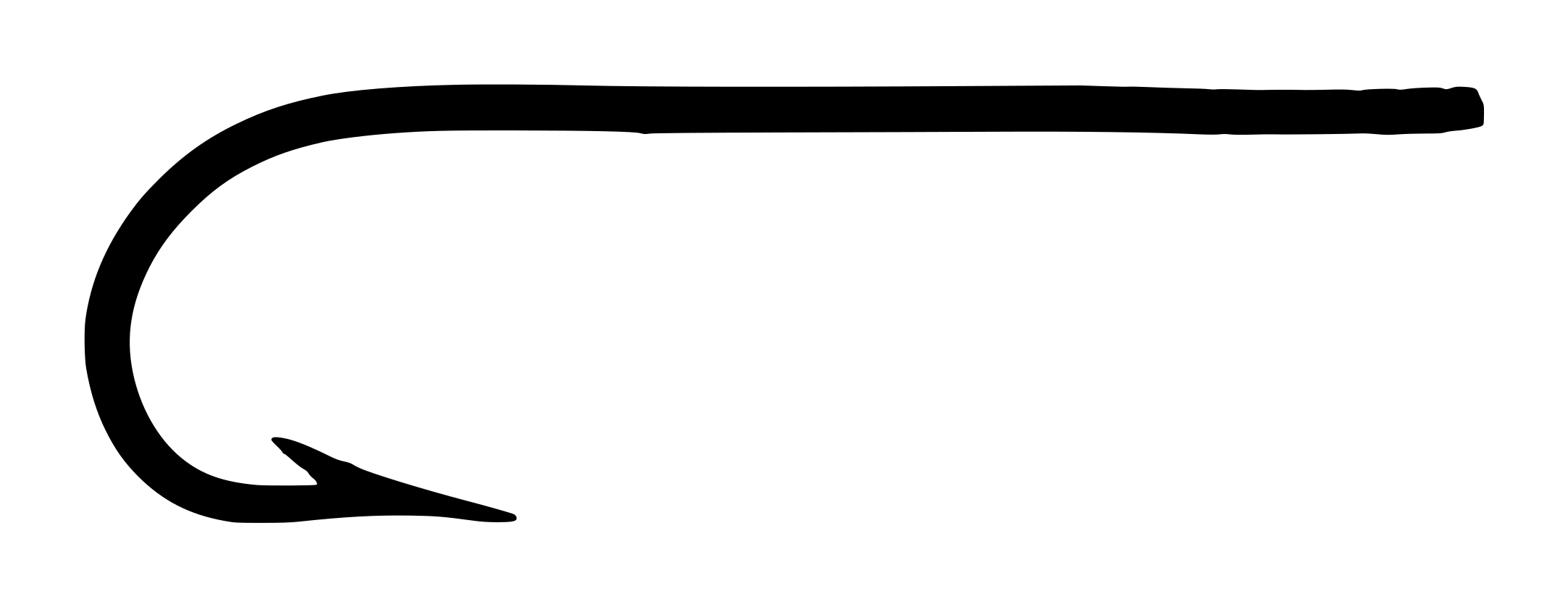
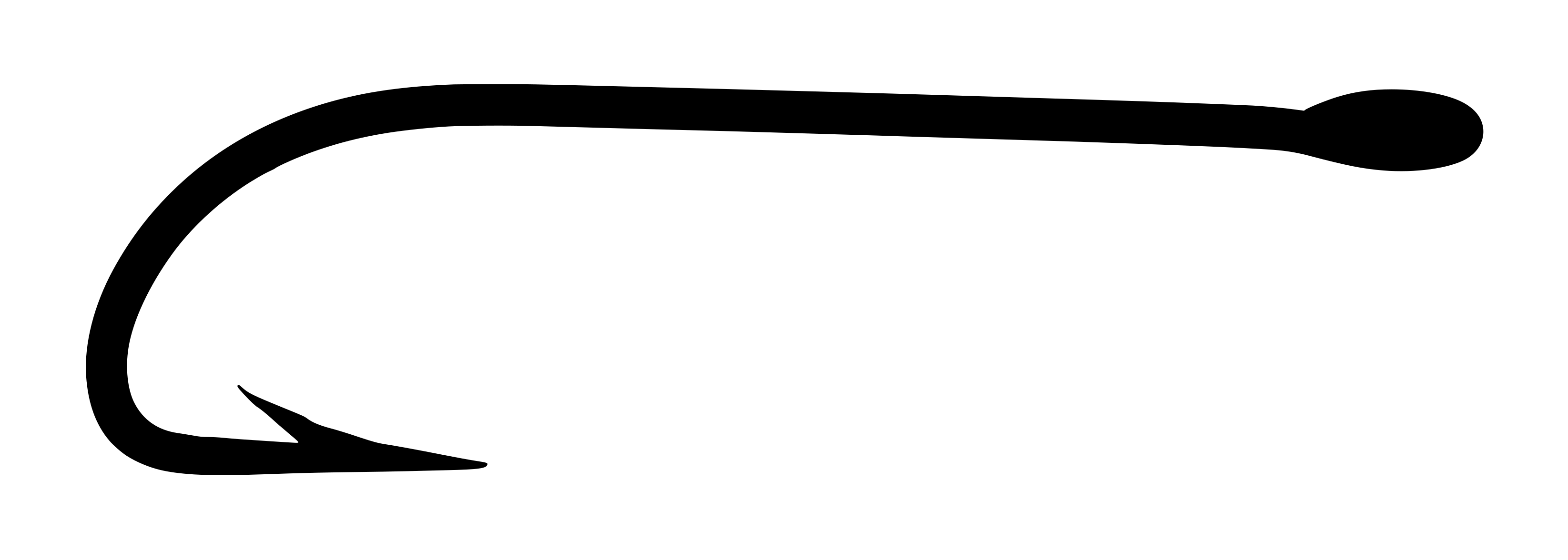
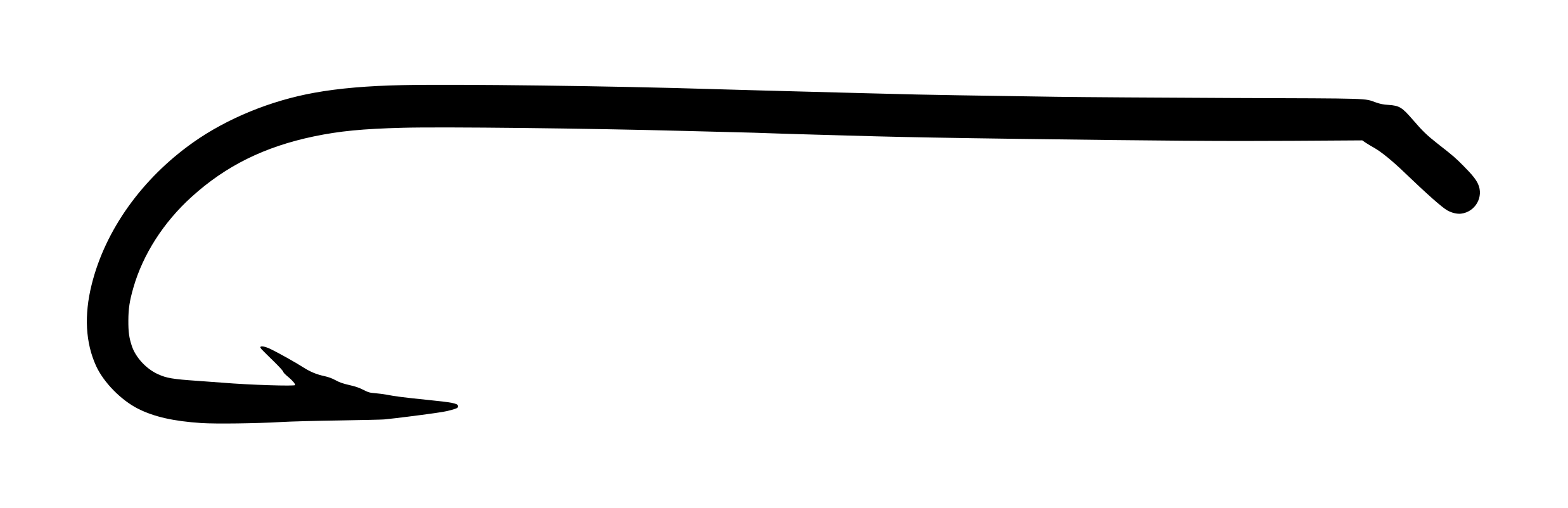
Mustad-Carlisle Hooks hook silhouette
Hook ReferenceO. Mustad & Son Hooks › Mustad Hooks – 1804 A

Mustad 1804 A

Mustad-Carlisle Hooksc. 1950-1965
Straight Ring EyeSproat BendExtra Long ShankFine WireTinned FinishFiled Point

Record summary

The Mustad 1804 A represents one of the most widely distributed bait hooks in angling history. This long-shank Carlisle pattern was specifically engineered for worm fishing, with its extended shank allowing natural presentation of nightcrawlers while serving as a bite guard to prevent deep hooking P.

Dating to approximately 1950-1965, this specimen exhibits the classic white cardboard box with glued paper label typical of mid-century Mustad packaging. The Oslo – Norway address format and decorative border typography are consistent with pre-standardized postal code era production V.

While extremely common in tackle boxes of the era, complete original packaging examples like this retain modest collecting interest as representatives of mass-production Norwegian hook manufacturing during the post-war fishing boom.

Mustad 1804 A — white cardboard box with paper label — size 7 — vintage Norwegian packaging
Original white cardboard box with cream paper label showing complete Mustad markings and decorative border design.

Photographic record

4 cataloged imagesSelect any record to load it above.

4 images shown

Mustad 1804 A Box and Label Size 7 Original white cardboard box with cream paper label showing complete Mustad markings and decorative border design. Open original
Mustad 1804 A Hook Point Size 7 Close-up detail of the filed point showing the superior point geometry and small close-cut barb typical of bait hooks. Open original
Mustad 1804 A Hook Size 7 Full profile view showing the characteristic extra-long shank and round Sproat bend that defines the Carlisle pattern. Open original
Mustad 1804 A Hooks Size 7 Two specimens showing the manufacturing consistency typical of Mustad's industrial production standards. Open original

Technical profile

Eye
Ball Eye, Straight / Inline
Wire
Extra-Heavy (2X+), Round, Est. ~0.015" (~0.38 mm)
Shank
Special Long — Plain
Bend
Sproat, Standard gap
Point
Superior (near-straight inner taper)
Finish
Tinned — Confirmed (stated on packaging) Bright tin plating with cool silver-white tone, uniformly applied across all specimens P
Hooks retain bright tinned finish with no corrosion. Box shows light age toning with intact corners and legible printing throughout P

The extra-long shank design serves dual purposes in bait presentation: allowing natural threading of long earthworms or nightcrawlers along the hook shaft, and providing a bite guard that prevents fish from swallowing the hook deeply. The fine wire gauge maintains adequate strength while minimizing bait damage, while the filed point ensures reliable penetration with the lighter wire diameter P.

Size & scale lab

Selected size (unspecified)
Physical specimen
Overall Length
25 mm
Shank Length
16.5 mm
Gap Width
6 mm
Bend Depth
5.6 mm
Weight
Not available
Shank-to-Gap Ratio
~2.7 : 1
Confidence
P Physical specimen

Grid-derived from photograph (1/10" grid)

Calibrated SVG True-scale preview

Historical context

mustad

O. Mustad & Søn, established in 1832 by Ole Mustad in Gjøvik, Norway, evolved from a small nail-making operation into the world’s largest hook manufacturer. By the mid-20th century, the company’s industrial-scale production facilities in Gjøvik were producing millions of hooks annually for global distribution, with the 1804 series becoming one of their most successful mass-market offerings.

Series History

The Mustad 1804 series was introduced as part of the company’s comprehensive bait hook line targeting the growing recreational fishing market of the 1940s-1950s. The ‘A’ designation indicated the standard Carlisle pattern within the series. This model remained in continuous production for decades with minimal design changes, establishing itself as the archetypal long-shank bait hook pattern copied by manufacturers worldwide.

Era and Packaging Dating

White cardboard box with glued paper label typical of mid-century Mustad packaging. Oslo - Norway address format predates standardized postal codes. Typography and decorative border design consistent with 1950s-1960s printing. No barcode indicates pre-1974 production.

The Universal Standard

The Mustad 1804 A became so ubiquitous in American tackle boxes that many anglers simply referred to any long-shank bait hook as a 'Carlisle,' regardless of manufacturer. The pattern's success led to widespread copying, making Mustad's original design the de facto standard for worm hook geometry that persists in modern tackle catalogs today.

Cross-reference & comparisons

Bait Fishing Saltwater

Primary Application

Designed specifically for live bait fishing, particularly earthworms and nightcrawlers. The long shank accommodates natural bait presentation while the fine wire minimizes damage to delicate baits. Popular among trout and panfish anglers for its reliable hooking and easy removal characteristics.

Secondary Applications

Occasional use by fly tyers for long-bodied streamers when lighter wire than standard streamer hooks was desired

Classic Fly Patterns

Not typically used for fly tying

Modern Equivalents

HookMatch QualityNotes
Eagle Claw 214 Excellent Direct modern descendant with identical Carlisle geometry and proportions
Mustad 3261 Very Good Modern Mustad long-shank bait hook with similar application
Tiemco 200R Good Similar length but designed for fly tying with semi-dropped point

Collector notes

Common vintage hook with modest interest due to complete original packaging and historical significance as archetypal long-shank bait hook.

Reference value $8 – $15 USD estimate
Packaging condition Good — moderate wear, legible Recorded specimen
Packaging format MUS-WB-01 Catalog code

Positive factors include the complete original packaging with intact label, clear manufacturer markings, and historical significance as one of the most widely-used bait hook patterns of the mid-20th century. The 1804 A represents the pinnacle of mass-production hook manufacturing from Norway’s dominant producer.

Limiting factors include the extremely high production numbers and widespread availability. These hooks were manufactured by the millions and remain common in tackle collections. The standard tinned finish, while practical, lacks the visual appeal of specialty finishes that drive collector premium.

Packaging

White cardboard slide-top box with glued cream-colored paper label. Label features decorative border of repeated asterisk/snowflake motifs. Black letterpress printing includes key logo graphic, manufacturer name 'O. MUSTAD & SÖN', location 'OSLO - NORWAY', model designation 'Qual. 1804 A', descriptive text 'Filed Point', product name 'Mustad-Carlisle Hooks', specifications 'Ringed Tinned', quantity '100', size 'No. 7', and country of manufacture 'Made in Norway'. Purple handwritten '7' size marking visible.

Market Value Notes

Complete boxes command modest premiums over loose hooks. Condition of label and box corners significantly affects value within range.

Where to Find

eBay, estate sales, vintage tackle dealers, tackle swap meets

Preservation

Storage and Preservation

Store in original packaging when possible, as complete boxes add significant collecting value. Keep in a cool, dry environment to prevent corrosion of the tinned finish. The white cardboard box is susceptible to light damage and should be stored away from direct sunlight. Handle the glued paper label carefully as it can separate from the box with age. Individual hooks should remain on the original tissue paper packing to maintain authenticity and prevent contact corrosion.

Marking Analysis

Box Markings

The purple handwritten ‘7’ visible on the label appears to be a size confirmation marking, likely added during packaging or inventory processes at the factory. The ink color and pen width are consistent with mid-century marking practices. This type of hand-annotation was common on Mustad packaging to verify size accuracy during the quality control process.

Confidence notation key

P Photographically verified — Directly observable in the photograph(s) on this page.
V Verified by documentation — Confirmed by manufacturer catalog, spec sheet, or published reference.
I Inferred — A logical deduction from observable or documented evidence, not directly stated.
E Estimated — An approximation based on visual comparison, proportional analysis, or limited data.
S Speculative — A reasoned hypothesis that cannot be confirmed from available evidence.

Claims with no notation are confirmed by multiple independent sources. All photographs on garrenwood.com are taken on a measurement grid where each square equals 1/10 inch (0.1″ / 2.54 mm).