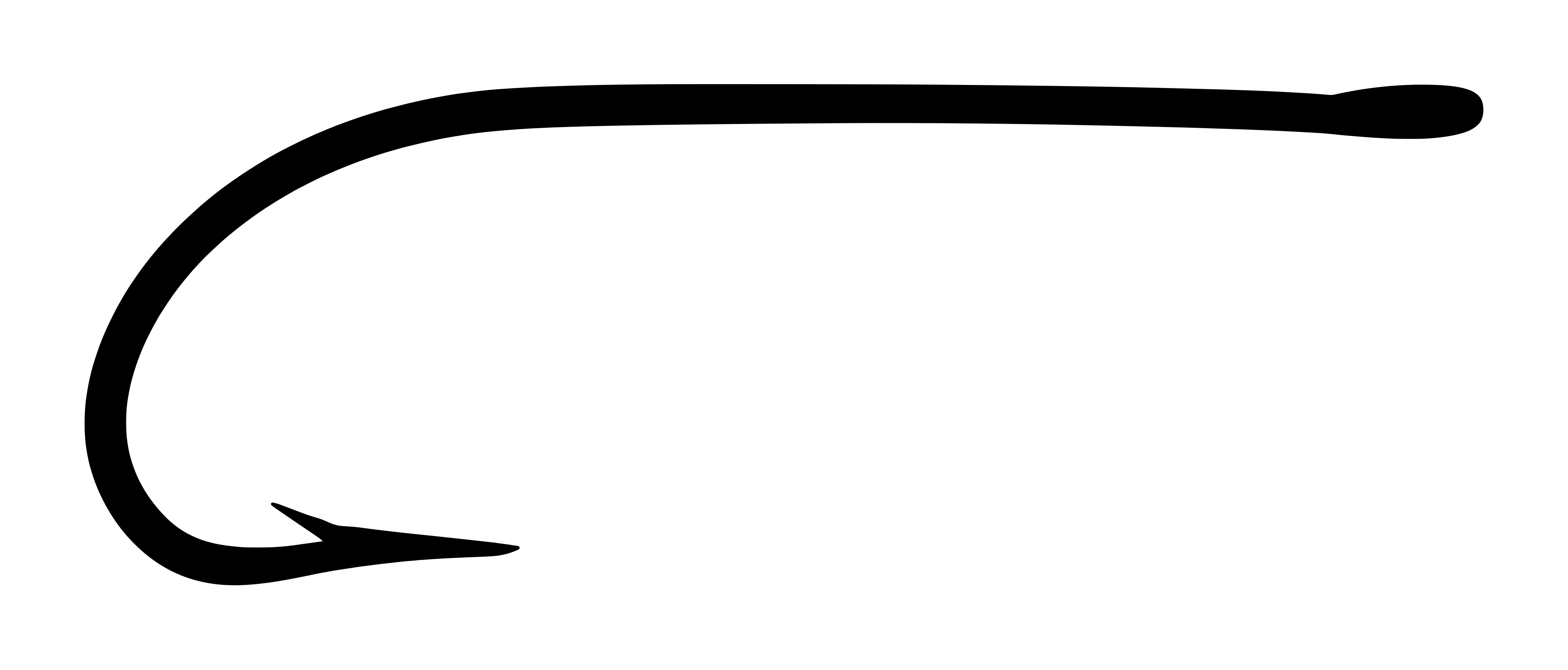
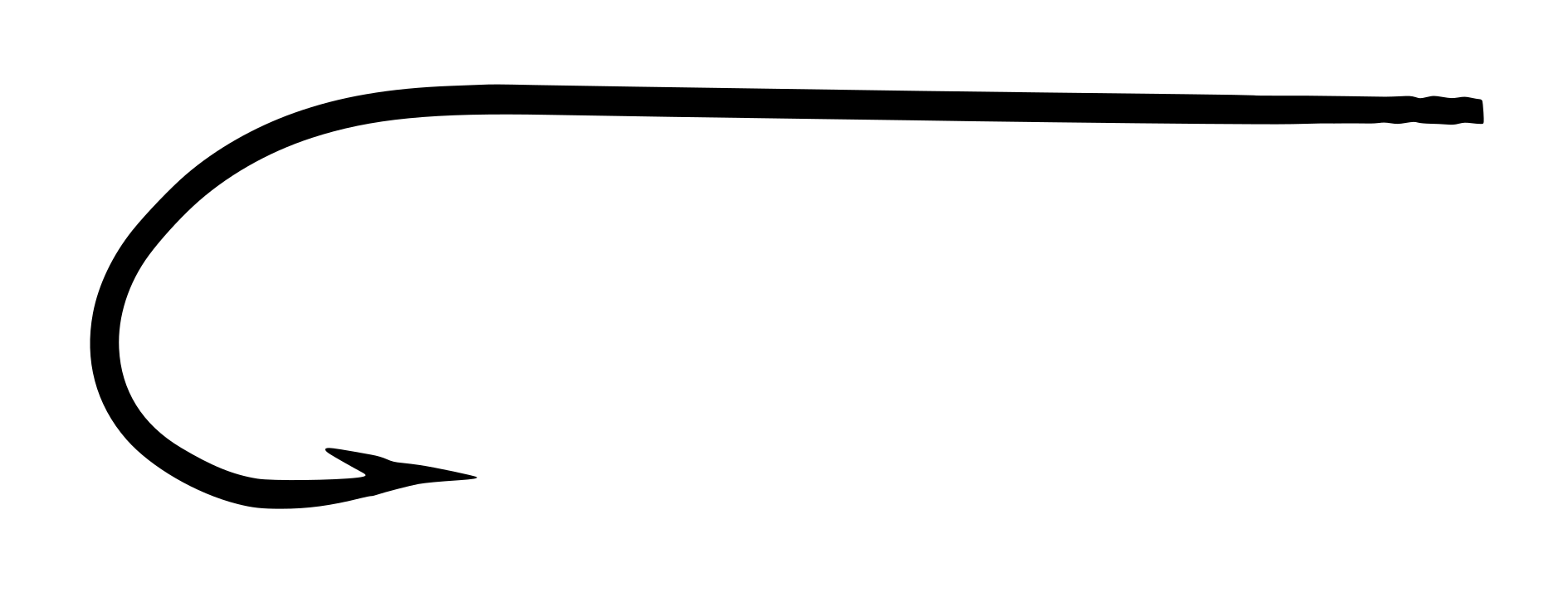
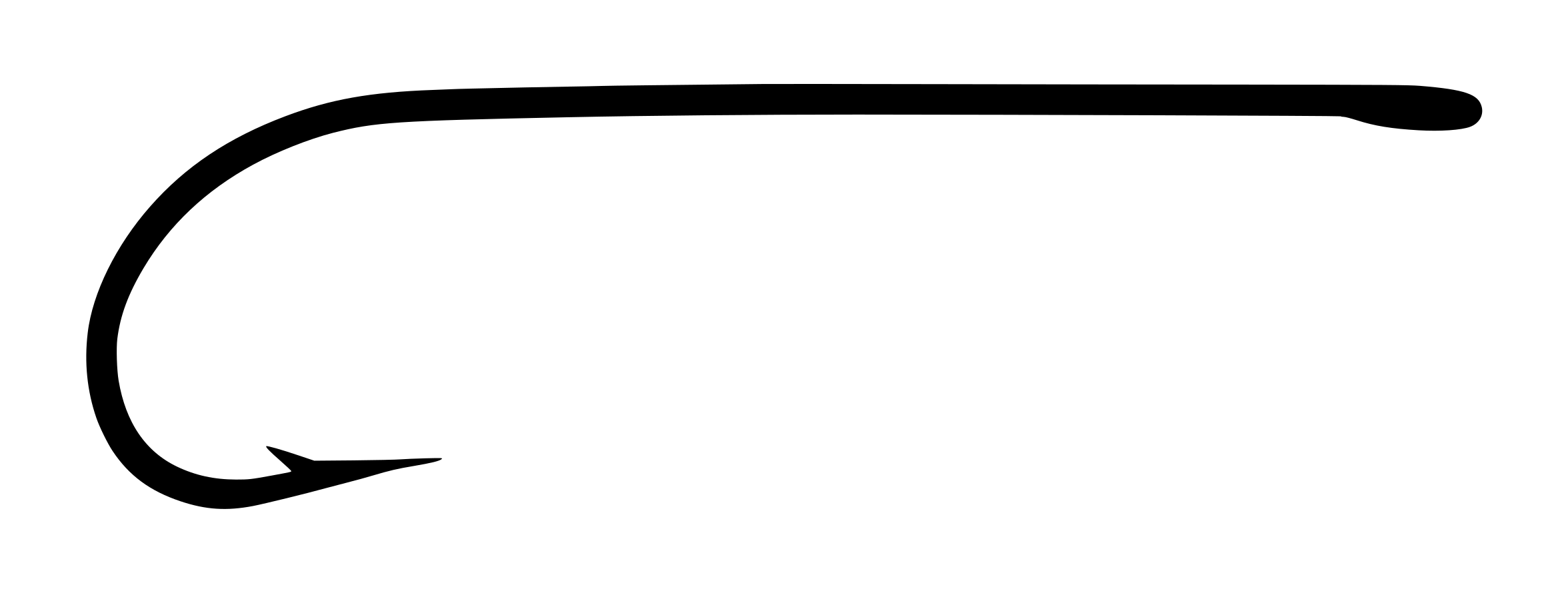
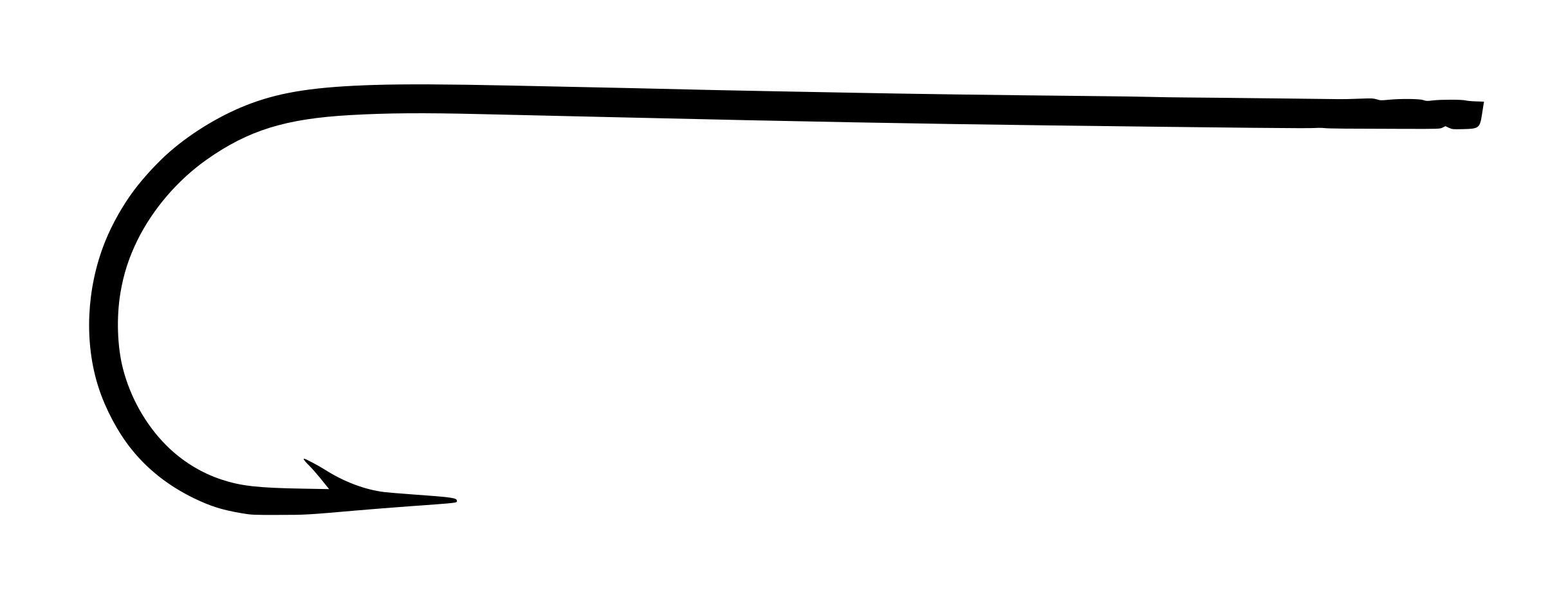
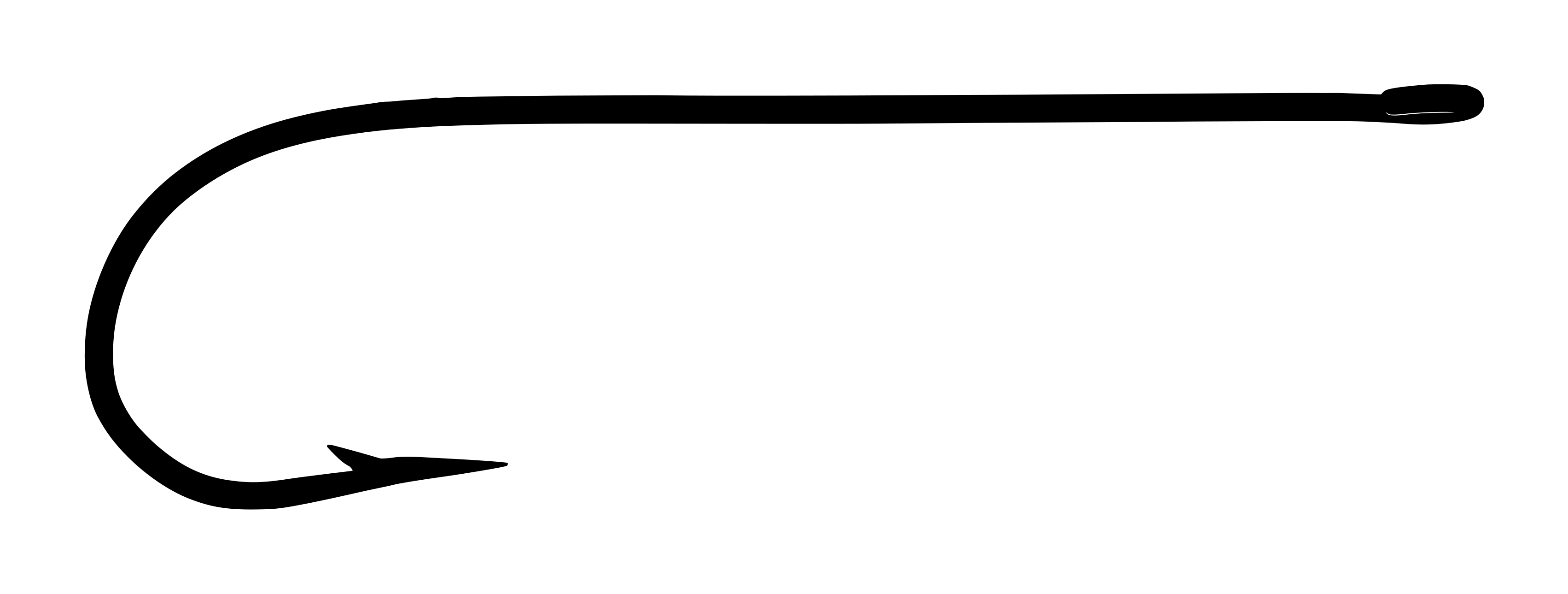
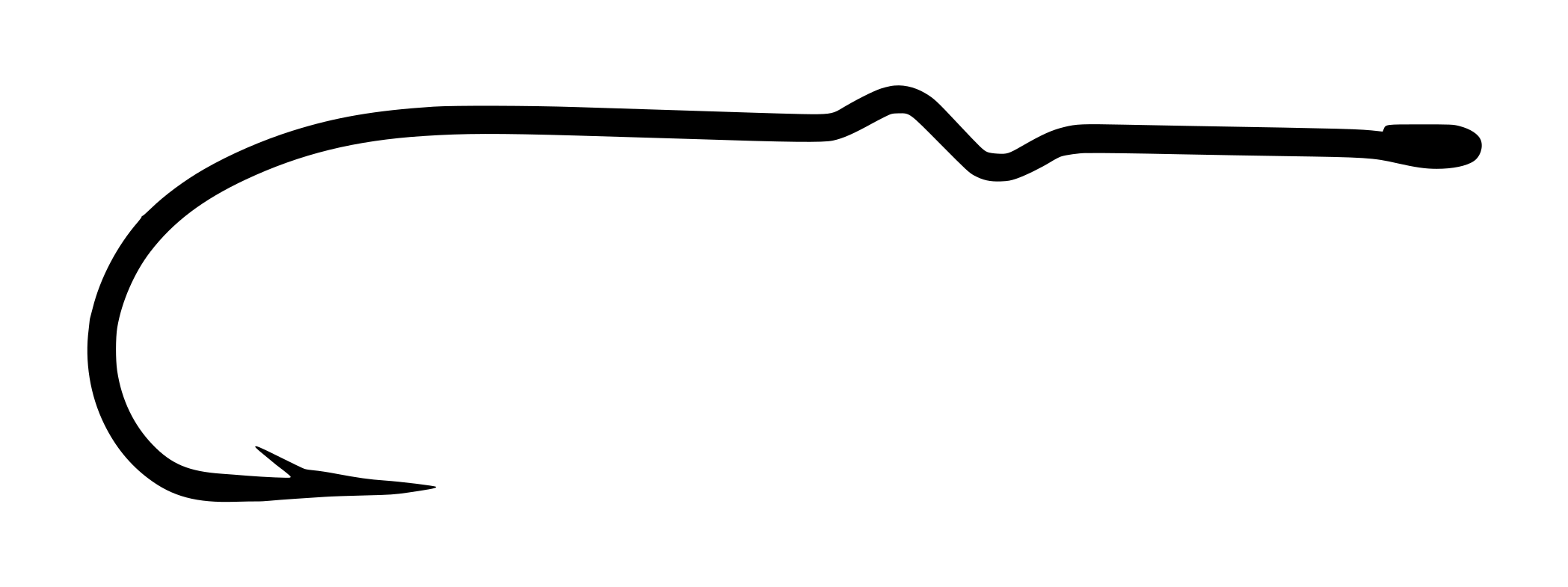
The Mustad Qual. 34031 is a specialized O’Shaughnessy saltwater hook manufactured in Oslo, Norway, during the 1950s-1960s peak era of Mustad’s global market dominance. Distinguished by its continuously curved shank—engineered to present long natural baits in biomechanically authentic postures—the 34031 exemplifies mid-20th-century tackle design philosophy that prioritized functional specialization over universal utility.
The hook features forged high-carbon steel wire (2x extra strong), a tinned saltwater finish, and a straight ring eye, with the defining ‘Superior’ point geometry offering a balance between penetration and durability. The 5/0 size positions it for heavy saltwater bait fishing targeting striped bass, catfish, and coarse-feeding marine species in Atlantic coastal environments. Original red-label packaging with complete 8-line Mustad typographic hierarchy remains archival-quality.
Collecting significance centers on the hook’s rare specialization and Norwegian manufacturing provenance. While O’Shaughnessy variants are common in vintage collections, the curved-shank configuration is considerably scarcer, particularly with pristine original packaging. The 34031 appeals to industrial design historians, Scandinavian manufacturing enthusiasts, and serious vintage-tackle archivists documenting the era when hook design was highly localized and regionally responsive rather than globally homogenized.
Mustad 34031 Box and Label size 5-0
Photographic record
3 cataloged imagesSelect any record to load it above.
3 images shown
Mustad 34031 Box and Label size 5-0Mustad 34031 Box and Label size 5-0Open originalMustad 34031 Hook Point size 5-0Mustad 34031 Hook Point size 5-0Open originalMustad 34031 Hook size 5-0Mustad 34031 Hook size 5-0Open original
Technical profile
Mustad Quality 34031 — O'Shaughnessy Hook with Special Long Curved Shank — Forged, 2x Extra Strong — Tinned — Straight Ring Eye — Made in Oslo, Norway
Eye
Ball Eye, Straight / InlineStraight ring formed from terminal wire bending cleanly back on to shank. No ball formation or tapered reduction. The ring diameter is proportionate to the heavy wire gauge—approximately 0.09"-0.11" (2.3-2.8 mm) inside diameter. Well-executed closure without visible gaps or overlap irregularities P.
Wire
Heavy (1X Heavy), Forged, Est. Extra-heavy, 2x Extra Strong
Shank
Special Long — Curved / Humped
Bend
O'Shaughnessy, Standard gapDistinctive continuously curved shank along entire length, defining characteristic of Qual. 34031 versus straight-shank standard O'Shaughnessy (Qual. 34007). The curve forms a gentle parabolic arc when viewed from above, with approximately 0.30"-0.40" (7.6-10 mm) of bow at the midpoint. The bend itself—the bottom hook turn—maintains the classic O'Shaughnessy parabolic geometry typical of that pattern. No lateral offset (Kirbed). Forging evident from slightly flattened wire cross-section along shank length P.
Point
Superior (near-straight inner taper)Barb placement is standard for O'Shaughnessy pattern—located approximately 0.15"-0.18" (3.8-4.6 mm) back from the tip. Barb height approximately 0.04"-0.05" (1.0-1.3 mm). The barb cut is precise and close-trimmed, angled rearward at approximately 35-40 degrees from the point plane. Single barb format (not double-barbed). Barb angle and sharpness consistent with mechanically ground superior-point geometry P.
Finish
Tinned — Confirmed (stated on packaging)Tinned silver-nickel electroplate with characteristic high-reflectance warm tone P. The finish shows even application across entire hook surface with no bare-steel spots or incomplete coverage. Age-appropriate patina and light oxidation present—no active corrosion or pitting visible. The tinning remains fully adherent to substrate without flaking. Color registers as bright silver-gray, consistent with vintage tin electroplating versus modern stainless steel finishes P.
Specimen hooks display bright tinned finish with minimal corrosion. No structural deformity, wire straightness intact, and eye closure is mechanically sound. Barbs remain sharp and intact on all observed specimens. Red label shows light aging with minor toning and a small paper wear mark at upper left edge; all printed text remains legible. Box cardboard shows expected creasing and minor edge wear consistent with 60+ year vintage storage. Overall packaging is conservation-grade P.
The 34031’s engineering centers on three innovations: forged wire construction, the curved shank geometry, and the superior point geometry. Forging—the cold-pressing of the wire through a drop-press die—fundamentally strengthens high-carbon steel by realigning crystalline grain structure. This process increases tensile strength by approximately 15-20% without increasing wire diameter, allowing Mustad to achieve 2x extra-strong performance in a gauge that would be standard-strength if left round. The result is a hook capable of setting deeply in hard bone and cartilage without bending open under sustained fighting loads.
The curved shank represents a biomechanical adaptation: natural baits (eels, sandworms, squid) possess an inherent curve or arch. A straight hook forces these organisms into an artificial posture, creating visible resistance to predatory feeding behavior. By curving the hook shank to match the baits’ natural silhouette, Mustad eliminated this sensory red flag. Anglers of the 1950s-1960s recognized this advantage for finicky species—the curved 34031 commanded a premium price relative to straight-shank competitors.
The superior point—a near-straight inner taper concentrating force at the tip while maintaining structural mass—was engineered to penetrate dense fish tissue and bone without fracturing or dulling. Unlike hollow points (which excel at light-tackle entry but are fragile against hard structures), the superior point sacrifices initial penetration ease for durability and holding power—essential in heavy saltwater where repeated jaw-pressure and abrasion occur during the fight.
The Qual. 34031 is the first documented curved-shank O'Shaughnessy variant in the garrenwood.com catalog. It represents the most specialized shank configuration in the O'Shaughnessy family documented to date.
Own this hook? Help us measure it.
We don't have measured sizes for this hook yet. Own one? Submit calipered measurements and we'll review and add them. Thank you!
Historical context
mustad
O. Mustad & Søn was founded in 1832 in Gjøvik, Norway, by Hans Schikkelstad, initially operating under the name ‘Brusveen Spiger- og Staltradfabrikk’ (Brusveen Nail and Wire Factory). The firm produced basic industrial metal goods—nails, steel wire, cast-iron products—until 1877, when visionary engineer Mathias Topp invented the first fully automated hook-making machine. This mechanization allowed continuous wire feeding, autonomous cutting, bending, barbing, and pointing at industrial pace, revolutionizing hook production globally.
The Mustad family—Hans Schikkelstad’s son-in-law Ole Hovelsen Mustad and his son Hans Mustad—recognized the competitive advantage and deliberately chose NOT to patent the technology, instead protecting their innovations through corporate secrecy, non-disclosure agreements, and restricted factory access. This strategy proved devastatingly effective against Redditch (England) and Japanese competitors. By the 1950s, Mustad had secured approximately 50% of global hook production market share, establishing sales offices and manufacturing facilities across North America, Europe, and Asia.
The Oslo factory (originally the Christiania facility, renamed with the city’s official designation change in 1925) became the world’s largest hook-production center. The company’s mid-century product catalog contained extraordinary variety—specialized patterns for regional fisheries from the American Midwest, Irish salmon rivers, Scandinavian lake systems, and Atlantic coastal commercial operations. This ‘industrial cloning’ strategy allowed Mustad to achieve global scale while respecting deeply localized fishing traditions. By the 1960s, ‘Mustad’ had become virtually synonymous with ‘fishing hook’ in many regions.
Series History
The O’Shaughnessy pattern originated as a British/Irish design in the mid-19th century, characterized by a parabolic bend and heavy construction suited to Atlantic salmon and big-game saltwater work. Mustad acquired and systematized this pattern, producing it in multiple configurations: standard O’Shaughnessy (Qual. 34007), long-shank variants (Qual. 34011), and specialized formations like the curved-shank Qual. 34031.
The Qual. 34031 ‘Special long curved shank’ variant was introduced to address a specific market need: the presentation of long, flexible natural baits (sandworms, eels, squid strips) in a posture mimicking the baits’ natural body curvature. This innovation reflected early-to-mid-20th-century tackle engineering’s increasing sophistication in biomechanical design. The curved shank required custom wire-forming dies and precision grinding, placing the 34031 in Mustad’s premium commercial tier (3400+ model series).
Production: The 34031 was manufactured throughout the 1950s-1970s as a steady-stock item in Mustad’s commercial saltwater catalog, with highest documented output in the 1950s-1960s peak-production era. The hook was gradually phased out as modern stainless-steel hooks and lightweight fly-fishing designs dominated the market from the 1980s onward. No direct modern equivalent exists in Mustad’s current production lineup.
Era and Packaging Dating
The presence of 'OSLO - NORWAY' on Line 3 confirms post-1925 production. The Key Brand logo styling, red paper label on white cardboard box, and offset letterpress printing method are consistent with mid-20th-century Mustad export packaging. The model code Qual. 34031 represents the classic arbitrary numbering system used prior to the Signature Series transition (c. 2001). No barcode present, confirming pre-1974 manufacture. The typography and box construction align with documented Mustad products from the 1950s-1960s peak production era.
The Age of Hyper-Specialization
During the 1950s, Mustad's Oslo factory produced over 60,000 distinct hook model variations—more models than many entire modern tackle companies manufacture in their entire operational history. The Qual. 34031 represents one of these hyper-specialized products: a hook engineered for a single, narrow application (curved-shank bait presentation) that would likely be considered commercially unviable today. Yet archives suggest the 34031 was a steady commercial seller in Atlantic coastal fisheries, particularly among Cape Cod striped-bass guides and Chesapeake Bay commercial operators. This specificity—the willingness to tooling and stock an ultra-narrow-purpose product—is a hallmark of mid-20th-century manufacturing culture that has largely vanished.
Design lineage and influence
The O’Shaughnessy pattern originated in the mid-19th century as an Irish saltwater design, featuring a parabolic bend characteristic of heavy-duty commercial fishing. Mustad acquired the design through their industrial-cloning strategy (reverse-engineering successful regional patterns) and produced it in multiple configurations from the 1880s onward. The Qual. 34031 represents a specialized evolution of this lineage—the addition of a continuously curved shank reflects the late-Victorian and early-20th-century innovation wave in fishing tackle, where hook designers began systematizing shank profiles for specific bait presentations.
The 34031 competes directly with British Limerick variants (particularly Edgar Sealey’s forged Limerick models) and represents Mustad’s response to the demand for bait-presentation refinement in Atlantic coastal fisheries. The engineering reflects industrial manufacturing sophistication: the curved shank required custom wire-forming dies and precision grinding, placing it in Mustad’s premium commercial tier (Qual. 3400+ range). Its discontinuation in modern production reflects the shift toward lightweight, single-purpose fly-fishing patterns and the rise of modern stainless steel in saltwater applications.
Best matchRelated by Attribute
Computed automatically from catalog data — updated as new hooks are added.
Matches: Bend, Gap, Eye, Eye Orient., Point +3 moreDiffers: Shank: Special Long vs 1X Long; Wire: Heavy (1X Heavy) vs Standard; Forging: Forged vs Round +1 more
Matches: Bend, Gap, Eye, Eye Orient., Point +3 moreDiffers: Shank: Special Long vs Standard; Wire: Heavy (1X Heavy) vs Standard; Application: Bait, Saltwater vs Streamer, Saltwater +1 more
Matches: Bend, Gap, Eye, Eye Orient., Point +2 moreDiffers: Shank: Special Long vs Standard; Wire: Heavy (1X Heavy) vs Standard; Finish: Tinned vs Bronzed +2 more
The Mustad 34031 is engineered for large natural-bait saltwater fishing—specifically the presentation of long, flexible baits such as sandworms, eels, squid strips, and mullet. The continuously curved shank allows these baits to lay in a natural, slightly arched posture along the hook length, preventing the rigid, unnatural appearance that would result from a straight-shank hook. This natural presentation significantly increases strike rates on species sensitive to artificial-looking offerings.
Historically used for trolling and bottom-fishing in Atlantic coastal environments targeting striped bass, channel catfish, and coarse-feeding saltwater species. The 2x extra-strong wire and tinned finish indicate primary application in saltwater environments where corrosion resistance is essential. The 5/0 size places it in the heavy-tackle category suitable for baits in the 2-4 ounce range and fish averaging 15-50 pounds.
Not typically used for modern fly tying; primarily a bait-fishing hook.
Modern Equivalents
Hook
Match Quality
Notes
Mustad 34011
Good
Long-shank O'Shaughnessy variant still in production; straight shank lacks the distinctive curve feature, but matches wire gauge and saltwater application.
Tiemco 811S
Moderate
Saltwater streamer hook; tempered stainless steel replaces tinned finish; fine wire versus heavy vintage forging; no curved-shank variant available.
Ahrex NS110
Moderate
Modern shrimp hook with curved profile; fine wire and contemporary design; saltwater application but smaller scale and lighter gauge than 34031.
Collector notes
Moderate collecting interest driven by the specialized curved shank engineering and O'Shaughnessy pattern significance. Limited by the fact that O'Shaughnessy variants are common; this specific curved version is scarcer but not museum-class rare.
Reference value
$8 – $18 USD estimate
Packaging condition
Good — moderate wear, legibleRecorded specimen
Packaging format
MW-OSH-01Catalog code
Positive factors: The 34031 represents a specialized O’Shaughnessy variant with a continuously curved shank—an engineering solution for presenting long natural baits with anatomical authenticity. The forged, 2x extra-strong construction and tinned saltwater finish indicate premium manufacturing intent. Original red-label packaging with complete label text is archival-quality. The Oslo-Norway designation and mid-century vintage positioning appeal to industrial design historians and Norwegian manufacturing collectors. The hook exemplifies Mustad’s post-WWII export dominance and their systematic cloning of regional patterns into global commercial products.
Limiting factors: The O’Shaughnessy pattern itself is ubiquitous in surviving hook collections—the standard Qual. 34007 is far more common. The curved variant, while functionally specialized, has limited modern fly-tying appeal and is rarely sought by contemporary anglers. The 5/0 size places it in the heavy saltwater category where modern stainless-steel replacements are readily available. Tinned finish shows age-appropriate oxidation and patina; pristine specimens command premium pricing.
Packaging
Red paper label (approximately 3.5" × 2.8") affixed to white cardboard box. Label features the iconic Key Brand downward-pointing skeleton key logo at upper left. Printed text follows Mustad's standardized 8-line typographic hierarchy: (1) 'O. MUSTAD & SÖN' (manufacturer), (2) 'Manufacturers', (3) 'OSLO - NORWAY' (geographic origin), (4) 'Qual. 34031' (model code), (5) 'Superior' (point identifier—note: brand/series line per Mustad convention), (6) 'Mustad-O'Shaughnessy Hooks' (pattern name), (7-8) 'Forged / Special ring / Tinned / Special long curved shank / 2 ex. strong' (features and finishes). Bottom left shows '100 / No.' (quantity indicator). Decorative dingbat border frames entire label. All text rendered in offset letterpress, black ink on red background. Box constructed from two-ply corrugated cardboard with white exterior coating; visible manufacturing creases consistent with fold-and-glue construction. No barcode present. Typography style, paper stock oxidation, and box construction align with documented Mustad products from c. 1950-1965.
Market Value Notes
Pricing reflects original packaging condition and label legibility. Loose hooks without packaging $3-6 USD. Mint original box with full label $15-22 USD. Value driven by mid-century Mustad scarcity and Norwegian manufacturing provenance rather than functional rarity. Most common on eBay and specialized vintage tackle dealers; less common at fishing fairs.
Where to Find
eBay vintage tackle listings, specialized Scandinavian tackle dealers, established fly-fishing forums (Single Barbed, Vintage Fishing Tackle groups), occasional estate sales, UK and US tackle fairs.
Collector's Identification Tips
Packaging verification: Examine label text carefully. The 8-line format is strict: Line 1 = ‘O. MUSTAD & SÖN’, Line 2 = ‘Manufacturers’, Line 3 = geographic origin (Oslo or Christiania), Line 4 = Qual. code, Line 5 = point style, Line 6 = pattern name, Lines 7-8 = features/finishes. The 34031 label clearly shows ‘Qual. 34031’, ‘Superior’ (brand line), and ‘Mustad-O’Shaughnessy Hooks’. Original red-label boxes with complete, legible text are archival-quality.
Hook identification: The continuously curved shank is the defining feature—visually distinct from the straight-shank Qual. 34007 standard O’Shaughnessy. The curve should be visible when the hook is laid flat on a surface: the shank will rock slightly rather than lying completely flat. Bend geometry is parabolic (smooth curve), not angular (Limerick-style). Tinned finish shows warm silver-gray tone, uniform application, and age-appropriate light patina. The ring eye is straightforward formation—no ball, no taper, no looped design.
Wire gauge assessment: The forged O’Shaughnessy is noticeably heavier than modern equivalent hooks. The wire diameter should appear robust relative to the gap width—approximately 4.5-4.8:1 ratio of shank length to gap. When compared side-by-side with a modern stainless-steel 5/0 O’Shaughnessy, the 34031 will register as distinctly thicker and heavier.
Era dating: ‘Oslo – Norway’ versus ‘Christiania – Norway’ is the primary dating marker. Oslo designation (post-1925) combined with red label style, offset letterpress typography, and box construction places this in the mid-20th-century export era. No barcode = pre-1974. Absence of Asian manufacturing attribution = pre-1970s shift to offshore production.
Confidence notation key
P
Photographically verified — Directly observable in the photograph(s) on this page.
V
Verified by documentation — Confirmed by manufacturer catalog, spec sheet, or published reference.
I
Inferred — A logical deduction from observable or documented evidence, not directly stated.
E
Estimated — An approximation based on visual comparison, proportional analysis, or limited data.
S
Speculative — A reasoned hypothesis that cannot be confirmed from available evidence.
Claims with no notation are confirmed by multiple independent sources. All photographs on garrenwood.com are taken on a measurement grid where each square equals 1/10 inch (0.1″ / 2.54 mm).