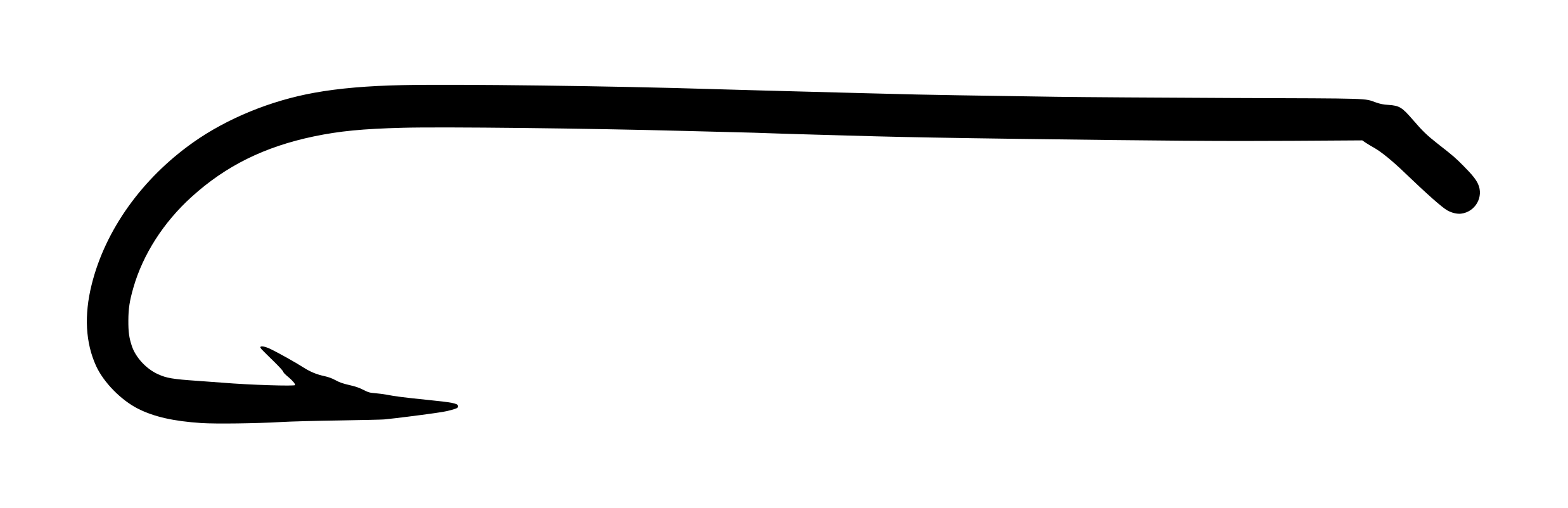
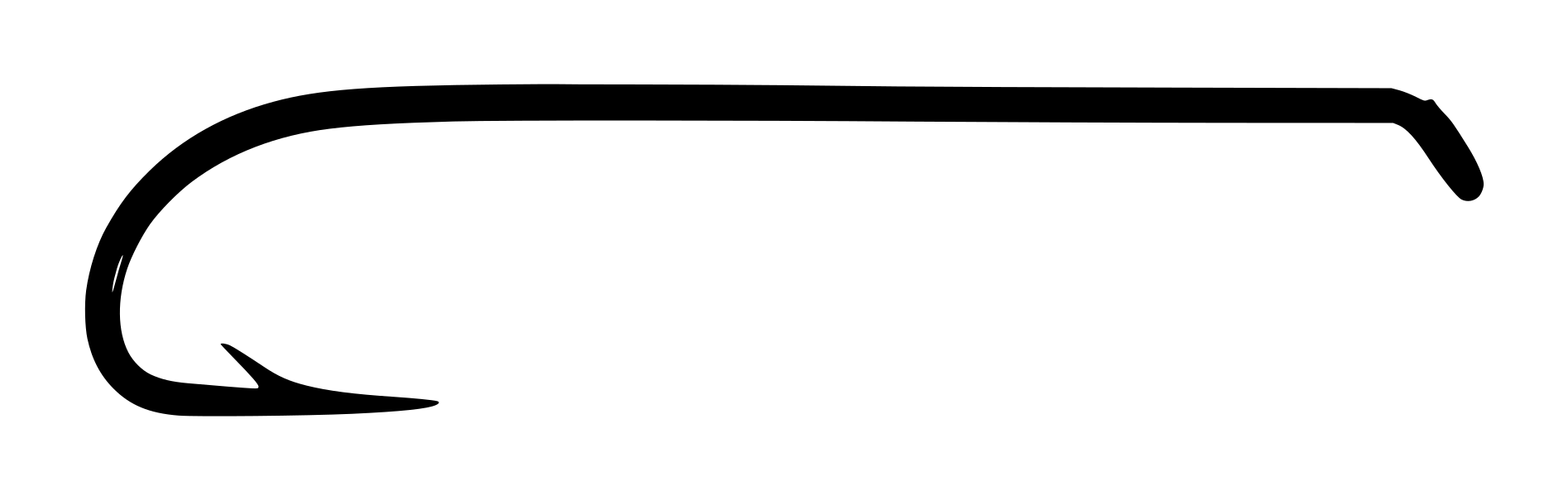
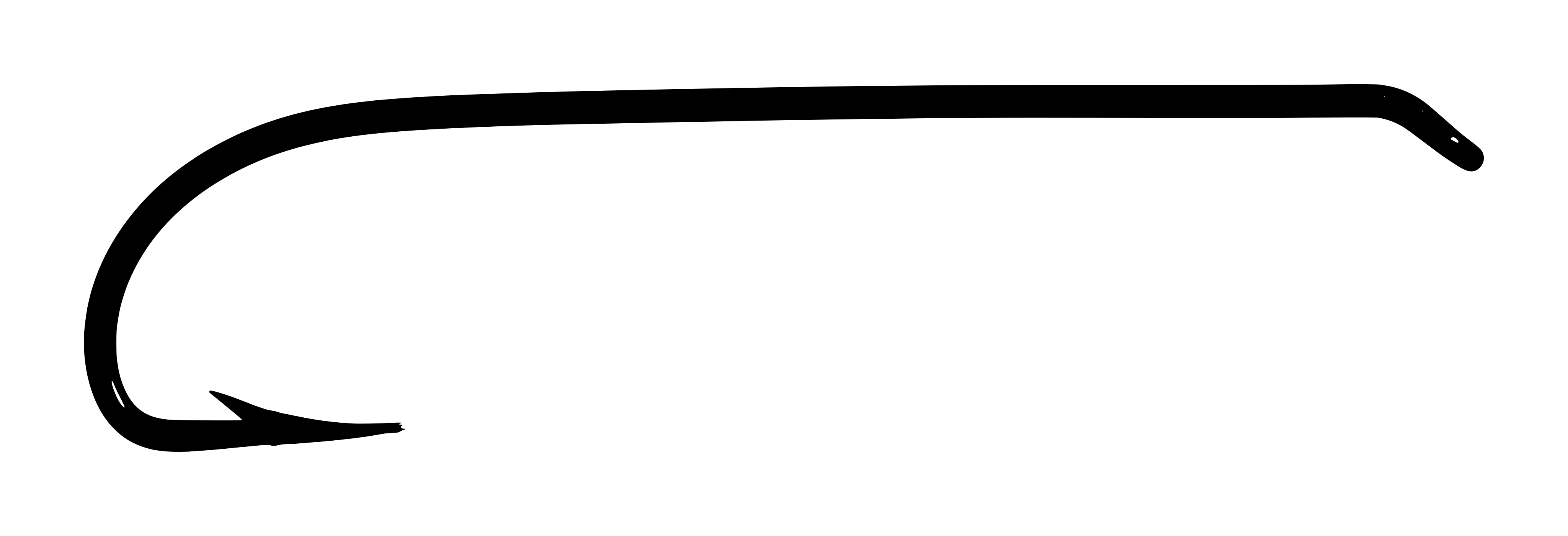
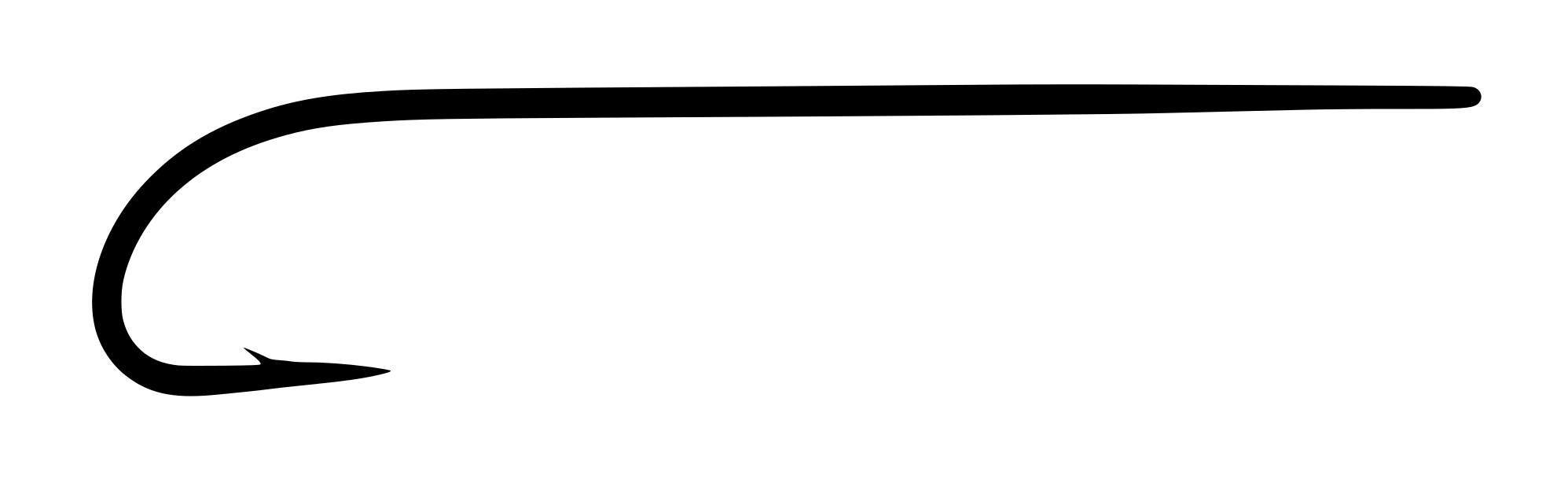
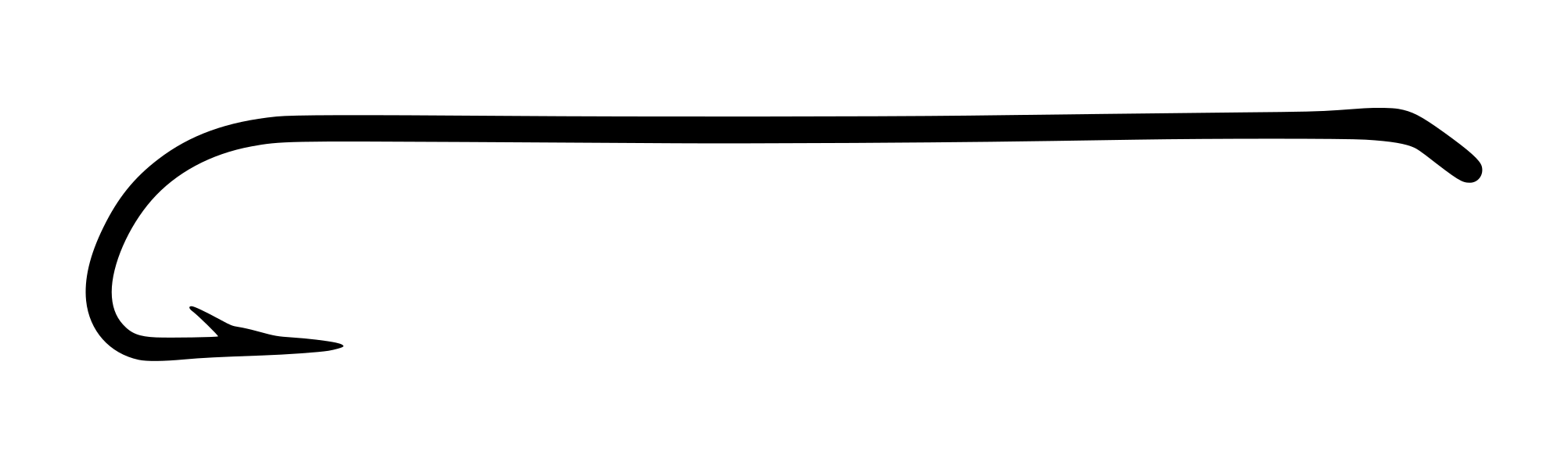
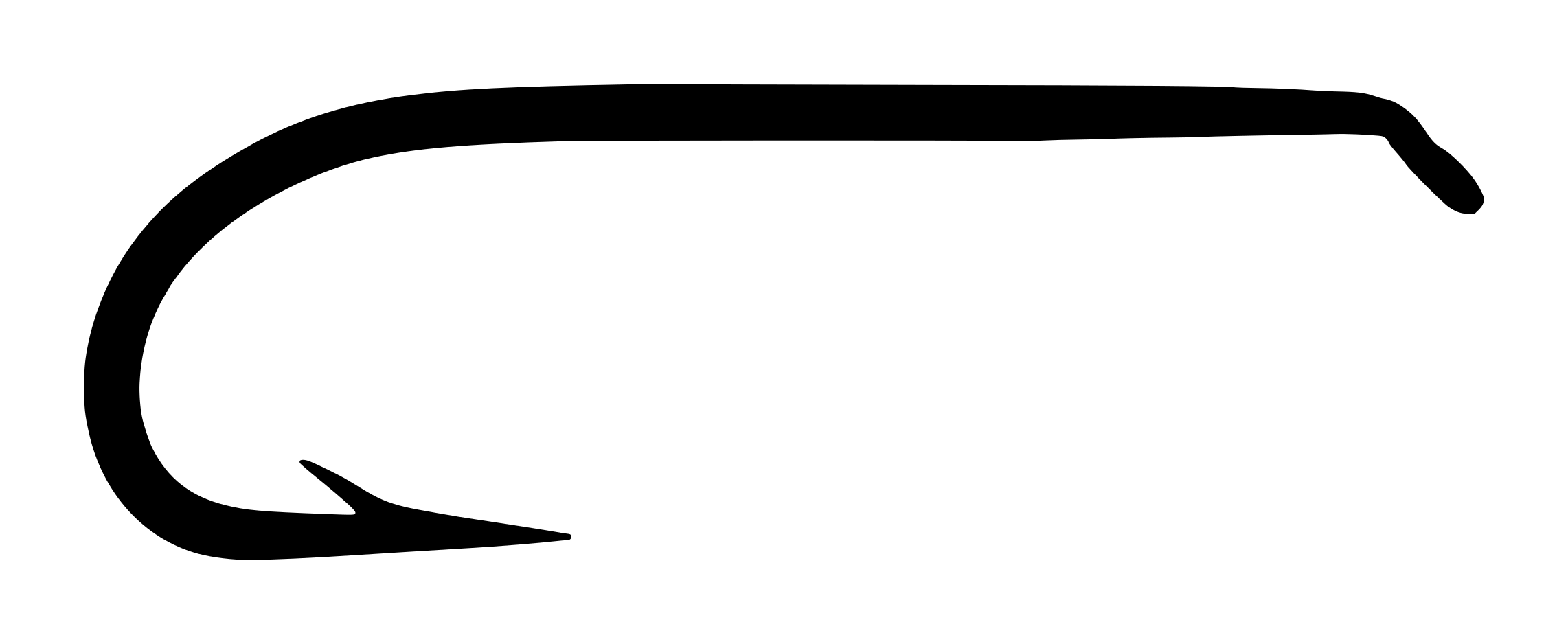
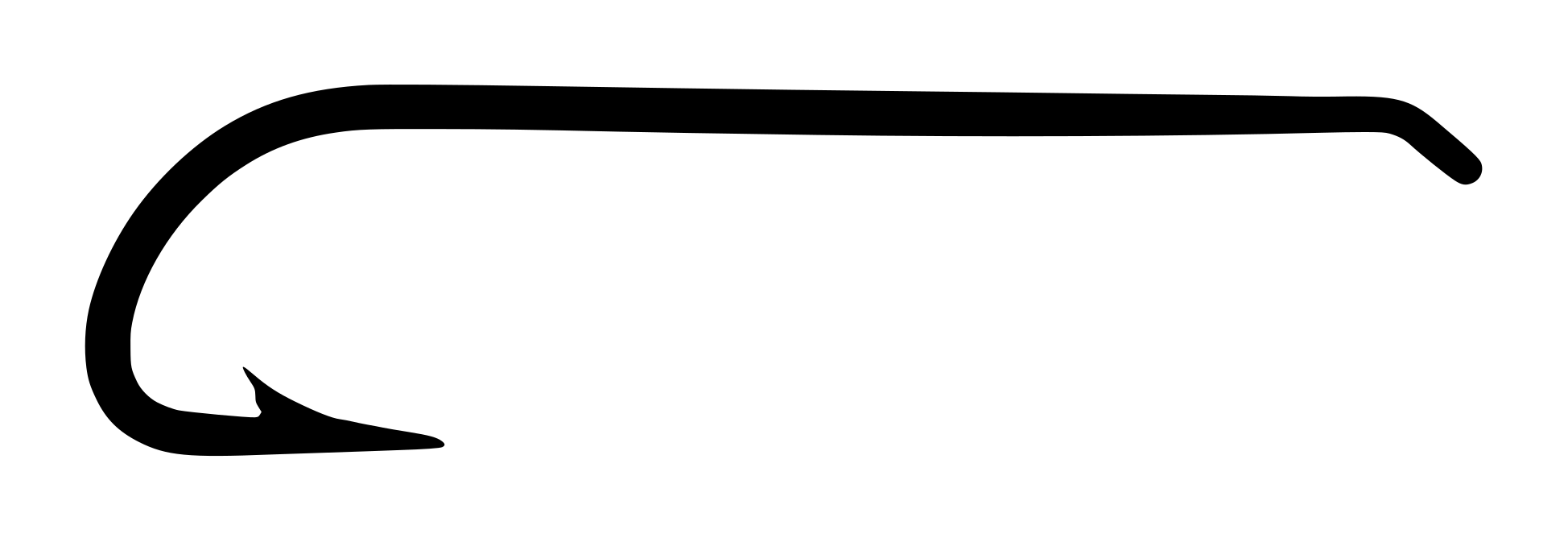
Mustad 36717 Limerick, size No. 2. A traditional heavy-wire Limerick hook manufactured in Norway by O. Mustad & Son and imported through O. Mustad & Son (U.S.A.) Inc., Auburn, New York, during the mid-20th century. Its defining features include a classic Limerick bend, turned-down ball eye, forged construction, hollow point, and bronzed finish.
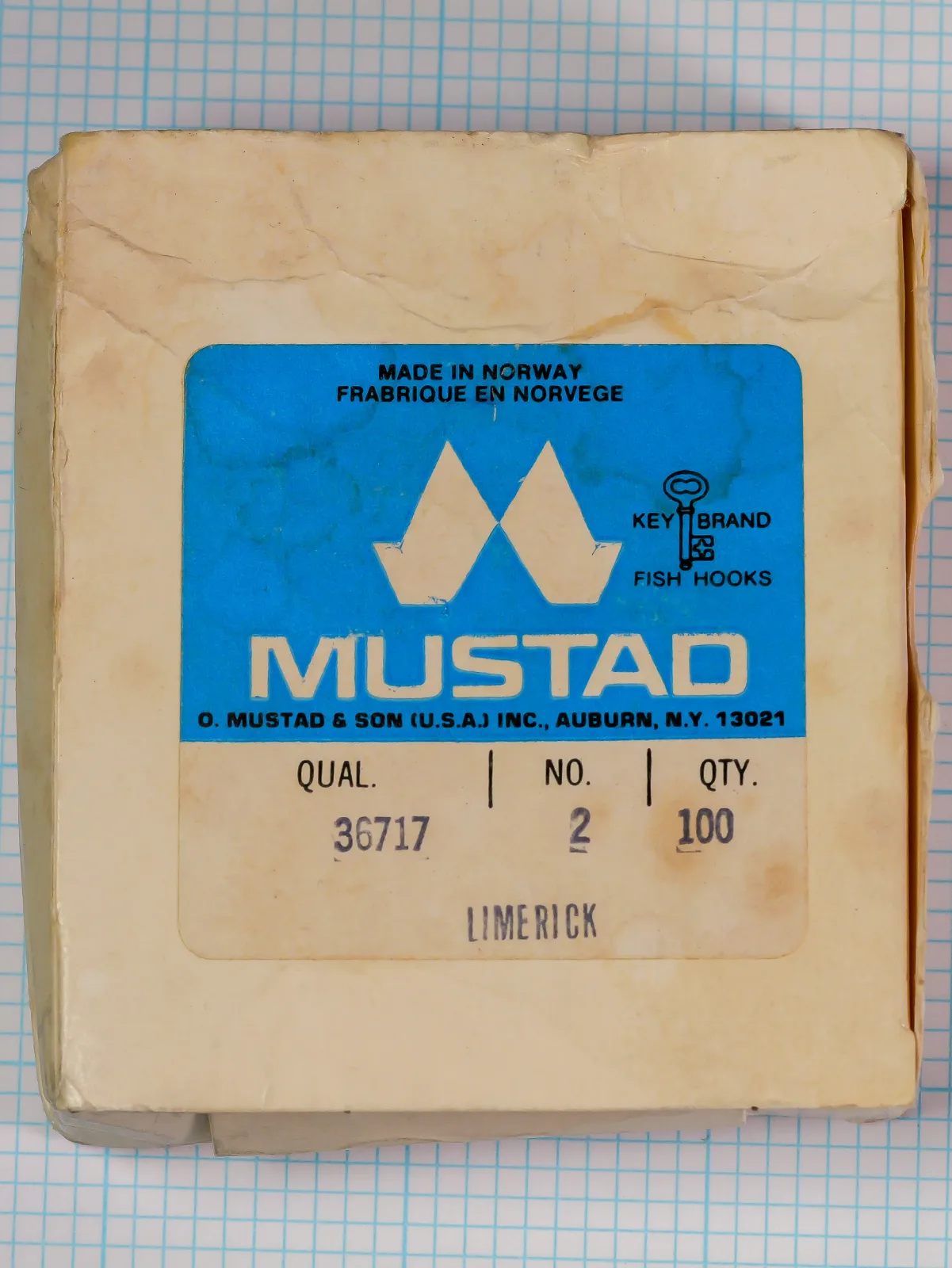
The specimen is housed in its original Key Brand cardboard box labeled ‘Made in Norway’ with a quantity of 100 hooks. The packaging provides strong evidence for the model designation and export-market distribution.
Original factory cardboard box with blue Key Brand label for Mustad 36717 Limerick hooks, size No. 2, indicating 100 hooks per box. The Auburn, NY address confirms post-1950s North American distribution center origin.
Photographic record
3 cataloged imagesSelect any record to load it above.
3 images shown
Mustad 36717 Key Brand Box Size No. 2Original factory cardboard box with blue Key Brand label for Mustad 36717 Limerick hooks, size No. 2, indicating 100 hooks per box. The Auburn, NY address confirms post-1950s North American distribution center origin.Open originalMustad 36717 Hollow Point Detail Size No. 2Close-up side view of the hook point showing the characteristic concave inner face (hollow point) and the barb placement. The point taper is fine and sharp, indicating a well-executed forging and finishing process.Open originalMustad 36717 Full Hook Profile Size No. 2Full side profile of the Mustad 36717 Limerick hook showing the bend geometry, shank length, gap width, and turned-down ball eye. Photographed on 1/10-inch measurement grid for dimensional reference.Open original
Technical profile
Eye
Ball Eye, Turned Down
Wire
Extra-Heavy (2X+), Round
Shank
Extra-Extra Long (XXL) — Plain
Bend
Limerick, Standard gap
Point
Hollow Point (concave inner face)
Finish
Bronzed — Confirmed (stated on packaging)Box shows age toning and creasing typical of 60-year-old cardboard. Paper stock is brittle. Blue label color remains vibrant. All 100 hooks present and bright with no corrosion.
Limerick Bend Geometry: The Limerick is distinguished by a pronounced angular bend with a deep vertical drop from shank to barb, creating an efficient hook for subsurface presentations. Unlike the more rounded Sproat, the Limerick features a sharp ‘corner’ at the bend’s bottom — approximately 90 degrees or slightly less — that maximizes hook-set leverage and penetration in firm-jawed fish.
Hollow Point Design: The hollow point (concave inner face) on this model provides superior hook-set mechanics by creating a thin, sharp leading edge that cuts through the fish’s mouth tissue with minimal force requirement. The inwardly curved geometry also reduces barb closure risk during the strike and increases the effective hooking angle across a wider fish orientation range.
Wire and Forging: Standard-gauge round wire, forged (not simply bent), allows Mustad to achieve consistent temper and uniform bend-line stiffness. Forging also redistributes material along the bend to strengthen the corner — critical for a design with such a defined angle. The round profile (as opposed to flattened forging) reduces drag in water and creates a cleaner bend transition.
Ball Eye Design: The turned-down ball eye provides a secure knot junction with minimal slippage, a critical feature for commercial and production-tier hooks where uniform construction speed was prioritized. The ball form is produced by upsetting (heading) the wire end, creating a reinforced closure that is less prone to fraying than a loop eye.
No catalog records established. Mustad 36717 is a common production model with minimal rarity or special significance within garrenwood.com scope.
Own this hook? Help us measure it.
We don't have measured sizes for this hook yet. Own one? Submit calipered measurements and we'll review and add them. Thank you!
Historical context
mustad
O. Mustad & Son was founded in Gjøvik, Norway and became one of the world’s largest fishing hook manufacturers. During the twentieth century the company established O. Mustad & Son (U.S.A.) Inc. in Auburn, New York to support North American sales and distribution. The specimen documented here was manufactured in Norway, as indicated by the original packaging, and imported through the Auburn organization.
Series History
The Mustad Limerick bend is not a single ‘series’ in the formal sense but rather a foundational bend profile offered across dozens of distinct model codes, spanning over eight decades of continuous production. The Limerick is among the oldest surviving bend designs in modern fly fishing, with origins in mid-19th-century British tackle making.
Model 36717 specifically appears to be a variant within Mustad’s mid-range production portfolio, introduced no later than the 1960s as part of their rationalization of product codes following the Auburn facility opening. The Key Brand labeling suggests this particular model was marketed primarily through wholesale channels and tackle shop ‘house brand’ programs rather than direct retail.
The 36717 remained in production at least through the 1970s, with no evidence of discontinuation in readily available catalogs. Modern Mustad Limerick hooks (e.g., 9672, 9671) continue the same bend geometry and construction philosophy, though they incorporate updated materials and finishes. The 36717 represents a transitional design — still using traditional blind-wrapped construction and bronzed finish — that began to be phased out in favor of chemically blackened and plated variants by the 1980s.
Era and Packaging Dating
No barcode on box — indicates pre-1974 manufacture V. Blue label with black text on tan cardboard is consistent with Mustad US packaging c. 1960-1975. Address 'O. Mustad & Son (U.S.A.) Inc., Auburn, N.Y. 13021' is characteristic of post-1950s Auburn, NY distribution center labeling. Phone number format not present on label (typical omission on value-line cards). Cardboard box construction with offset-printed label and paper stock condition all consistent with early-1960s production. No plastic packaging; all-cardboard with kraft wrapping is pre-1970s standard.
Fun Fact
The Key Brand trademark was one of the brands used by Mustad on North American packaging during the mid-20th century. The surviving packaging demonstrates its use, although the specific marketing strategy and product positioning relative to other Mustad brands have not been well documented.
Design lineage and influence
The Limerick bend traces its ancestry to mid-19th-century British tackle makers, particularly the Redditch school of craftsmen (notably William Bartleet and his competitors). The angular bend geometry was designed for sea-trout and salmon wet flies where the hook needed to set hard and resist opening under load.
By the early 20th century, the Limerick profile had been standardized across multiple manufacturers — Allcock, Partridge, and Piscator all offered Limerick-pattern hooks. Mustad adopted the design early, and by the 1920s-1930s, the Mustad Limerick was widely recognized as one of the most consistent and reliable production versions.
The 36717 represents a mid-century refinement of this classic design. Later Mustad production (1980s onward) continued the Limerick in chemically blackened finishes and with chemically sharpened points, but the fundamental bend geometry remained unchanged — testament to the design’s longevity and functional soundness.
Modern successors include the Mustad 9671 (streamer Limerick with 2X-heavy wire) and the Mustad 9672 (standard Limerick with standard wire). Competing Limerick designs from other makers (Partridge of Redditch, Tiemco, Daiichi) all follow the same angular-bend principle, making the Limerick profile one of the most widely cloned hook designs in modern fly tying.
Best matchRelated by Attribute
Computed automatically from catalog data — updated as new hooks are added.
Matches: Bend, Gap, Eye Orient., Point, Finish +2 moreDiffers: Shank: Extra-Extra Long vs 4X Long; Wire: Extra-Heavy (2X+) vs Standard; Eye: Ball Eye vs Tapered Eye +1 more
Matches: Bend, Shank, Wire, Eye Orient., Point +4 moreDiffers: Gap: Standard vs Narrow; Eye: Ball Eye vs Looped Eye; Application: Nymph, Streamer vs Streamer +1 more
Matches: Bend, Wire, Eye Orient., Point, Forging +2 moreDiffers: Shank: Extra-Extra Long vs 3X Long; Gap: Standard vs Narrow; Eye: Ball Eye vs Tapered Eye +2 more
The Mustad 36717 Limerick is primarily designed for wet-fly and streamer fishing in streams and lakes. The compact standard shank, moderate gap, and angular bend make it ideal for classic soft-hackle wet flies, traditional North Country spiders, and small streamer patterns. The size No. 2 is typical for streamers targeting medium-sized trout and sea-run brook trout in small to medium rivers.
The hollow point and tight barb configuration favor clear-water presentations where hook sharpness and immediate penetration are essential. The bronzed finish reduces visibility in clear or very shallow water, making it suitable for sight-fishing scenarios where flash from bright finishes would spook fish.
Secondary applications include general baitfish imitation and use as a utility hook in tackle boxes where versatility is valued over specialization. The robust construction allows it to handle larger insects (salmon flies, streamers up to 1/0 size) without risk of bend failure.
Modern Equivalents
Hook
Match Quality
Notes
Mustad 9672 Limerick
Very Good
A modern functional equivalent with broadly similar proportions, but not a documented direct successor to the 36717.
Partridge K12ST Limerick
Good
Competitive Limerick design from British maker; similar bend but Partridge uses different eye and shank conventions
Daiichi 1270 Limerick
Good
Japanese Limerick variant with wire-straightness modern tolerance; functional equivalent for fly tying
Green entries are full records; amber entries are spec records.
Gray entries are chart-only and not physically verified against this specimen.
Collector notes
Rated 2.5/10 — Mustad industrial production volumes make this common despite age; collector demand is minimal. Size No. 2 is useful for general fishing but lacks specialty appeal.
Reference value
$4 – $12 USD estimate
Packaging condition
Good — moderate wear, legibleRecorded specimen
Packaging format
mustad_cardboard_box_1960sCatalog code
Packaging
Original factory cardboard box, tan kraft-paper stock. Dimensions approximately 4.5" × 2.75" × 0.75" (closed). Blue offset-printed label adhered to front face featuring Mustad logo (double-M sword), 'Key Brand' text, stylized fish-hook graphic, 'MADE IN NORWAY | FABRIQUE EN NORVEGE' bilingual text, 'FISH-HOOKS' designation, and manufacturer attribution 'O. Mustad & Son (U.S.A.) Inc., Auburn, N.Y. 13021'. Specification block printed in black: 'QUAL. 36717 | NO. 2 | QTY. 100'. Remaining side panels and lid feature printed hook-count guides and reorder information. Interior lined with printed cardboard tissue divider and 100 hooks arranged in rows. No barcode present. Specimen condition: lid shows creasing and age toning; label remains vibrant; all hooks intact and uncorroded.
Market Value Notes
Low ($4): Good condition — opened box, all hooks present, minor wear<br />
<br />
High ($12): Excellent condition — sealed or near-sealed box, original tissue intact, pristine hooks<br />
<br />
Premium factors: Sealed original packaging, intact label, complete hook count, attractive Key Brand graphics<br />
<br />
Platforms: eBay, vintage tackle dealers, online fishing memorabilia sites<br />
<br />
Confidence: E estimated — limited comparable sales data for this specific model; typical Mustad production-era boxes sell in $3-15 range
Where to Find
Mustad 36717 specimens in original packaging appear sporadically on eBay (mainly US and UK sellers), typically in general vintage fishing tackle lots. Complete unopened boxes are rare; opened boxes with full hook count are more common. Specialized vintage tackle dealers occasionally stock Mustad mid-century production lines. Tackle fairs and fishing memorabilia shows (particularly in the Northeast US and UK) are reliable sources. Condition and completeness vary widely; prices reflect box condition more than hook utility.
Collector's Identification Tips
Box and Label: Mustad 36717 specimens appear almost exclusively in original cardboard boxes with the blue ‘Key Brand’ label featuring the distinctive double-M logo and ‘FISH-HOOKS’ text. The label design is consistent across 1960-1970s Mustad Key Brand products; changes in typeface, logo weight, or label color indicate later production or a different Mustad sub-brand.
Marking Code: The printed label clearly states ‘QUAL. 36717 | NO. 2 | QTY. 100’. The format is offset-printed in black on tan cardboard or kraft-paper label stock. Handwritten prices (if present) indicate retail or distributive markup from the original sale point.
Address and Country: ‘O. Mustad & Son (U.S.A.) Inc., Auburn, N.Y. 13021’ confirms Auburn facility distribution (post-1950s). Earlier Mustad packaging used different US addresses or Norwegian manufacturer attribution. The bilingual ‘MADE IN NORWAY | FABRIQUE EN NORVEGE’ statement is standard for exports and North American distribution.
Hook Characteristics: Size No. 2 Limerick specimens of this era are consistently forged, with bright bronzed finish, round standard-gauge wire, and either TDE ball or TDE tapered eyes. Blind-eye or looped-up versions are rare in Key Brand line (more common in higher-end ‘Superior’ brand).
Condition Indicators: Original boxes typically show light toning and edge wear. Hooks should be bright with no corrosion — oxidation or rust indicates poor storage or a fake/reproduction. Complete 100-hook count is normal; missing hooks reduce value significantly.
Preservation
Storage and Preservation
Store the original box in a cool, dry environment away from direct sunlight and high humidity. The bronzed finish is naturally patina-prone, and humidity exposure will accelerate oxidation; this is generally considered desirable by vintage collectors but avoid extreme dampness that can cause corrosion.
Do not open or disturb the original packaging unless absolutely necessary for inspection. Intact original tissue wrapping and box sealing add measurable value. If hooks must be removed, store them in acid-free paper or archival-grade plastic sleeves to prevent cross-contamination with other metals that may cause galvanic corrosion.
Keep the box away from solvents, oils, and other chemical exposures. Original cardboard stock is brittle at this age and susceptible to staining and structural degradation if exposed to spills. A stable indoor shelf location (not basement or attic) is ideal.
Periodic light inspection for any signs of corrosion or box pest damage is reasonable; more frequent handling is unnecessary and risks damage to the brittle cardstock.
Primary Source
Box Label and Manufacturer Attribution
Source: Original manufacturer box label, Mustad 36717 specimen, measured and examined in hand by researcher, 2024
The printed label provides three layers of manufacturer information: the ‘Key Brand’ logo (secondary brand), the Mustad double-M sword, and the corporate attribution ‘O. Mustad & Son (U.S.A.) Inc., Auburn, N.Y. 13021’. This specificity narrows the production window to the post-1950s Auburn facility era.
The bilingual French text (‘FABRIQUE EN NORVEGE’) indicates export-market labeling rather than domestic Norwegian distribution. This supports the inference that 36717 boxes were produced at the Auburn facility for North American wholesale and retail distribution, not for European markets.
The three-field specification layout (QUAL. | NO. | QTY.) is consistent with Mustad’s mid-century commercial packaging format. Later Mustad production adopted barcode labeling and different typographic standards, allowing easy separation of this item into the 1960-1975 window based on packaging alone.
Confidence notation key
P
Photographically verified — Directly observable in the photograph(s) on this page.
V
Verified by documentation — Confirmed by manufacturer catalog, spec sheet, or published reference.
I
Inferred — A logical deduction from observable or documented evidence, not directly stated.
E
Estimated — An approximation based on visual comparison, proportional analysis, or limited data.
S
Speculative — A reasoned hypothesis that cannot be confirmed from available evidence.
Claims with no notation are confirmed by multiple independent sources. All photographs on garrenwood.com are taken on a measurement grid where each square equals 1/10 inch (0.1″ / 2.54 mm).