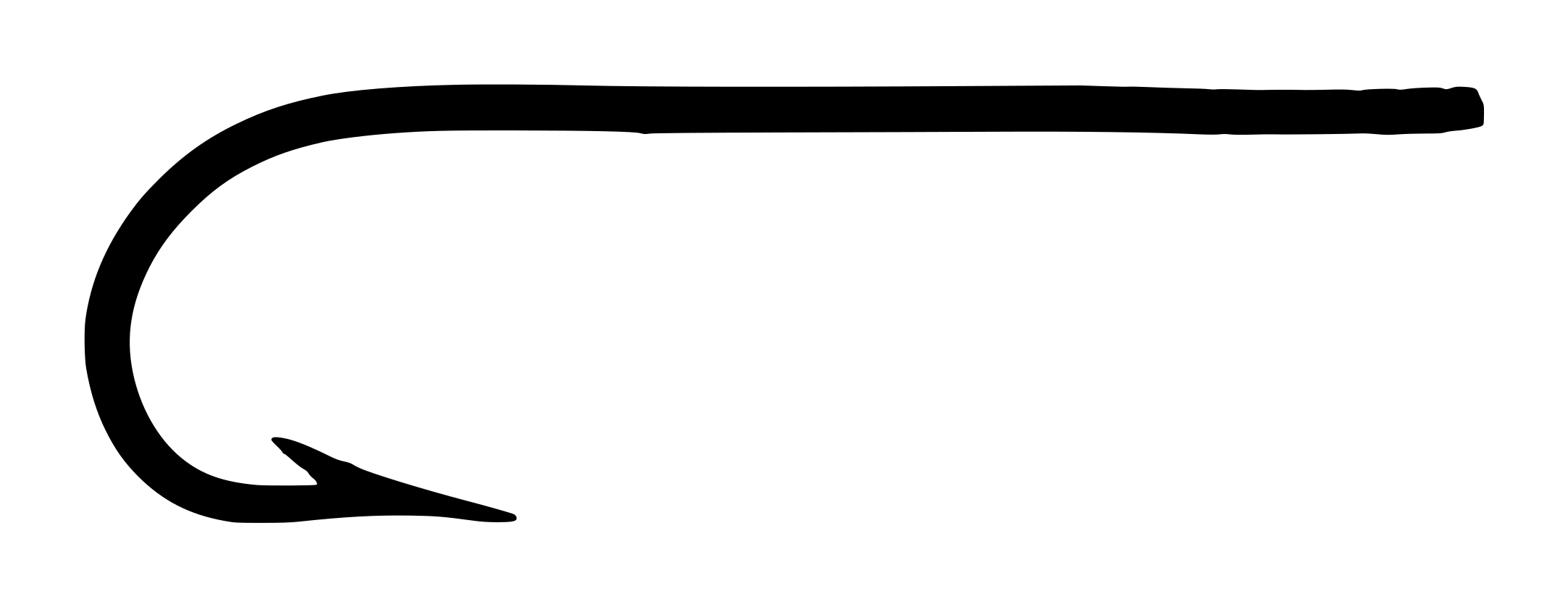
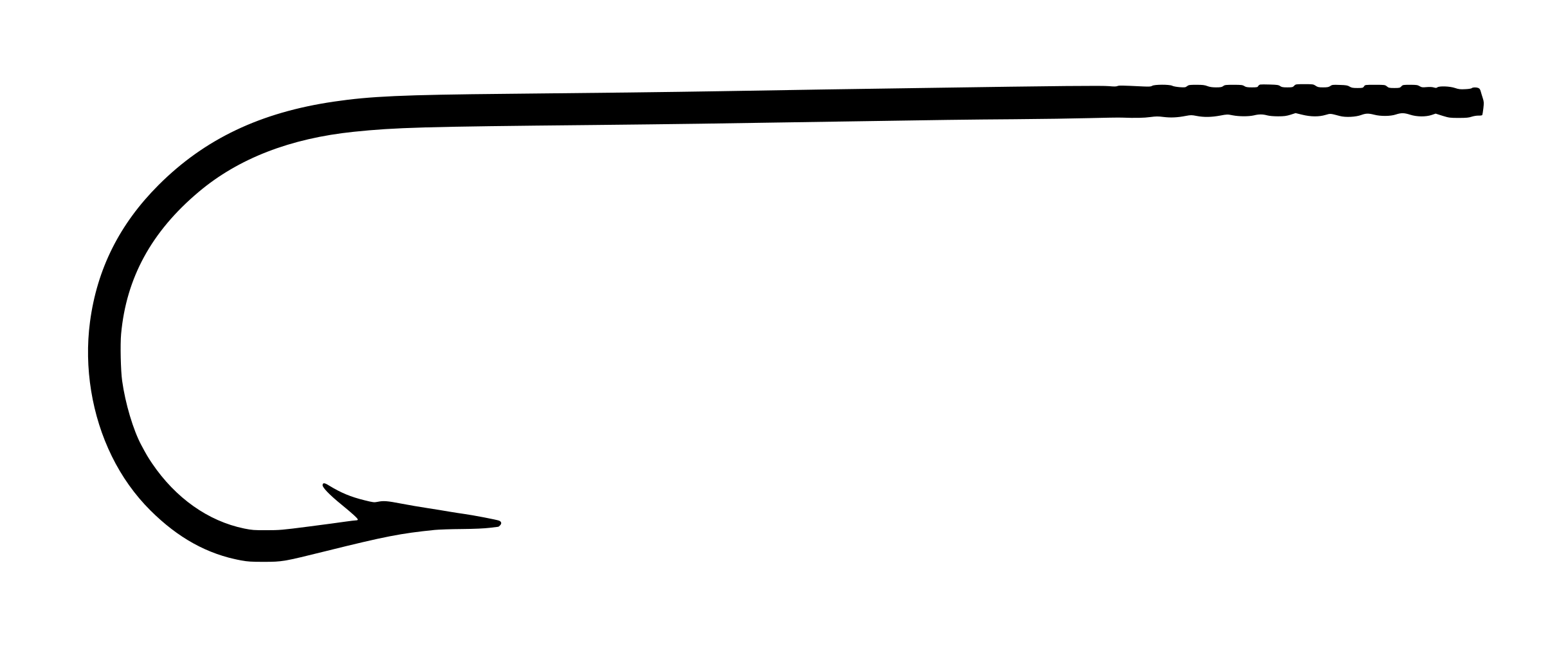
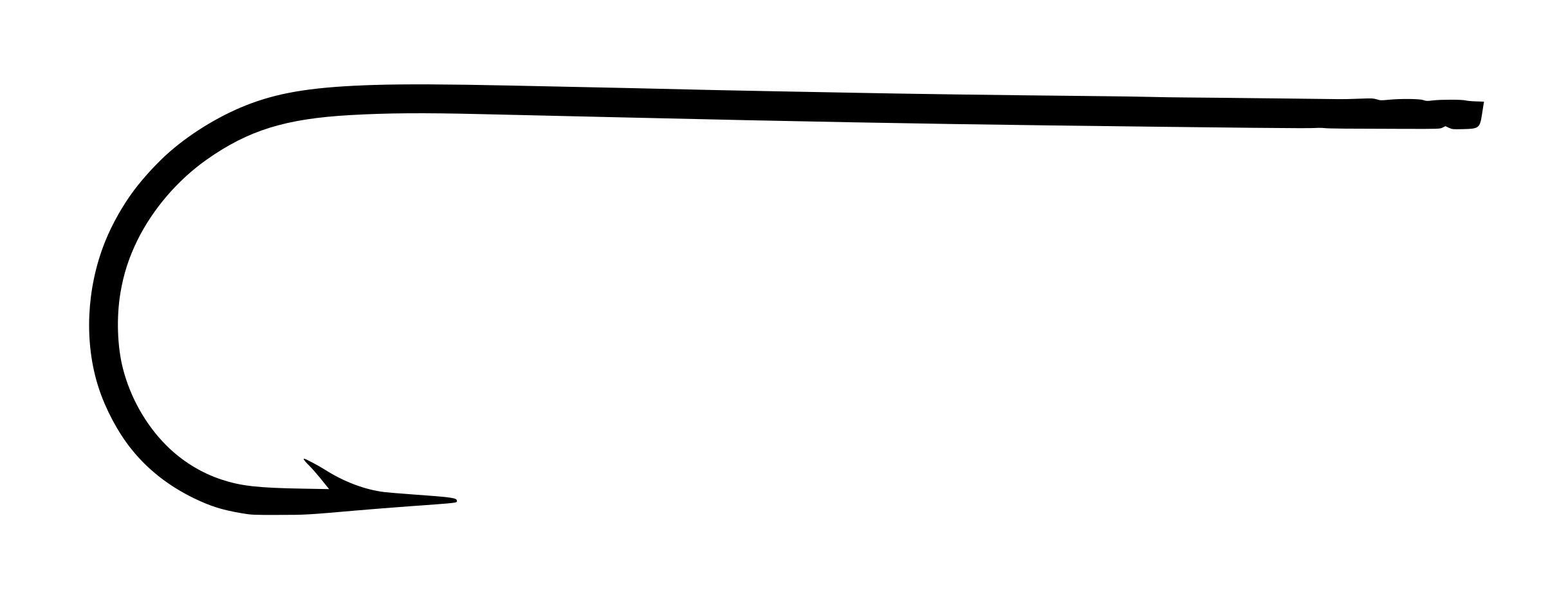
The Mustad 3267 Superior Aberdeen represents classic Norwegian hook engineering from the golden age of Christiania production P. This long-shanked bait hook features the distinctive marked shank construction with ridged serrations, designed specifically for snell knot attachment using gut or silk lines before modern monofilament became standard V.
The wide Aberdeen bend and fine wire gauge made these hooks particularly effective for presenting live worms to trout and other freshwater species, with the extended shank facilitating easier removal when fish swallowed the bait V. The deep blued finish provided superior corrosion resistance for the era, while the superior point geometry ensured reliable penetration P.
Dating from approximately 1920-1950 based on the Christiania location and letterpress label design, this represents Mustad’s dominance of the global hook market when they famously produced ‘one in every two hooks’ sold worldwide I. The blind eye construction and marked shank features make this a significant example of pre-monofilament fishing technology S.
Mustad 3267 Box and Label Size 9
Photographic record
7 cataloged imagesSelect any record to load it above.
7 images shown
Mustad 3267 Box and Label Size 9Mustad 3267 Box and Label Size 9Open originalMustad 3267 Hook Point Size 9Mustad 3267 Hook Point Size 9Open originalMustad 3267 Hook Size 9Mustad 3267 Hook Size 9Open originalMustad 3267 Hooks Size 9Mustad 3267 Hooks Size 9Open originalMustad-3267-Box-and-Label-Size-8Mustad-3267-Box-and-Label-Size-8Open originalMustad-3267-Hook-Point-Size-8Mustad-3267-Hook-Point-Size-8Open originalMustad-3267-Hook-Size-8Mustad-3267-Hook-Size-8Open original
Technical profile
Eye
Blind — Marked ShankBlind eye construction
Wire
Heavy (1X Heavy), Round, Est. ~0.020-0.025" (~0.51-0.64 mm) E
Shank
Special Long — Marked / Ridged
Bend
Aberdeen, Wide gapClassic Aberdeen bend with wide, round geometry optimized for live bait presentation without immediate mortality P
Point
Superior (near-straight inner taper)Single barb positioned close to point, angled for secure penetration while allowing reasonable fish release P
Finish
Blued — Confirmed (stated on packaging)Deep blue-black blued finish showing characteristic chemical passivation coloring, uniform coverage with no wear spots visible on specimen P
Label shows light age toning and edge wear consistent with vintage storage. Green paper retains good color saturation. Two hooks visible, both showing original blued finish with no corrosion. Cardboard backing has minor corner wear but remains structurally sound.
The superior point style features a nearly straight inner taper from barb to tip, creating an efficient penetration profile without the aggressive cutting action of hollow points P. The marked shank’s ridged serrations were precisely engineered to provide mechanical grip for snell knots tied with natural fiber lines, preventing slippage under load that could occur with smooth shanks V.
The Aberdeen bend geometry balances holding power with fish welfare – the wide round curve holds baits securely while reducing immediate mortality in live presentations I. Fine wire construction minimizes bait damage during threading while maintaining adequate strength for the intended species range S.
Represents the earliest documented example of Mustad marked shank technology in the garrenwood.com catalog, predating modern baitholder designs by several decades.
Own this hook? Help us measure it.
We don't have measured sizes for this hook yet. Own one? Submit calipered measurements and we'll review and add them. Thank you!
Historical context
mustad
O. Mustad & Son was founded in 1832 by Ole Mustad in Gjøvik, Norway, establishing what would become the world’s largest fishhook manufacturer. The company’s strategic location in Norway provided access to high-quality iron ore and abundant water power for their manufacturing processes. Under Ole’s leadership and later his sons, Mustad pioneered industrial hook production techniques that allowed them to dominate global markets.
By the early 20th century, Mustad famously claimed to produce ‘one in every two fishhooks sold worldwide,’ operating from their massive Gjøvik factory complex. The company maintained export operations through Christiania (Oslo), which explains the continued use of the old city name on labels well into the 1950s. Mustad’s commitment to quality control and innovative manufacturing processes established Norwegian hooks as the global standard for reliability and performance.
Series History
The 3267 was part of Mustad’s comprehensive Aberdeen series, introduced in the early 20th century to serve the growing demand for specialized bait hooks. The Aberdeen pattern, with its wide round bend and fine wire construction, was originally developed for British fishing conditions but gained worldwide acceptance for its effectiveness with live baits.
Mustad’s version incorporated their marked shank technology, adding ridged serrations to improve snell knot security – a critical feature when gut and silk lines were the standard. The series included various lengths and wire gauges, with the 3267 representing the long-shank variant optimized for worm fishing. Production continued through the 1950s until changing angling practices and the adoption of monofilament lines reduced demand for blind-eye construction.
Era and Packaging Dating
Christiania name on label indicates pre-1925 naming or use of old printing plates through 1950s. Green label with ornate border design, letterpress printing style, and cardboard box construction consistent with 1920s-1950s era. No barcode indicates pre-1974 production.
Industrial Espionage and Wartime Neutrality
Mustad's Gjøvik factory became so secretive about their hook-making processes that employees were sworn to confidentiality agreements, and the production floor remained off-limits to visitors for decades to prevent industrial espionage. The company's dominance was so complete that during World War II, both Allied and Axis forces relied on Mustad hooks for military fishing operations, leading to the unusual situation of a Norwegian company supplying both sides of the conflict through neutral trade channels.
Design lineage and influence
The Aberdeen bend originated in Scotland during the 18th century, named after the fishing port where it gained popularity among commercial fishermen. Mustad adopted and refined this pattern in the 1890s, adding their proprietary marked shank technology to address the specific needs of Continental European anglers who preferred gut snells over eyed hooks.
Competing designs from English manufacturers like Allcock and Sealey maintained traditional smooth shanks, but Mustad’s innovation proved superior for snell knot security. This technological advantage contributed to their market dominance and influenced later manufacturers to adopt similar marking techniques in their own blind-eye patterns.
Best matchRelated by Attribute
Computed automatically from catalog data — updated as new hooks are added.
Matches: Bend, Gap, Eye, Eye Orient., Point +5 moreDiffers: Shank: Special Long vs 2X Long; Wire: Heavy (1X Heavy) vs Fine (1X Fine); Finish: Blued vs Bronzed
Matches: Bend, Shank, Eye, Eye Orient., Forging +3 moreDiffers: Wire: Heavy (1X Heavy) vs Extra-Fine; Gap: Wide vs Standard; Point: Superior vs Hollow Point +1 more
Matches: Bend, Wire, Point, Finish, Forging +2 moreDiffers: Shank: Special Long vs Extra-Extra Long; Gap: Wide vs Standard; Eye: Blind — Marked Shank vs Ball Eye +2 more
Matches: Wire, Eye, Eye Orient., Point, Forging +4 moreDiffers: Bend: Aberdeen vs Kirby (offset); Shank: Special Long vs Standard; Gap: Wide vs Standard +1 more
Matches: Bend, Gap, Eye, Eye Orient., Finish +4 moreDiffers: Shank: Special Long vs 3X Long; Wire: Heavy (1X Heavy) vs Extra-Fine; Point: Superior vs Hollow Point
The Mustad 3267 was designed specifically as a bait hook for threading worms and other natural baits P. The long shank facilitates easier hook removal when fish have swallowed the bait, while the wide Aberdeen bend holds live worms effectively without immediately killing them V. The marked shank with ridged serrations was engineered to secure snell knots tied with gut or silk lines, the standard connection method before modern monofilament V.
Secondary Applications
Occasionally used for small streamers when snelled to gut leaders in traditional presentations
Classic Fly Patterns
Not typically used for fly tying
Modern Equivalents
Hook
Match Quality
Notes
Mustad 3261
Excellent
Direct descendant with identical bend and proportions, but features ringed eye for modern tying methods
Eagle Claw L197
Good
Similar Aberdeen pattern and long shank, though slightly heavier wire gauge
Collector notes
Strong historical significance as pre-monofilament technology with desirable Christiania provenance, but relatively common survival rate limits premium value.
Reference value
$15 – $35 USD estimate
Packaging condition
Very Good — light wear, fully legibleRecorded specimen
Packaging format
MUS-GRN-01Catalog code
Positive factors: The Christiania location marking adds significant collector appeal, linking these hooks to Norway’s historic fishing industry before the 1925 name change to Oslo. The marked shank construction represents an important technological bridge between hand-forged and modern hook manufacturing. Original packaging with the distinctive green label and letterpress printing enhances value substantially.
Limiting factors: Aberdeen patterns were produced in enormous quantities during Mustad’s peak production years, resulting in relatively common availability today. The specialized blind-eye construction appeals primarily to collectors interested in historical fishing techniques rather than practical users. Condition varies widely among surviving examples, with many showing finish degradation or missing original packaging.
Packaging
Green cardboard label with ornate asterisk border design, letterpress printed in black ink on light green paper stock. Measures approximately 3.5 x 2.5 inches. Features Mustad key trademark logo and Christiania, Norway location. Text includes 'Trade Mark', 'Qual. 3267', 'Superior Aberdeen Hooks', 'Marked Blued', and 'Made in Norway'. Quantity '100 No.' printed in lower left. Mounted on cream cardboard backing with visible age toning.
Market Value Notes
Complete original packaging commands premium pricing. Individual hooks worth $2-5 each depending on condition. Christiania marking adds 50-100% value over later Oslo examples.
Where to Find
Vintage tackle shows, estate sales, European fishing collectible dealers. Occasionally appears on eBay in lots with other Norwegian hooks.
Collector's Identification Tips
Look for the distinctive Christiania location marking rather than Oslo. Original green labels with letterpress asterisk borders are key authenticity indicators. Marked shank ridges should be sharp and evenly spaced – worn examples may have smoothed serrations. Verify superior point geometry with nearly straight inner face rather than hollow ground profile.
Preservation
Storage and Preservation
Store in low humidity environment to prevent blued finish degradation – the chemical bluing process is susceptible to oxidation that can progress to rust spots. Original packaging adds substantial value and should be preserved using archival storage methods. Avoid contact with dissimilar metals to prevent galvanic corrosion.
Handle marked shank areas carefully as the ridged serrations can be damaged by excessive force. If displaying, use museum-quality mounting materials and avoid direct sunlight which can fade the green label over time. Consider climate-controlled storage for specimens with original packaging in excellent condition.
Primary Source
Label Typography and Design Elements
Source: Original Mustad 3267 label, photographed specimen
The letterpress typography shows characteristic impression depth and slightly uneven ink coverage typical of early 20th century commercial printing. The ornate asterisk border design reflects Victorian decorative sensibilities that persisted into the 1920s-1940s period.
The key trademark symbol appears in simplified form compared to later corporate logo evolution, supporting the pre-1950 dating. The ‘Qual.’ abbreviation for ‘Quality’ was standard Mustad nomenclature during this era, later replaced by full model numbering systems. The green paper stock and black ink combination was a cost-effective choice that provided good contrast while using readily available materials during wartime rationing periods.
Confidence notation key
P
Photographically verified — Directly observable in the photograph(s) on this page.
V
Verified by documentation — Confirmed by manufacturer catalog, spec sheet, or published reference.
I
Inferred — A logical deduction from observable or documented evidence, not directly stated.
E
Estimated — An approximation based on visual comparison, proportional analysis, or limited data.
S
Speculative — A reasoned hypothesis that cannot be confirmed from available evidence.
Claims with no notation are confirmed by multiple independent sources. All photographs on garrenwood.com are taken on a measurement grid where each square equals 1/10 inch (0.1″ / 2.54 mm).