
Mustad Hooks – 3192

At-a-Glance Summary
The Mustad Quality 3192 represents a classic early 20th century Carlisle bait hook in superfine wire gauge, manufactured by the Norwegian industrial giant O. Mustad & Son. Distinguished by its long shank design and ringed eye construction, this model was specifically engineered for delicate live bait presentations where heavy wire would damage fragile baits like crickets or small worms.
The definitive collecting significance lies in the packaging marked ‘CHRISTIANIA – NORWAY,’ providing absolute pre-1925 dating since the Norwegian capital was renamed Oslo on January 1, 1925. This makes surviving examples genuine antiques of approximately 100 years age, representing Mustad’s dominance during the golden age of tackle manufacturing.
The iconic Key trademark visible on the label symbolized Mustad’s claim to be the ‘key to success’ for anglers worldwide. During this era, the company produced over 60,000 different hook patterns and sizes, establishing Norwegian engineering as the global standard for fishhook manufacturing quality and precision.
Photography
Identification
| Manufacturer | mustad |
| Model / Code | 3192 |
| Full Name | Carlisle Hook |
| Size Documented | Not stamped on visible label (P) |
| Estimated Era | c. 1900-1924 |
| Country of Origin | Norway |
Technical Specifications
| Eye Type | Ball Eye |
| Eye Orientation | Straight / Inline |
| Eye Notes | Well-formed ringed eye with complete wire loop, showing precise manufacturing control typical of Mustad's early industrial period P |
| Wire Gauge | Heavy (1X Heavy) |
| Wire Profile | Round (unforged) |
| Est. Wire Diameter | ~0.014-0.016" (~0.36-0.41 mm) E |
| Shank Length | Extra-Extra Long (XXL) |
| Bend Family | Aberdeen |
| Bend Notes | Classic Aberdeen bend geometry with rounded bottom curve and moderate depth, optimized for live bait presentations P |
| Point Style | Superior (near-straight inner taper) |
| Gap Width | Standard |
| Finish | Blued — Confirmed (stated on packaging) |
| Finish Notes | Deep blue-black blued finish with characteristic period oxide coloration, showing even application typical of Mustad's industrial finishing processes P |
| Condition | Hooks show original blued finish with no corrosion. Packaging exhibits age-appropriate toning and minor edge wear but remains structurally sound. |
The superfine wire gauge serves the critical function of preserving bait vitality while maintaining sufficient strength for fish capture. The extended shank length provides multiple advantages: preventing fish from swallowing the hook deeply (reducing mortality in catch-and-release scenarios), offering more surface area for secure bait attachment, and creating leverage that aids in hook removal.
The ringed eye construction, formed by bending the wire end into a complete loop, provides superior line attachment security compared to simple eye holes. The blued finish offers corrosion resistance while maintaining low visibility underwater, essential for wary freshwater species in clear water conditions.
Technical Measurements
Size measured: (unspecified). Method: Grid-derived from photograph (1/10" grid).
| Dimension | Value |
|---|---|
| Overall Length | ~1.80-1.90" (~45.7-48.3 mm) E |
| Shank Length | ~1.20-1.30" (~30.5-33.0 mm) E |
| Gap Width | ~0.40-0.50" (~10.2-12.7 mm) E |
| Bend Depth | ~0.30-0.40" (~7.6-10.2 mm) E |
| Shank-to-Gap Ratio | ~2.4-3.3 : 1 |
Overall length: approximately 18-19 small squares = ~1.80-1.90". Shank length: approximately 12-13 small squares = ~1.20-1.30". Gap width: approximately 4-5 small squares = ~0.40-0.50". Hook positioned at slight angle to grid, measurements estimated with moderate uncertainty range.
Historical Context
mustad
O. Mustad & Son was founded in 1832 by Ole Mustad in Gjøvik, Norway, evolving from a small nail-making operation into the world’s largest fishhook manufacturer. By the early 1900s, the company had established itself as the global standard for hook quality and innovation, producing an astounding 60,000+ different patterns and sizes to serve every conceivable fishing application.
The company’s success was built on Norwegian engineering precision and industrial-scale production methods that allowed them to dominate international markets. The iconic Key trademark, prominently displayed on this packaging, symbolized their marketing claim that Mustad hooks were the ‘key to success’ for anglers worldwide. This period represents the peak of their early industrial expansion before transitioning to modern manufacturing methods.
Series History
The 3192 was part of Mustad’s extensive Carlisle series, designed specifically for live bait fishing applications where hook weight and wire thickness were critical factors. The ‘Superfine’ designation indicated the lightest wire gauge in their catalog, engineered to prevent damage to delicate baits like crickets, grasshoppers, and small worms that would be killed or rendered ineffective by heavier wire constructions.
This series represented Mustad’s response to the growing sophistication of early 20th century angling, where bait presentation was becoming increasingly refined. The long shank design prevented deep hooking while the ringed eye provided secure line attachment, making these hooks particularly popular among freshwater anglers targeting trout and panfish with natural baits.
Era and Packaging Dating
Box marked 'CHRISTIANIA - NORWAY' which was the capital's name until January 1, 1925 when it was renamed Oslo. This provides definitive pre-1925 dating. Typography and box construction consistent with early 20th century production.
During the early 1900s, Mustad's production was so vast that they claimed to manufacture more fishhooks in a single day than some competitors produced in an entire year. The company's Gjøvik factory operated continuously, with workers maintaining production around the clock to meet global demand from tackle dealers across six continents.
Design Lineage and Influence
The Carlisle pattern traces its origins to 18th century English hook makers, named after the city in northwestern England. Mustad’s interpretation refined the traditional design with industrial precision, maintaining the characteristic long shank and rounded bend while introducing wire gauge variations like this superfine version to serve specialized applications.
This model influenced later developments in light-wire bait hooks, with the superfine gauge concept becoming standard across the industry for delicate live bait presentations. Modern equivalents continue to employ similar wire weights and proportions, demonstrating the enduring functionality of Mustad’s early 20th century engineering.
Related by Attribute
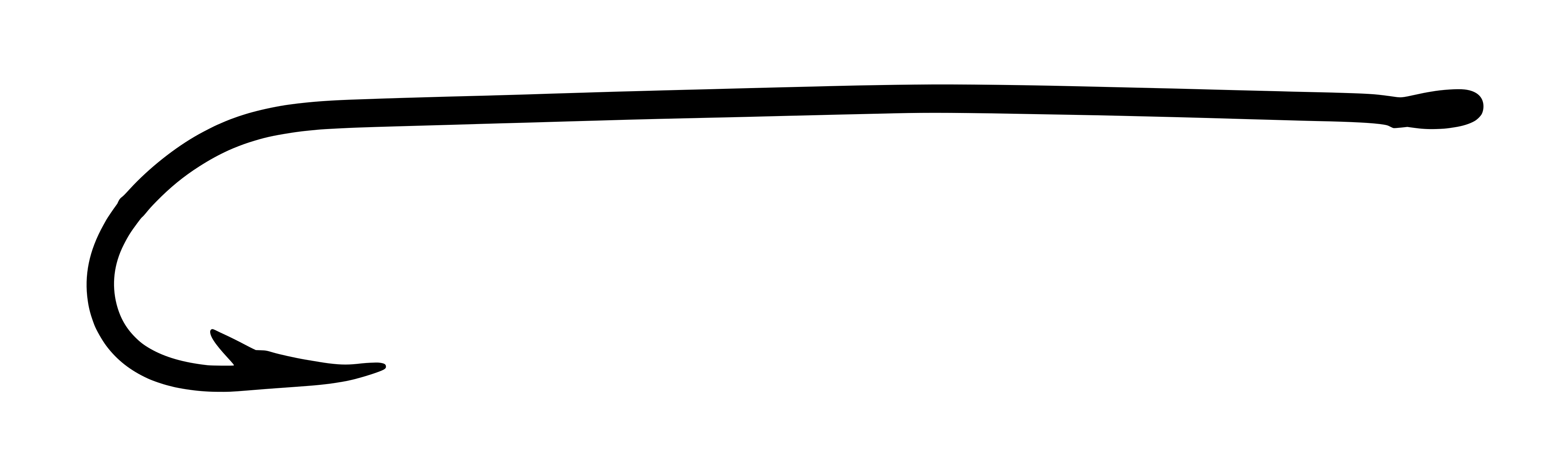
| Silhouette | Hook Model | Match | Analysis | |
|---|---|---|---|---|
|
3320-G No. 2 — Carlisle Pelican | 82% |
Matches: Shank, Wire, Gap, Eye, Eye Orient. +4 more Differs: Bend: Aberdeen vs Sproat; Point: Superior vs Standard / Spear; Finish: Blued vs Gold-Plated |
Compare |
| 2627 R No. No. 1/0 — Aberdeen Spear Pointed | 76% |
Matches: Bend, Gap, Eye, Eye Orient., Finish +4 more Differs: Shank: Extra-Extra Long vs Standard; Wire: Heavy (1X Heavy) vs Standard; Point: Superior vs Standard / Spear |
Compare | |

|
3284 B No. No. 10 — Aberdeen Hook | 75% |
Matches: Bend, Eye, Point, Forging, Shank Feat. +1 more Differs: Shank: Extra-Extra Long vs 4X Long; Wire: Heavy (1X Heavy) vs Extra-Heavy (2X+); Gap: Standard vs Wide +3 more |
Compare |
|
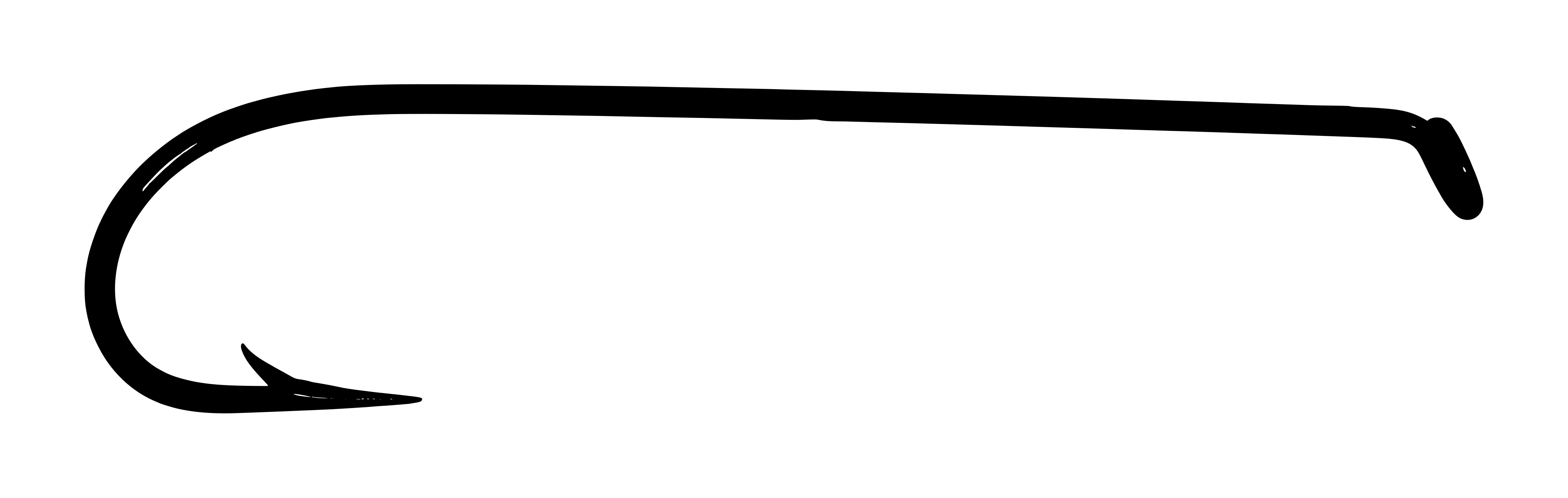
3718 No. No. 3 — Mustad 3718 Carlisle | 74% |
Matches: Shank, Wire, Eye, Forging, Shank Feat. +1 more Differs: Bend: Aberdeen vs Carlisle; Gap: Standard vs Wide; Eye Orient.: Straight / Inline vs Turned Down +3 more |
Compare |
|
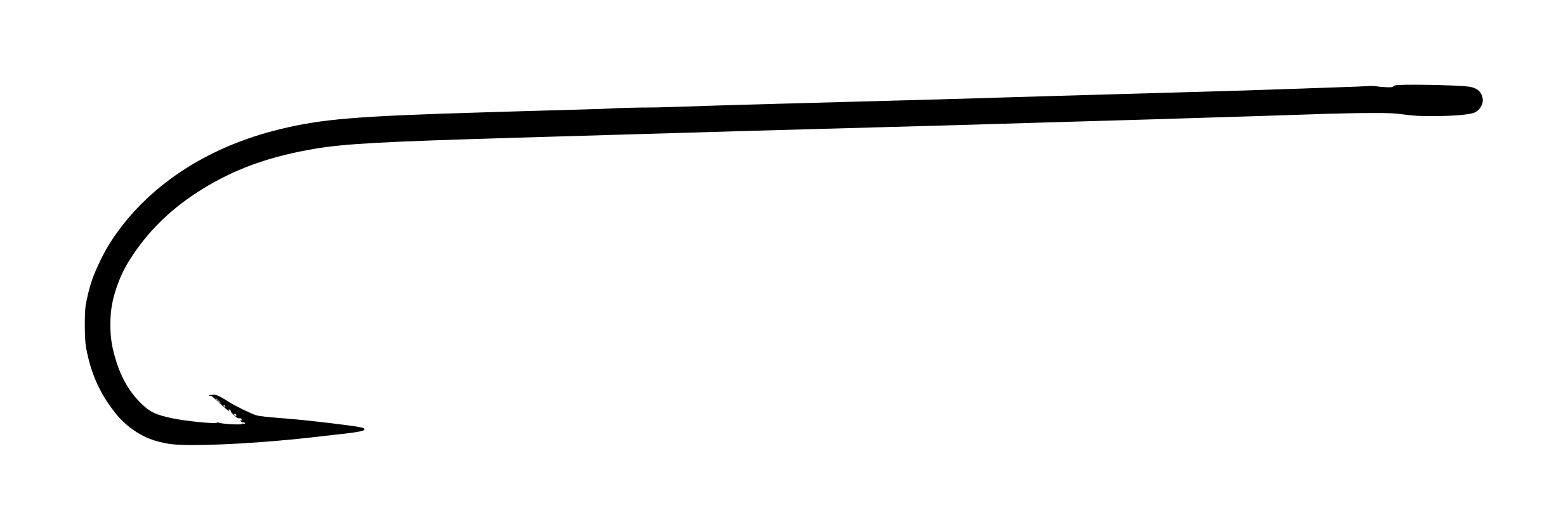
993 R 6X Long No. No. 4 — Celebrated No. 993 | 73% |
Matches: Shank, Gap, Eye, Eye Orient., Point +2 more Differs: Bend: Aberdeen vs Sproat; Wire: Heavy (1X Heavy) vs Standard; Finish: Blued vs Bronzed +1 more |
Compare |
Related by Shape (SVG)
| Silhouette | Hook Model | Match | |
|---|---|---|---|

|
3191 A No. 2 — Mustad-Carlisle Hooks | 99% | Compare |

|
3785 No. 3/0 — Mustad 3785 | 99% | Compare |
|
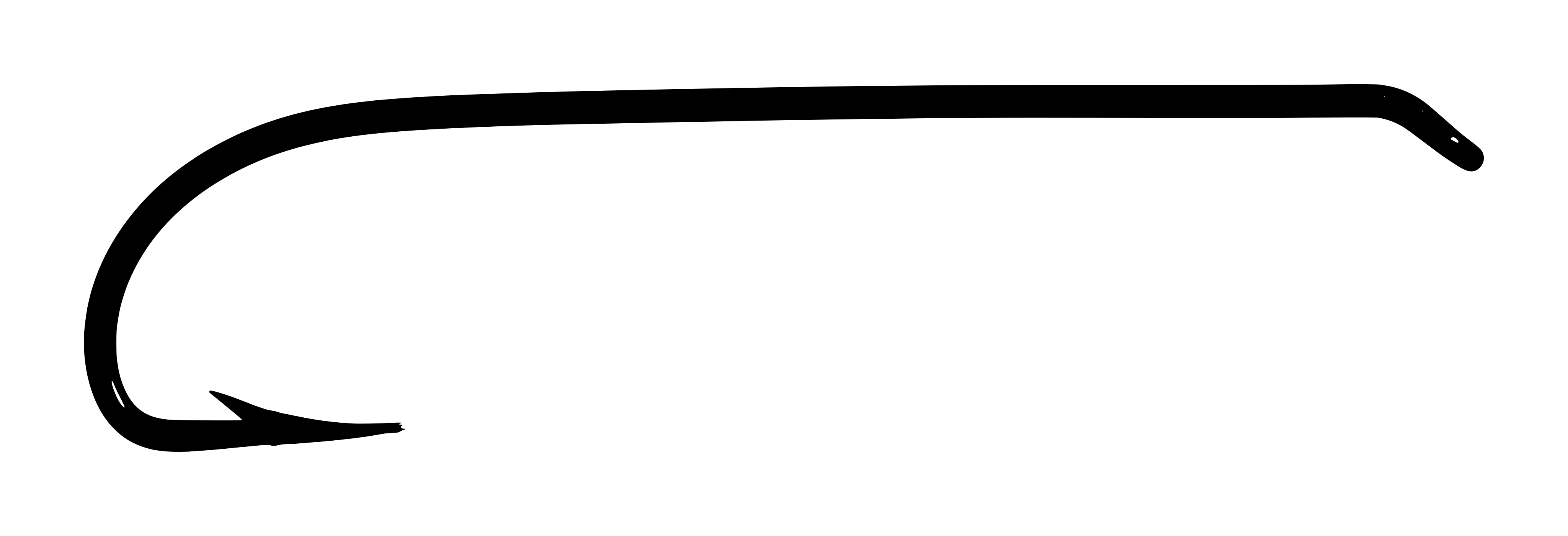
3665A No. No. 4 — Mustad 3665A Limerick | 98% | Compare |
|
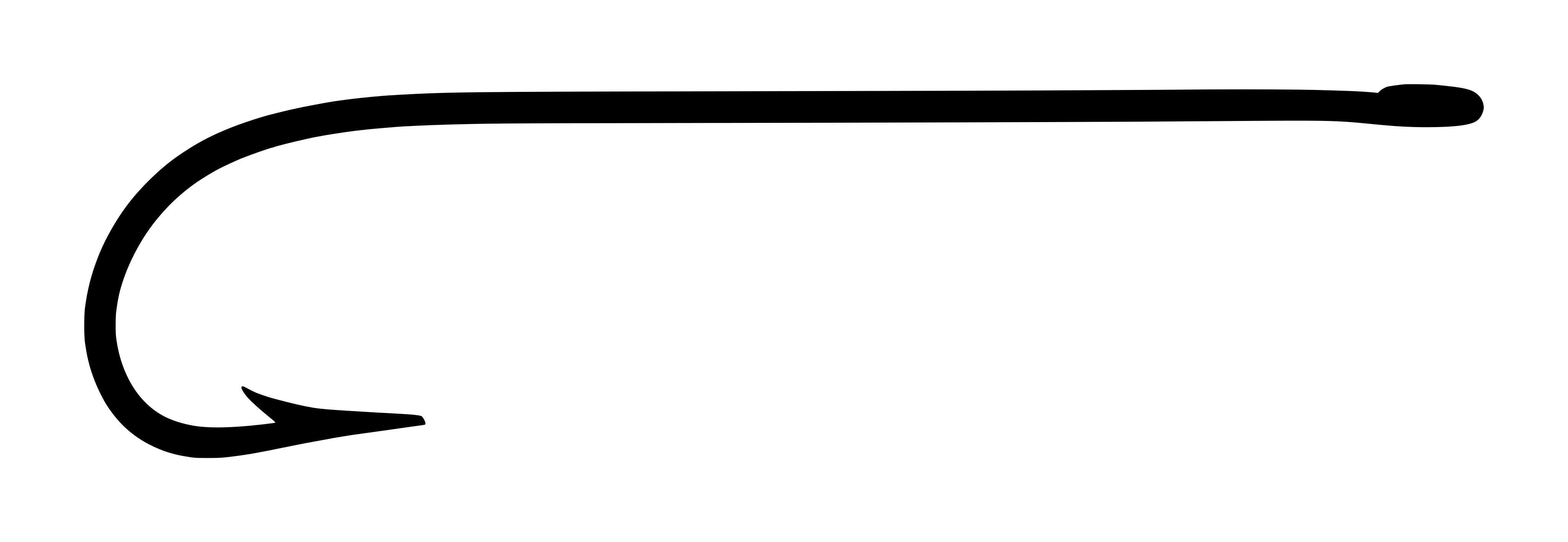
3194 N No. 4, 6 — 3194 N | 97% | Compare |

|
33960 No. No. 2 — Mustad 33960 Sproat | 97% | Compare |
Usage, Fly Patterns, and Equivalents
Primary Application
Designed for delicate live bait fishing with worms, crickets, and other fragile natural baits V. The superfine wire gauge prevents damage to live bait while the long shank prevents fish from swallowing the hook deeply, facilitating easier unhooking and release V.
Secondary Applications
Occasionally used by vintage fly tiers for long-bodied streamers and Woolly Worm patterns where light wire is desired
Classic Fly Patterns
Not typically used for fly tying
Modern Equivalents
| Hook | Match Quality | Notes |
|---|---|---|
| Mustad 3191 | Excellent | Direct descendant with identical bend geometry, available in standard wire |
| Eagle Claw 214 | Good | Similar Aberdeen-style bend and long shank proportions |
| Mustad 3261 | Good | Modern Carlisle pattern with comparable applications |
Collectability and Value
| Rarity | Scarce |
| Market Value (USD) | $35 – $65 |
| Packaging Condition | Very Good — light wear, fully legible |
| Packaging Format | MUS-CB-01 |
Strong collecting appeal centers on the definitive pre-1925 dating from the ‘Christiania’ marking, making these hooks genuine antiques of approximately 100 years age. The intact original packaging with the iconic Key trademark adds significant value, as does the historical significance of representing Mustad’s early 20th century global dominance in hook manufacturing.
Limiting factors include the relatively common Carlisle pattern and the fact that Mustad produced thousands of hook variants during this period. However, the specific combination of superfine wire, ringed eye construction, and documented Christiania provenance creates meaningful scarcity in the collector market.
Packaging
Small rectangular cardboard box with blue paper label. Label features decorative snowflake border pattern, Mustad Key trademark prominently displayed. Typography in serif font with 'Trade Mark' and company details clearly printed. Box shows period-appropriate construction with simple cardboard and paper label adhesion.
Market Value Notes
Premium pricing driven by intact Christiania-marked packaging and Key trademark. Loose hooks without packaging worth significantly less. Condition of box affects value substantially.
Where to Find
Antique tackle shows, estate sales, specialized fishing collectible dealers, occasionally on eBay from European sellers
Collector's Identification Tips
Authenticate by the ‘CHRISTIANIA’ marking which definitively dates to pre-1925. The Key trademark should be sharply printed with clear serif typography. Box construction uses period-appropriate thin cardboard with paper label adhesion rather than later printing methods.
Storage and Preservation
Store in a stable, low-humidity environment to prevent further deterioration of the cardboard packaging and label. The blued finish on the hooks is relatively stable but can develop surface oxidation if exposed to moisture. Keep hooks on the original card rather than removing them, as the intact packaging provides the primary collecting value.
Handle the box carefully as the cardboard shows age-appropriate brittleness. The paper label is the most fragile component and should not be exposed to direct handling or cleaning attempts. Store flat in acid-free archival boxes to prevent warping and crushing of the original packaging.
Packaging Markings
The label shows ‘100’ printed in the designated quantity space and ‘No.’ with a blank space for size designation. All text appears to be professionally printed rather than handwritten. The blank size space suggests this was a stock label format used across multiple sizes within the 3192 series, with specific size numbers added during packaging.
Label Text Analysis
Source: Original Mustad 3192 packaging label, c. 1900-1924
The label provides comprehensive product specification: ‘Trade Mark’ with Key symbol, ‘Qual. 3192’ (Quality designation), ‘O. MUSTAD & SON MANUFACTURERS’, ‘CHRISTIANIA – NORWAY’ (location), ‘Superfine CARLISLE HOOKS’ (pattern and wire gauge), ‘Ringed Blued’ (construction and finish), ‘100 No.’ (quantity and size designation area), and ‘Made in Norway’ (country of manufacture).
This text layout represents Mustad’s standard early 20th century labeling format, providing complete product identification while maintaining the company’s marketing emphasis on Norwegian quality and the Key trademark symbolism.
Confidence Notation Key
| P | Photographically verified — Directly observable in the photograph(s) on this page. |
| V | Verified by documentation — Confirmed by manufacturer catalog, spec sheet, or published reference. |
| I | Inferred — A logical deduction from observable or documented evidence, not directly stated. |
| E | Estimated — An approximation based on visual comparison, proportional analysis, or limited data. |
| S | Speculative — A reasoned hypothesis that cannot be confirmed from available evidence. |
Claims with no notation are confirmed by multiple independent sources. All photographs on garrenwood.com are taken on a measurement grid where each square equals 1/10 inch (0.1″ / 2.54 mm).