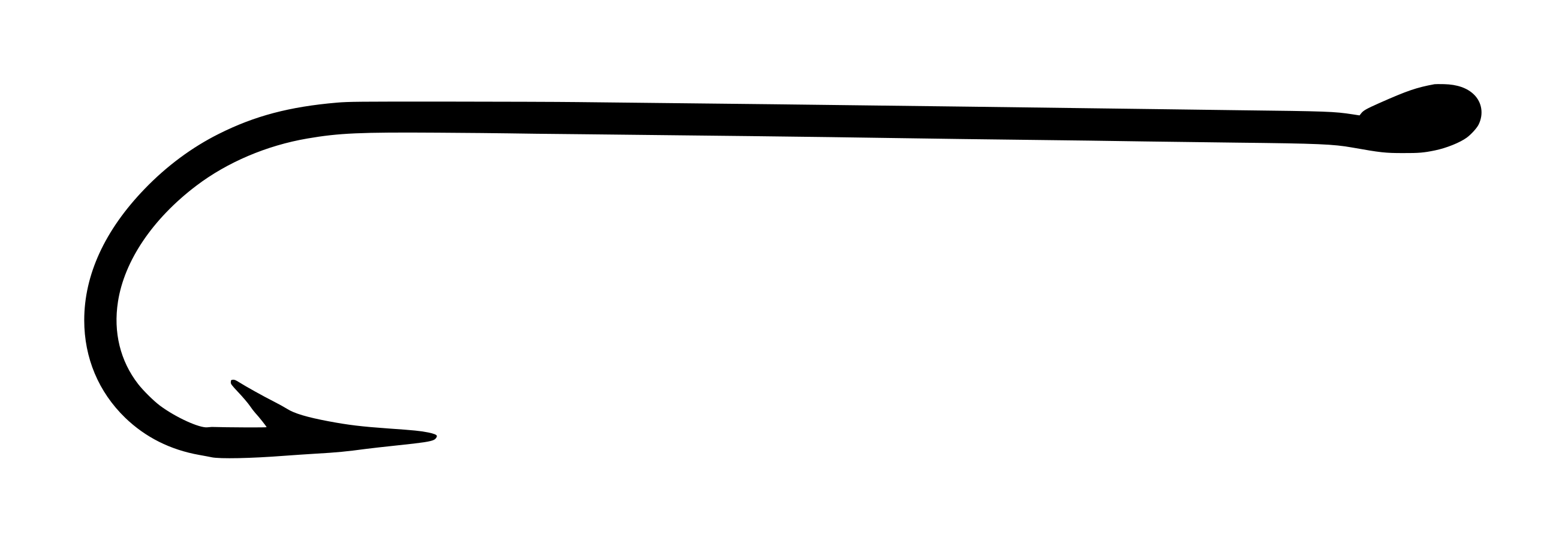
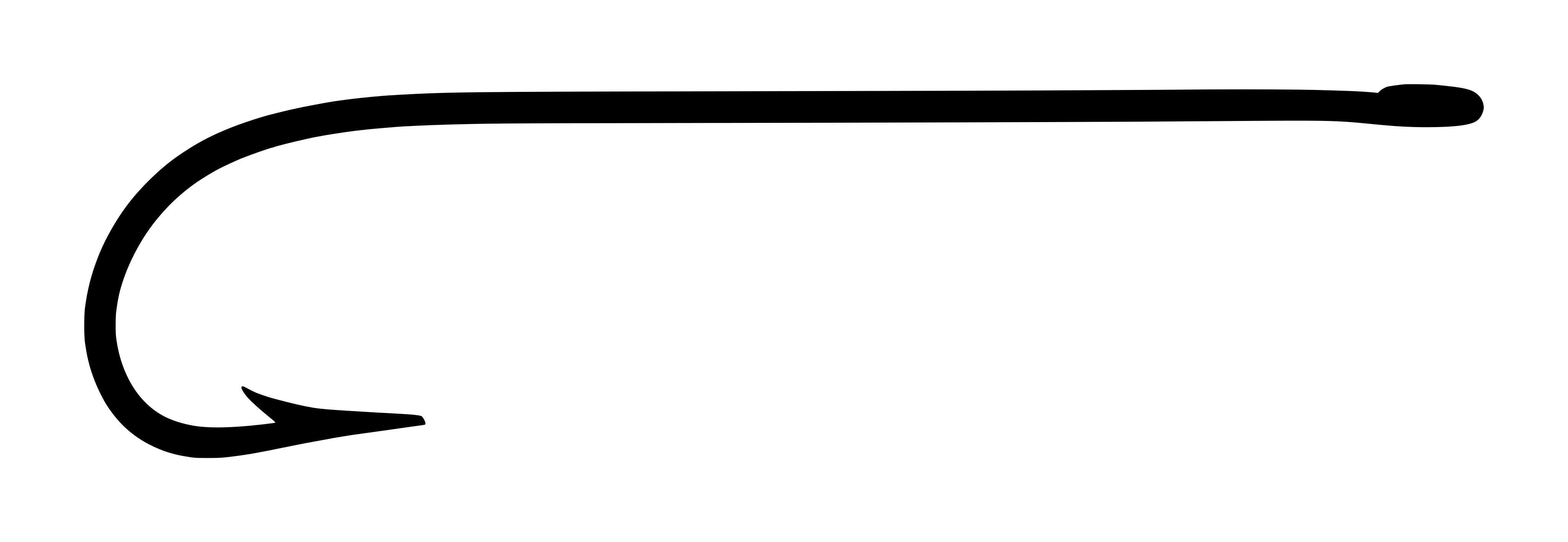
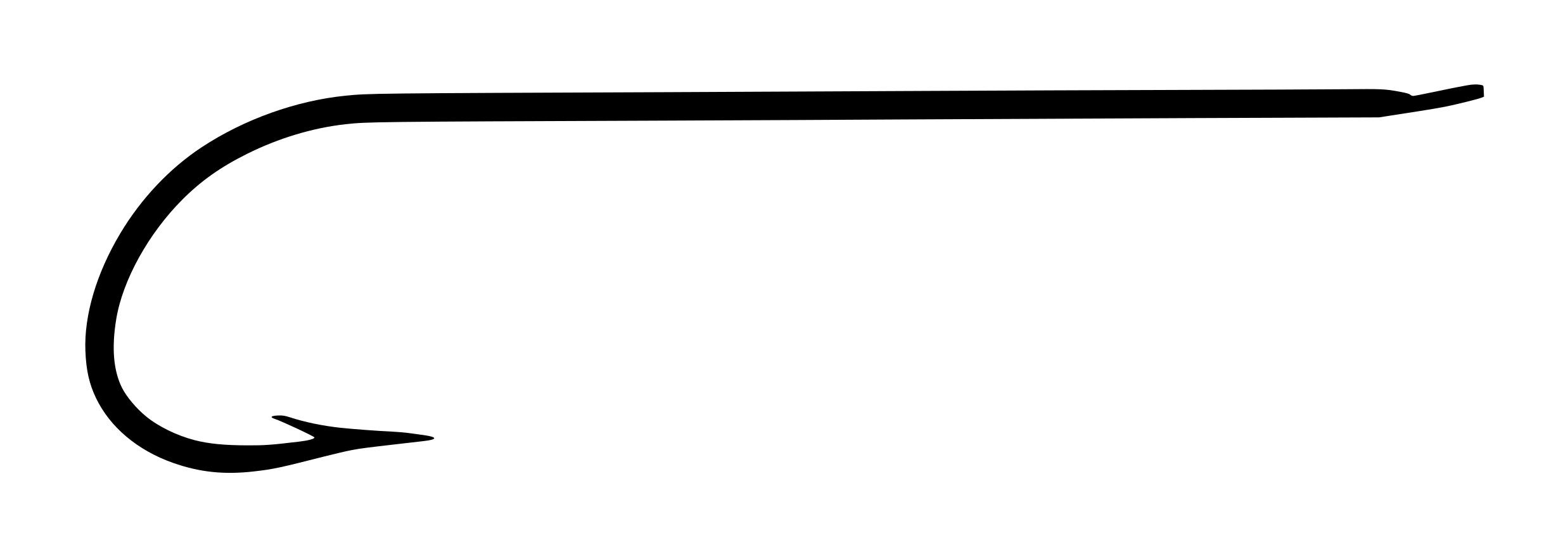
The Mustad Quality 3785 is a heavy-wire, marked-shank bass hook manufactured in Christiania, Norway between 1900 and 1924, representing a critical transitional phase in hook eye technology. This is a blind-eye, snelled pattern with hollow point and sproat bend—features engineered for premium bait presentation and capable of holding large, powerful game fish with delicate tissue.
The marked-shank (notched/filed) construction was the apex of pre-eyed hook technology, allowing anglers to whip silkworm gut or horsehair snoods directly to the shank, creating a streamlined profile impossible with contemporary metal eyes. The hollow point—a concave, razor-sharp geometry—required significantly more labor to hand-grind than standard spear or bead points, marking this as a premium-grade implement.
The Christiania location designation on the label provides definitive pre-1925 dating, as Oslo was officially renamed from Christiania on January 1, 1925. No barcode and period-appropriate letterpress printing on yellow-gold cardstock confirm early vintage manufacturing. Today, these hooks are highly sought by classical Atlantic salmon fly tiers and tackle historians exploring the mechanical and aesthetic lineage of modern hook design.
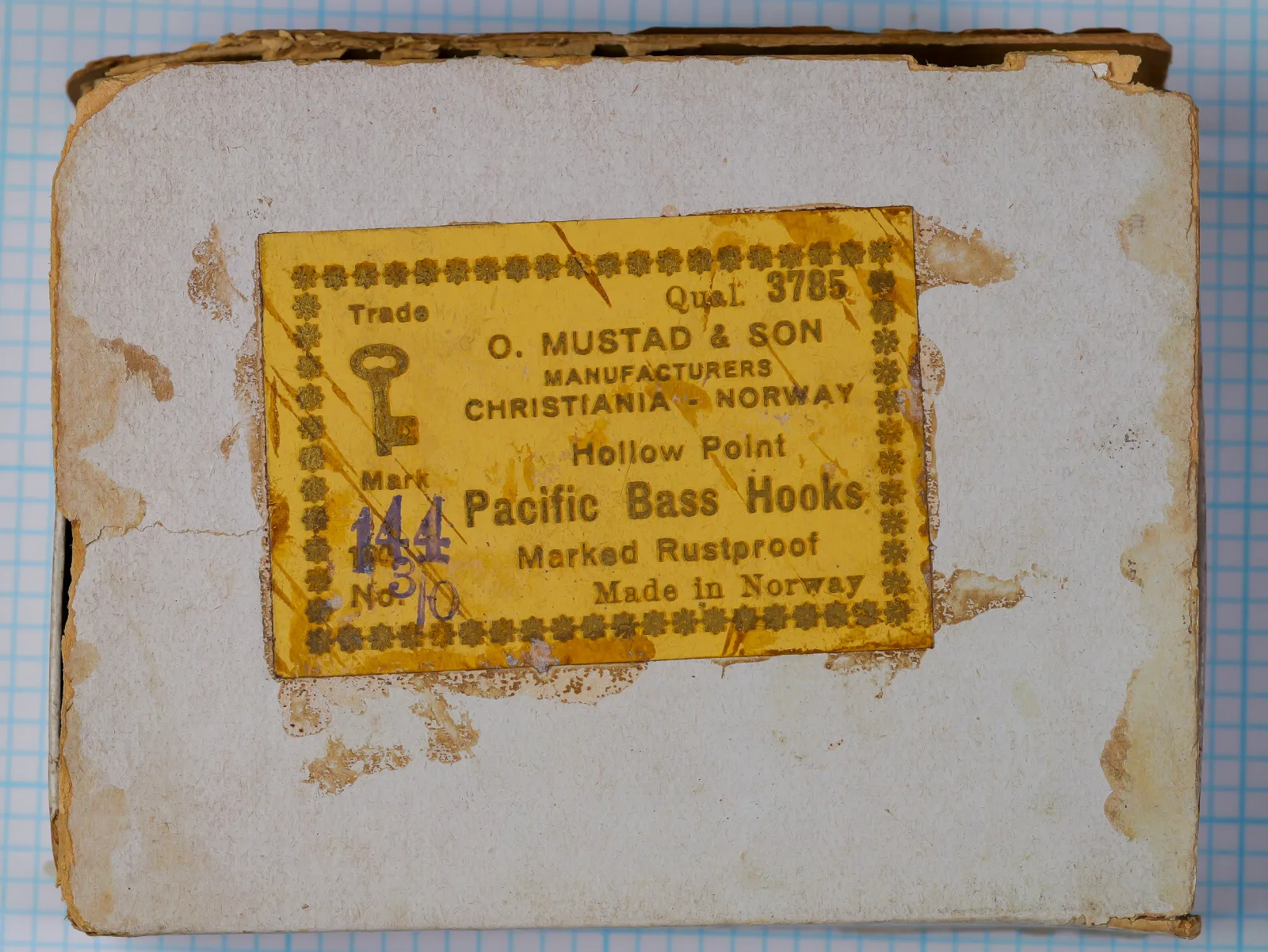
Original yellow-gold cardstock label with eight-line typographic format, Key Brand logo (skeleton key), and printed designation 'Pacific Bass Hooks — Marked Rustproof — Made in Norway.' Handwritten annotations in blue ink document original distribution quantity (144 hooks per box).
Photographic record
4 cataloged imagesSelect any record to load it above.
4 images shown
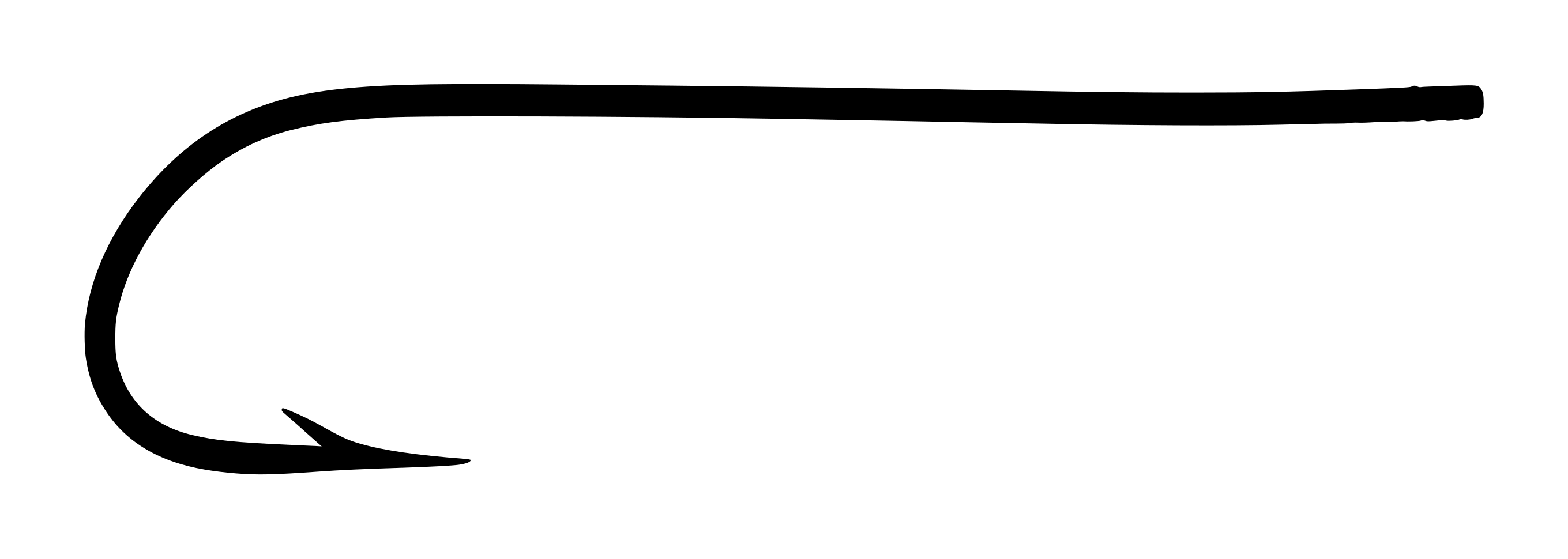
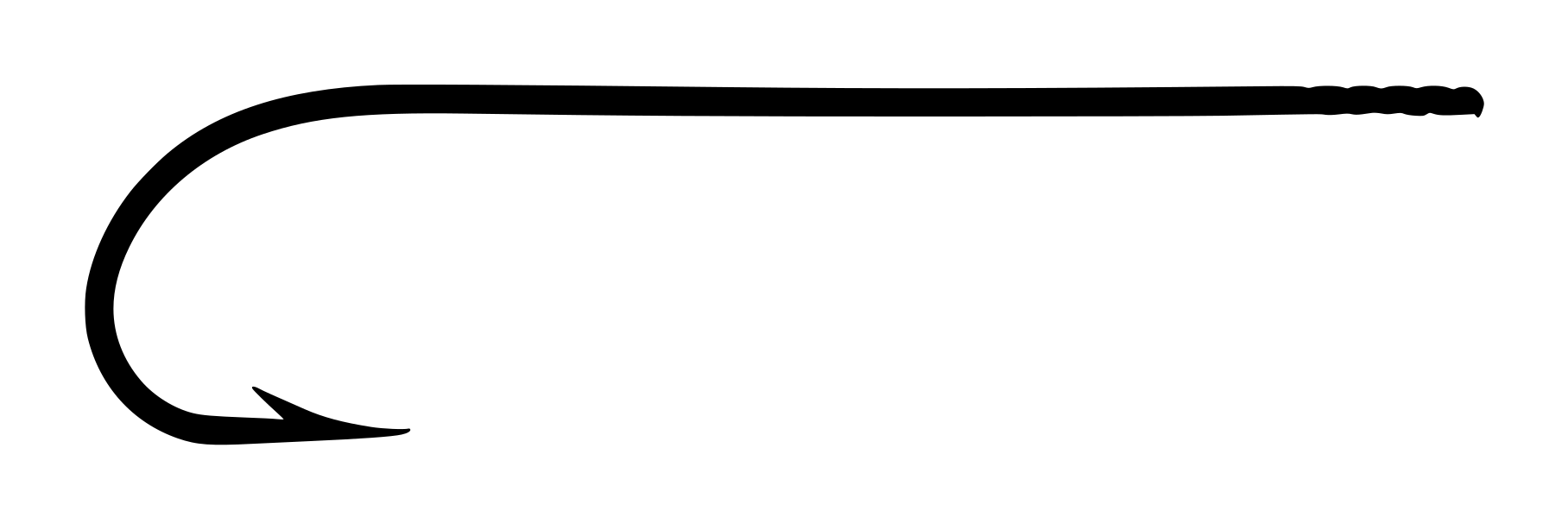
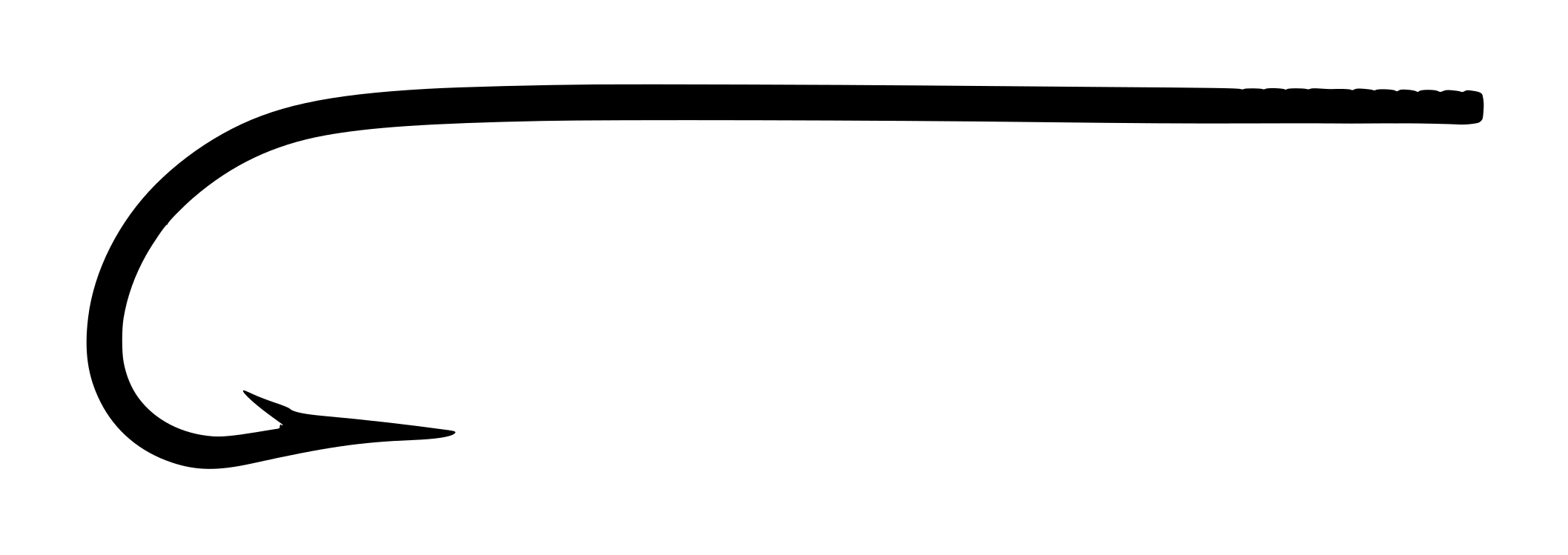
Mustad 3785 Pacific Bass Hooks Original Box Label Size 3/0Original yellow-gold cardstock label with eight-line typographic format, Key Brand logo (skeleton key), and printed designation 'Pacific Bass Hooks — Marked Rustproof — Made in Norway.' Handwritten annotations in blue ink document original distribution quantity (144 hooks per box).Open originalMustad 3785 Size 3/0 Hollow Point Close-Up DetailClose-up of the hook point showing the distinctive hollow point geometry—a concave, dished-out taper from the tip down to the barb base. The sharp, razor-like edge and rapid flare toward the barb are characteristic of premium early Mustad manufacture. Photographed on measurement grid for scale reference.Open originalMustad 3785 Size 3/0 Full Profile and Marked ShankFull overhead profile of the Mustad 3785, size 3/0, showing the long straight shank, sproat bend with parabolic curve, and tapered terminal end characteristic of marked-shank (blind-eye) construction. The marked notching on the shank end is visible for snood whipping. Photographed on measurement grid.Open originalMustad 3785 Size 3/0 Marked Shank DetailClose-up detail of the marked (notched/filed) terminal shank of the Mustad 3785, size 3/0. The file-cut ridges provide mechanical grip for whipped silk thread and pitch when forming a snelled gut leader. This construction predates the universal adoption of formed metal eyes and represents premium early 20th-century hook technology.Open original
Technical profile
Eye
Blind — Marked ShankMarked shank (blind eye) construction: the terminal wire is tapered to a blunt point and mechanically notched/filed to create a textured surface for grip. This construction predates formation of metal loops. Designed for direct snelling of silkworm gut or horsehair—the angler would soak the snood, whip it tightly around the marked shank using fine silk thread and pitch, creating a seamless, hydrodynamic connection. P
Wire
Heavy (1X Heavy), Round, Est. ~0.065"-0.075" (~1.65-1.90 mm)
Shank
4X Long — Marked / Ridged
Bend
carlisle, Narrow gap, Offset / kirbedSproat bend—parabolic curve sitting between a perfect round and sharp Limerick angle. Distributes fighting strain evenly across the bend; highly resistant to straightening under heavy load. Depth approximately 0.7", consistent with standard Sproat geometry for size 3/0. No lateral offset visible; bend is symmetrical and centered. Wire set is clean with no deformation. P
Point
Hollow Point (concave inner face)Short, close-cut barb positioned immediately below the point. Barb angle is acute and swept backward along the wire axis. Barb sits tight to the main wire with minimal flare—typical of premium early Mustad manufacture. Barb cut is clean and crisp, showing no rounding or damage. P
Finish
Bronzed — Confirmed (stated on packaging)Bronzed finish with warm, brownish-gold tone consistent with early Mustad lacquer or chemical compound mimicking bronze hue. Finish is uniform across the specimen with minor patination consistent with 100+ years of age. Color temperature is distinctly warm, neither cool silver (tin) nor deep black (japanning). Specimen shows no rust bleeding or flaking—original protective layer remains effective. P
Hook specimen exhibits excellent structural condition with no bending, cracking, or corrosion. Original bronzed finish is intact with uniform patination appropriate to age. Point remains sharp with no dulling or fracture. Shank notching (marked feature) is crisp and well-defined. Original packaging (yellow-gold cardstock box label) shows moderate toning and minor creasing but remains firmly adhered with all text legible. Two small losses to label edge; no missing hooks from box.
Heavy Wire Gauge: The heavy power wire delivers exceptional structural integrity for large, powerful fish (bass, pike, salmon). The thick diameter resists bending open or straightening under sustained fighting pressure, crucial for species with hard mouths and erratic run behavior.
Hollow Point Geometry: The concave, dished-out point creates an incredibly fine, razor-sharp tip that flares rapidly toward the barb. This design minimizes penetration force required—critical for snelled bait presentations where the angler cannot apply a violent hook-set through brittle gut leaders. The hollow point was labor-intensive to hand-grind, marking it as a premium feature commanding price premiums over standard spear points.
Sproat Bend: The parabolic curve mathematically distributes fighting strain evenly across the entire bend, preventing localized stress concentration. This geometry is exceptionally resistant to straightening out or fracturing under sudden, heavy loads—ideal for anadromous species (salmon, steelhead) and large freshwater predators.
Marked-Shank Construction: The file-cut notches on the terminal shank provide mechanical grip for the whipped silk or pitch securing the gut snood. This design eliminates the weight and bulk of a metal eye, creating a hydrodynamically refined presentation that slides through the water with minimal disturbance. The absence of a metal eye also eliminates the knot-catching hazard that early formed eyes presented.
Bronzed Finish: Contrary to the name, bronzed hooks are high-carbon steel coated with a specialized lacquer or chemical compound mimicking bronze hue. This finish offers superior rust resistance compared to bright or blued steel, making it suitable for both freshwater and light saltwater use. The warm, natural color profile is prized by stealthy anglers seeking to avoid unnatural metallic flash that might spook fish.
The Pacific Bass Hooks series (Qual. 3785 and related models) represents Mustad’s deliberate effort to capture the burgeoning American bass fishing market in the late 19th and early 20th centuries. Bass fishing as a sport was nascent in the American Midwest—the so-called ‘Indiana School’ of anglers developed specialized wide-gape, heavy-wire patterns for large-mouthed bass and pike in freshwater environments.
Mustad’s strategy was characteristic of their larger business model: reverse-engineer the regional preferences of local American and British anglers, manufacture them using advanced mechanized production, and export them at volumes and prices local craftsmen could not match. The ‘Pacific Bass Hooks’ designation suggests these patterns were also being marketed to the emerging West Coast saltwater bass fishery (striped bass and sea bass), broadening the appeal beyond freshwater applications.
The marked-shank construction of the 3785 dates this series to the pre-1925 period when snelled tackle dominated the premium market. By the 1930s, as eyed hooks became the industry standard, marked-shank patterns were being phased out in favor of ringed-eye and tapered-eye variants. The 3785 was likely discontinued as a marked-shank model sometime between 1925 and 1935, with the quality code potentially being reassigned to eyed variants.
Era and Packaging Dating
Label specifies 'CHRISTIANIA - NORWAY'. Oslo was officially renamed from Christiania on January 1, 1925, providing a definitive end date. Label uses classic early Key Brand logo in traditional format. No barcode present (pre-1974 strong indicator). Yellow-gold cardstock and letterpress printing consistent with early 1900s-1920s Mustad export packaging. Marked shank and blind eye construction predates universal adoption of eyed hooks, dating to pre-1930 manufacturing era.
The Last Generation of Snelled Hooks
The marked-shank, blind-eye hook represents a fascinating intersection of 19th-century Atlantic salmon traditions and early 20th-century American bass fishing innovation. In Britain and Scandinavia, premium fly tyers snelled their own gut loops to blank hooks, a labor-intensive craft requiring years of apprenticeship. The 'Pacific Bass Hooks' designation on the 3785 reveals Mustad's aggressive strategy of reverse-engineering American regional patterns—in this case, the wide-gape bass hooks favored by Indiana anglers—and producing them with Norwegian industrial efficiency. By 1920, marked-shank blanks were being rapidly replaced by eyed hooks, rendering this entire craft obsolete within a single generation. Today, classical Atlantic salmon fly tiers intentionally seek these hooks to maintain the historical tradition, making them paradoxically more valuable to specialists than their eyed successors.
Design lineage and influence
The marked-shank blind-eye hook descends directly from 18th-century British blacksmith traditions, where anglers themselves bound their gut leaders to plain steel blanks. By the 1880s, specialized tackle makers in Redditch and Scandinavia were producing finished blank hooks with marks (notches or file cuts) to prevent the whipping knot from slipping. The 3785 represents the industrial refinement of this craft—Mustad’s mechanized production of a pattern that would have been hand-forged by regional artisans only decades earlier.
The Sproat bend itself was created in Ireland and became the standard for wet flies and general-purpose bait fishing by the 1890s. Mustad’s aggressive ‘cloning’ strategy—taking regional patterns favored by American, British, or Irish anglers and producing them at scale—created a global market for standardized hooks that local blacksmiths could not compete with.
The marked-shank design was made obsolete almost overnight by the universal adoption of eyed hooks (ringed, tapered, and looped eyes) in the 1920s-1930s. However, the eyed hook did not emerge spontaneously; rather, manufacturers recognized that factory-formed eyes were far cheaper to produce at scale than individual snelling. Classical fly tiers have recently revived snelled-hook techniques as a deliberate connection to historical practice, making marked-shank blanks—long considered obsolete—valuable again for this niche community.
Best matchRelated by Attribute
Computed automatically from catalog data — updated as new hooks are added.
Matches: Bend, Gap, Eye, Eye Orient., Point +4 moreDiffers: Shank: 4X Long vs Extra-Extra Long; Wire: Heavy (1X Heavy) vs Standard; Finish: Bronzed vs Blued +3 more
Matches: Bend, Shank, Wire, Gap, Eye +3 moreDiffers: Point: Hollow Point vs Superior; Finish: Bronzed vs Tinned; Offset: Offset / Kirbed vs Straight +4 more
Matches: Bend, Gap, Eye, Eye Orient., Point +3 moreDiffers: Shank: 4X Long vs Extra-Extra Long; Wire: Heavy (1X Heavy) vs Extra-Heavy (2X+); Finish: Bronzed vs Blued +3 more
The Mustad 3785 was engineered for snelled bait fishing with large live baits (minnows, crayfish, or mullet) targeting bass, pike, salmon, and sea trout. The heavy wire and wide gape provided the holding power necessary for these powerful, sharp-toothed fish while the marked shank allowed anglers to create custom snelled leaders using silkworm gut—the dominant terminal tackle material of the early 20th century. The hollow point enabled rapid penetration with minimal applied force, critical when using delicate gut leaders that could not withstand violent hook-sets. In marine applications, the 3785 was used for saltwater bass (striped bass and sea bass on the American West Coast) and light offshore bait fishing. The heavy gauge and bronze finish made it suitable for both freshwater and brackish environments.
Classic Fly Patterns
Not typically used for fly tying. This is a bait hook designed for snelled live bait presentations. However, classical Atlantic salmon fly tiers occasionally use marked-shank blanks in traditional tied-down eye applications for historical accuracy or aesthetic purposes.
Modern Equivalents
Hook
Match Quality
Notes
Mustad 32813
Good
Modern heavy-wire bass hook with similar wire gauge and bend geometry, though with eyed construction and updated finishes
Partridge CS10/1
Moderate
Blind-eye Sproat from Redditch craftsman tradition, preserves marked-shank snelling practice but lighter wire gauge
Owner Mutu Light
Poor
Modern saltwater bass hook; lacks the historical snelled design but serves similar wide-gap bait fishing role
Collector notes
Strong collector appeal due to extreme rarity of marked-shank bass hooks, pre-1925 Christiania dating, and historical significance in the evolution of snelled tackle. Driving factors include early packaging condition, hollow point premium feature, and appeal to classic Atlantic salmon fly tiers. Limited factors: blind eye construction less familiar to modern anglers; heavy wire limits dry fly applications.
Packaging condition
Good — moderate wear, legibleRecorded specimen
Packaging format
GW-E-01Catalog code
Positive Factors: This is a documented pre-1925 Mustad hook bearing the Christiania designation, making it a genuine artifact from the firm’s initial major push into the American export markets. The marked-shank, blind-eye construction represents a pinnacle of hook technology immediately preceding the universal adoption of eyed hooks—a feature prized by practitioners of classical Atlantic salmon fly tying traditions. The hollow point designation and heavy wire gauge indicate a premium manufacturing grade. The Pacific Bass Hooks branding references the nascent sport fishery on the American West Coast, adding historical context to early 20th century regional tackle evolution. Original packaging in reasonably stable condition adds significant archival value.
Limiting Factors: Modern fly tyers and bait anglers are unfamiliar with snelled tackle and marked-shank construction, limiting appeal to casual collectors. The heavy wire gauge and size 3/0 make these hooks impractical for contemporary freshwater applications. Blind-eye hooks require specialized knowledge of snelling technique, creating an accessibility barrier. Market for vintage marked-shank hooks is highly specialized, concentrated among Atlantic salmon traditionalists and tackle historians rather than mainstream collectors.
Packaging
Original yellow-gold cardstock box label with decorative die-cut border. Eight-line typographic format in letterpress printing. Key Brand logo (skeleton key) upper left. Text reads: 'Trade [Key] | Qual. 3785 | O. MUSTAD & SON | MANUFACTURERS | CHRISTIANIA - NORWAY | Hollow Point | Mark | Pacific Bass Hooks | Marked Rustproof | Made in Norway'. Handwritten annotations in blue ink: '144' (quantity marker) and 'No [?]' (size notation). Label shows age-appropriate toning and minor creasing. Box construction uses period-appropriate cardstock. No barcode.
Preservation
Storage and Preservation
Store the 3785 specimen in a cool, dry environment away from direct moisture and humidity. The bronzed finish will develop a protective patina over time—light oxidation is expected and considered desirable by collectors, as it indicates the original finish remains intact beneath. Do not attempt to polish or restore the finish; this removes historical evidence and can damage the metal.
Keep the hook on its original cardstock label or in acid-free storage envelopes. The box and label are archival primary sources documenting manufacturing practices, dating, and regional marketing—their preservation adds significant value to the specimen. Store vertically or flat, never hanging, to prevent stress on any remaining packaging adhesives.
Avoid contact with other metals (iron, brass, copper) to prevent galvanic corrosion. The high-carbon steel can react with moisture to form light surface rust if stored in damp conditions; maintain relative humidity below 50% and use silica gel packets in enclosed storage containers. Do not handle with bare hands for extended periods; the natural oils and salt from skin can initiate rust formation over years.
If the hook shows any signs of active rust (bright orange/brown discoloration bleeding onto the label), isolate it immediately and consult a conservation professional. Most age-appropriate patination is benign, but active corrosion indicates environmental failure and must be addressed to prevent loss of the specimen.
Marking Analysis
Handwritten Annotations
The label bears two handwritten annotations in blue ink, likely applied by the original retailer or distributor: ‘144’ (upper left margin) and ‘No [?]’ (lower left margin). The ‘144’ most likely indicates the quantity of hooks in the original box (a gross in trade notation), consistent with standard wholesale packaging quantities of the era. This notation would have been used for inventory control in commercial tackle shops or wholesale distribution networks.
The second notation ‘No [?]’ is partially illegible in the photograph but may refer to a stock or catalog number assigned by the distributor, or possibly a size designation (though the label clearly indicates size 3/0). The handwriting style and blue ink are consistent with early 20th-century commercial pen usage—likely applied within the first few years of the hook’s manufacture, not long after production. These annotations add provenance value, as they document the commercial chain of custody and original retail handling.
Size Note
Sizing and Historical Context
The Mustad 3785 is documented as size 3/0 on the original label, consistent with modern hook sizing conventions. However, it is important to note that early 20th-century bass hooks often used sizing metrics that differed from contemporary fly hook standards. The 3/0 designation on this bass pattern refers to gape width and shank length relative to period-specific American bass hook conventions, not to the fine-wire dry fly scaling system that would later dominate.
By modern standards, the 3/0 Pacific Bass Hook represents a substantial, heavy-gauge pattern suitable for large baits and powerful fish. However, collectors and tyers should not assume direct equivalence between a 3/0 vintage Mustad bass hook and a modern 3/0 dry fly hook from the same manufacturer—the wire gauge and bend geometry differ significantly. The actual measured gap width of ~0.53″ and overall length of ~2.6″ provide objective dimensional reference points for comparison with modern patterns.
Additional
Label Text and Manufacturing Claims
Source: Mustad 3785 original cardstock label, c. 1900-1924
‘Marked Rustproof’ — This claim deserves careful analysis. In early 20th-century tackle marketing, ‘Rustproof’ was a premium claim that did not mean truly rustproof (an impossible guarantee for high-carbon steel). Rather, it referred to specific protective finishes—in this case, the bronzed lacquer or chemical coating—that substantially delayed oxidation compared to bare or blued steel. The coating is highly durable and effective, as evidenced by the specimen’s excellent condition 120+ years after manufacture. By modern standards, this would be more accurately labeled ‘rust-resistant’ rather than ‘rustproof,’ but the terminology reflects period conventions and legitimate protective properties.
‘Made in Norway’ — This notation is significant. By the 1920s, Norwegian manufacturing (particularly Mustad’s mechanized facility in Gjøvik/Christiania) had acquired a reputation for precision and reliability that competed directly with the dominant Redditch, England center of hook production. The ‘Made in Norway’ designation was a deliberate marketing claim emphasizing advanced industrial manufacturing—not handcrafted, but factory-precision. This contrasts with earlier Redditch patterns, which often used designations like ‘Warranted’ or ‘Forged’ that emphasized human skill and craft.
‘Pacific Bass Hooks’ — The name reflects Mustad’s geographic and demographic targeting. ‘Pacific Bass’ likely references both the West Coast saltwater bass fishery (striped bass, sea bass) and the broader American bass fishing boom in Midwestern and Southern states. By adopting regional American fishing terminology, Mustad positioned themselves as understanding local angling traditions rather than imposing foreign designs.
Additional
The Decline of Snelled Tackle and the Marked-Shank Hook
The marked-shank, blind-eye hook represents a fascinating technological dead-end in angling history. For over a century, the snelled hook—where the angler individually whipped a length of gut leader to the blank shank—was the standard for premium bait and fly fishing. This technique required serious skill: the angler soaked the gut snood until pliable, then wrapped it tightly around the shank using fine silk thread and pitch (a sticky resin) in a specific pattern that prevented slippage under tension. The process took 15-30 minutes per hook and required years of apprenticeship to master correctly.
Mustad’s solution was the marked-shank blank—file-cut notches that provided mechanical grip for the whipping thread, allowing faster, more reliable snelling even by inexperienced anglers. This democratized the process and extended snelled tackle’s competitive lifespan against an emerging alternative: the factory-formed eye.
However, by 1925-1930, mechanized eye-forming had become so efficient and cheap that factory eyes on finished hooks outsold blanks and marked-shank patterns. The economic logic was inexorable: why spend 15 minutes hand-snelling a hook when a factory hook with a ringed eye cost pennies and required no skill? Within a single generation, snelled tackle went from standard to obsolete.
Today’s classical Atlantic salmon fly tiers have deliberately revived snelling as a historical and aesthetic practice. By using marked-shank blanks (or forming their own eyes), they maintain a direct link to early 20th-century craftsmanship—a conscious rejection of industrial convenience in favor of historical authenticity. The Mustad 3785, once a practical tool becoming obsolete, has paradoxically become valuable again as a symbol of a vanished angling tradition.
Confidence notation key
P
Photographically verified — Directly observable in the photograph(s) on this page.
V
Verified by documentation — Confirmed by manufacturer catalog, spec sheet, or published reference.
I
Inferred — A logical deduction from observable or documented evidence, not directly stated.
E
Estimated — An approximation based on visual comparison, proportional analysis, or limited data.
S
Speculative — A reasoned hypothesis that cannot be confirmed from available evidence.
Unnotated claims are the compiler’s synthesis; see Sources. All photographs on garrenwood.com are taken on a measurement grid where each square equals 1/10 inch (0.1″ / 2.54 mm).