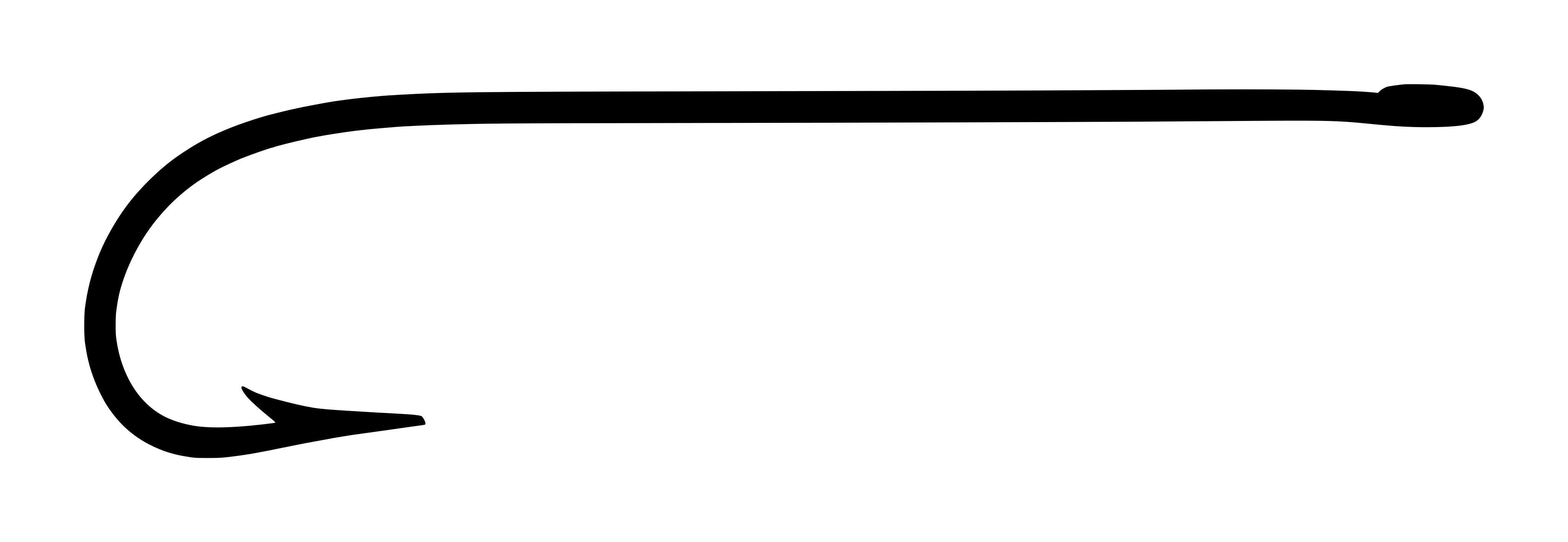
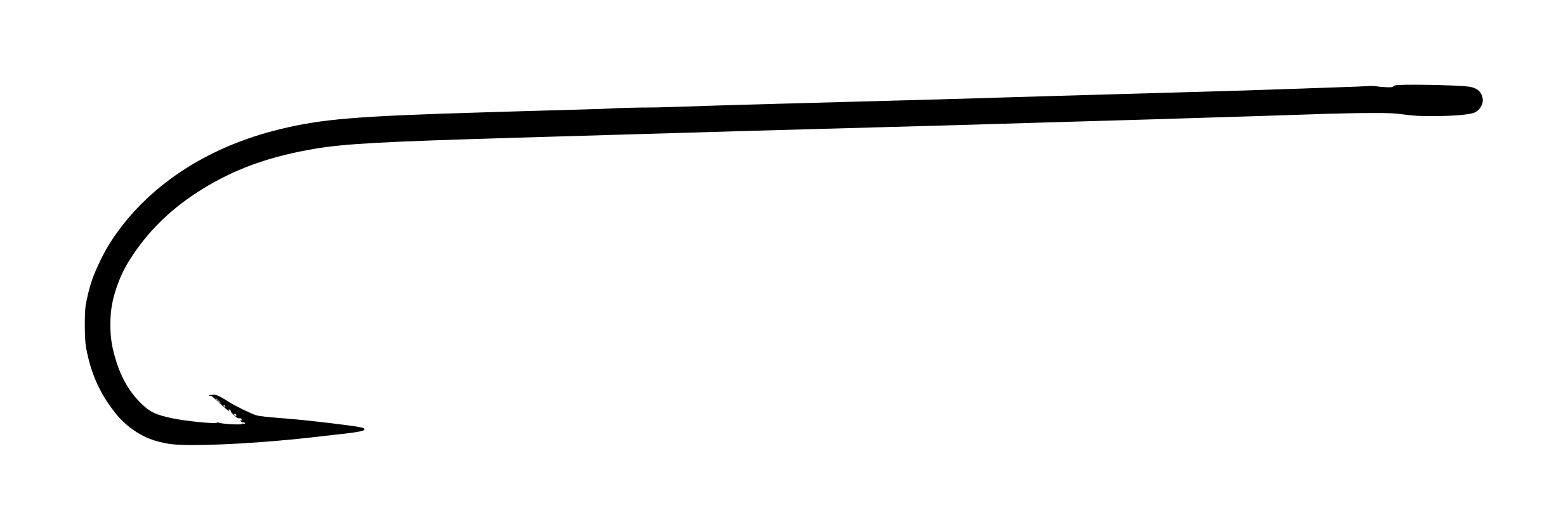
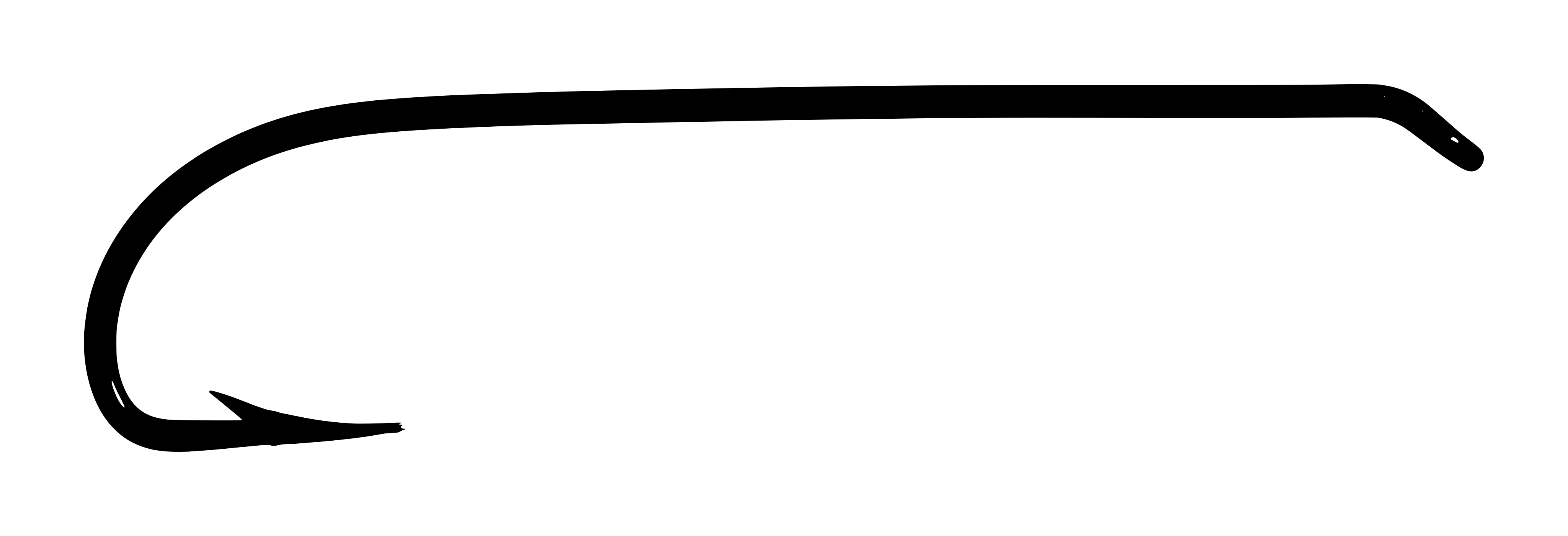
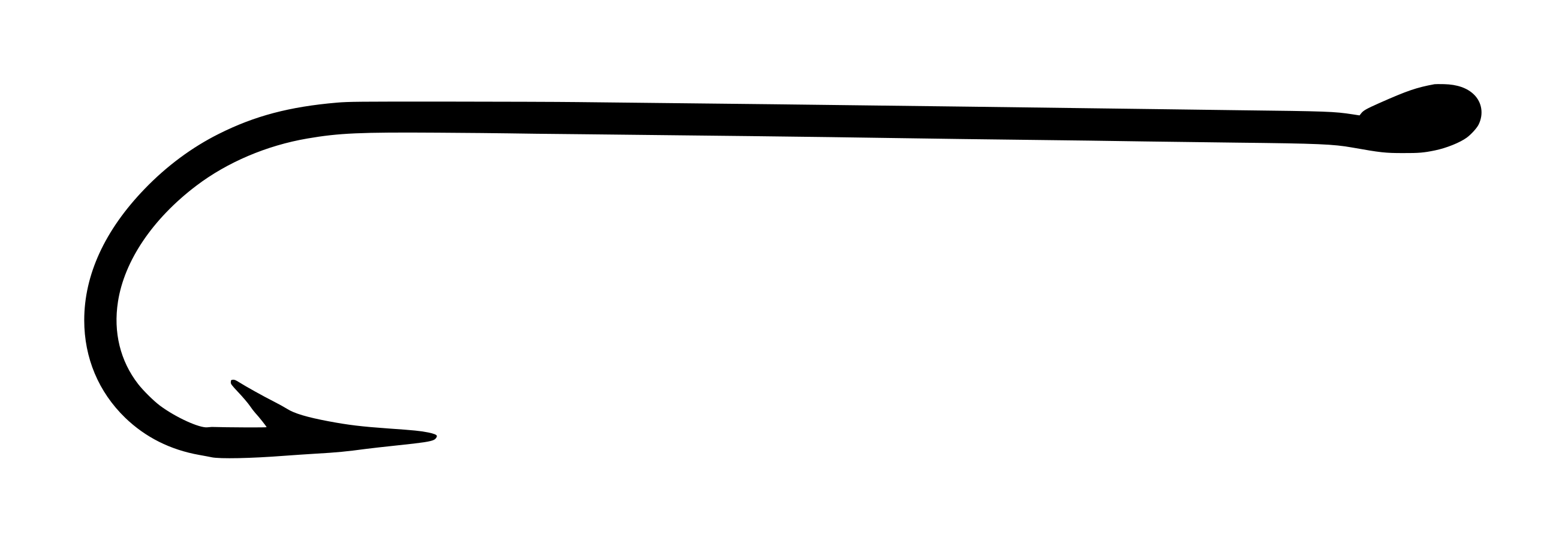
The Mustad 3194 N represents the classic Carlisle pattern in nickel-plated finish, manufactured by O. Mustad & Sön in Oslo, Norway during the company’s mid-century export era P. This extra-long shank hook with straight ring eye was designed primarily for bait fishing, particularly threading nightcrawlers and other live baits V. The superior point geometry provides reliable penetration while the extended shank prevents toothy fish from cutting the line near the hook I.
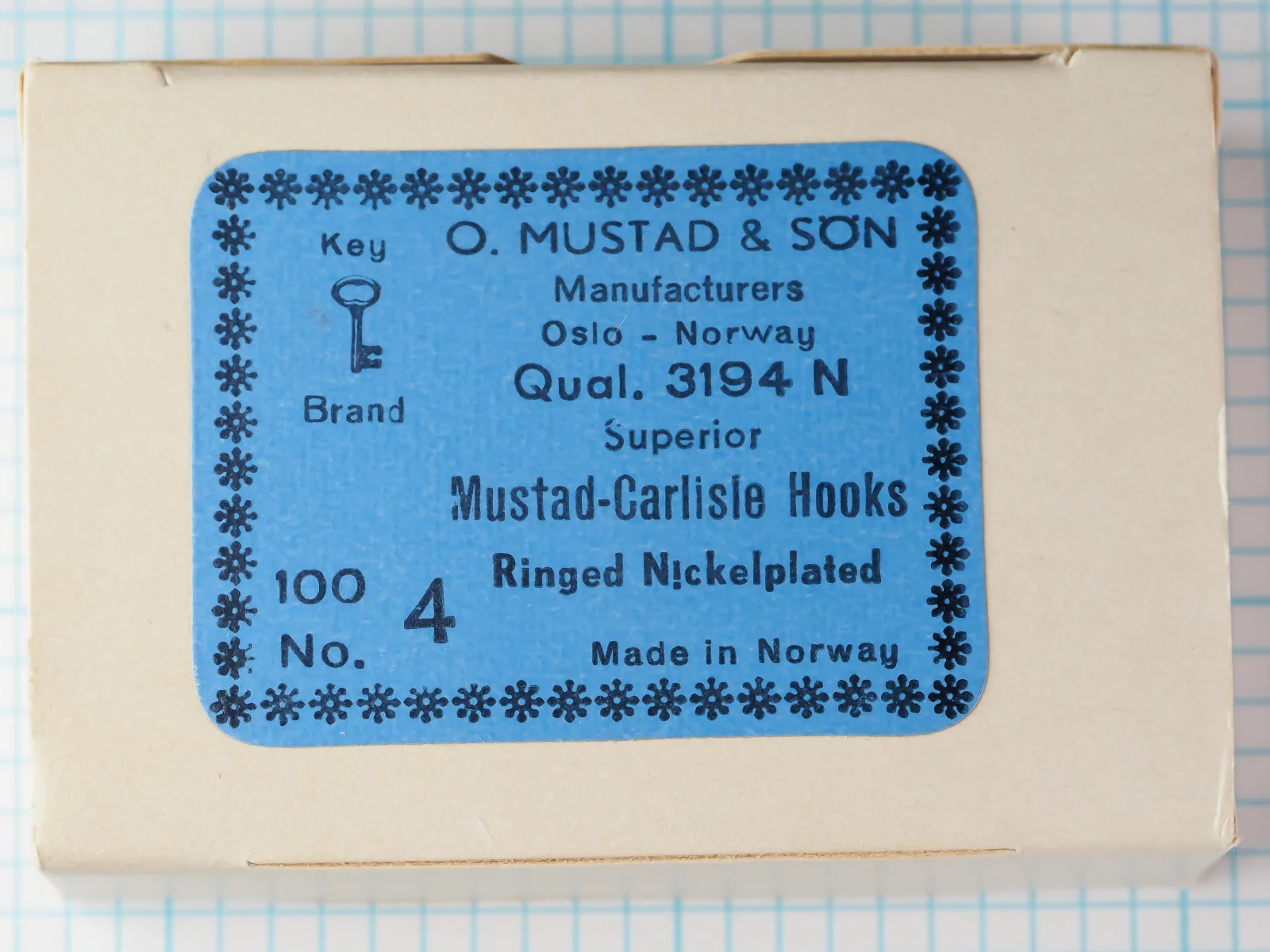
The specimen shows Mustad’s characteristic ‘Key Brand’ export packaging with asterisk border design, indicating production circa 1950-1965 before the company consolidated branding to their Gjøvik facility P. The nickel plating, denoted by the ‘N’ suffix, was preferred for saltwater applications and added visual flash to attract fish V. This model represents an important transitional period in Mustad’s global expansion when they dominated international hook markets.
For collectors, the 3194 N offers solid mid-tier interest due to its historical significance in Mustad’s catalog evolution and the attractive vintage packaging graphics I. While not rare, complete cards in good condition represent the golden age of Norwegian hook manufacturing and Mustad’s emergence as ‘The Hook Maker’ on the world stage S.
Original blue Key Brand packaging showing the distinctive asterisk border design and Oslo, Norway manufacturing location, indicating 1950s-1960s production.
Photographic record
8 cataloged imagesSelect any record to load it above.
8 images shown
Mustad 3194 N Key Brand Package Size 4Original blue Key Brand packaging showing the distinctive asterisk border design and Oslo, Norway manufacturing location, indicating 1950s-1960s production.Open originalMustad 3194 N Point Detail Size 4Close-up of the superior point geometry showing the characteristic near-straight inner taper and sharp penetrating tip on measurement grid.Open originalMustad 3194 N Full Profile Size 4Complete side view illustrating the classic Carlisle pattern with extra-long shank and straight ring eye configuration on measurement grid.Open originalMustad 3194 N Size Consistency ComparisonTwo hooks from the same card showing the remarkable manufacturing consistency that established Mustad as the global hook standard.Open originalMustad 3194 N Box and Label Size 6Mustad 3194 N Box and Label Size 6Open originalMustad 3194 N Hook Point Size 6Mustad 3194 N Hook Point Size 6Open originalMustad 3194 N Hook Size 6Mustad 3194 N Hook Size 6Open originalMustad 3194 N Hooks Size 6Mustad 3194 N Hooks Size 6Open original
Technical profile
Eye
Ball Eye, Straight / Inline
Wire
Standard, Round
Shank
Extra-Extra Long (XXL) — Plain
Bend
Sproat, Standard gap
Point
Superior (near-straight inner taper)
Finish
Nickelled / Nickel-Plated — Confirmed (stated on packaging)Card shows light edge wear and minor toning but retains structural integrity. Blue label graphics remain vibrant with no significant fading. All 100 hooks appear present and retain bright nickel finish with no corrosion.
The superior point geometry on the 3194 N features a near-straight inner taper that maintains sharpness while providing controlled penetration through both bait and fish tissue P. This design contrasts with hollow point styles, offering less aggressive initial penetration but greater reliability when threading delicate baits like nightcrawlers I. The straight ring eye eliminates the stress concentrations that can occur with turned-down or turned-up eyes under heavy load, making it ideal for larger fish where hook straightening might be a concern S.
The extra-long shank serves multiple engineering purposes beyond bait presentation – it acts as a built-in wire leader for toothy species, provides leverage for easier hook removal, and distributes stress over a longer wire length to prevent failure at the bend transition I. The nickel plating process involves electrodeposition of pure nickel over the steel substrate, providing both corrosion resistance and the reflective properties that can trigger strikes in clear water conditions V.
We don't have measured sizes for this hook yet. Own one? Submit calipered measurements and we'll review and add them. Thank you!
Historical context
mustad
O. Mustad & Sön, established in 1832 by Ole Mustad in Gjøvik, Norway, grew from a small nail and pin factory into the world’s largest fishhook manufacturer by the mid-20th century V. Under the leadership of Ole’s son Hans Mustad, the company pioneered industrial hook production methods and developed the comprehensive numbering system that became the global standard S. By the 1950s, Mustad operated facilities in Norway, Denmark, and other locations, producing over 60,000 different hook patterns for worldwide distribution V.
The company’s ‘Key Brand’ export line, represented by this 3194 N specimen, was specifically developed for international markets and featured standardized packaging with multiple language capabilities I. Mustad’s Oslo operations during this era served as a major distribution hub for European and American markets, with the distinctive blue packaging becoming synonymous with quality Norwegian craftsmanship P. The firm’s dominance was so complete that ‘Mustad’ became virtually synonymous with ‘fishhook’ in many markets, earning them the trademark slogan ‘The Hook Maker’ V.
Series History
The 3194 series represented Mustad’s approach to the traditional Carlisle pattern, offering multiple finish options to suit different fishing environments and angler preferences I. While the basic 3191 featured a bronze finish for general freshwater use, the 3194 N provided nickel plating for enhanced corrosion resistance and visual appeal V. This series was part of Mustad’s broader strategy to offer systematic finish variations across their most popular patterns, allowing dealers to stock comprehensive size and finish ranges S.
The Carlisle design itself traced back to 19th-century English patterns, but Mustad’s industrialized production brought unprecedented consistency and availability to this classic shape I. The series remained in production through the 1970s, when changing fishing practices and competition from Asian manufacturers led to consolidation of Mustad’s extensive catalog S. The 3194 N specifically targeted anglers who valued the flash and durability of nickel plating, particularly in saltwater and brackish water environments where bronze finishes would corrode rapidly I.
Era and Packaging Dating
Key Brand logo with asterisk border pattern, Oslo - Norway designation (before company moved all branding to Gjøvik post-1965), blue card stock with letterpress printing typical of 1950s-early 1960s export packaging, no barcode indicating pre-1974 production
The Norwegian Silver Standard
The Mustad 3194 N earned the nickname 'Norwegian Silver' among American anglers in the 1950s and 1960s, not only for its nickel finish but also for its reputation as reliable currency in tackle trades. Many fishing guides would accept Mustad hooks as partial payment for services, knowing they could easily trade them to other anglers. The distinctive blue Key Brand packaging became so recognizable that tackle shops would often display the boxes prominently as a quality indicator, leading to the phrase 'blue box guarantee' in some fishing communities.
Design lineage and influence
The Carlisle pattern represents one of the oldest continuously manufactured hook designs, with roots in 19th-century English hook-making traditions S. Mustad’s 3194 series built upon patterns developed by English manufacturers like Allcock and Bartleet, but applied Norwegian industrial precision to achieve unprecedented consistency I. The specific proportions of the 3194 – particularly the shank-to-gap ratio – became a template that influenced subsequent long-shank designs from other manufacturers S.
Competing designs from this era included Eagle Claw’s Aberdeen patterns and Wright & McGill’s Eagle Claw series, but none achieved the global distribution that Mustad’s systematic approach enabled I. The 3194 N’s influence can be seen in modern hooks like the Mustad 3261 and various Gamakatsu long-shank models, though contemporary versions often feature chemically sharpened points and advanced coatings that the original 3194 N pioneered in more basic form S.
Best matchRelated by Attribute
Computed automatically from catalog data — updated as new hooks are added.
Matches: Wire, Gap, Eye, Eye Orient., Point +4 moreDiffers: Bend: Sproat vs Carlisle; Shank: Extra-Extra Long vs 4X Long; Finish: Nickelled vs Gold-Plated
Matches: Shank, Gap, Eye, Point, Finish +4 moreDiffers: Bend: Sproat vs Carlisle; Wire: Standard vs Heavy (1X Heavy); Eye Orient.: Straight / Inline vs Turned Down +1 more
Matches: Wire, Gap, Eye, Eye Orient., Point +4 moreDiffers: Bend: Sproat vs Carlisle; Shank: Extra-Extra Long vs 4X Long; Finish: Nickelled vs Gold-Plated +1 more
The Mustad 3194 N was engineered primarily for live bait fishing, with the extra-long shank serving multiple functional purposes V. The extended length allows for easy threading of nightcrawlers, garden worms, and other elongated baits while providing ample shank space to prevent the bait from bunching at the bend I. The superior point geometry ensures clean penetration through both bait and fish tissue, while the nickel plating adds corrosion resistance for saltwater applications and provides attractive flash to stimulate strikes V.
This Carlisle pattern excelled in panfish applications where the long shank facilitated easy hook removal from small mouths, reducing fish mortality in catch-and-release scenarios I. The straight ring eye accommodated both snelled leaders and direct line attachment, making it versatile for various rigging methods popular in mid-century American and European fishing S.
Secondary Applications
Long-shank streamers in vintage fly tying, particularly patterns like Black Ghost and Mickey Finn where the nickel finish provided built-in flash. Also used for cut bait fishing and small saltwater species where corrosion resistance was valued.
Classic Fly Patterns
Black Ghost, Mickey Finn, Gray Ghost, Light Edson Tiger, other long-shank streamers requiring flash
Modern Equivalents
Hook
Match Quality
Notes
Mustad 3261
Very Good
Modern Aberdeen long-shank with similar proportions but chemically sharpened point
Eagle Claw 214
Good
Contemporary long-shank bait hook with comparable applications
Gamakatsu 90311
Moderate
Modern long-shank with different metallurgy and point geometry
Collector notes
Mid-tier collectible valued for vintage Mustad packaging and historical significance, but limited by relatively common availability.
Reference value
$8 – $25 USD estimate
Packaging condition
Very Good — light wear, fully legibleRecorded specimen
Packaging format
MUS-KC-01Catalog code
Positive factors: The 3194 N benefits from strong Mustad brand recognition and the attractive vintage ‘Key Brand’ packaging graphics that appeal to collectors of mid-century tackle advertising I. The Oslo, Norway designation represents an important period in the company’s history before consolidation to Gjøvik, adding geographical collecting interest P. Complete cards in good condition showcase the quality of 1950s-1960s hook packaging design and Norwegian industrial craftsmanship S.
Limiting factors: The 3194 series was produced in large quantities for many years, making individual specimens relatively common in the vintage tackle market I. The nickel finish, while attractive, was not as distinctive as some of Mustad’s specialty coatings, reducing premium collector interest S. The Carlisle pattern itself, being a standard design, lacks the uniqueness that drives high values for more specialized or experimental hook patterns I.
Packaging
Cream-colored cardboard with blue printed label featuring asterisk border pattern. Label text: 'Key O. MUSTAD & SON Manufacturers Oslo - Norway Qual. 3194 N Superior Mustad-Carlisle Hooks Ringed Nickelplated 100 No. 4 Made in Norway'. Key logo prominently displayed. Letterpress printing on quality card stock typical of 1950s-1960s export packaging.
Market Value Notes
Complete cards in excellent condition: $15-25. Partial cards or loose hooks: $8-15. Premium for size 6 due to higher demand among vintage fly tiers. Norwegian packaging adds 20-30% over generic Mustad boxes.
Where to Find
eBay vintage tackle auctions, estate sales in fishing regions, specialty tackle collecting forums, occasional appearance at tackle swap meets and fishing shows
Collector's Identification Tips
Key identification features include the distinctive blue ‘Key Brand’ label with asterisk border, Oslo-Norway location marking (pre-Gjøvik consolidation), and ‘Qual. 3194 N’ model designation. Genuine specimens show consistent nickel plating with bright, even coverage. Packaging should be cream cardboard with letterpress printing – offset printing indicates later reproduction. Check for 100-count quantity marking specific to this export format.
Preservation
Storage and Preservation
Store the 3194 N in a cool, dry environment to preserve both the nickel finish and the cardboard packaging. The nickel plating is more stable than bronze or blued finishes but can still develop patina if exposed to humidity over time. Keep hooks on the original card rather than transferring to other storage – the vintage packaging significantly enhances collectible value.
Avoid handling the hooks unnecessarily as oils from skin contact can cause uneven patina development on the nickel surface. If displaying, ensure adequate air circulation around the card to prevent moisture buildup. The blue printed label is susceptible to fading under direct sunlight, so store away from UV exposure. Original cards in collector-grade condition should be supported when stored vertically to prevent sagging that could damage the hook attachment points.
Size Note
Carlisle Sizing Considerations
The 3194 N follows Mustad’s traditional sizing where the long shank creates apparent size discrepancies when compared to standard-shank hooks of the same number. A size 4 Carlisle measures significantly longer overall than a size 4 standard hook, leading to confusion among anglers unfamiliar with the pattern. The gap width remains consistent with standard sizing, but the extended shank length can make the hook appear to be a larger size when viewed casually.
This sizing characteristic was intentional in the design – Mustad wanted anglers to be able to select gap width based on bait size while gaining the functional benefits of the long shank. Modern equivalents often use different size numbering to avoid this confusion, but vintage Carlisle patterns maintain the traditional relationship between gap and overall dimensions.
Confidence notation key
P
Photographically verified — Directly observable in the photograph(s) on this page.
V
Verified by documentation — Confirmed by manufacturer catalog, spec sheet, or published reference.
I
Inferred — A logical deduction from observable or documented evidence, not directly stated.
E
Estimated — An approximation based on visual comparison, proportional analysis, or limited data.
S
Speculative — A reasoned hypothesis that cannot be confirmed from available evidence.
Claims with no notation are confirmed by multiple independent sources. All photographs on garrenwood.com are taken on a measurement grid where each square equals 1/10 inch (0.1″ / 2.54 mm).