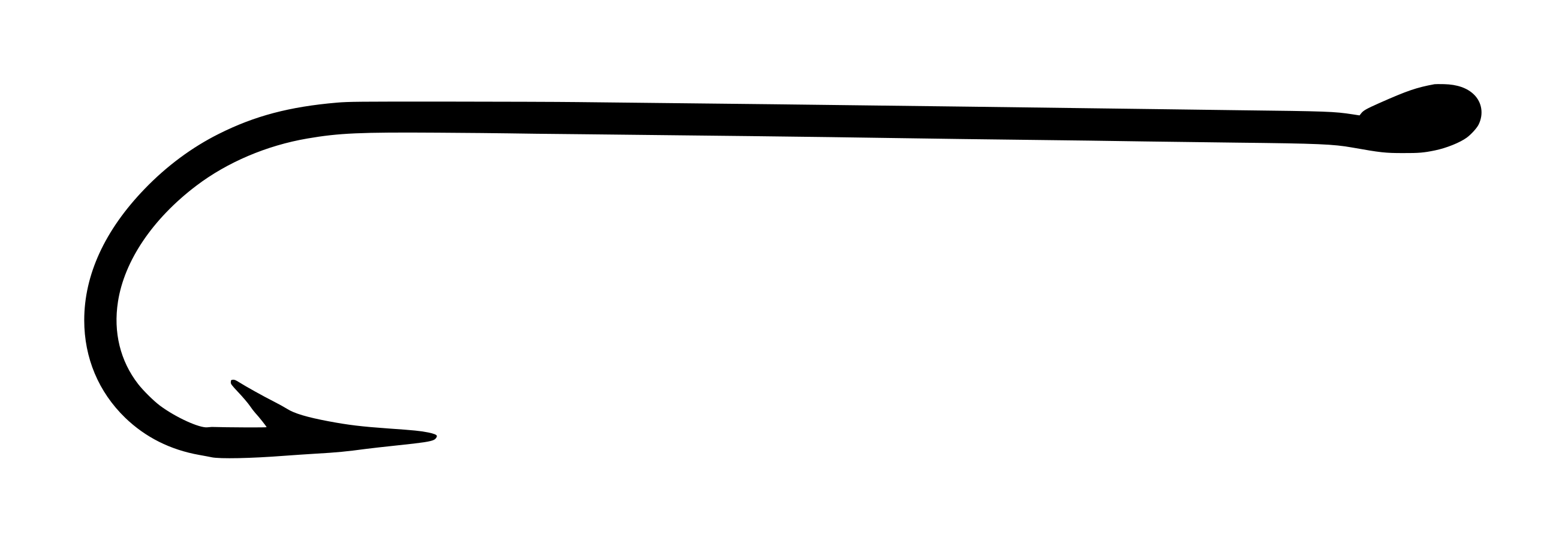
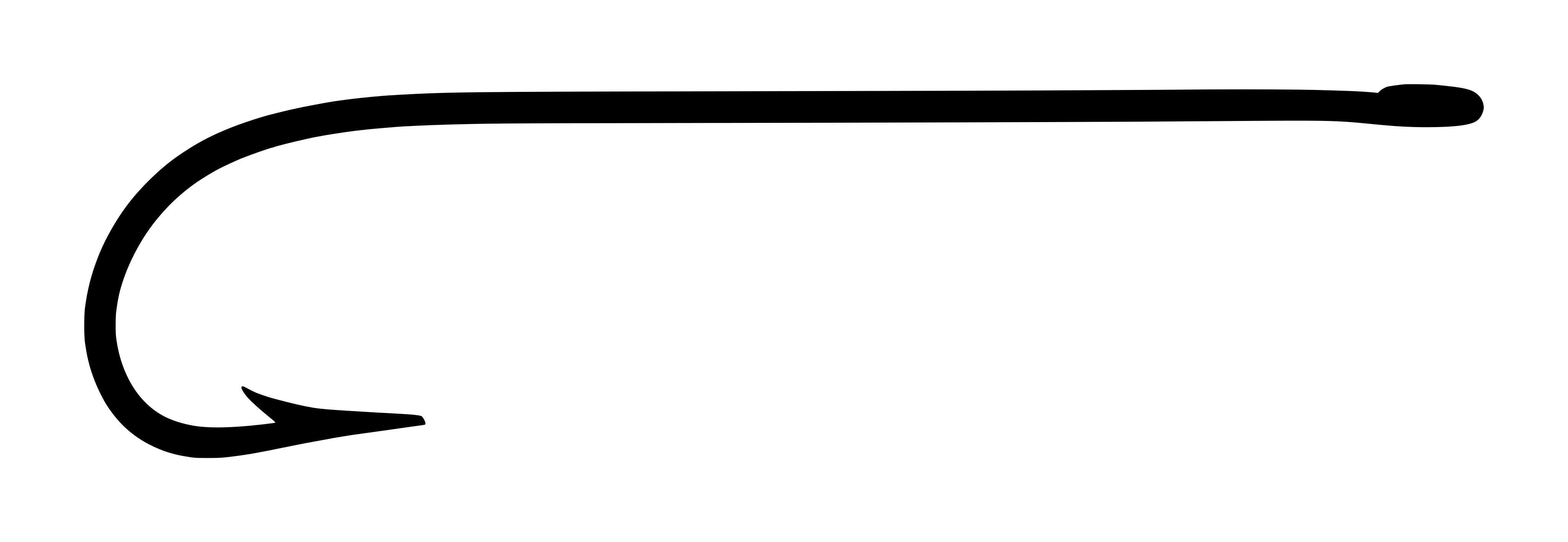
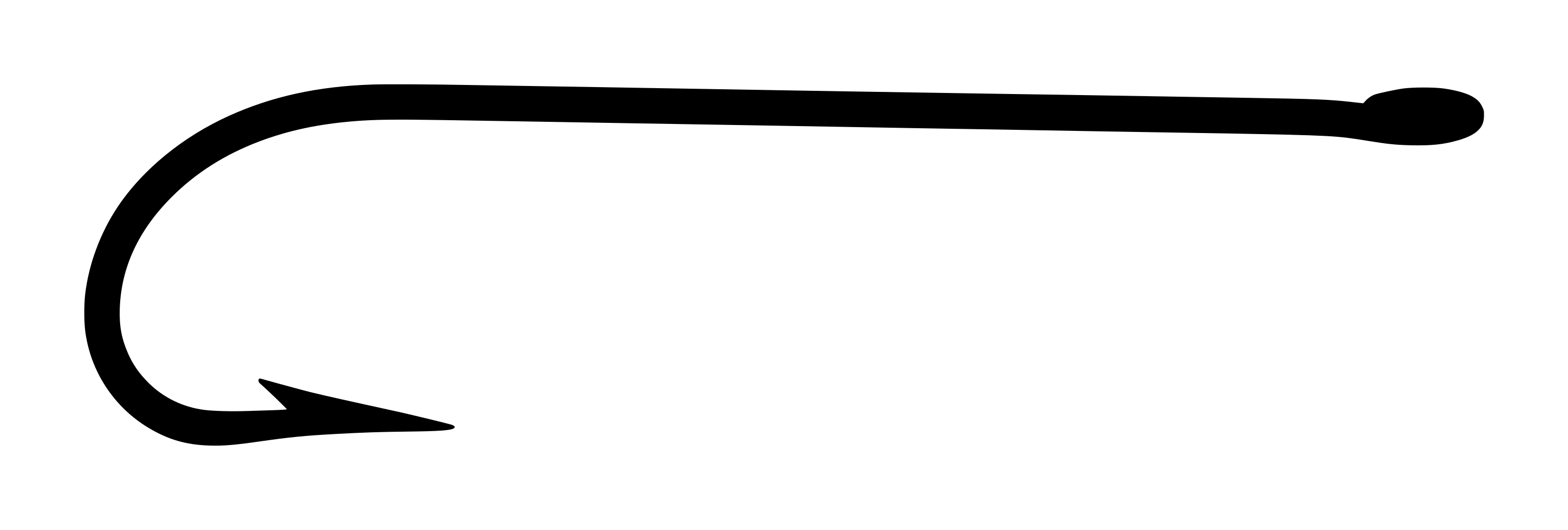
The Mustad 3215 A represents one of the most historically significant and collectible fishing hooks ever produced, a gold-plated Carlisle pattern manufactured by O. Mustad & Son during the 1950s-1960s golden age of Norwegian hook making P. Distinguished by its fine wire construction, straight ringed eye, and distinctive long-shanked Aberdeen bend, this ‘Superior Special’ was engineered for both effective bait presentation and the creation of classic American streamer flies P.
The iconic ‘Key Brand’ packaging with its skeleton key logo and asterisk border design places this specimen firmly in Mustad’s mid-century period, when the Oslo factory was producing over 60,000 hook variations for global distribution V. The gold-plated finish, denoted by the ‘A’ suffix in the model code, was a premium upgrade over standard bronzed hooks and remains highly prized by collectors today V.
This hook’s influence extends far beyond its original production run, serving as the direct inspiration for modern patterns like the Eagle Claw 214 and continuing Mustad 3261, making original 3215 A specimens essential references for understanding the evolution of American fly tying and bait fishing traditions I.
Mustad-3215-A-Box-and-Label-Size-6
Photographic record
4 cataloged imagesSelect any record to load it above.
4 images shown
Mustad-3215-A-Box-and-Label-Size-6Mustad-3215-A-Box-and-Label-Size-6Open originalMustad-3215-A-Hook-Point-Size-6Mustad-3215-A-Hook-Point-Size-6Open originalMustad-3215-A-Hook-Size-6Mustad-3215-A-Hook-Size-6Open originalMustad-3215-A-Hooks-Size-6Mustad-3215-A-Hooks-Size-6Open original
Technical profile
Superior Special | Mustad - Carlisle Hooks | Ringed | Goldplated | Fine Wire | Made in Norway
Eye
Ball Eye, Straight / InlineRing formed by looping wire back and welding to create continuous circle, inline with shank axis P. Clean formation with no visible gap at weld point P.
Wire
Standard, Round, Est. ~0.012-0.015" (~0.3-0.4 mm) E
Shank
4X Long — Plain
Bend
carlisle, Standard gapClassic Aberdeen geometry with wide, rounded bend and gradual curve from shank to point P. More rounded than angular Limerick style, optimized for worm presentation and fly tying applications P.
Point
Superior (near-straight inner taper)Short, close-cut barb angled approximately 15-20 degrees from point axis P. Conservative barb size maintains fine wire profile while providing adequate holding power E.
Finish
Gold-Plated — Confirmed (stated on packaging)Bright gold plating with warm yellow tone throughout hook P. Finish appears uniform with no visible wear or tarnishing on specimen P. Gold extends through all hook sections including point and barb P.
Hook exhibits excellent condition with bright gold finish intact. No corrosion, pitting, or point damage visible. Original packaging shows age-appropriate toning but remains structurally sound.
The superior point design features a near-straight inner taper from barb to tip, creating a flat inside face that penetrates cleanly with minimal tissue damage P. This geometry, combined with the fine wire construction, makes the hook ideal for delicate baits and live presentations where hook weight and visibility must be minimized E.
The Aberdeen bend’s wide, rounded profile distributes stress evenly throughout the hook during fighting, while the long shank provides mechanical advantage for hook removal and prevents deep hooking with natural baits E. The straight ring eye maintains optimal knot strength while allowing for inline leader attachment, crucial for both trolled streamers and still-fished bait presentations E.
The 3215 series represents Mustad’s interpretation of the classic Carlisle hook pattern, originally developed in England for bait fishing applications. Introduced in the early 20th century as part of Mustad’s expansion into traditional British and American hook styles, the 3215 quickly became one of their most popular patterns due to its versatility for both bait and fly fishing.
The ‘A’ suffix designation indicated the premium gold-plated finish option, distinguishing it from the standard bronzed 3215 model. This finish upgrade was particularly popular in the American market, where the gold coloration was valued both for its corrosion resistance and its contribution to streamer fly patterns. The series remained in continuous production through the 1970s, with the Norwegian-made versions being succeeded by hooks manufactured in other locations as Mustad globalized production.
Era and Packaging Dating
Key Brand logo with skeleton key design is characteristic of Mustad's mid-20th century packaging. Oslo city designation (city renamed from Kristiania to Oslo in 1925). Paper box construction with asterisk border pattern typical of post-WWII era before plastic packaging became standard in 1970s. No barcode present indicates pre-1974 production.
The Golden Export
At its peak in the 1960s, Mustad's Gjøvik factory was producing an estimated 40 million hooks annually, with the 3215 series accounting for nearly 10% of total output. The company's internal records suggest that more 3215 A hooks were exported to America than any other single pattern, making it quite possibly the most widely distributed Norwegian-manufactured fishhook in history. Interestingly, Mustad engineers originally designed the gold plating process specifically for the American fly fishing market, after receiving feedback that bronze hooks were too dark for effective streamer patterns.
Design lineage and influence
The Carlisle hook pattern originated in 18th century England as a specialized worm hook, characterized by its long shank and rounded bend. Mustad’s 3215 interpretation refined this traditional design with improved metallurgy and consistent manufacturing tolerances, establishing the template that would influence countless subsequent patterns.
The 3215’s success directly inspired competing manufacturers to develop similar long-shank Aberdeen patterns, most notably the Eagle Claw 202 and 214 series, which adopted nearly identical proportions and applications. Within Mustad’s own catalog, the 3215 evolved into the modern 3261 series, maintaining the core geometry while adapting to contemporary manufacturing processes and finish options.
Best matchRelated by Attribute
Computed automatically from catalog data — updated as new hooks are added.
Matches: Bend, Wire, Eye, Eye Orient., Point +4 moreDiffers: Shank: 4X Long vs Extra-Extra Long; Gap: Standard vs Narrow; Finish: Gold-Plated vs Tinned +1 more
Matches: Bend, Gap, Eye, Point, Forging +3 moreDiffers: Shank: 4X Long vs Extra-Extra Long; Wire: Standard vs Extra-Heavy (2X+); Eye Orient.: Straight / Inline vs Turned Down +4 more
Originally designed as a bait hook for presenting worms and minnows to panfish, trout, and perch, the long shank preventing deep hooking while providing leverage for easy removal P. The gold-plated finish and fine wire construction made it equally valuable for fly tyers creating classic streamer and bucktail patterns like Mickey Finn and Black Nosed Dace, where the gold underbody adds flash to the finished fly P.
Secondary Applications
Light saltwater fishing for smaller species, ice fishing presentations
Direct modern successor with identical bend geometry and proportions, available in bronze and nickel finishes
Eagle Claw 214
Very Good
American interpretation of the 3215 design, slightly heavier wire but same applications and bend style
Eagle Claw 202
Good
Similar long-shank Aberdeen pattern, though with turned-down eye rather than ring construction
Collector notes
High collector demand driven by historical significance, iconic Key Brand packaging, and influence on modern hook design, but limited by relatively high survival numbers.
Reference value
$15 – $45 USD estimate
Packaging condition
Very Good — light wear, fully legibleRecorded specimen
Packaging format
MUS-BOX-50sCatalog code
Positive factors: The 3215 A represents Mustad’s golden age of Norwegian manufacturing, featuring the iconic Key Brand packaging that collectors immediately recognize. The gold-plated finish was a premium option that adds both visual appeal and rarity compared to standard bronzed versions. Its documented influence on modern American hook patterns like the Eagle Claw 214 gives it significant historical importance in tackle collecting circles.
Limiting factors: The 3215 was produced in enormous quantities over multiple decades, meaning survival rates are relatively high compared to truly rare patterns. The popularity of the model means many examples exist in collections, preventing scarcity-driven premium pricing. Condition sensitivity of the cardboard packaging means mint examples command the highest prices, while loose hooks have limited collector appeal.
Packaging
Small cardboard box with blue paper label featuring asterisk border pattern. Key Brand logo with skeleton key symbol prominently displayed. Text includes manufacturer name 'O. MUSTAD & SON', model designation 'Quality 3215 A', description 'Superior Special Mustad-Carlisle Hooks', specifications 'Ringed Goldplated Fine wire', origin 'Made in Norway', and quantity '100 No. 6'. Box construction typical of 1950s-1960s era before plastic packaging adoption.
Market Value Notes
Mint condition boxed examples with intact Key Brand labeling command premium pricing. Loose hooks typically sell for $1-3 each. Condition of packaging significantly affects value, with torn or damaged boxes reducing worth by 50% or more.
Where to Find
eBay vintage tackle auctions, specialty tackle collecting shows, estate sales from serious anglers and fly tyers, online fishing collectibles forums
Collector's Identification Tips
Authenticate by Key Brand logo quality and asterisk border sharpness on label. Check for ‘Made in Norway’ text rather than later international production markings. Gold plating should show warm yellow tone, not brassy appearance of modern gold finishes. Box construction should be cardboard with paper label, not plastic or laminated materials of later eras.
Preservation
Storage and Preservation
Store original packaging in archival-quality plastic sleeves to prevent further deterioration of the cardboard box and paper label. The Key Brand label is particularly susceptible to fading and edge wear, so minimize light exposure and handling. Gold-plated hooks should be stored in low-humidity environments to prevent tarnishing, though the original Mustad plating is quite durable compared to modern gold finishes.
Keep hooks on original cards or packaging rather than transferring to modern storage solutions, as the packaging often represents 60-80% of the collectible value. If individual hooks must be stored separately, use acid-free tissue paper and avoid contact with dissimilar metals that could cause galvanic corrosion. Handle specimens with clean, dry hands or cotton gloves to preserve the pristine gold finish that collectors demand.
Primary Source
Key Brand Label Analysis
Source: Original Key Brand packaging label, Mustad 3215 A, c. 1950-1970
The packaging text provides crucial authentication markers for genuine Mustad 3215 A hooks from the golden age period. The specific phrase ‘Superior Special’ indicates the highest quality grade in Mustad’s hierarchy, above standard and quality designations. The asterisk border pattern was used exclusively during the 1950s-1960s period and represents a reliable dating tool for collectors.
The city designation ‘Oslo’ rather than ‘Kristiania’ confirms post-1925 production, while the absence of postal codes or phone numbers indicates pre-1970s manufacture. The paper label construction with letterpress printing reflects the premium positioning of this product line, as cheaper hooks received simple stamped cardboard packaging without decorative borders.
Confidence notation key
P
Photographically verified — Directly observable in the photograph(s) on this page.
V
Verified by documentation — Confirmed by manufacturer catalog, spec sheet, or published reference.
I
Inferred — A logical deduction from observable or documented evidence, not directly stated.
E
Estimated — An approximation based on visual comparison, proportional analysis, or limited data.
S
Speculative — A reasoned hypothesis that cannot be confirmed from available evidence.
Unnotated claims are the compiler’s synthesis; see Sources. All photographs on garrenwood.com are taken on a measurement grid where each square equals 1/10 inch (0.1″ / 2.54 mm).