The Mustad 31867 represents a specialized variation of the classic Carlisle pattern, distinguished by its turned-down ball eye rather than the typical straight ringed eye P. This Norwegian-made hook from the 1930s-1950s era bridges traditional bait fishing and early fly tying applications V.
The long shank prevents deep hooking with natural baits while the turned-down eye orientation accommodates both snelling techniques and streamer fly construction I. The kirbed point offset and bronzed finish follow traditional Carlisle specifications for enhanced bait retention and corrosion resistance P.
Packaging evidence including the Key Brand logo, Oslo location prominence, and glassine envelope construction places this specimen firmly in Mustad’s mid-century Norwegian production period, before the company’s major international expansion V. The 31867 model represents an interesting transitional design in hook manufacturing.
Mustad Carlisle 31867 - Point
Photographic record
2 cataloged imagesSelect any record to load it above.
TDE | Carlisle | 4X long | Standard Wire | Superior Point | Bronzed
Eye
Ball Eye, Turned DownWell-formed ball eye with consistent wire thickness throughout the loop, turned down at approximately 45-degree angle P. Ball formation shows quality Norwegian manufacturing standards I.
Wire
Standard, Round, Est. ~0.08"-0.10" (~2.0-2.5 mm) E
Shank
4X Long — Plain
Bend
carlisle, Standard gap, Offset / kirbedRound bend with traditional Carlisle proportions, slightly deeper than standard to accommodate the long shank geometry P. Kirbed offset visible when viewed from above P.
Point
Superior (near-straight inner taper)Standard swept barb positioned at optimal angle for bait retention, proportioned appropriately for 6/0 size P.
Finish
Bronzed — Confirmed (stated on packaging)Warm bronze tone consistent with traditional bronzing process, showing even coverage across wire surfaces P. Color temperature indicates copper-based bronzing rather than chemical bluing I.
Hook shows excellent preservation with bright bronzed finish intact. Package envelope displays light age toning but remains structurally sound with clear printing.
The turned-down ball eye provides optimal thread alignment for fly tying while maintaining snelling capability for bait fishing P. The ball formation ensures consistent wire thickness through the eye, preventing weak points that could develop with tapered eye construction. The long shank design serves dual engineering purposes: preventing deep hooking with natural baits and providing adequate thread wrapping space for streamer flies I. The kirbed point offset enhances hookup ratios by creating a slight outward angle that improves penetration geometry V. Standard wire gauge balances strength with penetration capability for both live bait and artificial fly presentations.
We don't have measured sizes for this hook yet. Own one? Submit calipered measurements and we'll review and add them. Thank you!
Historical context
mustad
O. Mustad & Søn was founded in 1832 by Ole Mustad in Gjøvik, Norway, beginning as a small nail and pin manufacturing operation. The company’s transformation into the world’s largest fishhook manufacturer began when Mathias Topp invented revolutionary hook-making machinery in the 1870s. Mustad’s industrial approach revolutionized hook production, moving from hand-forged craftsmanship to precision mechanical manufacturing.
The Oslo facilities referenced on this packaging represented Mustad’s distribution and administrative center during the company’s mid-century expansion period. The Key Brand logo symbolized the company’s ability to ‘unlock’ global fishing markets through superior Norwegian steel and manufacturing precision. Mustad’s protective approach to their machinery technology, including prohibiting employees from bringing paper into machine rooms, demonstrates the competitive advantage their manufacturing processes provided.
Series History
The 31867 Carlisle represents Mustad’s adaptation of the traditional English Carlisle pattern for dual-purpose applications. While standard Carlisle hooks like the 3191 featured straight ringed eyes for bait fishing, the 31867’s turned-down ball eye expanded functionality into fly tying applications, particularly for early streamer patterns and bucktails.
This model was part of Mustad’s mid-century expansion of their hook catalog to serve emerging angling techniques. The long shank Carlisle design originated in English fishing traditions but found new purpose in American fly fishing during the 1930s-1950s period when streamer fishing gained popularity. The 31867 bridged traditional European bait fishing with evolving North American fly fishing practices.
Era and Packaging Dating
Key Brand logo combined with Oslo, Norway location text (before shift to Gjøvik prominence), glassine/vellum paper label stock, and pre-barcode packaging indicate mid-century production period.
Industrial Espionage and the Key to Success
Mustad's security measures around their hook-making machinery were so extreme that workers were forbidden from bringing paper or pencils into the machine rooms to prevent industrial espionage. Mathias Topp's revolutionary machinery gave Mustad such a manufacturing advantage that the company guarded the technology more carefully than military secrets. The Key Brand logo literally represented their ability to 'unlock' global fishing markets through superior Norwegian engineering.
Design lineage and influence
The 31867 evolved from traditional English Carlisle patterns developed in Redditch during the 19th century. The standard Carlisle featured a straight ringed eye and long shank for bait fishing applications. Mustad’s adaptation added the turned-down ball eye to expand functionality into fly tying applications, reflecting the growing popularity of streamer fishing in the 1930s-1950s period. This design influenced later dual-purpose hook developments that served both bait and fly fishing markets.
Best matchRelated by Attribute
Computed automatically from catalog data — updated as new hooks are added.
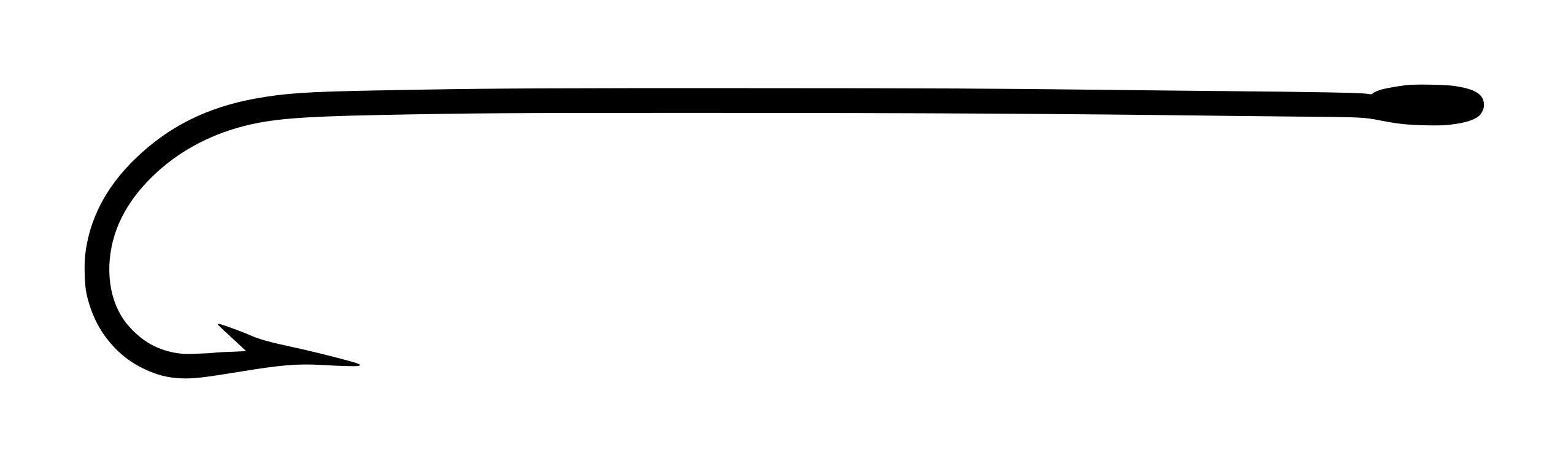
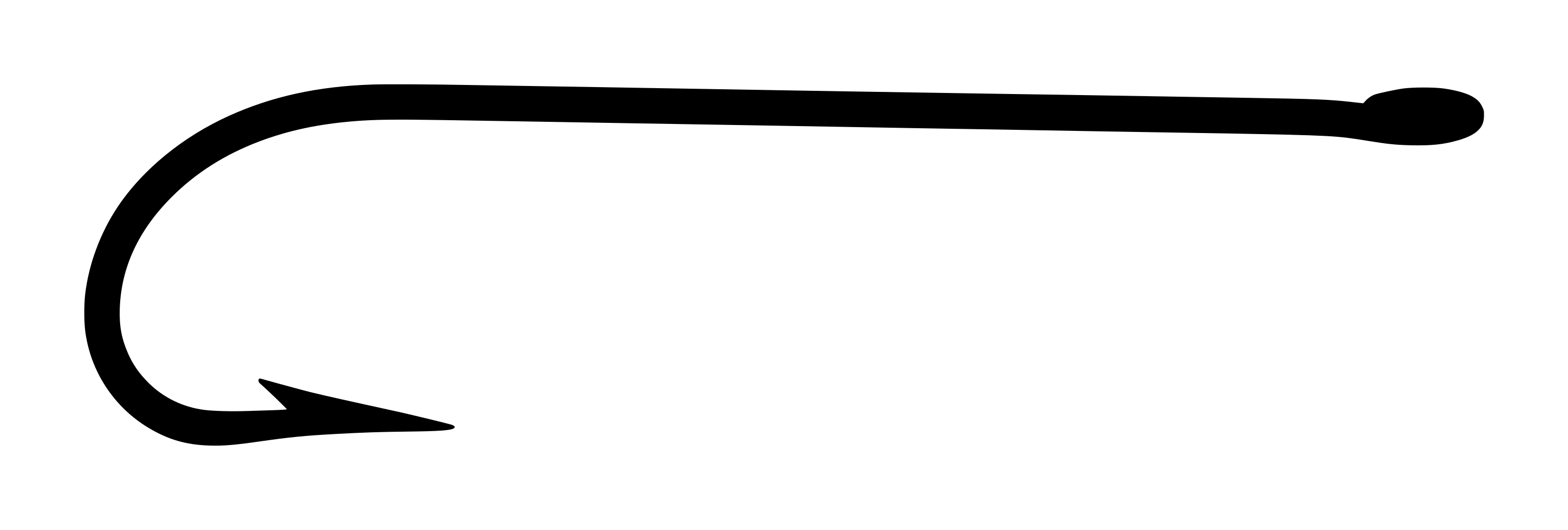
Matches: Bend, Shank, Wire, Gap, Eye +5 moreDiffers: Eye Orient.: Turned Down vs Straight / Inline; Finish: Bronzed vs Gold-Plated; Length: 99 mm vs 57 mm
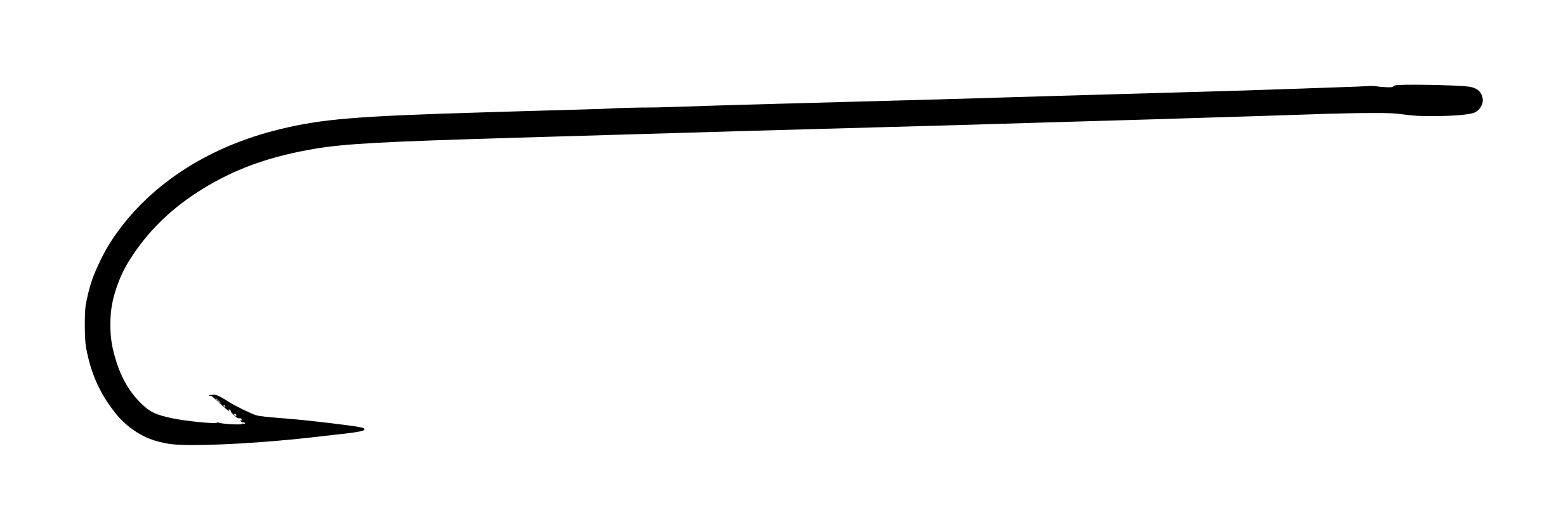
Matches: Bend, Gap, Eye, Point, Forging +2 moreDiffers: Shank: 4X Long vs Extra-Extra Long; Wire: Standard vs Heavy (1X Heavy); Eye Orient.: Turned Down vs Straight / Inline +2 more
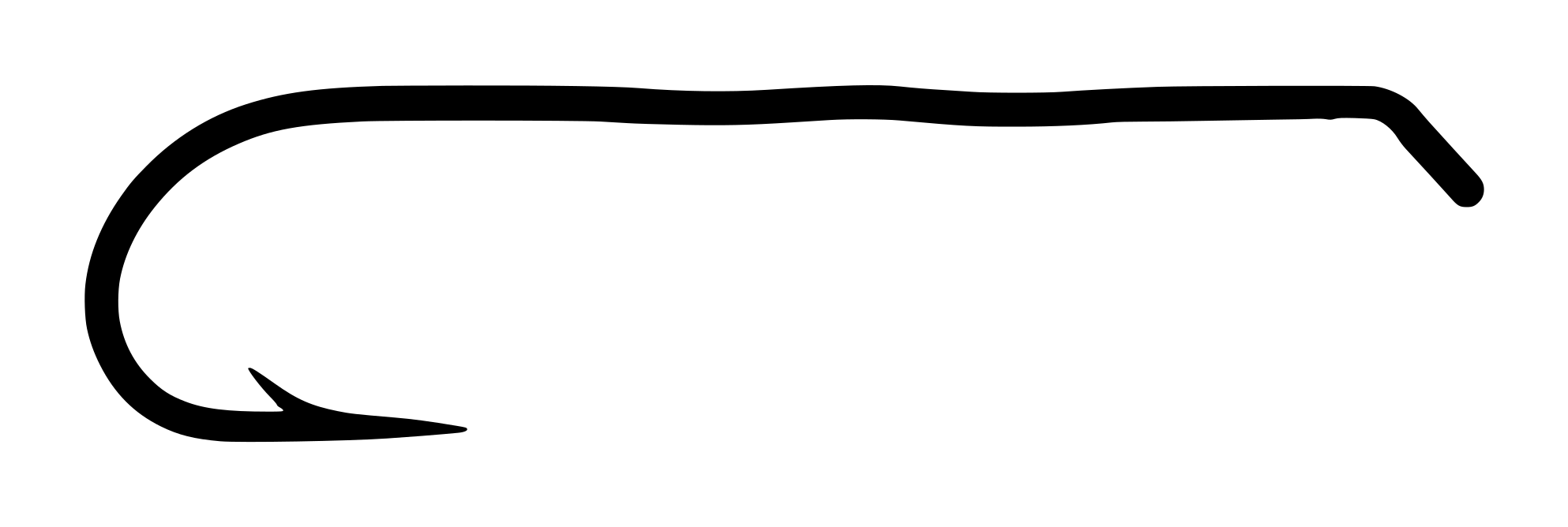
Matches: Bend, Gap, Eye, Point, Forging +2 moreDiffers: Shank: 4X Long vs Extra-Extra Long; Wire: Standard vs Fine (1X Fine); Eye Orient.: Turned Down vs Straight / Inline +2 more
The Mustad 31867 Carlisle serves dual purposes as both a traditional bait hook and fly tying platform P. The long shank prevents deep hooking when using worms or minnows, while the turned-down ball eye accommodates both snelling and fly tying applications V. This model bridges the gap between pure bait fishing and vintage streamer patterns.
Secondary Applications
Vintage streamer fly tying, snelled bait rigs for worms and minnows
Classic Fly Patterns
Black Ghost, Mickey Finn, Early Woolly Buggers, Classic Bucktails
Modern Equivalents
Hook
Match Quality
Notes
Mustad 9672
Good
Modern streamer hook with similar proportions but updated metallurgy
Tiemco 200R
Moderate
Contemporary long shank hook but different bend geometry
Eagle Claw 214
Moderate
Modern Aberdeen/Carlisle style but different eye construction
Collector notes
Moderate collectability driven by the unusual turned-down eye variation and mid-century Norwegian packaging, limited by the hook's functional rather than rare status.
Reference value
$15 – $35 USD estimate
Packaging condition
Very Good — light wear, fully legibleRecorded specimen
Packaging format
MUS-GL-01Catalog code
The 31867’s collectability stems from its role as a transitional design between pure bait hooks and fly tying applications, representing an important period in angling evolution. The Key Brand packaging from the Oslo era adds historical significance, as this represents Mustad before their major international expansion and facility relocations.
Limiting factors include the hook’s production in substantial quantities and its primary positioning as a functional tool rather than a specialty or limited-run model. The 31867 remains more historically interesting than genuinely rare, making it attractive to collectors interested in mid-century angling evolution rather than extreme scarcity.
Packaging
Small glassine/vellum paper envelope with purple ink printing. Features Key Brand logo with skeleton key graphic, O. Mustad & Son company name, Oslo Norway location, Quality 31867 model designation, and product description. Decorative star border pattern around entire label.
Market Value Notes
Value driven primarily by complete original packaging and historical documentation rather than hook rarity. Premium pricing for mint condition Key Brand envelopes with full hook complement.
Where to Find
Vintage tackle shows, estate sales, and specialized fishing collectible dealers. Occasionally appears on eBay in mixed vintage hook lots.
Collector's Identification Tips
Authentic 31867s show the distinctive turned-down ball eye that differentiates them from standard Carlisle patterns P. Key Brand packaging with Oslo, Norway location indicates genuine mid-century production V. The kirbed point offset should be clearly visible when viewed from above P.
Preservation
Storage and Preservation
Store in a cool, dry environment away from moisture to preserve the bronzed finish. The original glassine envelope provides excellent protection and adds significant collectible value – maintain hooks on the original packaging rather than loose storage. Avoid contact with dissimilar metals to prevent galvanic corrosion. The bronzed finish may develop attractive patina over time, which many collectors consider desirable. Handle the vintage glassine packaging carefully as the paper becomes brittle with age.
Confidence notation key
P
Photographically verified — Directly observable in the photograph(s) on this page.
V
Verified by documentation — Confirmed by manufacturer catalog, spec sheet, or published reference.
I
Inferred — A logical deduction from observable or documented evidence, not directly stated.
E
Estimated — An approximation based on visual comparison, proportional analysis, or limited data.
S
Speculative — A reasoned hypothesis that cannot be confirmed from available evidence.
Claims with no notation are confirmed by multiple independent sources. All photographs on garrenwood.com are taken on a measurement grid where each square equals 1/10 inch (0.1″ / 2.54 mm).