The Mustad Quality 3705 Carlisle Hook is a light-wire, panfish bait hook manufactured by O. Mustad & Søn of Christiania, Norway, in the early twentieth century. This is a definitive pre-1925 artifact, as the Christiania designation on Line 3 of the label establishes production before Norway’s capital was officially renamed Oslo on January 1, 1925.
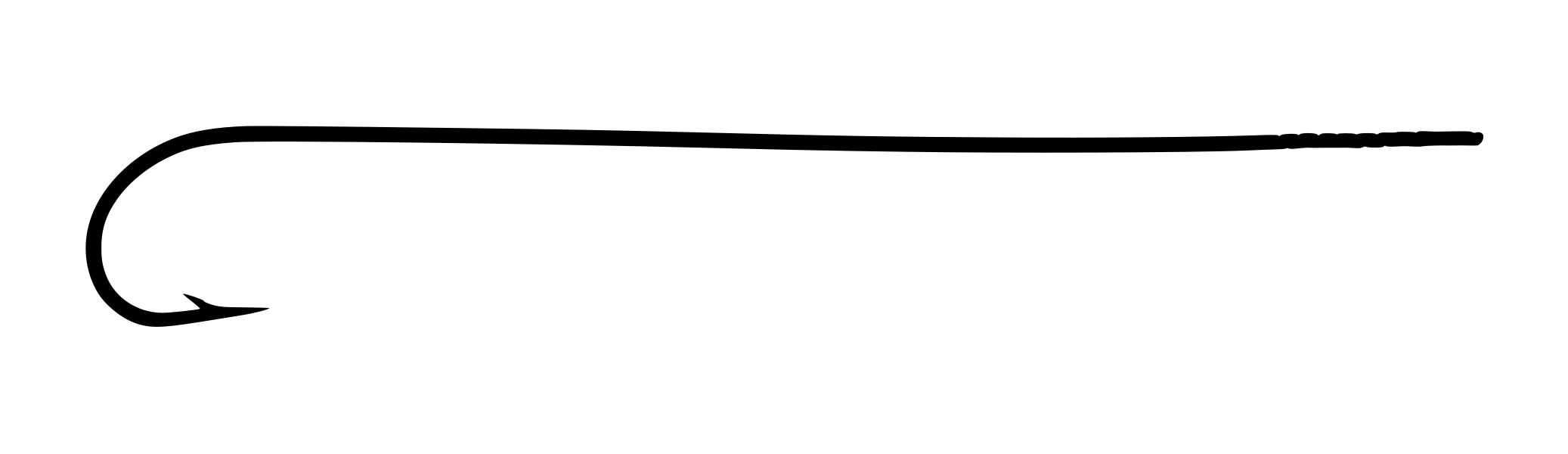
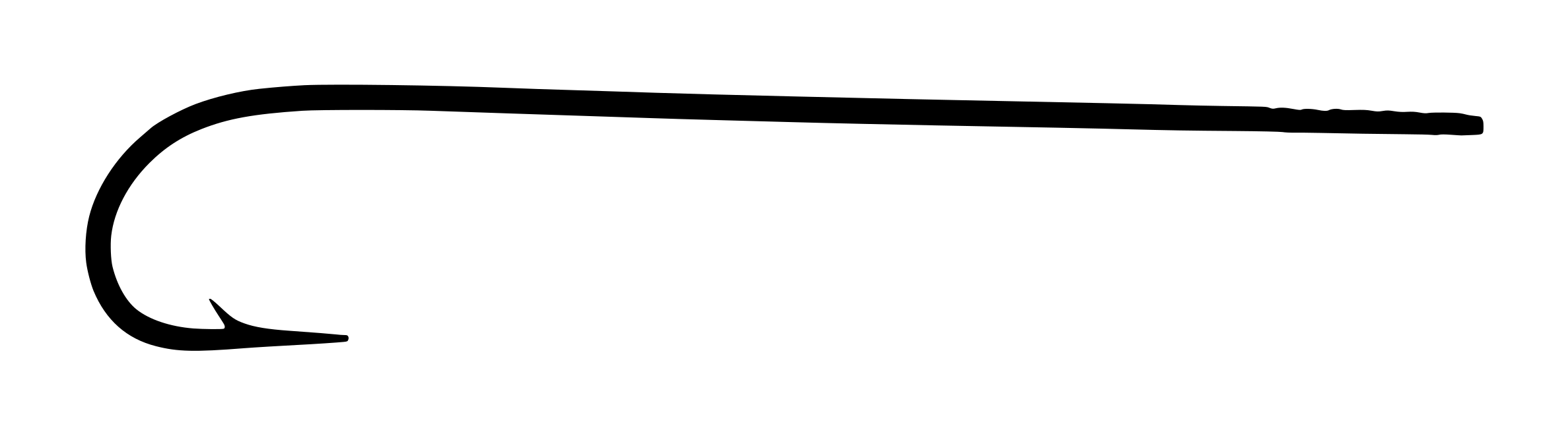
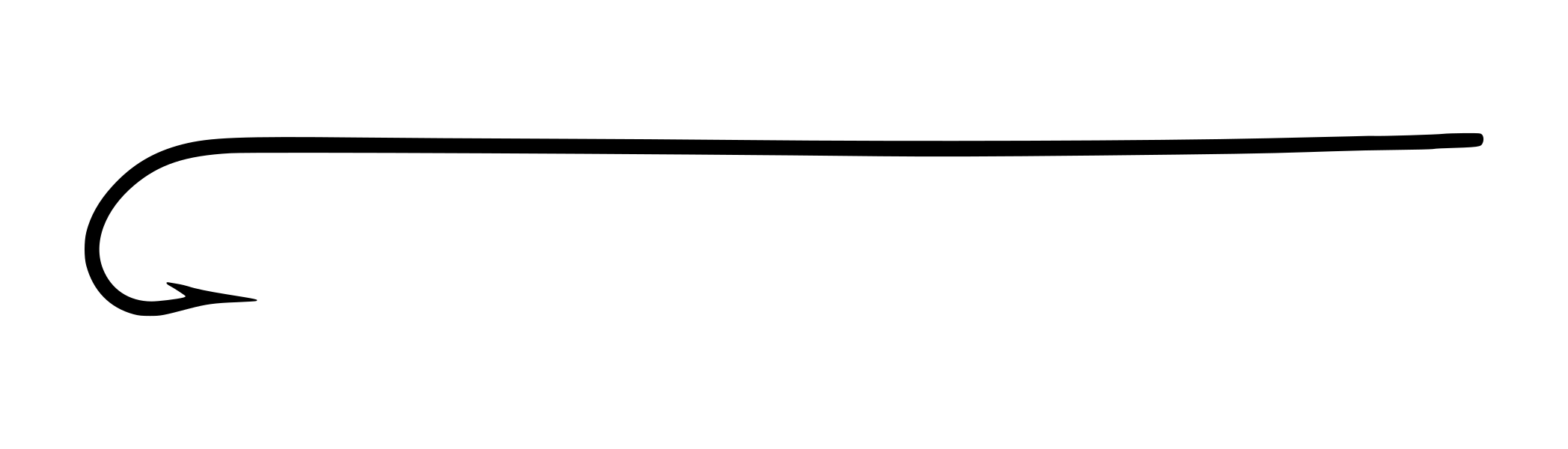
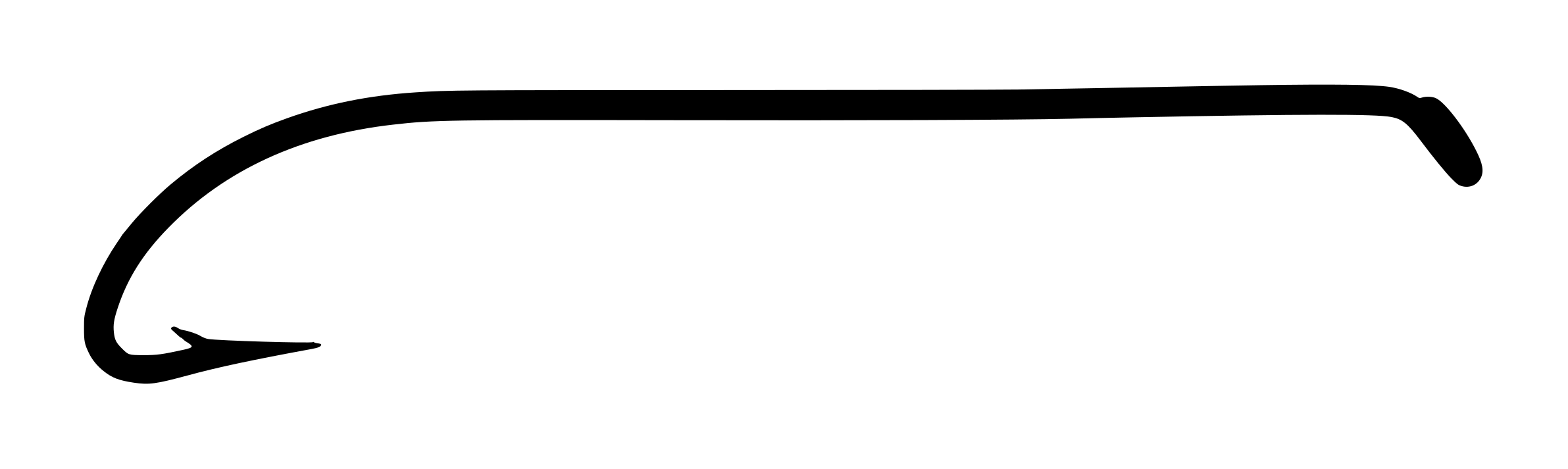
The Carlisle bend is characterized by a relatively compact, angular round curve — slightly tighter and less flared than the wide-gape Aberdeen pattern, but still open enough for effective live bait presentations. The light-gauge, high-tempered wire was engineered to bend free from underwater snags rather than break the angler’s line, a critical design philosophy for early twentieth-century freshwater fishing. The marked shank — visible as small raised ridges along the wire axis — provides passive grip for live baits, preventing them from sliding during casting.
This example retains its original blue paper box with gold foil stamped eight-line label, a highly formalized typographic system that Mustad used to communicate hook specifications across linguistic barriers to international wholesalers and retailers. The blind eye (marked shank) reflects the pre-monofilament era when anglers snelled their hooks directly to gut or silk leaders using traditional wrapping and whipping techniques. The blued finish provides a dark, stealthy presentation in clear freshwater, while offering modest corrosion resistance compared to heavy japanning or tinning.
The Carlisle remains historically significant as a documented example of Mustad’s aggressive industrial “cloning” strategy — reverse-engineering regionally favored hook patterns and standardizing them for global mass export. The model survives in substantial quantities, reflecting its mainstream status among panfish anglers across North America and Europe.
Original blue paper box with gold foil-stamped eight-line Mustad label, showing the Christiania, Norway designation confirming pre-January 1, 1925 manufacture. The standardized label format communicated technical specifications (Quality code, pattern name, finish, and shank features) across linguistic barriers to international wholesalers and retailers.
Photographic record
3 cataloged imagesSelect any record to load it above.
3 images shown
Mustad 3705 Carlisle Hook — Original Box and Label (Pre-1925)Original blue paper box with gold foil-stamped eight-line Mustad label, showing the Christiania, Norway designation confirming pre-January 1, 1925 manufacture. The standardized label format communicated technical specifications (Quality code, pattern name, finish, and shank features) across linguistic barriers to international wholesalers and retailers.Open originalMustad 3705 Carlisle Hook — Side Profile with Point Detail (Size 8)Side-profile close-up of a size 8 Mustad 3705 Carlisle hook showing the marked shank (raised ridges visible along the wire), hollow point geometry, and blind flatted eye. The concave inner face of the hollow point creates the knife-edge effect for rapid tissue penetration. Photographed on 1/10-inch measurement grid for dimensional reference.Open originalMustad 3705 Carlisle Hook — Top-Down Profile (Size 8)Top-down view of the Mustad 3705 Carlisle hook showing the complete hook geometry from eye to point, including the characteristic Carlisle bend with its angular round curve, and the placement of the small close-cut barb. This view best illustrates the tight, compact bend geometry that distinguishes the Carlisle from the extremely wide-gape Aberdeen pattern.Open original
Technical profile
Eye
Blind — Marked Shank
Wire
Standard, Round, Est. ~0.045"-0.055" (~1.1-1.4 mm) E
Shank
Extra-Extra Long (XXL) — Marked / Ridged
Bend
carlisle, Narrow gap, Offset / kirbedCarlisle bend exhibits angular round curve characteristic of the pattern P. Bend is slightly tighter and less dramatically flared than the Aberdeen, providing a middle-ground compromise between extreme wide-gape snag-release designs and conventional round bends. Wire set is clean and symmetrical with no visible offset.
Point
Hollow Point (concave inner face)Barb is small and close-cut P, typical of light-wire panfish hooks designed to minimize tissue damage. Barb is positioned perpendicular to the point axis.
Finish
Blued — Confirmed (stated on packaging)Blued finish is uniformly dark and cool-toned P, characteristic of controlled chemical passivation (black oxide coating) rather than heavy japanning or tinning. Finish shows minimal wear or corrosion on specimen hooks, suggesting dry storage conditions. Blued finish offers low-glare presentation ideal for clear freshwater environments.
Specimen hooks are bright with dark blued patina intact. Original paper box shows light creasing and wear consistent with storage in a dry environment for decades. Gold foil stamping is bright and legible. Purple handwritten price mark faint but visible. No hooks missing from the 100-count assembly.
The Carlisle’s light-gauge, high-tempered wire is engineered to bend and release from underwater snags (sunken timber, brush, rocks) rather than fracturing the angler’s line — a critical safety and cost consideration in early twentieth-century bait fishing when lines were expensive and often handmade from braided horsehair or gut. The hollow point geometry ensures rapid tissue penetration with minimal applied force, ideal for soft-mouthed freshwater species where a violent hook-set would tear the mouth tissue. The marked shank, created by small raised ridges or indentations along the wire axis, provides passive grip for live bait by creating friction against the bait’s interior, preventing it from sliding down the shaft during casting or in heavy current. The blind eye reflects the pre-monofilament era when anglers snelled (wrapped) the hook directly to gut or silk leaders rather than tying modern knots through a formed eye loop.
First documented example of Mustad Quality 3705 Carlisle Hook in pre-1925 Christiania-era production with intact original box in garrenwood.com catalog.
Own this hook? Help us measure it.
We don't have measured sizes for this hook yet. Own one? Submit calipered measurements and we'll review and add them. Thank you!
Historical context
mustad
O. Mustad & Søn was founded in 1832 in the remote village of Gjøvik, Norway, by Hans Schikkelstad as the Brusveen Spiger- og Staltradfabrikk (Brusveen Nail and Wire Factory), initially producing basic metal goods such as nails and steel wire. The company passed to Schikkelstad’s son-in-law, Ole Hovelsen Mustad, and his son, Hans Mustad, who rebranded the firm as O. Mustad & Søn. The defining moment in the company’s history occurred in 1877, when visionary engineer Mathias Topp invented the first fully automated hook-making machine — a revolutionary mechanization that could autonomously cut, bend, barb, and point raw steel wire at unprecedented speed and consistency. Rather than file for patents (which would have required public disclosure), the Mustad family relied on strict corporate secrecy, non-disclosure agreements, and restricted factory access to protect their proprietary methods. This strategy proved devastatingly effective against rivals in Redditch, England, and manufacturing hubs across Japan and the United States. By the 1950s, Mustad had secured an estimated fifty percent of the global hook production market, establishing sales offices and manufacturing facilities across multiple continents. The company’s formalized eight-line typographic label system became the industrial standard for global tackle communication, encoding crucial technical specifications into a universally legible format that transcended linguistic barriers.
Series History
The Carlisle pattern emerged in British regional angling tradition as a light-wire, panfish-focused variant of the larger Aberdeen family. Mustad adopted the Carlisle into their aggressive reverse-engineering strategy in the late nineteenth century, standardizing it for global export. The Qual. 3705 designation places it within the mid-tier product grouping (3000-3999 range), indicating manufacture to exacting dimensional and tempering standards — a step above economy models but below premium dry-fly hooks. The Carlisle was offered in dozens of size variants, eye configurations, and finish options throughout the early-to-mid twentieth century. The blind eye (marked shank) version was standard for the era, as monofilament line adoption was still nascent in the 1900s-1920s. As modern fishing lines evolved and anglers shifted toward formed-eye hooks, the Carlisle with taper eye or ball eye gradually became more common. Production continued well into the post-1925 Oslo era, and the Carlisle was not discontinued until Mustad’s transition to the Signature Series (c. 2001-2009), at which point the old numeric Quality codes became obsolete. The Carlisle pattern survives today in modern Mustad catalogs under the Signature Series designation, though current versions typically feature ball or tapered eyes rather than blind construction.
Era and Packaging Dating
Line 3 of label clearly states CHRISTIANIA - NORWAY. Oslo officially renamed from Christiania on January 1, 1925, making this a definitive pre-1925 artifact. Eight-line typographic label format is characteristic of vintage Mustad export packaging (1880s-1970s). Blue paper stock and gold foil stamping typical of early twentieth century tackle packaging. No barcode present (barcode standard post-1974). Trade mark and arbitrary numeric model code (Qual. 3705) are hallmarks of the classic numeric Quality system, later replaced by the Signature Series around 2001-2009. Handwritten price mark in purple ink consistent with early-twentieth-century retail practice.
The Lost Art of Snelling
The blind eye and snelling tradition of the Carlisle era represents one of the most sophisticated folk crafts in angling history. Before the widespread adoption of monofilament line in the 1950s, anglers would soak silkworm gut for hours until it became supple, then carefully wrap and whip the gut directly to the hook shank using waxed silk thread and hot pitch (a sticky resin) as a seal. A properly executed snell could hold enormous tension without slipping, and experienced anglers could identify each other by the precise geometry of their knots. Vintage snelling vises and pitch-heating tools remain highly collectible today, and several modern fly-tying traditions still teach the snell as an historical technique.
Design lineage and influence
The Carlisle bend belongs to the family of light-wire, wide-gape panfish hooks that emerged in the nineteenth century, competing with the Aberdeen, Virginia, and Kendal patterns for market dominance in the freshwater live-bait segment. The Carlisle represents a middle ground between the extremely wide gape of the Aberdeen (designed specifically to bend free from snags) and more conventional round bends, offering slightly tighter proportions while maintaining the light-gauge philosophy of rapid-release wire. Mustad’s aggressive industrial cloning strategy involved reverse-engineering these regionally favored patterns and standardizing them for global mass export, allowing the Carlisle to achieve widespread adoption across North America and Europe despite its British regional origins.
Best matchRelated by Attribute
Computed automatically from catalog data — updated as new hooks are added.
The Mustad 3705 Carlisle is a light-wire, light-tackle bait hook designed for panfish, trout, and small to medium freshwater species. The Carlisle bend features a tighter, more angular round curve compared to the extremely wide-gape Aberdeen pattern, making it ideal for live bait presentations where the angler desires easier hook removal and a slightly more compact hook form. The marked shank provides passive bait-gripping action, while the hollow point and light wire gauge ensure minimal tissue damage to delicate live baits such as small minnows, earthworms, or cricket nymphs. The blind eye construction required snelling directly to the shank using traditional silkworm gut or silk line — a universal practice in the pre-modern monofilament era.
Classic Fly Patterns
Not typically used for fly tying.
Modern Equivalents
Hook
Match Quality
Notes
Mustad C49S Carlisle (modern Signature Series)
Excellent
Direct modern equivalent in current Mustad catalog; uses contemporary ball eye instead of blind eye, but maintains Carlisle bend geometry and light-wire philosophy.
Tiemco TMC 3769 Wet Fly Hook
Very Good
Contemporary light-wire, short-shank pattern designed for similar panfish and trout bait applications; offers ball eye convenience with comparable wire gauge and bend profile.
Daiichi 1120 Light Wire Wet Fly
Good
Competitive light-wire pattern suitable for live bait panfish work; slightly shorter shank and finer wire than Carlisle, but functionally similar application range.
Collector notes
The Mustad 3705 Carlisle represents common vintage tackle with modest collecting interest, driven primarily by the Christiania-era packaging and the documented pre-1925 manufacture. Surviving examples are readily available on secondary markets, limiting premium pricing.
Reference value
$12 – $28 USD estimate
Packaging condition
Good — moderate wear, legibleRecorded specimen
Packaging format
Mustad-Trade-Label-BlueCatalog code
Positive factors: Definitive Christiania-era production (pre-January 1, 1925) establishes authentic early Mustad export status. Eight-line typographic label is historically important as a standardized industrial documentation system. Original blue paper box with gold foil stamping adds significant value over loose hooks. The light-wire Carlisle pattern has substantial regional nostalgia in British and North American panfish traditions. Marked shank construction is clearly visible and documented in manufacturing literature. Blind eye construction represents a vanished snelling tradition, making it educational for tackle historians.
Limiting factors: Carlisle hooks survive in high quantities — they were mass-produced for high-volume commercial and recreational bait markets. No dramatic innovation or rarity factor distinguishes this model from dozens of other contemporary Mustad light-wire patterns. Standard No. 8 size is the most abundant size produced, limiting scarcity. Condition of this specimen shows moderate aging and the box exhibits light wear rather than pristine preservation. Modern light-wire panfish hooks are functionally superior and far more available, reducing collector nostalgia relative to classic dry-fly patterns.
Packaging
Bright blue paper-covered box with gold-foil stamped text. Eight-line typographic label in gold foil on blue background with decorative beaded border. Graphics include the iconic Mustad downward-pointing skeleton key trademark in gold foil. Label reads: Trade / Qual. 3705 / O. MUSTAD & SON / MANUFACTURERS / CHRISTIANIA - NORWAY / (Line 5 not clearly visible in image) / CARLISLE HOOKS / 100 No. 8 / Marked Blued / Made in Norway. Purple handwritten price mark visible (5 or S designation). Box shows aging and light wear consistent with early-to-mid twentieth century storage.
Market Value Notes
Original boxes with 100 hooks intact typically sell $12-$18 on eBay and specialist vintage tackle sites. Individual loose hooks from broken cards fetch $0.50-$1.50 each. Premium pricing (up to $28) occurs when the box is in excellent condition with minimal wear, the label is bright and legible, and the hooks remain unused and bright. The Christiania-era designation (pre-1925) typically adds 20-30% over comparable post-1925 Oslo-era Carlisle boxes. Specialist tackle dealers and fly-tying collectors seeking historical examples or materials pay slightly above eBay averages.
Store the original blue paper box in a cool, dry environment away from direct sunlight and moisture. The blued finish is susceptible to rust and patina development with humidity exposure; desiccant packets (silica gel) placed in a sealed acid-free storage container will extend preservation indefinitely. Do not attempt to “clean” or polish blued hooks — the dark patina is chemically protective and adds historical authenticity. If loose hooks are removed for examination or use, store them separately in an acid-free envelope with a desiccant packet. Avoid contact with other metals to prevent galvanic corrosion. The original paper box adds 50-100% to specimen value; preserve it intact and undamaged whenever possible. If the box becomes severely creased or torn, consult a paper conservator rather than attempting amateur repairs. Periodically inspect the specimen for any signs of corrosion or environmental stress, especially if stored in humid climates.
Marking Analysis
Handwritten Markings and Price Notation
A purple handwritten mark — either a numeral “5” or the letter “S” — is faintly visible on the upper right corner of the box, consistent with early twentieth-century retail pricing practices. This notation likely represents either a price code (a common retail strategy where store owners assigned numerical or alphabetic codes to obscure the wholesale cost from customers) or an inventory mark. The hand pressure and ink style are consistent with fountain pen application of the era. No other markings, dates, or annotations are visible on the specimen. The presence of a handwritten retail or inventory mark is common on surviving vintage tackle boxes and provides valuable evidence of direct retail distribution and use rather than warehouse storage.
Primary Source
Eight-Line Label System Documentation
Source: A Comprehensive Typology and Decryption of Vintage O. Mustad & Søn Hook Labels (Mustad Label Reference Document)
The label on this Mustad 3705 box exemplifies the standardized eight-line typographic format that O. Mustad & Søn used to encode technical specifications across linguistic barriers. Line 1: “O. MUSTAD & SON” (manufacturer identity). Line 2: “MANUFACTURERS” (corporate role — critical for brand loyalty, differentiating Mustad from import agents and repackagers). Line 3: “CHRISTIANIA – NORWAY” (geographic origin and production era marker). Line 4: “Qual. 3705” (quality/model code, placing this hook in the mid-tier product grouping, 3000-3999 range). Line 5: Point identifier (not clearly legible in box image but documented as “Hollow Point” by analyst notes and visible in hook photographs). Line 6: “CARLISLE HOOKS” (pattern name). Lines 7-8: “Marked Blued” and “Made in Norway” (shank feature and finish, plus manufacturing country statement). The quantity “100” and size “No. 8” appear separately, typically in the bottom left corner. This eight-line system remained consistent across decades of production and allowed Mustad to communicate complex technical information to retailers, wholesalers, and anglers worldwide in a single, universally recognizable format. The standardization of this labeling system is itself a testament to Mustad’s dominance of the global hook market and their systematic approach to product categorization.
Additional
The Carlisle Pattern and the Panfish Tradition
The Carlisle bend occupies a unique position in the history of light-wire panfish hooks. Unlike the extremely wide-gape Aberdeen (which emphasized snag-release capability) or conventional round bends designed for general utility, the Carlisle represents a deliberate engineering compromise: a tighter, more angular round curve that retained light-gauge wire and snag-release philosophy while offering easier hook removal and a slightly more compact presentation ideal for small to medium freshwater species. The pattern originated in British regional angling tradition but achieved global distribution through Mustad’s aggressive industrial cloning strategy. By the early twentieth century, the Carlisle had become the preferred pattern among North American panfish anglers, particularly for crappie, bluegill, and small-to-medium trout in streams and lakes. The marked shank — clearly visible as raised ridges along the wire axis — provided passive bait-gripping action that prevented live bait from sliding during casting, a feature that distinguished the Carlisle from smoother-shanked alternatives. The blind eye required snelling, a meticulous skill that separated serious bait anglers from casual practitioners. A properly executed snell distributed load evenly along the gut or silk leader, allowing these delicate materials to handle surprising tension without breaking. The Carlisle remains a testament to the sophisticated folk engineering of pre-modern angling, where every geometric detail served a specific functional purpose aligned with the materials and techniques available to anglers of the era.
Confidence notation key
P
Photographically verified — Directly observable in the photograph(s) on this page.
V
Verified by documentation — Confirmed by manufacturer catalog, spec sheet, or published reference.
I
Inferred — A logical deduction from observable or documented evidence, not directly stated.
E
Estimated — An approximation based on visual comparison, proportional analysis, or limited data.
S
Speculative — A reasoned hypothesis that cannot be confirmed from available evidence.
Claims with no notation are confirmed by multiple independent sources. All photographs on garrenwood.com are taken on a measurement grid where each square equals 1/10 inch (0.1″ / 2.54 mm).