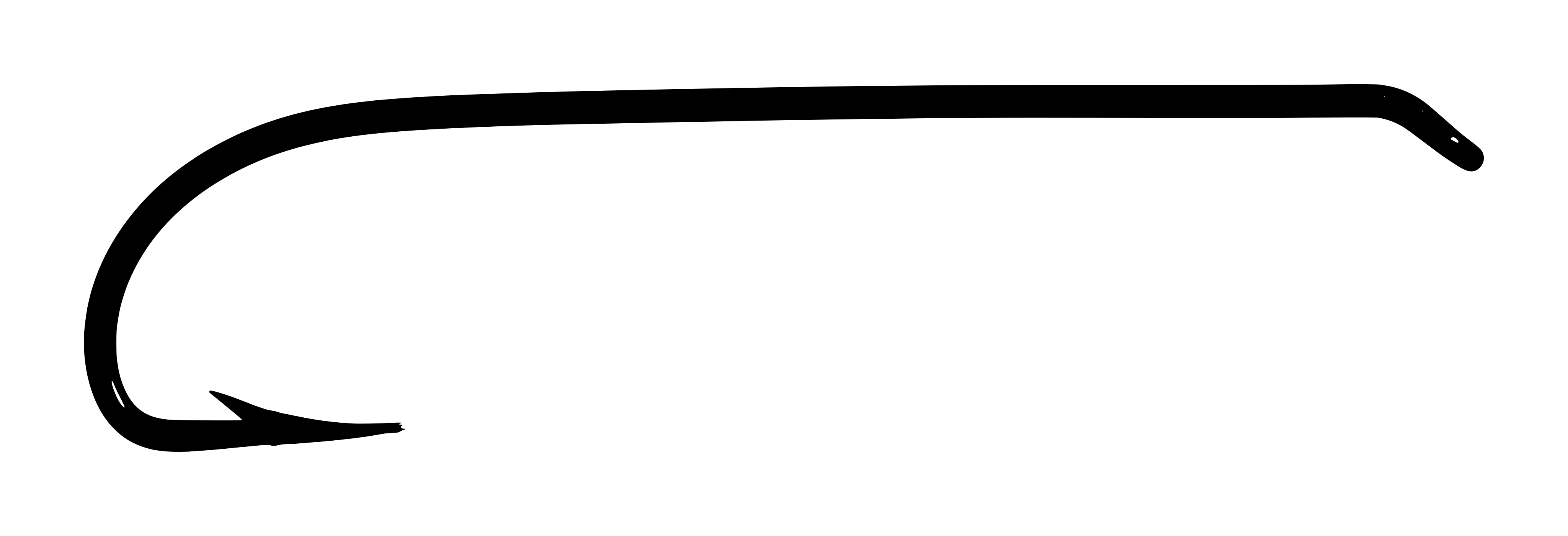
Selected size
1
Catalog record
- Overall Length
- 47.9 mm V
- Shank Length
- 35.1 mm V
- Bend Depth
- 11.9 mm V
- Wire Diameter
- 1.1 mm V
- Confidence
- V Catalog record only
 Garren WoodFishing Hook Reference
The Mustad 3665A Limerick is a mid-20th-century bait hook manufactured by O. Mustad & Son (U.S.A.) Inc. in Auburn, New York, under the Key Brand label. This hook exemplifies the practical design philosophy of 1960s-1970s commercial fishing tackle — a robust, simple tool for live and cut bait fishing in freshwater and light saltwater applications.
The 3665A features a classic Limerick bend with a sharp hollow point, round standard-gauge wire, and a tapered eye. The No. 4 size measures approximately 1.81 inches overall with a 0.30-inch gap, making it suitable for medium baits and small to medium game fish. The bronzed finish provides rust resistance and a traditional appearance consistent with period tackle standards.
Era evidence includes the Auburn address and Key Brand logo on the box (Mustad’s US subsidiary operated from 1956 onward), offset printing on kraft cardboard packaging, and the absence of a Universal Product Code (pre-1974). The 100-hook bulk package format indicates commercial or wholesale distribution, common for working anglers and bait shops during the 1960s-1970s.
Collectors value the 3665A as a representative example of post-war American sporting goods manufacturing and Norwegian hook engineering applied to the domestic market. The original packaging, condition, and straightforward design appeal to historians of mid-century fishing tackle traditions.
4 cataloged imagesSelect any record to load it above.
4 images shown
The Mustad 3665A employs a hollow point geometry, which is distinct from the superior (near-straight) point design. The hollow point features a concave inner face — the inner taper curves inward as it approaches the tip, creating a knife-edge profile. This geometry reduces penetration force requirements and cuts quickly through tissue and bait, making it ideal for soft baits and reactive striking.
The round wire profile (non-forged) provides adequate strength for standard bait fishing while maintaining a smooth, uniform diameter along the shank. This simplifies manufacturing and reduces cost compared to forged wire, fitting the Key Brand’s market positioning as a practical, economical product.
The tapered eye allows secure line attachment without the wire bulk of a ball eye, and reduces the profile at the eye junction — useful for small-mouth fish that may reject oversized hardware. The Limerick bend’s angular apex and moderate curve radius provide stable hook orientation in the fish’s mouth and mechanical advantage during the fight.
The bronzed finish combines iron oxide and copper compounds, applied through a hot-bath process that creates a rust-resistant surface without the brittleness of blue or japanned finishes. Bronze is warmer in appearance than silver or nickel finishes and was the industry standard for mid-20th-century bait hooks.
We have measurements for sizes 1, 2, 4, 8, 10, 12, 14. Know any others? Submit calipered measurements and we'll review and add them. Thank you!
O. Mustad & Son was founded in 1832 by Ole Mustad in Gjøvik, Norway. The company became one of the world’s largest hook manufacturers, establishing dominance through vertical integration of wire drawing, hook forging, and packaging. Mustad’s Norwegian factory developed reputation for quality standardization and innovative point designs, including the hollow point geometry that defined 20th-century hook engineering.
In 1956, Mustad established a U.S. subsidiary corporation — O. Mustad & Son (U.S.A.) Inc. — headquartered in Auburn, New York. This operation handled distribution, repackaging, and marketing for North American markets under multiple brand names including Mustad, Key Brand, and regional imprints. The Auburn facility imported bulk hooks from Gjøvik and packaged them into wholesale and retail quantities for tackle shops, mail-order distributors, and commercial fishing suppliers.
The Key Brand imprint was Mustad’s economy line distributed through Auburn. It offered identical hook designs to premium Mustad-branded products but at lower retail price points, competing directly with American domestic manufacturers like Wright & McGill and Pflueger. The 3665A Limerick was a core item in the Key Brand catalog throughout the 1960s and 1970s, available in large bulk quantities for commercial and institutional fishing applications.
The Mustad 3665A belongs to the Limerick bend family, one of the oldest and most successful hook designs in sport and commercial fishing. The Limerick bend originated in Ireland in the 19th century and was adopted by English and Norwegian manufacturers as a standard pattern for freshwater and light saltwater bait fishing.
Mustad introduced its own Limerick variant in the early 20th century and refined it through successive production eras. By the 1960s, the 3665A represented the standardized version — a medium-weight hook on round wire with a tapered eye and a sharp hollow point, optimized for natural bait presentations.
The 3665A was available in sizes ranging from No. 1 (large) through No. 10 (small), packaged in bulk quantities from 50 to 1000 hooks per box for commercial wholesale distribution. It competed directly with equivalent Limerick patterns from Partridge of Redditch and Wright & McGill, all filling the same market niche for working bait anglers, commercial fishermen, and tackle retailers.
Production continued through the 1980s with minor manufacturing refinements but no significant design changes. The 3665A has been discontinued in its original form, though Mustad continues to manufacture Limerick hooks under modern model numbers.
Multiple packaging elements confirm circa 1960-1975 production: (1) The Auburn, New York address for O. Mustad & Son (U.S.A.) Inc. — Mustad's US subsidiary operated from 1956 to the mid-1980s, placing the hook in that window. (2) Absence of a barcode or UPC — the Universal Product Code was adopted in North America beginning 1974, so no barcode indicates pre-1974 or very early 1974 manufacture. (3) The offset printing method on kraft cardboard is characteristic of 1960s-1970s tackle packaging, predating flexographic and digital printing. (4) The Key Brand logo style and the blue/tan color scheme are consistent with Mustad's US product line during the 1960s-1970s. (5) The handwritten price mark '72-' in graphite suggests a retailer's inventory or pricing notation from the early 1970s, consistent with retail stock from that era.
The Key Brand name was Mustad's deliberate positioning as an 'unlocking' solution for anglers seeking value without sacrificing reliability. In the 1960s, when a bulk box of 100 Key Brand No. 4 Limerick hooks might retail for under $2, the same quality hook branded as premium Mustad could command 50% higher prices. Many retail tackle shops purchased Key Brand wholesale and repackaged them under their own house brand labels, creating a three-tier market where the identical hook was sold at different prices based on packaging and branding alone.
The Limerick bend originated in Ireland during the 19th century as a refinement of earlier generic round-bend patterns. English manufacturers — notably Redditch makers such as Allcock and Partridge — adopted and standardized the Limerick geometry by the 1870s-1880s, using it for both fly fishing and bait applications.
Mustad adopted the Limerick design in the early 20th century and manufactured it alongside imported English Limerick hooks, eventually establishing its own Norwegian version as a dominant global standard. The 3665A represents the mature, production-optimized iteration of this lineage.
Competing contemporary designs included the Aberdeen bend (wider, lighter) and the Sproat bend (more rounded), both of which occupied similar market positions but with slightly different profiles. The Limerick’s angular geometry proved superior for bait fishing where quick penetration and reduced barb damage were valued, cementing its position as the 20th-century standard.
Modern successors include the Mustad 3904 (Aberdeen variant) and the contemporary Mustad Limerick hooks still manufactured in Norway and distributed globally. The 3665A’s design influence persists in budget and commercial hook lines across multiple manufacturers.
| Silhouette | Hook Model | Match | Analysis | Compare |
|---|---|---|---|---|
| 765SP No. Size 4 and Size 6 — TMC 765SP Streamer | 85% | Compare | ||
|
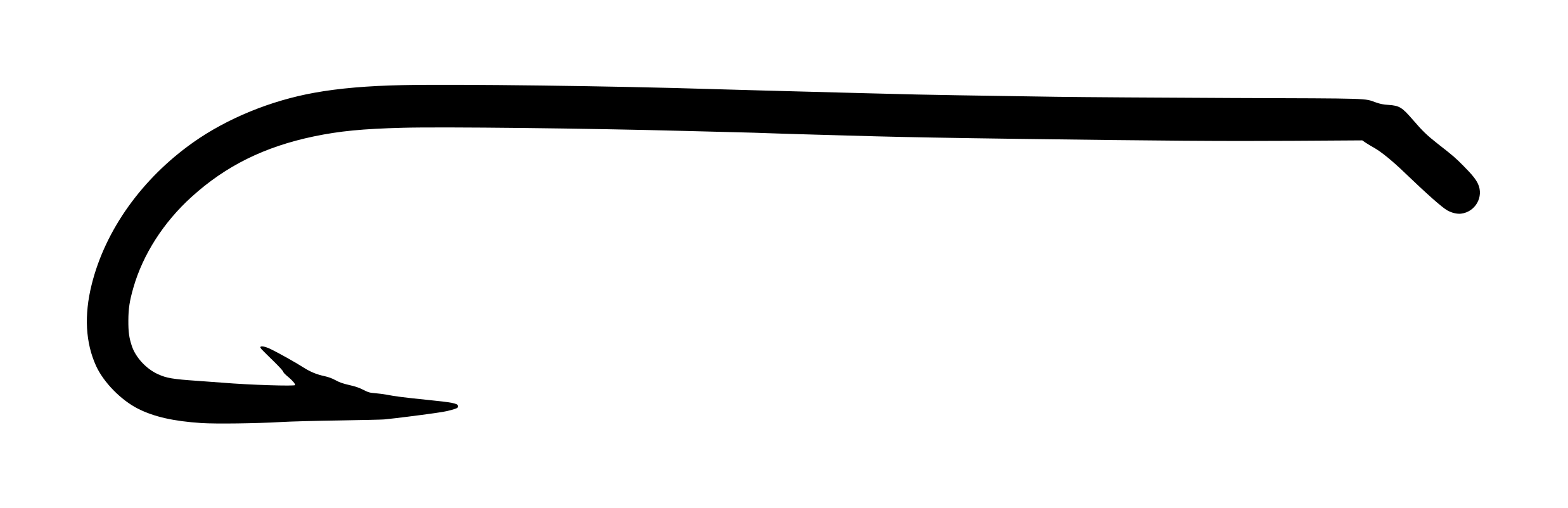
36717 No. 2 — Mustad 36717 Limerick | 79% | Compare | |
| 9661 No. 1, 2, 6, 8, 10, 12 — Mustad 9661 | 78% | Compare | ||
|
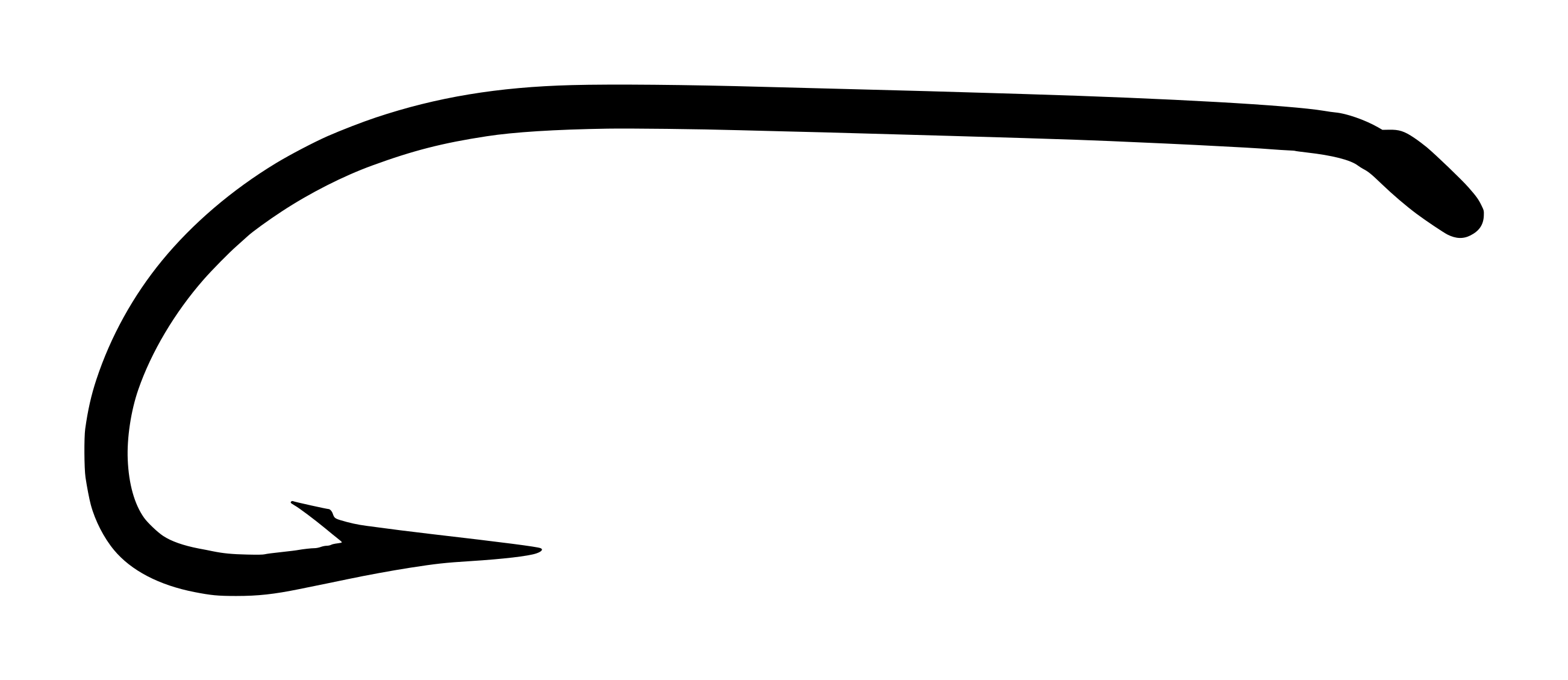
3123 No. 3 — Mustad-Limerick Hook | 76% | Compare | |
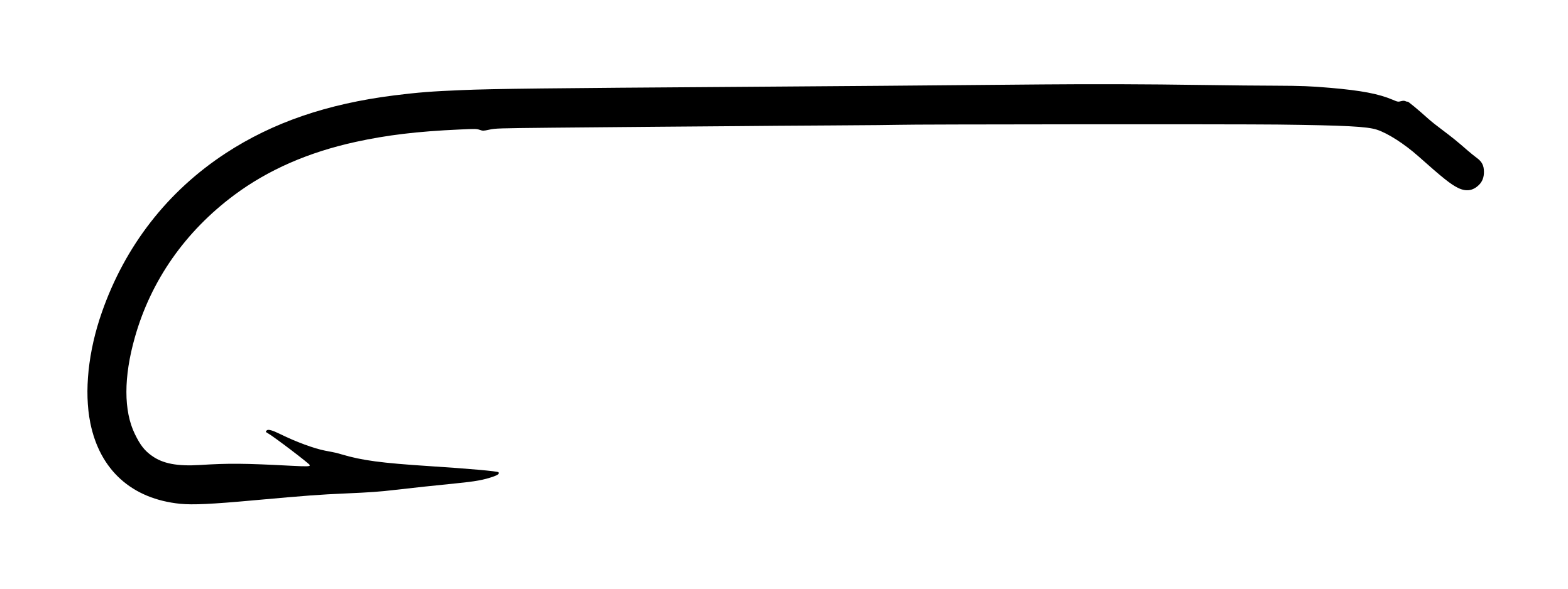
|
36680 No. 6 — Mustad 36680 Streamer | 74% | Compare |
| Silhouette | Hook Model | Match | Compare |
|---|---|---|---|

|
3191 A No. 2 — Mustad-Carlisle Hooks | 99% | Compare |
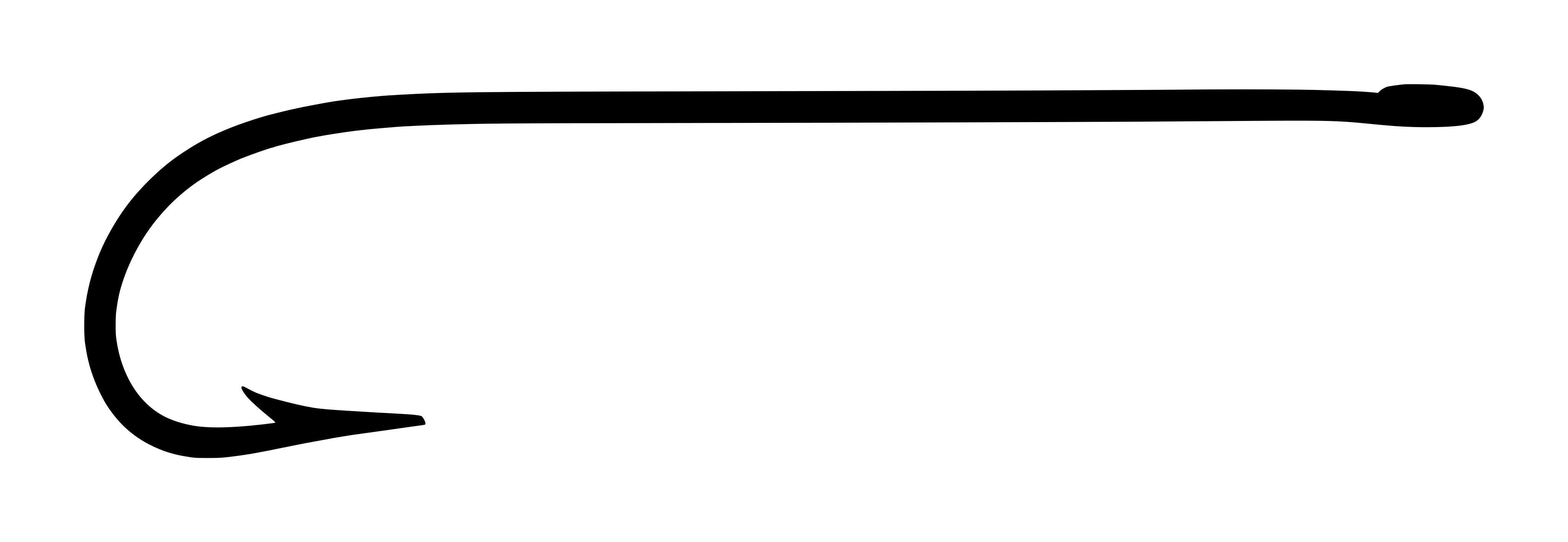
|
3194 N No. 4, 6 — 3194 N | 99% | Compare |

|
3785 No. 3/0 — Mustad 3785 | 99% | Compare |
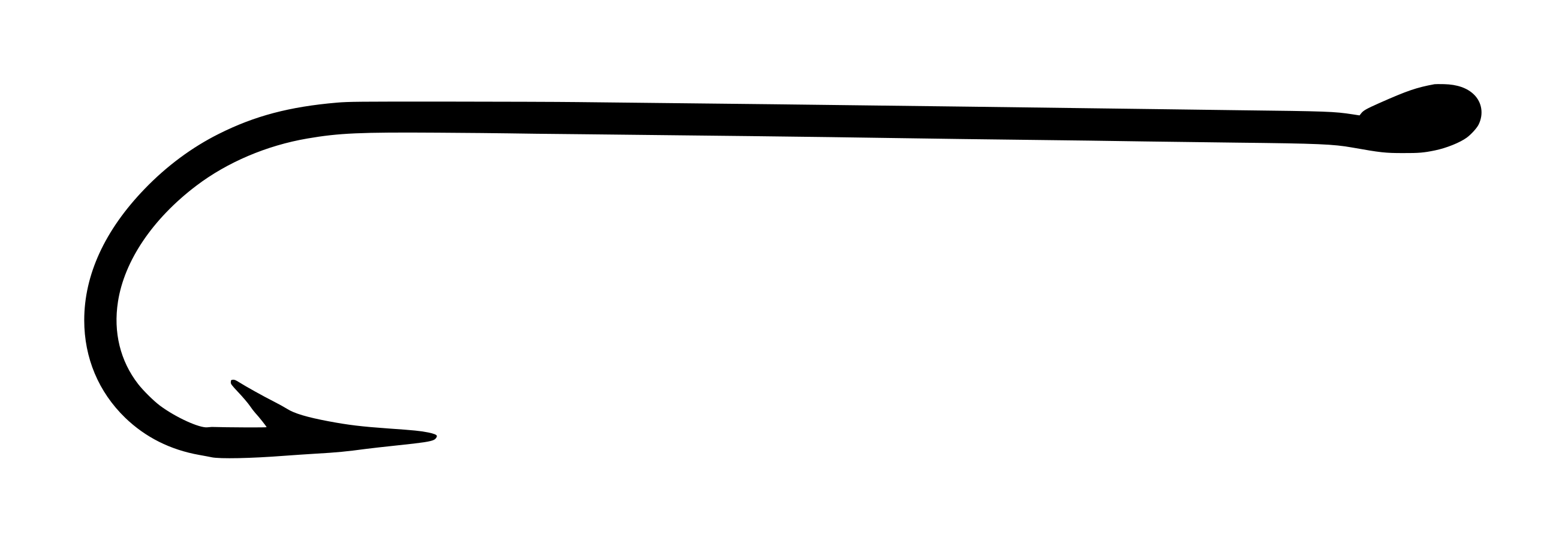
|
3321 No. 6 — Carlisle | 98% | Compare |

|
3192 No. t stamped on visible label (P) — Carlisle Hook | 97% | Compare |
The Mustad 3665A is a classic bait and light saltwater hook designed for live or cut bait fishing. The Limerick bend geometry provides excellent penetration and hook retention for species such as stripers, mackerel, and bottom-feeding fish. The straight eye and standard shank accommodate natural baits and simple soft-plastic presentations. The hollow point design cuts quickly through the bait into the fish’s mouth, reducing missed strikes.
| Hook | Match Quality | Notes |
|---|---|---|
| Mustad 92620 Beak | Good | Modern offset beak design replaces the Limerick for contemporary bait fishing; same wire gauge range and size progression |
| Mustad O'Shaughnessy 3907 | Moderate | Heavier-duty alternative with similar point geometry but deeper, more angular bend; for larger baits and saltwater |
| Mustad Classic 3906 | Moderate | Modern traditional Limerick variant with slightly refined manufacturing; discontinued and replaced with fluorocarbon-specific models |
Industry cross-reference
4X–6X long shank large articulated streamers
| Ahrex | TP605Chart only TP615Chart only |
|---|---|
| Core | C2461Chart only |
| Daiichi | 1750Spec record 2220Spec record |
| Firehole | 839Chart only 860Chart only |
| Hanák | H900BLChart only H950BLChart only |
| Mustad | 36717Full record L87Chart only R74Chart only R75Chart only |
| Orvis | JA0167Chart only JA1511Chart only |
| Partridge | CS17Chart only |
| Tiemco | 300Chart only 9395Chart only |
Green entries are full records; amber entries are spec records. Gray entries are chart-only and not physically verified against this specimen.
The 3665A is moderately collectible as a representative example of mid-20th-century North American tackle marketing and Norwegian hook manufacturing transferred to the US market. Original packaging significantly increases value; loose hooks of this model have little collector premium. Scarcity is modest — bulk boxes survive in greater numbers than individual vintage hooks, but original boxes from the early 1970s are uncommon.
Factors supporting collectability: Original Mustad/Key Brand packaging with intact label and printing is scarce and highly valued by tackle historians. The 3665A appears in fewer modern catalogs than larger Mustad sizes, increasing rarity among collectors seeking complete period assortments. The dual-language ‘MADE IN NORWAY’ marking appeals to Norwegian manufacturing history collectors. The handwritten price mark provides documentary evidence of retail economics from the early 1970s. The box’s condition — good but not pristine — is realistic and accessible to collectors with moderate budgets.
Limiting factors: The 3665A lacks notable design innovation or patent significance compared to branded specialty hooks. It is not the rarest Mustad model; far scarcer examples include early 1950s variants and discontinued specialty patterns. Loose hooks have minimal collector value outside the context of original packaging. The generic nature of the Limerick design means multiple manufacturers produced visually similar hooks, reducing exclusivity. Market demand is primarily from Mustad specialists and mid-century tackle historians, not mainstream hook collectors.
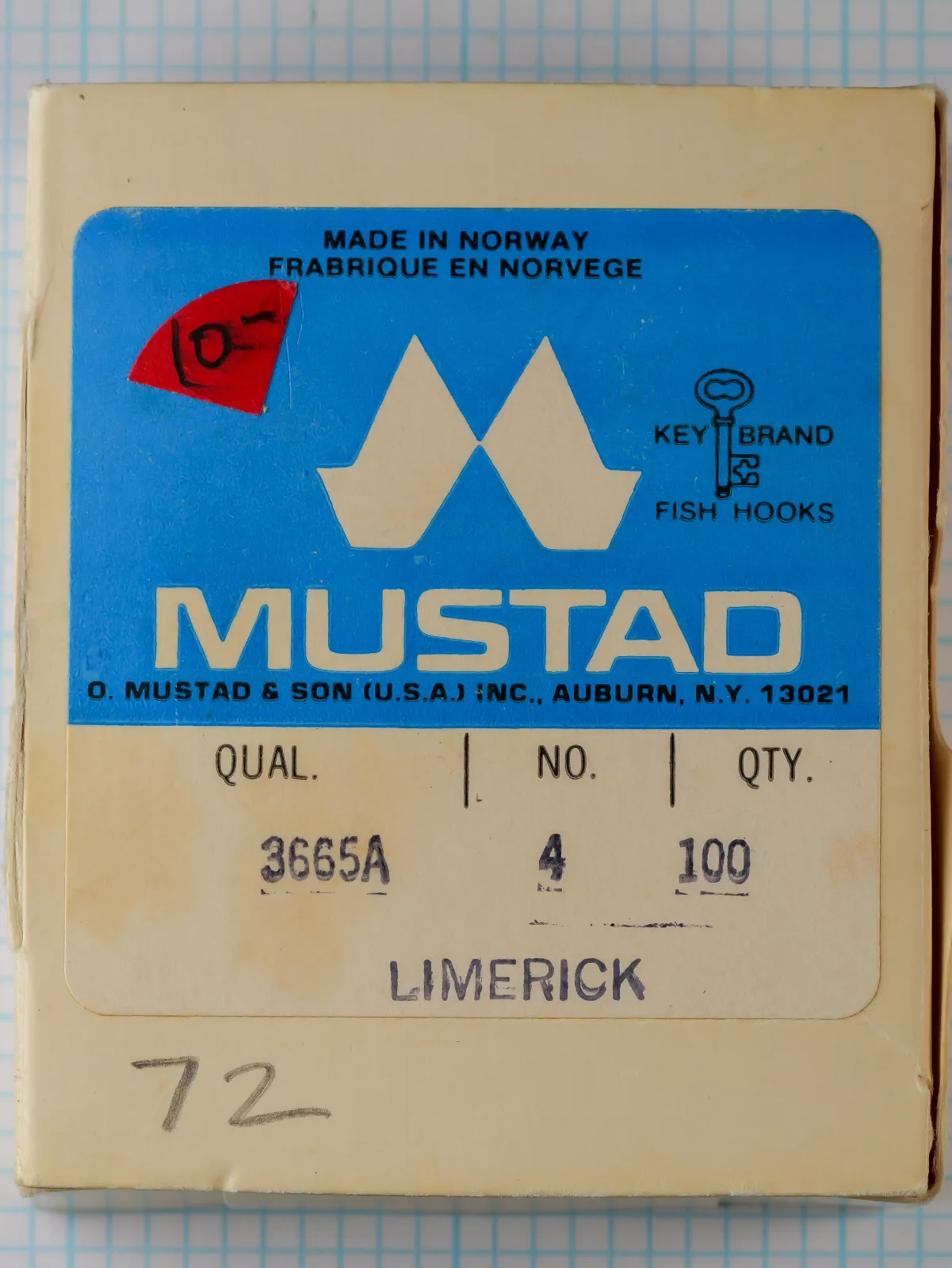
Kraft cardboard box, approximately 4.5 x 3 inches, with blue and tan printed label. The label features the Mustad crown logo in red, the Key Brand key-in-circle logo in blue, and dual-language text 'MADE IN NORWAY / FABRIQUEE EN NORVEGE'. The main label panel includes printed fields for QUAL. (3665A), NO. (4), and QTY. (100), filled in by offset printing. A separate handwritten notation '72-' in graphite pencil appears on the lower left corner of the box, indicating a retailer price mark or inventory code. The box construction uses single-wall kraft with offset-printed text, typical of 1960s-1970s wholesale packaging. No Universal Product Code is present, confirming pre-1974 manufacture.
Pricing reflects original box condition and label clarity. A box in excellent condition with clean, unfaded label commands $25-$32. Good condition (light toning, minor wear) ranges $15-$22. Fair condition (heavy toning, label creasing, price marks) drops to $8-$15. Loose hooks individually are unsellable. Rarity premium applies for complete, unopened boxes with all 100 hooks intact. Prices are higher among UK and European collectors due to rarity of Mustad US subsidiary packaging in those markets.
Original 3665A boxes appear occasionally on eBay in collections of vintage tackle lots, typically priced $15-$35 depending on condition and box label quality. Specialist vintage tackle dealers (particularly those focused on Norwegian or American fishing heritage) stock them when available. Estate sales and antique fairs in regions with strong fishing traditions occasionally feature unopened or original-packaging boxes. Online forums dedicated to vintage fishhooks and tackle collecting report periodic sales through private channels. Loose hooks from broken packaging are effectively worthless and rarely listed separately.
The model code 3665A is stamped on the kraft card label alongside the size number (4) and quantity (100). The Key Brand logo — a stylized key within a circle — appears in the upper right corner. The dual-language text ‘MADE IN NORWAY / FABRIQUEE EN NORVEGE’ confirms Norwegian manufacture. The Auburn, NY address distinguishes this as a US subsidiary product, not a direct Gjøvik import. Original packaging with handwritten price mark ’72-‘ in pencil indicates a retailer inventory code or price notation from the early 1970s.
Store the original Mustad 3665A packaging in a cool, dry environment away from direct sunlight and moisture. The kraft cardboard is susceptible to humidity damage and foxing (age-related brown spots) on the printed label. Keep the box in a sealed container or document preservation sleeve if long-term archival storage is intended.
The bronzed finish is relatively rust-resistant compared to bright or blued hooks, but moisture exposure will accelerate patina development. A light, thin patina (browning) is historically appropriate and generally acceptable to collectors. If the hooks show active corrosion or surface rust, they can be carefully cleaned with a soft brass brush and light mineral oil, followed by air drying. Avoid abrasive cleaning methods that damage the original finish.
If the box has been opened and hooks are loose, store them in the original packaging or in a paper envelope rather than in sealed plastic, which traps moisture. The original packaging is the primary collectible asset — the value is largely in the box itself rather than the hooks.
Do not re-package the hooks or modify the box. Alterations destroy the documentary and collectible integrity. If the box has become fragile, consider placing it in a clear acid-free storage box for support rather than attempting repairs.
The handwritten marking ’72-‘ in graphite pencil on the lower left corner of the box is a retailer inventory or pricing code, not a manufacturer’s mark. The two-digit year ’72’ indicates this box was in retail stock during 1972, the year before the Universal Product Code became standard (1974). The dash following the year suggests a price point notation — possibly $0.72 per box wholesale cost, or 72 cents, or a pricing tier code.
This marking is common on vintage tackle boxes and provides documentary evidence of retail supply chain history and period pricing practices. It is valued by collectors as proof of authentic vintage provenance and historical market documentation. The handwriting — clean, angular, and confident — suggests a professional retailer’s or wholesaler’s inventory system rather than personal angling notes.
The presence of this marking actually increases the collectibility of the box by anchoring it to a specific year and retail context, rather than decreasing value as one might fear. It documents the material history of the object.
Source: Mustad 3665A original packaging label, c. 1972, Auburn, New York.
The packaging provides several primary-source claims about manufacture and distribution: (1) ‘MADE IN NORWAY / FABRIQUEE EN NORVEGE’ — bilingual text confirms Norwegian origin and suggests distribution in both English-speaking and French-speaking North American markets, consistent with Mustad’s continental reach; (2) ‘O. MUSTAD & SON (U.S.A.) INC., AUBURN, N.Y. 13021’ — the specific address confirms Mustad’s US subsidiary operation in upstate New York, established 1956; (3) ‘KEY BRAND FISH HOOKS’ — the proprietary brand name indicates this was Mustad’s economy/wholesale product line, distinct from premium ‘Mustad’ branded products.
The printed fields ‘QUAL.’ (quality/model), ‘NO.’ (size), and ‘QTY.’ (quantity) were filled in by offset printing, not handwritten, confirming these were standardized production box specifications. The 100-hook quantity is typical of commercial wholesale distribution, not retail consumer packaging (which usually contained 10-25 hooks).
The absence of a barcode, SKU number, or Universal Product Code provides strong evidence of pre-1974 manufacture. The offset printing method (visible halftone dots on close inspection) and kraft cardboard substrate are characteristic of 1960s-1970s tackle packaging, predating flexographic and digital printing methods adopted in the 1980s.
The Mustad 3665A is listed as size ‘No. 4’ on the packaging, which is a legacy hook size designation predating the modern ISO 7993 standard. In the historical Mustad numbering system (and most English/Norwegian manufacturers), hook size progressed from No. 1 (largest) upward to No. 10, No. 12, etc. (smaller), with the progression not perfectly uniform in gap or shank dimensions.
The documented measurements for this No. 4 specimen (overall length 1.81 inches, gap 0.30 inches, shank ~1.35 inches) confirm the hook is appropriately sized within Mustad’s historical No. 4 range. Modern equivalents would be approximately ISO 7993 size 1/0 or 2/0 depending on the manufacturer’s interpretation, but direct metric conversion is imprecise due to historical variation.
This hook is suitable for baits ranging from 1.5 to 2.5 inches (small minnows, worm bunches, mullet pieces) and species from 0.5 to 5 pounds. The size designation reflects working fisherman’s rather than formal engineering standards.
| P | Photographically verified — Directly observable in the photograph(s) on this page. |
| V | Verified by documentation — Confirmed by manufacturer catalog, spec sheet, or published reference. |
| I | Inferred — A logical deduction from observable or documented evidence, not directly stated. |
| E | Estimated — An approximation based on visual comparison, proportional analysis, or limited data. |
| S | Speculative — A reasoned hypothesis that cannot be confirmed from available evidence. |
Claims with no notation are confirmed by multiple independent sources. All photographs on garrenwood.com are taken on a measurement grid where each square equals 1/10 inch (0.1″ / 2.54 mm).
Your cart is empty.