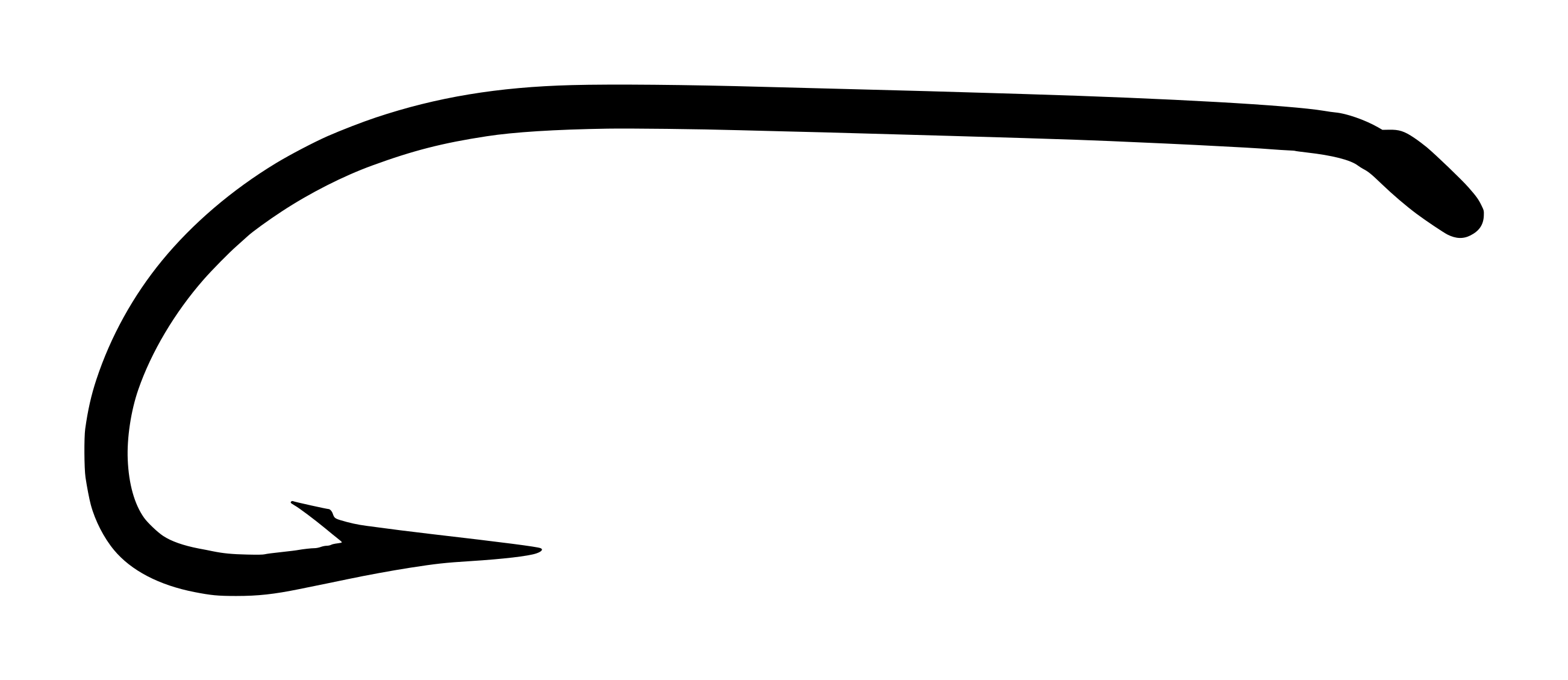
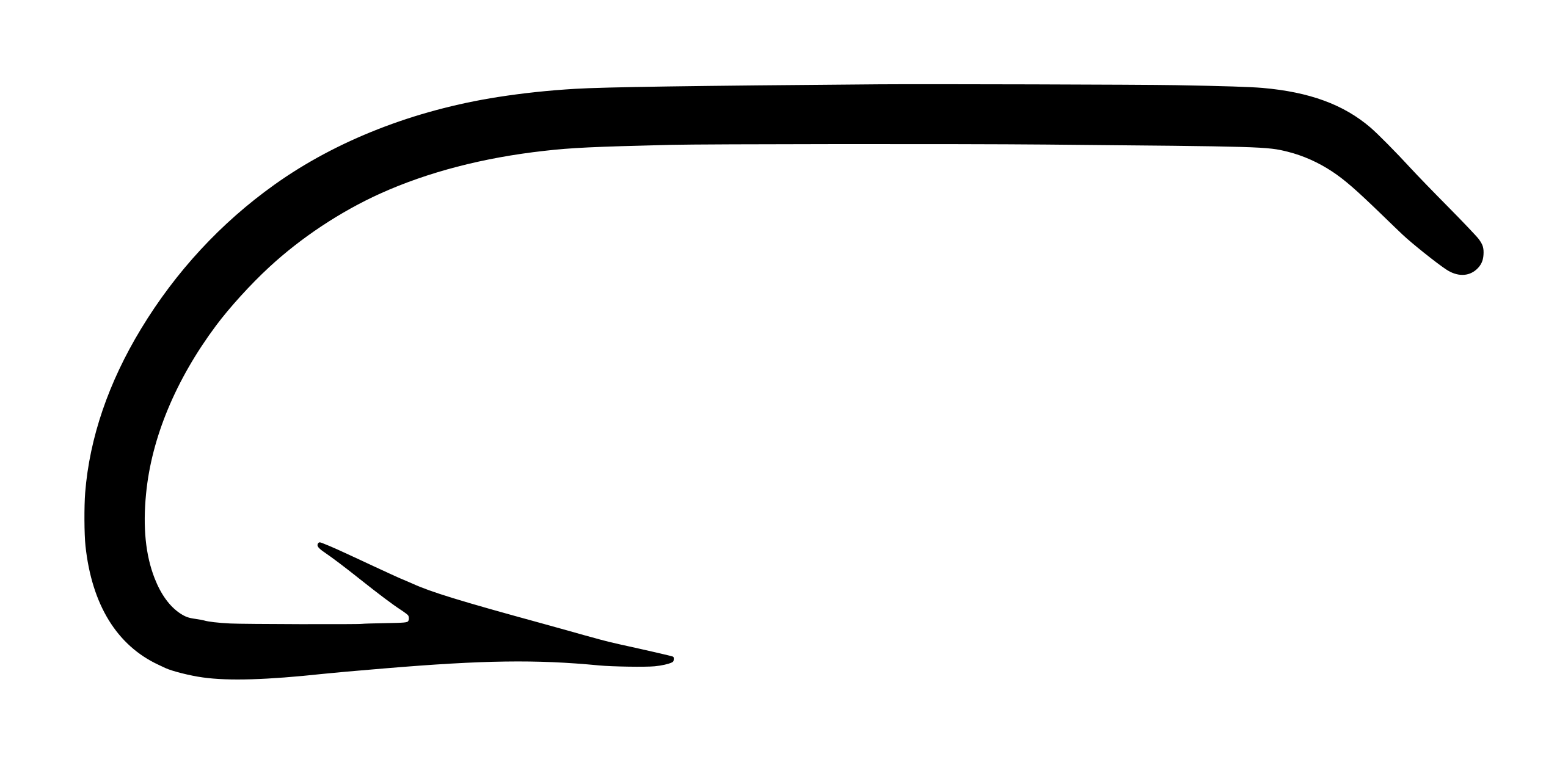
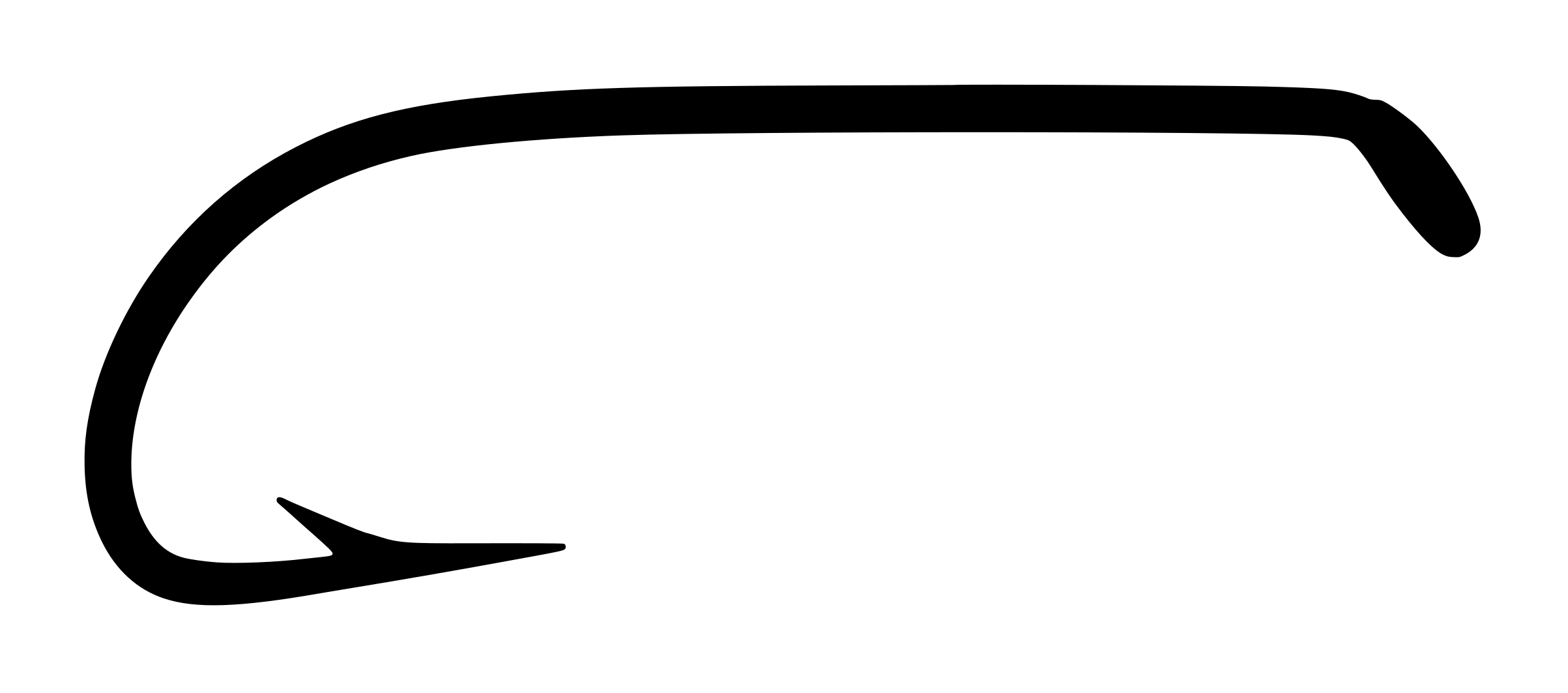
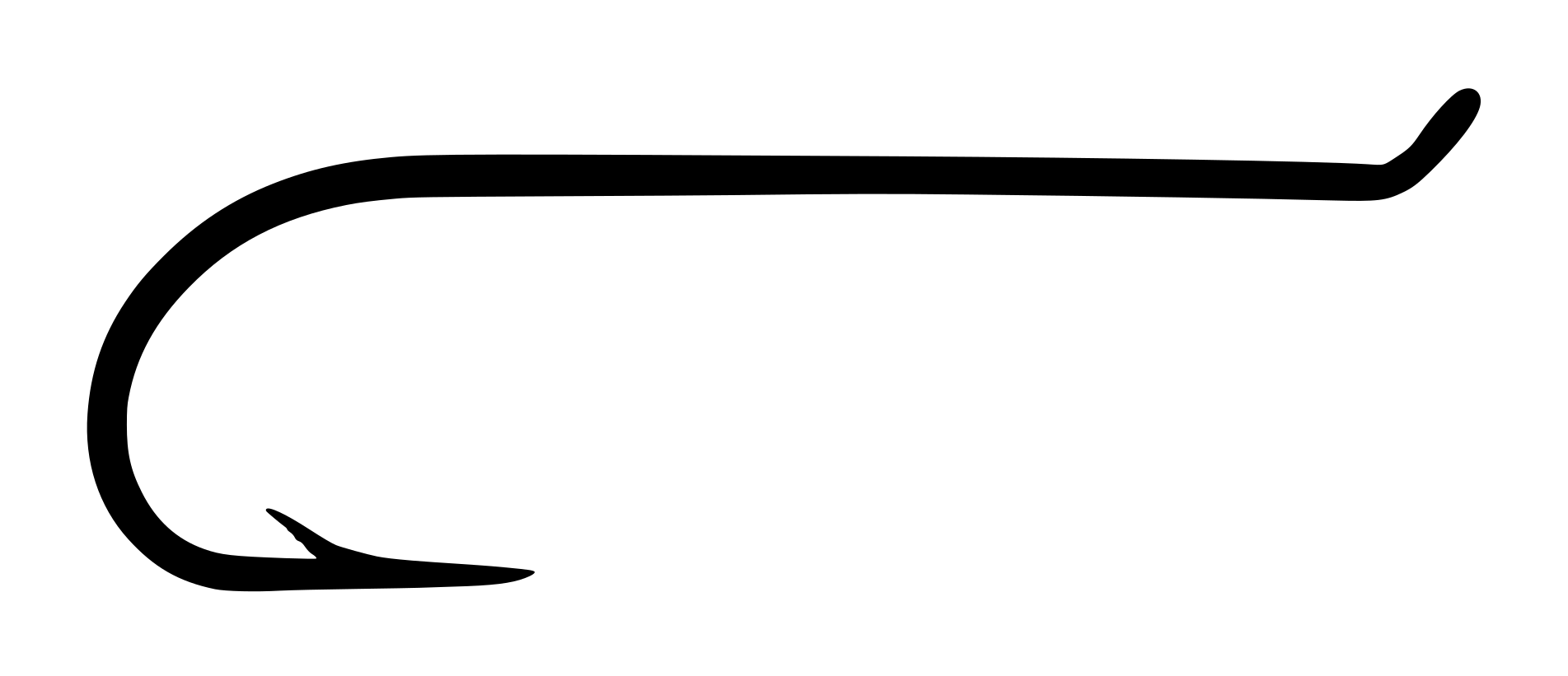
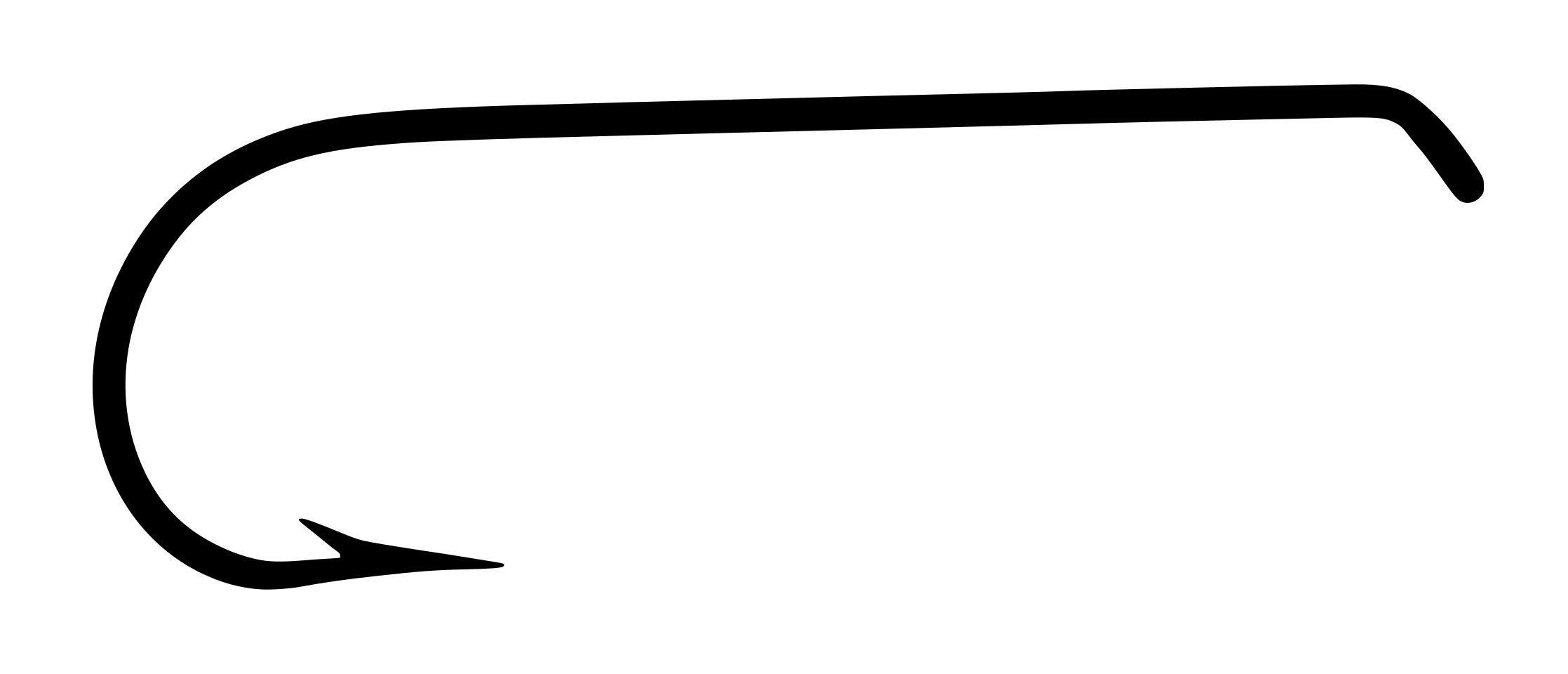
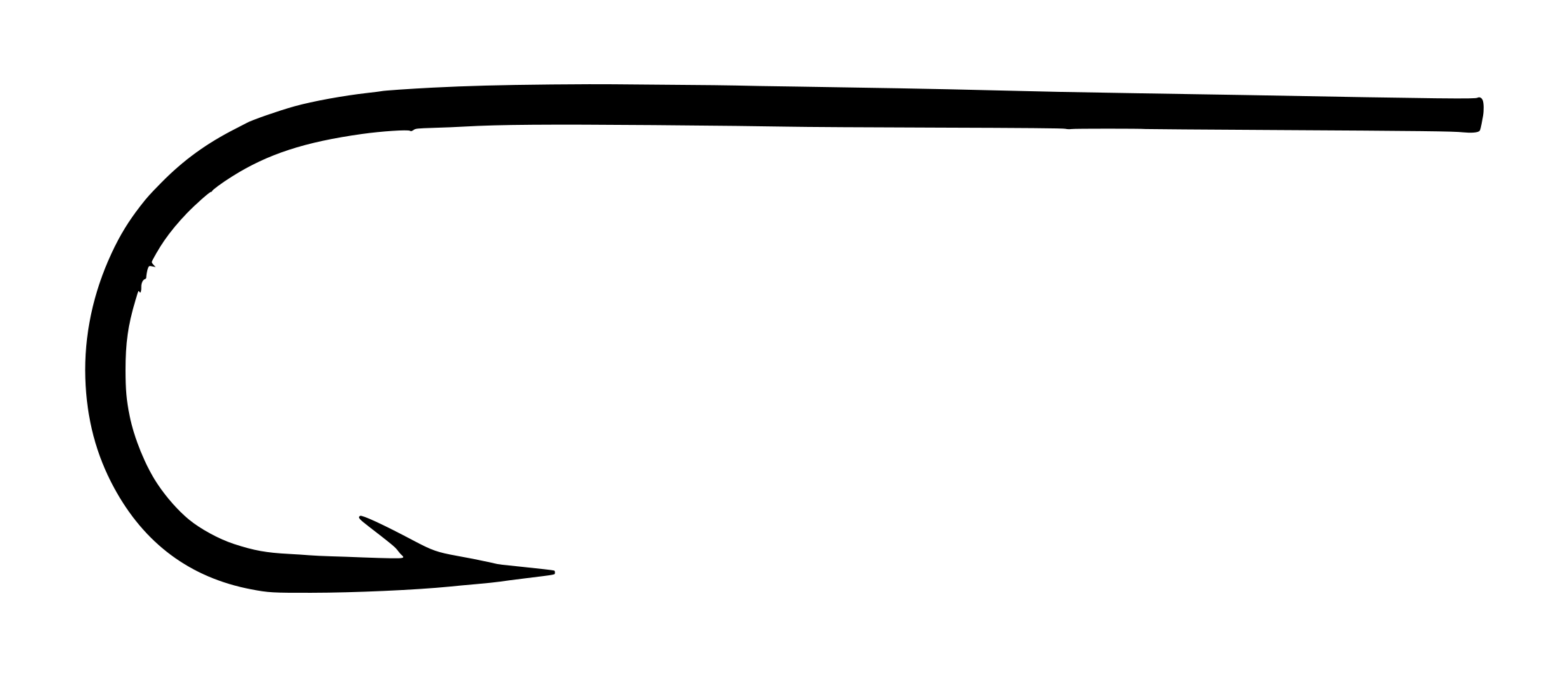
The Mustad 3123 is a mid-20th century wet fly and streamer hook featuring the Limerick bend, a turned-down ball eye, bronzed finish. The semi-angular bend geometry and superior point were designed to penetrate quickly and resist straightening under load, making it a reliable choice for traditional wet fly work before the Limerick bend displaced. The odd-numbered sizing system and pristine Norwegian packaging from this 1950s era specimen reflect manufacturing conventions that had begun to yield to even-number standardization, marking this hook as a transition artifact in hook design history.
Original Mustad packaging for model 3123 Limerick Hooks, marked Superior grade, bronzed finish, ball-eye, size 3, made in Norway.
Photographic record
3 cataloged imagesSelect any record to load it above.
3 images shown
Mustad 3123 Limerick Hook Original PackageOriginal Mustad packaging for model 3123 Limerick Hooks, marked Superior grade, bronzed finish, ball-eye, size 3, made in Norway.Open originalMustad 3123 Limerick Hook Single SpecimenSingle bronzed 3123 Limerick Hook displaying the characteristic limerick bend, straight eye, and tapered point in side profile.Open originalMustad 3123 Limerick Hooks Size ComparisonTwo examples of the 3123 Limerick Hook demonstrating consistency of bend profile, ball-eye, and bronzed finish across specimens.Open original
Technical profile
Turned down Ball | Limerick | 2X long | Superior Point | Bronzed
Eye
Ball Eye, Turned Down
Wire
Standard, Round
Shank
2X Long — Plain
Bend
Limerick, Standard gapClassic Limerick geometry with pronounced angular transition at bend apex, creating the semi-angular profile that distinguished this bend family from round Sproat designs P. Bend depth appears standard for the size range E.
Point
Superior (near-straight inner taper)Standard-length barb positioned close to the point with moderate sweep angle, typical of wet fly construction P
Finish
Bronzed — Confirmed (stated on packaging)Deep bronze coloration with warm golden undertones characteristic of Mustad's mid-century bronzing process P. Finish shows excellent uniformity with no visible corrosion or wear on specimen P.
Hook exhibits bright bronzed finish with no corrosion. Original green paper label shows light age toning but remains fully legible with intact decorative border.
The Limerick bend’s semi-angular geometry creates a sharp transition at the bend apex, designed to penetrate quickly and resist straightening under load. The superior point features a near-straight inner taper that maintains strength while providing adequate penetration for wet fly applications.
The turned-down ball eye construction ensures proper fly positioning while the ball formation prevents the tippet from slipping down the shank. The standard wire gauge provides the optimal balance between strength and fine presentation for traditional wet flies in the size 3 range.
We have measurement for size 1. Know any others? Submit calipered measurements and we'll review and add them. Thank you!
Historical context
mustad
O. Mustad & Son, founded in 1832 in Gjøvik, Norway, became the world’s largest fishhook manufacturer through aggressive expansion and acquisition. The company’s founder, Ole Mustad, transformed a small blacksmith operation into an industrial powerhouse that dominated global hook production by the early 20th century.
The Oslo facility referenced on this packaging served as Mustad’s primary export distribution center during the mid-20th century, handling shipments to markets throughout Europe and North America. Mustad’s success came from combining traditional Norwegian metalworking expertise with modern mass production techniques, allowing them to offer consistent quality at competitive prices across their extensive catalog.
Series History
The 3123 was part of Mustad’s core wet fly hook line that served anglers from the late 19th century through the 1960s. The Limerick bend design originated in Ireland and became the standard for wet flies due to its angular geometry, which traditionalists believed provided superior hooking and holding power compared to round bends.
This model was gradually phased out as the Sproat bend (featured in hooks like the 3906) gained popularity for its perceived strength advantages. The intermediate size numbering system (including odd numbers like 3, 5, 7) was also simplified in later decades to the even-numbered system still used today. Production of the 3123 likely ended in the 1960s as Mustad modernized their catalog.
Era and Packaging Dating
Green paper label with decorative flower/snowflake border pattern characteristic of Mustad's mid-century export packaging. 'Oslo - Norway' designation before later shift to 'Gjøvik' or simplified 'Norway' marking. No barcode indicates pre-1974 production. Typography and label design consistent with 1950s era.
The Lost Odd Numbers
The size No. 3 represents a fascinating relic of hook sizing history. Modern fly hooks use almost exclusively even numbers (2, 4, 6, 8), but vintage systems included odd numbers to provide finer gradations for specific applications. The intermediate sizes were gradually eliminated as manufacturers standardized their catalogs, making odd-numbered vintage hooks increasingly sought after by collectors.
Design lineage and influence
The Limerick bend traces its origins to Irish hook makers of the 18th century, named after the city of Limerick where the pattern was refined. Mustad adopted this traditional British Isles design for their international catalog, competing directly with Redditch manufacturers like Allcock and Milward who had dominated wet fly hook production.
This design influenced countless wet fly patterns but was eventually superseded by the Sproat bend, which offered similar functionality with improved strength characteristics. Modern wet fly hooks like the Mustad 3906 and Tiemco 3761 represent the evolutionary descendants of hooks like the 3123.
Best matchRelated by Attribute
Computed automatically from catalog data — updated as new hooks are added.
Matches: Bend, Shank, Eye Orient., Point, Finish +3 moreDiffers: Wire: Standard vs Fine (1X Fine); Gap: Standard vs Narrow; Eye: Ball Eye vs Tapered Eye +1 more
Designed primarily for classic wet fly patterns and early streamer designs, particularly effective for trout, sea trout, and salmon fishing in traditional British and European styles. The Limerick bend’s geometry made it ideal for patterns like the March Brown, Greenwell’s Glory, and Partridge and Orange that required reliable hooking in moving water I.
Secondary Applications
Large soft hackles, traditional salmon flies, vintage-style streamers
Classic Fly Patterns
March Brown, Greenwell's Glory, Partridge and Orange, Wickham's Fancy, Royal Coachman wet
Modern Equivalents
Hook
Match Quality
Notes
Mustad 3906 Size 2
Good
Similar application but Sproat bend instead of Limerick
Tiemco 3761 Size 2
Moderate
Comparable wet fly application, different bend geometry and wire gauge
Collector notes
Moderate collectability driven by odd-numbered sizing rarity and Limerick bend obsolescence, but limited by Mustad's large production volumes.
Reference value
$15 – $35 USD estimate
Packaging condition
Very Good — light wear, fully legibleRecorded specimen
Packaging format
MUS-GRN-01Catalog code
Positive factors include the historically significant Limerick bend design, the rare intermediate size numbering, and the excellent condition of both hook and original packaging. The 1950s Oslo labeling represents a specific and desirable era in Mustad collecting.
Limiting factors include Mustad’s massive production volumes and the survival of numerous examples. While uncommon today, the 3123 was widely distributed during its production run, preventing it from achieving true rarity status among serious collectors.
Packaging
Green paper label with decorative flower/snowflake border pattern. Text includes 'O. MUSTAD & SON Manufacturers Oslo - Norway', 'Qual. 3123', 'Superior Mustad-Limerick Hooks', '100 No. 3', 'T. d. ball-eye Bronzed', 'Made in Norway'. Mounted on cream cardboard backing. Typography suggests letterpress printing method typical of 1950s production.
Market Value Notes
Values reflect excellent packaging condition and intermediate size rarity. Loose hooks command $8-15, while mint packaging adds significant premium. Specialized wet fly collectors pay top dollar for complete original cards.
Store in a cool, dry environment to preserve the bronzed finish and prevent corrosion. The original green paper label is particularly susceptible to fading and should be kept away from direct light. Consider archival storage sleeves for the cardboard backing to prevent further aging.
The bronzed finish may develop attractive patina over time, which many collectors consider desirable. Avoid cleaning with abrasives that could damage the original finish. If hooks must be handled, use tweezers to prevent oils from fingers affecting the bronze coating.
Size Note
Intermediate Size System
The No. 3 size represents Mustad’s historical intermediate sizing system that included odd numbers between the standard even-numbered progressions. This finer gradation allowed anglers to match hook size more precisely to specific fly patterns and fishing conditions.
Modern equivalent sizing places this hook between current size 2 and size 4, with the gap width and overall proportions suggesting closer correspondence to a modern size 2. The elimination of odd-numbered sizes simplified manufacturing but reduced the precision available to discriminating fly tiers.
Primary Source
Label Typography Analysis
Source: Original Mustad packaging label, c. 1950s
The green label demonstrates classic 1950s industrial typography with sans-serif fonts and decorative border elements. The ‘Oslo – Norway’ designation is particularly significant as it predates Mustad’s later emphasis on ‘Gjøvik’ as their primary manufacturing location identifier.
The ‘Qual. 3123’ marking represents Mustad’s quality designation system, while ‘Superior’ refers specifically to the point geometry rather than a grade classification. The letterpress printing method and paper stock quality indicate this was premium export packaging rather than domestic Norwegian market materials.
Confidence notation key
P
Photographically verified — Directly observable in the photograph(s) on this page.
V
Verified by documentation — Confirmed by manufacturer catalog, spec sheet, or published reference.
I
Inferred — A logical deduction from observable or documented evidence, not directly stated.
E
Estimated — An approximation based on visual comparison, proportional analysis, or limited data.
S
Speculative — A reasoned hypothesis that cannot be confirmed from available evidence.
Claims with no notation are confirmed by multiple independent sources. All photographs on garrenwood.com are taken on a measurement grid where each square equals 1/10 inch (0.1″ / 2.54 mm).