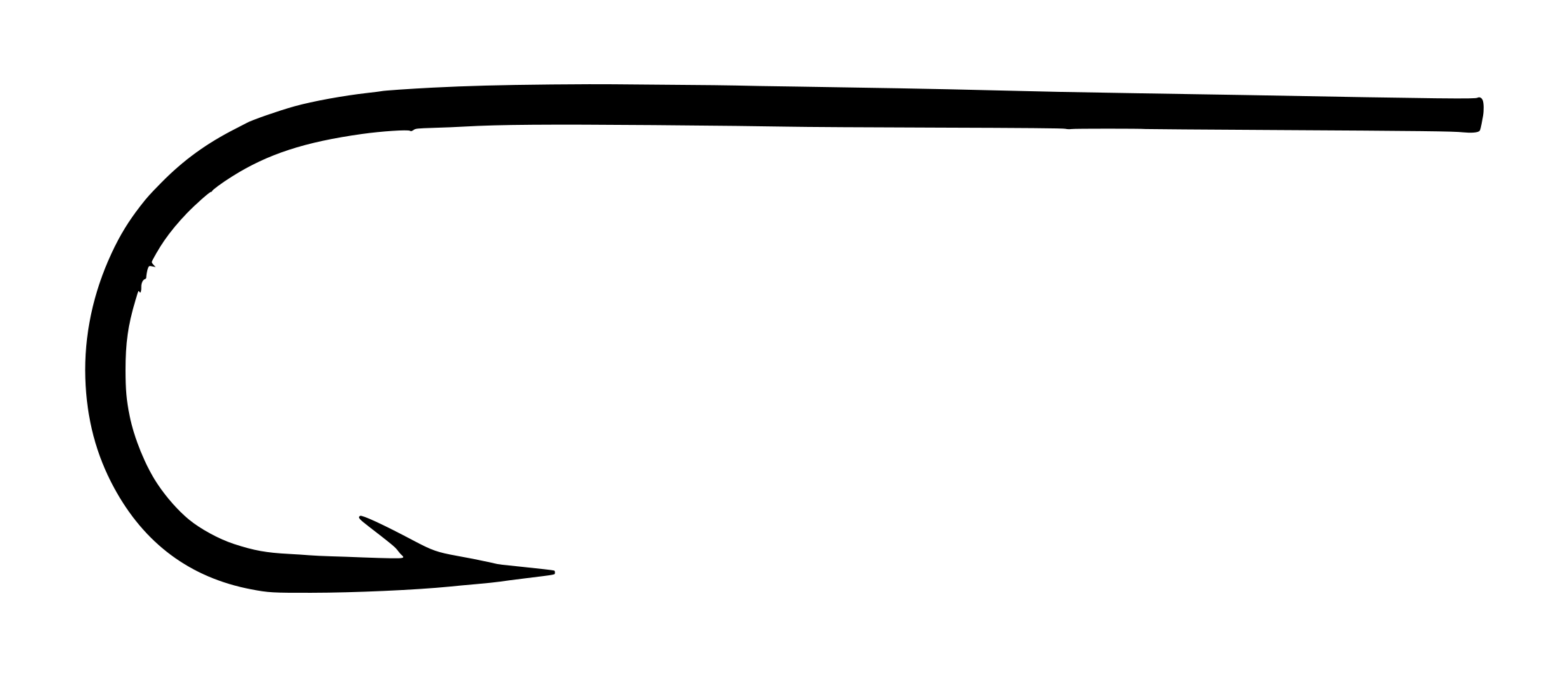
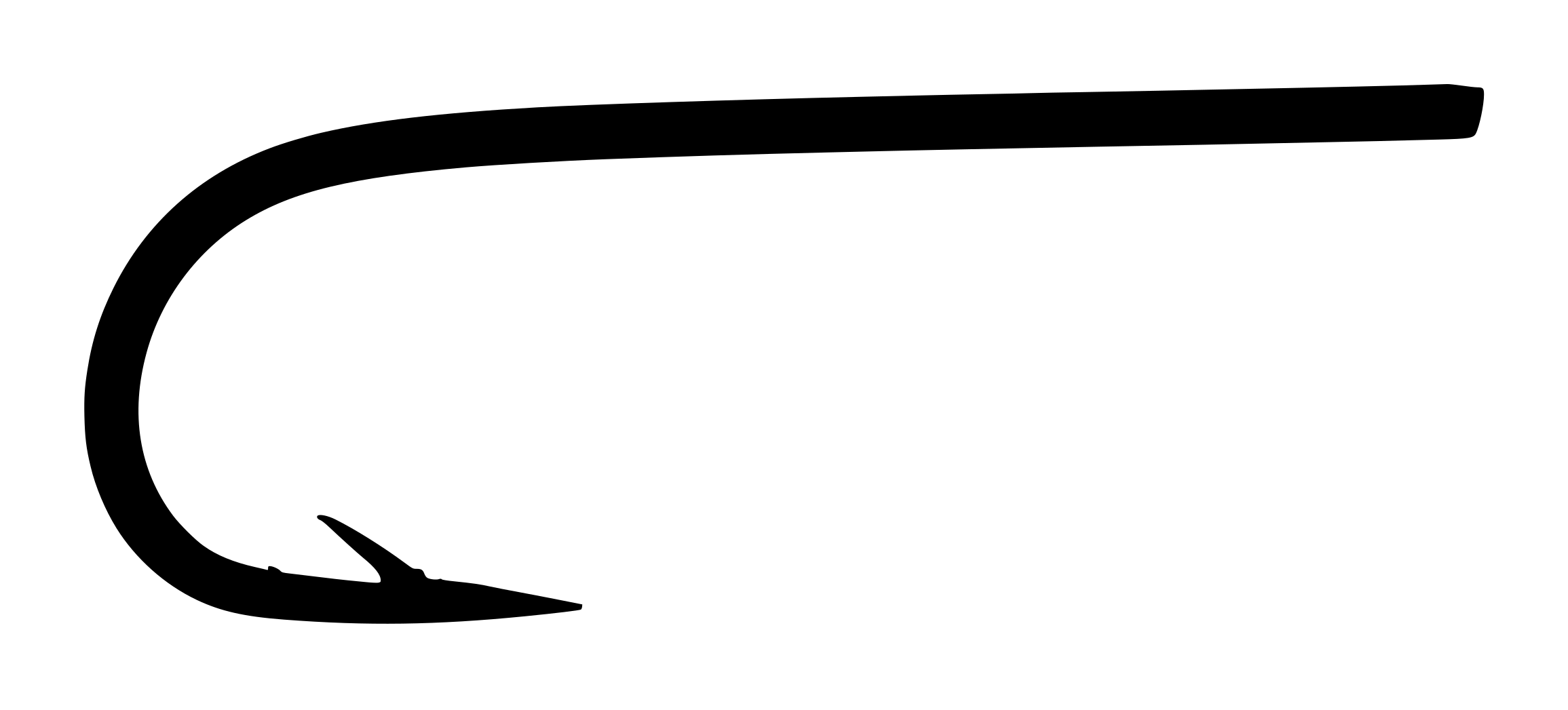
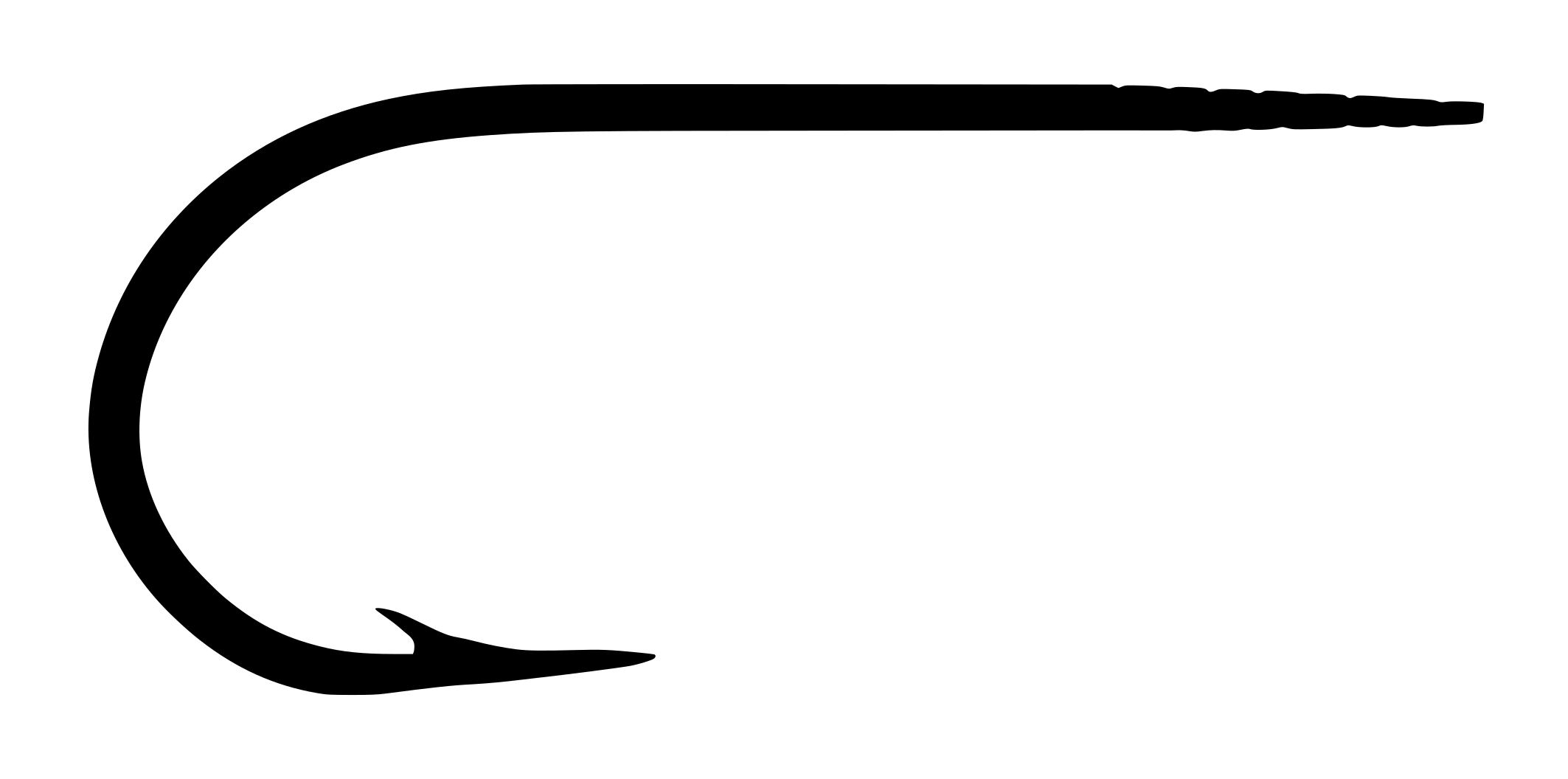
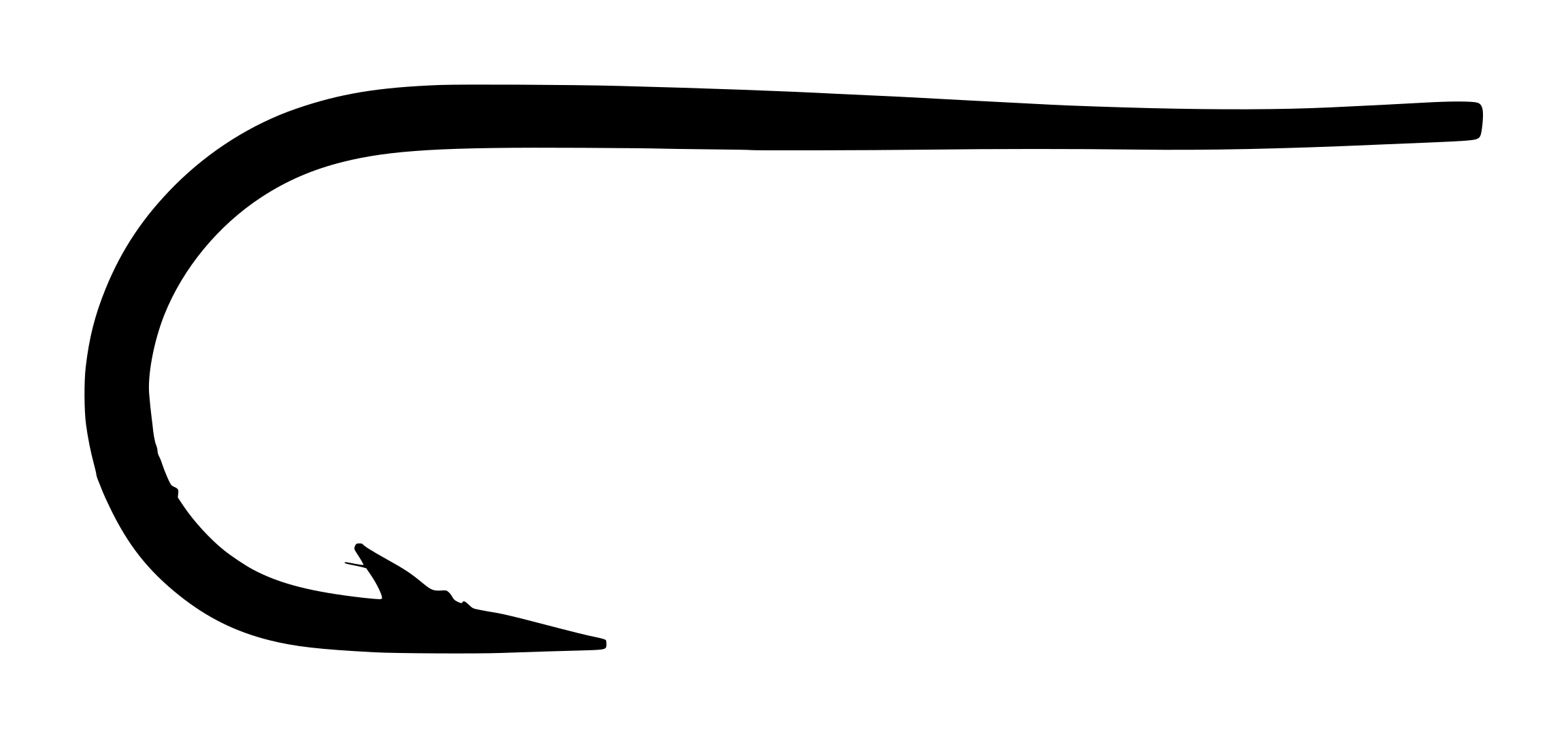
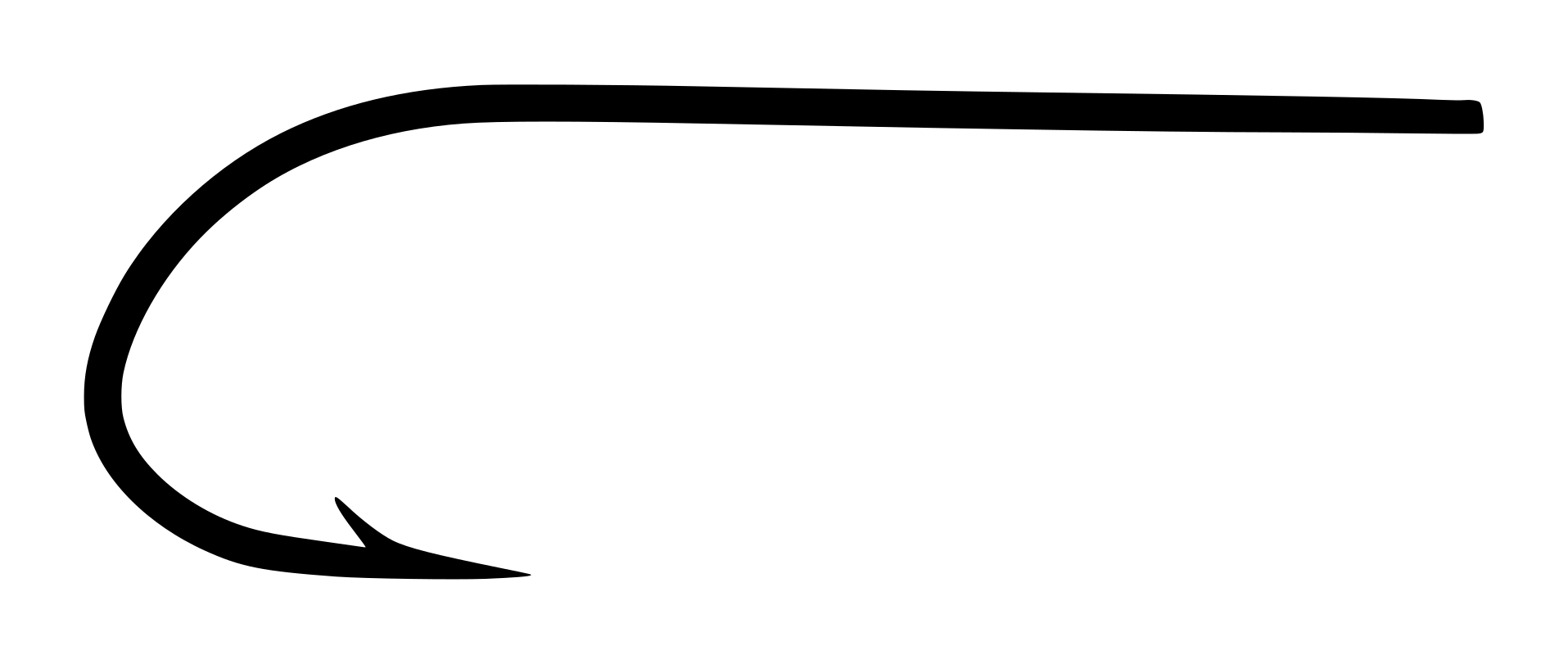
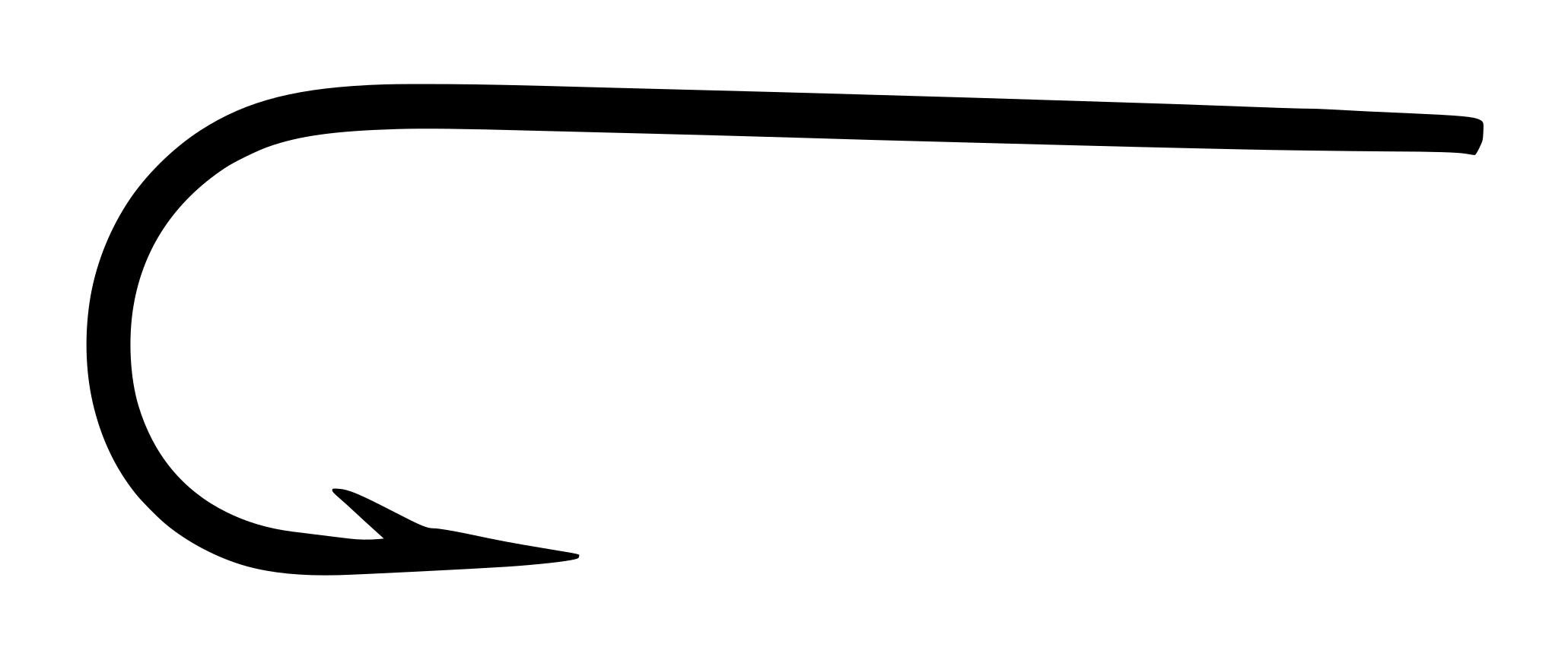
This is a Redditch-era Partridge Fine Wire Round Taper trout hook, size 12, with a distinctive tapered blind eye designed for gut-loop attachment on classic dressed patterns. The specimen shown in original hand-stamped envelope packaging dates to the 1920s–1950s production era, as evidenced by the pre-barcode envelope, purple hand-stamped labeling style, and aged paper stock. The fine round wire (approximately 0.017–0.020 inch) and moderate shank make it suitable for small dry flies and wet flies on delicate leaders.
The tapered blind eye is a specialist construction rarely documented in modern catalogs — the shank tapers smoothly to a rounded point with no flattening, allowing the tyer to whip a loop directly around the tapered section. This contrasts sharply with the more common flatted blind eye (spade end) seen on heavier Redditch salmon irons. Among collectors, tapered blind-eye trout hooks are uncommon and modestly desirable, particularly when housed in original Redditch envelope packaging. The lack of a specific model code suggests this was a standard trade pattern rather than a named designer creation, which limits prestige but adds authenticity as a working hook of the era.
Profile view of a Partridge Fine Wire Round Taper hook, size 12, showing the tapered blind eye and smooth round bend geometry on measurement grid.
Photographic record
13 cataloged imagesSelect any record to load it above.
8 images shown
Partridge Fine Wire Round Taper Size 12 ProfileProfile view of a Partridge Fine Wire Round Taper hook, size 12, showing the tapered blind eye and smooth round bend geometry on measurement grid.Open originalPartridge Fine Wire Round Taper Size 12 PairTwo Partridge Fine Wire Round Taper hooks, size 12, positioned side-by-side on measurement grid to show consistency and relative scale.Open originalPartridge Fine Wire Round Taper Size 12 Envelope BackBack of the original hand-stamped envelope for Partridge Fine Wire Round Taper Size 12, showing size marker and descriptive labeling in purple ink.Open originalPartridge Fine Wire Round Taper Size 5 EnvelopeOriginal hand-stamped envelope for Partridge Fine Wire Round Taper Size 5, with specimen hook shown for scale.Open originalPartridge Fine Wire Round Taper Size 7 EnvelopeOriginal hand-stamped envelope for size 7, demonstrating the consistent labeling format across the Fine Wire Round Taper series size range.Open originalPartridge Fine Wire Round Taper Size 8 EnvelopeHand-stamped envelope for size 8, with specimen hook shown to demonstrate the hook's appearance in this larger size.Open originalPartridge Fine Wire Round Taper Size 5 Point DetailMacro detail of the point and barb on a size 5 specimen, showing the superior point geometry (nearly straight inner taper) and fine, well-set barb.Open originalPartridge Fine Wire Round Taper Size 7 Point DetailMacro view of the size 7 hook point, showing superior point construction and fine barb placement characteristic of Redditch trout-fly design.Open originalPartridge-Fine-Wire-Round-Taper-Hook-Size-5Partridge-Fine-Wire-Round-Taper-Hook-Size-5Open originalPartridge-Fine-Wire-Round-Taper-Hook-Size-7Partridge-Fine-Wire-Round-Taper-Hook-Size-7Open originalPartridge-Fine-Wire-Round-Taper-Hook-Size-8Partridge-Fine-Wire-Round-Taper-Hook-Size-8Open originalPartridge-Fine-Wire-Round-Taper-Package-Size-5Partridge-Fine-Wire-Round-Taper-Package-Size-5Open originalPartridge-Fine-Wire-Round-Taper-Package-Size-7Partridge-Fine-Wire-Round-Taper-Package-Size-7Open original
Technical profile
Eye
Blind — Tapered ShankTapered blind eye — the shank tapers smoothly to a rounded point with no flattening or spade construction. Gut attached via loop tied around the taper. This is a true tapered blind eye design distinct from blind_flatted construction. P
Wire
Fine (1X Fine), Round
Shank
Standard — Plain, Tapered
Bend
Round / Kendal, Standard gap
Point
Superior (near-straight inner taper)
Finish
Bronzed — Inferred (photographically likely)Both specimen hooks examined are bright with no corrosion, retaining full finish. Points are sharp. Hooks are complete and uncreased. Package envelope shows age-appropriate patina and light soiling but is structurally sound.
The fine round wire (approximately 0.017–0.020 inch) is light enough to penetrate small fly materials and delicate fish lips without tearing, yet substantial enough to retain its set in the bend. The round profile (as opposed to forged) is characteristic of drawn-wire production — the wire is drawn to gauge and then bent, rather than forged into shape as a single operation. This allows for consistent diameter along the shank and a smooth, even finish.
The superior point (near-straight inner taper) reflects the practical requirement that gut-loop eyes function with minimal protrusion into the hook gap — any internal barb or hollow-point geometry would interfere with the loop-wrapping process. The rounded bend (characteristic of Kendal-style round bends) provides a gradual transition from shank to point, reducing stress concentration and improving hook-setting geometry on delicate-mouthed small trout.
The tapered blind eye itself is a precision detail: the shank must taper smoothly without a sharp shoulder, allowing whipped binding to seat firmly while the gut loop spreads the load evenly. This contrasts with flatted blind-eye construction (spade end), which creates a sharp shoulder and is intended for use with larger-diameter line and heavier materials, particularly on salmon irons.
This hook belongs to Partridge’s foundational Fine Wire trout line — an uncodified, descriptively named series that predates the modern alphanumeric catalog system (L-series, K-series, CS-series) introduced later. The ‘Fine Wire Round Taper’ designation suggests it was marketed as a general-purpose small trout hook available in multiple sizes (5, 7, 8, 12 documented here), each optimized for delicate leaders and small fly dressings.
The tapered blind-eye construction was specifically intended for gut-loop tying — a method in which a loop of gut or thin monofilament was whipped around the tapered shank, creating a secure attachment point for both traditional full-dressed flies and simpler hackle-wing patterns. As nylon monofilament came into common use in the 1950s–1960s, the need for blind-eye hooks declined, and the Fine Wire Round Taper line was gradually phased out in favor of eyed variants. This design is representative of the Redditch craft era’s emphasis on specialized eye construction for specific tying traditions.
The Gut-Loop Tradition
The Redditch blind-eye tradition — both tapered and flatted variants — emerged from a singular constraint: the availability of gut for fly leaders and tying. Before nylon and synthetic materials became mainstream in the 1950s, fly tyers worked exclusively with natural gut, which had to be tied directly to the hook. A properly tapered blind eye created a secure, smooth attachment point that minimized gut abrasion and allowed the finished fly to move more naturally in water. Once monofilament replaced gut, the blind-eye hook became functionally obsolete, and the ancient craft of blind-eye tying nearly disappeared — though it has experienced a modest revival among classic salmon-fly tiers today.
Design lineage and influence
Best matchRelated by Attribute
Computed automatically from catalog data — updated as new hooks are added.
Matches: Bend, Shank, Gap, Eye, Eye Orient. +5 moreDiffers: Wire: Fine (1X Fine) vs Standard; Point: Superior vs Standard / Spear; Shank Feat.: Plain, Tapered vs Tapered
Matches: Bend, Shank, Gap, Eye, Eye Orient. +4 moreDiffers: Wire: Fine (1X Fine) vs Extra-Fine; Point: Superior vs Standard / Spear; Finish: Bronzed vs Blued +3 more
Matches: Bend, Eye, Eye Orient., Finish, Forging +3 moreDiffers: Shank: Standard vs 1X Long; Wire: Fine (1X Fine) vs Standard; Gap: Standard vs Narrow +5 more
Matches: Bend, Shank, Gap, Eye Orient., Finish +3 moreDiffers: Wire: Fine (1X Fine) vs Extra-Fine; Eye: Blind — Tapered Shank vs Blind — Marked Tapered Shank; Point: Superior vs Hollow Point +4 more
Matches: Bend, Shank, Gap, Eye, Eye Orient. +5 moreDiffers: Wire: Fine (1X Fine) vs Standard; Point: Superior vs Hollow Point; Shank Feat.: Plain, Tapered vs Tapered +3 more
Named patterns specifically associated with this hook. Leave blank if none formally documented. Do not speculate — only include patterns with a confirmed association.
Modern Equivalents
Hook
Match Quality
Notes
Partridge L3A / TDH (looped-eye variant)
Good
Same Redditch maker, similar fine-wire gauge and round bend, but eyed rather than blind. Used for the same small-trout dry-fly and wet-fly work.
Tiemco TMC 100 or TMC 101
Moderate
Modern fine-wire dry-fly hook in similar size range with superior point geometry. Looped eye rather than blind, lacking the historical tapered blind-eye construction.
Collector notes
Rated 4.5/10 — a modestly collectible Redditch-era trout hook with fine wire and an uncommon tapered blind-eye construction. Redditch-era packaging in good condition and the specialist tapered-blind-eye design drive collector interest; however, the generic model code and lack of named designer limit appeal. Size 12 is not rare, but the tapered blind-eye construction in any size is less common than flatted blind-eye variants.
Reference value
$8 – $22 USD estimate
Packaging condition
Good — moderate wear, legibleRecorded specimen
Packaging format
GW-P-CLASSIC-1Catalog code
This hook’s collectability derives from three factors: (1) authentic Redditch-era hand-stamped envelope packaging, (2) the specialist tapered blind-eye construction suitable for gut-loop dressed patterns, and (3) fine-wire gauge appropriate for delicate trout work. The main limiting factor is the absence of a named designer or specific model code — the labeling is purely descriptive (‘Fine Wire Round Taper’), which suggests this was a trade or house-brand variant rather than a signature Partridge pattern.
The tapered blind eye itself is genuinely scarce relative to flatted blind-eye construction, which became the standard in Redditch salmon irons. Collectors of blind-eye trout hooks will seek this variant; however, blind-eye trout hooks are far less collected than blind-eye salmon irons. The finest condition examples — with complete original envelope and both hooks uncreased — command modest premiums. Pricing is driven more by envelope preservation and rarity of the tapered-eye construction than by brand prestige, as Partridge did not prominently advertise this design.
Packaging
Off-white wove paper envelope with hand-stamped purple-ink labeling. Layout: size number (12) stamped upper left, hook description 'FINE WIRE' and 'ROUND TAPER' stamped in two lines center. No barcode visible. No country-of-origin marking visible on envelope face. No price marked. Paper stock is aged cream to off-white, shows light foxing and toning consistent with early-to-mid 20th century. Envelope fold structure and paper quality suggest pre-1960 manufacture. Hand-stamping rather than letterpress or offset printing is typical of small-scale Redditch-era envelope production.
Market Value Notes
Low ($8): Good condition with envelope, both or most hooks present, light wear on package.
High ($22): Excellent/Mint condition, sealed or near-sealed envelope, both hooks bright and uncreased, minimal envelope soiling.
Premium factors: Complete original envelope in good condition; tapered blind-eye construction (scarcer than flatted); Redditch-era hand-stamped labeling; both hooks present and bright.
Platforms: eBay UK, specialist Redditch tackle dealers, UK tackle fairs.
Confidence: E estimated — limited comparable sales data for Redditch hand-stamped envelope blind-eye trout hooks. Estimate is anchored to broader Partridge blind-eye salmon iron sales ($10-35 for carded examples) adjusted downward because trout hooks command less collector premium than salmon irons.
Where to Find
eBay UK (search 'Partridge blind eye trout'), specialist Redditch hook dealers, UK vintage tackle fairs. Rarely listed on US eBay or US dealers due to regional scarcity.
Preservation
Storage and Preservation
Store the envelope in a cool, dry location away from direct sunlight and high humidity. The bronzed finish will develop a patina over time in moist conditions — this is a natural oxidation process and is often considered desirable by collectors of vintage hooks. However, aggressive rust formation can be prevented by maintaining relative humidity below 50% and storing away from corrosive materials (salt, fertilizers, acids).
Keep the original envelope intact — it is a primary value driver and a historical record of the hook’s provenance and era. Do not attempt to clean the paper or ink; aged patina is authentic and contributes to the package’s historical credibility. If you must handle the hooks, use clean hands or cotton gloves to prevent fingerprint oils from accelerating tarnish. Store the complete package flat in an archival folder or in the original envelope tucked inside a larger protective box.
Avoid exposure to vinyl, PVC, or acidic materials, which can cause chemical corrosion. Do not store hooks loose in plastic bags or containers with high-sulfur paper, which accelerates oxidation.
Marking Analysis
Handwriting and Hand-Stamping Analysis
The envelope shows two distinct marking methods. The size number ’12’ and the descriptive text ‘FINE WIRE’ and ‘ROUND TAPER’ are all hand-stamped with a rubber stamp and purple ink, typical of Redditch envelope production practices from the 1920s through 1950s. The stamp impressions are slightly irregular in pressure and alignment, consistent with manual stamping — each envelope was stamped individually by hand rather than printed on a press.
The purple ink color is characteristic of rubber-stamp inks used in this era. No handwritten annotations or price markings are visible on the envelope face examined. The absence of a printed country-of-origin label or barcode further confirms pre-1974 production, as barcodes were not adopted for fishing tackle until the early-to-mid 1970s, and printed country-of-origin markings became standard after the Trade Marks Act 1875 and subsequent consumer labeling regulations.
Size Note
Size Notation and Historical Context
This hook is marked ‘Size 12’ rather than using a modern-standard numerical designation. In the British Redditch tradition, hook sizes were numbered sequentially from the smallest (No. 1) to the largest (No. 20 and above), with no direct correlation to the modern international ISO or Mustad sizing conventions. A Redditch ‘No. 12’ typically corresponds to a modern United States Mustad ‘No. 16’ or slightly smaller — a difference of approximately 4 sizes.
The actual measured overall length of 0.40–0.44 inch (10.2–11.2 mm) and gap of 0.16 inch (4.06 mm) confirm this is indeed a small trout hook, appropriate for size 12–16 dry flies and delicate wet flies on 4X–5X tippets. The Redditch numbering system was regional and not internationally standardized, which means British tackle catalogs from different eras and different makers sometimes varied in their size equivalencies. When purchasing vintage British hooks, cross-referencing the actual dimensions (as provided here) with your preferred modern hook sizing is essential to avoid size confusion.
Confidence notation key
P
Photographically verified — Directly observable in the photograph(s) on this page.
V
Verified by documentation — Confirmed by manufacturer catalog, spec sheet, or published reference.
I
Inferred — A logical deduction from observable or documented evidence, not directly stated.
E
Estimated — An approximation based on visual comparison, proportional analysis, or limited data.
S
Speculative — A reasoned hypothesis that cannot be confirmed from available evidence.
Unnotated claims are the compiler’s synthesis; see Sources. All photographs on garrenwood.com are taken on a measurement grid where each square equals 1/10 inch (0.1″ / 2.54 mm).