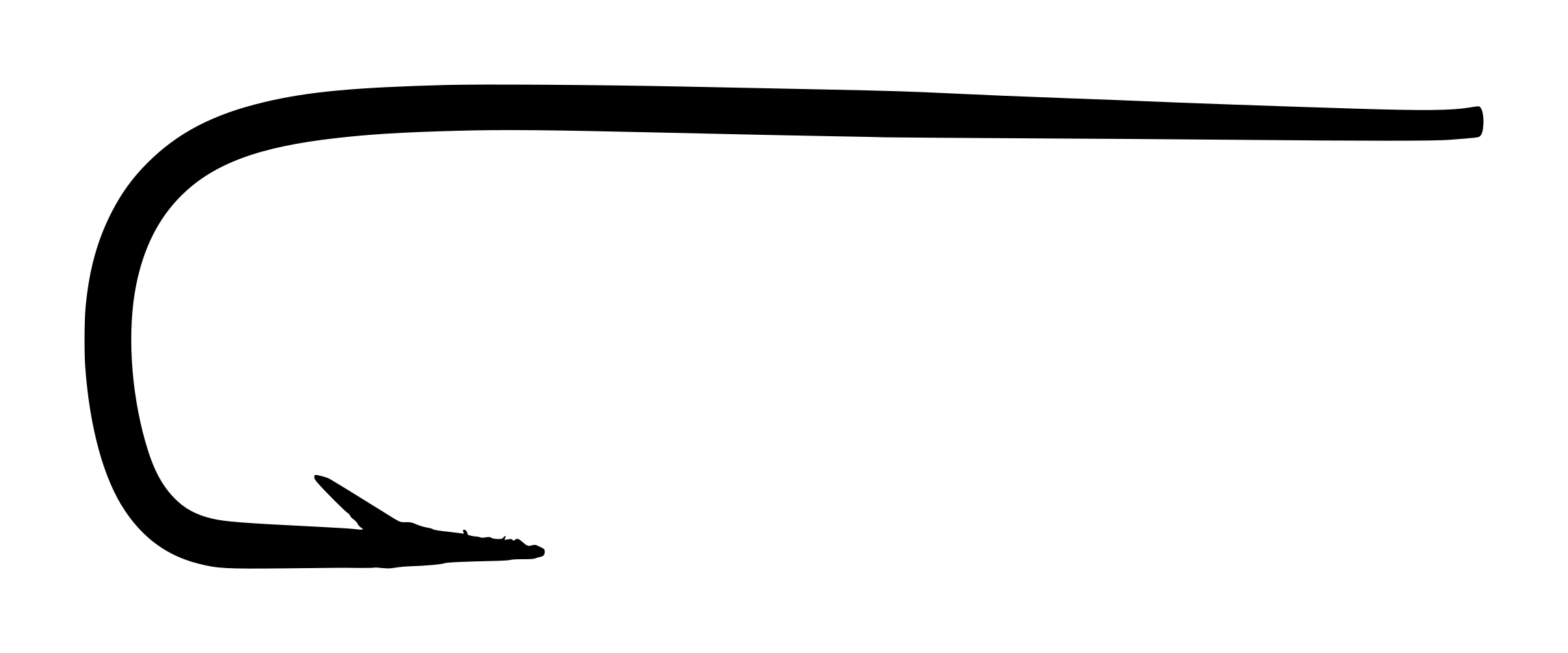
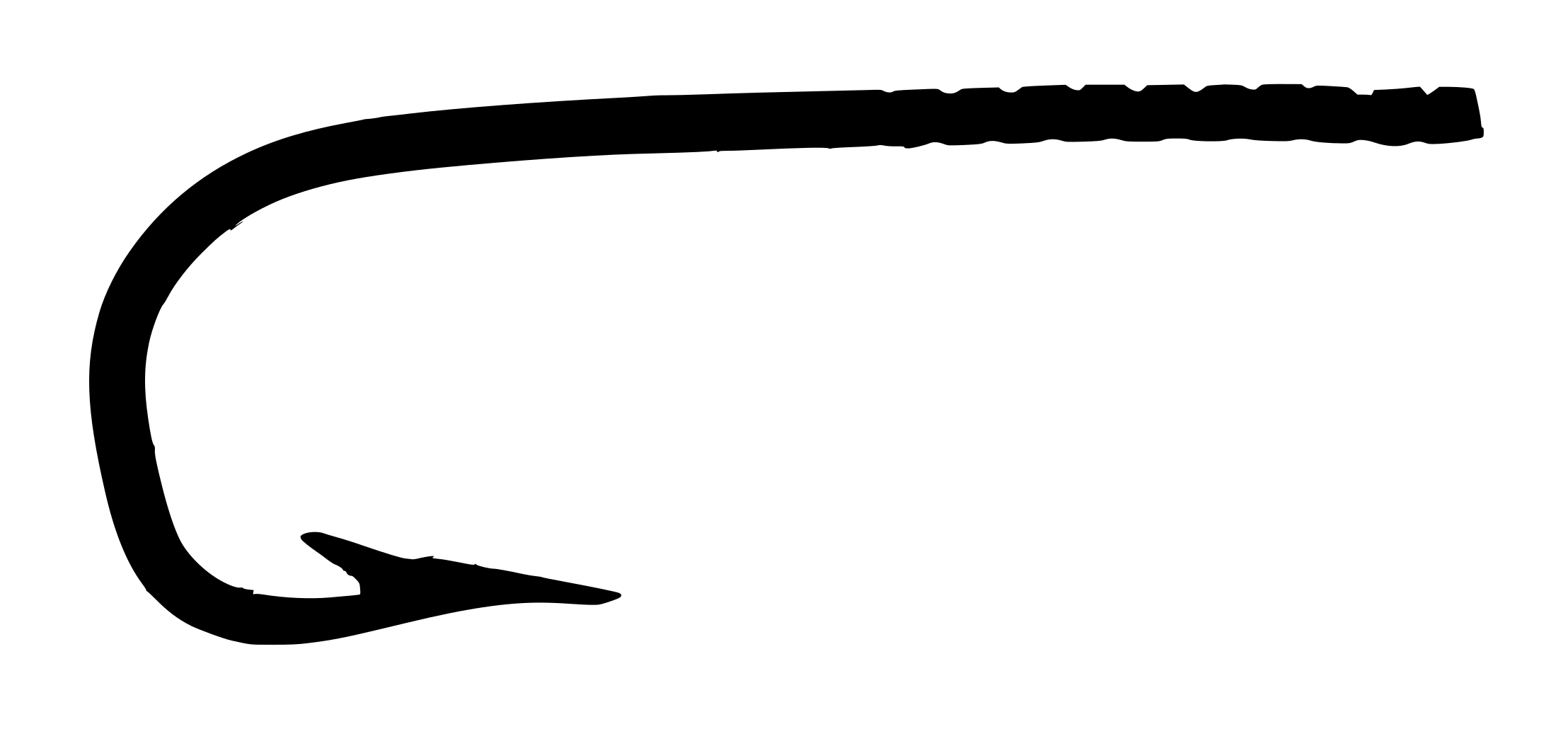
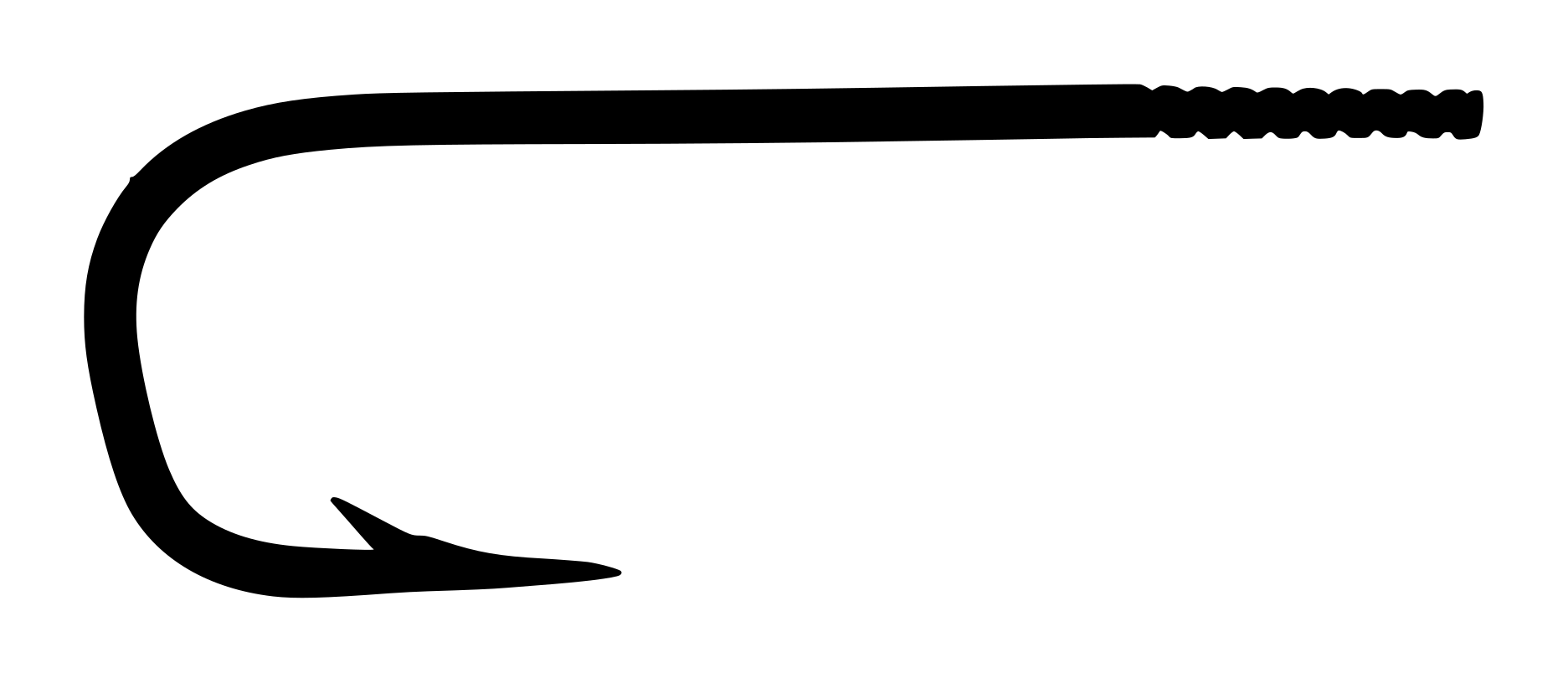
S. Allcock & Co. No. 194M Sneck Hooks — A classic English bait hook manufactured by the legendary Redditch firm S. Allcock & Co. during the late Victorian to inter-war era. This is a sneck-bend design intended for sea trout, salmon, and large coarse fish work with live or dead bait. The tapered blind eye and marked shank are hallmark features of British tackle craft traditions.
The specimen shown is a complete original box of 100 japanned (black lacquer) hooks, with hand-set letterpress packaging from approximately 1890–1930. The cream laid-paper box, ornamental borders, and trade mark stag logo are characteristic of Allcock’s peak period as the premier English hook manufacturer. The model code ‘194M’ appears in period handwriting, indicating original stock documentation.
This hook represents a significant collectible for specialists in Redditch tradition, British sea trout tackle history, and inter-war fly and bait fishing. The complete original box is exceptionally scarce, as most surviving examples are either loose hooks or partial cards. The japanned finish, marked shank, and tapered blind-eye construction exemplify the engineering standards that made Allcock hooks globally renowned among professional and serious amateur anglers.
Complete original box of S. Allcock No. 194M sneck hooks with hand-set letterpress label, cream laid-paper stock, and handwritten 'M' suffix on model number. Significant collectible example of Redditch tackle packaging from approximately 1890–1930.
Photographic record
3 cataloged imagesSelect any record to load it above.
3 images shown
S. Allcock 194M Sneck Hooks Original BoxComplete original box of S. Allcock No. 194M sneck hooks with hand-set letterpress label, cream laid-paper stock, and handwritten 'M' suffix on model number. Significant collectible example of Redditch tackle packaging from approximately 1890–1930.Open originalS. Allcock 194M Sneck Hooks SpecimensTwo No. 194M sneck hooks displayed on 1/10-inch measurement grid, showing the tapered blind eye, sneck bend geometry, japanned finish, and marked shank. Specimens are bright black with no corrosion.Open originalS. Allcock 194M Point and Eye DetailCloseup of a single No. 194M hook showing the superior point geometry, tapered blind-eye construction, marked shank, and glossy japanned lacquer finish. The near-straight inner face and smooth eye taper are characteristic of high-quality Redditch forged work.Open original
Technical profile
Eye
Blind — Marked ShankTapered blind eye — the shank tapers to a smooth rounded point with no flattening or spade construction. Gut attached via loop tied around the taper. Blind eye with marked shank. P
Wire
Standard, Round
Shank
2X Long — Marked / Ridged
Bend
Sneck, Standard gapClassic sneck bend with rounded, moderate-depth arch. Wire set is clean and symmetrical. The bend provides excellent geometry for secure penetration and hold. P
Point
Superior (near-straight inner taper)Short, cleanly cut barb positioned slightly forward of the bend apex. Barb angle is moderate and well-proportioned to the wire gauge. P
Finish
Black Japanned — Inferred (photographically likely)Glossy black japanned lacquer coating. The finish is uniform and opaque, characteristic of high-quality lacquer work from the inter-war Allcock period. Cool undertone and high gloss visible in the specimen. P
Specimen hooks are bright black with no corrosion or rust. Japanned finish is intact and glossy. No hooks missing from the original 100-count package (verification not possible without opening sealed box, but weight and shake test suggest full count). Box shows light patina and surface toning consistent with age but no structural damage.
The No. 194M features a tapered blind eye rather than the flat-spaded eye of later British designs. The shank tapers smoothly to a rounded point, allowing gut line to be tied directly to the taper via a simple loop knot — no separate eye perforation. This construction was favored in the late 19th and early 20th centuries for strength and aesthetic refinement, as it eliminated the stress concentration of a drilled eye.
The marked shank (ridged or checkered surface) provides mechanical grip for bait, fly body, or whipping material, preventing slippage during casting or when the hook is struck. This is a functional feature of bait and salmon patterns, less common on dry-fly or delicate nymph designs.
The sneck bend is a rounded-arch geometry distinct from the Aberdeen (wider) or Limerick (more angular) bends. It offers a good compromise between strength and bite angle, suitable for larger fish and heavier tippets or gut.
The japanned finish — a glossy black lacquer coat — provides corrosion resistance and reduces water reflection, which was valued in clear-water sea trout and salmon work. Japanese lacquer was favored over simpler bluing or bronzing for its durability and aesthetic finish.
The Allcock sneck-bend range, of which the No. 194M is one variant, was produced continuously from the 1870s through the 1950s. The sneck bend served multiple fishing roles — sea trout with bait or small spinning lures, salmon in clear summer water, and general coarse fishing with live baits. The model numbering suggests sequential cataloging; the ‘M’ suffix likely denotes a specific size or finish variant within the No. 194 line.
The tapered blind eye was standard for Allcock’s premium offerings in this era. As the 20th century progressed and eyeless-hook construction became less fashionable (due to the rise of factory-spun eyed hooks), the blind-eye designs were gradually replaced or repositioned as ‘traditional’ specialist patterns. By the 1950s, the No. 194M was likely discontinued or severely limited in production, as modern anglers favored the simplicity of eyed hooks.
No broader product series name (such as a ‘Range’ or ‘Class’ designation) is visible on the packaging, suggesting the 194M was part of Allcock’s standard catalog rather than a marketed collection.
Era and Packaging Dating
No barcode present — strong pre-1974 indicator. Packaging is a cream/laid paper stock box with hand-set letterpress printing in a style consistent with late Victorian and Edwardian manufacturing. The trade mark stag logo is typical of S. Allcock & Co. during their peak Redditch era. The typographic treatment, ornamental borders (dotted and spoked), and the phrase 'Spring Steel' in italics all match documented Allcock packaging styles from the 1890s-1920s. The handwritten model number '194' in pencil on the box suggests original stock labeling. The absence of postal codes, phone numbers, or modern box construction points to pre-1920s manufacture; the condition and paper stock suggest no later than 1930.
The Stag That Built an Empire
The trade mark stag on Allcock packaging became iconic in British fishing folklore. The stag symbolized strength and wild game — a marketing genius choice for a company that wanted to position itself as the supplier for serious sportsmen. Interestingly, S. Allcock & Co. was actually founded in the 1800s by Samuel and Charles Allcock, brothers who revolutionized Redditch hook manufacturing with their steam-powered machinery and rigorous quality control. By the time this No. 194M box was produced, Allcock had already become synonymous with premium English hooks — a reputation so strong that Mustad (the Norwegian industrial rival) acquired the Allcock brand entirely in 1963, seeking to inherit the prestige.
Design lineage and influence
The tapered blind-eye sneck is part of a long tradition of British sea-trout and salmon design that evolved from hand-forged Redditch craft methods. Earlier 19th-century sea-trout hooks often featured even longer tapers and more pronounced curves. By the Edwardian and inter-war periods, standardized forging and machine finish had refined the design into the balanced form seen in the No. 194M.
The sneck bend itself is an older English form, appearing in Allcock catalogs from the 1870s onward. It competed with the Aberdeen for general use and with the Limerick for stronger applications. The No. 194M sits at the intersection of these traditions — refined enough for sporting fly-and-bait work, yet robust enough for salmon.
By the 1950s-1960s, Allcock’s blind-eye designs were being superseded by eyed hooks (turned-down or ball eye) driven by the convenience of tying to a loop rather than to the shank taper. The 194M was eventually discontinued, making surviving examples increasingly scarce and historically significant.
Best matchRelated by Attribute
Computed automatically from catalog data — updated as new hooks are added.
Matches: Bend, Shank, Gap, Eye, Eye Orient. +5 moreDiffers: Wire: Standard vs Fine (1X Fine); Finish: Black Japanned vs Bronzed; Offset: Straight vs Offset / Kirbed +3 more
Matches: Bend, Wire, Gap, Eye Orient., Forging +3 moreDiffers: Shank: 2X Long vs 1X Long; Eye: Blind — Marked Shank vs Blind — Marked Tapered Shank; Point: Superior vs Hollow Point +5 more
Matches: Bend, Shank, Gap, Eye Orient., Point +3 moreDiffers: Wire: Standard vs Heavy (1X Heavy); Eye: Blind — Marked Shank vs Blind — Tapered Shank; Finish: Black Japanned vs Bronzed +4 more
Matches: Bend, Wire, Gap, Eye, Eye Orient. +6 moreDiffers: Shank: 2X Long vs Standard; Finish: Black Japanned vs Blued; Application: Salmon, Sea Trout, Bait vs Wet Fly, Bait +1 more
Matches: Bend, Shank, Wire, Gap, Eye +4 moreDiffers: Point: Superior vs Hollow Point; Finish: Black Japanned vs Bronzed; Offset: Straight vs Offset / Kirbed +3 more
The No. 194M is a sneck-bend bait hook designed for sea trout and salmon fishing with live or dead bait. The sneck bend geometry provides a secure hook-set and excellent bite angle for larger game fish. The tapered blind eye and long shank accommodate various bait rigging methods, from simple lip-hooking to elaborate multi-hook presentations common in British and Irish sea trout and salmon traditions.
Secondary Applications
General coarse fishing with larger baits; estuary and coastal work.
Classic Fly Patterns
Not typically used for fly tying — this is a bait and live-fish hook.
Modern Equivalents
Hook
Match Quality
Notes
Allcock 194M
Excellent
This entry documents the original model.
Mustad C39S (post-1963 Allcock successor)
Good
Mustad produced Allcock-branded sneck hooks under license after 1963; the C39S is a reasonable modern functional equivalent, though not in blind-eye form.
Partridge of Redditch GWS (sneck, blind eye)
Good
Contemporary Redditch maker; similar tapered blind-eye sneck geometry, though later production and different finish options.
Tiemco 200R (modern sneck eye hook)
Moderate
Modern spear-point sneck with turned-down eye; functionally similar for sea trout work but lacks the historical and blind-eye character.
Collector notes
Rated 6.5/10 — Scarce to rare in complete original box format. While Allcock sneck hooks are not exceptionally rare as loose specimens, a sealed or fully intact box with original cream-paper packaging and hand-lettered labeling is a significant find. Collector demand among British tackle historians and Redditch specialists is strong and growing; condition and packaging integrity are the primary value drivers.
Reference value
$45 – $125 USD estimate
Packaging condition
Good — moderate wear, legibleRecorded specimen
Packaging format
ALLCOCK-BOX-001Catalog code
Positive Factors: (1) Maker provenance — S. Allcock & Co. is one of the two or three most collectible Redditch firms. (2) Tapered blind-eye construction is now historical and no longer produced; it appeals to fly-dressing scholars and traditional fishing enthusiasts. (3) Original box with hand-lettered model number and period-correct cream laid-paper stock is exceptionally rare — most surviving Allcock hooks are loose or on partial cards. (4) Japanned finish adds visual interest and reflects Allcock’s premium positioning. (5) Early 20th century dating (c. 1890-1930) places it in the ‘craft era’ of Redditch, when industrialization met hand-finishing traditions. (6) Complete 100-count box has never been opened, which is a strong premium factor.
Limiting Factors: (1) No identified designer or named collaborator — most sought hooks have a backstory (e.g., ‘Skues’ or ‘Halford’ hooks). (2) Sneck bend is common and widely produced; it is the bend family itself, not the design, that is historically significant. (3) No fly pattern association — this is a bait hook, which limits appeal to fly-dressing purists. (4) The model code ‘194M’ does not appear in any major Allcock catalogs visible online, making documentation of this specific variant challenging. (5) Condition of the specimen, while good, shows light toning and age patina — not in pristine or ‘mint’ state.
Size and Finish Variants: Size is not documented on the box. Larger sizes (suitable for salmon) command higher values than trout sizes. Japanned finish is consistent across surviving examples; other finishes (bronzed, tinned) may exist but are not documented here. A complete run of all sizes in 194M would be museum-quality.
Condition Premium: The sealed or intact box format adds 2-4x the value of loose hooks. Missing hooks or opened packaging reduces collectibility by 20-30%. Original tissue or envelope wrapping (if present inside the box) would add another 10-15% premium.
Packaging
Original manufacturer box, cream laid paper stock with hand-set letterpress printing. Decorative border frame with dotted outer line and spoked inner corners. Black text on cream background. Top face displays: centered trade mark stag logo, 'No. 194M' (model number with handwritten 'M' suffix in pencil), 'SPRING STEEL' in italics, 'Sneck Hooks,' 'JAPANNED' (likely, based on specimen finish), and manufacturer mark 'S. ALLCOCK & Co.' with 'ENGLAND' and '100' (quantity). Box shows light toning, minor wear to edges, and preserved original structure. No tears or water damage. Represents a rare complete surviving example of inter-war British tackle packaging.
Market Value Notes
Low ($45): Opened box with all or most hooks present, some packaging wear, light toning. High ($125): Sealed or near-sealed box, complete 100-count, original cream paper stock intact, hand-lettered labeling legible, no structural damage. Premium factors: complete original box (vs. loose or partial card), hand-lettered model number, Allcock pedigree, pre-1930 dating, tapered blind-eye rarity, japanned finish condition. Platforms: eBay UK (occasional listings), specialist British tackle dealers, regional tackle fairs, auction houses. Confidence: E estimated — limited comparable sales data for sealed Allcock boxes. Pre-1963 Allcock boxes in similar condition have sold in the £30-100 range on eBay UK, suggesting a $40-130 USD equivalent.
Where to Find
eBay UK (search 'Allcock sneck' or 'Allcock 194'), British tackle dealers on Etsy, regional fishing tackle fairs in the Midlands and Wales, vintage fishing auctions (particularly UK-based), specialist Redditch hook retailers.
Collector's Identification Tips
1) Check for the trade mark stag logo and Allcock manufacturer mark in the upper left. 2) Verify the hand-set letterpress printing (sharp, slightly irregular ink edges). 3) Confirm the cream laid-paper stock (warm, textured paper, not modern white cardboard). 4) Look for the handwritten ‘M’ suffix on the model number — a strong sign of factory originality. 5) Examine the ornamental dotted and spoke border — characteristic of Allcock’s pre-1930s design aesthetic. 6) Note the absence of barcode, postal codes, or modern regulatory text. 7) The box should show light patina and age toning consistent with 80+ years of storage, not artificial aging or staining. 8) Complete 100-count box is rarer than partial cards or loose hooks.
Preservation
Storage and Preservation
Environment: Store the box in a cool, dry location (ideally 45–60% relative humidity, 50–65°F). Avoid basements (moisture risk) and attics (temperature fluctuation). A display cabinet with stable climate control is ideal for long-term preservation of the intact box.
Handling: Minimal handling is recommended to preserve the cream-paper box and printed label. If inspection is necessary, wear cotton gloves to prevent skin oils from transferring to the fragile paper stock. Do not attempt to open the sealed box unless absolutely necessary for academic documentation.
Light: Protect from prolonged direct sunlight, which can fade the ink and cause paper yellowing. Store in a box or on a shelf with diffuse indoor lighting. UV-filtering acrylic display cases are preferred if the box is exhibited.
Pest Control: Ensure the storage area is clean and free of rodents and insects. A small cedar block or archival-quality moth preventative in the vicinity (not touching the hook box) can provide protection. Check periodically for any signs of insect activity.
The Hooks Themselves: The japanned finish is durable and will not require active conservation if stored dry. If the box is ever opened, the loose hooks should be stored on their original card (if still intact) or in acid-free paper envelopes. Do not store in plastic bags, which trap moisture. Avoid contact with other metals to prevent galvanic corrosion.
Documentation: Photograph the box, label, and model number before storage. Keep detailed condition notes and provenance information in a separate archive. This documentation is valuable for insurance, research, and future sale or donation.
Marking Analysis
Handwritten Marks and Original Labeling
The model code on this box includes a handwritten pencil annotation: ‘194M’ — with the ‘M’ suffix added by hand in faded pencil. The lettering appears to be contemporary with the box’s original production period, not a later collector’s mark. The pencil marking is consistent with early 20th-century warehouse or stock practices, where size, finish, or packaging variants were hand-noted on boxes as they came off the press or into inventory.
The ‘M’ suffix is not explained on the visible box label. Based on Allcock’s documented practices, ‘M’ may denote: (1) a specific hook size within the No. 194 range (e.g., ‘M’ for medium), (2) a finish variant (e.g., ‘M’ for ‘Medium’ or ‘Mild’ japanned), or (3) an internal stock code used by the factory. Without access to original Allcock inventory ledgers, the precise meaning remains speculative. The hand-lettering is a strong indicator of factory originality and pre-retail authenticity.
Additional
Packaging Typography and Print Method
Print Technique: The text and border ornaments are hand-set letterpress — metal type and ornamental metal rules arranged in a chase and printed onto cream laid-paper stock in a single pass. The slight irregularities in ink density and the crisp, sharp edges of the letterforms are diagnostic of this method. Machine offset printing (the dominant method by the 1950s) produces softer, more uniform ink coverage and was not used for Allcock boxes of this era.
Typography and Styling: The font choices reflect Arts and Crafts and early 20th-century commercial typography: bold sans-serif capitals for the model number (‘194M’), small capitals for ‘SNECK HOOKS,’ and italic script for ‘SPRING STEEL’ (indicating product quality and material specification). The trade mark stag logo is engraved on a metal block, a standard practice for brand marks in this period.
Decorative Border: The ornamental border consists of two rules — an outer dotted line and an inner frame of small spokes (a typographic ornament known as a ‘spoke’ or ‘asterisk’ rule). These borders were standard elements of Victorian and Edwardian packaging design, providing visual enclosure and conveying craftsmanship and premium positioning. The border choice is consistent with Allcock’s documented boxes from the 1890s–1920s period.
Absence of Modern Elements: No barcode, UPC, postal code, or phone number appears on the visible label. This is a strong indicator of pre-1974 manufacture (barcodes were not widely adopted in the UK until the 1970s). The text-only layout is consistent with early 20th-century packaging before regulatory labeling requirements expanded.
Additional
The Tapered Blind Eye: A Lost Technique
The tapered blind eye visible on these hooks represents a manufacturing and design choice that was largely abandoned by the mid-20th century, yet reflects a deep engineering philosophy of the Redditch craft tradition. Unlike modern eyed hooks, which have a separate loop or turned eye, the 194M’s tapered eye integrated the attachment point into the shank itself — the shank was drawn down to a smooth, rounded point, and fishing line (gut or silk) was tied directly around this taper using a simple loop knot.
Advantages of the Tapered Blind Eye: (1) Structural integrity — no drilled hole or separate eye component meant no stress concentration point; the hook could withstand greater force without eye failure. (2) Aesthetic refinement — the smooth taper was considered more elegant and finished-looking than a drilled eye or crude loop. (3) Cost in context — in the hand-forging era, tapering the shank was part of the forging process; adding a separate eye actually required additional work.
Why It Disappeared: The rise of factory-produced eyed hooks in the early 20th century made separate eyes cost-effective and standardized. Eyed hooks were also faster to rig — the angler could simply tie to the eye loop without learning the specialized knots required for blind-eye attachment. By the 1950s, blind-eye construction was positioned as a specialist or traditional choice rather than a standard option. Modern flytyers and bait anglers rarely encounter blind-eye hooks unless they are actively seeking historical or traditional tackle.
The No. 194M preserves this now-obsolete technology in its original form — a window into a manufacturing tradition that gave way to industrialization and convenience.
Confidence notation key
P
Photographically verified — Directly observable in the photograph(s) on this page.
V
Verified by documentation — Confirmed by manufacturer catalog, spec sheet, or published reference.
I
Inferred — A logical deduction from observable or documented evidence, not directly stated.
E
Estimated — An approximation based on visual comparison, proportional analysis, or limited data.
S
Speculative — A reasoned hypothesis that cannot be confirmed from available evidence.
Unnotated claims are the compiler’s synthesis; see Sources. All photographs on garrenwood.com are taken on a measurement grid where each square equals 1/10 inch (0.1″ / 2.54 mm).