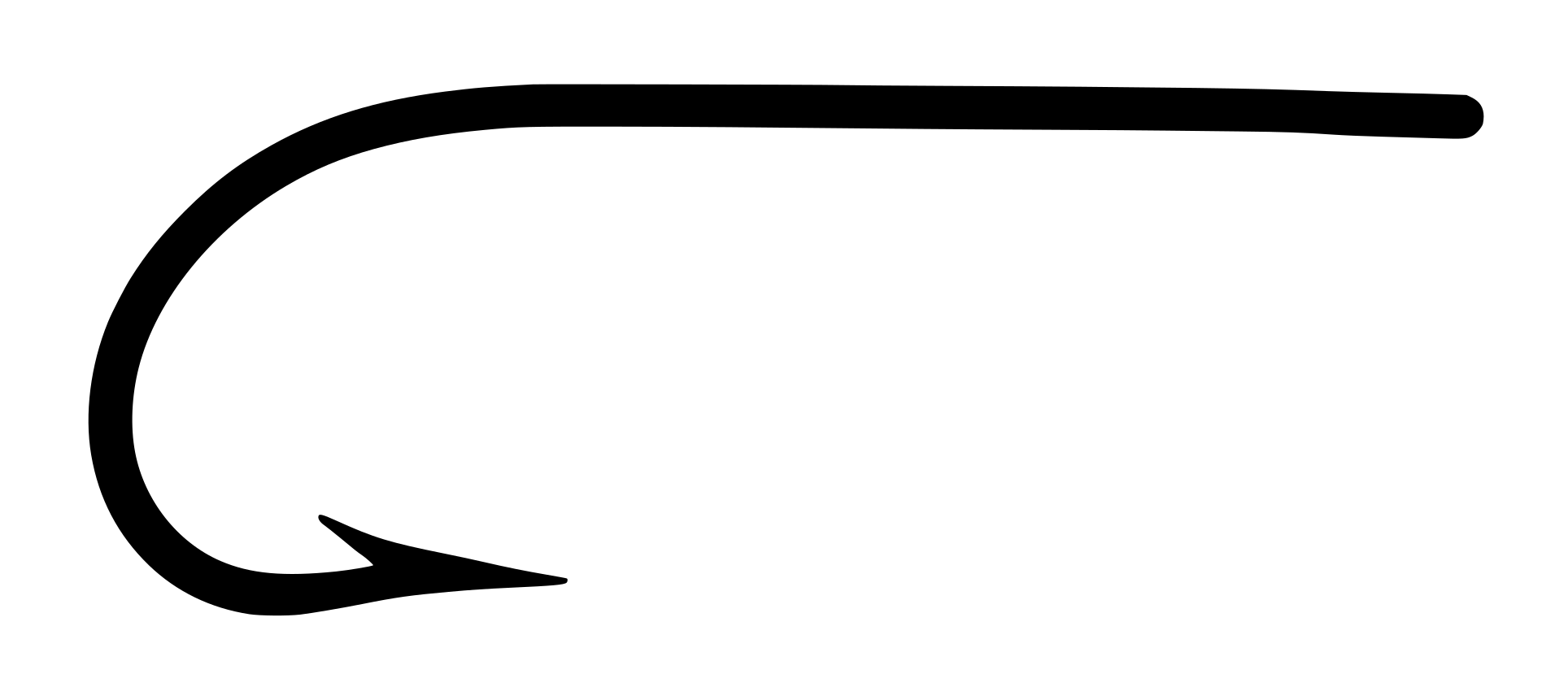
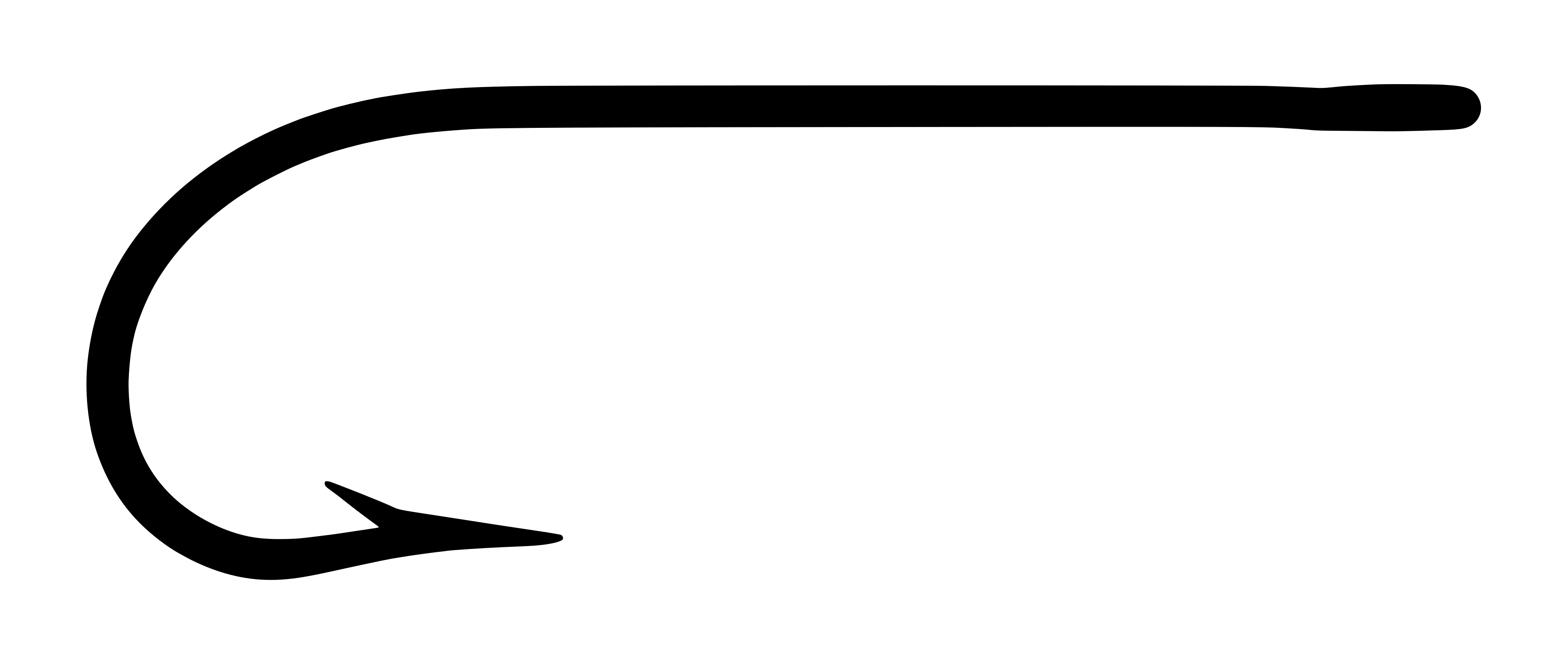
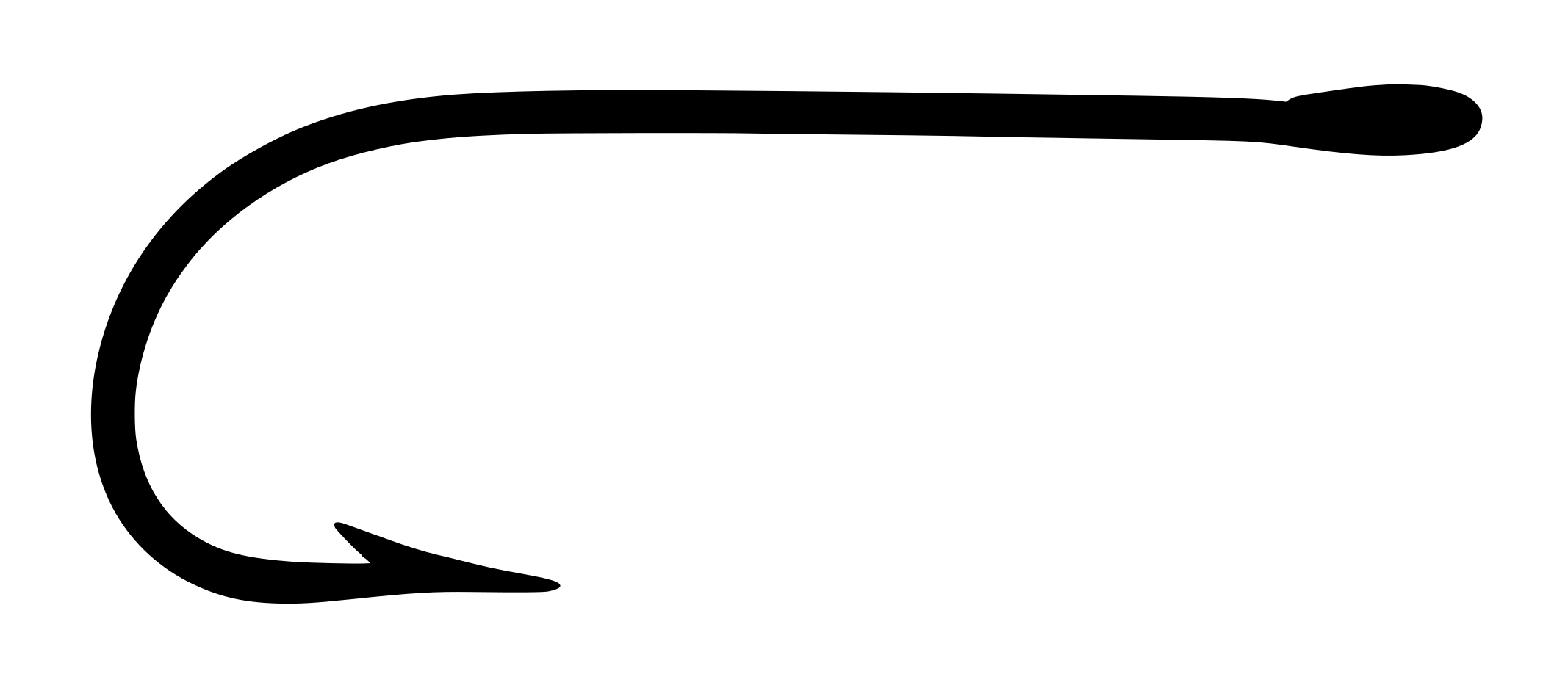
The S. Allcock & Co. Kendal Sneck No. 195 is a classic British sea trout and salmon hook from the Redditch manufacturing tradition, dating to the early 20th century. This is a standard-shank, hollow-point design with a distinctive blind eye, manufactured using traditional wire-forming techniques without forge work.
The hook’s name—’Kendal Sneck’—references both its origin in Kendal, Cumberland, and its characteristic sneck (sharp angular) bend geometry. The ‘Rustproof Hooks’ claim on the original green packaging reflects Allcock’s emphasis on durability and finish quality. The tapered shank and bronzed finish are consistent with period standards for migratory fish work.
This specimen is notable for its well-preserved original packaging—a bright green letterpress card with handwritten hook count—and represents the pre-barcode era of British hook manufacturing. The Kendal Sneck series remained in production for decades, making this model a significant reference point for understanding early-to-mid 20th century Redditch craft manufacturing.
S Allcock – 195 Hook Point
Photographic record
4 cataloged imagesSelect any record to load it above.
Blind Eye | Sneck Bend | Standard Shank | Standard Wire | Hollow Point | Bronzed Finish
Eye
Blind — Marked Tapered Shank
Wire
Standard, Round
Shank
1X Long — Marked / Ridged, Tapered
Bend
Sneck, Standard gapSharp angular sneck bend characteristic of the pattern. The bend forms a distinct corner at the shank-bend junction rather than a rounded transition. Bend depth approximately 0.54" measured from shank centerline. No offset (true sneck) P.
Point
Hollow Point (concave inner face)Barb is short and closely cut, typical of period construction P. Barb sits approximately 0.12"-0.14" from the hook tip. Barb angle is approximately 45 degrees inward. No secondary barbs or microbarbs present.
Finish
Bronzed — Confirmed (stated on packaging)Bronzed finish displays warm brown tone consistent with period bronzing technique. Steel grain texture visible through the finish layer on the shank, indicating a thin protective coating rather than heavy lacquer P. Some age-related patina darkening present, particularly on the bend, but core bronze color remains evident. No corrosion or flaking observed on the specimen hooks.
Hook specimen displays bright bronze finish with no corrosion or pitting. Original green card stock shows age toning to pale celadon color; minor creasing and edge wear consistent with storage. Handwritten pencil quantity mark remains legible. Card is missing one hook—only one specimen visible mounted; original count presumably 100 hooks per box as marked. All visible elements structurally sound.
The Kendal Sneck No. 195 exemplifies traditional Redditch hook engineering principles. The hollow-point construction—explicitly advertised as ‘Tested’ on the packaging—reflects the precision point geometry demanded by sea trout and salmon anglers. The hollow point’s concave inner face creates a knife-edge effect at the tip, enabling swift penetration of hard mouth tissue. This geometry represents a deliberate engineering choice rather than a byproduct of manufacturing; Allcock clearly emphasized this feature in their marketing, suggesting it was a technical distinction recognized by professional tyers and serious anglers.
The tapered shank reduces weight while maintaining adequate cross-sectional strength at the eye and barb. The taper is achieved through traditional wire-drawing and shaping, not forging. This non-forged construction maintains the original wire grain structure, contributing to overall strength and flexibility. The tapered profile improves handling in wet-fly presentations, particularly in tandem rigs where multiple flies are fished together.
The bronzed finish is applied as a thin protective layer, visible in the photographs as a warm brown tone with visible steel grain texture showing through. This finish provides oxidation resistance while remaining thin enough to allow the hook geometry to remain clearly visible—important for anglers inspecting point geometry and checking for damage in difficult light conditions on the water.
The Kendal Sneck series was a staple offering within the broader Allcock product line for sea trout and salmon fishing. The series appears to have remained in continuous production from approximately 1900 through the 1930s or 1940s, available in a range of sizes from No. 6 down to No. 1/0-2/0.
The ‘Sneck’ nomenclature itself derives from the distinctive sharp angular bend profile, characteristic of Northern English and Scottish river fishing terminology. The Kendal name reference suggests either an association with the Kendal area (Lake District, Cumberland) where sea trout fishing was traditional, or a hook pattern named in honor of a particular river or fishing tradition in that region.
The series was marketed with explicit quality claims—’Hollow-point Tested,’ ‘Rustproof,’ ‘Taper Shanks’—all printed directly on the original packaging. This suggests that each variant of the Kendal Sneck (across different sizes and finishes) shared consistent manufacturing standards and quality control protocols.
No clear documentation exists indicating specific design changes, discontinuation events, or replacement patterns within the series. The Kendal Sneck appears to have been a persistent, slowly-evolving design rather than a product that underwent deliberate modernization. The series was likely discontinued during the post-World War II period as Allcock’s market position weakened relative to Mustad and other industrial producers. By the 1950s, references to the Kendal Sneck become rare in catalogs, and by the 1960s it appears fully discontinued.
Era and Packaging Dating
Bright green letterpress packaging with ornamental border is characteristic of S. Allcock pre-1930s card format. Handwritten hook count '100' in pencil indicates pre-barcode era inventory marking. 'Fabriqué en Angleterre' (Made in England) text with French language suggests export market targeting. No barcode present — strong pre-1974 indicator, likely pre-1940. Trade mark symbol and ornate Victorian-style border decorations typical of Edwardian-era Redditch hook packaging. 'Ltd.' corporate designation confirms company had formalized structure by this date.
The Sneck and the Lake District Fishing Tradition
The 'Kendal Sneck' name captures a linguistic legacy of British river culture: 'sneck' is a dialectal term for a sharp angle or latch, used throughout Northern England and Scotland to describe the angular bend profile. Kendal, in England's Lake District, was a major center of fishing tourism and sporting tradition. Redditch hook manufacturers like Allcock deliberately named their patterns after famous fishing regions and distinctive bend geometries, creating a taxonomy of hooks that reflected the landscapes and traditions where they were actually used. A fisherman ordering a 'Kendal Sneck' was ordering not just a hook profile, but a piece of named river tradition—a marketing strategy that persists in fly-fishing nomenclature to this day.
Design lineage and influence
The sneck bend pattern predates the Kendal Sneck branding by several decades, with sneck patterns appearing in Redditch catalogs from the 1870s-1880s. The sneck’s angular geometry suited the traditional wet-fly and minnow-tail presentations common in Northern English and Scottish sea trout fishing.
The Kendal Sneck represents the sneck pattern in its mature commercial form—combined with refined manufacturing standards, explicit quality testing claims, and targeted marketing toward serious sea trout anglers. Competing sneck patterns from Partridge and Milward offered similar bend geometry but with different eye treatments, shank tapers, and finish options. The post-war decline of British hook manufacturing meant the Kendal Sneck was eventually superseded by Mustad’s mass-produced sneck patterns and, later, by modern Japanese manufacturers (Tiemco, Daiichi) offering lighter-wire contemporary variants.
Best matchRelated by Attribute
Computed automatically from catalog data — updated as new hooks are added.
Matches: Bend, Gap, Eye, Eye Orient., Point +3 moreDiffers: Shank: 1X Long vs 2X Long; Wire: Standard vs Fine (1X Fine); Offset: Straight vs Offset / Kirbed +5 more
Matches: Bend, Wire, Gap, Eye Orient., Forging +3 moreDiffers: Shank: 1X Long vs 2X Long; Eye: Blind — Marked Tapered Shank vs Blind — Marked Shank; Point: Hollow Point vs Superior +5 more
Matches: Gap, Eye, Eye Orient., Point, Finish +5 moreDiffers: Bend: Sneck vs Limerick; Shank: 1X Long vs 3X Long; Wire: Standard vs Fine (1X Fine) +3 more
Matches: Bend, Gap, Eye Orient., Finish, Forging +2 moreDiffers: Shank: 1X Long vs 2X Long; Wire: Standard vs Fine (1X Fine); Eye: Blind — Marked Tapered Shank vs Blind — Marked Shank +6 more
Light salmon work in small river conditions; occasional use in sea-run brown trout fishing.
Classic Fly Patterns
Not typically used for fly tying; designed for traditional wet-fly and natural bait presentations.
Modern Equivalents
Hook
Match Quality
Notes
Partridge of Redditch CS35 (Sea Trout Sneck)
Very Good
Modern sneck bend with similar application; slightly heavier wire; available with tapered shank.
Daiichi 1180 (Alec Jackson Spey Hooks)
Good
Modern sneck-style bend; forged loop eye; used for sea trout and salmon; slightly shorter shank.
Tiemco 6413 (TMC 6413)
Moderate
Modern light wire sneck; suitable for sea trout wet fly; lacks traditional tapered shank character.
Collector notes
Rated 5.0/10 — an uncommon and desirable hook combining Redditch manufacturing pedigree with well-preserved period packaging. Collector demand is moderate to good among British tackle historians and sea trout fly fishers. The green letterpress card is a primary appeal factor; loose hooks would rate significantly lower.
Reference value
$18 – $45 USD estimate
Packaging format
Allcock_Card_Green_1900sCatalog code
What makes this hook collectible: The Kendal Sneck represents a foundational design in British sea trout and salmon fishing tradition. S. Allcock & Co. was one of the most respected Redditch manufacturers, and this model is a genuine period piece from the early industrial era of hook making. The original green letterpress packaging is particularly sought after—Allcock’s pre-1930s cards are less commonly preserved than later Mustad or Partridge examples.
What limits the rating: The Kendal Sneck was produced in large quantities over a 30+ year period (c. 1900-1930s), so complete original cards are not exceptionally rare. Size 1/0 is moderately common; smaller sizes (down to No. 6) and larger sizes (up to 2/0-3/0) command more premium. Condition significantly affects value—cards with all hooks intact and minimal toning are highly desirable, while opened or partially depleted cards lose collecting appeal.
Most desirable variants: Complete original green cards with handwritten hook count and minimal toning; sizes 1/0-2/0 for salmon work; sealed or near-sealed packaging with all 100 hooks present. Cards bearing alternative color variants (known in red or blue) would be scarcer.
Condition factors: Card condition is paramount. Sealed/never-opened cards command 30-50% premiums over opened examples. Hook count completeness is critical—missing even two or three hooks reduces value by 15-25%. Color intensity of the green card stock (bright vs. faded) noticeably affects appeal to collectors seeking display examples. Legibility of text and ornamental border clarity are secondary but noticeable factors.
Packaging
Bright green card stock, letterpress printed with dark brown/black text and ornamental border design. Border features repeating decorative motifs in corners and edges. Card dimensions approximately 3.5" x 2.5". Text elements: 'No. 195' (model code), 'Hollow-point Tested', 'KENDAL SNECK', 'Rustproof Hooks', 'Taper Shanks', 'S. ALLCOCK & CO., Ltd., Redditch, England', handwritten quantity '100', 'Fabriqué en Angleterre' (Made in England). Small stag/deer logo (trade mark) in upper left corner. Single hook visible mounted on card. Condition shows age toning and light creasing; green color has faded to pale celadon in areas.
Market Value Notes
Low ($18): Good condition — opened card, 85-95 hooks present, moderate toning, all text legible.
High ($45): Excellent condition — sealed or near-sealed original card, full or near-full hook count (95-100), minimal toning, bright green color retained.
Premium factors: Bright green card stock color; handwritten hook count visible; original tissue or inner wrapper intact; all hooks present and uncorroded; original 100-hook inventory notation.
Platforms: Specialist tackle auction houses, UK eBay vintage fishing section, Redditch hook dealers, collector forums.
Confidence: E estimated — limited comparable eBay sales data for pre-1930 Allcock cards. Market values based on general rarity of well-preserved early British hook packaging and Redditch maker premium.
Where to Find
Specialist tackle dealers focusing on British heritage fishing; UK eBay vintage section under 'antique fish hooks' or 'Redditch hooks'; Christies and Sotheby's Fine Sporting Sales (occasionally); regional tackle fairs in northern England; online forums dedicated to vintage British fly fishing.
Collector's Identification Tips
Identifying an authentic S. Allcock Kendal Sneck:
1. Green card stock with ornamental border — Allcock’s signature bright green letterpress cards from c. 1900-1930 are instantly recognizable. The ornamental border motif is consistent across the company’s product range. Later cards (1930s-1940s) may show faded color but retain the border design.
2. Explicit ‘Hollow-point Tested’ text — This claim is characteristic of Allcock’s marketing language and distinguishes their cards from competing patterns. Not all Redditch manufacturers used this specific phrase.
3. ‘Kendal Sneck’ name and S. Allcock & Co., Ltd. attribution — The spelling ‘KENDAL’ (not ‘Kendel’ or variants) and the ‘Ltd.’ corporate designation are consistent markers of authentic Allcock packaging from the early 1900s onward.
4. Handwritten hook count — The pencil notation ‘100’ (or other counts up to 200 in some cases) indicates pre-barcode inventory marking and is consistent with Allcock’s documented manufacturing practices. This detail strongly indicates age and authenticity.
5. ‘Fabriqué en Angleterre’ text — Export-market cards are less common than domestic English cards and add collecting interest. The French text is an indicator of pre-1945 export preparation.
6. Hook construction details — Authentic Kendal Sneck hooks show characteristics of hand-drawn wire and hand-soldered eyes; no modern machine-welding evidence should be visible. The bronzed finish should display warm brown tone with visible steel grain, not uniformly gray or silver appearance.
Preservation
Storage and Preservation
Store the original green card in a cool, dry environment away from direct sunlight. UV exposure will accelerate fading of the already-aged green color. Keep the card flat in a protective sleeve or archival-quality box—avoid stacking other items on top, which causes creasing.
The bronzed finish on the specimen hooks is susceptible to patina development and light surface oxidation with humidity. This is generally considered desirable by collectors and does not indicate corrosion. However, maintain humidity levels between 30-50% to prevent accelerated patina development. Avoid contact with other metals or moisture-wicking materials.
Do not attempt to clean the hooks or card with water or chemical cleaners. Gentle dusting with a soft, dry brush is acceptable for light surface dust only. The handwritten hook count and green color are primary value drivers—preserve them by minimizing handling. Store away from fishing tackle and saltwater environments.
Marking Analysis
Handwritten Annotations
A pencil notation ‘100’ appears in the lower left field of the card, indicating the original box count of hooks supplied. This handwritten marking is characteristic of pre-barcode inventory management in British hook manufacturing, where cards were marked by hand rather than printed with stock information. The pencil marking remains legible and has not faded significantly—typical of hard pencil marks on card stock.
The notation style (informal pencil mark rather than ink signature or printer’s mark) suggests in-house inventory logging rather than retailer annotation. This evidence supports dating the specimen to the pre-1940s era, when such manual counting systems were standard practice at the Redditch works. Modern hook cards feature printed packaging information or printed barcodes; handwritten counts are not seen after approximately 1945.
Primary Source
Packaging Text and Manufacturing Claims
Source: S. Allcock & Co. Ltd., Kendal Sneck No. 195 packaging, c. 1900-1930, Redditch, England.
The card text provides several important manufacturing and marketing claims:
‘Hollow-point Tested’: This explicit claim on the packaging confirms that the hooks were quality-tested for point geometry. ‘Tested’ appears to indicate that individual hooks were inspected to verify the hollow point profile—a labor-intensive quality control step that Allcock promoted as a competitive advantage. This language suggests targeting fly fishers and professional tyers who demanded predictable point geometry for difficult fish.
‘Rustproof Hooks’: The bronzed finish is cited as ‘rustproof,’ which is marketing language typical of the period. Bronzing provides a protective layer over bare steel, but the term ‘rustproof’ is somewhat aspirational—the finish is corrosion-resistant rather than truly rust-proof. This claim reflects Allcock’s emphasis on durability, particularly important for expensive salmon and sea trout hooks used in wet conditions.
‘Taper Shanks’: Explicitly specified on the card, indicating that the tapered shank design (narrowing toward the eye) was a notable feature, not assumed to be standard. Tapered shanks reduced weight and improved handling while maintaining adequate strength. This feature particularly benefited the traditional tandem rig configurations common in British sea trout fishing, where two or three flies were fished in succession.
Bilingual marking ‘Fabriqué en Angleterre’: The French text (‘Made in England’) indicates that this card was prepared for export to French or francophone markets—a significant sales channel for Redditch manufacturers in the early 20th century. British fishing tackle enjoyed prestige in Continental Europe, and Allcock maintained dedicated marketing materials for export.
Additional
The Kendal Sneck in British Fishing Tradition
The Kendal Sneck represents a critical convergence of English manufacturing and Scottish/Northern English fishing practice. Despite its name reference to Kendal, Cumberland, the hook was manufactured in Redditch, the industrial center of hook making. The ‘Kendal Sneck’ designation appears to reference the traditional name of the sneck bend pattern in the Lake District and Scottish Border rivers where sea trout and salmon fishing culture was strongest.
This hook represents an era before the industrialization of hooks by Mustad and other large manufacturers fully displaced British craft makers. By the 1940s, Mustad’s mass-production advantages and aggressive pricing had marginalised smaller Redditch concerns like Allcock. However, the Kendal Sneck’s 30+ year run (c. 1900-1935) demonstrates sustained professional and amateur demand for a pattern that genuinely worked in the hardest British fishing conditions.
Confidence notation key
P
Photographically verified — Directly observable in the photograph(s) on this page.
V
Verified by documentation — Confirmed by manufacturer catalog, spec sheet, or published reference.
I
Inferred — A logical deduction from observable or documented evidence, not directly stated.
E
Estimated — An approximation based on visual comparison, proportional analysis, or limited data.
S
Speculative — A reasoned hypothesis that cannot be confirmed from available evidence.
Unnotated claims are the compiler’s synthesis; see Sources. All photographs on garrenwood.com are taken on a measurement grid where each square equals 1/10 inch (0.1″ / 2.54 mm).