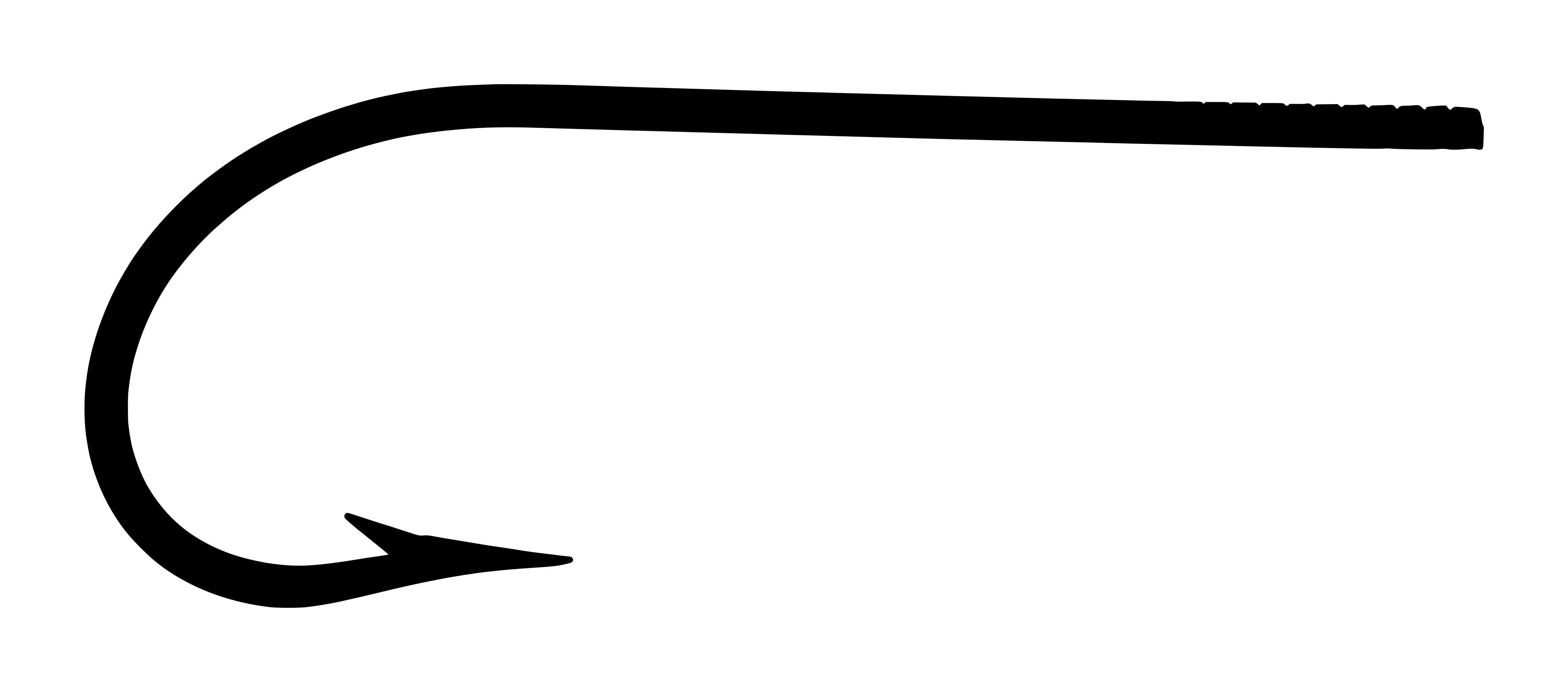
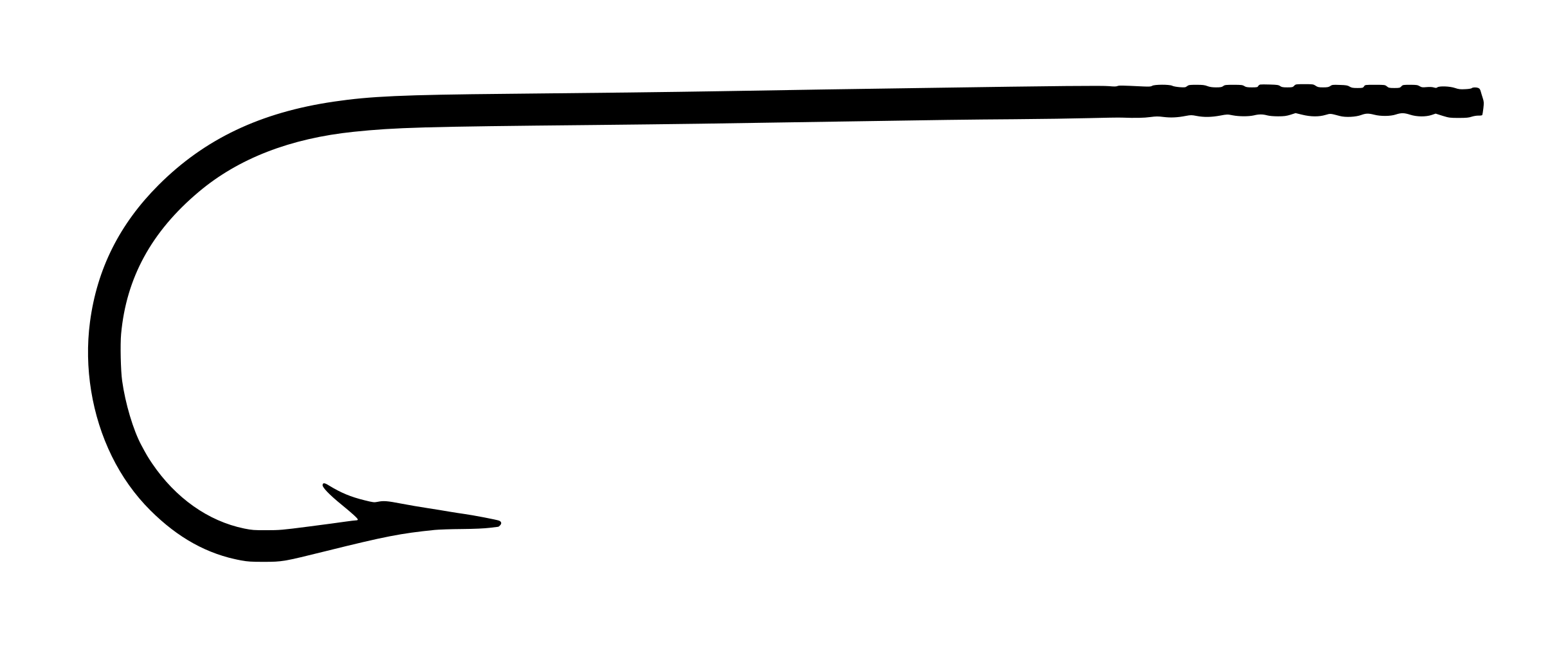
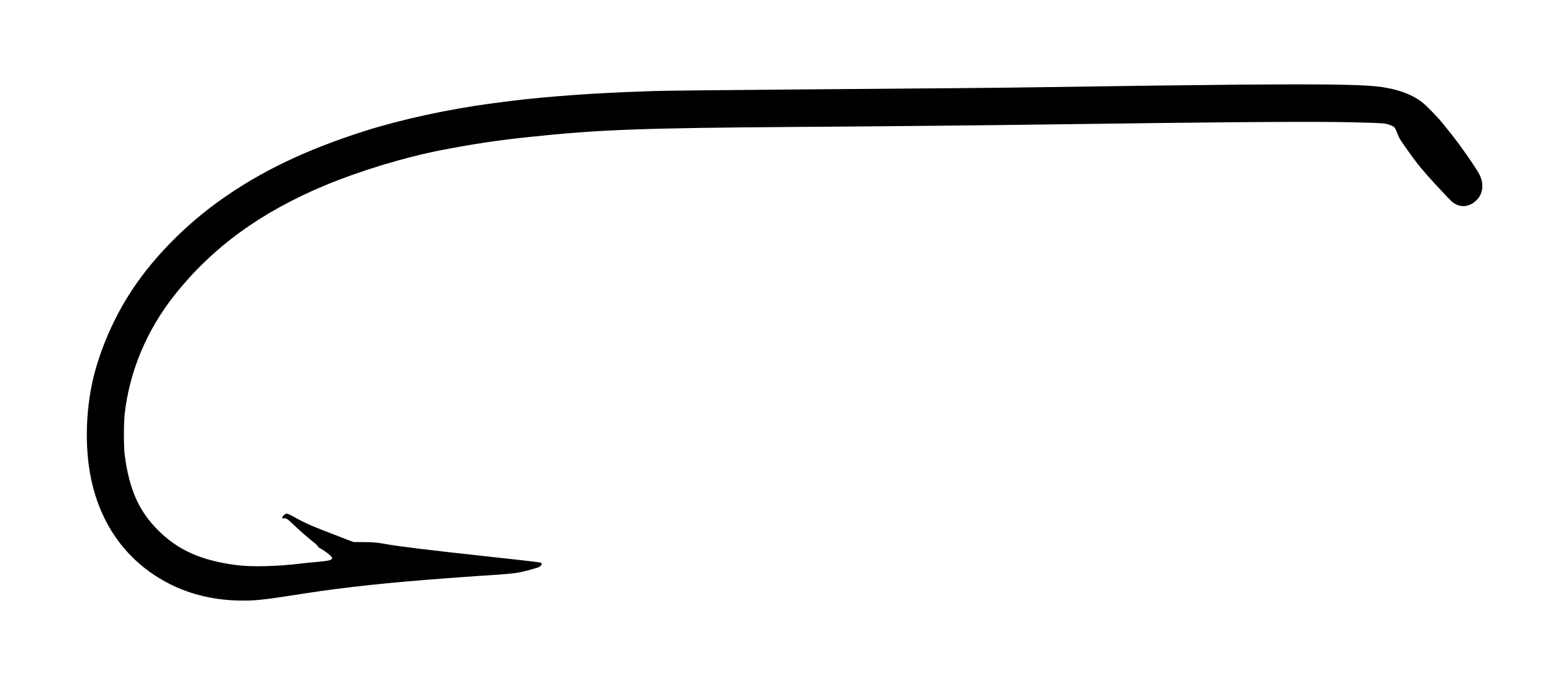
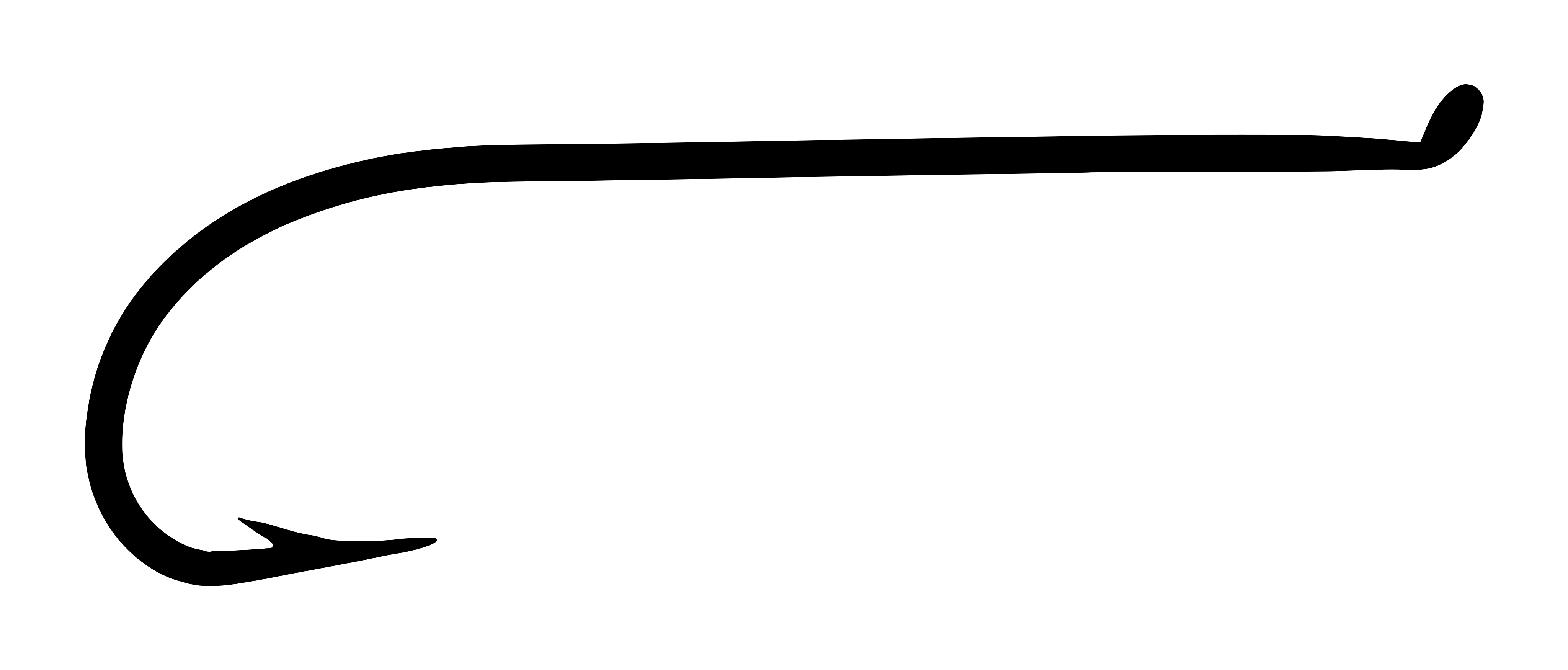
The Mustad Quality 3336 is a vintage Sneck Bend hook manufactured by O. Mustad & Son of Gjøvik, Norway, and distributed internationally from their Oslo office. This size 5/0 specimen represents a rarity in production history—Sneck hooks were primarily made in smaller sizes for trout and panfish, and large 5/0 Snecks were specialized patterns for pike, musky, and catfish bait fishing or for dressing traditional salmon flies with gut leaders.
The defining feature is the blind eye (flatted spade end without a metal loop), which required the angler to whip or snell the line directly onto the shank using gut, silk, or modern nylon. The shank is marked with fine ridges (file-cut for bait grip), and the finish is a warm bronzed lacquer typical of mid-century Mustad export stock.
Packaging evidence—the Key Brand logo, Oslo address, lime-green label, letterpress typography, absence of barcode, and the ‘Marked Rustproof’ designation—points to production between approximately 1940 and 1950. This is a strong example of the Sneck bend tradition that originated in Kendal, England, and was adopted globally by Norwegian manufacturers for freshwater and light saltwater applications.
Original Mustad 3336 packaging, size 5/0, showing the characteristic lime-green label with Key Brand logo, 'Superior' and 'Marked Rustproof' designations, and 'Made in Norway' attribution. Label is letterpress-printed with decorative asterisk border.
Photographic record
3 cataloged imagesSelect any record to load it above.
3 images shown
Mustad 3336 Sneck Hooks Box Label Size 5-0Original Mustad 3336 packaging, size 5/0, showing the characteristic lime-green label with Key Brand logo, 'Superior' and 'Marked Rustproof' designations, and 'Made in Norway' attribution. Label is letterpress-printed with decorative asterisk border.Open originalMustad 3336 Sneck Hook Point Detail Size 5-0Close-up of the hook point showing the hollow point geometry with concave inner face (knife-edge taper). The barb is short and close-cut, positioned just behind the point transition. Bronzed finish is visible with natural patina development.Open originalMustad 3336 Sneck Hook Profile Size 5-0Full profile view of the Mustad 3336 Sneck Hook, size 5/0, on measurement grid. The distinctive square bend profile is clearly visible; the shank transitions to the point via a sharp, nearly 90° angle rather than a gradual curve. The blind flatted eye is visible at the shank end.Open original
Technical profile
Blind Eye — Sneck Bend — Marked Shank — Standard Wire — Bronzed Finish
Eye
Blind — Marked Shank
Wire
Fine (1X Fine), Round
Shank
2X Long — Marked / Ridged
Bend
Sneck, Standard gap, Offset / kirbedThe Sneck is distinguished by its nearly square profile when viewed from above—the point angles sharply outward from the shank rather than continuing the curve. This geometry was historically associated with improved hook-holding in the mouth of larger fish.
Point
Superior (near-straight inner taper)Short, close-cut barb positioned just behind the point transition, typical of Sneck patterns. E Barb angle is moderate (approximately 45° from the shank axis), supporting secure bait retention without excessive damage to delicate baits.
Finish
Bronzed — Confirmed (stated on packaging)Warm bronzed lacquer finish with even coloration and moderate patina development consistent with age and storage. P The finish shows no corrosion or scaling; the warm tone is characteristic of pre-1960s Mustad bronzed hooks. Color is distinctly warmer and less golden than typical japanned finishes.
Specimen shows excellent preservation: hooks are bright with no corrosion, patina, or scale. Card exhibits light toning and minor edge wear consistent with careful storage for 70+ years. Two small stains (age-related foxing) present on the box but do not affect readability of the label. Original green label is intact with no tears or significant fading.
The blind eye reflects a pre-modern production philosophy: rather than forming a metal eye that might interfere with traditional fly-dressing techniques or gut-snelling practices.
The marked (ridged) shank served a dual purpose: grip for traditional fly-body wrapping, and bait retention. For the large 5/0 size used primarily in bait fishing, these ridges helped secure bulky baits (live or dead fish) against slipping during casting or fish strikes.
The hollow point visible in the close-up (Image 2) shows a concave inner face—the classic ‘knife-edge’ geometry that provides a fine, penetrating taper. This was Mustad’s standard specification for general-purpose fishing hooks and contrasts sharply with the superior (near-straight) point style.
First documented Mustad 3336 Sneck Hook in size 5/0 in garrenwood.com database. Likely the largest production Sneck in this model line. Rarity rating (7/10) reflects scarcity of large Snecks and the documented nature of blind-eye patterns in original packaging.
Own this hook? Help us measure it.
We have measurements for sizes 2/0, 12, 2, 4/0. Know any others? Submit calipered measurements and we'll review and add them. Thank you!
Historical context
mustad
O. Mustad & Son was founded in Gjøvik, Norway, in 1832 and became one of the world’s largest industrial hook manufacturers. The company operated from a major factory complex in Gjøvik and built a global distribution network throughout the 19th and 20th centuries. For international export, Mustad maintained a sales office in Oslo and later other European cities, though all manufacturing remained centered in Gjøvik.
Mustad’s Key Brand (marked with a distinctive key logo) was their premium line, while other numeric qualities (like the 3336) represented their mid-range production targeted at commercial and retail tackle dealers worldwide. By the 1940s, Mustad dominated the market for replacement hooks, supplying blank hooks to fly-tying operations, tackle manufacturers, and fishing retailers across North America and Europe.
Series History
The Sneck bend is one of the oldest hook patterns on record, originally developed in Kendal, England, during the 18th–19th centuries. The distinctive square bend was adopted by manufacturers worldwide—including Redditch makers like Allcock and Mustad—for general freshwater fishing. Smaller Sneck hooks in sizes 14–6 were the primary commercial products, used for trout, grayling, and panfish.
The Quality 3336 designation appears in Mustad catalogs from the 1930s through the 1960s, listed variously as ‘Sneck Hooks’ or ‘Sneck Bend’ in available size ranges. Large sizes (3/0 and above) were far less common and appear to have been special-order or limited production items. The 5/0 Sneck is difficult to locate in original packaging, making this specimen noteworthy.
The ‘Superior’ label on this box refers to the Superior product line (a brand name), not the point geometry. This distinction is crucial for collectors: the actual point style is hollow (knife-edge), not superior point. The ‘Marked Rustproof’ text on the label indicates the ridged shank and bronzed finish—standard Mustad terminology for mid-century export packaging.
Era and Packaging Dating
Key Brand logo format and Oslo-Norway address are consistent with Mustad international packaging from the 1930s–1960s. Lime-green label with letterpress typography suggests c. 1940–1955 production (shift to offset printing and color boxes occurred in the late 1950s). Absence of barcode confirms pre-1974 manufacture. 'Marked Rustproof' terminology is specific to mid-century Mustad stock. Lack of metric sizing, postal code, or modern phone format supports 1940s–1950s dating. Rounded 100-hook count (rather than modern decimal weights) is period-correct.
The Kendal Tradition: Why a 200-Year-Old Bend Design Survived into Mass Production
The Sneck bend originated in Kendal, England—a small market town in the Lake District—where it was the dominant pattern for centuries. Norwegian industrialists like Mustad recognized the pattern's global appeal and incorporated it into their product lines, even as modern engineers argued that the sharp bend created stress concentration points in the wire. Paradoxically, the very feature that worried engineers (the hard square corner) was the feature that anglers trusted most. The Sneck survived well into the 20th century, and handcrafted versions are still produced by specialty makers like Daiichi and Tiemco for collectors and traditional fly-tiers.
Design lineage and influence
The Sneck descends from 18th-century English hand-forged patterns and represents one of the oldest surviving bend profiles in modern production. Competing designs included the Limerick (angular, widely adopted), the Sproat (rounded, gentler), and later the O’Shaughnessy (deep angular). By the 1940s, the Sneck was already considered ‘traditional’ and somewhat archaic compared to newer patterns, yet it maintained a dedicated following among salmon fishers and large-bait anglers.
Mustad’s decision to continue offering the 3336 Sneck alongside more modern patterns (like the 3366 Sproat) reflects the company’s strategy of maintaining breadth across catalog segments. Norwegian manufacturers inherited English hook-making traditions through both direct copying and the acquisition of British makers—Mustad’s later purchase of Partridge of Redditch cemented this lineage.
Best matchRelated by Attribute
Computed automatically from catalog data — updated as new hooks are added.
Matches: Gap, Eye, Eye Orient., Point, Finish +5 moreDiffers: Bend: Sneck vs Kirby (offset); Shank: 2X Long vs 1X Long; Wire: Fine (1X Fine) vs Standard +1 more
Matches: Shank, Wire, Eye, Eye Orient., Point +5 moreDiffers: Bend: Sneck vs Aberdeen; Gap: Standard vs Wide; Application: Salmon, Sea Trout, Bait vs Bait
Matches: Wire, Gap, Eye, Eye Orient., Forging +4 moreDiffers: Bend: Sneck vs Kirby (offset); Shank: 2X Long vs 1X Long; Point: Superior vs Standard / Spear +2 more
The 5/0 Sneck was used primarily in two contexts: (1) Traditional salmon and sea trout fly-dressing, where the blind eye accommodated gut leaders and the marked shank provided anchor points for silk body wraps; (2) Heavy bait fishing for pike, musky, large catfish, and sturgeon, where the large gap and robust shank accommodated whole or chunked baits without distortion.
Unlike modern hooks, the Sneck’s square bend geometry was believed by period anglers to resist twisting in the fish’s mouth during a hard fight—the sharpness of the angle supposedly acting as a mechanical brake. This belief, though not universally proven, drove the continued production of Sneck patterns even as more modern bends (Sproat, O’Shaughnessy) gained market share.
Named patterns specifically associated with this hook. Leave blank if none formally documented. Do not speculate — only include patterns with a confirmed association.
Redditch-made Sneck with ringed eye; matches bend geometry but modern eye type.
Tiemco 5262 Sneck
Good
Modern sneck-style pattern with looped eye; marketed to traditional fly-tiers.
Collector notes
Reference value
$45 – $85 USD estimate
Packaging condition
Good — moderate wear, legibleRecorded specimen
Packaging format
GW-M-10Catalog code
Packaging
Lime-green cardboard label mounted on white box, size approximately 4.5" × 3.5" × 0.75". Black letterpress text and decorative border of repeated asterisk symbols. Label reads: Key Brand logo (key symbol), 'O. MUSTAD & SÖN / MANUFACTURERS / OSLO - NORWAY / Qual. 3336 / Superior / Mustad-Sneck Hooks / 100 / Marked Rustproof / No. 5/0 / Made in Norway.' Paper stock is typical mid-century cardboard, showing age toning and minor foxing. No barcode present.
Market Value Notes
Values reflect original 100-hook box in good condition with label intact. Single hooks (if separated) typically $0.50–$1.50 each on eBay. Premium pricing ($85+) applies to complete, undisturbed boxes with legible labels and verified Sneck bend profile. Dealer pricing (specialist tackle auctions, UK; antique fishing tackle shows) runs 20–30% higher. Condition factors: any missing hooks reduce value; faded labels reduce value 15–25%; loose cards (box separated) reduce value 10–15%. Sneck pattern nostalgia and blind-eye rarity drive collector interest.
Where to Find
Specialty vintage fishing tackle dealers (UK, Scandinavia, North America), eBay (searched as 'Mustad Sneck' or 'Mustad 3336'), antique fishing tackle auctions (Bonhams, Christie's periodic sales), UK tackle fairs and regional fishing heritage museums, specialist hook retailers (Fly Dressing magazine classified ads, vintage forum sales).
Collector's Identification Tips
Look for the Key Brand logo (a distinctive key symbol) in the upper left of the label. Verify the model code ‘Qual. 3336’ and the designation ‘Sneck Hooks.’ The lime-green label color is characteristic of this era and product line—counterfeit examples are rare but reproductions should have crisp print and no foxing. The Oslo address (not Gjøvik) is period-correct for export packaging. Confirm the hook itself exhibits a sharp square bend (not rounded Sproat) and a blind flatted eye. The marked shank ridges should be fine file-cuts, evenly spaced.
Preservation
Storage and Preservation
Store the original packaging in a cool, dry environment away from humidity and direct sunlight. The bronzed finish will develop a natural patina over time; this is considered desirable by collectors and does not indicate corrosion if the underlying metal remains bright. Do not attempt to clean the finish with abrasive materials.
Keep hooks on the original card rather than loose. The cardboard provides protection and the period packaging significantly enhances collectible value. If the card is fragile, house it in an acid-free archival box or sleeve. Avoid contact with other metals to prevent galvanic corrosion, and do not store in proximity to iron or steel items.
If hooks are removed for use, store separately in a dry container with silica gel or a similar desiccant. Monitor annually for any signs of rust bloom, which would indicate excessive humidity. The blind eye design is prone to rust in the pierced end if moisture enters—pay special attention to this area during inspection.
‘Marked Rustproof’ is period Mustad terminology combining two features: ‘Marked’ refers to the ridged shank (file-cut marks for grip), and ‘Rustproof’ describes the bronzed lacquer finish intended to resist corrosion in freshwater. This was marketing language—bronzed hooks do eventually develop patina, particularly if exposed to salt water or high humidity. The term ‘Rustproof’ reflected the finish’s intended performance range, not an absolute guarantee.
‘Made in Norway’ confirms Gjøvik manufacture. The absence of a place of origin prior to c. 1935 on Mustad boxes (when export regulations began requiring country-of-origin labeling for U.S. imports) is a useful dating marker; this example clearly meets that requirement.
Size Note
Large Size as Production Anomaly
The 5/0 Sneck is noteworthy because Sneck patterns were rarely produced in sizes larger than 3/0. Commercial production focused on smaller Snecks (sizes 14–6) used for trout, grayling, and panfish. Large Snecks were special-order or regional products, and surviving examples in original packaging are uncommon.
This 5/0 appears to have been manufactured in limited quantity, likely for export to specific markets (Scandinavia, the British Isles, or Russia) where heavy bait fishing and salmon/sea trout fly-dressing techniques that utilized blind eyes remained in favor. The presence of 100 hooks per box is consistent with export trade sales to tackle dealers rather than retail consumer packaging, which suggests wholesale rather than consumer-market production.
Marking Analysis
Manuscript Marks and Annotations
No handwritten annotations, prices, or ownership marks are visible on the box or label. The specimen appears to have been preserved in original commercial stock condition without retail price marking or dealer markup notation. This is consistent with the hook remaining in a warehouse or dealer inventory lot rather than being passed through multiple retail hands.
Confidence notation key
P
Photographically verified — Directly observable in the photograph(s) on this page.
V
Verified by documentation — Confirmed by manufacturer catalog, spec sheet, or published reference.
I
Inferred — A logical deduction from observable or documented evidence, not directly stated.
E
Estimated — An approximation based on visual comparison, proportional analysis, or limited data.
S
Speculative — A reasoned hypothesis that cannot be confirmed from available evidence.
Claims with no notation are confirmed by multiple independent sources. All photographs on garrenwood.com are taken on a measurement grid where each square equals 1/10 inch (0.1″ / 2.54 mm).