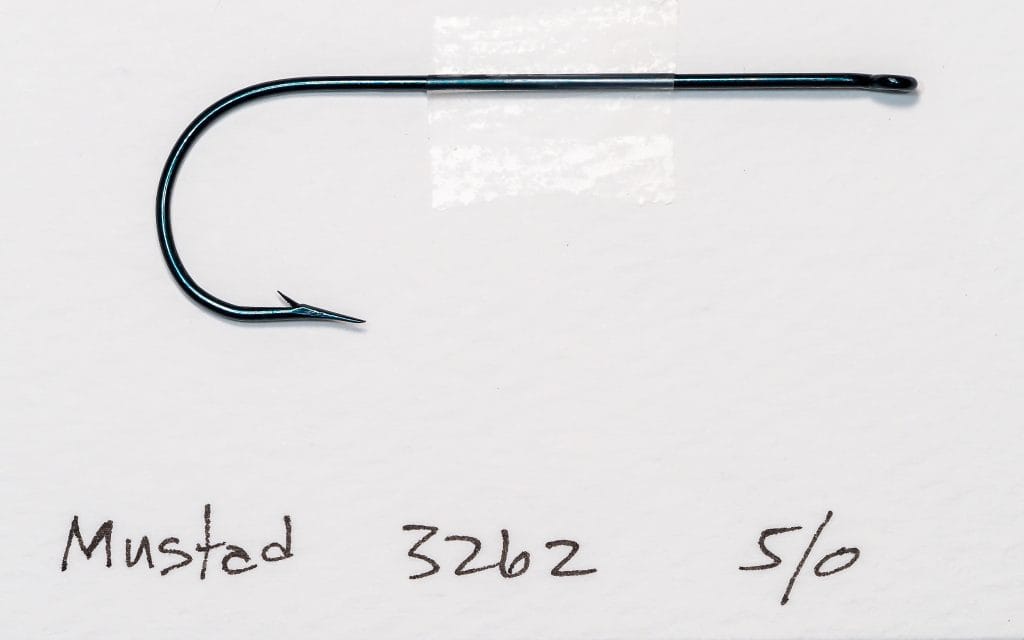
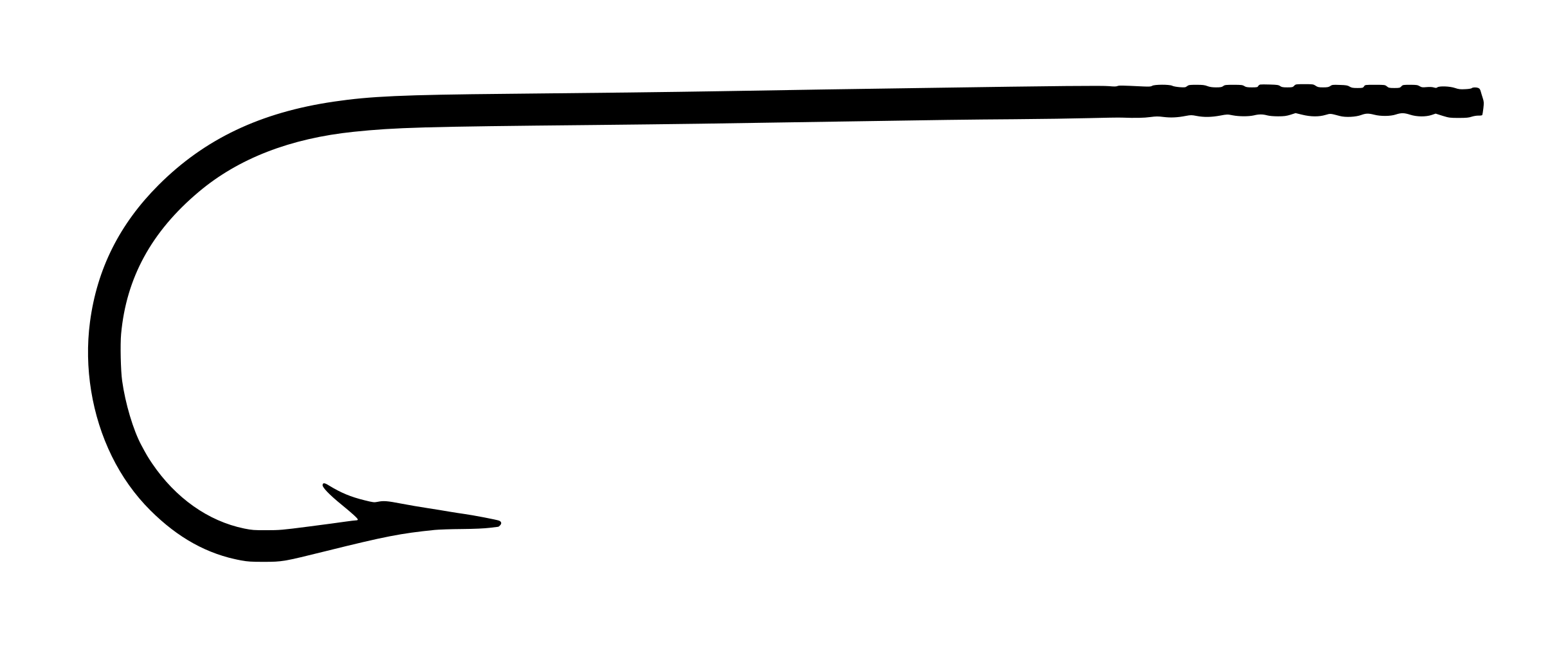
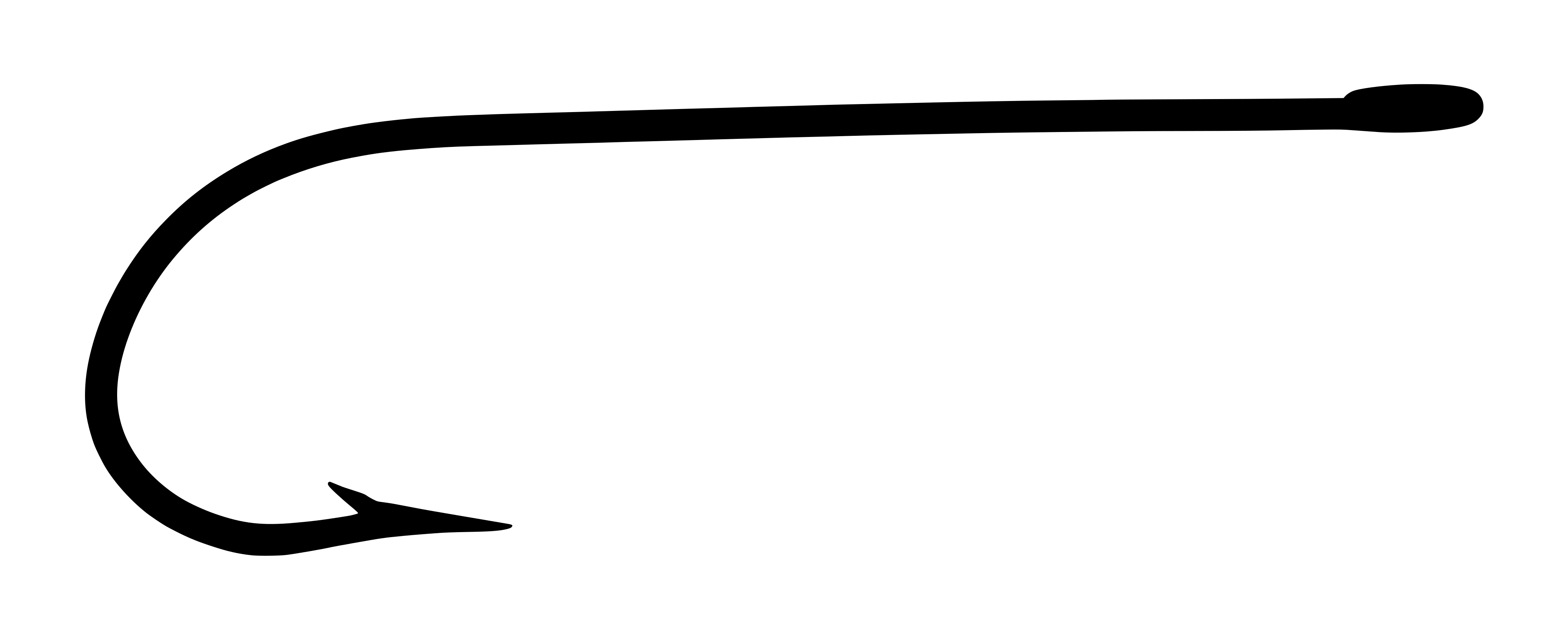
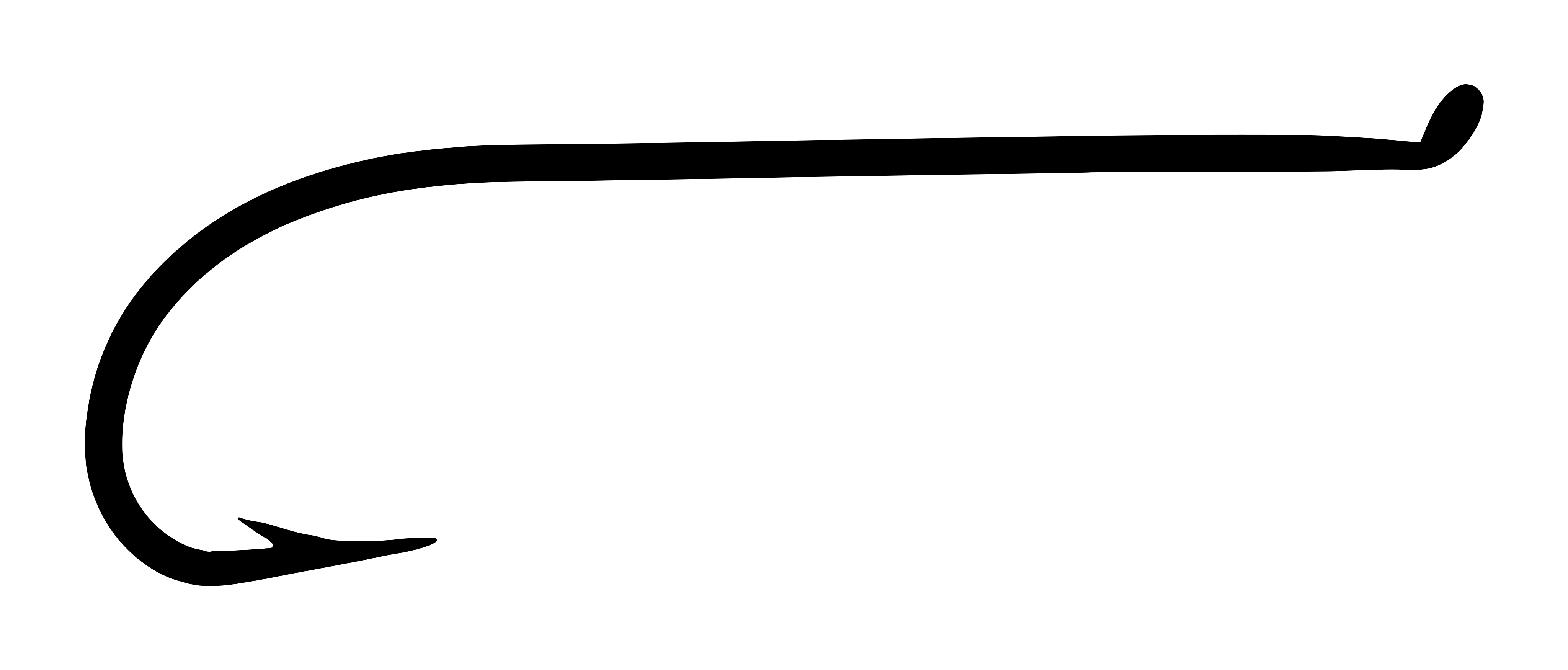
The Mustad 3262 Aberdeen represents the Norwegian manufacturer’s interpretation of the classic wide-gap Aberdeen bend, designed for reliable bait fishing performance. This size 5/0 specimen demonstrates the characteristic blued finish and light wire construction that made Mustad hooks the global standard for commercial and recreational fishing P.
The straight ringed eye and superior point style reflect Mustad’s industrial manufacturing approach, prioritizing strength and penetration over specialized applications. Documentation on this handwritten specimen card suggests mid-20th century cataloging, though the 3262 pattern has remained largely unchanged throughout its production run E.
While not rare, the 3262 Aberdeen holds significance as an example of Mustad’s commitment to fundamental hook geometry executed with Norwegian precision manufacturing standards.
Complete profile view of the Mustad 3262 Aberdeen hook, size 5/0, showing the characteristic wide bend and blued finish with handwritten specimen documentation.
Photographic record
5 cataloged imagesSelect any record to load it above.
5 images shown
Mustad 3262 Aberdeen Hook Size 5/0 DocumentationComplete profile view of the Mustad 3262 Aberdeen hook, size 5/0, showing the characteristic wide bend and blued finish with handwritten specimen documentation.Open originalMustad 3262 Aberdeen Point Detail Size 5/0Close-up detail of the Mustad 3262 Aberdeen point showing the superior point geometry and barb construction with blued finish.Open originalMustad 3262 — Hook point macro detailMacro detail of the sharp barbed point on a Mustad 3262 Aberdeen hook size 5/0, showing fine wire construction and blued finish against a measurement grid.Open originalMustad 3262 — Full hook profileComplete side profile of a Mustad 3262 Aberdeen hook size 5/0 with ringed eye and blued finish, displaying the characteristic shallow Aberdeen bend on a calibrated measurement grid.Open originalMustad 3262 — Vintage box labelOriginal Mustad 3262 Aberdeen Hooks cardboard box label featuring Key Brand mark, Oslo Norway origin, quantity 100, size 2, blued finish with ringed eye specification. Box shows age-related wear and yellowing at corners.Open original
Technical profile
Eye
Ball Eye, Straight / Inline
Wire
Fine (1X Fine), Round, Est. ~0.04"-0.05" (~1.0-1.3 mm) E
Shank
3X Long — Plain
Bend
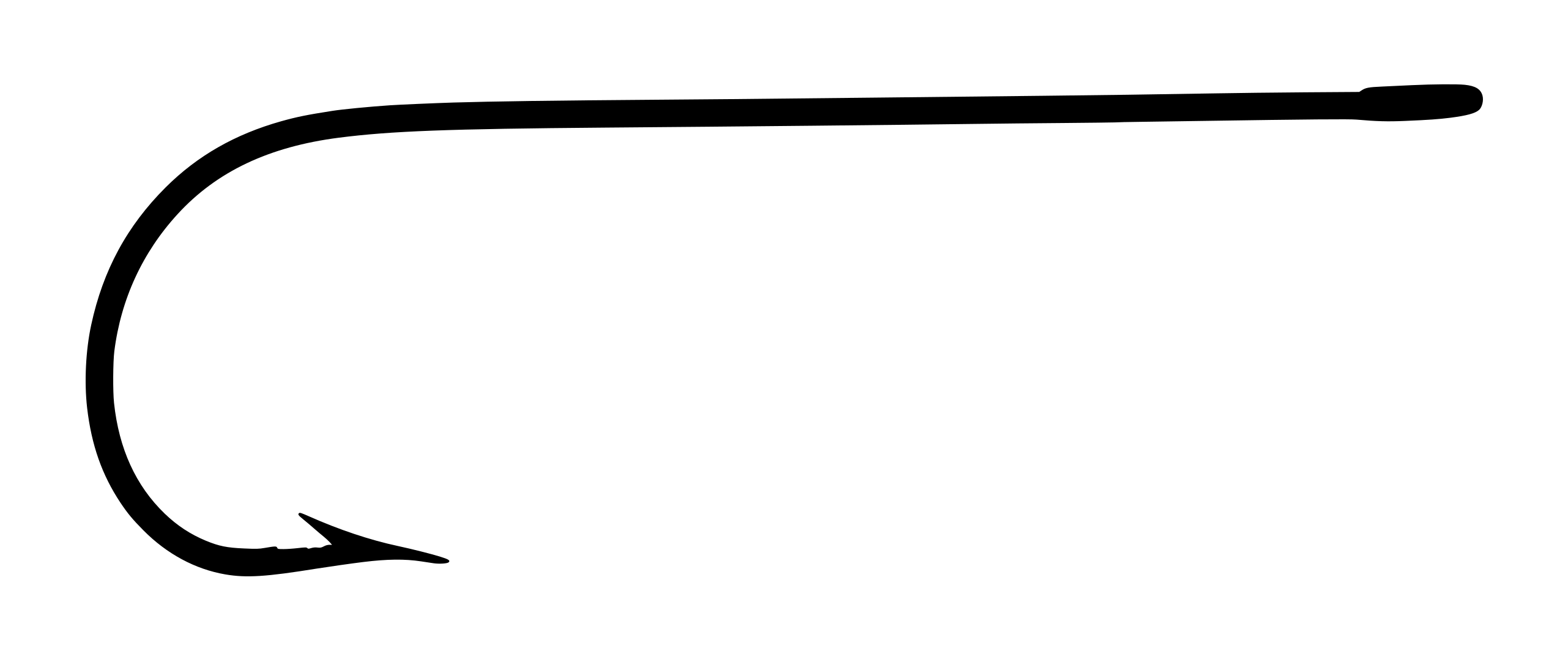
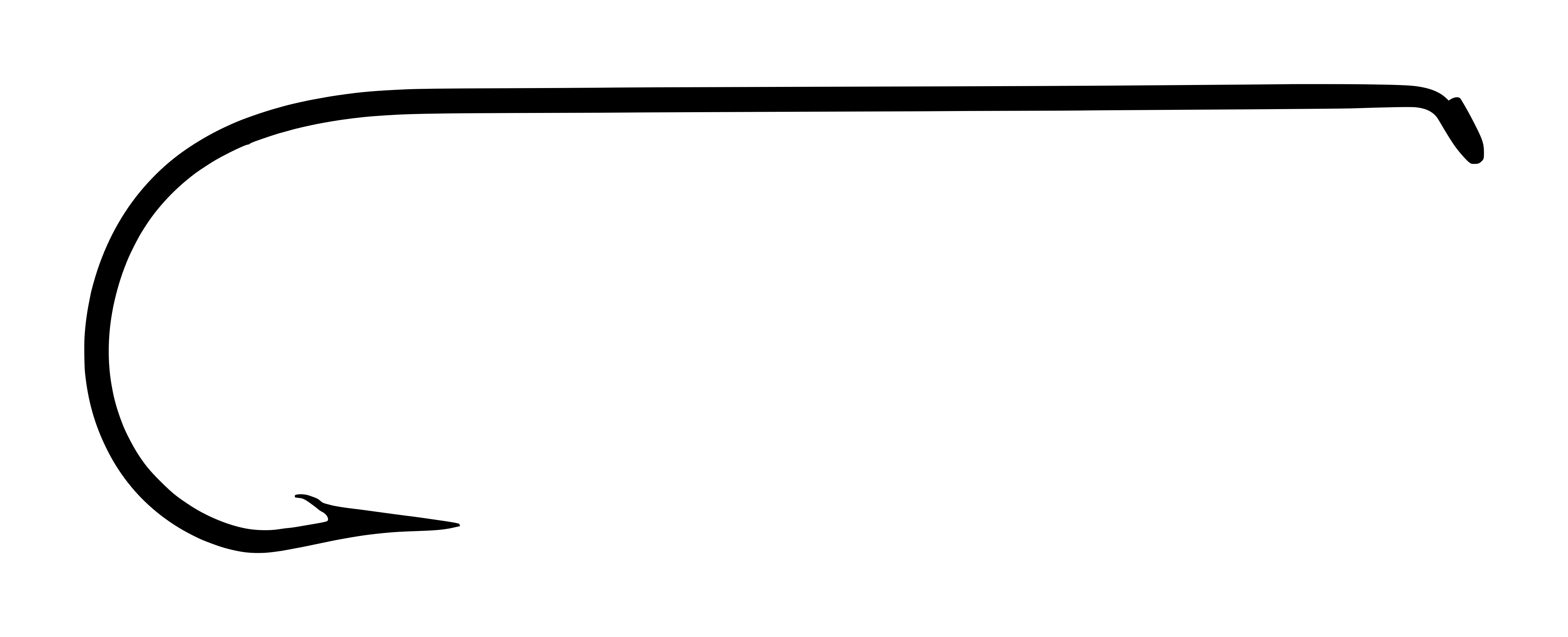
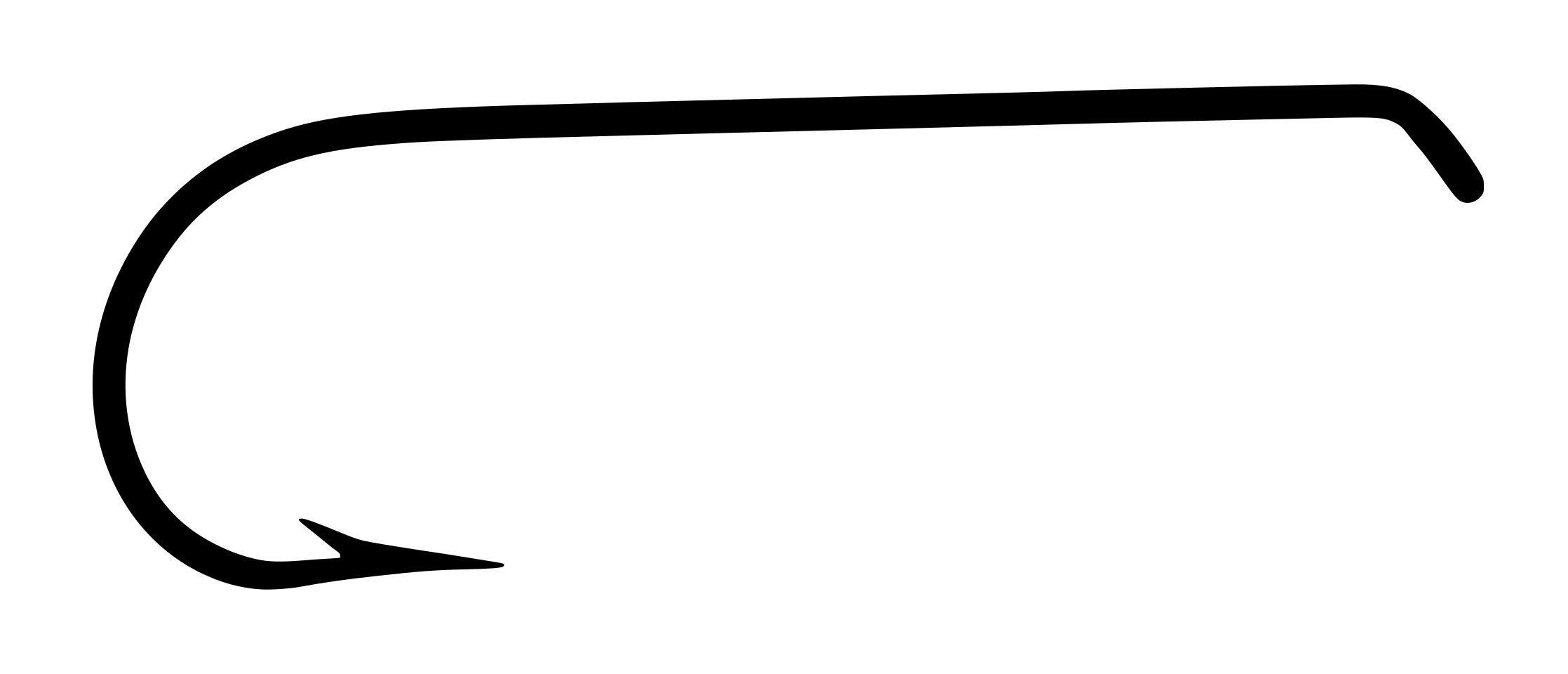
Aberdeen, Wide gapClassic Aberdeen geometry with wide, rounded profile providing maximum gap clearance for bait presentation P
Point
Superior (near-straight inner taper)
Finish
Blued — Confirmed (stated on packaging)Traditional blue-black blued finish showing characteristic dark metallic appearance with slight surface texture P
The Aberdeen bend geometry maximizes the gap-to-shank ratio, providing superior bait presentation and fish-holding capability. The wide, rounded bend distributes stress evenly across the hook during fights with large fish. The superior point style features a nearly straight inner taper that provides reliable penetration without the complexity of hollow-ground points P.
Light wire wire gauge construction ensures strength for saltwater applications and large fish, while the blued finish provides moderate corrosion resistance. The straight ringed eye eliminates the stress concentration inherent in turned eye designs, making this pattern suitable for high-load fishing applications E.
We don't have measured sizes for this hook yet. Own one? Submit calipered measurements and we'll review and add them. Thank you!
Historical context
mustad
O. Mustad & Son, established in 1832 by Ole Mustad in Gjøvik, Norway, grew from a small nail-making operation into the world’s largest fishhook manufacturer. The company’s success stemmed from Norway’s abundant iron ore resources, hydroelectric power for manufacturing, and Ole Mustad’s innovative approaches to hook production and global distribution.
Under the leadership of Hans Mustad in the late 19th century, the company expanded internationally, establishing the distinctive red-and-white Mustad branding that became synonymous with quality hooks worldwide. The Gjøvik factory pioneered mass production techniques while maintaining consistent quality standards that made Mustad hooks the preferred choice for both commercial fishermen and tackle manufacturers globally.
Series History
The 3262 Aberdeen represents Mustad’s standardization of the traditional Aberdeen bend pattern, which originated in Scottish fishing traditions. Mustad introduced their Aberdeen series to provide wide-gap hooks optimized for bait presentation and fish-holding capability, particularly valuable for marine fishing applications.
The 3262 has remained essentially unchanged since its introduction, reflecting the maturity of the Aberdeen design and Mustad’s manufacturing consistency. The straight ringed eye construction became standard across Mustad’s bait hook lines, offering superior strength compared to turned eyes while maintaining ease of rigging.
Era and Packaging Dating
The 3262 Aberdeen has been a long-running catalog staple for Mustad. Handwritten specimen card suggests mid-20th century documentation, but the model itself has remained in production with minimal changes for decades.
From Scottish Harbors to Global Standard
The Aberdeen bend was originally developed by Scottish fishermen in the 19th century specifically for sea fishing from the Aberdeen harbor. The wide gap design allowed better bait presentation for cod and haddock fishing in the North Sea. Mustad's adoption of this pattern helped standardize what had been a regional Scottish design into a worldwide fishing staple.
Design lineage and influence
Best matchRelated by Attribute
Computed automatically from catalog data — updated as new hooks are added.
Matches: Bend, Shank, Eye, Eye Orient., Forging +3 moreDiffers: Wire: Fine (1X Fine) vs Extra-Fine; Gap: Wide vs Standard; Point: Superior vs Standard / Spear +1 more
Matches: Bend, Wire, Gap, Eye, Eye Orient. +3 moreDiffers: Shank: 3X Long vs 2X Long; Point: Superior vs Hollow Point; Finish: Blued vs Bronzed +1 more
Matches: Bend, Shank, Point, Forging, Application +2 moreDiffers: Wire: Fine (1X Fine) vs Extra-Fine; Gap: Wide vs Standard; Eye: Ball Eye vs Tapered Eye +3 more
Matches: Bend, Eye, Point, Forging, Shank Feat. +1 moreDiffers: Shank: 3X Long vs 2X Long; Wire: Fine (1X Fine) vs Extra-Fine; Gap: Wide vs Standard +3 more
The Mustad 3262 Aberdeen is designed primarily for bait fishing applications, particularly effective for marine species and large freshwater fish. The wide Aberdeen bend provides excellent bait presentation while the light wire gauge ensures strength for fighting sizeable fish P.
Secondary Applications
Occasionally used for large saltwater streamers and pike flies where extreme strength is required
Classic Fly Patterns
Not typically used for fly tying
Modern Equivalents
Hook
Match Quality
Notes
Mustad 92641 Aberdeen
Excellent
Direct modern equivalent with chemically sharpened point
Owner 5111 Aberdeen
Good
Similar Aberdeen geometry with Japanese manufacturing
Collector notes
Common production hook with modest collecting interest due to classic Aberdeen design and Mustad heritage.
Reference value
$2 – $8 USD estimate
Packaging condition
Good — moderate wear, legibleRecorded specimen
The Mustad 3262 Aberdeen represents a workhorse pattern in the Mustad catalog, making it readily available but of limited scarcity value. Positive factors include the classic Aberdeen bend geometry and Mustad’s reputation for consistent quality manufacturing. However, continuous production and wide distribution limit premium collecting interest except for earliest examples or unusual packaging variants.
Market Value Notes
Common pattern with limited premium for standard examples. Value primarily in complete original packaging or unusual size variations.
Store in a dry environment away from moisture to preserve the blued finish, which can develop surface rust if exposed to humidity. The straight ring eye is particularly susceptible to corrosion where the ring joint meets the shank. Original documentation cards like this handwritten specimen sheet add historical value and should be preserved alongside the hook.
Avoid contact with dissimilar metals to prevent galvanic corrosion. The blued finish can be damaged by rough handling. Store individually or with protective spacing to prevent point damage from contact with other hooks.
Marking Analysis
Specimen Documentation
The handwritten notation ‘Mustad 3262 5/0’ appears to be catalog documentation, likely from a tackle shop or collector’s reference system. The clear, consistent handwriting suggests professional or systematic record-keeping rather than casual notation.
This type of specimen card documentation was common in mid-20th century tackle shops and fishing clubs for inventory management and hook identification training. The format indicates careful cataloging practices typical of the era when hook identification required more specialized knowledge.
Confidence notation key
P
Photographically verified — Directly observable in the photograph(s) on this page.
V
Verified by documentation — Confirmed by manufacturer catalog, spec sheet, or published reference.
I
Inferred — A logical deduction from observable or documented evidence, not directly stated.
E
Estimated — An approximation based on visual comparison, proportional analysis, or limited data.
S
Speculative — A reasoned hypothesis that cannot be confirmed from available evidence.
Claims with no notation are confirmed by multiple independent sources. All photographs on garrenwood.com are taken on a measurement grid where each square equals 1/10 inch (0.1″ / 2.54 mm).