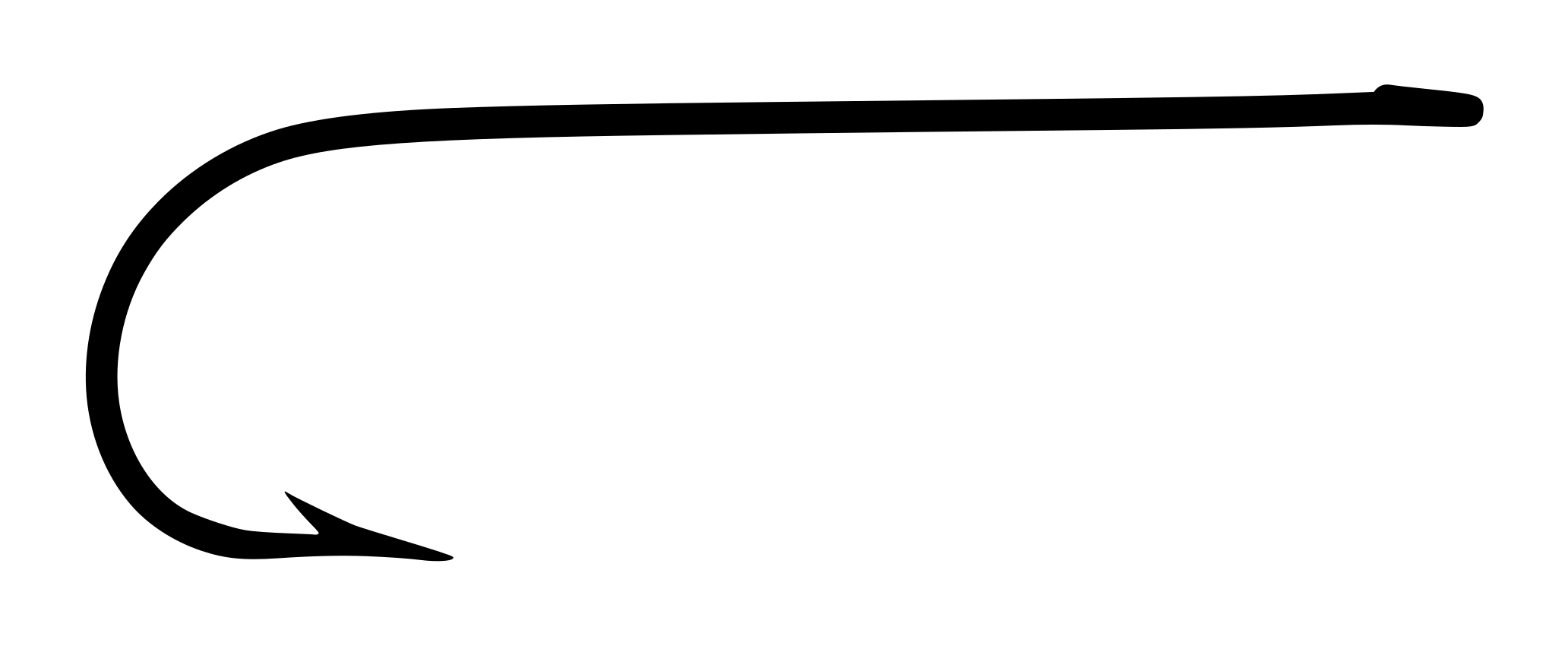
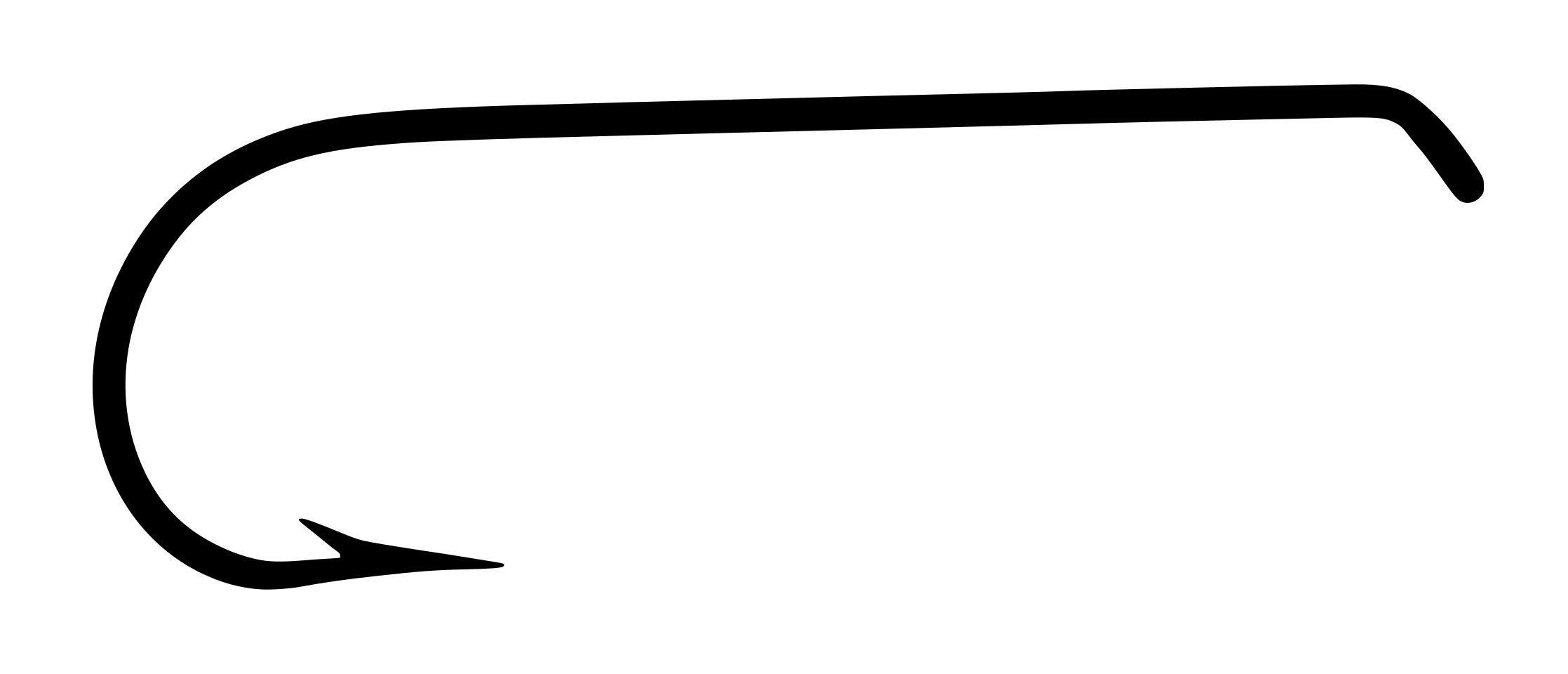
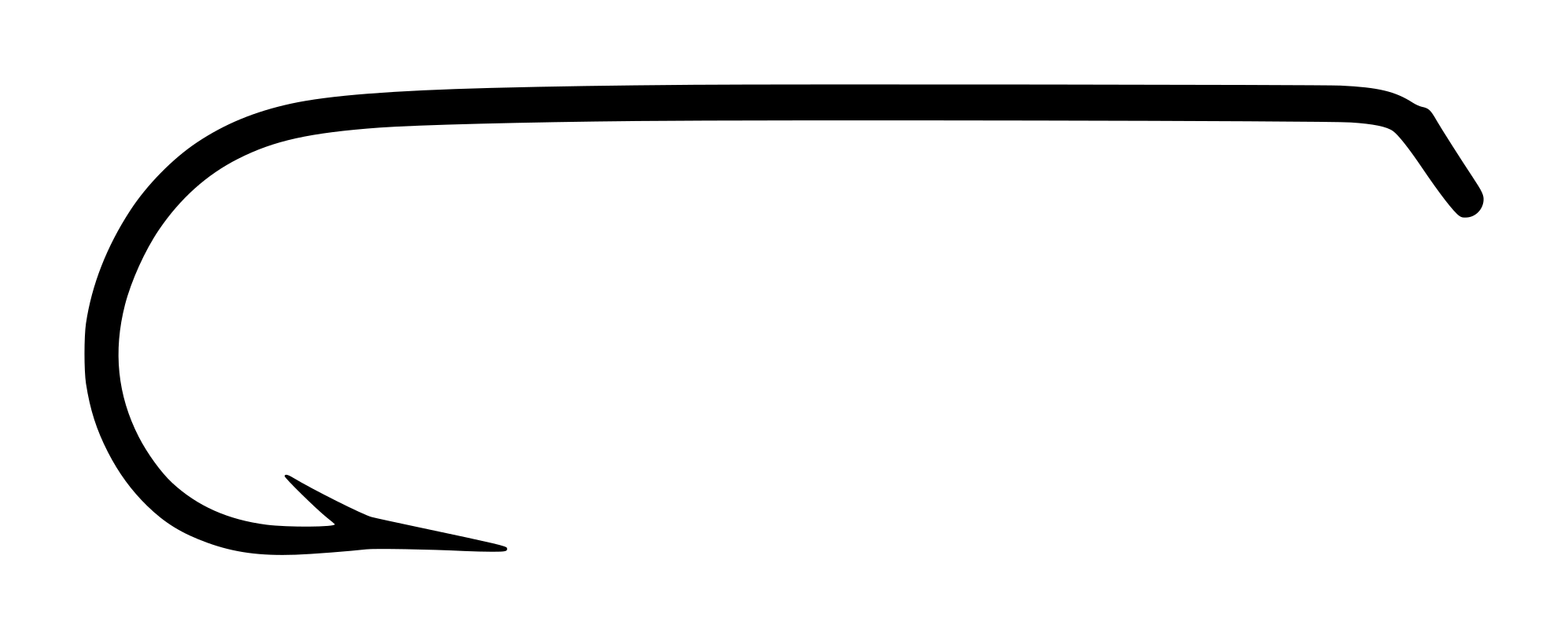
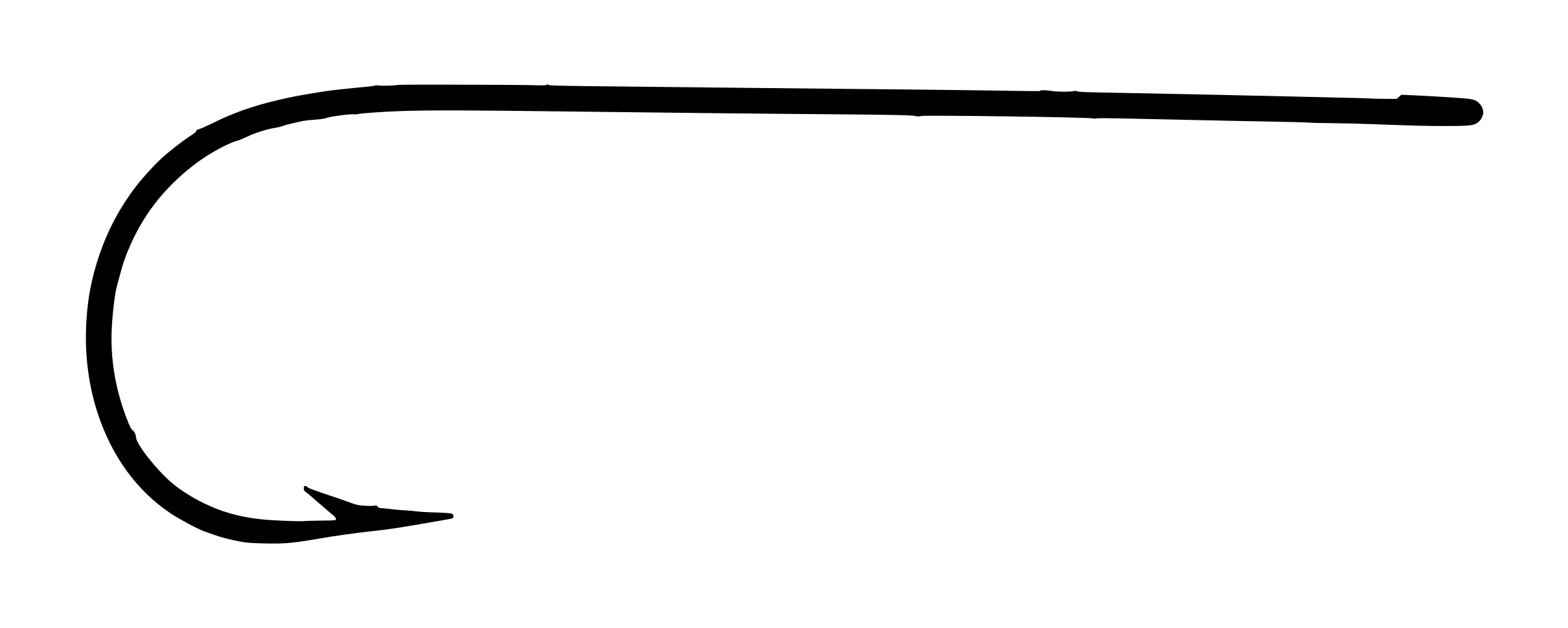
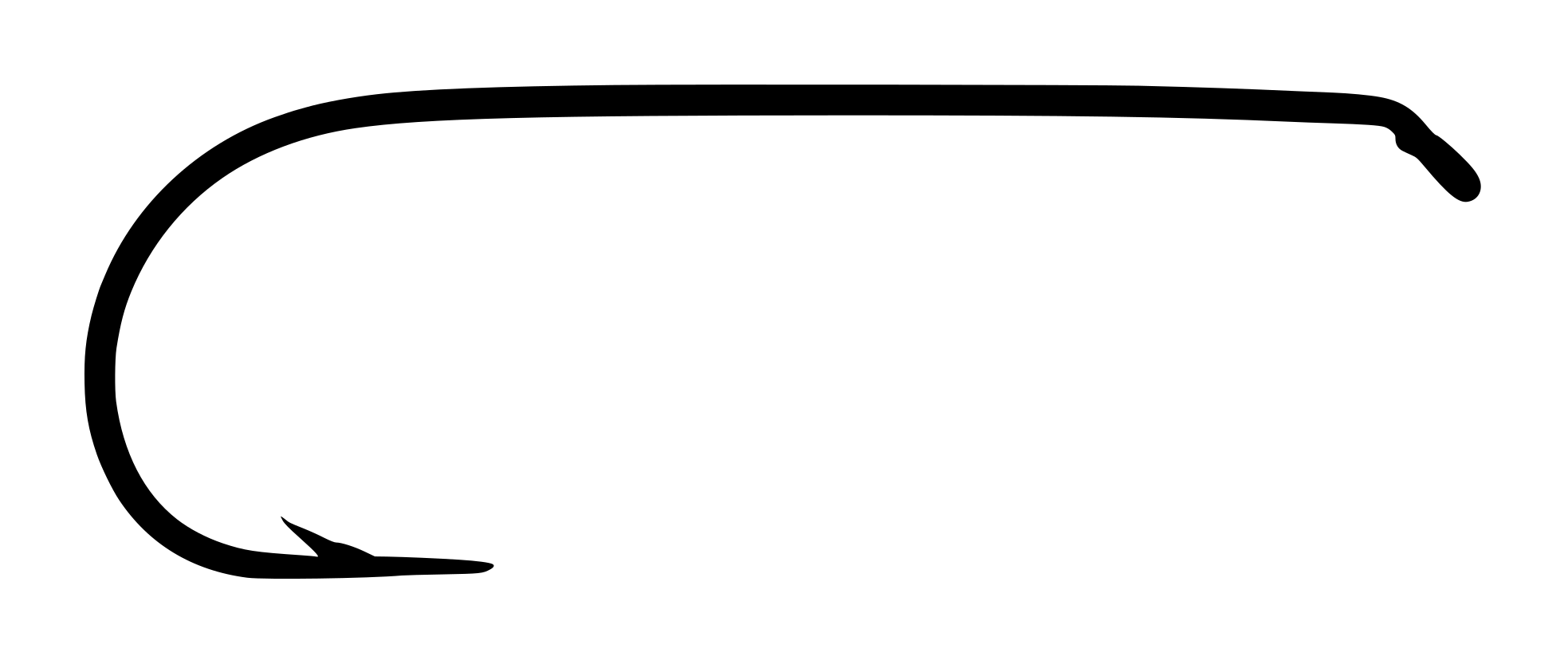
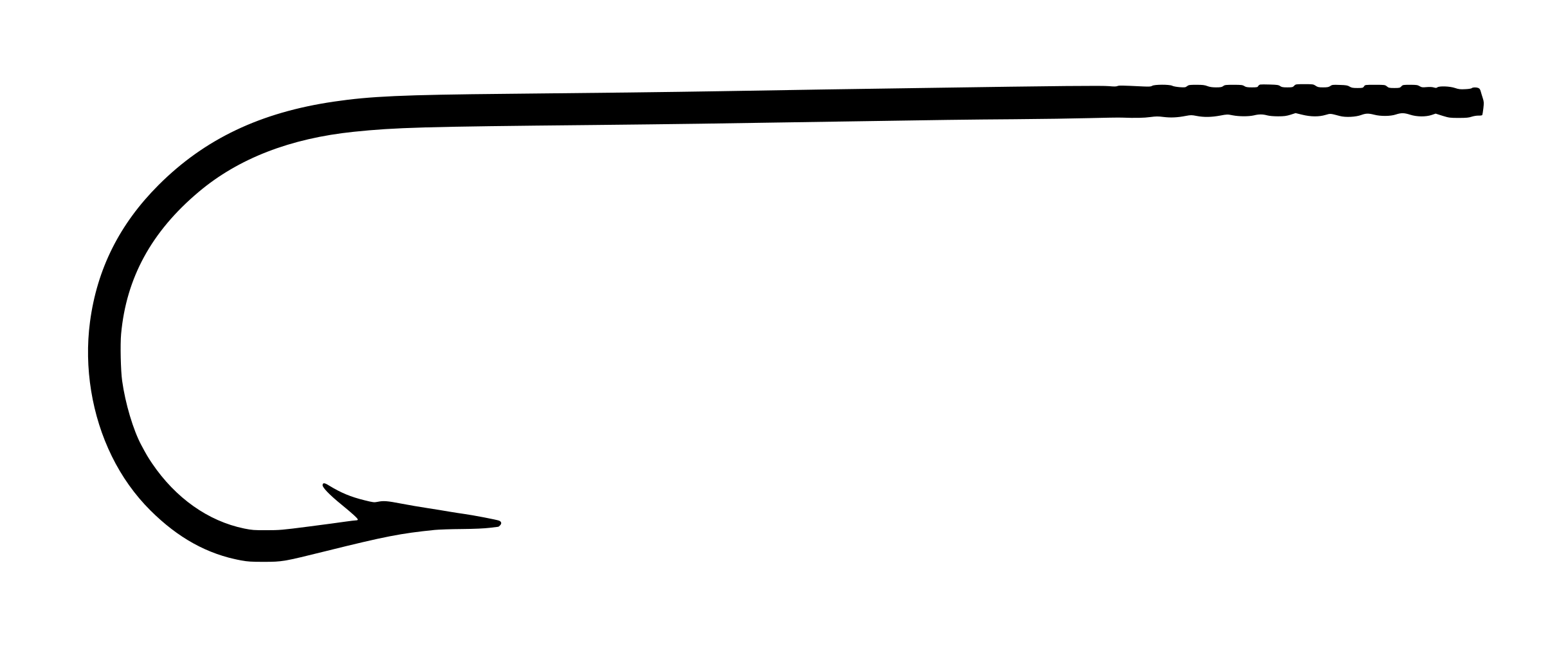
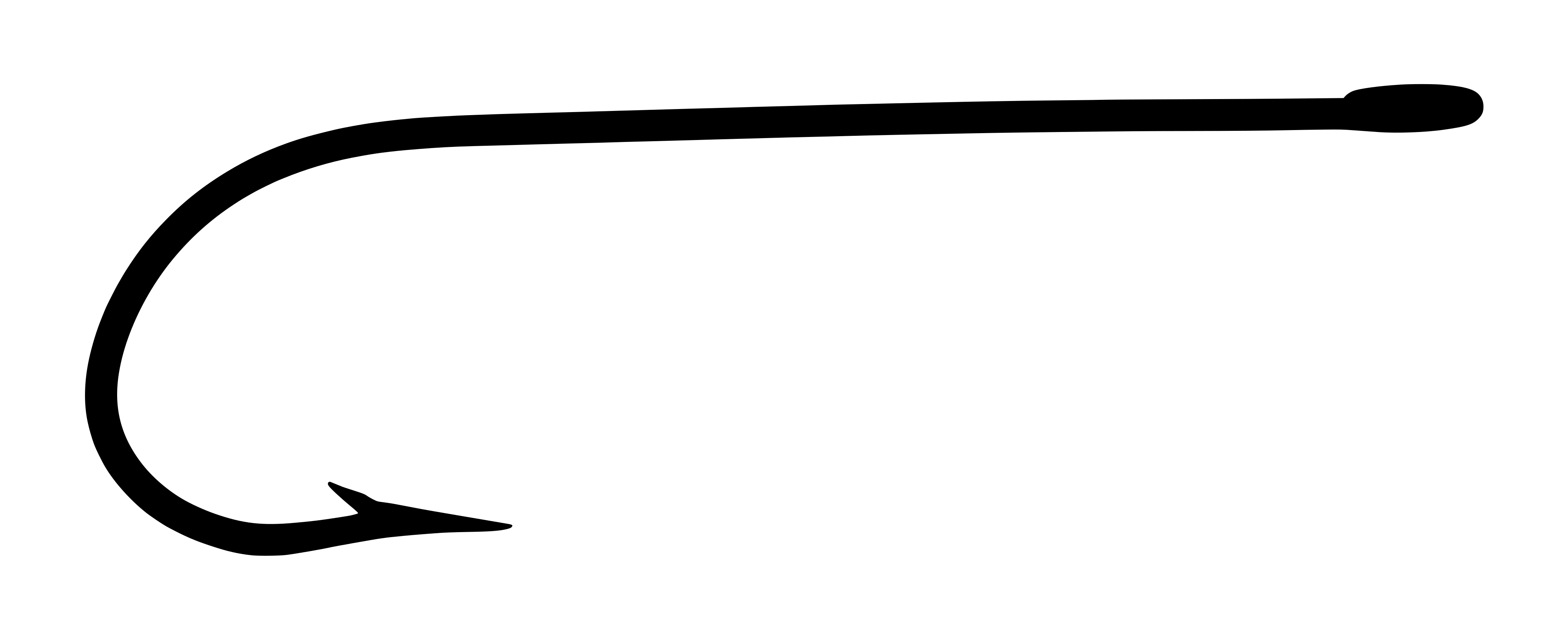
Mustad model 3260 B Aberdeen is a size 1 bait hook finished in gold plate with a straight ball eye, long 2X shank, and extra-fine wire. The Aberdeen bend shows the characteristic wide rounded profile, while the Superior point geometry features a near-straight inner taper that reduces point elasticity under sustained pressure. Extra-fine wire permits natural bait to move with minimal resistance, a trade-off accepted in light-tackle applications where delicate presentation outweighs structural strength. The combination of gold plating with extra-fine wire on a bait hook is uncommon and suggests either a specialty production run or a deliberate choice to extend corrosion resistance in fresh water applications during the 1960s–1970s window.
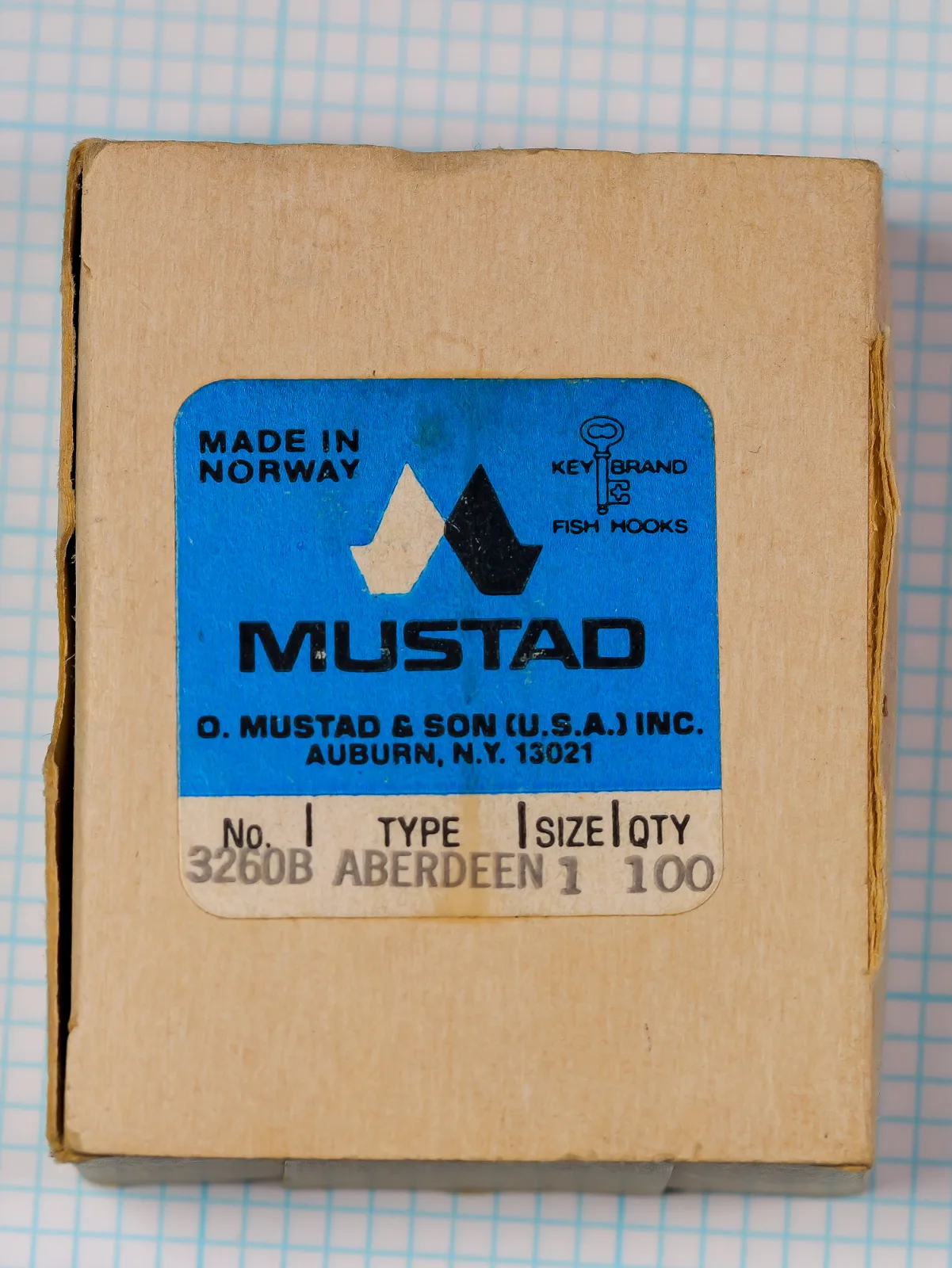
Front face of the original Mustad manufacturer box showing the blue Keytibrand label with model 3260 B Aberdeen Size 1, quantity 100. Auburn, N.Y. distribution address and "Made in Norway" origin marking visible. No barcode or modern regulatory text indicates pre-1974 production.
Photographic record
3 cataloged imagesSelect any record to load it above.
3 images shown
Mustad 3260 B Aberdeen Box Label Size 1 100-CountFront face of the original Mustad manufacturer box showing the blue Keytibrand label with model 3260 B Aberdeen Size 1, quantity 100. Auburn, N.Y. distribution address and "Made in Norway" origin marking visible. No barcode or modern regulatory text indicates pre-1974 production.Open originalMustad 3260 B Aberdeen Size 1 Side Profile Point and BendSide view of specimen hook showing the Superior point taper and Aberdeen bend profile. Gold-plated finish is bright and uniform. Extra-fine wire gauge is evident from the slender shank proportions. Measurement grid indicates ~1.42" overall length.Open originalMustad 3260 B Aberdeen Size 1 Straight Inline Ball EyeFront-facing view of the straight inline ball eye and upper shank. The ball eye is uniformly formed and sits perpendicular to the hook plane. Extra-fine wire proportions are evident from the slender shank. Gold-plated finish remains lustrous with no defects visible.Open original
Technical profile
Straight Ball Eye | Aberdeen | 2X Long | Extra-Fine Wire | Superior Point | Gold-plated / Gilt
Eye
Ball Eye, Straight / InlineBall eye is uniform diameter, formed from the shank wire without taper. Wire ends are cleanly butted — no gap or loose wrap visible. Eye sits perpendicular to the hook plane in true inline (straight) orientation. Ball diameter is proportionate to the fine wire gauge and does not create excessive bulk at the tie point P.
Wire
Extra-Fine, Round
Shank
2X Long — Plain
Bend
Aberdeen, Standard gapAberdeen bend geometry shows the characteristic wide, rounded bottom profile. Bend is moderately deep relative to gap width — consistent with standard Aberdeen proportions rather than a shallow variant. Wire set through the bend is clean with no visible distortion. The bend symmetry is bilateral and centered P.
Point
Superior (near-straight inner taper)Barb is standard closed-edge sprue-cut type, positioned immediately behind the point. Barb angle is slightly swept rearward (approximately 15–20 degrees), typical of Mustad's mid-century cutting geometry. Barb is short and close-cut — does not project significantly from the wire P.
Finish
Gold-Plated — Confirmed (stated on packaging)Gold-plated finish displays warm, lustrous yellow-gold tone throughout the visible wire and bend. No flaking, pitting, or base-metal showing observed on specimen hooks. Plating appears uniform and well-adhered — consistent with factory application. The gold layer does not obscure the underlying steel wire structure; wire texture remains slightly visible beneath the coating P.
Hooks are bright gold-plated with no corrosion visible. Box lid shows light kraft patina consistent with decades-long storage; printing remains legible. No splits or major crushing on the box. Two hooks photographed are specimen-perfect with no flaws or wear.
The Superior point specification consists of a near-straight inner taper from the barb to the tip, producing a point with minimal hollowing or concavity. This geometry concentrates the cutting edge and reduces point elasticity, making the hook less prone to blunting under sustained pressure on hard mouths or through dense strike detection in live bait.
Extra-fine wire reduces the shank cross-section, permitting natural bait (worms, minnows, insects) to slide and move with minimal wire resistance. The trade-off is reduced structural capacity — fine wire should not be used in abrasive substrates or with very large or powerful species. The long 2X shank accommodates multiple segments of live bait or allows the angler to vary the hook position within the bait body without shortening shank length between knots.
The straight inline eye avoids the slight lateral torque introduced by turned-down or turned-up eyes, potentially reducing the rotation or binding of the leader material when the hook is under load. This is particularly valuable in light-tackle applications where tension should transmit directly through the leader rather than introducing torsional stress.
This pattern was made in sizes 1–100 per box (V). We have measurement for size 1. Know the others? Submit calipered measurements and we'll review and add them. Thank you!
Historical context
mustad
O. Mustad & Son, founded in Gjevick, Norway in 1832, became one of the world’s largest industrial fishhook manufacturers. The Norwegian factory established a reputation for consistency and scale production in the 19th and early 20th centuries. Following World War II, Mustad expanded its US operations, opening a distribution hub in Auburn, New York by the early 1950s.
The Auburn facility did not cast or forge hooks on-site but served as the primary US sales and warehouse operation for Mustad’s Norwegian production. Mustad’s ownership also included or partnered with several hook brands — among them Keytibrand, which appears to have been either a house sub-brand or a licensed trademark for certain product lines marketed through regional distributors. The Keytibrand mark on this packaging suggests a mid-20th-century marketing strategy to position Mustad hooks into specific retail channels.
Series History
The Aberdeen bend family is one of the oldest and most durable hook designs in fly and bait fishing, with origins in 19th-century Redditch production. Mustad began producing Aberdeen hooks in the mid-1800s and maintained continuous production lines into the modern era. Model 3260 B represents Mustad’s standard catalog Aberdeen — the “B” designation in Mustad nomenclature typically indicated the specific wire gauge and production variant within a bend family. This particular variant (extra-fine wire, gold-plated) may have been a specialty order or a targeted SKU for light-tackle retailers, as most bulk Aberdeen production used standard or heavy wire for durability in live-bait fishing.
Era and Packaging Dating
No barcode visible on packaging — barcode adoption was not standard until ca. 1974, placing production before that threshold. Address format (Auburn, N.Y. 13021 ZIP code) typical of 1960s–1970s US mail format. Keytibrand house mark present, suggesting a period after Mustad established its US distributor network (ca. 1950s onward) but before major logo redesigns in the 1980s. Kraft box construction and offset/letterpress print quality consistent with 1960–1975 manufacturing. Absence of modern safety labeling or EPA/FDA regulatory text further supports mid-20th-century production.
Gold-Plated Aberdeen — A Luxury Bait Hook
Gold-plated fishing hooks are uncommon in the history of mass production. The cost of electroplating and the minimal performance benefit in fresh water made gold plating an exotic choice. Most Mustad gold-plated hooks appear in the 1960s–1980s in specialized catalogs, possibly marketed toward premium tackle retailers or as gift sets. The Auburn Mustad address on this box places it in the era when Mustad's US operation was establishing its catalog diversity — expanding beyond basic bronze and nickel finishes to serve high-end sporting goods shops and mail-order suppliers. A full box of 100 size-1 gold-plated Aberdeen suggests either a special order by a retailer with affluent customers or a limited production run intended to sample the market for luxury bait hooks.
Design lineage and influence
The Aberdeen bend traces to English Redditch makers of the 1870s and represents an intermediate evolution between the round-bend and the more angular Sproat. The wide, gently curved bottom gives the Aberdeen its characteristic strength and moderate gap, making it suitable for both fly tying and bait work. Mustad’s adoption of the form in industrial production standardized the Aberdeen across generations of anglers.
By the mid-20th century, the Aberdeen occupied a middle ground in Mustad’s bait-hook catalog — larger and heavier than the O’Shaughnessy in most sizes, but lighter than the Limerick. Competitors including Partridge of Redditch, Allcock, and American makers continued to produce their own Aberdeen variants, but Mustad’s scale and distribution ensured that “Mustad Aberdeen” became the reference standard for many anglers.
Best matchRelated by Attribute
Computed automatically from catalog data — updated as new hooks are added.
Matches: Bend, Wire, Gap, Eye, Eye Orient. +4 moreDiffers: Shank: 2X Long vs 3X Long; Point: Superior vs Standard / Spear; Finish: Gold-Plated vs Blued
Matches: Bend, Shank, Wire, Gap, Forging +3 moreDiffers: Eye: Ball Eye vs Tapered Eye; Eye Orient.: Straight / Inline vs Turned Down; Point: Superior vs Hollow Point +1 more
This gold-plated Aberdeen was intended for bait fishing — likely fresh water species including panfish, trout, and smaller pike. The long shank and extra-fine wire accommodate both live and dead bait presentation without excessive bulk. The straight inline eye permits direct leader attachment without lateral twist.
Secondary Applications
The long shank and delicate wire could support tail or streamer tying for light presentations, though no fly-tying association is evident from the packaging.
Classic Fly Patterns
Not typically used for fly tying.
Collector notes
Rated 3.5/10 — Mustad Aberdeen hooks are abundant in most sizes and finishes, and size 1 is a standard production size. However, the gold-plated finish and extra-fine wire are uncommon variants, and an unopened manufacturer box of 100 hooks adds significant historical interest. The combination of rarity (gold plating) and the complete original packaging elevates collector appeal slightly, though demand remains modest among general hook collectors.
Reference value
$8 – $18 USD estimate
Packaging condition
Good — moderate wear, legibleRecorded specimen
Packaging format
Mustad_box_100ctCatalog code
Positive factors: Complete original Mustad manufacturer box with intact label printing and legible model code. Specimen hooks are bright and corrosion-free. Gold-plated finish is an unusual choice for bait hooks and suggests either a specialty order or a limited production experiment. The Keytibrand sub-brand and mid-20th-century Auburn address add historical documentation value. No barcode confirms pre-1974 production in a narrow window (1960–1975).
Limiting factors: Mustad produced millions of Aberdeen hooks across decades — size 1 is a common production size. Basic bait hooks have limited demand among advanced collectors, who tend to favor specialty patterns, rare bend families, or named collaborator hooks. A box of 100 identical hooks offers less visual or design variety than a mixed lot. The gold plating, while unusual, does not enhance functional value for bait fishing and may not appeal broadly.
Variant significance: Size 1 with extra-fine wire is the scarce variant within this production line. Larger sizes (2, 4, 6) in the same series would be less collectible. Gold-plated finish likely commands a small premium over equivalent bronzed or nickelled stock from the same era. Complete sealed or unopened packaging is rare and would add 30–50% to value; this box has been opened but remains complete.
Packaging
Rigid manufacturer box, kraft cardboard construction. Face label (blue field, black and white print) bears "MADE IN NORWAY" and "KEYTIBRAND" logo (crossed diamond motif) in upper corners. Center text: MUSTAD and "O. MUSTAD & SON (U.S.A.) INC. AUBURN, N.Y. 13021". Lower label field (beige/cream) with printed fields: "No. 3260 B | TYPE ABERDEEN | SIZE 1 | QTY 100". The "3260 B" is hand-printed or stamped in heavier type. Box shows age toning; lid appears intact but with light wear.
Market Value Notes
Low ($8): Good condition. Box opened, all 100 hooks present, minor packaging wear, hooks bright and complete.<br />
High ($18): Excellent condition. Box nearly sealed or sealed, all hooks present, minimal packaging wear, original label pristine.<br />
Premium factors: Original manufacturer box (vs. loose hooks); complete hook count; Keytibrand sub-brand documentation; gold-plated finish; mid-century Auburn distribution address; extra-fine wire variant; pre-barcode era appeal.<br />
Platforms: eBay (UK and US vintage tackle sections), occasional vintage fishing tackle dealers, specialist hook auctions.<br />
Confidence: E estimated. Limited comparable sales data for gold-plated Mustad bait hooks of this era and size. Estimate derived from typical box-lot valuations for complete Mustad boxes (ca. $10–20) adjusted downward for modest collector demand and upward for finish rarity. No direct eBay sold listings located for this specific model.
Where to Find
eBay — search terms "Mustad 3260", "Mustad Aberdeen gold", "vintage bait hooks Mustad". UK and US sections both regularly list Mustad boxes of similar era. Vintage tackle dealers specializing in mid-20th-century stock. Tackle auctions and estate sales in the US Northeast (given Auburn, N.Y. provenance). Fishing heritage museum gift shops occasionally carry similar surplus stock.
Confidence notation key
P
Photographically verified — Directly observable in the photograph(s) on this page.
V
Verified by documentation — Confirmed by manufacturer catalog, spec sheet, or published reference.
I
Inferred — A logical deduction from observable or documented evidence, not directly stated.
E
Estimated — An approximation based on visual comparison, proportional analysis, or limited data.
S
Speculative — A reasoned hypothesis that cannot be confirmed from available evidence.
Claims with no notation are confirmed by multiple independent sources. All photographs on garrenwood.com are taken on a measurement grid where each square equals 1/10 inch (0.1″ / 2.54 mm).