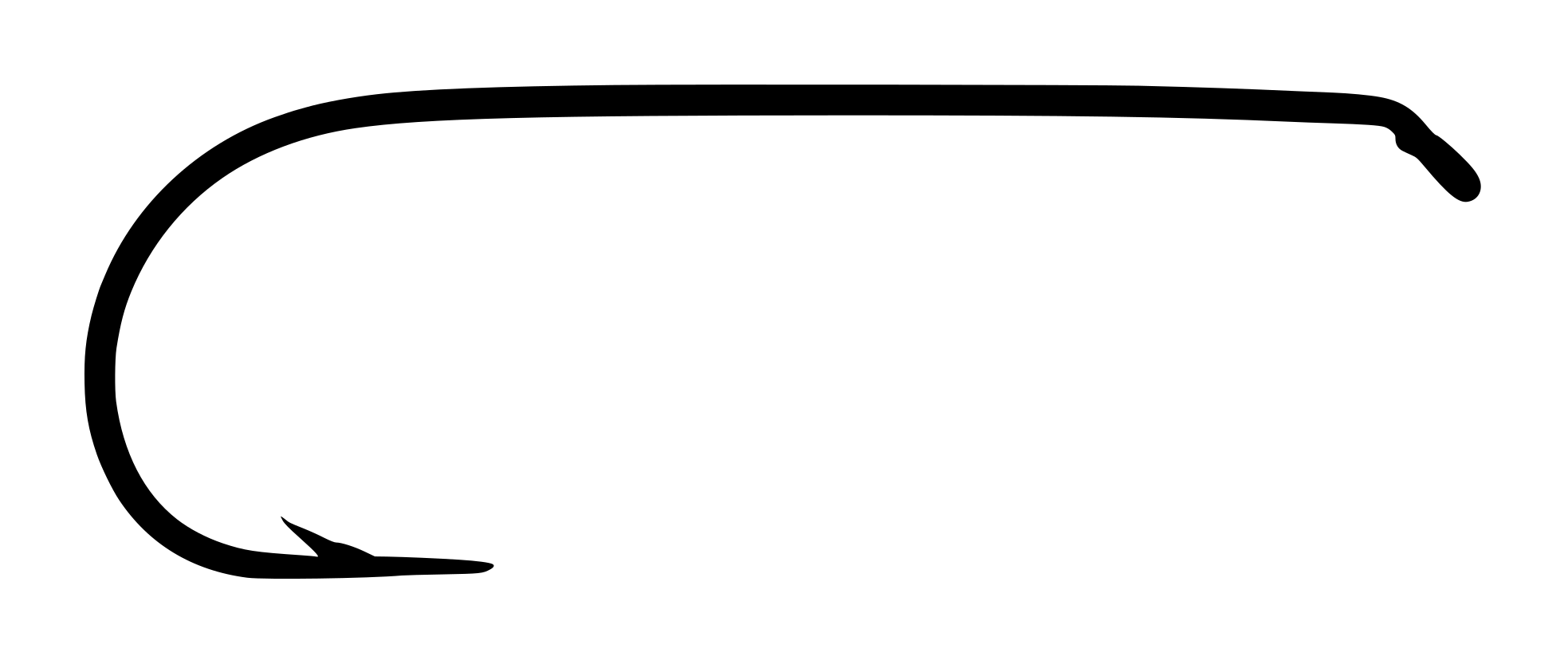
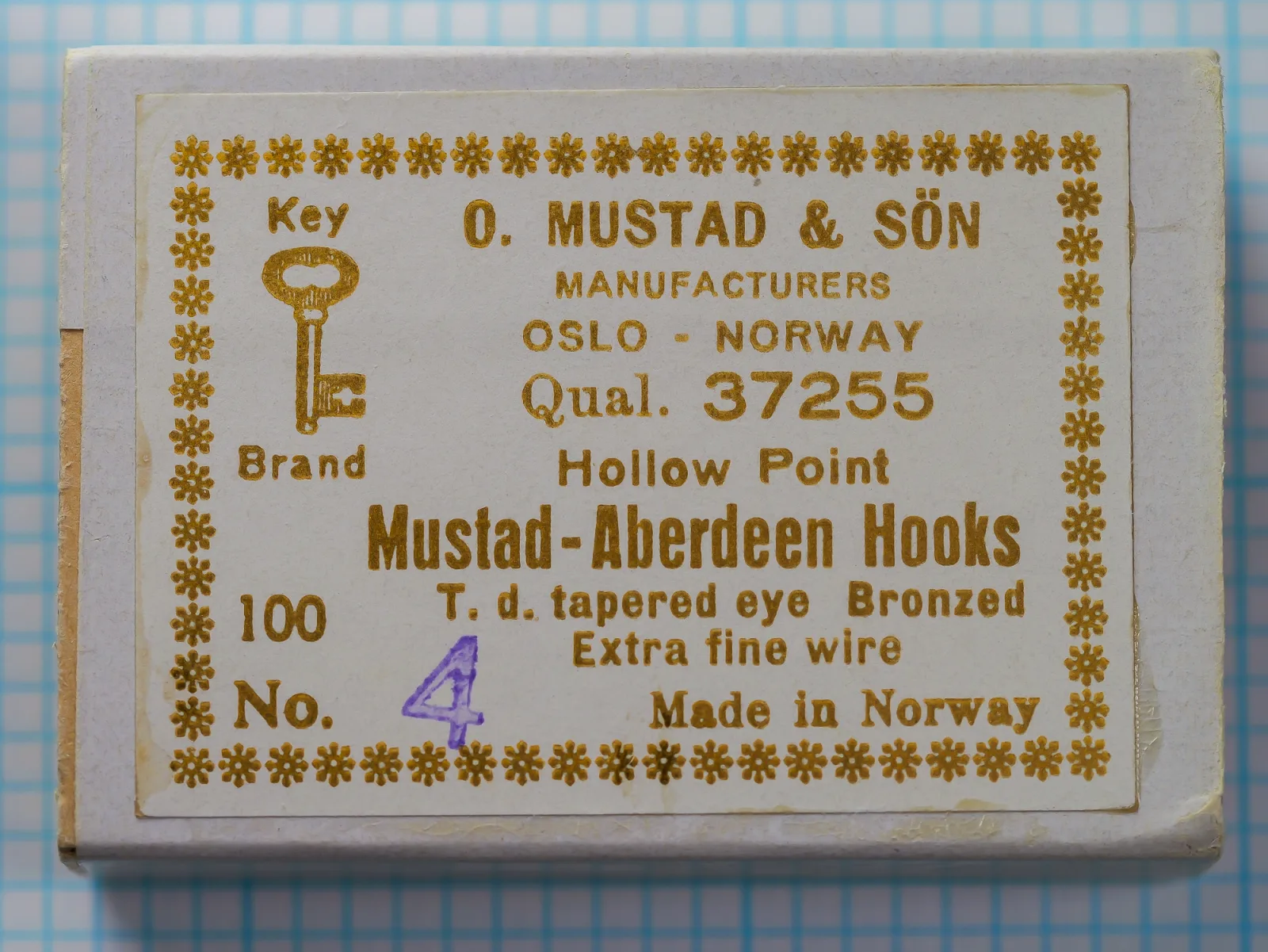
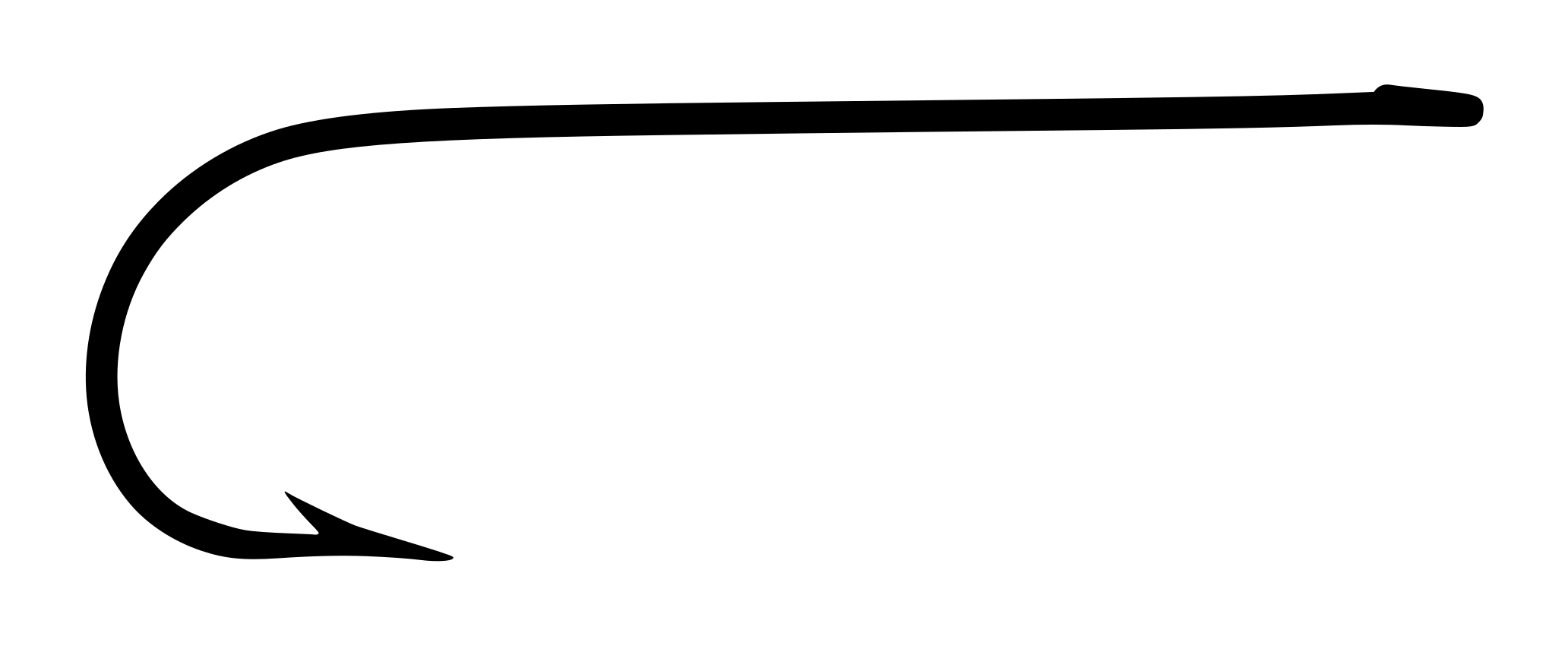
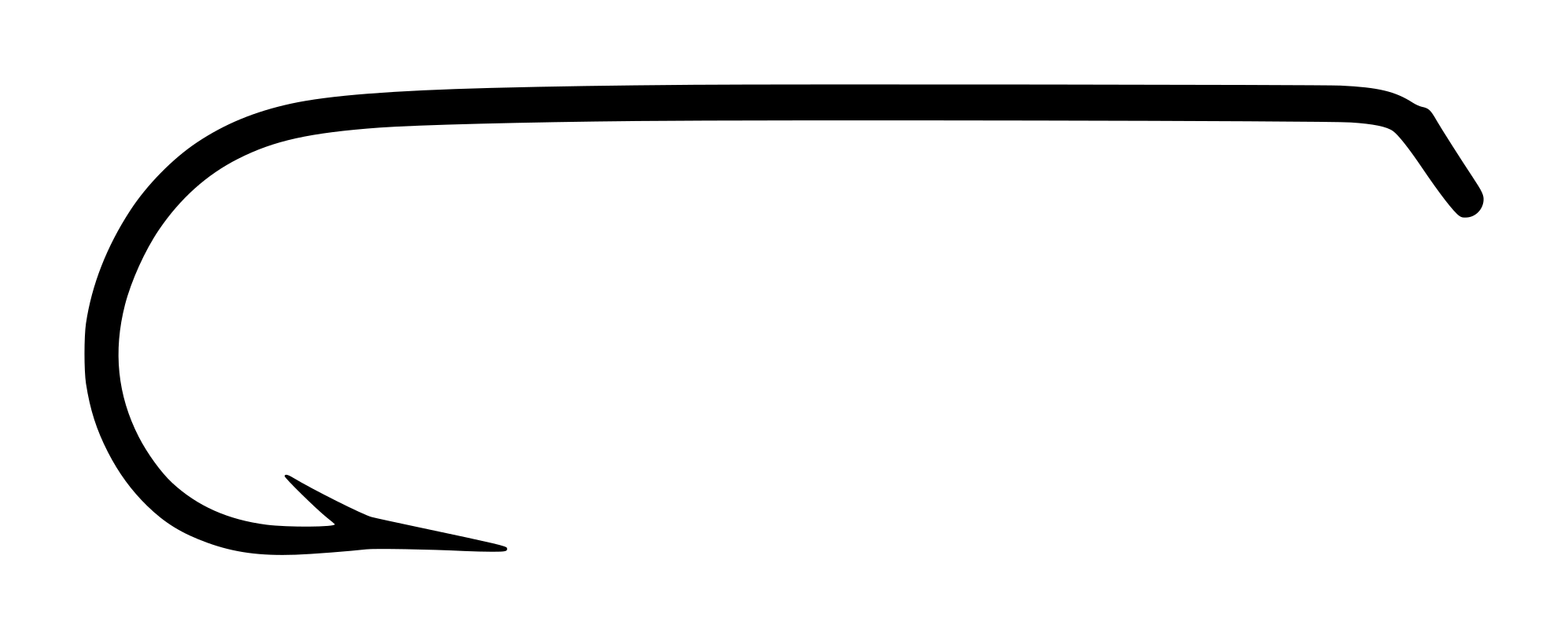
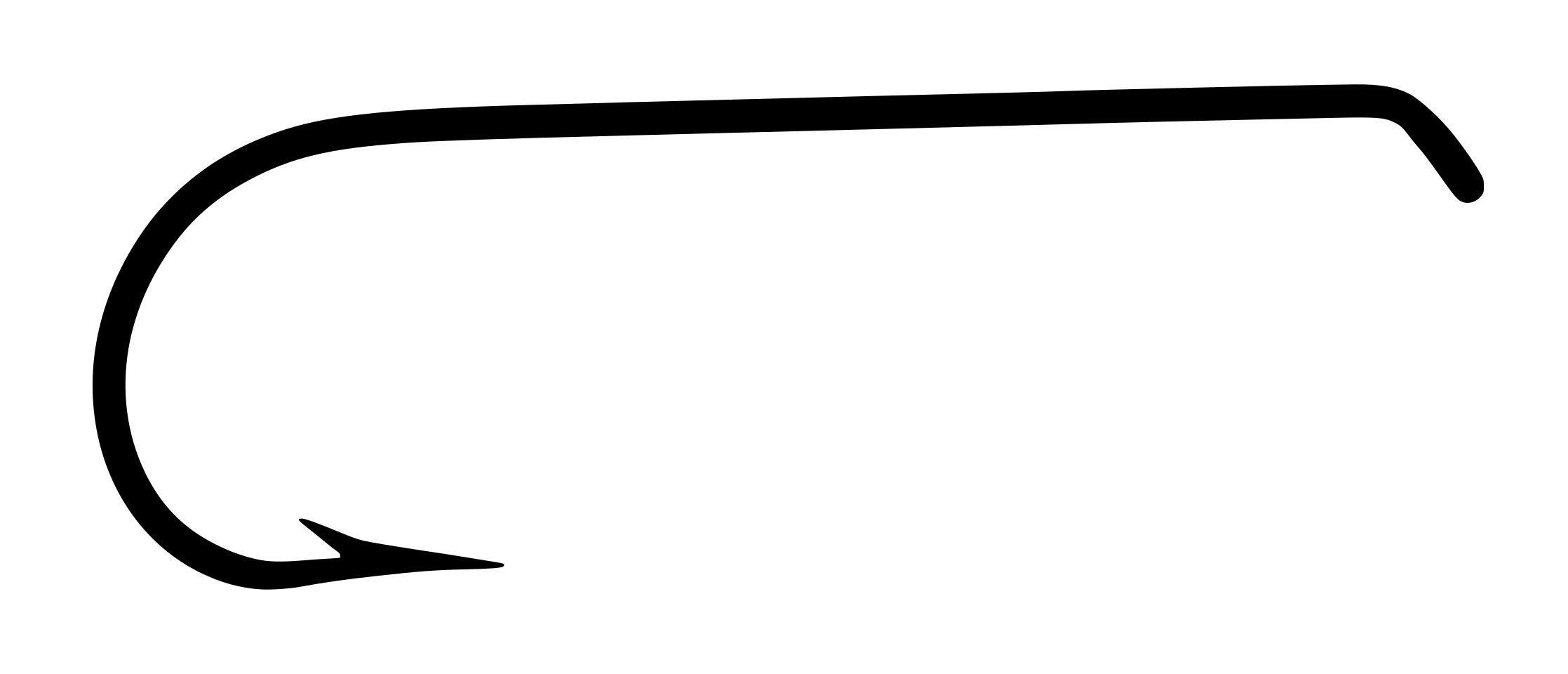
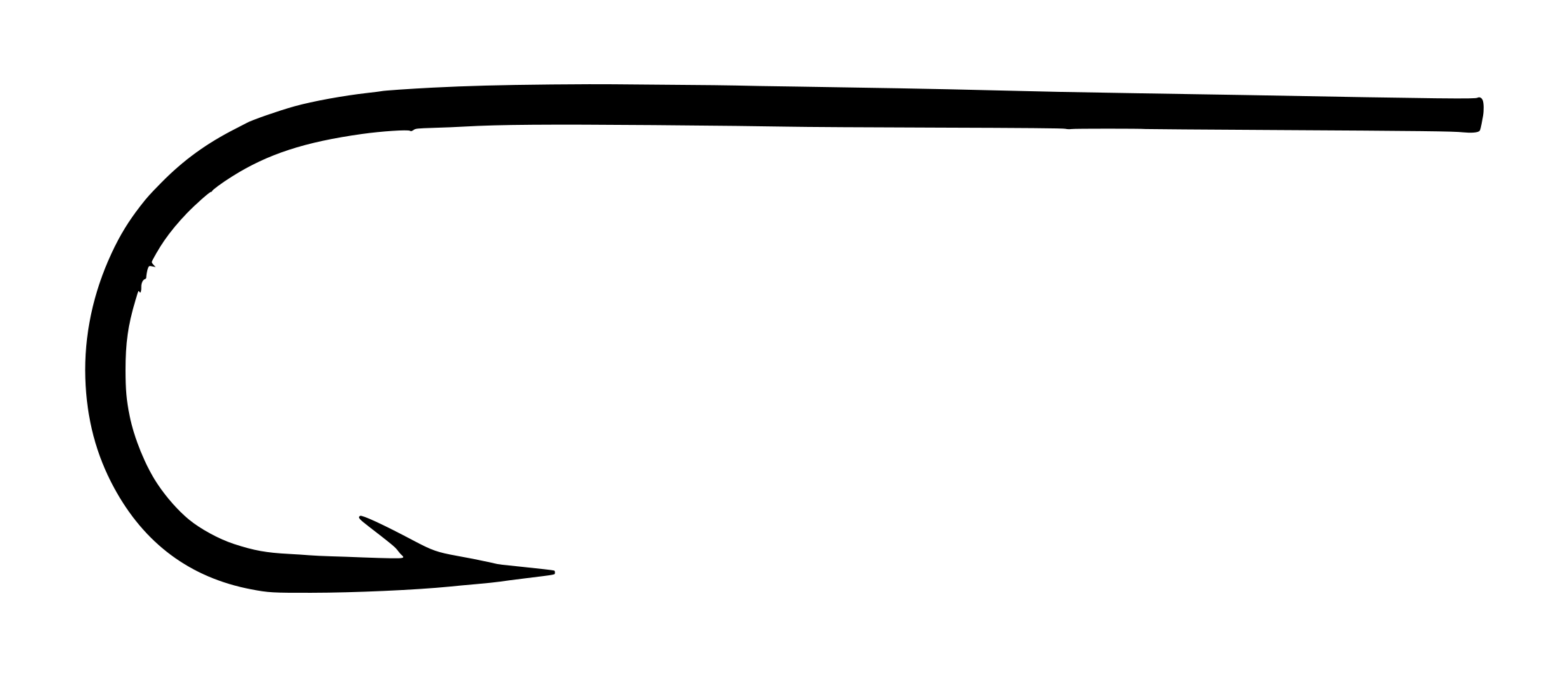
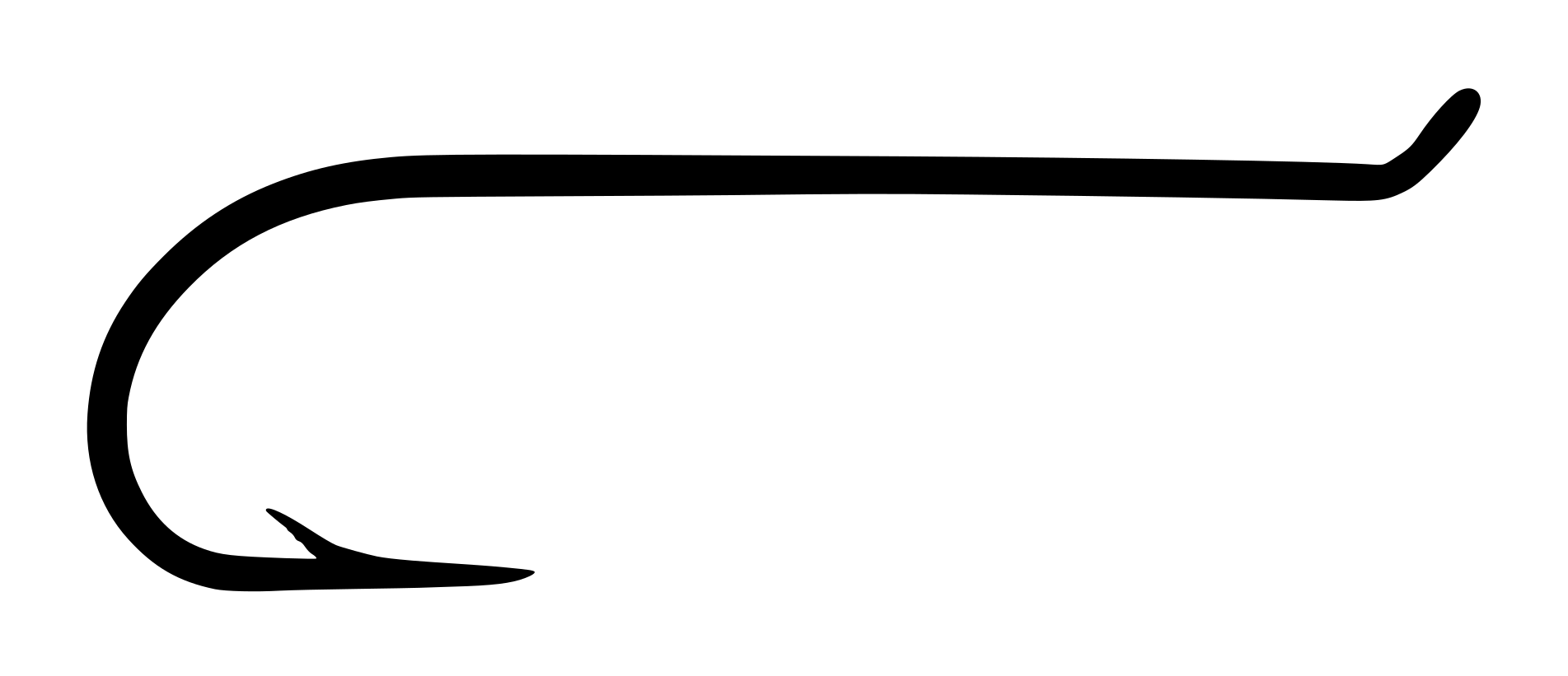
Mustad 37255 Aberdeen Hook, Quality No. 4, in the Key Brand line. A standard bait and wet-fly hook manufactured by O. Mustad & Son in Gjøvik, Norway, featuring a tapered turned-down eye, 2X long shank, extra-fine round wire, and hollow point. The hook is bronzed (warm brown tone) and originally packed with 100 per box in a rigid cardboard container with gold letterpress printing on cream stock.
This box shows no barcode and displays era-consistent manufacturing indicators: printed “Made in Norway” statement, letterpress method, and cream paper stock. The handwritten size marking in purple ink is consistent with mid-twentieth-century warehouse or retailer inventory marking. All 100 hooks remain present in the original box.
The Aberdeen bend is a wide-gape, rounded design suited to live-bait presentations. The hollow point geometry features a concave inner face that transitions sharply to the barb, providing bite geometry suited to softer baits and worm presentations. The 2X long shank allows for larger bait mounting or extended wet-fly dressing while keeping the wire gauge minimal to reduce visibility.
Collecting appeal is primarily historical rather than rarity-driven: Mustad’s industrial production volume kept prices low and availability high, even in original packaging. This example is significant as a period artifact of mid-century Mustad distribution through the Key Brand channel, and demonstrates the standardized packaging and nomenclature Mustad applied across its commercial hook lines.
Original Mustad & Søn packaging for model 37255 Aberdeen hooks, size 4, manufactured in Oslo, Norway. Label specifies hollow point, tapered eye, bronzed finish, extra fine wire construction.
Photographic record
3 cataloged imagesSelect any record to load it above.
3 images shown
Mustad 37255 Aberdeen Hooks Box LabelOriginal Mustad & Søn packaging for model 37255 Aberdeen hooks, size 4, manufactured in Oslo, Norway. Label specifies hollow point, tapered eye, bronzed finish, extra fine wire construction.Open originalMustad 37255 Aberdeen Hook Side ProfileSide profile of a size 4 Mustad 37255 Aberdeen hook showing the characteristic long, fine-wire bend and hollow point geometry. Bronzed finish visible along the shank and barb.Open originalMustad 37255 Aberdeen Hook Top ViewTop view of a Mustad 37255 Aberdeen hook showing the full bend profile, tapered eye, and point geometry. Wire gauge remains consistent from eye to barb.Open original
Technical profile
Turned Down Tapered Eye | Aberdeen | 2X Long | Extra-Fine Wire | Hollow Point | Bronzed
Eye
Tapered Eye, Turned DownTapered eye exhibits fine proportioning consistent with extra-fine wire stock. Taper is gradual and even. No damage or corrosion visible on the hook specimen P. Eye opening measures approximately 0.10"-0.12" (2.5-3.0 mm), appropriate for No. 4 size E.
Wire
Extra-Fine, Round
Shank
2X Long — Plain
Bend
Aberdeen, Standard gapAberdeen bend displays characteristic wide, rounded profile. Bend geometry is symmetrical and shows consistent wire curvature from the shank entry through the turn to the barb P. No reverse or kirb offset—hook sits straight P. Bend depth is moderate relative to shank length, typical of Aberdeen proportioning.
Point
Hollow Point (concave inner face)Short, close-cut barb positioned perpendicular to the shank at approximately 60-65 degrees from horizontal when viewed from the point side E. Barb is integral to the wire rather than filed, indicating hot-rolled and finished-in-place manufacturing I. Barb length approximately 0.08"-0.10" (2.0-2.5 mm) from the main line E.
Finish
Bronzed — Confirmed (stated on packaging)Bronzed finish displays warm brown tone with steel grain texture visible beneath the coating P. Surface finish is uniform across the shank, bend, and point. No areas of rust or copper oxide discoloration visible. Hook surface shows minor age toning and matte finish characteristic of proper bronzing rather than age darkening of bare steel P. Finish remains intact without active corrosion on the specimen examined.
The specimen is in excellent condition. All 100 hooks present in the original rigid cardboard box. The box exterior shows light cream paper yellowing at the edges and minor handling wear to the lid, but all printed text remains legible and vibrant. No hooks are bent, broken, or corroded. The interior box bottom shows no water damage or deterioration. The purple handwritten numeral "4" remains clearly visible on the box face.
The hollow point geometry is defined by a concave (inwardly curved) inner surface that extends from the barb to the tip. This contrasts with the Superior Point, which has a nearly straight, nearly flat inner face. The hollow configuration creates a sharp edge transition at the barb and a more acute angle at the very tip, resulting in a needle-like penetration geometry suited to soft baits (worms, maggots, earthworms) that compress slightly under strike pressure.
The extra-fine wire (approximately 0.025″-0.028″ / 0.64-0.71 mm) reduces mass and water resistance compared to standard wire, making the hook less visible in the water and easier to cast with light tippet. Fine wire also allows dressing with smaller thread and thinner dubbing, reducing overall bulk at the connection point. The trade-off is reduced durability under sustained bending pressure, limiting its use to lighter presentations and smaller fish.
The 2X long shank extends the connection point between the bend and the eye, providing additional dressing area for larger wet-fly patterns and bait presentations. The shank length (approximately 0.90″ / 22.8 mm) is measured in standardized increments relative to the hook’s gap; 2X long indicates approximately twice the standard shank length for the bend family and gauge.
The tapered eye reduces bulk at the connection point by narrowing the wire diameter where it forms the eye loop. This is achieved by drawing the wire slightly finer in that region during manufacture, then forming the loop. The taper improves casting comfort and reduces the mass of the finished fly, an important consideration for light-tippet dry-fly and fine-nymph work, though this hook was originally intended for bait and wet-fly use where the taper is less critical.
This pattern was made in sizes 2-16 (V). We have measurement for size 4. Know the others? Submit calipered measurements and we'll review and add them. Thank you!
Historical context
mustad
O. Mustad & Son was established in Oslo (then Christiania), Norway, in 1832 by Ole Mustad, a blacksmith and hook maker. The company expanded rapidly in the late nineteenth century, establishing a modern factory in Gjøvik, Norway, in 1877. By the early twentieth century, Mustad had become the largest industrial hook manufacturer in Europe, producing millions of hooks annually across dozens of patterns and specifications.
Mustad’s strength lay in vertical integration: the company controlled iron sourcing, wire drawing, hook forging, hardening, finishing, and packaging entirely in-house. This allowed rapid scaling of production and consistent quality control. The Gjøvik factory became a model of industrial organization, with separate departments for each operation and a systematic quality-grading system that assigned each hook specification a unique “Quality” number.
Following World War II, Mustad consolidated its market position and aggressively expanded distribution in North America and the United Kingdom. The company introduced house brands like the Key Brand to differentiate price tiers and to serve wholesale distributors directly. By the 1950s, Mustad had become the largest supplier of fishing hooks globally, with products distributed through tackle shops, sporting goods retailers, and direct sales to institutional buyers (schools, hatcheries, fishing camps).
The company maintained strict manufacturing standards and invested in process improvements, introducing hardening and tempering specifications that improved point durability. Mustad’s “Quality” numbering system became an industry standard, adopted by competitors and recognized by professional tyers as a reliable shorthand for hook specifications. The Gjøvik factory remained the primary manufacturing center through the twentieth century and continues to operate today.
Series History
The Mustad-Aberdeen hooks are part of Mustad’s foundational commercial hook line, manufactured continuously since the early twentieth century. The Aberdeen is a wide-gap, rounded-bend design that originated in Scotland in the 19th century and became a standard pattern internationally by the early 1900s. Mustad adopted the pattern and produced it under the “Aberdeen” designation across multiple wire gauges and shank lengths to serve both fly tyers and live-bait anglers.
The 37255 represents Aberdeen hooks marketed under the “Key Brand” label, a Mustad house brand. The “Quality” numbering system (Qual. 37255) reflects Mustad’s internal catalog organization, where each quality number designated a specific combination of bend, eye type, wire gauge, and shank length. This allowed retailers and wholesalers to order by a single number rather than specifying all parameters individually.
The 2X long shank variant of the Aberdeen was introduced as part of Mustad’s response to demand for shank-extended patterns suitable for larger wet flies and bait presentations. The extra-fine wire option (also known as “fine” in some catalogs) was developed to minimize water displacement and improve the aesthetics of dressing, making it popular with both professionals and amateur tyers by the 1950s.
By the 1960s, Mustad’s Aberdeen line had become one of the most widely distributed hook patterns in North America and Europe. The box format with 100-hook quantity was the standard commercial package for wholesale distribution to tackle shops and fly-tying retailers. Production continued with minimal design changes throughout the twentieth century, and the Aberdeen remains in continuous manufacture today, though modern versions typically feature chemically sharpened points and different wire specifications than these mid-century examples.
Era and Packaging Dating
No barcode present on packaging — strong indicator of pre-1974 manufacture. Letterpress printing method (not offset lithography) consistent with 1945-1965 production. Cream-colored paper stock and integrated cardboard box construction with printed (not label-applied) text matches Mustad's mid-century box design. "Made in Norway" printed statement reflects Mustad's post-WWII emphasis on Norwegian origin branding. Handwritten purple ink notation on box face is consistent with mid-century warehouse inventory marking before automated systems. Typography and logo style are consistent with Mustad catalogs of the early 1950s through mid-1960s. Likely date range: 1950-1965, with 1955-1960 as the most probable window.
Assembly Line Precision: The Gjøvik Factory System
During the 1950s, Mustad's Gjøvik factory employed over 1,000 workers and operated under a highly specialized assembly-line system where individual workers repeated a single operation—wire straightening, bending a specific bend, tempering, finishing—for their entire shift. A skilled bend operator could form approximately 500-600 hooks per hour. Inspectors then visually examined hooks for defects, broken points, or improper barbs before packaging. The "Key Brand" marking on boxes like this one reflected a deliberate pricing strategy: Mustad sold identical specifications under different brand names (Key, Superior, Tiemco early domestic lines) to different wholesale channels, allowing retailers to compete on price without cannibalizing each other's margins. The same No. 4 2X Long Extra-Fine Aberdeen hook might be packaged under "Key Brand" for one wholesaler and "Mustad Standard" for another, often manufactured on the same day in the same factory.
Design lineage and influence
The Aberdeen bend originated in Scotland in the mid-nineteenth century as a response to demand for a wider-gape pattern than the Sneck, which was the dominant fly hook at the time. The Aberdeen’s rounded, symmetrical bend provided better bite geometry for live baits (particularly worms and small fish) while maintaining casting properties suitable for wet flies. By the 1880s, the pattern had been adopted by English hook makers including Allcock and H. Milward & Sons, and had spread to Norwegian manufacturers including Mustad.
Mustad’s version of the Aberdeen became the most widely distributed globally due to the company’s aggressive export strategy and bulk pricing. American tackle companies including Pflueger, Hardy Bros., and later Orvis purchased Mustad-manufactured hooks in bulk, often under their own branding. This made the Mustad Aberdeen the de facto standard pattern for North American anglers by the early twentieth century.
Competitors to the Aberdeen included the Sproat (with a deeper, more angular bend), the Limerick (with an angular but wider bend), and various proprietary patterns from regional manufacturers. However, the Aberdeen’s balance of simplicity, versatility, and manufacturability ensured its dominance and continuous production to the present day.
The extra-fine wire variant represented a twentieth-century refinement, driven by the rise of fly-tying as a recreational hobby rather than purely a commercial practice. Amateur tyers favored the reduced bulk and improved aesthetics of fine-wire hooks, and Mustad responded by offering extra-fine versions across most of its bend families by the 1940s. This hook type—the 2X long extra-fine Aberdeen—became the standard for baitfish imitations (small streamers) and terrestrial patterns (ant and beetle imitations) in fly fishing by the 1960s.
Best matchRelated by Attribute
Computed automatically from catalog data — updated as new hooks are added.
Matches: Bend, Shank, Wire, Gap, Forging +3 moreDiffers: Eye: Tapered Eye vs Ball Eye; Eye Orient.: Turned Down vs Straight / Inline; Point: Hollow Point vs Superior +1 more
Matches: Bend, Shank, Gap, Eye Orient., Forging +3 moreDiffers: Wire: Extra-Fine vs Fine (1X Fine); Eye: Tapered Eye vs Ball Eye; Point: Hollow Point vs Superior +1 more
Matches: Bend, Wire, Gap, Eye Orient., Finish +4 moreDiffers: Shank: 2X Long vs 3X Long; Eye: Tapered Eye vs Ball Eye; Point: Hollow Point vs Standard / Spear +1 more
Traditional wet-fly and bait hook. The long shank and tapered eye are suited to tying larger wet-fly patterns and terrestrial imitations. Extra-fine wire reduces bulk and water displacement. Originally designed for bait fishing—particularly live minnow and worm presentations—in freshwater streams and small rivers. The standard gap is appropriate for both fly and bait applications without requiring a specialized deep-point geometry.
Modern Equivalents
Hook
Match Quality
Notes
Mustad 3906B
Excellent
Contemporary Mustad Aberdeen equivalent. Same bend family, tapered eye, turned-down orientation, and 2X long shank. Modern version has chemically sharpened point and different wire tempering. Functionally interchangeable for most fly and bait applications.
Tiemco 200R
Very Good
Modern equivalent with Aberdeen-inspired bend geometry. Tapered eye, turned-down, extra-fine wire. Point sharpening method differs, but overall functional profile is similar for small streamer and wet-fly applications.
Daiichi 1550
Good
Contemporary Japanese alternative with similar bend proportions. Slightly finer wire and sharper point, but comparable gap and shank length. Not an exact equivalent but suitable for the same applications.
Collector notes
Rated 3.0/10. Mustad's industrial production volume and widespread distribution mean that original boxes of Aberdeen hooks remain readily available on the secondhand market. Collector demand is casual—these hooks are picked up incidentally as part of vintage tackle lots rather than actively sought. The box format and mid-century era add modest interest to condition-conscious collectors of Norwegian tackle, but the lack of rarity or scarcity prevents a higher rating.
Reference value
$8 – $22 USD estimate
Packaging format
GW-MUS-BOX-01Catalog code
What makes this hook collectible: Original manufacturer box with intact content is the primary appeal. The 100-hook quantity is substantial enough to interest fly tyers looking for usable vintage stock. The cream-colored cardboard with gold letterpress printing is characteristic of mid-century Mustad packaging and attractive to tackle box collectors. The hand-marked size notation adds minor documentary interest. The complete absence of corrosion and the perfect hook count suggest careful storage and handling.
What limits the rating: Mustad’s mass production meant that hundreds of thousands of these boxes were manufactured and distributed. Examples remain common on the secondhand market, particularly in North America and the United Kingdom. The specific size (No. 4) is neither unusually small nor large, further limiting scarcity. The Extra-Fine Wire variant is less common than standard wire, but not rare. The 2X long shank is more specialized than standard shank, but not exceptionally scarce.
Desirable variants: Original boxed sets of smaller sizes (No. 12, 14, 16) are more challenging to find than larger sizes. Double or bulk lots (multiple boxes together, as originally distributed to retailers) command a slight premium. Boxes with hand-marked inventory codes, particularly when the code is known to correspond to a specific retailer or region, add documentary value. Early examples (1945-1955) with different text or logo styling are preferred over later printings.
Condition factors: Complete hook count is essential; a missing hook or two reduces value measurably. Box condition is secondary—minor creasing, edge yellowing, and lid wear are expected and acceptable. Water damage, active corrosion on the hooks, or broken/bent hooks reduce value significantly. Original interior tissue wrapping, if present, adds 10-15% premium. Pristine mint condition boxes (sealed or nearly sealed) are rare and command 2-3x typical values for opened boxes.
Packaging
Rigid cardboard box with attached lid. Cream colored stock with gold/brown letterpress printing. Decorative floral border around entire perimeter. Printed text centered: "Key Brand" and "Key" logo at top. "O. MUSTAD & SON | MANUFACTURERS | OSLO - NORWAY" in large gold text. "Qual. 37255" below manufacturer name. "Hollow Point | Mustad-Aberdeen Hooks | T.d. tapered eye Bronzed | Extra fine wire | Made in Norway" and "100 | No. 4" at bottom. All text is printed directly on the box face; no label overlay. Box has integral lid closure. Light cream paper stock with visible slight age yellowing on edges. No barcode present. Handwritten notation "4" in purple ink on box face. Interior contains 100 hooks arranged in organized rows.
Market Value Notes
Low ($8): Good condition — opened box, all or nearly all 100 hooks present, minor box wear, hooks bright with no corrosion.<br />
High ($22): Excellent condition — sealed or near-sealed box, complete hook count, minimal box wear, interior tissue intact if originally present.<br />
Premium factors: Original manufacturer box in clean condition, complete hook count, mid-twentieth-century era, Norwegian origin branding, hand-marked inventory notation, extra-fine wire variant.<br />
Platforms: eBay US/UK (primary), vintage tackle dealers, online auction platforms (occasional).<br />
Confidence: E estimated — based on limited transaction data for complete Mustad boxes of this era. Mustad hooks in original packaging typically sell $5-30 depending on size, completeness, and box condition. This example is at the middle-to-upper end due to box quality and complete content.
Where to Find
eBay UK and US vintage fishing tackle sections; vintage sporting goods dealers specializing in Norwegian tackle; online tackle auctions (Bonhams, Millers Auctions UK); European online marketplaces (Vinted, Catawiki). Complete original boxes are more frequently encountered in European markets than North America. Expect 1-3 examples available at any given time across all platforms.
Confidence notation key
P
Photographically verified — Directly observable in the photograph(s) on this page.
V
Verified by documentation — Confirmed by manufacturer catalog, spec sheet, or published reference.
I
Inferred — A logical deduction from observable or documented evidence, not directly stated.
E
Estimated — An approximation based on visual comparison, proportional analysis, or limited data.
S
Speculative — A reasoned hypothesis that cannot be confirmed from available evidence.
Claims with no notation are confirmed by multiple independent sources. All photographs on garrenwood.com are taken on a measurement grid where each square equals 1/10 inch (0.1″ / 2.54 mm).