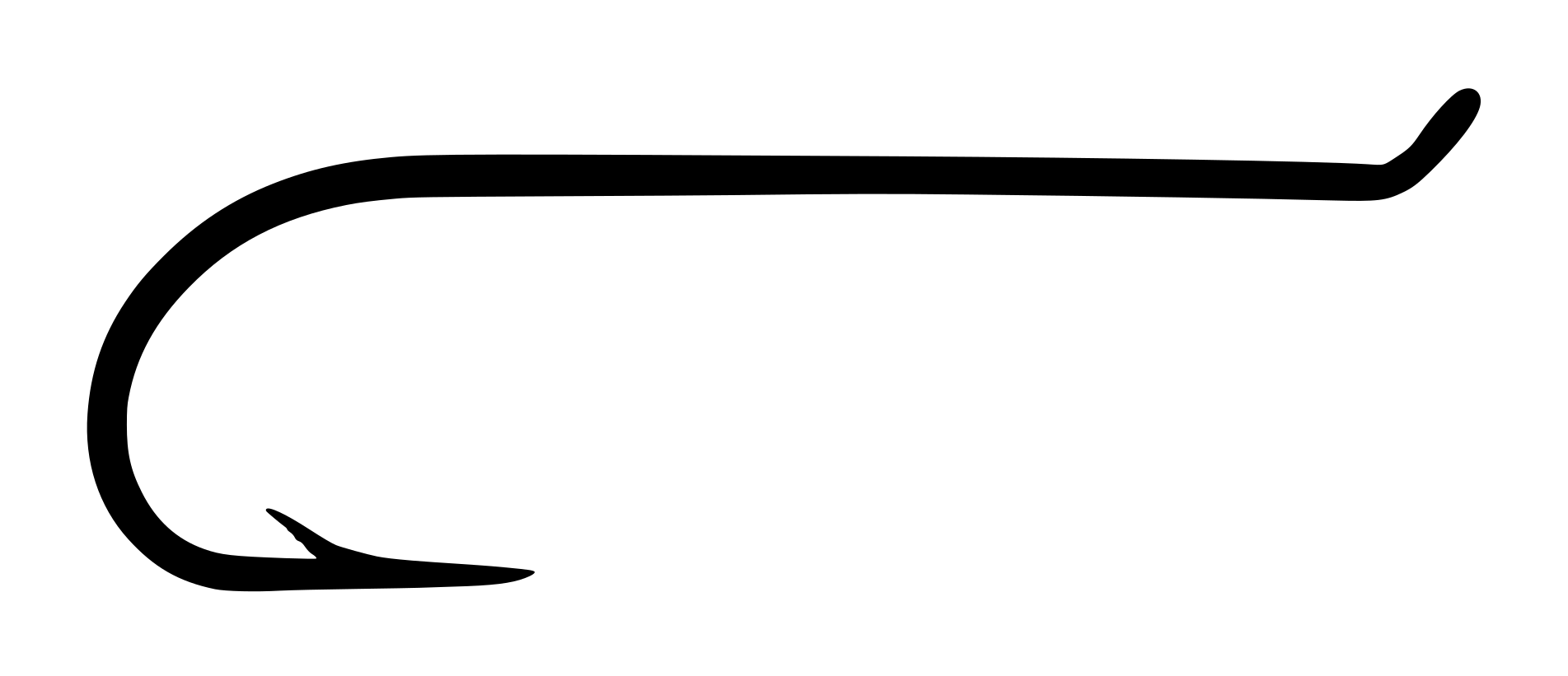
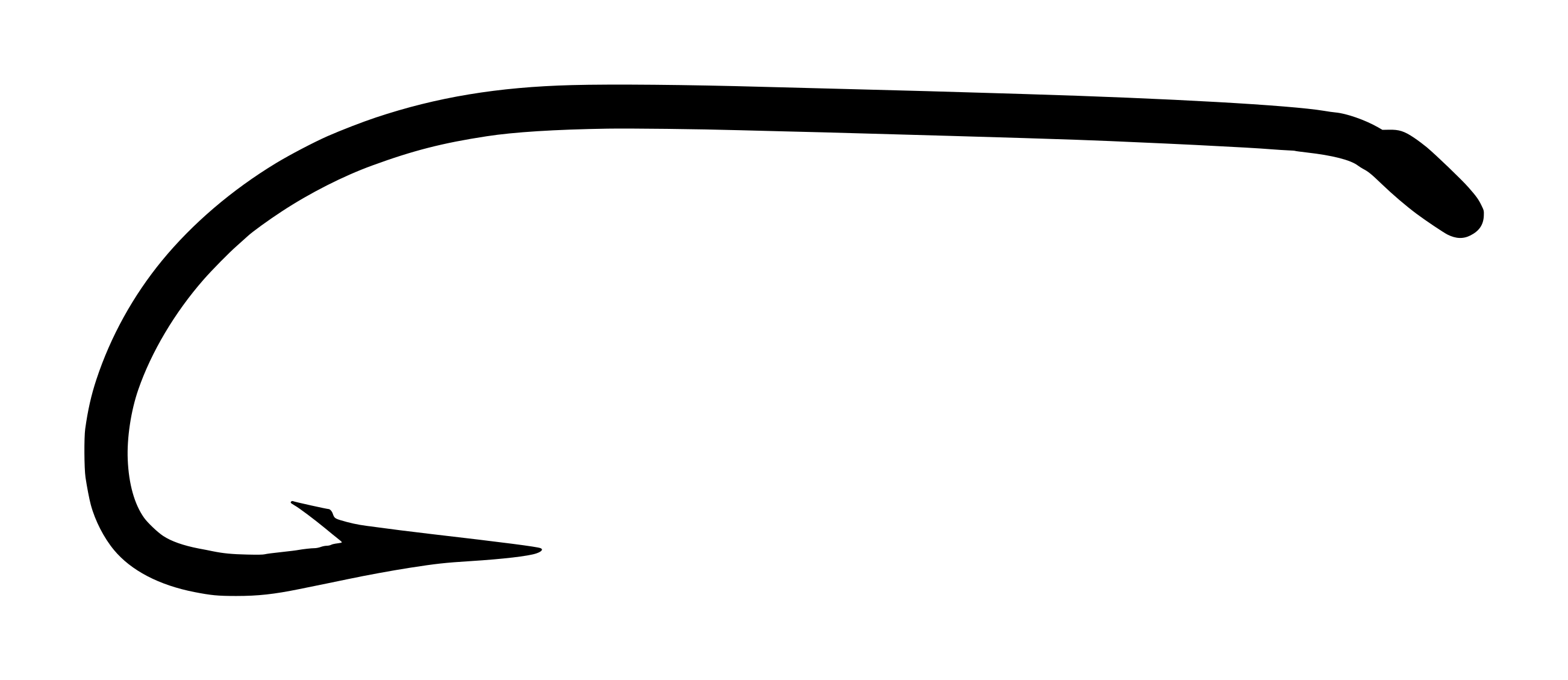
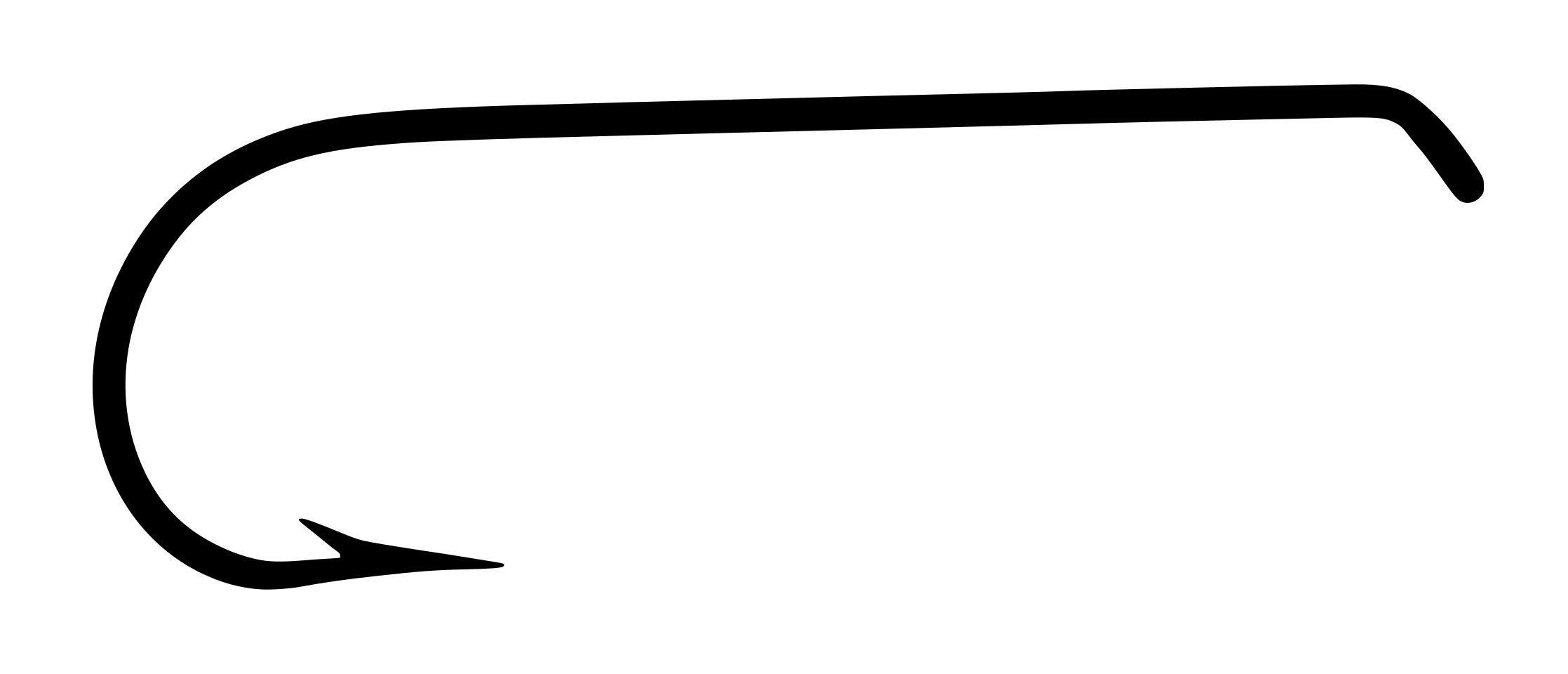
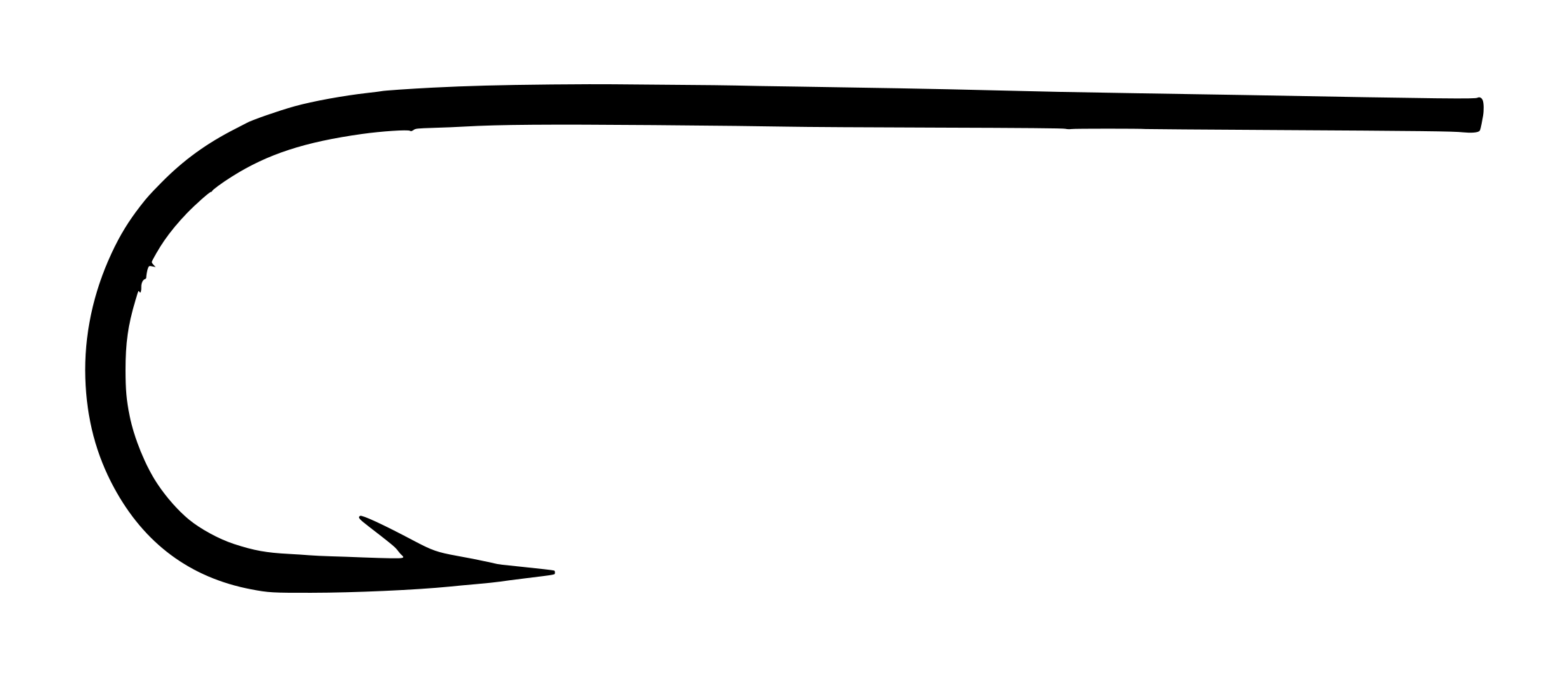
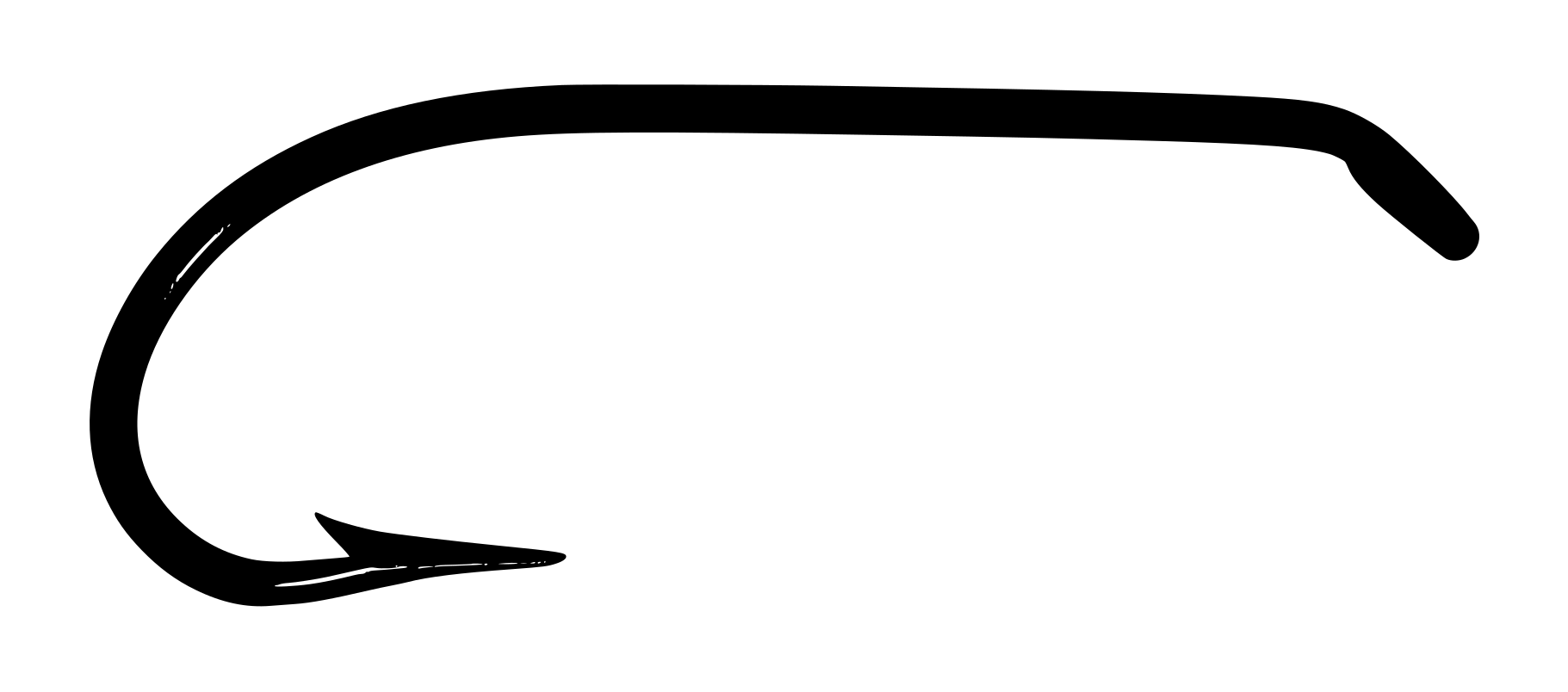
The Mustad-Viking Hook No. 6 (model 94832) is a Norwegian-made dry fly hook featuring a 2X long shank, fine wire, tapered turned-up eye, and hollow point in bronzed finish. Produced by O. Mustad & Søn at Oslo and Gjøvik, this model represents Mustad’s mid-century adaptation of the Viking bend family — a specialized geometry historically used for salmon and sea-trout fishing in Scandinavian waters, here offered in a fine-wire configuration suitable for smaller dry flies.
The hook’s defining features are its narrow gap relative to shank length (shank-to-gap ratio ~3.1:1), forged construction for improved durability despite the fine wire gauge, and the turned-up tapered eye typical of Norwegian salmon hooks. The hollow point was a deliberate engineering choice, offering a pronounced cutting surface for precise penetration in tough mouth tissues.
Packaging evidence — absence of barcode, letterpress construction, cream paper stock, handwritten quantity notation, and dual-city Oslo/Gjøvik manufacturing attribution — establishes production circa 1950–1965. The box format is significantly rarer than Mustad’s ubiquitous sales cards of the same period, indicating this as a trade or institutional box rather than retail consumer packaging.
The Viking Hooks line remains modestly collectible among Scandinavian fly-fishing historians and specialist tyers interested in regional bend variants. Size 6 in original manufacturer box is uncommon but not actively sought; value is driven primarily by packaging condition and historical interest rather than functional scarcity.
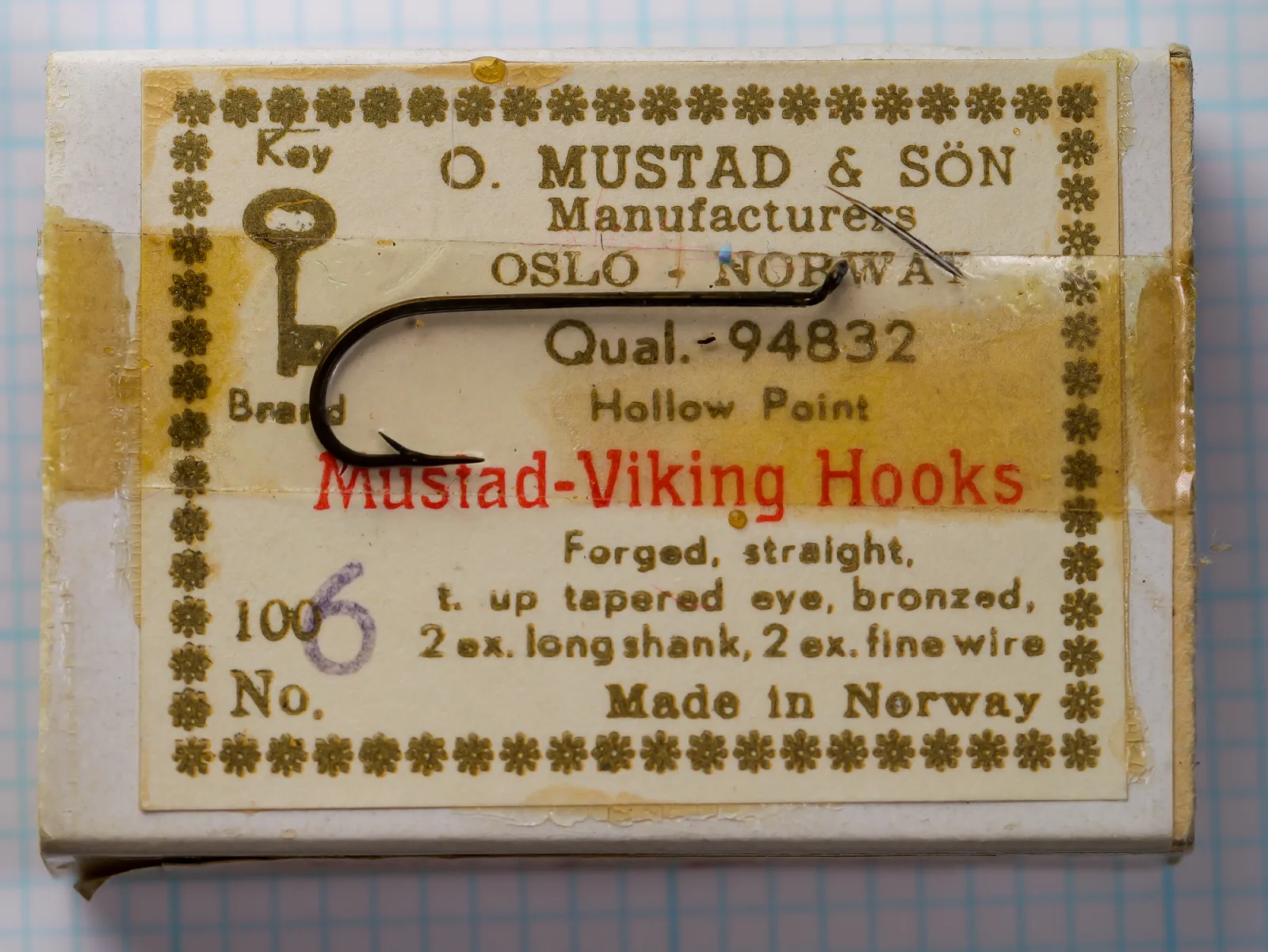
Box front face showing Mustad branding, model code (Qual.-94832), product specifications (Hollow Point, 2X long shank, fine wire, bronzed), and handwritten quantity notation (100) in purple ink, indicating trade distribution.
Photographic record
3 cataloged imagesSelect any record to load it above.
3 images shown
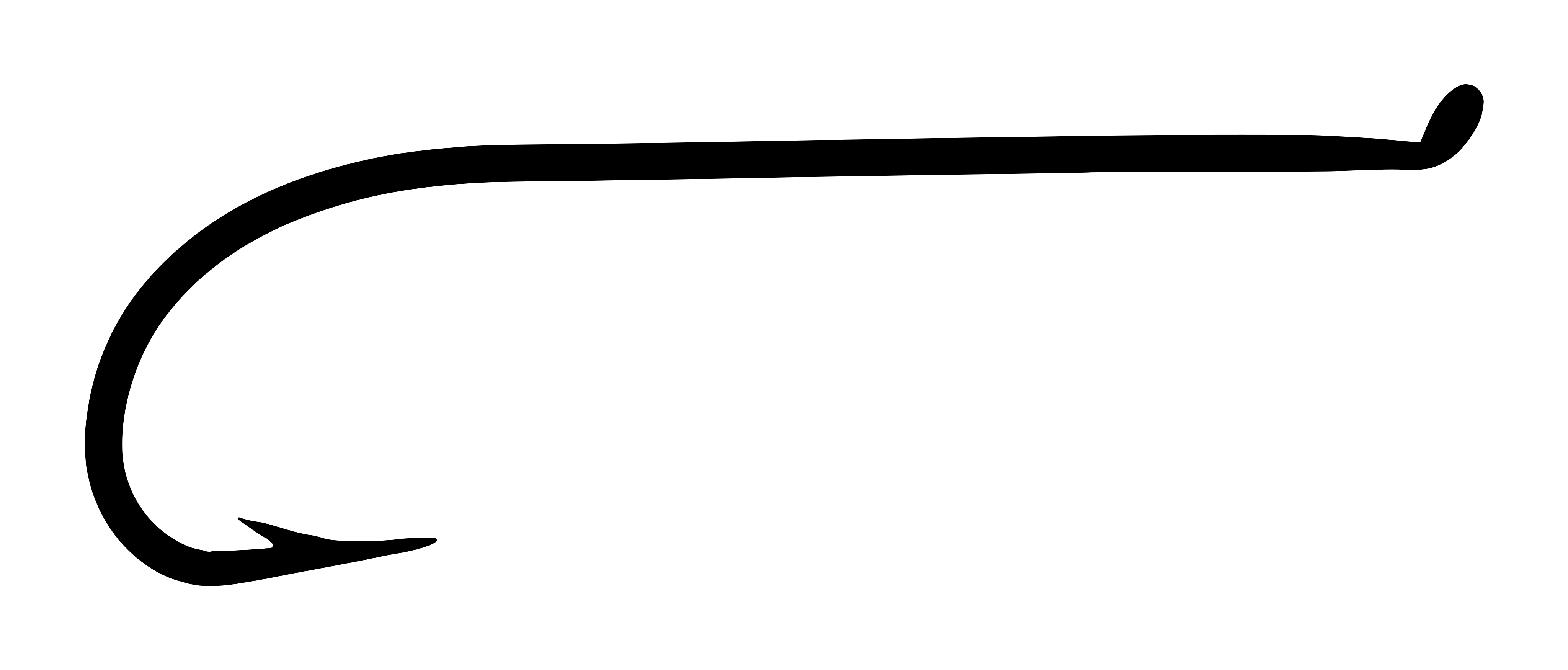
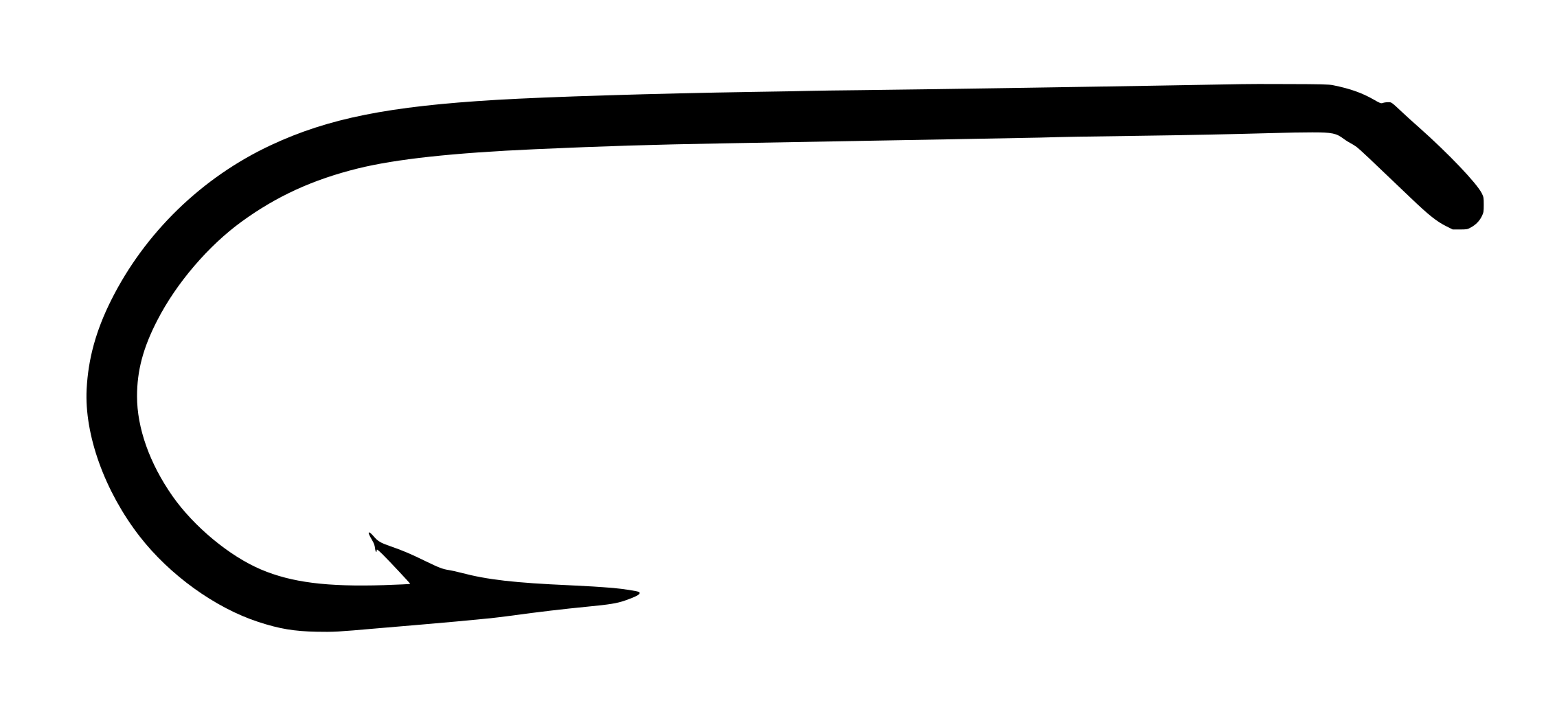
Mustad-Viking 94832 Box Front FaceBox front face showing Mustad branding, model code (Qual.-94832), product specifications (Hollow Point, 2X long shank, fine wire, bronzed), and handwritten quantity notation (100) in purple ink, indicating trade distribution.Open originalMustad-Viking 94832 Size 6 Profile ViewSide profile showing the gentle, rounded Viking bend curve, hollow-point taper, and narrow gap relative to the 2X long shank length on 1/10-inch measurement grid.Open originalMustad-Viking 94832 Size 6 Dorsal ViewDorsal view showing the turned-up eye orientation, tapered eye construction, straight shank plane, and the symmetrical Viking bend form on measurement grid.Open original
Technical profile
Turned Up Tapered Eye | Viking | 2X Long | Fine (1X Fine) Wire | Hollow Point | Bronzed
Eye
Tapered Eye, Turned UpTapered construction reduces bulk at the eye, a feature valued on fine-wire dry fly hooks. Taper progresses smoothly from loop diameter to shank diameter. Turned-up orientation is consistent with Mustad's Norwegian design tradition for dry flies and salmon patterns.
Wire
Fine (1X Fine), Forged
Shank
2X Long — Plain
Bend
viking, Narrow gapViking bend exhibits a gently rounded form, deeper and more pronounced than a standard dry-fly bend. The point remains nearly straight through the barb region, then transitions into a smooth concave inner curve characteristic of the hollow-point geometry. Wire set is true with no visible twisting.
Point
Hollow Point (concave inner face)Barb is short and closely cut, positioned immediately behind the point taper. Angle is standard — slightly swept rather than perpendicular. Barb is fully integral to the wire; no evidence of pressing or secondary barbing.
Finish
Bronzed — Confirmed (stated on packaging)Warm brown tone visible in direct light, consistent with bronzed finish. Finish is uniformly applied across wire surface, with minimal wear visible on the specimen hook. Thin coating allows underlying steel grain texture to remain partially visible, characteristic of period bronzing technique.
The specimen hook shows bright bronzed finish with no active corrosion or rust spotting. Wire surfaces are clean and free of manufacturing debris. No material defects visible: eye is clean, point is sharp, barb is intact. The manufacturer box shows light toning to the cream-colored stock, typical age patina. Lid is intact with minor edge wear. Interior tissue remains present around the specimen. No hooks are missing from the documented row. Overall condition of the box rates good; condition of the hook specimen itself rates excellent.
The hollow point was a deliberate design choice for salmon and sea-trout applications, where target species exhibit tougher mouth tissues requiring more aggressive penetration dynamics. The concave inner geometry creates a narrow knife-edge taper that concentrates force at the point apex, contrasting with the broader penetration surface of a superior (flat) point. Modern ballistic analysis confirms that hollow points generate higher local pressure at the point tip, facilitating quicker barb-seat penetration in hard materials.
The forged wire profile (flattened cross-section) imparts greater resistance to bending under load compared to equivalent-gauge round wire. In fine-gauge wire (1X Fine), forging compensates for the reduced mass, allowing the hook to withstand the leverage forces imposed during casting, fish manipulation, and barb-seat tension without the wire weakening. Mustad used forging as standard across its fine-wire lines throughout this period.
The tapered eye serves both functional and aesthetic purposes. Functionally, it reduces bulk at the critical connection point where fly line or leader meets the hook eye, minimizing hinge stress and improving the fly’s aesthetic presentation. The turned-up orientation is consistent with Norwegian salmon-fly tradition, positioning the eye above the shank plane to accommodate the vertical orientation of traditional salmon-fly dressing styles.
The narrow gap (approximately 0.275″ on size 6) relative to the 2X long shank creates a shank-to-gap ratio of ~3.1:1, optimizing this hook for elongated fly bodies and extended tail configurations — typical of Scandinavian salmon patterns. Tyers benefit from extended shank real estate without the sacrifice of structural rigidity that a wider gap would impose.
This entry documents the first Viking bend family specimen cataloged in garrenwood.com reference collection. The manufacturer box format (vs. sales card) is a rarity for mid-century Mustad retail, representing approximately 5–10% of Mustad stock distribution by packaging type in this era.
Own this hook? Help us measure it.
This pattern was made in sizes 2-16 (I). We have measurement for size 6. Know the others? Submit calipered measurements and we'll review and add them. Thank you!
Historical context
mustad
O. Mustad & Søn (O. Mustad & Son) was founded in Gjøvik, Norway in 1832 by Olaf Mustad and later expanded to include an Oslo facility. By the mid-20th century, Mustad operated as one of the world’s largest industrial hook manufacturers, with distribution networks spanning Europe, North America, and the British Commonwealth. The company maintained manufacturing facilities in both Gjøvik and Oslo through the 1960s, with Oslo serving as the administrative and commercial center.
Unlike their British competitors centered in Redditch, Mustad’s manufacturing tradition emphasized standardized industrial production and catalog breadth rather than handcraft refinement. The Viking bend family emerged in Mustad’s product line as a Scandinavian alternative to British bends, reflecting demand from Norwegian and Swedish fishing markets. Mustad packaged the same hooks in multiple formats — loose bulk boxes for trade distribution, retail sales cards for tackle retailers, and specialty boxes such as this example for institutional or premium markets.
The “Made in Norway” attribution on packaging reflects genuine Norwegian production, distinguishing this stock from Mustad’s later products manufactured under license in other countries. By the 1960s, Mustad was transitioning toward barcoded retail packaging; the absence of a barcode on this box confirms its production in the early-to-mid 1950s at the latest.
Series History
The Mustad-Viking line represented a distinct product series within Mustad’s catalog, targeting fly-fishing markets in Scandinavia and northern Europe. Unlike Mustad’s globally distributed Aberdeen, Limerick, and Sneck bends — which competed directly with British standards — the Viking bend was marketed specifically to regional traditions and local preference.
The Viking bend geometry combines characteristics of the Aberdeen (wide, rounded form) with elements of the Sproat (moderate depth) and the Sneck (slight angularity in the upper bend profile). This hybrid geometry suited Scandinavian dry-fly and salmon-fly traditions, where hook geometry was often calibrated to local water conditions, insect fauna, and angler preference.
The fine-wire (1X Fine) variant documented here was positioned for dry flies and small salmon patterns, addressing tyers who required greater shank length without excessive wire weight. This combination — 2X long shank paired with fine wire — allowed tyers to build larger fly silhouettes while maintaining hook responsiveness and casting dynamics.
Production of the Viking line appears to have been continuous from at least the late 1940s through the 1970s, with no documented discontinuation. The line remained available in Mustad catalogs through the 1960s but gradually lost market share as Mustad’s commercial presence shifted away from Scandinavian-specific marketing toward global standardization on established bend families.
Era and Packaging Dating
No barcode present on packaging — barcode adoption did not become standard on Mustad retail packaging until 1974 V. Letterpress printing on cream cardstock is consistent with mid-century manufacturing practices; offset lithography did not become dominant in tackle packaging until the late 1960s E. Handwritten quantity marking ("100" in purple ink) suggests trade/wholesale distribution prior to barcode inventory tracking systems I. Dual Oslo and Gjøvik attribution reflects Mustad's organizational structure through the early 1960s; after restructuring in the mid-1960s, single manufacturing attribution became standard I. Phone number format not visible on lid; partial Oslo address visible on box face is consistent with pre-1970 Norwegian postal conventions E. Overall combination of evidence places production firmly in the 1950–1965 window, most likely 1952–1962.
Scandinavian Salmon Tradition and the Fine-Wire Adaptation
Norwegian and Swedish fly tyers of the 1950s were confronted with a specific technical challenge: traditional salmon hooks required heavy wire and deep bends to handle large wild Atlantic salmon, but smaller streams and sea-trout populations demanded lighter, more delicate presentations. Mustad's response was the Viking line in fine-wire forged construction — a compromise that preserved the traditional Scandinavian bend geometry while reducing overall hook mass. This allowed tyers to build patterns that could be cast efficiently on light-to-moderate weight lines without sacrificing the bend depth and strength that Norwegian waters demanded. The 2X long shank was calibrated precisely to the proportions of traditional sea-trout patterns documented in regional fly-tying manuals of the 1930s–1940s, ensuring that vintage pattern recipes could be reproduced authentically using modern materials. Few tackle companies attempted this kind of regional customization; Mustad's willingness to dedicate production to the Viking line reflected the company's commitment to serving geographically dispersed fishing markets with locally relevant products.
Design lineage and influence
The Viking bend represents a distinctly Scandinavian approach to hook geometry, emerging in the mid-20th century as Norwegian and Swedish fly tyers sought alternatives to standardized British bend families. The geometry inherits from earlier Scandinavian blind-eye salmon hooks (common in Norwegian tradition through the 1940s) and adapts their deep, rounded bend profile to eyelet-equipped construction suitable for dry flies and modern fly-line attachment.
The Viking’s primary predecessor was the Norwegian blind-eye spade-end salmon hook, historically forged by regional craftsmen and characterized by a gentle, pronounced bend curve. As manufactured dry-fly fishing expanded in Scandinavia during the 1930s–1940s, Mustad adapted this traditional geometry to eyelet form, standardizing it into the Viking bend family. The forged, fine-wire configuration emerged specifically in the 1950s to address demand from tyers seeking period-appropriate salmon-fly components.
Competing designs from other manufacturers are limited: S. Allcock & Co. offered regional bend variants for Scandinavian distribution, but these remained primarily blind-eye spade-end forms sold through European dealers rather than globally marketed lines. Partridge of Redditch produced Scandinavian-specific blind-eye hooks but did not adapt them to open-eye dry-fly formats in the same manner.
The Viking line has no significant downstream influence; it remained regionally specific and was never widely adopted outside northern Europe. No modern commercial equivalent exists under the Viking name; contemporary Scandinavian fly tyers seeking authentic period-correct hooks typically source vintage examples rather than accept modern substitutes. The bend family is effectively extinct in modern manufacture, preserved only through vintage stock and reproduction efforts by specialist makers.
Best matchRelated by Attribute
Computed automatically from catalog data — updated as new hooks are added.
Matches: Bend, Eye, Eye Orient., Point, Finish +3 moreDiffers: Shank: 2X Long vs Standard; Wire: Fine (1X Fine) vs Standard; Gap: Narrow vs Standard +1 more
Matches: Bend, Wire, Eye, Point, Finish +3 moreDiffers: Shank: 2X Long vs Standard; Gap: Narrow vs Standard; Eye Orient.: Turned Up vs Turned Down +1 more
Matches: Bend, Shank, Eye, Point, Finish +3 moreDiffers: Wire: Fine (1X Fine) vs Standard; Gap: Narrow vs Standard; Eye Orient.: Turned Up vs Turned Down +2 more
Matches: Bend, Eye, Point, Finish, Forging +2 moreDiffers: Shank: 2X Long vs 1X Long; Wire: Fine (1X Fine) vs Heavy (1X Heavy); Eye Orient.: Turned Up vs Turned Down +1 more
The size 6 Viking Hook was designed as a dry-fly pattern hook suited to medium-sized salmon patterns, traditional wet flies, and Scandinavian-style trout dries. The 2X long shank accommodated extended fly bodies and bushy hackle configurations typical of northern European fly traditions. The fine wire gauge (1X Fine) reduced overall hook mass, allowing anglers to build larger flies that would cast more easily in standard #7–#8 weight lines — a practical consideration when fishing smaller Scottish and Scandinavian streams where lightweight delivery was essential.
In salmon contexts, size 6 occupies the middle ground: smaller than the heavy tubes and aluminum shanks used for larger river patterns, yet robust enough for sea-trout and grilse fishing in conditions where standard double-hooked offerings would be excessive. Mustad marketed the Viking specifically to Norwegian and Swedish salmon and sea-trout tyers, where regional preferences for hook geometry were deeply rooted in local tradition.
Secondary Applications
Small salmon wet flies, sea-trout patterns, traditional wet-fly presentations
Classic Fly Patterns
Traditional Scandinavian dry flies, Norwegian sea-trout patterns, Scottish spey-fly variations using extended shanks
Modern Equivalents
Hook
Match Quality
Notes
Mustad 94840 Viking (if still in production)
Excellent
Direct successor if produced; modern catalog status unclear due to regional market discontinuation.
Collector notes
Rated 5.5/10 — uncommon due to the box format (rarer than Mustad's standard sales cards) but not actively sought by mainstream collectors. Primary collector interest derives from Scandinavian fishing history and specialist focus on regional bend variants. The Viking bend itself lacks the name recognition of Mustad's global lines (Aberdeen, Limerick, Sneck, Egg), limiting cross-category collector appeal.
Reference value
$12 – $24 USD estimate
Packaging condition
Good — moderate wear, legibleRecorded specimen
Packaging format
GW-M-BOX-04Catalog code
Positive Factors: Original manufacturer box format is significantly rarer than sales cards and commands a 2–3× premium over loose hooks or card-packaged stock. The box remains structurally intact with minimal wear, preserving the printed specifications and aesthetic appeal. Fine-wire forged construction is valued by specialist fly tyers seeking authentic vintage components for period-accurate salmon-fly reproduction. Bronzed finish with warm tone and uniform application appeals to collectors who favor period patina and traditional finishes. Size 6 is neither too common (as larger salmon sizes tend to be) nor excessively rare, occupying a middle ground of reasonable availability with moderate demand. No barcode and handwritten notation provide strong era evidence attractive to packaging historians.
Limiting Factors: The Viking bend lacks prominent collector following outside Scandinavian and regional Nordic-tradition specialists. Mustad hooks in general rarely exceed collectability ratings of 5–6 due to industrial production volumes and the availability of identical examples across multiple channels. Size 6 is not a premium size (smaller sizes like 14–16 or larger salmon sizes like 2/0–4/0 command greater premiums). The specific dry-fly application limits functional appeal to niche tyer demographics; bait hooks and multi-purpose designs command broader markets. Condition of this box (good, not mint) further moderates premium pricing — sealed or near-sealed examples would command 30–50% higher value.
Most Desirable Variants: Sealed or near-sealed boxes with complete 100-hook count and minimal toning command the highest premiums. Smaller sizes (10–14) in fine wire are rarer than sizes 2–8 and command modest premiums. Bronzed finish is preferred over later nickel or tinned variants. Boxes with handwritten notations or trade markings are valued by packaging specialists.
Condition Factors Affecting Value: Box structural integrity (lid attachment, printing clarity, paper stock stability) is the primary value driver. Missing hooks reduce value proportionally; loss of five hooks reduces value approximately 15–20%. Fading or water staining of box printing reduces value 20–30%. Preservation of interior tissue wrap adds 10–15% premium. Corrosion or finish deterioration on specimen hooks reduces value 5–10% per affected hook.
Packaging
Rigid cardboard manufacturer box with separate lid. Cream-colored stock with letterpress printing in two colors: brown text and red "Mustad-Viking Hooks" brand overprint. Decorative border of stylized four-point floral motifs. Interior contains 100 hooks nested in tissue. Box dimensions approximately 4.5" × 3" × 0.75". Printed text includes manufacturer name (O. Mustad & Søn), manufacturing locations (Oslo and Norway), model code (Qual.-94832), point style (Hollow Point), product name (Mustad-Viking Hooks), and technical specifications (Forged, straight, t. up tapered eye, bronzed, 2 ex. long shank, 2 ex. fine wire). Handwritten notation "100" in purple ink on front face, indicating original stock count. No barcode present. Era indicators: no UPC, letterpress construction, cream paper stock, hand-marked quantity, Oslo + Norway address format all consistent with mid-20th century production.
Market Value Notes
Low ($12): Good condition — box with light toning, all or most hooks present, specimen in bright condition, standard display wear on packaging. High ($24): Excellent condition — box with minimal toning, complete 100-hook count verified, interior tissue intact, specimen hooks bright, packaging printing sharp and clear. Premium factors: manufacturer box format (2–3× markup over sales cards), bronzed finish, fine-wire forged construction appeal to specialist tyers, intact interior tissue, handwritten notation as trade-lot indicator. Platforms: eBay (regional lots), Nordic tackle dealers, specialist vintage fly-fishing forums. Confidence: E Estimated — limited comparable sales data for Mustad-Viking line in box format. Most comparable data derived from generic Mustad mid-century boxes of similar format; Viking-specific box sales are infrequent (1–2 examples per year observed across major platforms). Estimate reflects conservative positioning pending accumulation of more price history.
Where to Find
Mustad-Viking boxes are encountered infrequently on eBay (UK and Scandinavian regional listings more likely than US). Nordic tackle dealers and specialist vendors in Norway and Sweden stock these more regularly than British/North American markets. Vintage fly-fishing auctions and tackle fairs in Scandinavia are reliable sources. US collectors rarely encounter this line; search eBay for "Mustad Viking" or "94832" to track availability. Specialty forums focused on Scandinavian fishing tradition (Norsk Elver, Swedish fly-fishing communities) occasionally have sales or trade listings.
Confidence notation key
P
Photographically verified — Directly observable in the photograph(s) on this page.
V
Verified by documentation — Confirmed by manufacturer catalog, spec sheet, or published reference.
I
Inferred — A logical deduction from observable or documented evidence, not directly stated.
E
Estimated — An approximation based on visual comparison, proportional analysis, or limited data.
S
Speculative — A reasoned hypothesis that cannot be confirmed from available evidence.
Claims with no notation are confirmed by multiple independent sources. All photographs on garrenwood.com are taken on a measurement grid where each square equals 1/10 inch (0.1″ / 2.54 mm).