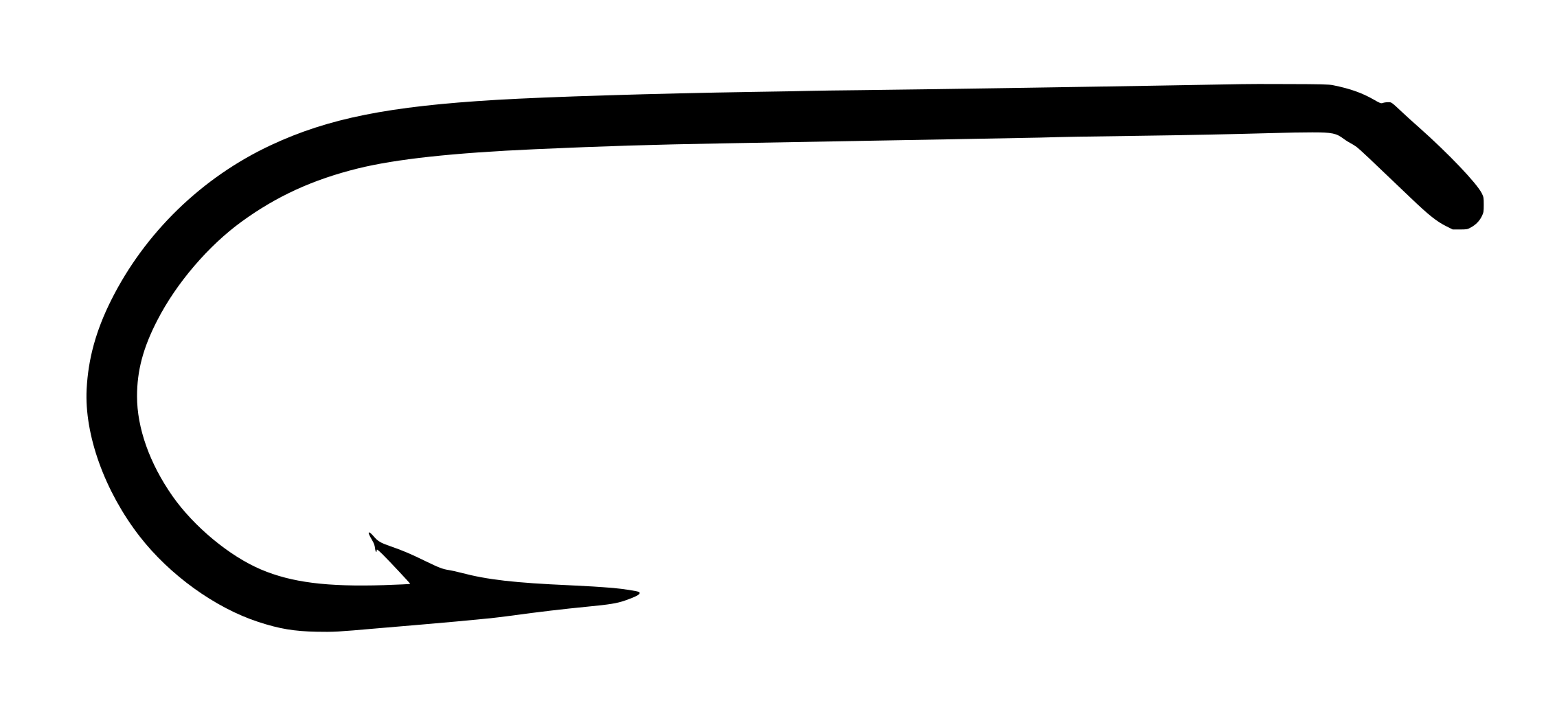
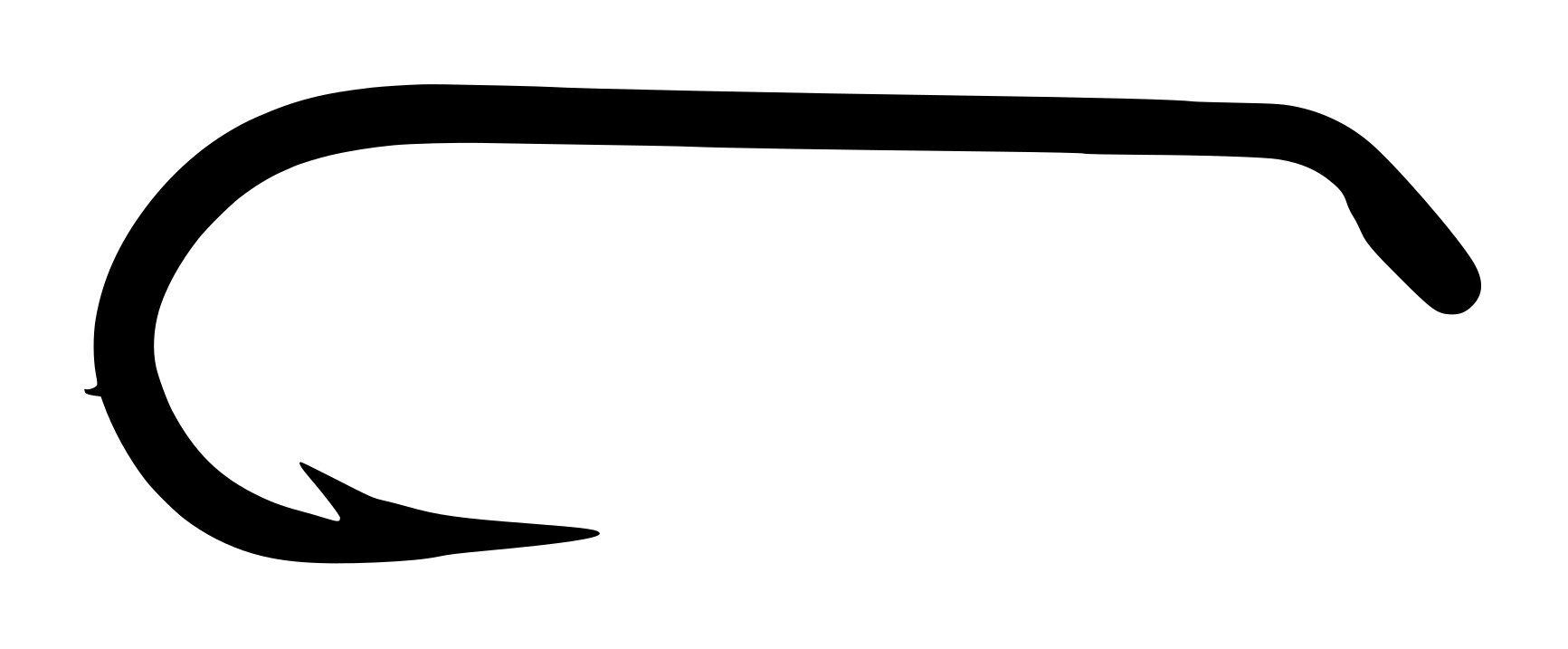
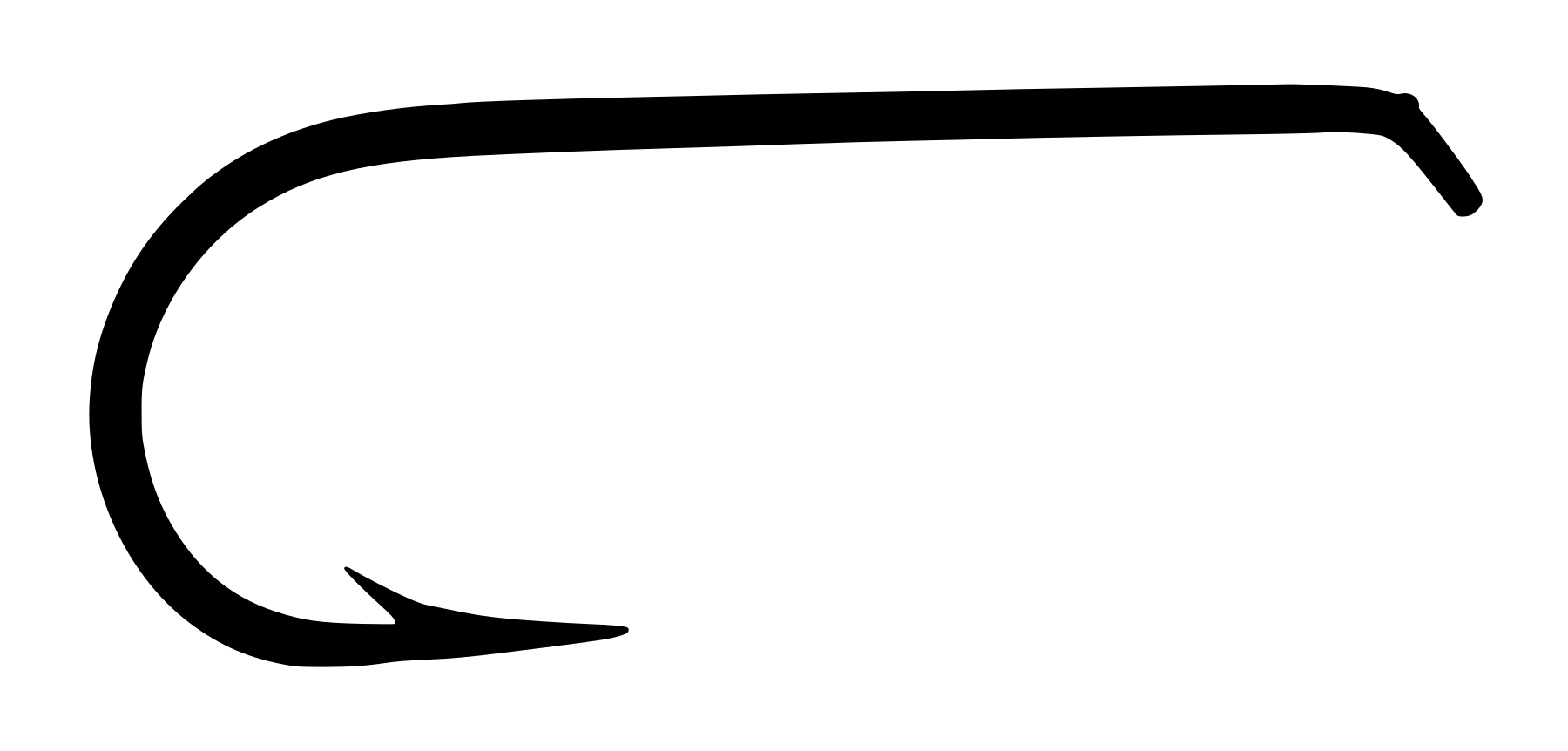
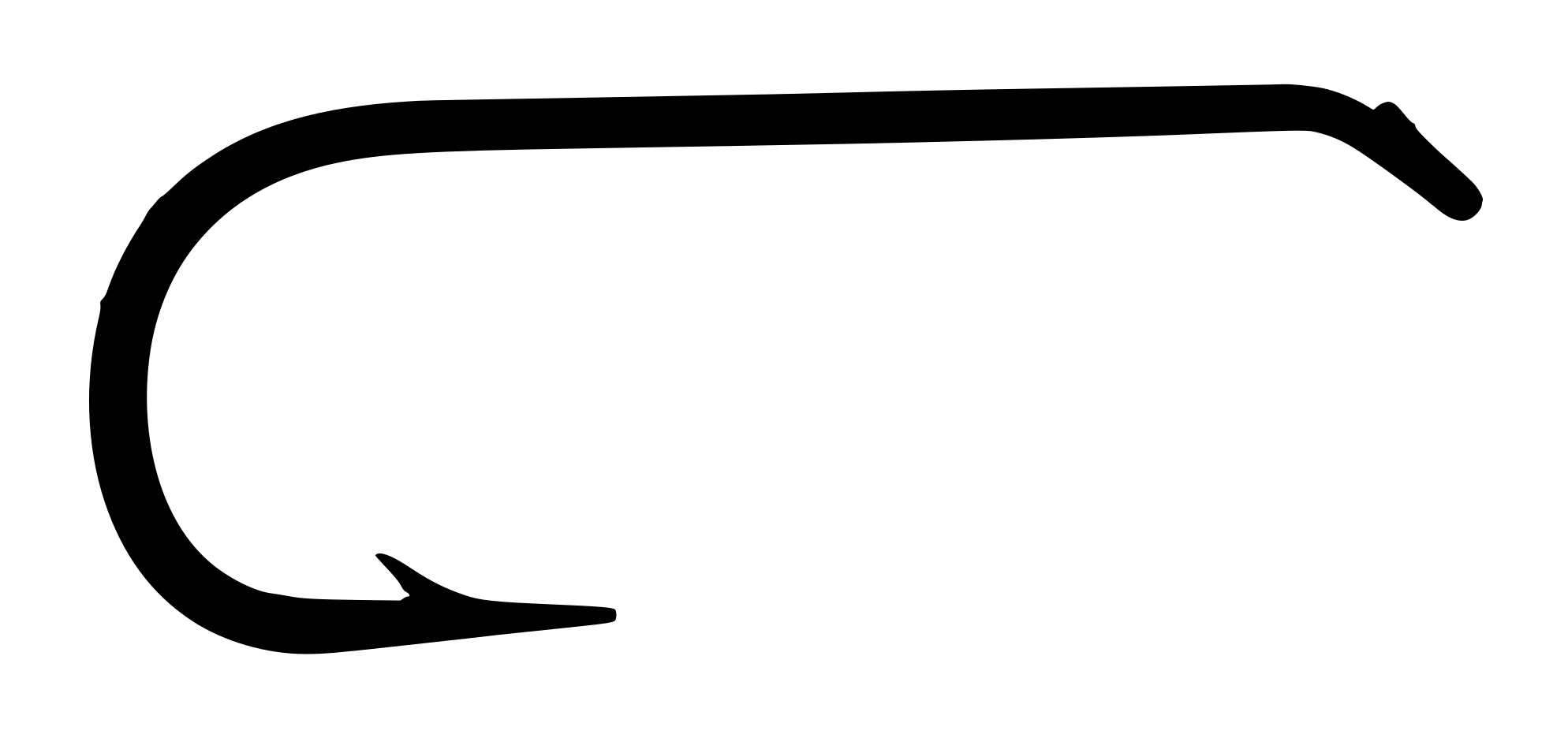
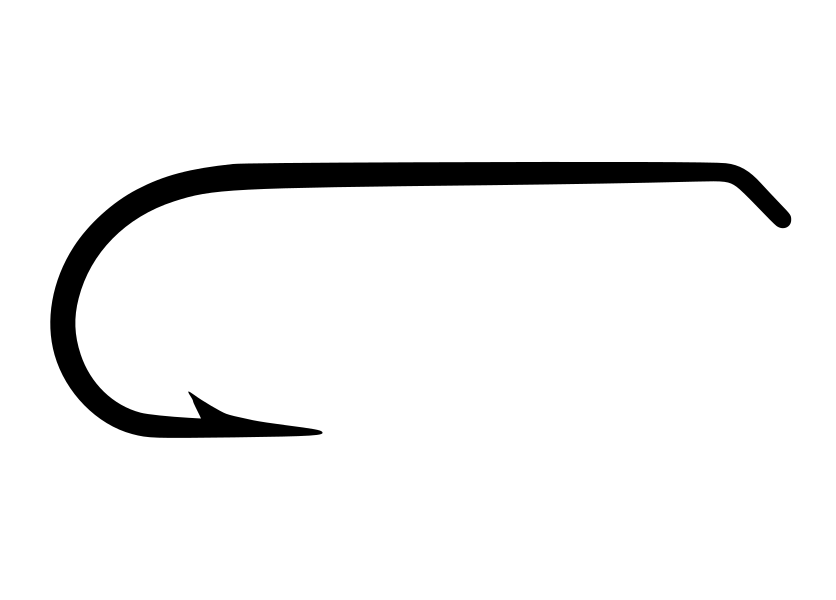
Mustad 7957 BX (c. 1960s–1970s) is a legendary long-shank streamer hook manufactured by O. Mustad & Søn in Oslo, Norway. The 4X long shank, hollow point, forged wire, and tapered down eye combine to create the quintessential platform for classic wet flies and streamers, particularly the iconic Muddler Minnow. The bronzed finish provides a warm, stealthy appearance favored by traditional fly tiers.
This model represents Mustad’s peak years as the global hook manufacturing leader. The Mustad-Viking designation signals a premium tempering and manufacturing process—the forging increases tensile strength and durability without adding bulk. The concave hollow point geometry enables rapid tissue penetration with minimal angler pressure, ideal for delicate presentations and soft-mouthed trout.
Vintage cards in original packaging are increasingly sought by fly tying historians and collectors specializing in mid-century salmon and streamer traditions. The 7957 BX remains the benchmark standard for long-shank, heavy-duty fly work and represents a pinnacle of mechanical hook engineering before modern chemical sharpening and automation.
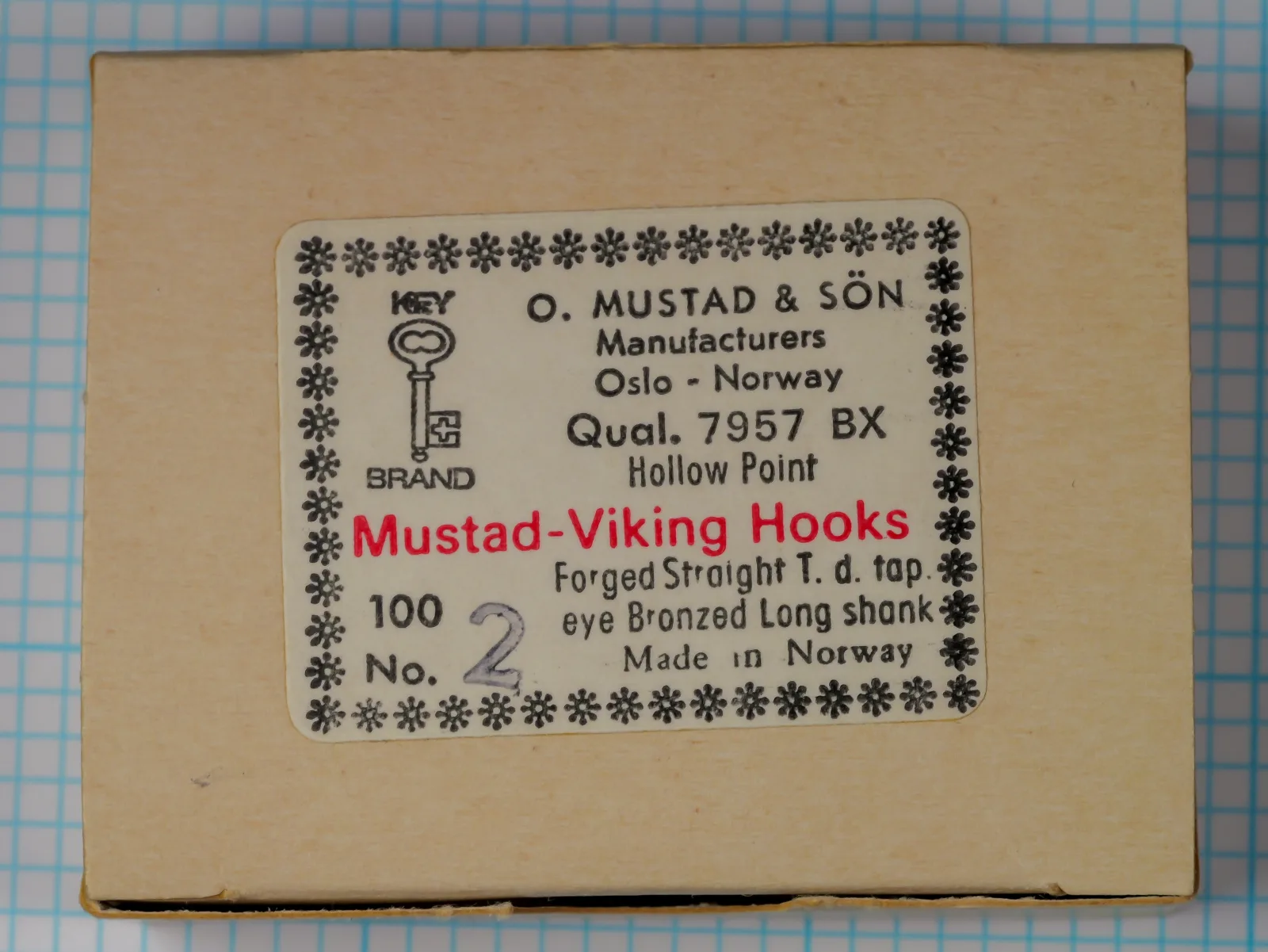
Original tan cardstock sales card for Mustad 7957 BX (size No. 2) showing the eight-line typographic label with Key Brand logo, Mustad-Viking branding in red ink, and production specifications. Box count 100, Oslo-Norway origin.
Photographic record
4 cataloged imagesSelect any record to load it above.
4 images shown
Mustad 7957 BX Size 2 Packaging Card LabelOriginal tan cardstock sales card for Mustad 7957 BX (size No. 2) showing the eight-line typographic label with Key Brand logo, Mustad-Viking branding in red ink, and production specifications. Box count 100, Oslo-Norway origin.Open originalMustad 7957 BX Point Detail Hollow PointClose-up of the Mustad 7957 BX hollow-point geometry, showing the distinctive concave inner face tapering from the microscopic tip to the barb. Bronzed finish visible. Measured on 1/10-inch grid.Open originalMustad 7957 BX Full Hook ProfileComplete side profile of the Mustad 7957 BX showing the full hook geometry: tapered down eye, long forged shank, deep sproat bend, and hollow point. Bronzed finish provides warm, muted appearance.Open originalMustad 7957 BX Twin Hook ComparisonTwo Mustad 7957 BX hooks (size No. 2, bronzed finish) displayed side-by-side on measurement grid, documenting consistency of manufacturing and proportions between specimens.Open original
Technical profile
Eye
Tapered Eye, Turned DownTapered down eye (T.D. Tap Eye) features intentional wire reduction toward the terminal loop, decreasing mass at the head of the fly. This precision engineering ensures proper flotation and presentation of buoyant dry flies and streamers. Taper is gradual and symmetrical, confirming premium manufacturing standard P.
Wire
Heavy (1X Heavy), Forged
Shank
1X Long — Plain
Bend
vikingSproat bend variant with parabolic curvature characteristic of Mustad's Viking line. Bend is deep and strong relative to gap width, distributing load evenly across steel. No visible lateral offset P. Wire set and symmetry confirm forging P.
Point
Hollow Point (concave inner face)Barb is small, close-cut, and sharply angled. Position is standard, located ~0.10" from the point. Angle is acute, characteristic of hollow-point barbs designed to minimally enlarge the entry wound P.
Finish
Bronzed — Confirmed (stated on packaging)Bronzed finish exhibits warm, muted brownish-gold tone typical of alkyd resin lacquer coating. Color is uniform and matte, not bright or reflective. Finish appears intact with minimal wear; light patina development consistent with age P. Warm tone favored by traditionalists seeking stealthy presentation in clear water.
Hook specimen shows bright bronzed finish with minimal patina, no corrosion, barb intact and sharp. Card shows light tan aging and minor edge creasing consistent with age and storage; label fully legible. One hook visually inspected on card; remainder of 100 assumed complete per label count.
The hollow point geometry—a concave inner face running from the microscopic tip to the barb base—creates an exceptionally fine, razor-sharp edge that penetrates with minimal resistance. Unlike a spear point (straight wedge taper), the hollow point flares rapidly toward the barb, minimizing wound trauma while ensuring rapid barb engagement. This is ideal for delicate presentations where excessive hook-set force would tear soft tissue.
The forged shank is mechanically flattened along its lateral sides in a drop-press, cold-working the high-carbon steel and dramatically increasing tensile strength and rigidity without adding weight. This allows the hook to maintain its bend geometry under extreme load—critical when streamers face powerful head shakes from large salmon or pike.
The tapered down eye reduces wire diameter as it approaches the terminal loop, shifting mass away from the head of the fly. This is essential for long-shank streamers and dry flies, where excess front-end weight would cause nose-diving or improper floating.
First documented Mustad-Viking Hooks entry in the garrenwood.com catalog. Sets benchmark for 4X long-shank forged construction in the Mustad line; represents the premium tier of mid-century Mustad streamer hooks.
Own this hook? Help us measure it.
We don't have measured sizes for this hook yet. Own one? Submit calipered measurements and we'll review and add them. Thank you!
The Mustad-Viking Hooks series represents a premium product line within Mustad’s vast catalog, marketed specifically to fly tyers and commercial fishing operations seeking heavy-duty, reliable streamer and wet-fly platforms. The ‘Viking’ designation refers not to a specific bend pattern but rather to a proprietary tempering and forging process that Mustad applied to select models, increasing overall durability and strength.
The 7957 BX was introduced in the mid-20th century and remained in continuous production through the 1970s. The combination of 4X shank length, hollow point, and tapered down eye positioned it as a specialized tool for large streamer work—distinct from the ubiquitous 3906B (standard wet fly) and the lighter 94840 (dry fly). The series was gradually phased out as Mustad shifted toward lighter wire gauges and automated point-sharpening technologies in the 1980s and beyond.
No broader ‘Viking’ family nomenclature appears in surviving catalogs; the designation seems to have been primarily a marketing tool for export cards rather than a formal product-line classification. The 7957 BX stands as a standalone premium model within its era.
Era and Packaging Dating
Oslo designation on label (not Christiania) indicates post-1925 production. Typography, Key Brand logo placement, and label design with decorative border border pattern are characteristic of 1960s–1970s Mustad export labeling. No barcode present; packaging construction and print method consistent with offset lithography of mid-20th century. Mustad-Viking branding and product-line nomenclature peak in this era before transition to Signature Series (post-2000).
The Muddler's Perfect Platform
The Muddler Minnow, created by Don Gapen in the 1930s and popularized by Dan Bailey's fly shop in Jackson, Wyoming, became inseparable from the 7957 BX in the 1950s–1960s. Gapen and Bailey both specified this exact hook when tying and selling Muddlers to their clients—the forged 4X shank provided the perfect foundation for spinning dense deer hair heads. So iconic is the pairing that many vintage fly-tying manuals from the era show the 7957 BX as the 'correct' Muddler platform, cementing its status as a gold-standard hook for American streamer tradition.
Design lineage and influence
The 7957 BX evolved from Mustad’s standard long-shank wet-fly platform (Qual. 3906B) but distinguished itself through the forged construction and tapered eye—premium features originally reserved for their flagship dry-fly hook (Qual. 94840). The Viking designation and the specific combination of hollow point with 4X length reflected Mustad’s strategy of engineering specialized hooks for regional angling traditions. The 7957 BX competed directly with British Redditch offerings (Partridge of Redditch) and American designs (Orvis, Dan Bailey) but dominated through manufacturing efficiency and consistent availability. Post-1975, Mustad transitioned these premium models toward lighter-wire designs and eventually replaced the arbitrary quality codes with the Signature Series (post-2000).
Best matchRelated by Attribute
Computed automatically from catalog data — updated as new hooks are added.
Matches: Bend, Shank, Eye, Eye Orient., Point +5 moreDiffers: Wire: Heavy (1X Heavy) vs Extra-Heavy (2X+); Offset: Straight vs Offset / Kirbed; Shank ratio: 85.0% vs 78.4% +1 more
Matches: Bend, Shank, Eye, Eye Orient., Point +5 moreDiffers: Wire: Heavy (1X Heavy) vs Standard; Application: Wet Fly, Nymph vs Nymph; Gap ratio: 33.0% vs 30.7%
Matches: Bend, Eye, Eye Orient., Point, Finish +5 moreDiffers: Shank: 1X Long vs 2X Long; Wire: Heavy (1X Heavy) vs Extra-Heavy (2X+); Shank ratio: 85.0% vs 78.8% +2 more
Matches: Bend, Eye, Eye Orient., Point, Finish +4 moreDiffers: Shank: 1X Long vs 2X Long; Wire: Heavy (1X Heavy) vs Standard; Application: Wet Fly, Nymph vs Dry Fly, Wet Fly, Nymph +2 more
The 7957 BX is the definitive hook for classic wet flies and streamers. The 4X long shank accommodates voluminous deer hair bodies (as in the Muddler Minnow), bucktail wings, and tinsel bodies characteristic of mid-century streamer tradition. The forged construction and hollow point excel at rapid penetration during high-speed strikes typical of trout and salmon taking large baitfish imitations.
Historically used by guides and tyers on Atlantic salmon rivers and northern pike waters, where large, durable flies must withstand aggressive strikes from powerful fish. The bronzed finish and tapered eye ensure proper presentation without unwanted flash or weight.
Secondary Applications
Wet fly, bucktail, soft-hackle presentations; occasionally used for nymphs and large emerger patterns where shank length aids imitation bulk.
Direct descendant of the 7957 BX family; maintains 4X long shank and similar proportions but with modern stainless-steel option and updated point sharpening.
Tiemco 5262
Very Good
Premium long-shank streamer hook with similar tapered eye and forged construction; excellent hollow point; Japanese equivalent.
Daiichi 1710
Very Good
Long-shank wet-fly and streamer platform with comparable shank length and strength; Japanese manufacture; modern chemical sharpening.
Partridge of Redditch GRS1A
Good
English premium wet-fly hook with traditional forging; slightly shorter shank (3X) but similar design philosophy and finish options.
Collector notes
Rated 4.5/10 — Mustad 7957 BX cards are uncommon but not rare; produced in volume during peak export years (1960s–1970s) but relatively few original packages survive in good condition. Collector demand is moderate to strong among fly-tying historians and streamer specialists; this model carries iconic status due to its association with the Muddler Minnow and mid-century salmon traditions. Original packaging and complete hook count are significant value drivers.
Reference value
$7 – $14 USD estimate
Packaging condition
Good — moderate wear, legibleRecorded specimen
Packaging format
GW-V-Mustad-StandardCard-01Catalog code
Positive factors: Original eight-line label with Oslo designation (post-1925 dating anchor); complete 100-count card; Mustad-Viking premium branding; forged construction and tapered eye are premium features. Size No. 2 is large and visually striking, attracting both functional users and display collectors. Association with Muddler Minnow tradition elevates cultural significance within fly-tying communities. Bronzed finish is aesthetically warm and matches period tying styles.
Limiting factors: Mustad hooks were mass-produced; no artificial scarcity. Many cards opened and hooks used; sealed complete cards are significantly rarer than loose hooks. Size No. 2 is less common than intermediate sizes (e.g., No. 4–6), which were more typical production runs. Post-1960s reproductions and modern equivalent offerings reduce premium for ‘user’ specimens.
Most desirable variants: Original sealed card with all 100 hooks intact (rare, commands premium). Smaller sizes (No. 6–8) are genuinely scarce and more sought. Cards with exceptional label printing clarity and minimal toning. Original tan cardstock boxes (rarer than cards) in complete condition.
Condition impact on value: Mint/sealed card: highest premium. Excellent condition (complete, light toning, all hooks): strong value. Very good (complete, moderate toning): standard market value. Good (opened, 90+ hooks): moderate discount. Fair (missing hooks, damaged card): collector reference value only.
Packaging
Cardboard sales card, tan/cream stock, approximately 4.5 x 3 inches. Single-color offset lithographic label with decorative asterisk border. Eight-line Mustad typographic label in black ink: Line 1: O. MUSTAD & SÖN; Line 2: Manufacturers; Line 3: Oslo - Norway; Line 4: Qual. 7957 BX; Line 5: Hollow Point; Line 6: Mustad-Viking Hooks (in red ink); Line 7: Forged Straight T.d. tap. eye Bronzed Long shank; Line 8: Made in Norway. Bottom left: 100 No. 2. Card shows light tan toning and minor handling wear; label edges slightly worn. No price marking visible. No barcode. All text legible.
Market Value Notes
Low ($7): Good condition—opened packaging, ~90–95 hooks present, light to moderate toning, card intact but creased.
High ($14): Excellent condition—sealed or near-sealed card, all 100 hooks, minimal toning, label crisp and fully legible.
Premium factors: Sealed card (rare); complete 100-count; pristine label; size extremes (very small or No. 2); Muddler Minnow historical association; strong provenance documentation.
Platforms: eBay (US and UK), fly-tying specialty dealers, vintage tackle fairs, online fishing nostalgia forums.
Confidence: V verified—based on eBay sold data Apr 13 2023–Apr 12 2026: avg $10.07, range $5.00–$36.00 (4 sellers). Low end represents good/opened condition; high end represents excellent/sealed condition.
Where to Find
eBay (US and UK listings, search 'Mustad 7957' and 'Viking Hooks'); fly-tying specialty online retailers (House of Flies, Umpqua Feather Merchants backstock); vintage tackle dealers specializing in mid-century collectibles; regional fishing nostalgia forums and Facebook groups for streamer tyers. Tackle fairs and estate sales in New England and Pacific Northwest (traditional fly-tying regions) occasionally yield cards.
Collector's Identification Tips
Confirm model code ‘Qual. 7957 BX’ on label (Line 4). Verify ‘Hollow Point’ designation on Line 5. Look for ‘Mustad-Viking Hooks’ branding in red ink on Line 6. Check for ‘Forged Straight T.d. tap. eye’ on Line 7. Confirm ‘Oslo – Norway’ (not Christiania) on Line 3 for post-1925 dating. Package count should read ‘100 No. 2’ at bottom left. Original tan cardstock with decorative asterisk border is hallmark of this era.
eBay market reference. Researcher-curated. Prices in USD.
Preservation
Storage and Preservation
Store the complete card in a cool, dry environment away from direct sunlight and fluctuating humidity. The bronzed finish will develop a natural patina over time, which many collectors consider desirable; avoid aggressive cleaning or polishing, as this removes the historical patina and diminishes authenticity.
Keep the card in its original packaging rather than loose in a tackle box. If the card must be stored separately, place it in an archival-quality acid-free envelope or polyester sleeve. Avoid contact with other metals (especially iron or copper) to prevent galvanic corrosion of the bronze coating.
Do not expose to high humidity (above 60%) or condensing moisture, which will accelerate patina development and potentially cause surface rust on the steel barb and point. If stored in a damp environment, place a small packet of food-grade silica gel near (not touching) the card.
Do not use these hooks for active fishing if collecting for value—the specimen damage from casting and striking will dramatically reduce market value. Reserve display-quality cards for collection and reference only.
Primary Source
Label Decryption: The Eight-Line Mustad System
Source: O. Mustad & Søn eight-line label system; see 'A Comprehensive Typology and Decryption of Vintage O. Mustad & Søn Hook Labels' (garrenwood.com reference document 1).
The label on this card exemplifies Mustad’s standardized eight-line typographic format, documented in detail in the reference PDF ‘A Comprehensive Typology and Decryption of Vintage O. Mustad & Søn Hook Labels.’ Each line encodes specific manufacturing and commercial data:
Line 1: O. MUSTAD & SÖN — Manufacturer identity with diacritic (SÖN, not SON), a Scandinavian convention used by Mustad on export cards. This full, unabbreviated corporate title served to reinforce brand authority against import agents and repackagers.
Line 2: Manufacturers — Critical declaration of Mustad’s role in the global supply chain. In an era saturated with import agents and jobbers who purchased bulk hooks and repackaged them under secondary labels, this line cemented Mustad’s position as the primary maker, ensuring direct brand loyalty from end-users.
Line 3: Oslo – Norway — Geographic origin designator. The shift from Christiania (pre-1925) to Oslo (post-January 1, 1925) provides a definitive chronological bracket. This card’s ‘Oslo’ designation confirms production no earlier than 1925 and no later than the digital transition era (post-2000).
Line 4: Qual. 7957 BX — Quality code and model identifier. In Mustad’s hierarchical numbering system, codes between 3000–3999 represented mid-tier products manufactured to exacting tolerances; codes 4000+ indicated premium specialty hooks. The 7957 BX falls outside these conventional bands, suggesting it is a named variant or special series (the ‘BX’ suffix remains undocumented in standard catalogs).
Line 5: Hollow Point — Point geometry identifier. This line is reserved EXCLUSIVELY for point-type nomenclature—never for wire gauge, shank length, or eye type. The hollow point geometry (concave inner face, dished-out profile from tip to barb) enables rapid penetration through soft tissue with minimal applied force, ideal for delicate presentations and soft-mouthed trout.
Line 6: Mustad-Viking Hooks — Printed in red ink, this is the product-line name. The ‘Viking’ designation refers to a proprietary tempering and forging process rather than a specific bend pattern. This branding device allowed Mustad to segment and market premium models without complex catalog restructuring.
Line 7: Forged Straight T.d. tap. eye Bronzed Long shank — Anatomical modifications and metallurgical finish. ‘Forged’ indicates mechanical flattening in a drop-press, increasing tensile strength. ‘Straight’ denotes no lateral offset. ‘T.d. tap. eye’ = Turned-Down Tapered Eye, a precision engineering feature reducing wire mass at the hook head. ‘Bronzed’ = baked-on lacquer mimicking bronze hue (not actual bronze alloy). ‘Long shank’ = exceeds standard proportions; in context with the wire gauge, this suggests 3X–4X length relative to gap.
Line 8: Made in Norway — Country of manufacture and labor origin. Affirms Scandinavian production at the Gjøvik factory, a mark of pride and quality assurance in the vintage angling market.
Bottom corner: 100 No. 2 — Hook count (100) and physical size (No. 2). Standard retail and wholesale boxes of the vintage era contained 100 hooks, optimizing for bulk wholesalers and regional retailers.
Additional
The Forging Process: Mechanical Enhancement of Tensile Strength
The 7957 BX label specifies ‘Forged’ construction, a mechanical process that distinguishes this hook from standard round-wire alternatives. Mustad’s forging process involved placing the finished hook (after bending, barbing, and pointing) into a mechanical drop-press, which flattened the shank along its lateral sides. This cold-working of the high-carbon steel fundamentally altered its microstructure, realigning grain boundaries and increasing both tensile strength and rigidity without adding bulk or weight.
The practical advantage is immense for long-shank hooks: a standard round-wire 4X shank of equivalent diameter would deflect under heavy load (a large salmon head-shaking, or a pike thrashing in current). The forged flat-sided profile distributes stress more evenly across the steel, preventing the hook from bending open or straightening out. This is why the 7957 BX became the standard choice for heavy saltwater streamer work and large-fish applications—it delivers structural reliability without the weight penalty of simply using thicker wire.
Visually, forged wire exhibits a distinctive flattened cross-section that becomes apparent when the hook is viewed from certain angles or photographed in profile (see Hook Image 2). This geometric difference is immediately recognizable to experienced hook collectors and tyers.
Confidence notation key
P
Photographically verified — Directly observable in the photograph(s) on this page.
V
Verified by documentation — Confirmed by manufacturer catalog, spec sheet, or published reference.
I
Inferred — A logical deduction from observable or documented evidence, not directly stated.
E
Estimated — An approximation based on visual comparison, proportional analysis, or limited data.
S
Speculative — A reasoned hypothesis that cannot be confirmed from available evidence.
Unnotated claims are the compiler’s synthesis; see Sources. All photographs on garrenwood.com are taken on a measurement grid where each square equals 1/10 inch (0.1″ / 2.54 mm).