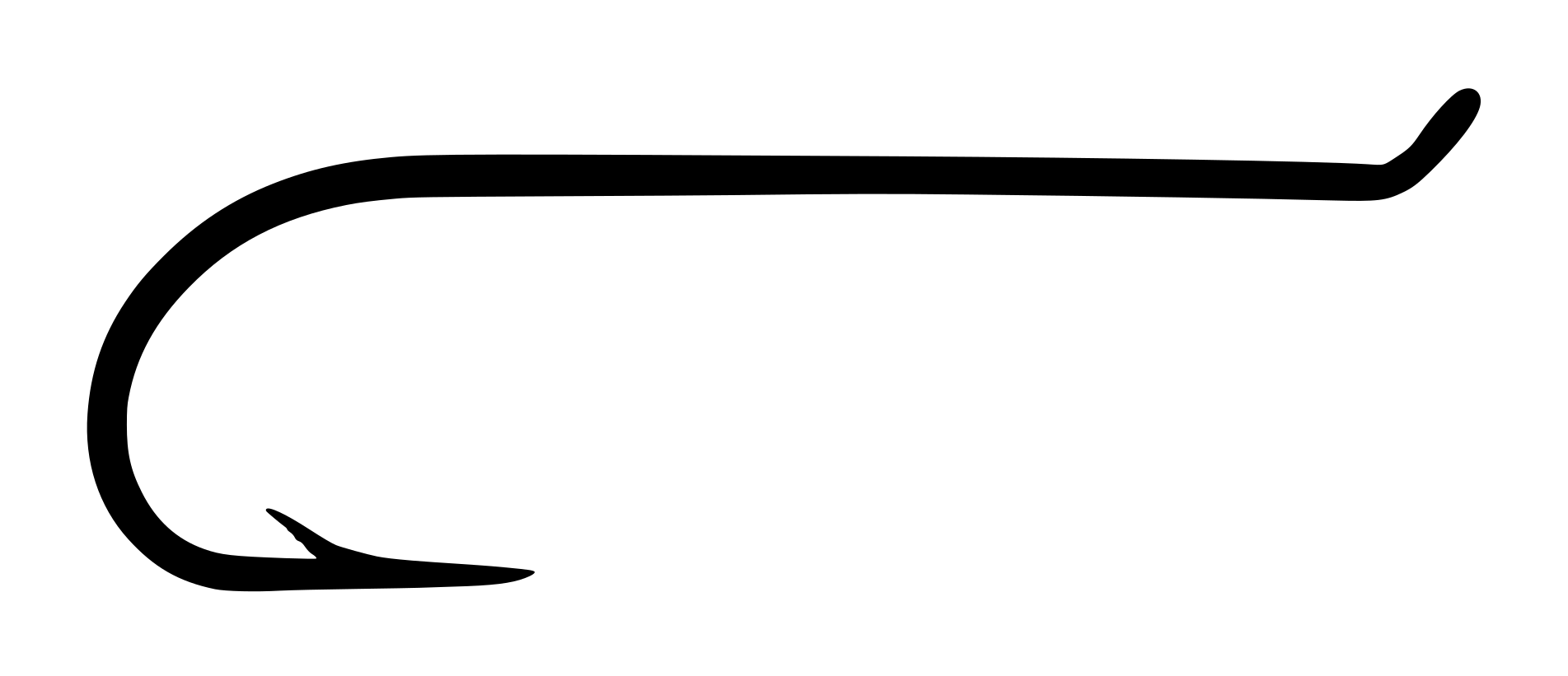
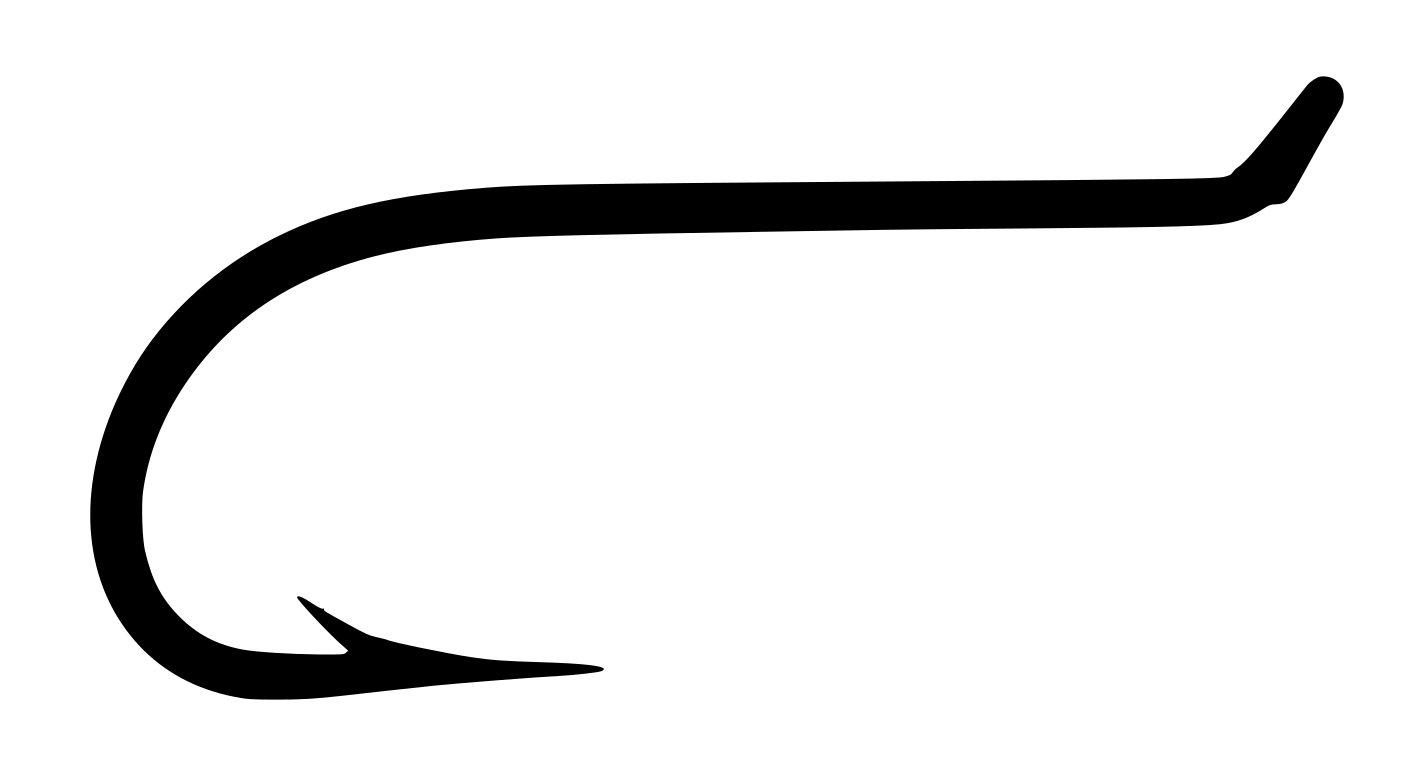
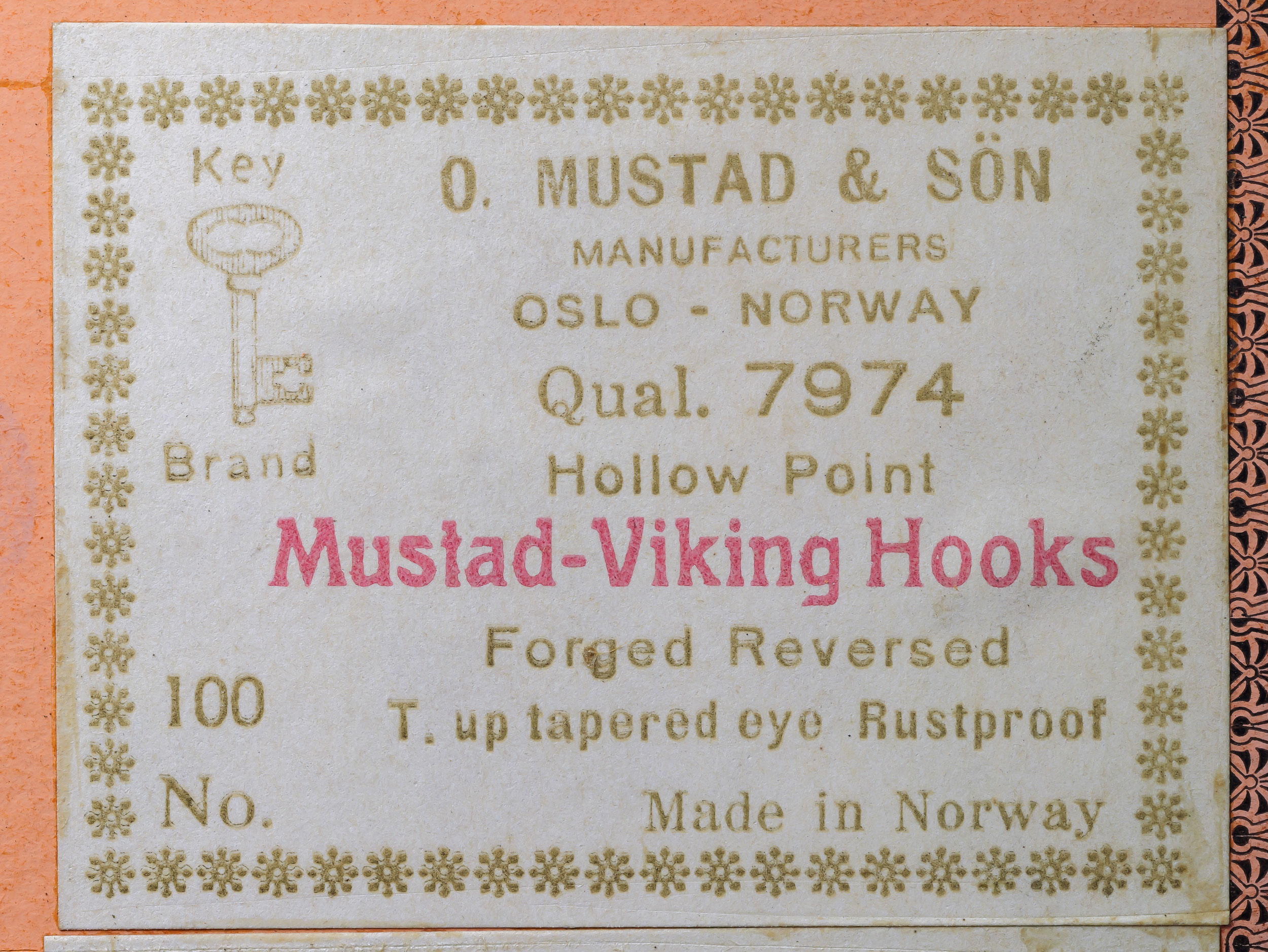
Mustad quality 7974 appears on a Key Brand label as “Mustad-Viking Hooks.” The same label specifies “Hollow Point,” “Forged Reversed,” “T. up tapered eye,” “Rustproof,” and “Made in Norway” V.
The photographed card carries six mounted single hooks. Five handwritten size marks are fully legible—6, 8, 10, 12, and 14—while the final mark is cropped as 1[?] P. The hooks are barbed and show a dark brown-to-black metallic surface with light wear or patina P.
Photographic record
2 photographs · Hold Ctrl and scroll to zoom · drag to pan · double-click for 100%
IMG-1Mustad 7974 Viking Hooks — Display Card — Sizes 6-16 Six Mustad 7974 hooks mounted with pink thread on an orange card. Handwritten size marks 6 through 14 are legible; the final mark is cropped to 1[?].
2How to identify it
Identify 7974 from the cream Key Brand label. It prints “Qual. 7974,” “Hollow Point,” “Mustad-Viking Hooks,” “Forged Reversed,” and “T. up tapered eye. Rustproof” V. The photographed hooks have turned-up formed eyes, smooth rounded bends, straight shanks, visible barbs, and a dark metallic surface P.
Do not use color alone to identify the coating. The label says “Rustproof,” but does not name bronzing or another specific finish. The specimen board has handwritten size marks 6, 8, 10, 12, 14, and a cropped 1[?] P.
The label identifies quality 7974 as Hollow Point, Forged, Reversed, with a turned-up tapered eye and Rustproof treatment V. In site terminology, “Reversed” means the point is offset to the right when viewed from the eye down the shank. The supplied side views do not show the degree of offset.
The hooks show smooth rounded bends, straight shanks, visible barbs, and turned-up eyes P. The hollow-point grinding geometry is not resolved in the photographs. Wire gauge, shank-length class, gap category, exact finish coating, and dimensions remain unverified.
Catalog records. Six mounted specimens are recorded on one card. Five size marks are fully legible—6, 8, 10, 12, and 14—and the sixth reads 1[?] P.
Own this hook? Help us measure it.
We don't have measured sizes for this hook yet. Own one? Submit calipered measurements and we'll review and add them. Thank you!
4Specimens, packaging, and label
This record documents 6 specimens. Each describes itself only; none stands for every example of the model.
O. MUSTAD & SON
MANUFACTURERS
OSLO - NORWAY
Qual. 7974
Hollow Point
Mustad-Viking Hooks
Forged Reversed
100    T. up tapered eye. Rustproof
No.    Made in Norway
LBL-3 handwritten · orange board beneath first hook fromIMG-1
6
LBL-4 handwritten · orange board beneath second hook fromIMG-1
8
LBL-5 handwritten · orange board beneath third hook fromIMG-1
LBL-8 handwritten · orange board beneath sixth hook at right edge fromIMG-1
1[?]
Trademark
Gold/olive skeleton-key emblem printed between “Key” and “Brand.”
As entered on the specimen record
O. MUSTAD & SON
MANUFACTURERS
OSLO - NORWAY
Qual. 7974
Hollow Point
Mustad-Viking Hooks
Forged Reversed
100    T. up tapered eye. Rustproof
No.    Made in Norway
Layout
Cream Key Brand label with skeleton-key trademark at upper left and a magenta “Mustad-Viking Hooks” line.
O. MUSTAD & SON
MANUFACTURERS
OSLO - NORWAY
Qual. 7974
Hollow Point
Mustad-Viking Hooks
Forged Reversed
100    T. up tapered eye. Rustproof
No.    Made in Norway
LBL-3 handwritten · orange board beneath first hook fromIMG-1
6
LBL-4 handwritten · orange board beneath second hook fromIMG-1
8
LBL-5 handwritten · orange board beneath third hook fromIMG-1
LBL-8 handwritten · orange board beneath sixth hook at right edge fromIMG-1
1[?]
Trademark
Gold/olive skeleton-key emblem printed between “Key” and “Brand.”
As entered on the specimen record
O. MUSTAD & SON
MANUFACTURERS
OSLO - NORWAY
Qual. 7974
Hollow Point
Mustad-Viking Hooks
Forged Reversed
100    T. up tapered eye. Rustproof
No.    Made in Norway
Layout
Cream Key Brand label with skeleton-key trademark at upper left and a magenta “Mustad-Viking Hooks” line.
O. MUSTAD & SON
MANUFACTURERS
OSLO - NORWAY
Qual. 7974
Hollow Point
Mustad-Viking Hooks
Forged Reversed
100    T. up tapered eye. Rustproof
No.    Made in Norway
LBL-3 handwritten · orange board beneath first hook fromIMG-1
6
LBL-4 handwritten · orange board beneath second hook fromIMG-1
8
LBL-5 handwritten · orange board beneath third hook fromIMG-1
LBL-8 handwritten · orange board beneath sixth hook at right edge fromIMG-1
1[?]
Trademark
Gold/olive skeleton-key emblem printed between “Key” and “Brand.”
As entered on the specimen record
O. MUSTAD & SON
MANUFACTURERS
OSLO - NORWAY
Qual. 7974
Hollow Point
Mustad-Viking Hooks
Forged Reversed
100    T. up tapered eye. Rustproof
No.    Made in Norway
Layout
Cream Key Brand label with skeleton-key trademark at upper left and a magenta “Mustad-Viking Hooks” line.
O. MUSTAD & SON
MANUFACTURERS
OSLO - NORWAY
Qual. 7974
Hollow Point
Mustad-Viking Hooks
Forged Reversed
100    T. up tapered eye. Rustproof
No.    Made in Norway
LBL-3 handwritten · orange board beneath first hook fromIMG-1
6
LBL-4 handwritten · orange board beneath second hook fromIMG-1
8
LBL-5 handwritten · orange board beneath third hook fromIMG-1
LBL-8 handwritten · orange board beneath sixth hook at right edge fromIMG-1
1[?]
Trademark
Gold/olive skeleton-key emblem printed between “Key” and “Brand.”
As entered on the specimen record
O. MUSTAD & SON
MANUFACTURERS
OSLO - NORWAY
Qual. 7974
Hollow Point
Mustad-Viking Hooks
Forged Reversed
100    T. up tapered eye. Rustproof
No.    Made in Norway
Layout
Cream Key Brand label with skeleton-key trademark at upper left and a magenta “Mustad-Viking Hooks” line.
O. MUSTAD & SON
MANUFACTURERS
OSLO - NORWAY
Qual. 7974
Hollow Point
Mustad-Viking Hooks
Forged Reversed
100    T. up tapered eye. Rustproof
No.    Made in Norway
LBL-3 handwritten · orange board beneath first hook fromIMG-1
6
LBL-4 handwritten · orange board beneath second hook fromIMG-1
8
LBL-5 handwritten · orange board beneath third hook fromIMG-1
LBL-8 handwritten · orange board beneath sixth hook at right edge fromIMG-1
1[?]
Trademark
Gold/olive skeleton-key emblem printed between “Key” and “Brand.”
As entered on the specimen record
O. MUSTAD & SON
MANUFACTURERS
OSLO - NORWAY
Qual. 7974
Hollow Point
Mustad-Viking Hooks
Forged Reversed
100    T. up tapered eye. Rustproof
No.    Made in Norway
Layout
Cream Key Brand label with skeleton-key trademark at upper left and a magenta “Mustad-Viking Hooks” line.
O. MUSTAD & SON
MANUFACTURERS
OSLO - NORWAY
Qual. 7974
Hollow Point
Mustad-Viking Hooks
Forged Reversed
100    T. up tapered eye. Rustproof
No.    Made in Norway
LBL-3 handwritten · orange board beneath first hook fromIMG-1
6
LBL-4 handwritten · orange board beneath second hook fromIMG-1
8
LBL-5 handwritten · orange board beneath third hook fromIMG-1
LBL-8 handwritten · orange board beneath sixth hook at right edge fromIMG-1
1[?]
Trademark
Gold/olive skeleton-key emblem printed between “Key” and “Brand.”
As entered on the specimen record
O. MUSTAD & SON
MANUFACTURERS
OSLO - NORWAY
Qual. 7974
Hollow Point
Mustad-Viking Hooks
Forged Reversed
100    T. up tapered eye. Rustproof
No.    Made in Norway
Layout
Cream Key Brand label with skeleton-key trademark at upper left and a magenta “Mustad-Viking Hooks” line.
Later marks
1[?]
Condition
The mounted hooks appear intact with light surface wear or patina and no heavy red corrosion visible. The card and label show staining, scuffs, toning, and minor edge wear P.
5Pattern history and manufacturer context
Design lineage
The label names the pattern “Mustad-Viking Hooks” V. The supplied side views show a smooth rounded bend P, but no dated catalog or factory source in this record establishes a predecessor, successor, or formal relationship to another bend family.
Dating
The label reads “OSLO - NORWAY” V. Oslo City Archives states that the name Oslo took effect again on 1 January 1925, supporting a 1925 lower bound for this label but not a model introduction or end date V.
O. Mustad & Son — The surviving label uses “OSLO - NORWAY.” Oslo City Archives dates restoration of the name Oslo to 1 January 1925, giving this package a 1925-or-later lower bound V. Read the maker’s history →
6Use
Primary application
No specific fly-fishing application is established by the label or opened sources. An eBay listing categorizes size 13 model 7974 as fly-tying and fly-fishing merchandise, but that seller metadata does not distinguish dry-fly from wet-fly use V.
Other uses
No secondary application is verified by the current label or opened market sources.
Fly patterns
No named fly pattern is verified by the current evidence record.
7Collecting and buying
3 / 10CollectabilityRarity: Common
Rated 3/10. A size-13 eBay listing offers more than 10 100-hook units and reports 10 sold, so current evidence does not support scarcity V. Broader frequency across sizes and specialist demand remain undocumented.
Basis: One eBay seller reports more than 10 size-13 100-hook units available and 10 sold; no broader population or listing-frequency dataset is documented.
The model is presently documented by one ongoing size-13 market listing rather than a broad sample of auctions or dealer records. That listing reports more than 10 units available and 10 sold, showing surviving stock in quantity for at least that size V.
The photographed card has a legible Key Brand label and six mounted hooks, but specimen condition and completeness do not affect the model-level rating. No comparative rarity dataset establishes that smaller sizes, the tapered up-eye form, or other packaging variants are scarcer.
Market value
Insufficient recorded sales data to estimate a reliable value.
10 sold observations recorded; 2 are needed, with the basis and date of the range, before a value is shown. Asking prices are shown as asking prices only.
No verified value range is assigned from the current evidence. The opened eBay sources show asking prices of $12.99 and $14.99 for the same size-13 listing; the item page reports 10 sold but does not expose individual realized prices V.
eBay currently has a size-13 model 7974 listing. Other recurring sales channels are not established in this evidence record V.
8Label and source analysis
Label Transcription and Specifications
Source: Mustad 7974 Key Brand packaging label
Manufacturer and origin: “O. MUSTAD & SON,” “MANUFACTURERS,” “OSLO – NORWAY,” and “Made in Norway” are printed on the cream Key Brand label V.
Model and specifications: The label reads “Qual. 7974,” “Hollow Point,” “Mustad-Viking Hooks,” “Forged Reversed,” and “T. up tapered eye. Rustproof” V. In site terminology, reversed means the point is offset to the right when viewed from the eye down the shank. The label does not identify the specific rustproof coating.
Lower-left fields: The label also prints “100” and “No.” V. The photographed orange board carries six hooks, so these printed fields do not establish that the surviving board itself originally held 100 hooks P.
9Modern equivalents and related hooks
Best matchRelated by Attribute
Computed automatically from catalog data — updated as new hooks are added.
Which dated Mustad catalog or price list first and last lists quality 7974, and what full size range does it give?No dated primary catalog containing quality 7974 was located in the checked evidence record.Can you help? Send a dated Mustad catalog or price-list page that shows quality 7974, including the publication date and page number.
Entry last updated July 21, 2026. Entries are updated as new specimens, measurements, or documents come to light.


![Mustad 7974 hooks mounted in one row on an orange card, with handwritten size marks 6, 8, 10, 12, 14, and a cropped 1[?].](https://garrenwood.com/wp/wp-content/uploads/2025/12/Mustad-7974-Hooks-scaled.jpg)