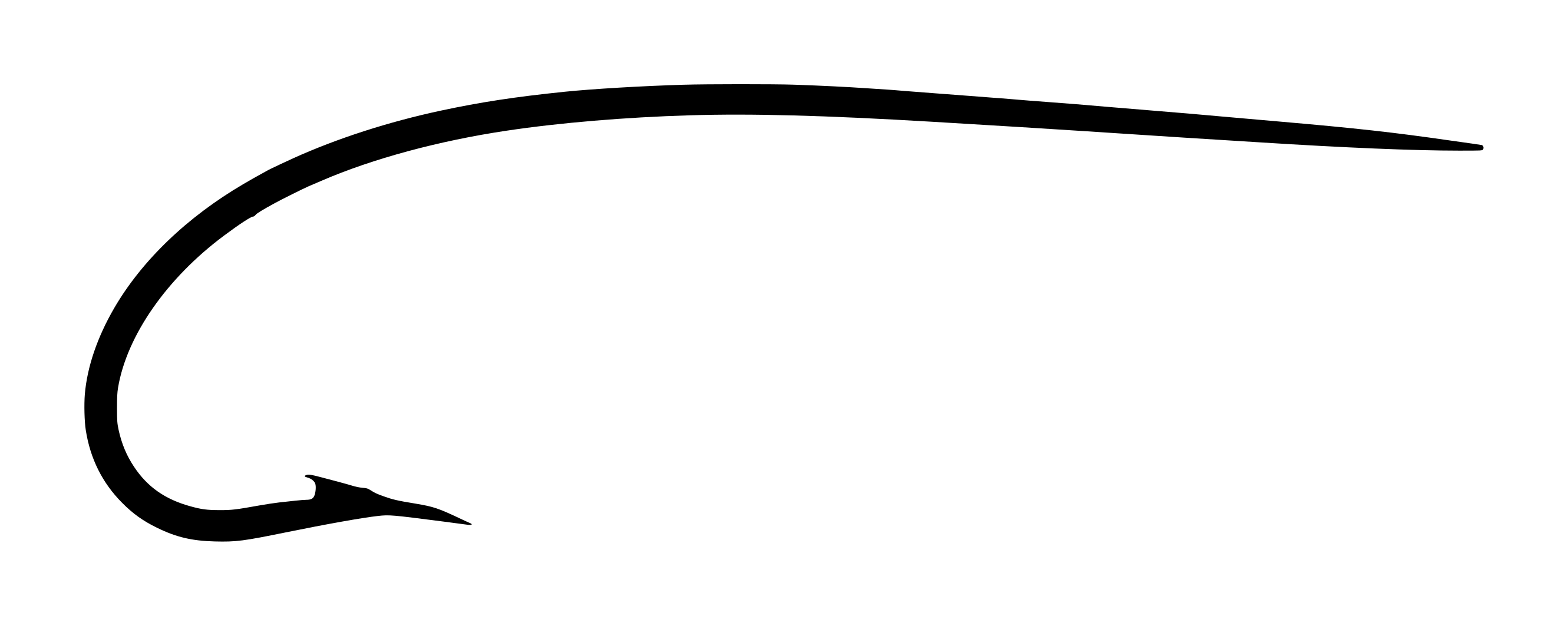
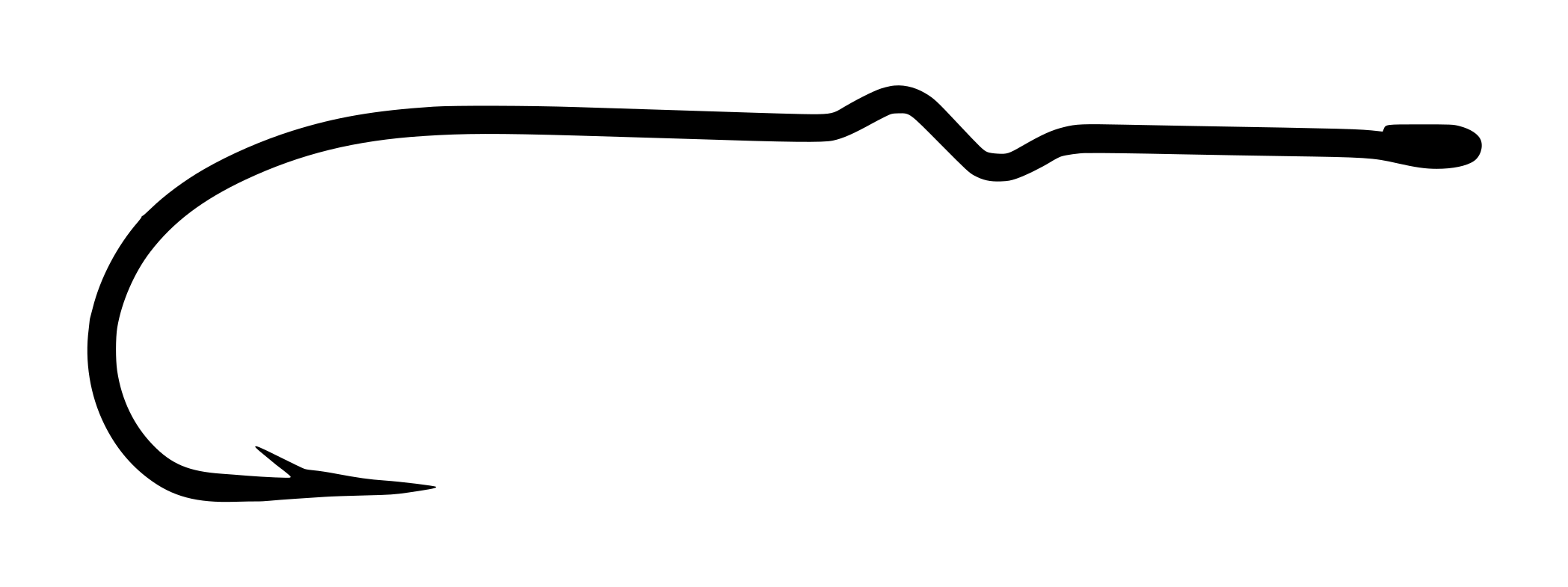
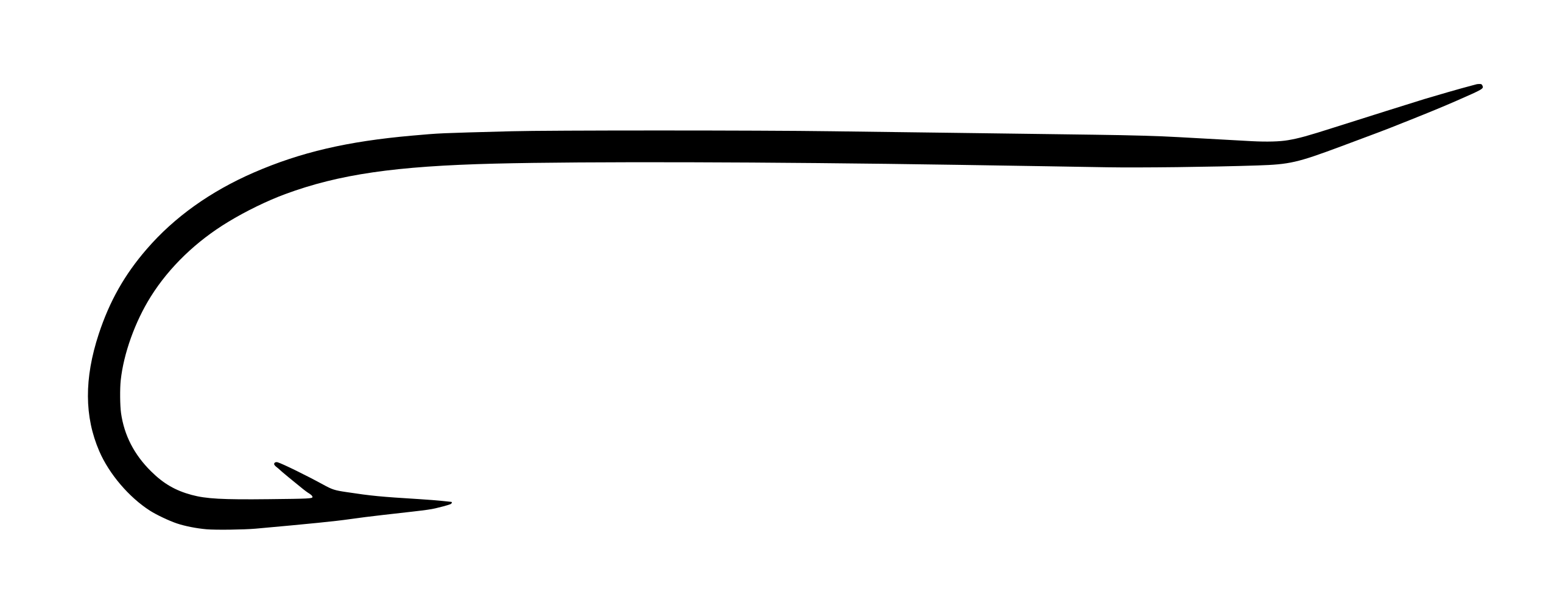
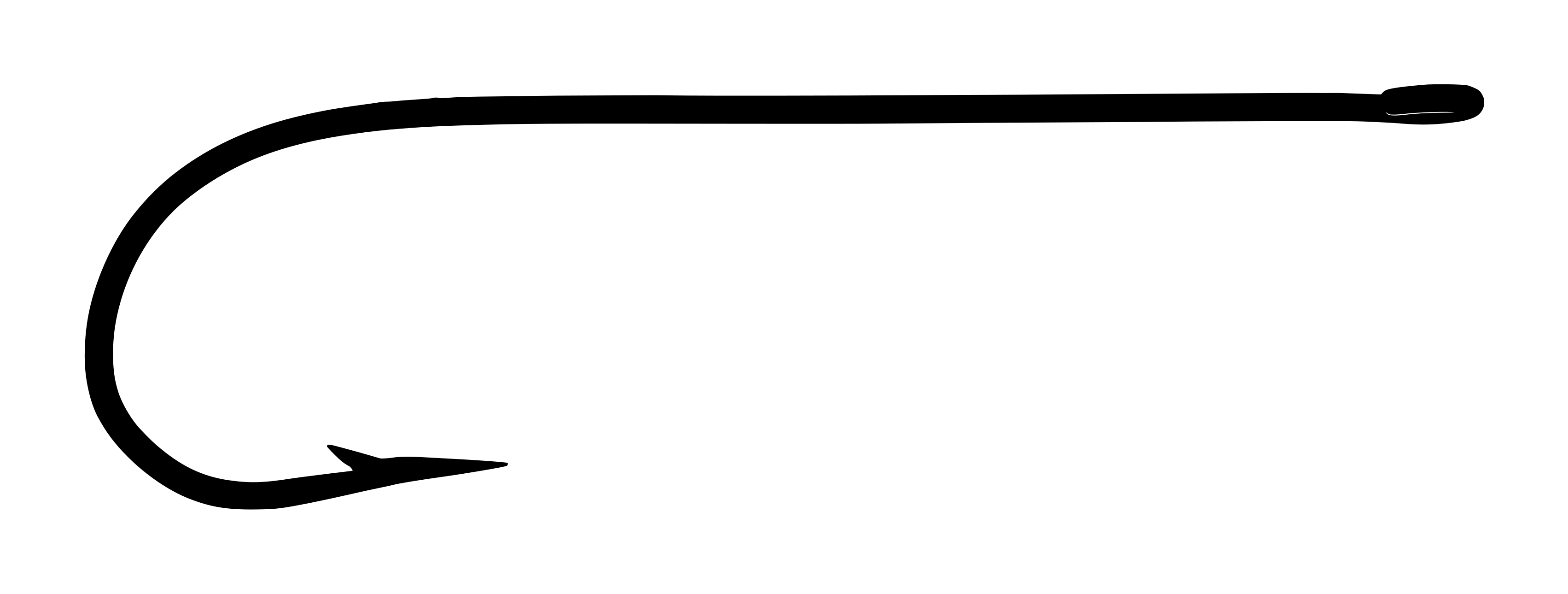
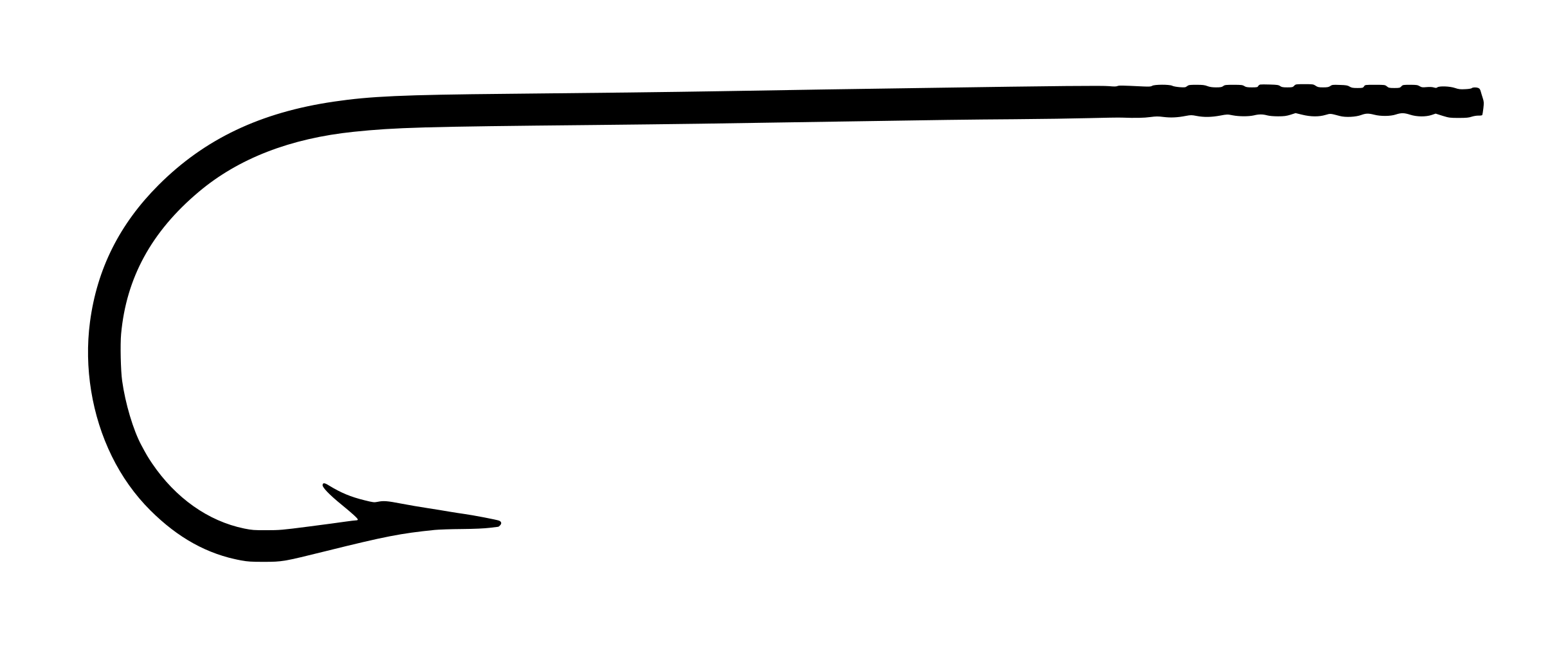
The Mustad 3278 Aberdeen represents a classic example of Norwegian hook manufacturing excellence, designed for versatile bait fishing applications P. This size 5/0 specimen features the characteristic wide Aberdeen bend with long shank construction, making it ideal for larger baits and bottom fishing techniques P.
Distinguished by its straight ring eye and superior point geometry, the 3278 demonstrates Mustad’s commitment to functional design over ornamental features P. The bronzed finish provides corrosion resistance while the light wire gauge minimizes bait damage during presentation P.
Dating to approximately 1960-1990 based on construction methods and finish characteristics, this hook represents the mature period of Mustad’s industrial production when quality control and consistency reached their peak I. The model remains significant for collectors as an example of purpose-built fishing tackle from Norway’s dominant hook manufacturer I.
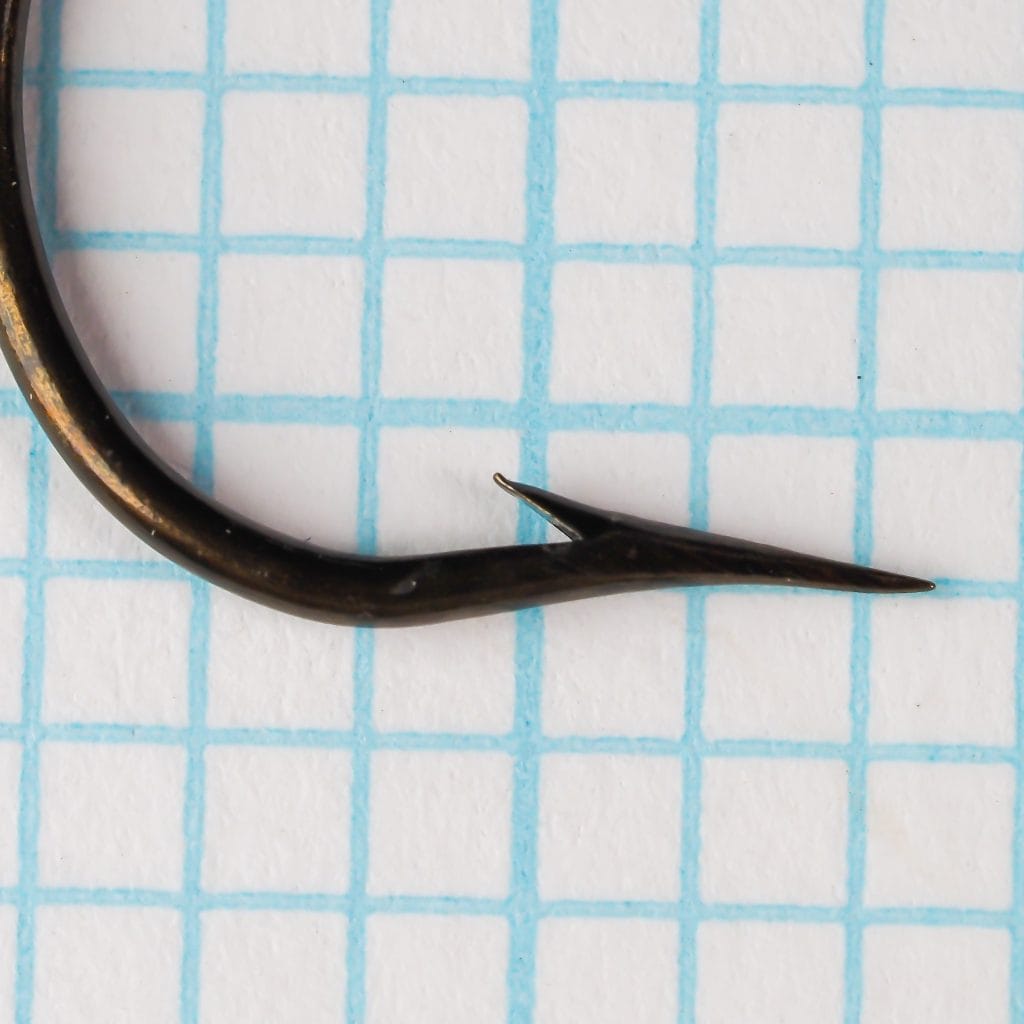
Close-up view of the Mustad 3278 superior point showing the characteristic near-straight inner taper and positioned barb.
Photographic record
3 cataloged imagesSelect any record to load it above.
3 images shown
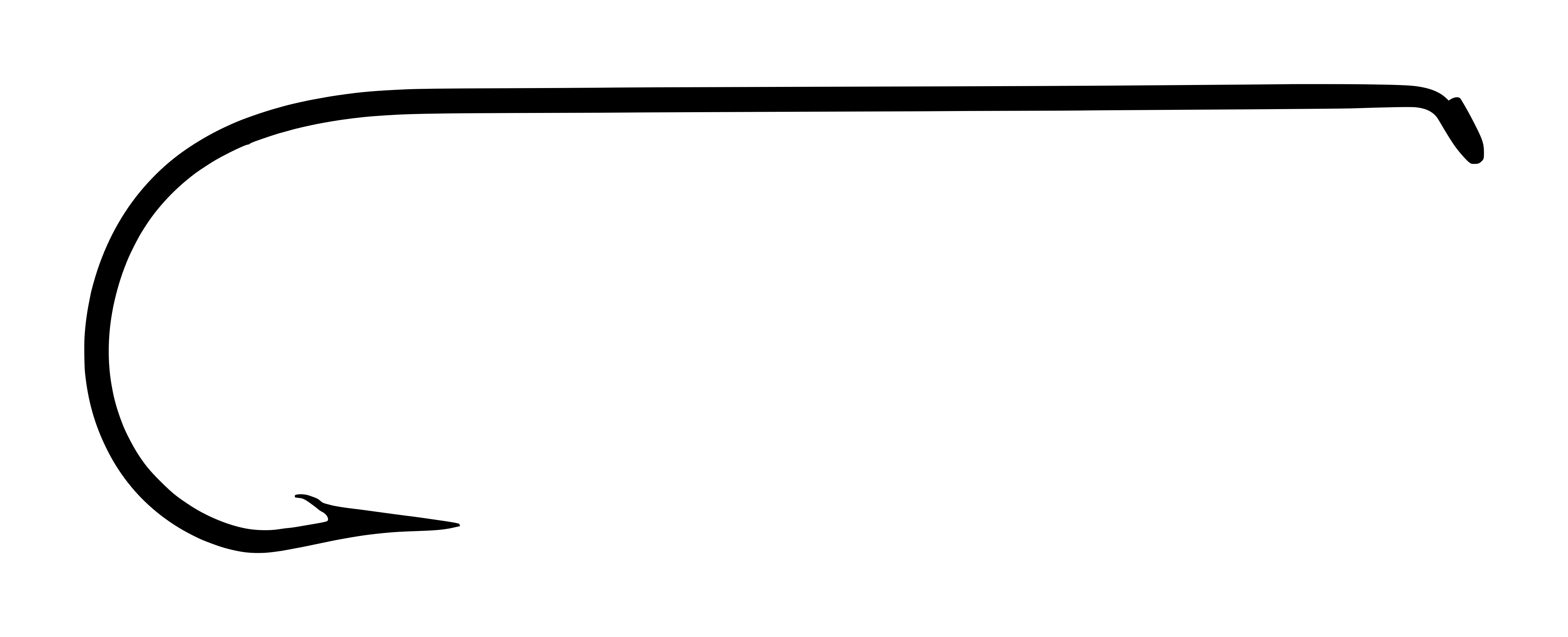
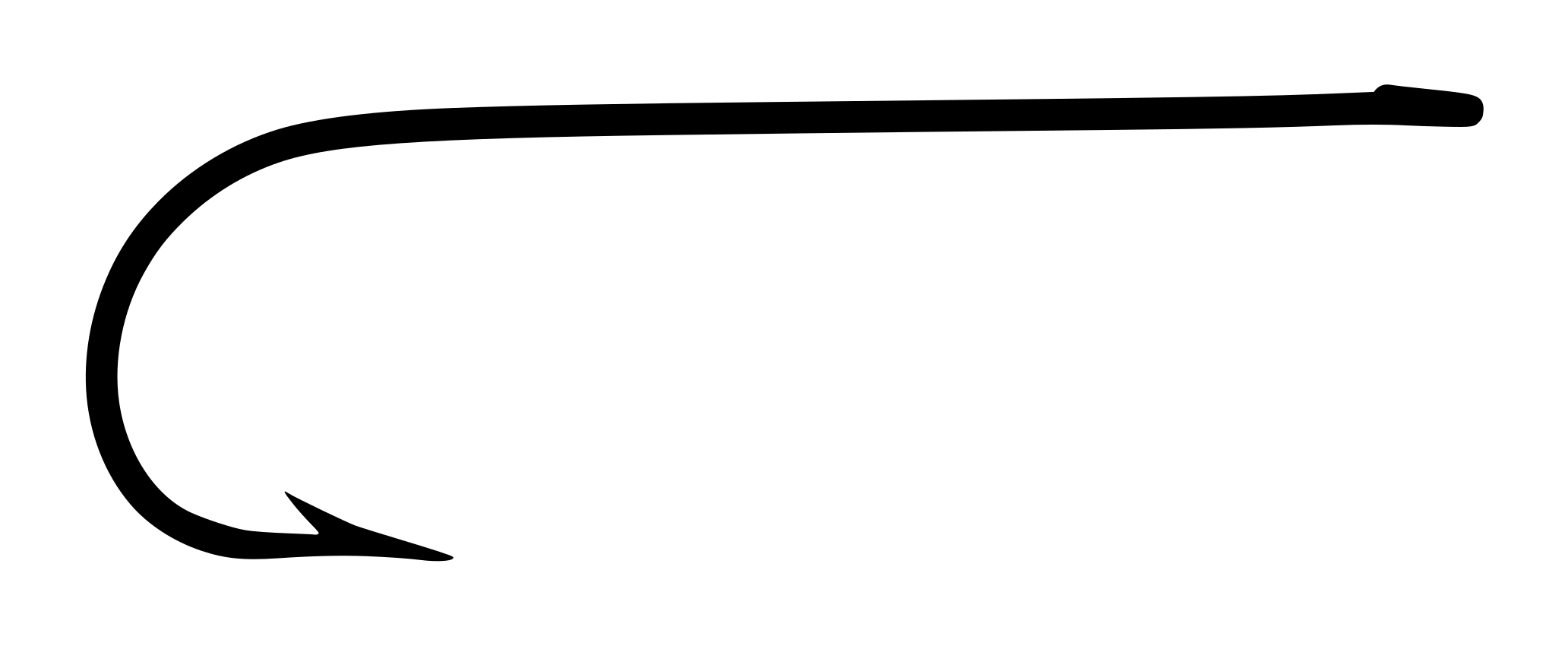
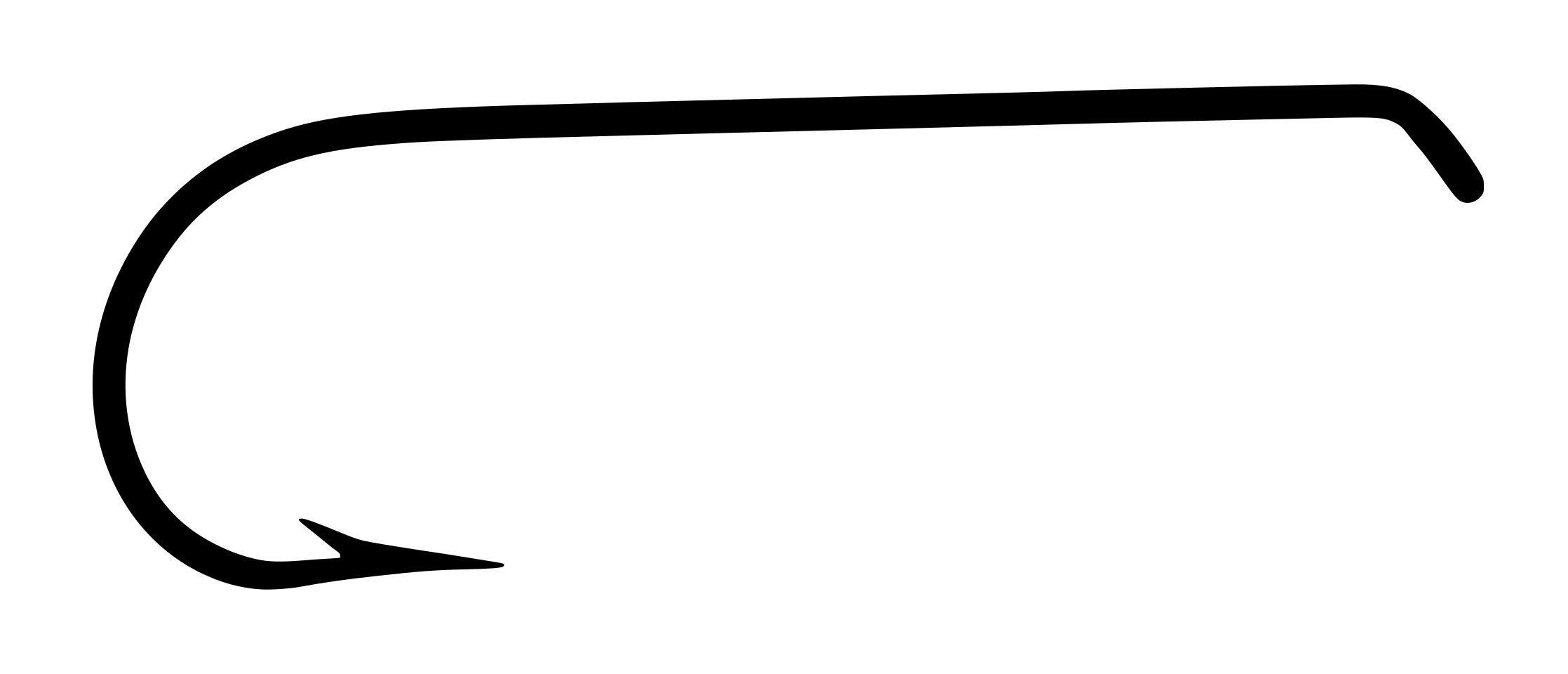
Mustad 3278 Aberdeen Point Detail Size 5/0Close-up view of the Mustad 3278 superior point showing the characteristic near-straight inner taper and positioned barb.Open originalMustad 3278 Aberdeen Full Profile Size 5/0Complete side view of the Mustad 3278 showing the wide Aberdeen bend geometry, long shank, and straight ring eye construction.Open originalMustad 3278 Aberdeen Size DocumentationTwo Mustad 3278 hooks displayed with handwritten research label confirming model number and size documentation.Open original
Technical profile
Eye
Ball Eye, Straight / InlineThe straight ring eye shows clean formation with consistent gap closure, typical of Mustad's industrial manufacturing standards P. Ring alignment is perpendicular to the hook shank for optimal leader attachment P.
Wire
Extra-Fine, Round, Est. ~0.030"-0.035" (~0.76-0.89 mm) E
Shank
3X Long — Plain
Bend
Aberdeen, Standard gapThe Aberdeen bend exhibits the characteristic wide, rounded profile that defines this bend family P. The deep gap provides excellent clearance for bulky baits while maintaining structural integrity in the light wire construction I.
Point
Superior (near-straight inner taper)Small, close-cut barb positioned at optimal angle for secure hold while minimizing tissue damage P. Barb proportions appropriate for the light wire gauge I.
Finish
Bronzed — Confirmed (stated on packaging)The bronze finish displays the warm, golden-brown tone characteristic of Mustad's bronzing process during this era P. Coverage appears uniform with no visible corrosion or wear on this specimen P.
The superior point geometry features a near-straight inner taper that concentrates penetration force at the tip while maintaining strength through the point section I. This design philosophy prioritizes reliable hookset over aggressive barb retention, making it ideal for situations where initial penetration is critical I.
The light wire construction reduces the hook’s displacement volume, minimizing disturbance to live baits while providing sufficient strength for the target species range I. The Aberdeen bend’s wide profile distributes stress across a larger arc, preventing point failure under load I.
Standard production hook with no notable records within the garrenwood.com catalog
Own this hook? Help us measure it.
We have measurement for size 5/0. Know any others? Submit calipered measurements and we'll review and add them. Thank you!
Historical context
mustad
O. Mustad & Son was established in 1877 by Ole Mustad in Gjøvik, Norway, evolving from a small nail-making operation into the world’s largest fishhook manufacturer. Under the leadership of Hans Mustad, Ole’s son, the company pioneered industrial hook manufacturing techniques and established global distribution networks that dominated the international tackle trade by the early 20th century.
The Gjøvik factory became synonymous with consistent quality and innovative manufacturing processes, including advanced tempering methods and precision wire drawing techniques. Mustad’s success lay in combining Norwegian metallurgical expertise with mass production efficiency, enabling the company to serve both commercial fishing fleets and recreational anglers worldwide.
Series History
The 3278 Aberdeen represents Mustad’s interpretation of the classic Scottish Aberdeen bend, adapted for industrial production methods. Introduced during the mid-20th century expansion period, this model was designed to serve the growing bait fishing market with a reliable, cost-effective hook suitable for various species and conditions.
The series emphasized functional performance over decorative elements, reflecting Mustad’s philosophy of purpose-built fishing tools. The straight ring eye construction, introduced to reduce manufacturing costs while maintaining strength, became a hallmark of Mustad’s production hooks during this era.
Era and Packaging Dating
Handwritten identification label suggests research specimen from mid-to-late 20th century. Bronze finish and straight ring eye construction consistent with post-1960 production methods.
From Scottish Shore to Norwegian Factory
The Aberdeen bend was originally developed by Scottish fishermen who discovered that the wide gap design could accommodate the bulky lugworms used as bait in North Sea fishing. When Norwegian manufacturers like Mustad adopted this design, they modified the traditional hand-forged profile to work with industrial wire-forming equipment, creating a hybrid that combined Scottish fishing wisdom with Norwegian manufacturing efficiency.
Design lineage and influence
The Aberdeen bend originated in Scottish fishing traditions, named after the coastal city where this wide-gap design proved effective for sea fishing applications. Mustad’s 3278 represents the industrialization of this traditional form, adapting hand-forged geometry to machine production methods.
Competing designs from English manufacturers like Partridge and Allcock influenced Mustad’s approach to eye construction and point geometry, resulting in the hybrid features visible in the 3278 series.
Best matchRelated by Attribute
Computed automatically from catalog data — updated as new hooks are added.
Matches: Bend, Shank, Wire, Eye, Eye Orient. +4 moreDiffers: Gap: Standard vs Narrow; Point: Superior vs Beak / Reversed; Finish: Bronzed vs Black Japanned +1 more
The Mustad 3278 Aberdeen is designed primarily for natural bait fishing in both freshwater and saltwater environments P. The wide gap and long shank accommodate larger baits such as worms, cut bait, and live minnows I. The light wire construction reduces damage to delicate baits while the superior point geometry ensures reliable penetration I. Particularly favored for bottom fishing applications where the wide Aberdeen bend provides excellent hooking leverage I.
Secondary Applications
Occasionally used for large streamer patterns in saltwater fly fishing applications
Classic Fly Patterns
Not typically used for fly tying
Modern Equivalents
Hook
Match Quality
Notes
Mustad 92641
Good
Modern Aberdeen with similar proportions but updated metallurgy
Owner 5177
Moderate
Japanese Aberdeen interpretation with different eye construction
Collector notes
Moderate interest due to Mustad's historical significance, limited by common availability and recent production.
Reference value
$5 – $15 USD estimate
The Mustad 3278 Aberdeen attracts collector interest primarily as a representative example of mid-20th century Norwegian hook manufacturing. Positive factors include the model’s association with Mustad’s golden age of production and its role in establishing industrial hook manufacturing standards.
Limiting factors include the hook’s common availability and extended production run, which reduces scarcity value. Most specimens show similar construction quality, making condition differences the primary value differentiator among surviving examples.
Market Value Notes
Values reflect general Mustad collecting interest rather than specific model rarity. Premium pricing for mint condition specimens with original packaging.
Where to Find
Common at tackle shows, online auctions, and general fishing collectible dealers
Preservation
Storage and Preservation
Store Mustad 3278 hooks in a dry environment to preserve the bronzed finish, which can develop patina with moisture exposure. The straight ring eye is particularly susceptible to corrosion at the gap closure point, so avoid contact with dissimilar metals. Original packaging, if available, should be preserved as it adds historical context and collector value.
For long-term storage, consider placing hooks in individual compartments to prevent contact corrosion between the ring eyes and hook points. The light wire construction makes these hooks more vulnerable to mechanical damage than heavier gauges, so handle with appropriate care during examination and storage.
Marking Analysis
Research Documentation
The handwritten label ‘Mustad 3278 5/0’ appears to be a modern research annotation rather than period packaging, based on the pen type and writing style I. This type of documentation is common among fishing tackle researchers and collectors who maintain specimen collections for reference purposes I. The clear, systematic notation suggests this hook was part of a larger cataloging effort, possibly for museum or research collection purposes S.
Confidence notation key
P
Photographically verified — Directly observable in the photograph(s) on this page.
V
Verified by documentation — Confirmed by manufacturer catalog, spec sheet, or published reference.
I
Inferred — A logical deduction from observable or documented evidence, not directly stated.
E
Estimated — An approximation based on visual comparison, proportional analysis, or limited data.
S
Speculative — A reasoned hypothesis that cannot be confirmed from available evidence.
Claims with no notation are confirmed by multiple independent sources. All photographs on garrenwood.com are taken on a measurement grid where each square equals 1/10 inch (0.1″ / 2.54 mm).