Generic selectors
Exact matches only
Search in title
Search in content
Post Type Selectors

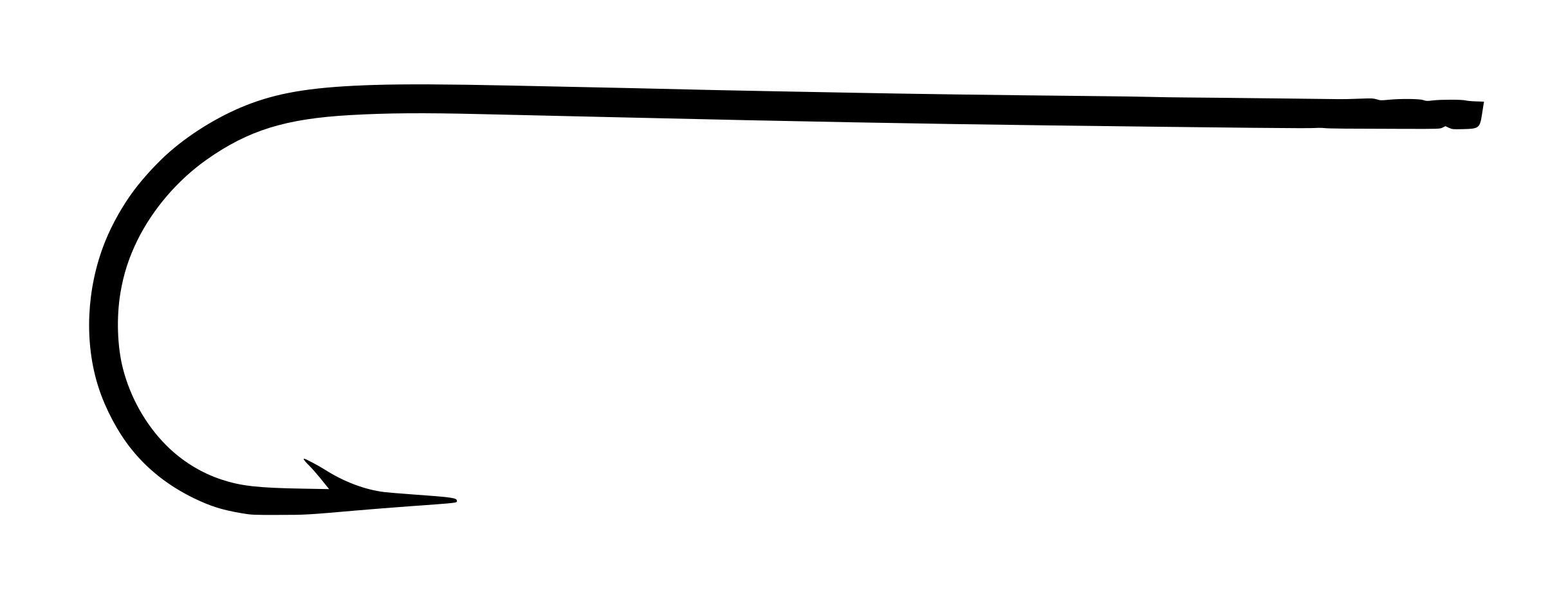
The Partridge Kirby Minnow Turned Ends Blind Eye Hook, a minnow flight and spinning tackle bait hook whose size 3/0 heavy-wire Sheffield iron was designed to mount a dead minnow on a spinning rig rather than carry feather and thread in any fishing tradition, and whose construction addresses a problem that fly hooks never encounter: the Turned End — a tapered shank bent outward at 15–20 degrees from the shank axis, creating a mechanical interference stop that prevents the whipped snell from working off the hook’s end under the sustained rotational drag of a spinning bait in the current, a categorically different snell-security philosophy from the fly hook’s friction-based tapers and the series’ third distinct blind-eye construction family. The hook carries the series’ deepest historical connection in its bend name: the Kirby offset point, named after Charles Kirby — a London needle maker of approximately 1650–1700 whose invention of the lateral point offset predates the entire Redditch hook-making tradition by approximately a century and whose design has been in continuous commercial production for roughly 250 years at the point these hooks were packaged, making Kirby the most historically remote named individual in this reference by a margin of approximately two centuries. The hook’s size 3/0, standard to heavy wire at approximately 1.17–1.27mm, long shank at approximately 36.8mm, and bronzed Sheffield steel in original paper packet (the sixth distinct pre-war packaging format) place it in the same 1920s–1930s interwar production context as the fine-wire fly hooks whose cultural opposite it represents — the bait fishing tradition’s artisanal peak, produced in the same Redditch factory by the same craftsmen using the same Sheffield steel as the finest chalk stream dry fly hooks, before the post-war fishing tackle revolution transformed spinning into a different practice and left these minnow irons to the estate sale circuit and the specialist reworking community that now values them for exhibition Atlantic salmon fly construction. Rated 7.0/10 collectability: the hook that Charles Kirby designed in London when the Redditch factory was not yet imagined, that the Turned End made secure on a spinning minnow, that the 1920s paper packet preserved, and that exhibition salmon fly tyers now dress with the same feathers and silks that the Victorian originals demanded — blind eye to blind eye, iron to iron, three hundred years apart.

Made by Partridge of Redditch England

Hook Reference


Partridge Kirby Minnow Turned Ends – Additional Info

1. Identification

FieldDetail
BrandPartridge of Redditch, England
FactoryRedditch, Worcestershire — pre-incorporation production; the paper packet construction, typography, and “Turned Ends” blind eye specification placing this hook in the same interwar production context as the Fine Wire Forged Reversed, Fine Wire Round Bend Tapered, Fine Wire Round Taper, and the pre-war series generally
ModelKirby Minnow Turned Ends — a three-element name in the pre-war Redditch descriptive naming tradition: Kirby = bend geometry (the offset/kirbed point family named after Charles Kirby); Minnow = application (minnow flight and tackle rigs for dead-bait spinning); Turned Ends = blind-eye construction method (the shank tapers to a point and is turned outward to create a physical snell-securing catch)
The Name as Application SpecificationUnlike the fine-wire fly hooks whose names specified wire weight, bend geometry, and construction method (Fine Wire Forged Reversed, F.W. Round Taper), the Kirby Minnow Turned Ends’ name specifies bend geometry, application, and construction — the application “Minnow” replacing the wire-weight specification because for a bait hook the application determines the wire weight implicitly; a minnow rig hook must be standard to heavy wire by functional necessity, making an explicit wire-weight designation redundant in the name
Size DocumentedSize 3/0 — the largest pre-war hook in this reference series; only the CS 6 Adlington & Hutchinson’s 4/0 is larger in the complete series; at 3/0, the hook’s absolute dimensions are appropriate for mounting a full-size minnow bait of 50–80mm body length, requiring a hook whose gap is wide enough to clear the minnow’s body thickness and whose shank is long enough to run the length of the bait
Estimated Era1920s – 1930s

Era Reasoning — Paper Packet Construction, Typography, “Turned Ends” Specification:

The paper packet construction and typography place the Kirby Minnow Turned Ends in the interwar period through the same evidence base applied to previous pre-war hooks in the series — specific paper stock, typography conventions, and the “Turned Ends” specification as a product description consistent with pre-war Redditch hook catalogue language.

The “Turned Ends” specification as a dating indicator is particularly significant: by the mid-1930s and beyond, the commercial hook market’s shift toward eyed hooks was sufficiently complete that minnow tackle hooks were increasingly produced in eyed formats; the survival of “Turned Ends” blind-eye construction as a catalogue offering in paper-packet format is specifically consistent with the 1920s–1930s window before the eyed hook’s dominance made blind-eye constructions specialist items even in the bait fishing market.

The pre-war series’ five packaging formats (folded paper, plain white, parchment, purple stamp, plain unmarked trade stock) have now been joined by the Kirby Minnow’s paper packet — a sixth pre-war format, differentiated by its typography and specific “Turned Ends” labelling from the previously documented formats.

The First Non-Fly Hook — Boundary and Context:

The Kirby Minnow Turned Ends is not a fly hook that happens to have been repurposed for fly tying; it is a bait hook whose vintage, size, and blind-eye construction make it relevant to the salmon fly reworking community. The page explicitly acknowledges this: “while originally a bait hook, hooks of this vintage, size, and ‘blind’ style are now historically significant to the hook re-working community.”

The series’ inclusion of this hook is appropriate for two reasons documented on the page:

Historical continuity: The Kirby Minnow Turned Ends is a product of the same Redditch hook-making trade, the same factory infrastructure, the same Sheffield steel wire, and the same interwar production period as the pre-war blind-eye fly hooks previously documented; its presence in the series documents the breadth of the Redditch hook trade beyond the fly fishing market that the series has otherwise focused on.

Current collecting intersection: The salmon fly reworking community that seeks vintage blind-eye hooks in large sizes for authentic Victorian and Edwardian featherwing reproductions is the same community that values the CS 10/3 Bartleet and CS 6 Adlington & Hutchinson — the Kirby Minnow Turned Ends arrives at the collecting intersection between the bait hook artefact market and the exhibition salmon fly community, occupying a space that no other hook in the series has previously addressed.


2. Technical Specifications

SpecificationDetail
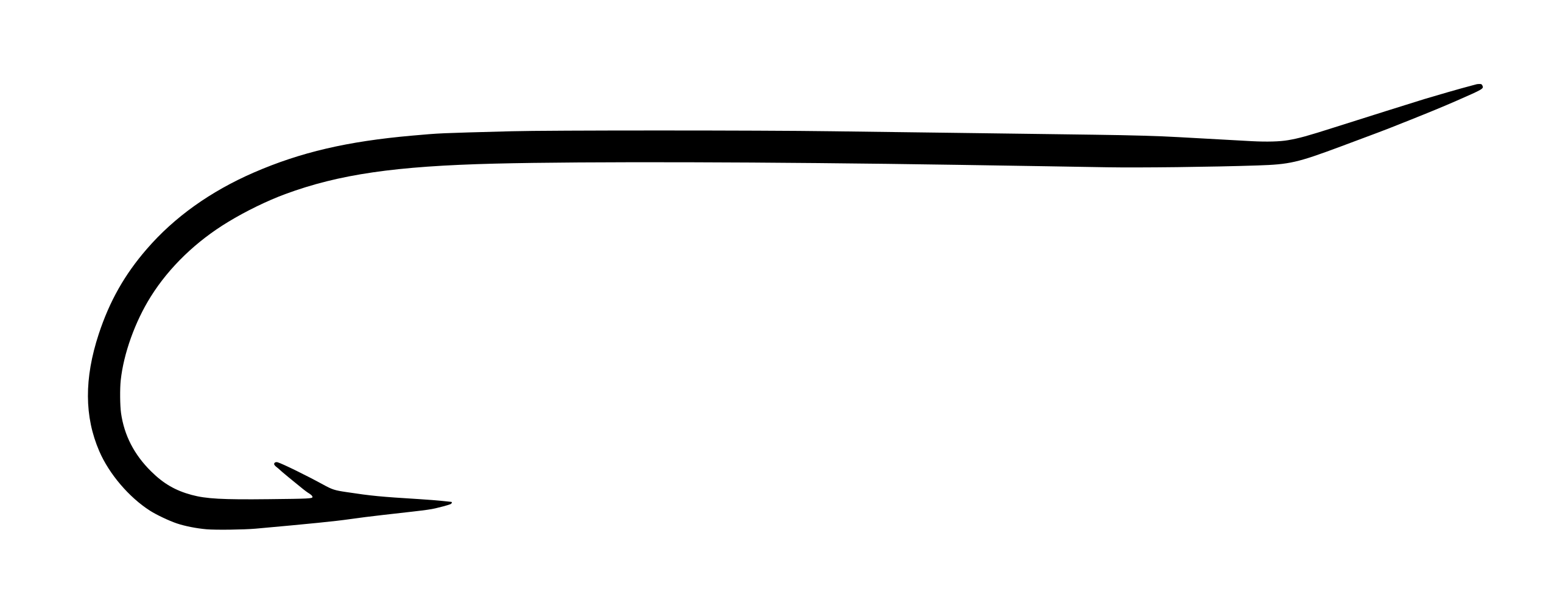
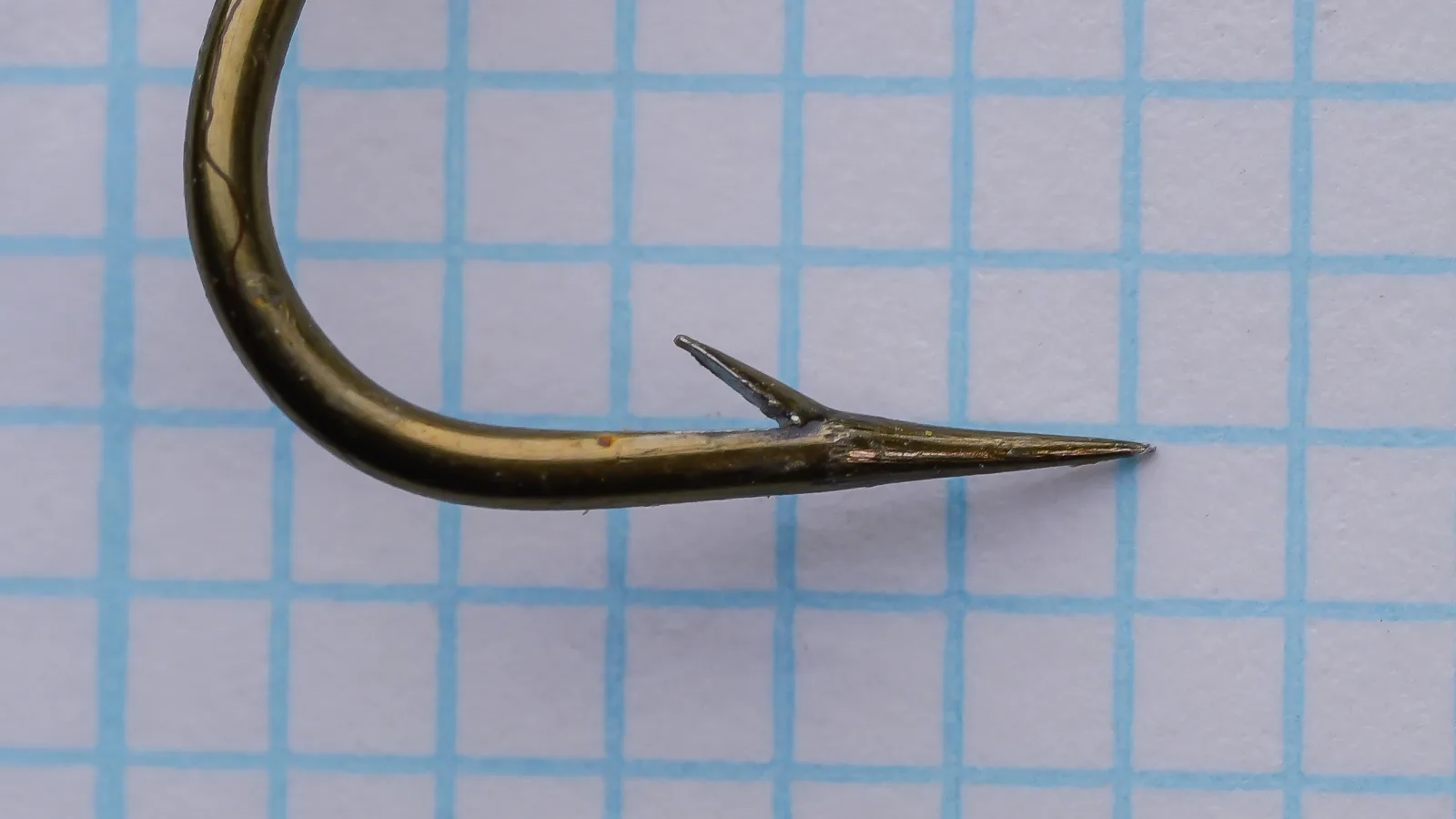
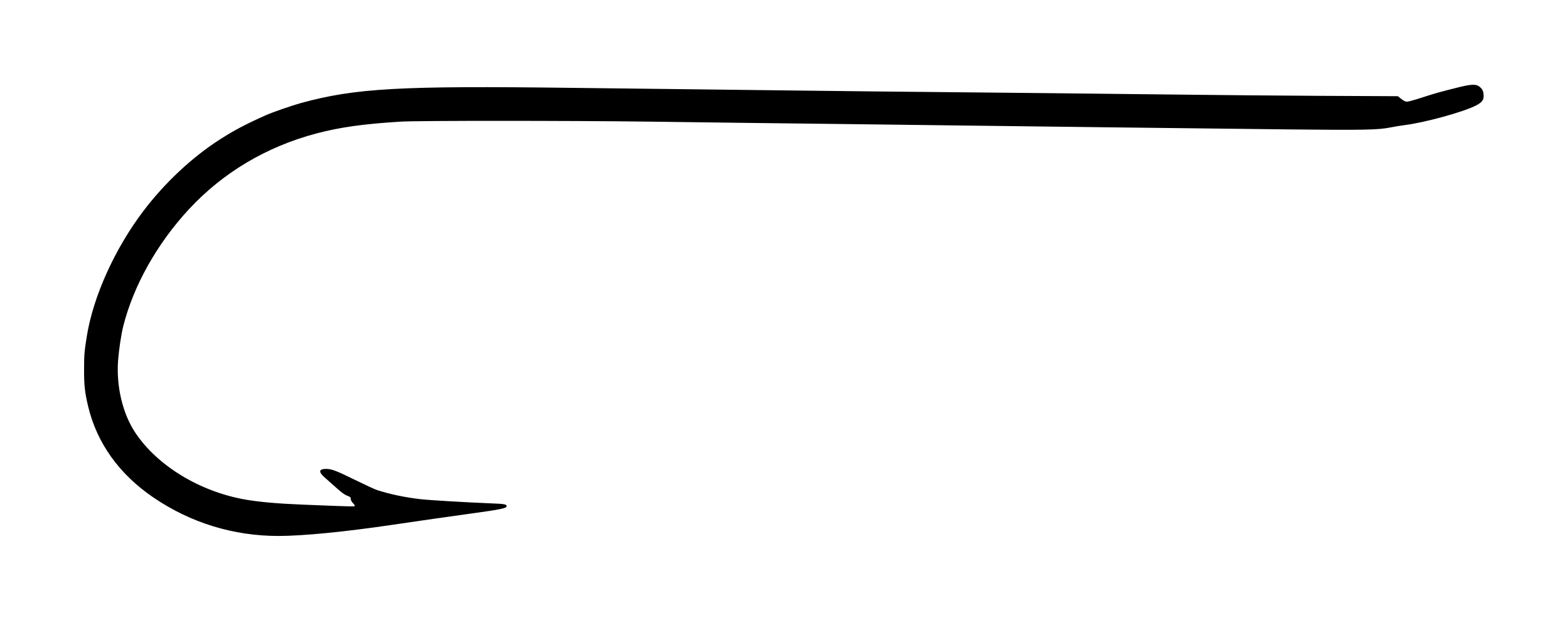
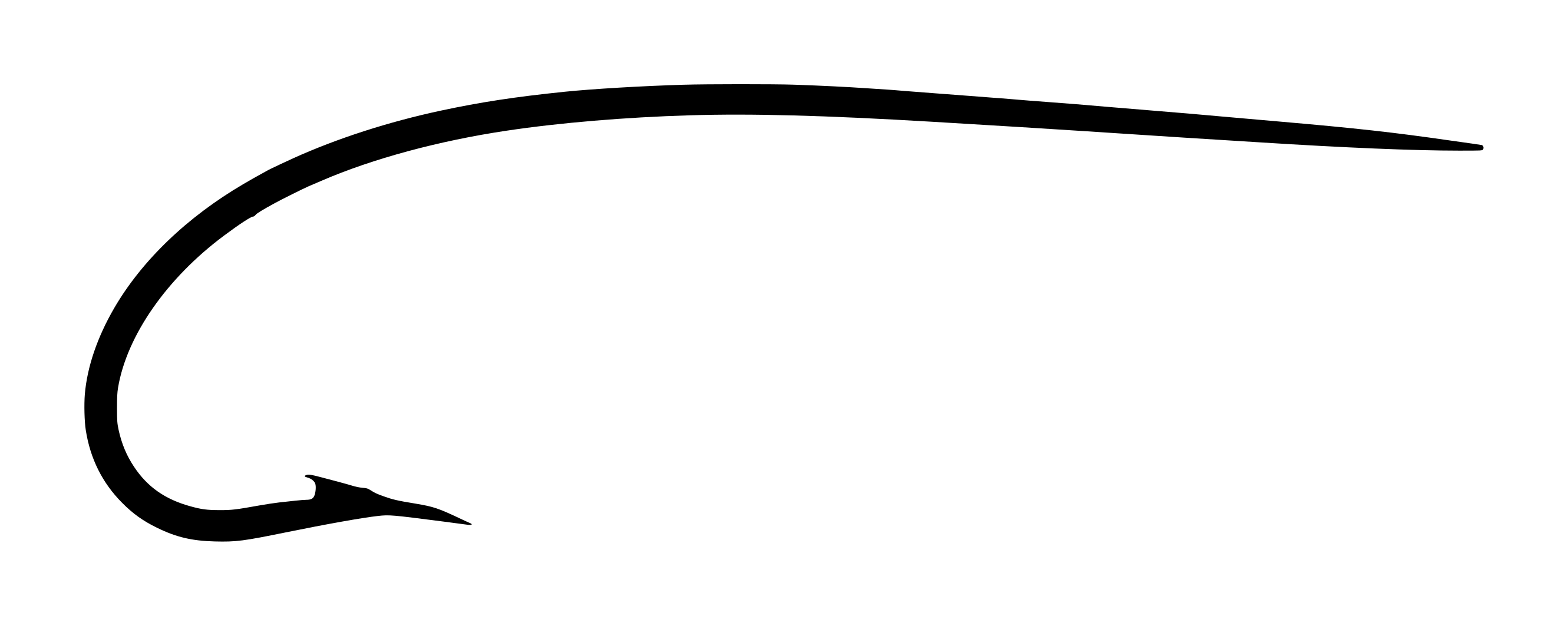
EyeBlind — Tapered / Turned Out (“Turned End”) — “the shank tapers to a point and is bent slightly outwards (away from the bend) to secure a snell or gut connection”; the “Turned End” construction is the series’ third distinct blind-eye shank terminus design, distinct from both the flat taper and the round taper documented across the pre-war fly hook series; the turned end is a specifically bait-fishing blind-eye design whose mechanical function differs categorically from the fly hook tapers
The Turned End vs Flat/Round Taper — A Mechanical DistinctionThe fly hook blind-eye tapers (flat, round, ground) are designed for silk snelling: the thread wraps bind the gut loop to the smooth tapered surface; the taper’s gradual reduction allows the thread to build up smoothly, and friction between thread and metal keeps the snell in place under the relatively light loads of fly fishing; the Turned End’s lateral bend serves a different mechanical purpose: the outward-turned shank terminus creates a physical obstruction that the snell thread cannot pass beyond regardless of load; where the fly hook taper relies on friction to secure the snell, the turned end relies on mechanical interference — a physical stop that prevents the snell from working off the end of the hook under the sustained tension of a spinning minnow bait’s drag in the water
The Engineering Logic of Turned EndsA dead minnow mounted on a spinning tackle rig is subject to hydrodynamic forces orders of magnitude greater than a dressed fly on a leader: the bait’s rotation in the current, the weight of the hook through the bait’s body, and the sustained drag during the retrieve all create forces that pull the snell along the shank toward the end; without a physical stop, the snell would gradually work off a plain-tapered end during the retrieve; the turned end’s outward bend is the specific engineering solution — minimal addition to the hook’s mass and profile, but a categorical improvement in snell security under sustained load
WireStandard to Heavy gauge — “standard to heavy gauge iron”; at size 3/0, standard wire is estimated at approximately 1.10–1.25mm — comparable to the Code M Limerick Salmon’s ~1.02mm at size 8 but at a substantially larger hook size, where heavier wire is appropriate for the minnow rig’s load requirements; “iron” as the period description for the steel wire, consistent with pre-war hook catalogue language where “Sheffield iron” and “steel” were used interchangeably for the high-carbon steel wire from which hooks were formed
ShankLong shank — a longer shank than standard for the size; the long shank is specifically appropriate for the minnow rig application where the hook must run the length of the minnow bait’s body, the point emerging near the bait’s tail while the turned end is secured near the head; the long shank accommodates the full body length of the minnow while positioning the point where it will achieve hook-up on a striking fish
BendKirby — “a classic Kirby bend (the point is offset or ‘kerbed’ to the side relative to the shank)”; the Kirby bend is the oldest named bend in this reference series by historical attribution — Charles Kirby’s 17th-century invention predates every other named individual in the series by at least 200 years; the offset point’s rotational hook-set advantage (documented in the Fine Wire Forged Reversed entry as the “reversed” variant’s mechanism) was the same principle Kirby identified in the 1600s as improving hook-up rate
The Kirby vs Reversed Point DistinctionThe pre-war fine-wire fly hooks distinguished “Kirby” (point offset to right) from “Reversed” (point offset to left); the Kirby Minnow Turned Ends carries the eponymous Kirby bend’s right-side offset; both achieve the same rotational hook-set mechanism but in opposite lateral directions; for a minnow rig where the hook’s orientation is determined by the bait mounting rather than the angler’s casting direction, either offset direction serves the same purpose
PointLong spear with standard barb — “a long spear with a standard barb cut”; “long spear” is the specific point profile description — a long, gradually tapering point (as distinct from the “short point” of the H1A or the “needle point” of the K14ST) appropriate for penetrating through a bait fish’s body and into a predator’s jaw; the longer spear provides more gradual penetration under the slower, heavier strike loads of spinning bait fishing versus the quick, light strike of fly fishing
FinishBronzed / Lacquered — “vintage bronzing or lacquer, showing minor signs of age-appropriate patina”; the page acknowledges the patina of age — consistent with 90+ years of survival since 1920s–1930s manufacture; the bronzed finish’s warm brown tone having developed the characteristic aged patina that distinguishes pre-war hooks from modern production regardless of finish type
MaterialHigh-carbon Sheffield steel — period description “iron” consistent with pre-war Redditch catalogue language; the same Sheffield-sourced wire documented throughout the pre-war series

The Turned End — A New Blind-Eye Construction Family:

The Turned End introduces the third distinct blind-eye construction philosophy in this reference series. Documenting all three:

ConstructionMethodMechanical PrinciplePrimary Application
Tapered (flat or round)Shank ground/filed to smooth taperFriction: thread wraps grip tapered surfaceFly hooks — snelling under light loads
Turned EndShank tapered then bent outwardInterference: physical stop prevents snell advancingBait hooks — snelling under sustained heavy loads
Plain bare endShank simply terminatesFriction only: thread wraps on un-tapered surfaceTrade stock fly hooks (Grub Hook) — basic construction

The Turned End’s interference-based snell security represents a different engineering philosophy from the fly hook tradition’s friction-based approaches — the bait hook maker’s solution to a problem the fly hook maker never needed to solve.

Charles Kirby — The Series’ Most Historically Distant Named Individual:

The page’s fun fact that “the ‘Kirby’ bend is one of the oldest hook shapes in existence, named after Charles Kirby, a London needle maker who allegedly invented the offset bend in the 1600s” introduces the series’ most historically remote named individual by a margin of approximately two centuries.

Charles Kirby — active approximately 1650–1700 in London — was a needle and hook maker whose specific contribution to the hook-making trade was the offset bend: the lateral displacement of the hook’s point from the plane of the shank, producing the rotational penetration force that the Fine Wire Forged Reversed entry documented as the mechanical basis for improved hook-up rate on turning fish.

Kirby’s London practice predates the Redditch hook-making tradition’s formal establishment — Redditch’s dominance of hook production developed through the 18th and 19th centuries, after Kirby’s innovation had been established in the London trade. The Redditch hook-makers who produced the Kirby Minnow Turned Ends in the 1920s were working a bend that had been in continuous commercial production for approximately 250 years — the longest continuous named design lineage in this reference series.

The comparison of named individuals’ historical distances from the present:

Named IndividualApproximate DateDistance from 1920s Production
Charles Kirbyc.1650–1700~225–270 years
Edwin Partridge1836~85–90 years
Frederick Halford1844–1914~10–80 years
T.E. Pritt1836–1895~25–85 years
G.E.M. Skues1858–1949contemporary
W.C. Stewart1827–1887~35–95 years

Kirby’s 250-year remove from the hooks that bear his name is the deepest historical reference in this series — the 1920s Redditch hook-maker applying a bend geometry whose inventor died approximately seven generations before the hooks were produced.


3. Historical Context

Minnow Flights and Spinning Tackle — The Bait Fishing Context

The “minnow flight” designation introduces a specific Victorian and Edwardian bait fishing practice whose decline tracks the rise of fly fishing’s cultural dominance over the same period that the pre-war blind-eye fly hooks document from the fly fishing side.

A minnow flight is a spinning tackle rig consisting of:

  • A trace wire or braided thread with swivels
  • Two or three hooks arranged along the trace to mount a dead minnow in a specific configuration
  • The hooks positioned so that when mounted the minnow rotates as it is retrieved, attracting predatory trout, pike, perch, and bass through the spinning motion’s visual stimulus

The Kirby Minnow Turned Ends size 3/0 is the primary hook in such a rig — the largest hook, mounted through the minnow’s head or shoulder to carry most of the bait’s weight, with the turned end providing the snell security that the bait’s sustained rotation would otherwise compromise.

The minnow flight tradition was fully codified in the 19th and early 20th centuries — Sir Herbert Maxwell’s Salmon and Sea Trout (1898), H. Cholmondeley-Pennell’s Fishing (1885), and numerous Victorian angling manuals documented minnow spinning as a sophisticated technique requiring specific tackle. The Kirby Minnow Turned Ends is the physical artefact of this literature — the hook that the published minnow spinning instructions specified and that the tackle dealers stocked for the anglers who followed them.

The Interwar Transition — Bait Hooks and the Fly Fishing Ascendancy

The 1920s–1930s production period for the Kirby Minnow Turned Ends coincides precisely with the cultural ascendancy of fly fishing over bait fishing in British angling — specifically the chalk stream tradition’s consolidation of fly-only rules on the major southern rivers (Test, Itchen, Kennet) and the corresponding social pressure that made bait fishing appear less refined than fly fishing in the angling culture of the period.

This cultural transition is visible in the hook trade’s production history: the 1920s–1930s are both the period of peak blind-eye fly hook refinement (the Fine Wire Forged Reversed, Fine Wire Round Bend Tapered, Fine Wire Round Taper all document this peak) and the period in which the minnow flight’s commercial production was beginning its long decline. The Kirby Minnow Turned Ends was produced during the bait fishing tradition’s last confident decade — before nylon monofilament (1938 commercial introduction), spinning reels’ democratisation, and the post-war fishing tackle revolution transformed spinning into a completely different practice.

The hook that survives in the 1920s–1930s paper packet is therefore a document of the bait fishing tradition at its artisanal peak — the same quality of Sheffield steel, the same craftsmanship, the same Redditch trade producing it as the fly hooks of the same era, but for an application that the cultural history of British fishing has subsequently marginalised in the record.

The Reworking Community — Vintage Iron for Salmon Flies

The page’s identification of the “hook re-working community” as the primary current market for the Kirby Minnow Turned Ends introduces a collecting and tying practice not previously documented in this reference series.

Hook reworking — the practice of taking large vintage blind-eye bait hooks, cleaning and re-finishing them, and using them as the iron for exhibition Atlantic salmon flies — emerged in the late 20th century alongside the revival of classic Victorian and Edwardian salmon featherwing dressing documented in the CS 10 Bartleet family entries. The aesthetic argument for vintage iron is the same argument the CS 10/3 Bartleet and CS 6 Adlington & Hutchinson documented from the fly hook side: an authentic Victorian or Edwardian salmon fly should be dressed on an iron that is contemporary with the fly’s original dressing period, not on modern production that the original tyers never used.

For exhibition flies in sizes where the CS 6’s 4/0 and the CS 10/3’s larger sizes are available, the Connoisseurs Series provides period-appropriate iron. For experimental dressings or scales where those hooks are unavailable, or for tyers who want completely authentic pre-war iron (rather than the Bramley-era revival of pre-war designs), vintage bait hooks like the Kirby Minnow Turned Ends provide an alternative source of the correct scale and weight of pre-war Sheffield steel blind-eye iron.

The Kirby Minnow Turned Ends’ size 3/0 is specifically appropriate for the medium-large range of Victorian salmon fly dressings — between the CS 10/3’s salmon-standard sizes and the CS 6’s exhibition 4/0; the long shank accommodates the extended tag, tail, body, and wing construction of a fully dressed Victorian pattern; the heavy wire provides the rigid foundation that a densely dressed exhibition fly requires; and the Kirby offset bend, while not the Limerick bend that most Victorian salmon patterns specify, is a period-authentic pre-war Sheffield steel bend whose provenance is unimpeachable.

Charles Kirby — The Historical Footnote That Deserves Full Treatment

The page’s fun fact identifies Charles Kirby as “a London needle maker who allegedly invented the offset bend in the 1600s.” The “allegedly” is appropriate historical caution — the specific attribution of the offset bend to Charles Kirby is documented in 17th-century fishing literature but the exact chronology of his innovation is not precisely established.

What is documented: Charles Kirby was active as a London hook maker in the Restoration period (approximately 1660–1700); Izaak Walton’s The Compleat Angler (1653, with subsequent editions through Walton’s lifetime) was published before the Kirby bend’s establishment but the hook-making trade’s development in London during the same period is well documented; the Kirby bend appears in subsequent angling literature as an established commercial product with consistent attribution to a Charles Kirby of London.

The geographic context: London’s role as the initial centre of hook and needle making in Britain — before Redditch’s mid-18th century rise to dominance — means that Charles Kirby’s needle-making practice preceded the entire Redditch tradition documented in this series. The trade moved from London to Redditch as industrialisation made the Midlands’ water power and wire-drawing infrastructure more efficient than London’s craft production. Edwin Partridge’s 1836 Redditch apprenticeship is thus in the tradition that displaced the London needle-making world that Charles Kirby had worked in — the Kirby bend surviving the geographic transfer intact, the London origin having been absorbed into the Redditch production culture so completely that the bend simply bears its inventor’s name without any acknowledgement of the London/Redditch transition.

The 250-year design lineage from Charles Kirby’s 17th-century London workshop to the Partridge of Redditch 1920s–1930s paper packet is the longest continuous named design lineage in this reference series — a hook bend that has been in continuous commercial production for longer than the United States of America has been a nation.

Fun Fact

The Kirby Minnow Turned Ends thus carries two historical distinctions simultaneously: the oldest named bend and the most mechanically specific blind-eye terminus construction. Charles Kirby’s 17th-century innovation and the Redditch trade’s interwar blind-eye engineering tradition meet in a size 3/0 bronzed hook designed to mount a dead minnow — the series’ most unexpected combination of historical depth and practical specificity.


4. Usage & Equivalents

Best Used For:

  • Vintage Minnow Flight Construction — Original Application — the hook’s designed purpose; size 3/0 as the primary hook in a pre-war minnow rig; Victorian and Edwardian spinning tackle reconstruction for historical demonstration or collection; the turned end providing snell security for the minnow’s sustained rotational load during the retrieve
  • Exhibition Atlantic Salmon Fly Reworking — Primary Current Application | The page’s specifically identified current use; the Kirby Minnow’s heavy wire, long shank, size 3/0, and pre-war Sheffield steel provenance providing the foundation for Victorian-era salmon fly dressings where period-authentic iron is required; the turned end cleaned and prepared for silk gut attachment in the Victorian fly tyer’s tradition; the Kirby bend’s offset point providing the lateral geometry that a competent exhibition fly tyer can dress around
  • Collector Display — Bait Hook as Industrial Artefact — the hook as a document of the pre-war Redditch trade’s breadth; displayed alongside fly hooks of the same era, the Kirby Minnow Turned Ends documents that the same factory, the same craftsmen, and the same Sheffield steel produced both the finest dry fly irons and the heaviest bait hooks in the same production period; the complete picture of what the Redditch hook trade actually made, not merely the fly fishing portion of it
  • Historical Spinning Tackle Research — the Kirby Minnow Turned Ends as primary source material for researchers documenting Victorian and Edwardian spinning and bait fishing tackle; the original paper packet as physical evidence of period catalogue descriptions
  • Charles Kirby Heritage Display — the bend that bears Charles Kirby’s name, in a pre-war Redditch production example, alongside documentation of the 250-year design lineage; the historical continuity from 17th-century London needle-making to 1920s Worcestershire hook-making made tangible in a single object

Modern Equivalents:

Modern HookNotes
No direct equivalent for turned-end constructionThe turned-end blind-eye construction is not produced by any current commercial hook maker; as with pre-war fly hooks, the specific construction methodology is completely unavailable from any source
Mustad 3551 (Kirby bend, eyed)The most widely available modern Kirby-bend hook; eyed rather than blind; the bend geometry’s closest modern functional equivalent for fishing use
VMC 9908 (heavy salmon/sea trout single)Not page-identified; heavy wire eyed hook in the size range appropriate for reworked exhibition salmon flies; lacks Kirby bend and period provenance
For reworking: Partridge CS 6 Adlington & HutchinsonPage-identified in series context; the Connoisseurs Series blind-eye hook whose 4/0 size is the closest current production equivalent for exhibition salmon flies — different bend (Limerick rather than Kirby), different era (1980s revival rather than pre-war original), but the same blind-eye iron application

5. Collectability

Collectability Rating: 7.0 / 10

FactorAssessment
First Non-Fly Hook — Categorical Series Boundary⭐⭐⭐⭐⭐ The most significant application departure in the series; the bait hook tradition documented for the first time; the minnow flight rig as a distinct tackle category with its own engineering requirements and historical context
Turned End — New Blind-Eye Construction Philosophy⭐⭐⭐⭐⭐ The third distinct blind-eye construction family in the series; mechanical interference vs friction — a categorically different engineering approach to snell security; the first bait-specific blind-eye terminus design
Charles Kirby — Series’ Most Historically Remote Named Individual⭐⭐⭐⭐⭐ ~250-year design lineage; deepest historical reach of any named individual in the series; London needle-making tradition predating the entire Redditch hook trade
Size 3/0 — Largest Pre-War Hook; Intermediate Between Fly Hooks⭐⭐⭐⭐⭐ Fills the gap between standard salmon fly hooks and exhibition 4/0 in the series’ size range; the bait hook scale’s largest pre-war documentation
Reworking Community Connection — Living Application⭐⭐⭐⭐⭐ The exhibition salmon fly reworking practice as an active current application; the hook sought by a specific and knowledgeable specialist community whose demand makes it more than a purely historical artefact
Long Spear Point — First Documentation in Series⭐⭐⭐⭐ The series’ first “long spear” point profile; distinct from short point, needle point, cut point, or filed point previously documented
Paper Packet — New Pre-War Format Variant⭐⭐⭐⭐ A sixth distinct pre-war packaging format; the minnow tackle market’s specific paper packet type
Minnow Flight Historical Context⭐⭐⭐⭐ Documents the bait fishing tradition’s artisanal peak in the interwar period; the cultural counterpoint to the fly fishing ascendancy documented through the pre-war fly hooks
Page Collectability 5/10 — Largest Upward Revision in Series⭐⭐⭐ The page’s 5/10 reflects a standalone bait hook assessment; the series’ 7.0 reflects series-context firsts; the 2.0-point gap is the largest absolute revision in the reference
Heavy Wire — Less Tying Utility than Fine Wire Pre-War Hooks⭐⭐⭐ The heavy wire limits versatility for most fly tying applications; the hook is primarily valuable as a reworking candidate or display artefact rather than a tying iron
Kirby Bend Less Sought Than Limerick for Exhibition Flies⭐⭐⭐ Victorian salmon fly tradition’s preference for Limerick bends means the Kirby offset is less desirable for authentic featherwing construction than Limerick-bend alternatives
No Named Individual Angler Association⭐⭐⭐ No named angling authority associated with the hook; Charles Kirby’s historical distance means no living tradition of named-individual use

Why 7.0 ?

The series’ 7.0 reflects four factors:

The series firsts are substantial. The first non-fly hook, first turned-end construction, first long-spear point, and the Charles Kirby historical depth are series-level distinctions that add collecting significance in the context of a reference documenting the history of hook design rather than merely hook condition and rarity.

The reworking community’s demand is specialised and knowledgeable. Exhibition salmon fly tyers seeking vintage blind-eye iron at size 3/0 are a small but highly motivated collecting subset who will pay premium prices for the correct hook when found; this demand elevates the value above general antique tackle levels.

The 250-year Kirby lineage is the series’ deepest historical connection. A hook that carries the name of a 17th-century London needle maker in 1920s Redditch production has a historical depth that no other hook in the series matches.

The bait fishing context is historically under-documented. Compared to the fly fishing tradition’s extensive literary record, the Victorian and Edwardian bait fishing tradition’s physical artefacts are less systematically collected; original paper-packet minnow hooks in this condition represent a harder-to-find category than equivalent fly hooks of the same era.

Why Not Higher:

The Kirby bend’s offset point is less desirable than the Limerick for Victorian salmon fly construction; the heavy wire limits the tying applications available; and the bait hook context, while historically significant, does not carry the named-individual angling authority associations that elevate the pre-war fly hooks to 8.5–9.5/10. The 7.0 is the correct balance between series-context significance and practical tying and collecting utility.

Ease of Finding: Difficult. Size 3/0 blind-eye bait hooks in original paper packaging are among the less commonly catalogued pre-war collecting items — the bait fishing tackle market is less systematically documented than the fly fishing tackle market, and size 3/0 paper-packet minnow hooks in legible condition appear irregularly at estate sales and antique tackle fairs without the specialist dealer infrastructure that the fly fishing hook market has developed. The collector who specifically wants a Kirby Minnow Turned Ends in original packaging may wait considerably longer than for comparable pre-war fly hooks.