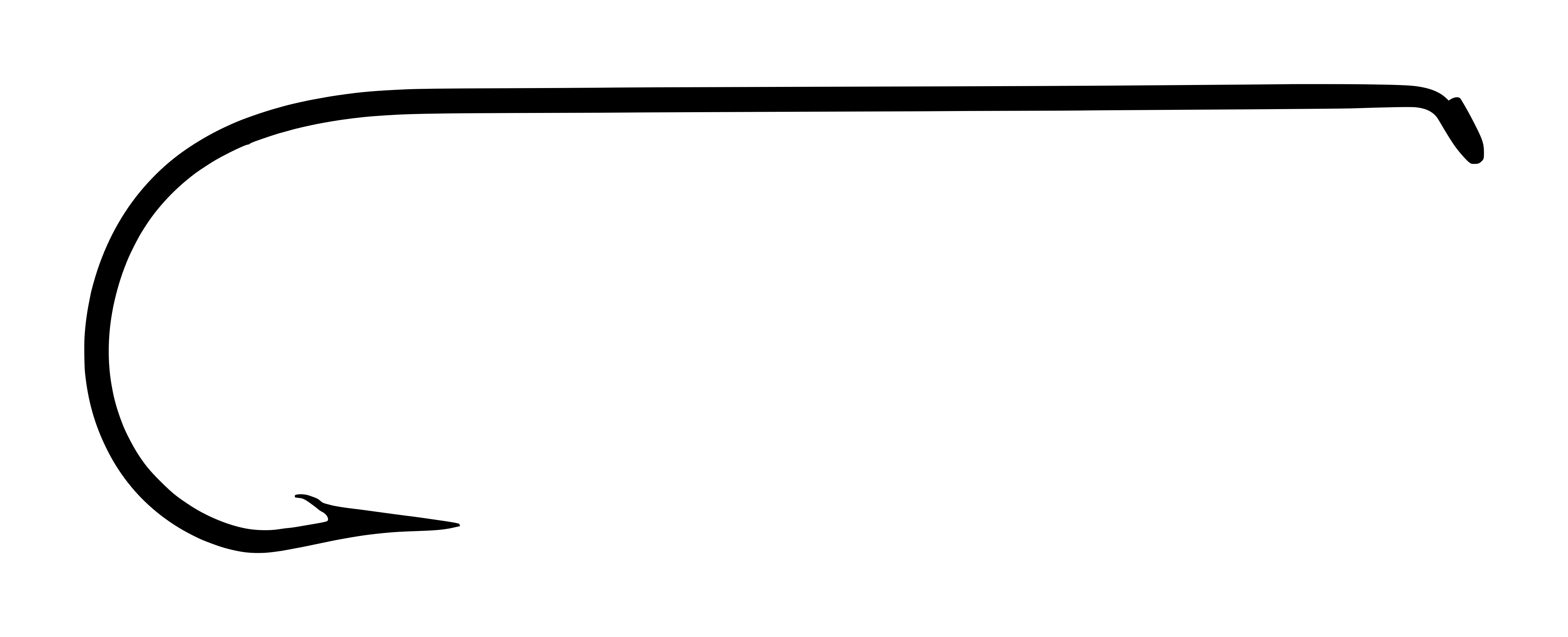
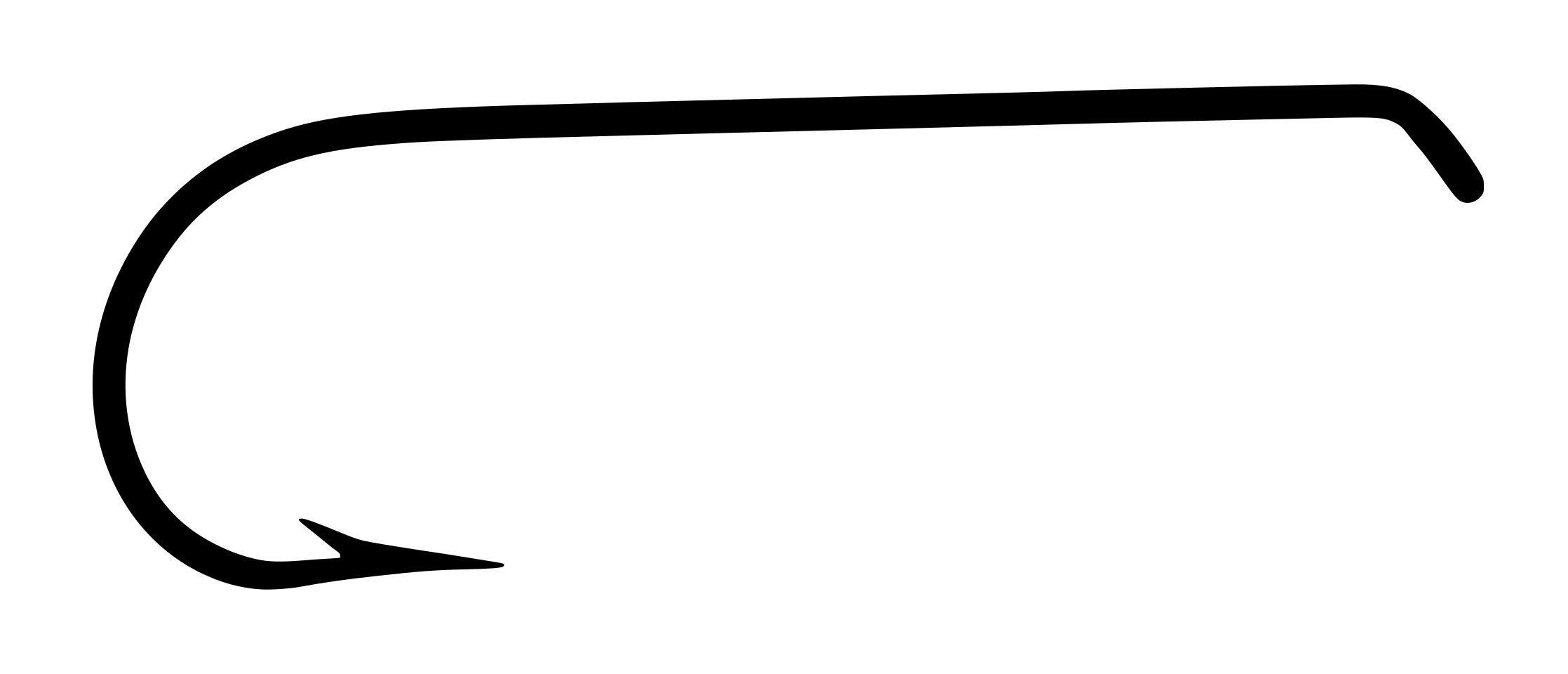
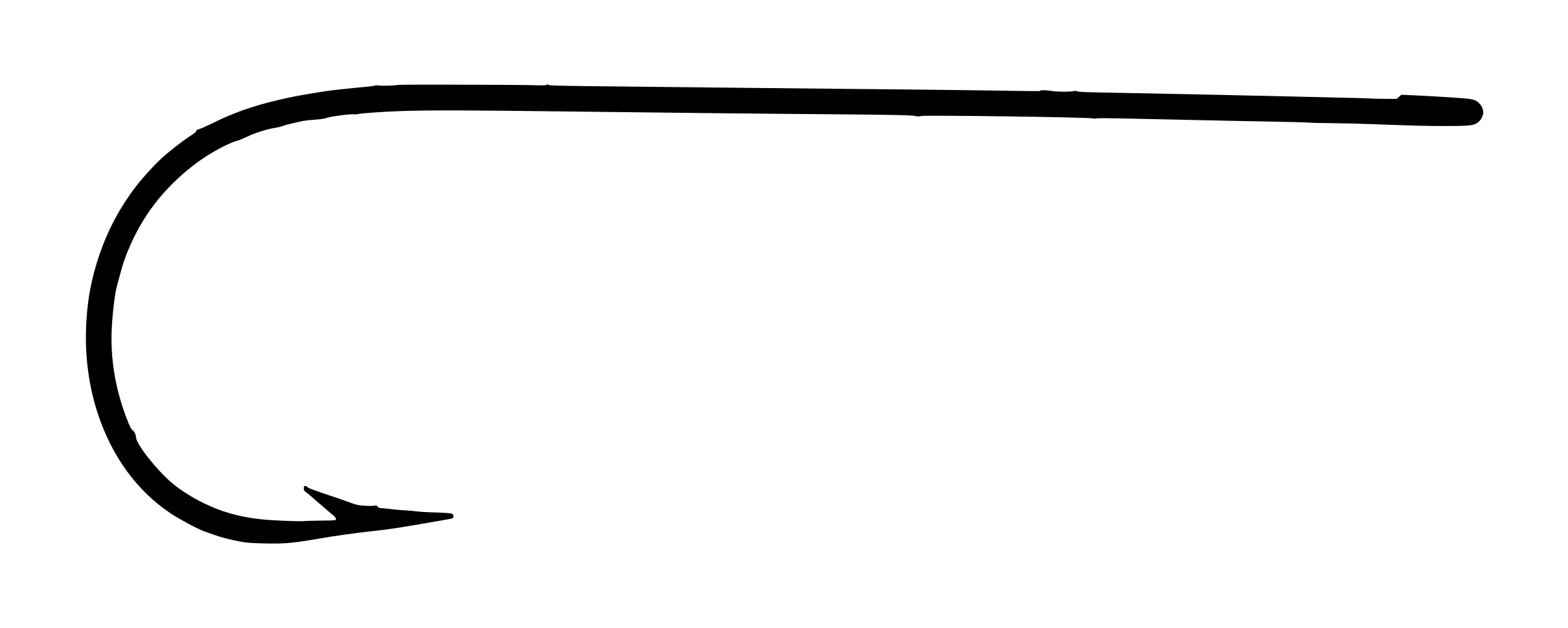
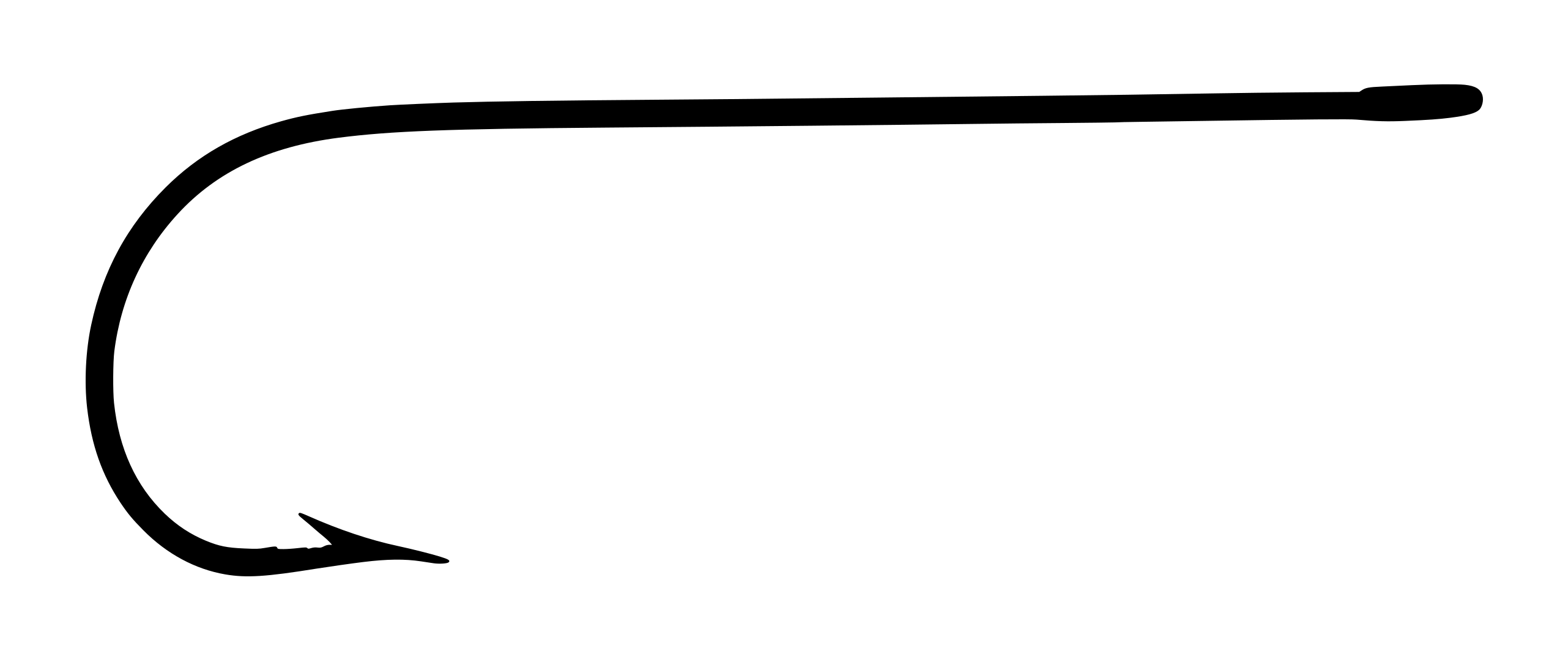
The Mustad 32800 represents the classic Aberdeen hook pattern that has been an all time favorite with salt and freshwater anglers V. This size 4/0 specimen features the characteristic wide round bend and extended shank that defines the Aberdeen design, with a turned-down ball eye and superior point geometry P.
The light wire construction and bronzed finish are typical of mid-20th century production, likely manufactured between 1960-1980 based on the handwritten specimen notation style I. The Aberdeen’s long shank makes it particularly effective for using long natural baits, such rag or sand worms or as live bait hook V.
This hook represents Mustad’s enduring commitment to the Aberdeen pattern, which remains a true all-round hook, which can be used to present any bait for species ranging from small Whiting and Sea Robins to Sea Bass and Cod V. The 32800 model demonstrates the timeless functionality that has made the Aberdeen a staple in tackle boxes worldwide.
Mustad 32800 Hook Point
Photographic record
3 cataloged imagesSelect any record to load it above.
Tapered Eye, Turned DownThe turned-down ball eye shows typical Mustad construction quality with a well-formed ball and smooth taper transition to the shank. The downward angle positions the line attachment optimally for bait presentation P.
Wire
Extra-Fine, Round, Est. ~0.020"-0.025" (~0.5-0.6 mm) E
Shank
3X Long — Plain
Bend
Aberdeen, Standard gapThe Aberdeen bend displays the characteristic wide, rounded geometry that maximizes gap width relative to overall hook size. The bend maintains consistent curvature without sharp transitions, distributing stress evenly across the bend radius P.
Point
Superior (near-straight inner taper)The barb is cut close to the point with moderate angle, designed to secure bait and fish without excessive tissue damage. The barb placement allows for effective penetration while maintaining holding power P.
Finish
Bronzed — Inferred (photographically likely)The bronzed finish exhibits the warm golden-brown tone characteristic of mid-20th century Mustad production. The coating appears uniform with slight darkening in crevices, consistent with traditional bronzing processes P.
Hook specimen shows excellent condition with bright bronzed finish and sharp point. Handwritten notation card displays age-appropriate toning but remains clearly legible.
The Aberdeen’s engineering reflects a specialized design for bait presentation and fish handling. The wide, rounded bend provides exceptional gap clearance for natural baits while distributing stress across a broader curve, reducing the likelihood of hook failure under load. The extended shank serves multiple functions: it provides additional holding area for long baits like ragworms, creates separation between the hook point and bait threading area, and offers better leverage for hook removal.
The superior point geometry features a near-straight inner taper that balances penetration capability with strength. Unlike hollow points with their concave inner faces, the superior point maintains material thickness closer to the tip, providing durability while still achieving effective penetration. The light wire gauge reduces the hook’s visibility and weight in the water while maintaining adequate strength for the intended applications.
We have measurement for size 4/0. Know any others? Submit calipered measurements and we'll review and add them. Thank you!
Historical context
mustad
O. Mustad & Son, founded in 1832 in Gjøvik, Norway, became the world’s largest fishhook manufacturer through industrial innovation and global distribution. Hans Øyvind Mustad established the company during Norway’s emerging industrial period, building it into an international enterprise that would dominate hook manufacturing for over a century.
The company’s success stemmed from combining Norwegian metallurgical expertise with mass production techniques. By the early 20th century, Mustad hooks were distributed globally, with the Aberdeen pattern becoming one of their most successful designs. The factory in Gjøvik employed hundreds of workers and produced millions of hooks annually, making ‘Mustad’ synonymous with quality fishing tackle worldwide.
Series History
The Mustad Aberdeen series represents one of the company’s longest-running and most successful hook patterns, with production spanning from the early 1900s through the present day. The 32800 model was part of Mustad’s comprehensive Aberdeen lineup that included various sizes and wire gauges to serve different fishing applications.
During the mid-20th century, when this specimen was likely produced, the Aberdeen pattern was marketed heavily to both commercial and recreational fishermen. The series included multiple model numbers (32800, 3261, 3262, etc.) covering different specifications within the Aberdeen geometry. The pattern’s enduring popularity led to continuous production refinements while maintaining the essential wide-bend, long-shank characteristics that define the Aberdeen design.
Era and Packaging Dating
Handwritten notation style and ballpoint pen markings suggest mid to late 20th century specimen organization. No modern barcode present indicates pre-1974 production. Simple index card format was standard for tackle organization in this period.
Scottish Origins of a Norwegian Success
The Aberdeen hook pattern takes its name from Aberdeen, Scotland, where it was originally developed for North Sea fishing in the 19th century. The wide bend and long shank were specifically designed to handle the large marine worms common in Scottish coastal waters. When Mustad began manufacturing the pattern, they maintained the traditional geometry while applying their advanced tempering techniques, creating hooks that could handle both the delicate presentation of ragworms and the powerful runs of North Sea cod.
Design lineage and influence
The Aberdeen pattern originated in 19th-century Scotland for North Sea fishing applications, with the distinctive wide bend and long shank addressing specific regional fishing needs. Mustad adopted the pattern during their expansion of traditional European hook designs, refining the geometry while maintaining the essential characteristics that made it effective.
The pattern influenced numerous variations including the Aberdeen Jig Hook (32760) and Cricket Hook designs, all maintaining the fundamental wide-bend geometry. Modern Aberdeen hooks continue to follow the traditional proportions, though contemporary versions often incorporate advanced point technology and corrosion-resistant finishes while preserving the classic bend and shank relationships.
Best matchRelated by Attribute
Computed automatically from catalog data — updated as new hooks are added.
Matches: Bend, Shank, Wire, Gap, Eye Orient. +4 moreDiffers: Eye: Tapered Eye vs Ball Eye; Point: Superior vs Standard / Spear; Application: Bait, Saltwater vs Bait +1 more
Matches: Bend, Shank, Wire, Finish, Forging +2 moreDiffers: Gap: Standard vs Wide; Eye: Tapered Eye vs Ball Eye; Eye Orient.: Turned Down vs Straight / Inline +2 more
Matches: Bend, Shank, Wire, Gap, Forging +2 moreDiffers: Eye: Tapered Eye vs Ball Eye; Eye Orient.: Turned Down vs Straight / Inline; Point: Superior vs Standard / Spear +2 more
The Aberdeen pattern is renowned as an all-time favorite with salt and freshwater anglers for presenting any bait for species ranging from small Whiting and Sea Robins to Sea Bass and Cod. The long shank design makes it perfect when using long natural baits, such rag or sand worms or as live bait hook V.
Secondary Applications
Live bait fishing, surf casting, bottom fishing for cod and sea bass
Classic Fly Patterns
Not typically used for fly tying
Modern Equivalents
Hook
Match Quality
Notes
Mustad 3261 Aberdeen
Excellent
Direct descendant with UltraPoint technology and consistent geometry
Gamakatsu 255 Aberdeen
Very Good
Similar bend geometry with modern point design and finishes
Collector notes
Modest collector interest due to Aberdeen pattern significance and mid-century Mustad heritage, but limited by common availability of similar specimens.
Reference value
$5 – $15 USD estimate
Packaging condition
Good — moderate wear, legibleRecorded specimen
Packaging format
GW-N-01Catalog code
The Mustad 32800 Aberdeen holds moderate collector appeal based on several positive factors. The Aberdeen pattern represents one of fishing’s most enduring and successful hook designs, with this specimen showcasing mid-20th century Mustad manufacturing quality. The handwritten specimen notation adds period authenticity and suggests tackle collection or research provenance.
Limiting factors include the Aberdeen’s continued production over many decades, making period identification challenging without packaging. The pattern’s commercial success resulted in high production numbers, ensuring reasonable availability of similar specimens. While historically significant, the lack of unique features or clear vintage packaging constrains premium collector interest.
Packaging
Handwritten specimen notation on white index card using blue ballpoint pen. Text reads 'Mustad 32800' and '4/0' in period handwriting style. Card stock appears to be standard 3x5 inch format with light aging and toning consistent with mid-20th century documentation methods.
Market Value Notes
Individual vintage Aberdeen hooks typically sell for $5-15 depending on condition and size. Premium pricing for specimens with original packaging or clear vintage provenance. Historical notation may add modest value for tackle collectors.
Where to Find
Estate sales, tackle auctions, vintage fishing shows, and online platforms specializing in collectible tackle
Collector's Identification Tips
Look for the characteristic Aberdeen wide bend and long shank proportions. Mustad specimens show consistent eye formation and point geometry. Period examples often display handwritten size notations or specimen organization systems. The bronzed finish should show warm golden-brown tones rather than modern dark bronze coatings.
Preservation
Storage and Preservation
Store Aberdeen hooks in a controlled environment away from humidity to prevent corrosion of the bronzed finish. The bronze coating provides moderate corrosion resistance but can develop patina with exposure to moisture. Original specimen cards or notation systems add historical value and should be preserved alongside the hooks.
Avoid handling the point and barb areas to maintain sharpness. If storing multiple specimens, separate them to prevent point damage from contact. The handwritten documentation represents an important aspect of tackle collecting history and should be protected from light exposure and handling to preserve legibility.
Marking Analysis
Specimen Documentation Analysis
The handwritten notation ‘Mustad 32800’ and ‘4/0’ appears to be executed in blue ballpoint pen using a steady hand with consistent letter formation. The writing style suggests mid-to-late 20th century documentation practices common among tackle collectors and fishing guides who maintained specimen collections for reference purposes.
The numerical formation and letter spacing indicate careful documentation rather than casual notation, suggesting this was part of an organized collection or research effort. The ink shows slight fading consistent with ballpoint pen aging over several decades, supporting the estimated 1960-1980 timeframe.
Primary Source
Aberdeen Pattern Documentation
Source: Mustad Fishing official product documentation, accessed 2026
Contemporary Mustad documentation describes the Aberdeen as an all time favorite with salt and freshwater anglers that serves as a true all-round hook, which can be used to present any bait for species ranging from small Whiting and Sea Robins to Sea Bass and Cod. This versatility explanation helps explain the pattern’s enduring popularity across different fishing applications.
The technical description emphasizes the Aberdeen’s suitability for long natural baits, such rag or sand worms or as live bait hook, directly connecting the design features to practical fishing applications. This documentation supports the engineering rationale behind the extended shank and wide bend geometry.
Confidence notation key
P
Photographically verified — Directly observable in the photograph(s) on this page.
V
Verified by documentation — Confirmed by manufacturer catalog, spec sheet, or published reference.
I
Inferred — A logical deduction from observable or documented evidence, not directly stated.
E
Estimated — An approximation based on visual comparison, proportional analysis, or limited data.
S
Speculative — A reasoned hypothesis that cannot be confirmed from available evidence.
Claims with no notation are confirmed by multiple independent sources. All photographs on garrenwood.com are taken on a measurement grid where each square equals 1/10 inch (0.1″ / 2.54 mm).