The Mustad Quality 37360 represents a classic Aberdeen bait hook from the company’s mid-century Oslo production era. This size 3/0 example features the pattern’s signature extra-fine wire construction and wide-gap geometry, engineered specifically for live minnow presentations targeting larger predatory fish.
The distinctive ‘point bent in’ specification indicates an inward-curved point geometry that promotes self-hooking while reducing deep-throat hooking incidents. Combined with the Aberdeen’s thin wire design—intended to bend rather than break when snagged—this hook embodies the practical engineering philosophy of mid-20th century bait fishing tackle.
The yellow asterisk-bordered label format dates this example to Mustad’s 1950s-1960s export packaging system, when the company dominated global hook production from their Norwegian facilities. Complete examples with intact documentation represent increasingly scarce artifacts of industrial fishing tackle history.
Original Mustad Quality 37360 Aberdeen hook on yellow asterisk-border label, size 3/0, showing complete Oslo-era packaging documentation.
Photographic record
7 cataloged imagesSelect any record to load it above.
7 images shown
Mustad 37360 Aberdeen Size 3/0 Original BoxOriginal Mustad Quality 37360 Aberdeen hook on yellow asterisk-border label, size 3/0, showing complete Oslo-era packaging documentation.Open originalMustad 37360 Aberdeen Point Detail Size 3/0Close-up of the Mustad 37360's distinctive curved-in point geometry and short-cut barb, designed for self-hooking action with live bait.Open originalMustad 37360 Aberdeen Full Profile Size 3/0Complete side profile of the Mustad 37360 showing the Aberdeen's characteristic long shank, wide gap, and round bend geometry.Open originalMustad 37360 Aberdeen Size 3/0 ComparisonTwo Mustad 37360 hooks demonstrating manufacturing consistency in the Aberdeen pattern's dimensions and finish quality.Open originalMustad-37360-Box-and-Label-Size-1Mustad-37360-Box-and-Label-Size-1Open originalMustad-37360-Hook-Point-Size-1Mustad-37360-Hook-Point-Size-1Open originalMustad-37360-Hook-Size-1Mustad-37360-Hook-Size-1Open original
Technical profile
Eye
Ball Eye, Straight / InlineStandard turned-down ball eye with clean, consistent ball formation P. Eye properly aligned with shank axis for balanced presentation.
Wire
Extra-Fine, Round
Shank
3X Long — Plain
Bend
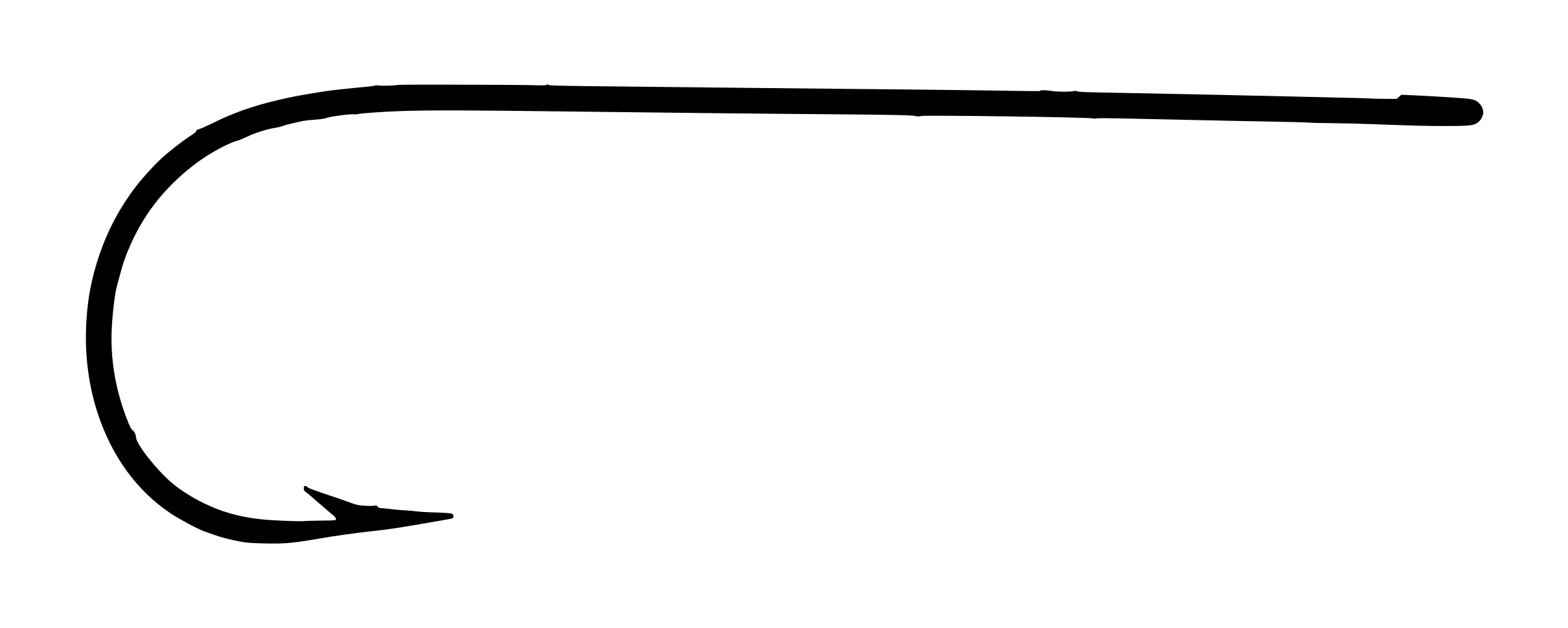
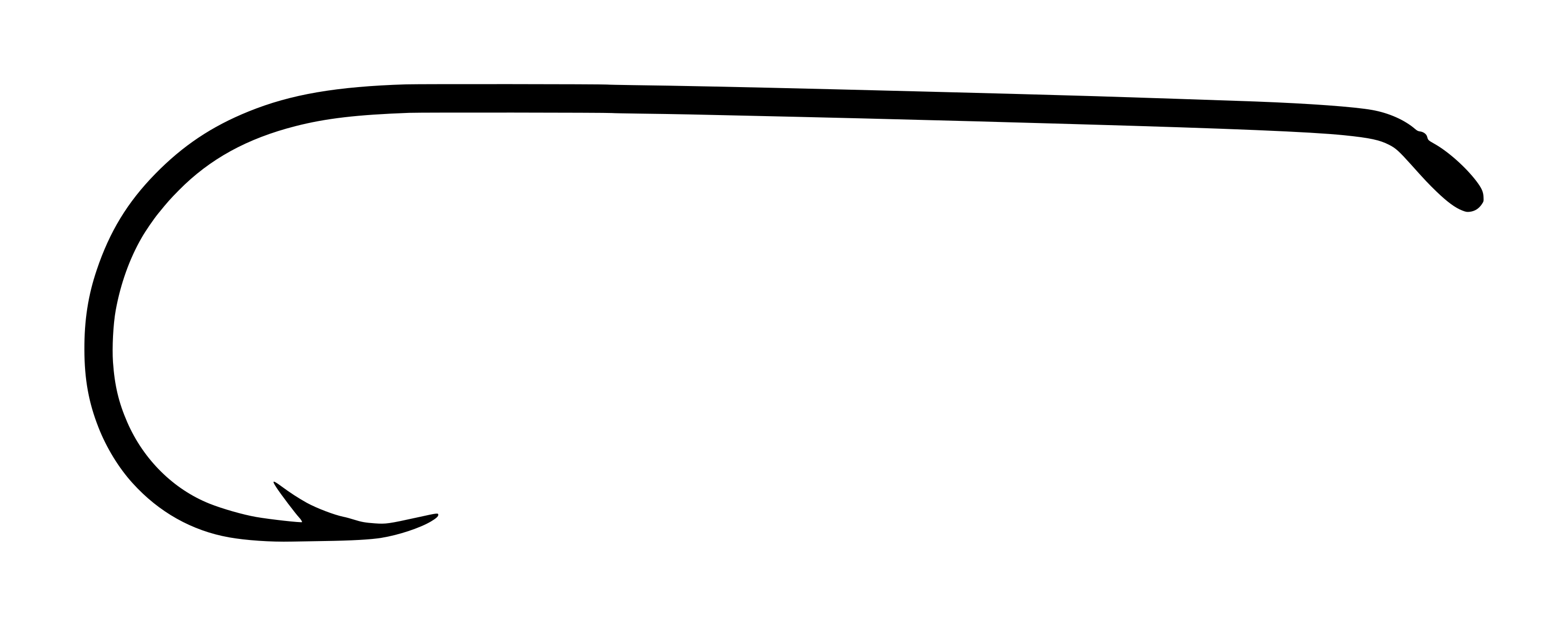
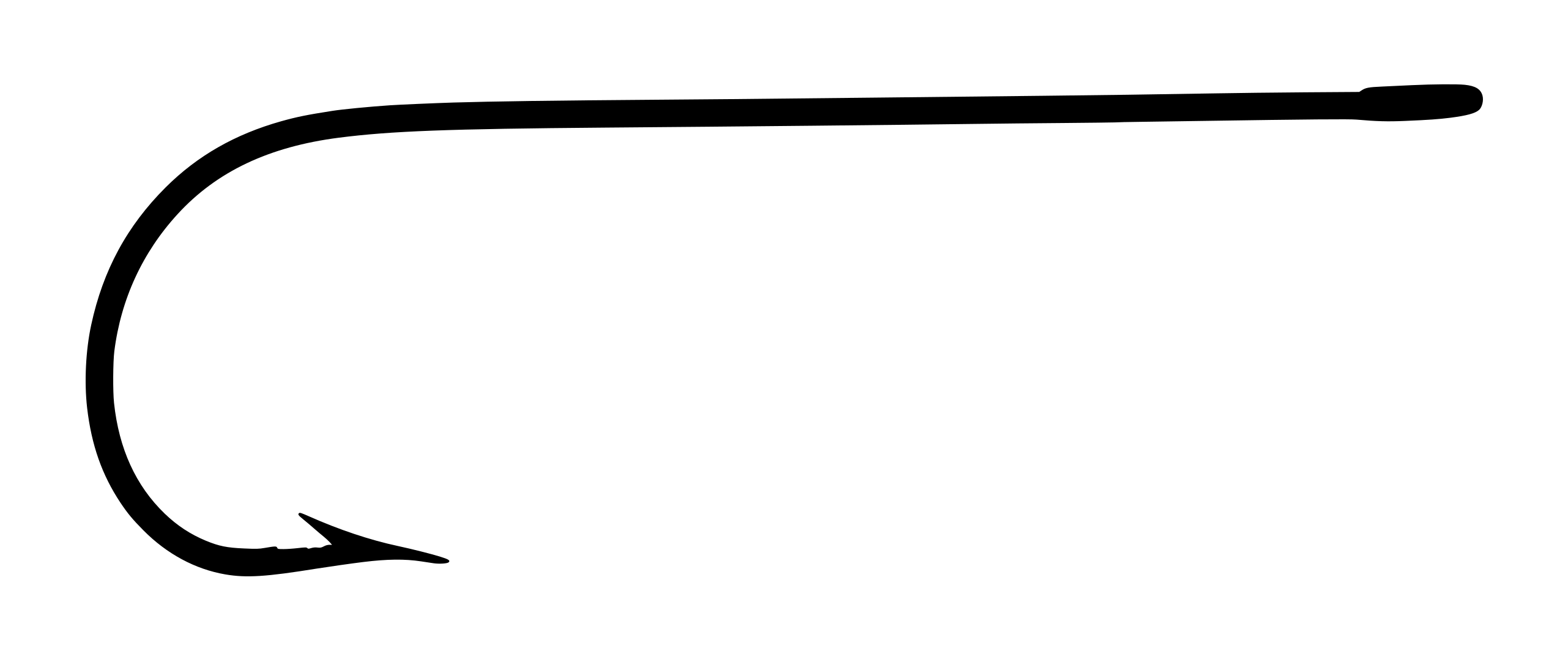
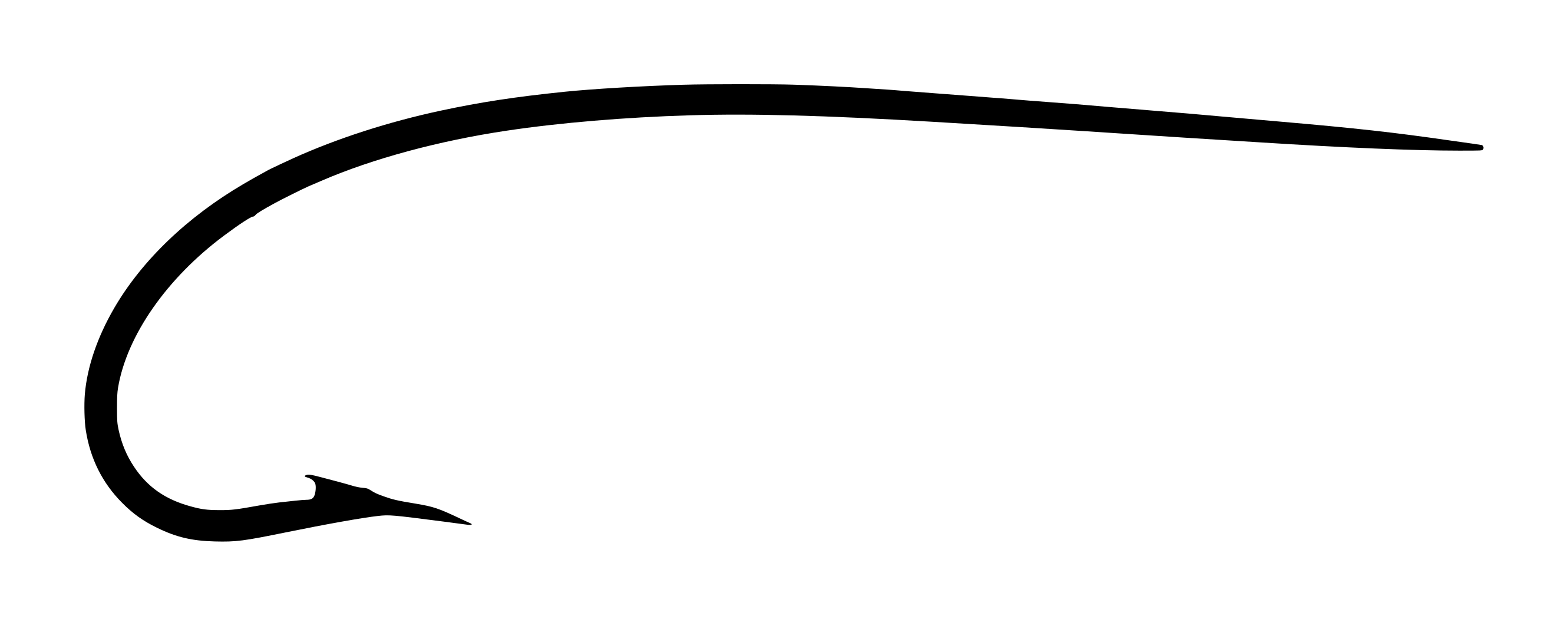
Aberdeen, Wide gapClassic Aberdeen wide-gap round bend with exceptionally thin wire construction P. Designed to bend rather than break when snagged, allowing retrieval and reshaping.
Point
OtherShort, close-cut barb positioned near point P. Barb angle optimized for thin wire strength while maintaining holding power.
Finish
Bronzed — Confirmed (stated on packaging)Warm bronze coating with uniform coverage P. Finish provides corrosion resistance while maintaining low visibility underwater.
Hooks show bright bronzed finish with no corrosion. Label intact with minor edge toning. Box shows light wear but structural integrity maintained.
The Aberdeen’s extra-fine wire serves dual engineering purposes: minimizing trauma to live bait and providing controlled failure under extreme load. The wide gap-to-shank ratio maximizes hooking efficiency while the long shank prevents line cutting by sharp-toothed fish. The ‘point bent in’ geometry creates a self-hooking mechanism that rotates the point into tissue during fish movement, while reducing the likelihood of deep-throat hooking that complicates fish release.
We don't have measured sizes for this hook yet. Own one? Submit calipered measurements and we'll review and add them. Thank you!
Historical context
mustad
O. Mustad & Søn transformed from a small Norwegian nail factory into the world’s largest fishing hook manufacturer through revolutionary automation and aggressive international expansion. Founded in 1832 in Gjøvik by Hans Schikkelstad, the company was acquired by Ole Mustad in the 1870s. The pivotal moment came in 1877 when Mathias Topp invented the first fully automated hook-making machine, allowing continuous production from raw wire to finished hooks. By maintaining strict secrecy around their manufacturing processes rather than filing patents, Mustad devastated traditional hook-making centers in Redditch, England and captured an estimated 50% of global hook production by the 1950s.
Series History
The Quality 37360 belongs to Mustad’s systematic numbering of Aberdeen pattern hooks during their mid-century catalog expansion. Introduced as part of the 37000-series Aberdeen family, these hooks represented Mustad’s mass-production approach to traditional Scottish bait fishing patterns. The series included various sizes and wire gauges, with the 37360 specifically engineered for larger live bait presentations. Production continued through the 1960s before being superseded by the modern numerical catalog system that replaced Mustad’s traditional Quality codes.
Era and Packaging Dating
Yellow paper label with asterisk border and Key logo is characteristic of Mustad's mid-century export packaging. Oslo designation indicates post-1925 manufacture. Label style and printing method suggest 1950s-1960s production era.
Scottish Engineering Goes Global
Aberdeen hooks were originally developed by Scottish fishermen who needed hooks that would bend rather than break when snagged on North Sea bottom structures. The pattern name honors Aberdeen, Scotland's fishing heritage, though Mustad's Norwegian mass production made these hooks globally ubiquitous. The thin wire design philosophy influenced modern catch-and-release hook engineering.
Design lineage and influence
The Aberdeen pattern originated in 19th-century Scotland before being systematically reverse-engineered by Mustad’s industrial operation. Earlier Aberdeen hooks were individually forged by local smiths using regional wire specifications. Mustad’s standardization established consistent wire gauges and gap proportions that became the global Aberdeen standard. Modern descendants include the Mustad 3261 Classic Aberdeen and Eagle Claw 202, though contemporary versions often use stronger wire alloys that sacrifice the original’s controlled-failure characteristics.
Best matchRelated by Attribute
Computed automatically from catalog data — updated as new hooks are added.
Matches: Bend, Shank, Wire, Gap, Eye +5 moreDiffers: Eye Orient.: Straight / Inline vs Turned Down; Point: Other vs Beak / Reversed; Length: 49 mm vs 38 mm
Matches: Bend, Gap, Eye, Eye Orient., Finish +4 moreDiffers: Shank: 3X Long vs 2X Long; Wire: Extra-Fine vs Fine (1X Fine); Point: Other vs Hollow Point
Designed specifically for live bait fishing with minnows, shiners, and other delicate baits. The extra-fine wire minimizes damage to live bait, keeping them active longer. The wide gap and long shank facilitate easy hook removal and prevent line-cutting by sharp-toothed species. Size 3/0 is ideal for larger baits targeting pike, walleye, and bass P.
Secondary Applications
Bottom fishing with cut bait, still fishing with large nightcrawlers, ice fishing for large predators
Classic Fly Patterns
Not typically used for fly tying.
Modern Equivalents
Hook
Match Quality
Notes
Mustad 3261 Classic Aberdeen
Excellent
Direct modern descendant with identical bend geometry and application
Eagle Claw 202 Aberdeen
Very Good
Similar pattern but typically heavier wire gauge
Gamakatsu Live Bait Aberdeen
Good
Modern materials with traditional Aberdeen geometry
Collector notes
Uncommon vintage Aberdeen with excellent documentation. Appeal limited by common pattern type but enhanced by pristine condition and complete original packaging.
Reference value
$15 – $35 USD estimate
Packaging condition
Very Good — light wear, fully legibleRecorded specimen
Packaging format
MUS-YEL-AST-01Catalog code
Positive factors include complete original Oslo-era packaging with intact label, excellent hook condition, and documentation of Mustad’s mid-century Aberdeen production. The yellow asterisk-border label format is historically significant and increasingly scarce. Limiting factors include the common Aberdeen pattern and large production quantities of size 3/0 hooks during this era.
Packaging
Yellow paper label with decorative asterisk border pattern. Features Key Brand logo with skeleton key graphic. Eight-line Mustad format: manufacturer name, OSLO - NORWAY location, Quality 37360 model code, 'Point bent in' specification, 'Mustad Aberdeen Hooks' pattern name, 'Ringed Bronzed Ex. fine wire' specifications, 'Made in Norway' origin mark, and '100 No. 3/0' quantity/size designation. Mounted on white cardboard box backing.
Market Value Notes
Complete boxes with intact labels command premium over loose hooks. Condition critical for value retention. Specialty tackle collectors drive demand for documented Oslo-era examples.
Where to Find
Vintage tackle shows, estate sales, specialized Mustad collectors, occasionally on eBay in fishing memorabilia lots
Collector's Identification Tips
Authenticate by verifying the yellow asterisk-border label format characteristic of 1950s-1960s Mustad export packaging. The ‘OSLO – NORWAY’ designation confirms post-1925 manufacture. Quality 37360 model code should appear clearly on fourth line of eight-line format. Original bronzed finish shows warm brown coloration, not bright steel or black japanning. Complete boxes of 100 hooks with intact labels command significant premiums over loose examples.
Preservation
Storage and Preservation
Store in cool, dry environment away from moisture to prevent bronzed finish deterioration. The extra-fine wire is particularly susceptible to corrosion, so maintain low humidity storage conditions. Original yellow label is prone to fading and tearing—handle minimally and store away from direct light. Avoid contact with other metals to prevent galvanic corrosion. Complete boxes with intact labels represent the highest preservation priority, as loose hooks lose significant historical documentation value.
Primary Source
Label Text Analysis
Source: Original Mustad Quality 37360 box label, c. 1950-1965
The eight-line format follows Mustad’s standardized export labeling system. ‘Point bent in’ represents specific technical terminology distinguishing this variant from standard Aberdeen hooks. ‘Ex. fine wire’ indicates the finest wire gauge in Mustad’s production hierarchy. ‘Made in Norway’ marking reflects mid-century Norwegian industrial pride and export marketing. The Quality 37360 numbering places this hook in Mustad’s systematic Aberdeen family, with the 373XX series representing various sizes and specifications within the pattern.
Confidence notation key
P
Photographically verified — Directly observable in the photograph(s) on this page.
V
Verified by documentation — Confirmed by manufacturer catalog, spec sheet, or published reference.
I
Inferred — A logical deduction from observable or documented evidence, not directly stated.
E
Estimated — An approximation based on visual comparison, proportional analysis, or limited data.
S
Speculative — A reasoned hypothesis that cannot be confirmed from available evidence.
Claims with no notation are confirmed by multiple independent sources. All photographs on garrenwood.com are taken on a measurement grid where each square equals 1/10 inch (0.1″ / 2.54 mm).