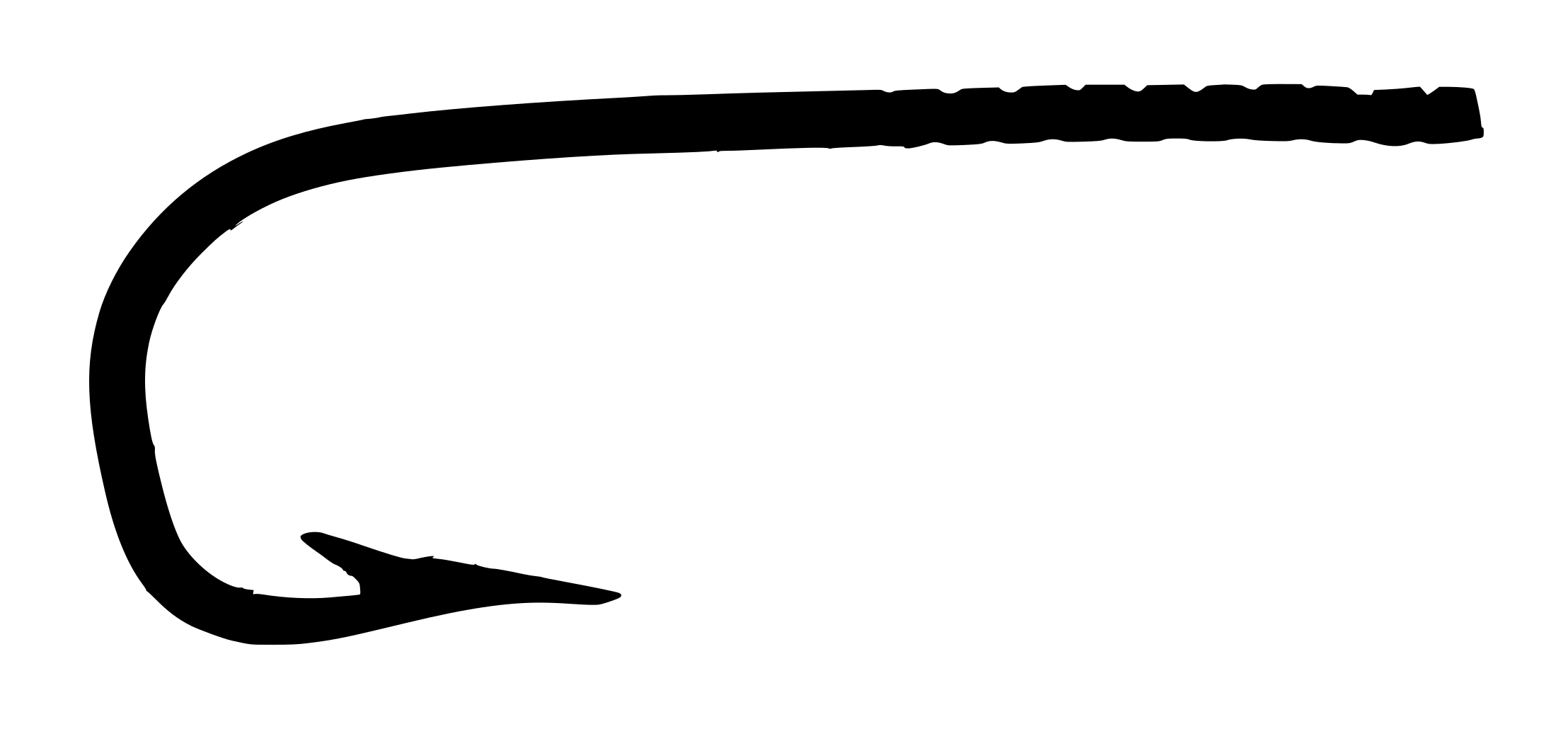
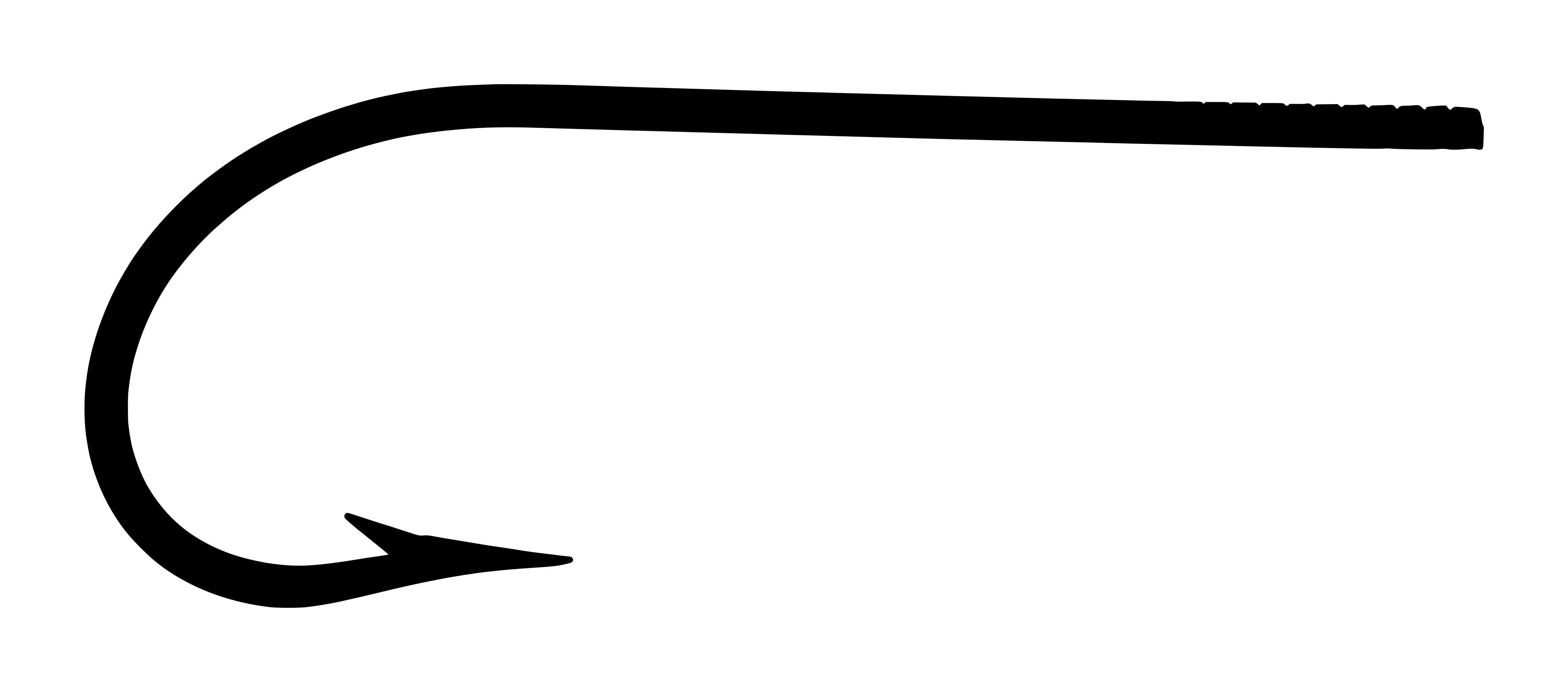
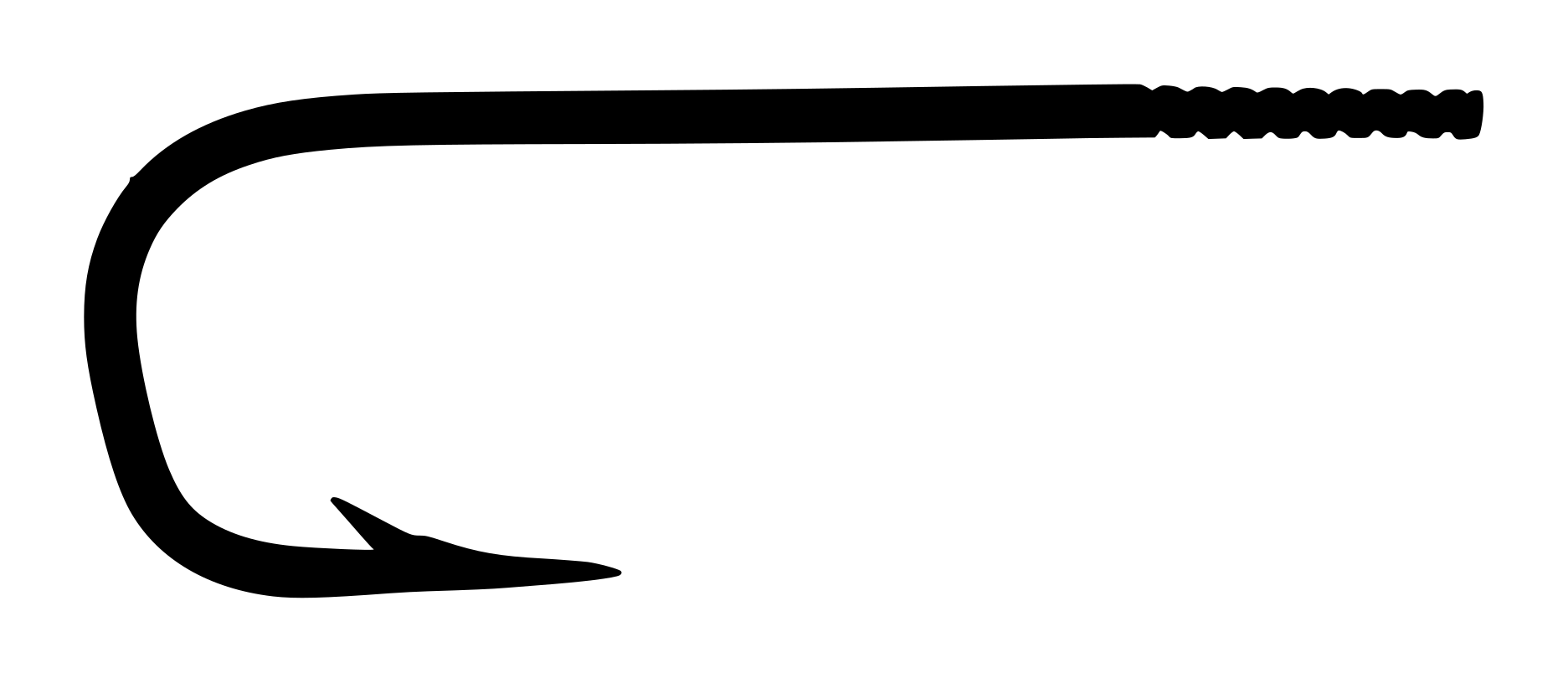
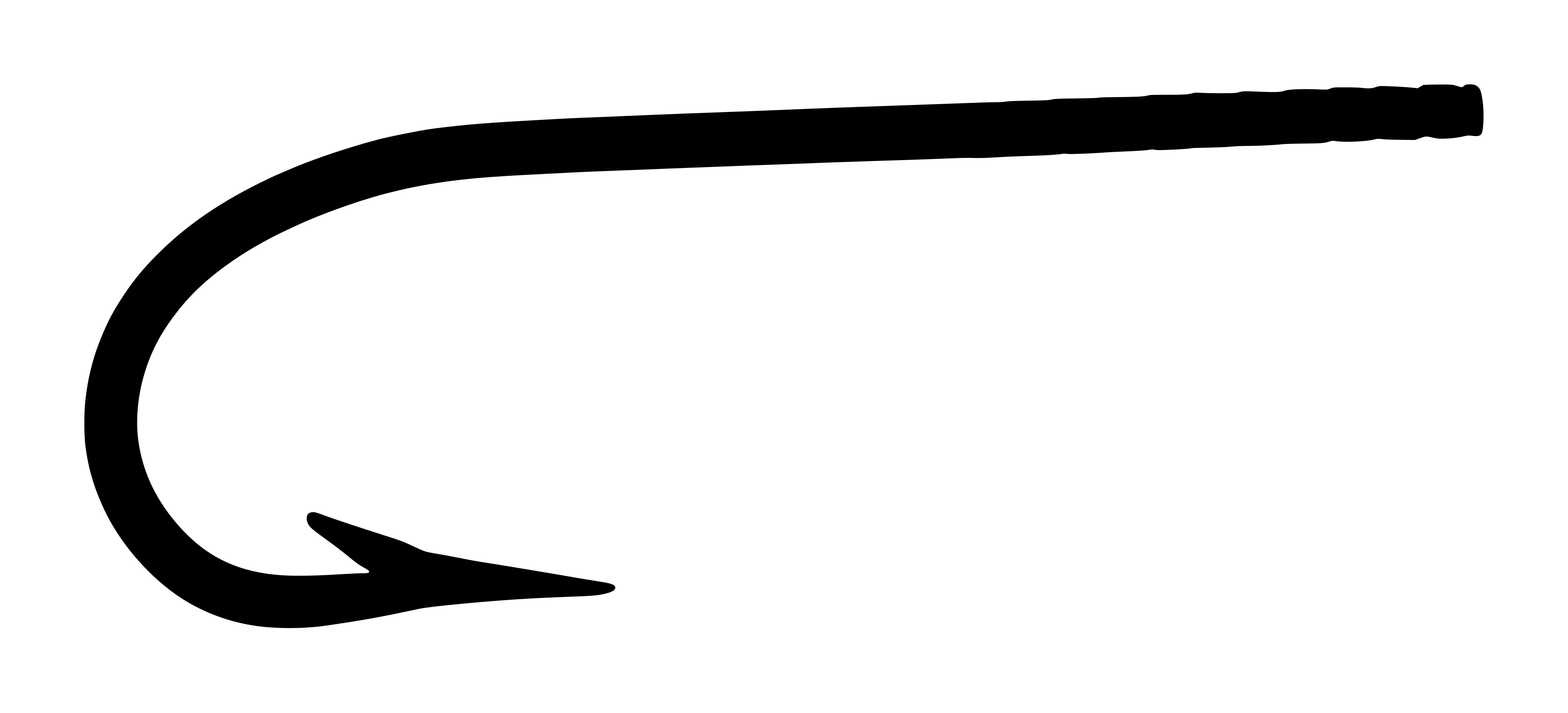
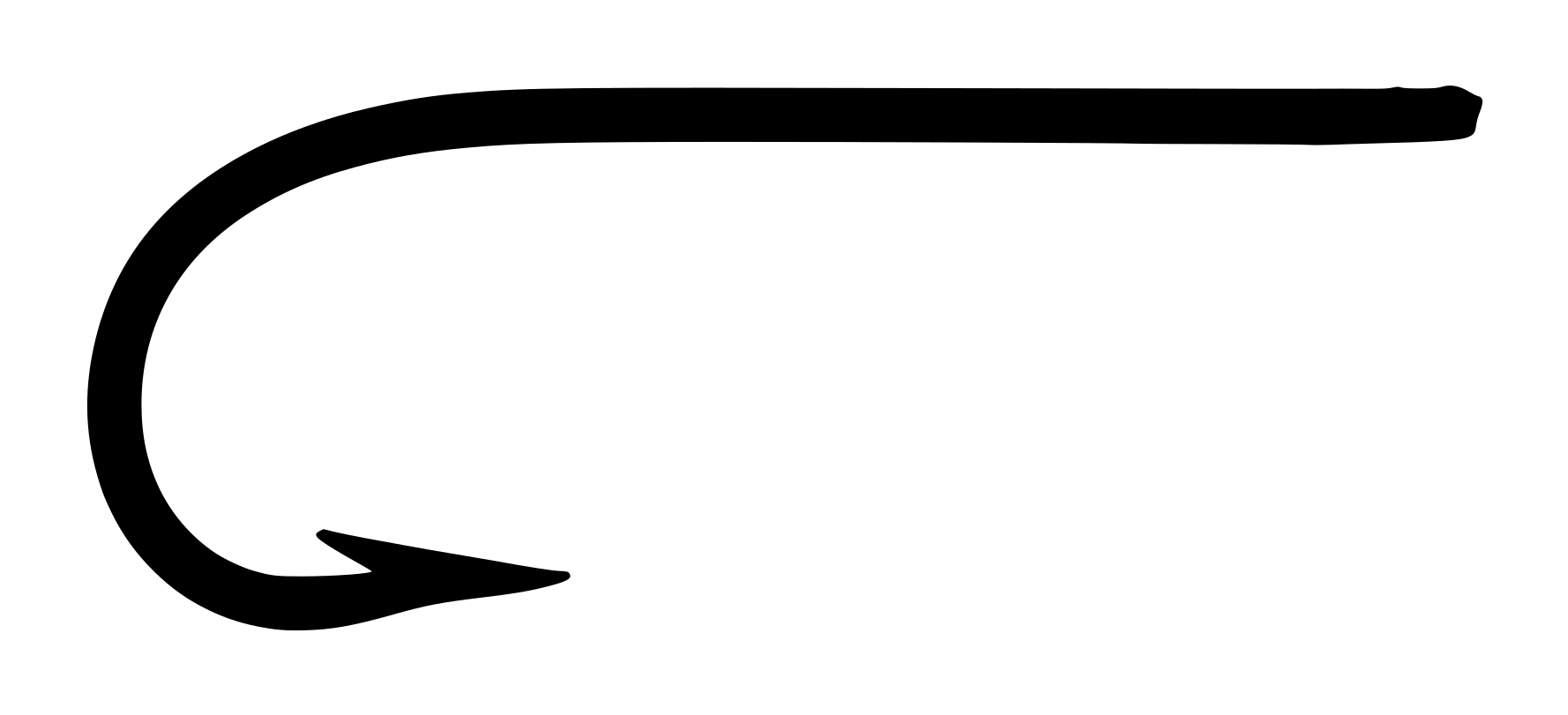
The Mustad 3337 is a marked (blind-eye) sneck hook manufactured in Christiania, Norway, during the 1920s–1940s. Labeled ‘Superior Sneck Hooks,’ this model exemplifies the traditional English sneck bend—a sharp-angled profile prized for its mechanical advantage and distinct aesthetic in the water.
The hook features a near-straight superior point with minimal inner taper, a characteristic blued finish, and a marked shank designed for snelling or commercial bait rigging. Size No. 9 presents overall length of ~0.67″–0.71″ with a gap of 0.17″. The blind eye (marked shank) construction reflects early 20th-century practice for fly tying and bait applications where a loop knot directly to the shank was preferred over a looped eye.
This model holds significance for collectors interested in Mustad’s pre-WWII Norwegian production, sneck bend evolution, and the transition from blind-eye to eyed hook dominance. Original packaging in good to very good condition adds considerable appeal to historical and specialist collections.
Original Mustad 3337 Superior Sneck Hooks box showing the bright green label with letterpress printing, Key Brand trademark, Christiania address, and handwritten size No. 9 notation.
Photographic record
3 cataloged imagesSelect any record to load it above.
3 images shown
Mustad 3337 Size 9 Original Packaging LabelOriginal Mustad 3337 Superior Sneck Hooks box showing the bright green label with letterpress printing, Key Brand trademark, Christiania address, and handwritten size No. 9 notation.Open originalMustad 3337 Size 9 Profile View Showing Marked ShankProfile view of the Mustad 3337 Size 9 hook showing the marked (ridged) shank, sneck bend geometry, and superior point taper. The flat, barb area is visible from this angle.Open originalMustad 3337 Size 9 Shank Detail Showing Marked EyeClose-up view of the blind (flatted) eye end of the Mustad 3337, showing the marked shank ridge pattern and the characteristic flat spade end with hole for direct knot attachment.Open original
Technical profile
Blind-Eye Sneck Bend | Superior Point | Marked Shank | Blued Finish | Standard Wire
Eye
Blind — Marked ShankBlind-eye construction (flatted/spade end) per analyst note. No formed eye loop; instead, a flattened end with a hole drilled through allows direct knot attachment to the shank. P
Wire
Standard, Round
Shank
Standard — Marked / Ridged
Bend
Sneck, Standard gapClassic sneck bend with sharp, nearly right-angle corners rather than smooth curves. The bend depth is moderate (~0.28"–0.32") relative to gap width, consistent with traditional English sneck geometry. No visible offset or reversal—hook sits true. P
Point
Superior (near-straight inner taper)Barb placement is standard, positioned ~1/3 of the distance from point toward bend. Barb cut appears short and close, consistent with sneck hook tradition. Angle is roughly perpendicular to the shank. P
Finish
Blued — Confirmed (stated on packaging)Blued finish showing dark blue-black oxidation typical of heat-treated steel. Specimen exhibits uniform color tone with minimal wear; original finish is well-preserved. No corrosion or pitting visible. P
Specimen shows excellent preservation. No corrosion, rust staining, or metal fatigue. Blued finish intact and uniform. Original packaging in very good condition with minor toning and edge wear consistent with age.
The superior point on the 3337 is defined by a near-straight inner face and minimal concavity—a taper geometry that provides a relatively durable point without the extreme sharpness of a hollow point. This design prioritizes point strength over initial penetration, making it suitable for the firmer lips of wild trout and early 20th-century live bait scenarios. The marked shank (raised ridges) improves grip on bait or thread, preventing slip during knot tying. Bluing—a heat-treatment process—forms a protective magnetite layer on the steel surface, offering modest rust resistance compared to bright or japanned finishes. The standard-gauge round wire and sneck bend geometry combine to create a hook with good hooking power and reduced risk of point breakage in active fish.
The Mustad 3337 ‘Superior Sneck Hooks’ line represents Mustad’s interpretation of the classic English sneck bend, adapted for the global market. The sneck—characterized by sharp, angular geometry—originated in Redditch and had been a staple of British salmon and trout fishing for centuries. Mustad adopted this bend family into its catalog, branding it as ‘Superior’ to emphasize quality and manufacturability under automated production.
The marked (blind-eye) shank design was standard for commercial and fly-tying applications in the early 20th century, predating the dominance of looped-eye hooks. The 3337 line was produced across multiple sizes (this specimen is No. 9) and finishes (blued, tinned, etc.). The model code ‘Qual. 3337’ (Quality 3337) appears in Mustad’s vintage catalogs as a mid-range freshwater hook suitable for wet fly dressing and bait applications. Production likely continued through the 1950s, after which market demand shifted decisively toward eyed hooks. No specific discontinuation date is documented, but the transition to the modern eyed-sneck variants (e.g., Mustad 57068) occurred gradually during the postwar period.
Era and Packaging Dating
Package explicitly states 'CHRISTIANIA - NORWAY'. Oslo was renamed from Christiania in 1925; continued use of the legacy name on packaging was common through the 1940s. Typography and print method (letterpress, green stock) are consistent with 1920s–1940s production. 'Key Brand' trademark logo style matches Mustad's early 20th-century identity. No barcode present (barcodes not standard until 1970s). Box construction and paper stock are period-appropriate for interwar/early postwar era. Overall evidence points to c. 1920s–1940s.
The Sneck: A Latch That Hooks Fish
The sneck bend is so named from the Scots/Northern English dialect word 'sneck,' meaning a latch or fastening. The hook's sharp corner was said to resemble the mechanical turn of a door latch—and functionally, it operated like one, the corner angles providing a mechanical 'catch' that prevented fish from rolling or shaking free during the fight. North Country fly fishers prized sneck hooks for soft-hackle wet flies, particularly the spiders tied for graywing on Scottish and English rivers. The philosophy was simple: a sneck-bent fly tumbling through the current with minimal hackle created a silhouette that mimicked drowning insects more convincingly than heavily dressed patterns.
Design lineage and influence
The sneck bend is one of the oldest European hook forms, with origins tracing to English (likely Redditch) craft traditions predating industrial standardization. The sharp angular geometry—nearly a 90-degree corner at the bend—differs markedly from the smooth, rounded sproat and aberdeen bends that would come to dominate 20th-century hook design. The sneck’s mechanical advantage (increased leverage from the sharp corner) and distinctive silhouette made it a favorite among North Country fly fishers, particularly for soft-hackle and spider patterns.
Mustad’s adoption of the sneck bend reflected the company’s strategy of acquiring or emulating successful English designs and manufacturing them at scale in Norway. The marked-shank variant (3337) competed with similar models from Partridge of Redditch and other British manufacturers, but Mustad’s automation allowed lower pricing and greater consistency. The transition from blind-eye (marked) to eyed-sneck hooks occurred gradually from the 1940s onward. Modern sneck equivalents include the Mustad 57068 (eyed sneck, forged, blued) and the Partridge of Redditch ‘Sneck’ series, which maintain the traditional bend geometry while offering contemporary eye construction.
Best matchRelated by Attribute
Computed automatically from catalog data — updated as new hooks are added.
Matches: Shank, Gap, Eye, Eye Orient., Point +3 moreDiffers: Bend: Sneck vs Kirby (offset); Wire: Standard vs Heavy (1X Heavy); Finish: Blued vs Bronzed +4 more
Matches: Bend, Wire, Gap, Eye, Eye Orient. +6 moreDiffers: Shank: Standard vs 2X Long; Finish: Blued vs Black Japanned; Application: Wet Fly, Bait vs Salmon, Sea Trout, Bait +1 more
Matches: Wire, Eye, Eye Orient., Point, Forging +2 moreDiffers: Bend: Sneck vs Kirby (offset); Shank: Standard vs 1X Long; Finish: Blued vs Bronzed +5 more
Matches: Bend, Wire, Gap, Eye, Eye Orient. +3 moreDiffers: Shank: Standard vs 2X Long; Point: Superior vs Hollow Point; Finish: Blued vs Bronzed +5 more
Matches: Bend, Gap, Eye, Eye Orient., Point +3 moreDiffers: Shank: Standard vs 2X Long; Wire: Standard vs Fine (1X Fine); Finish: Blued vs Bronzed +4 more
The Mustad 3337 was designed primarily for wet fly tying and snelled bait applications. Anglers would tie the fishing line directly to the marked (notched) shank using a clinch knot or whip finish, creating a slender profile ideal for traditional wet flies, North Country spiders, and soft-hackle patterns. The sneck bend’s sharp, nearly 90-degree angles provided excellent hook-set leverage and prevented rolling in a fish’s mouth—critical for early 20th-century salmon and trout fishing in British and Scandinavian waters. The blued finish offered modest corrosion resistance suitable for freshwater work.
Secondary Applications
Bait rigging for small to medium freshwater fish; commercial live bait applications
Classic Fly Patterns
North Country Spider, soft-hackle wet flies, traditional Welsh and Scottish patterns
Modern Equivalents
Hook
Match Quality
Notes
Mustad 57068 Sneck Bend Hook
Very Good
Modern looped-eye successor to the 3337. Maintains sneck bend geometry and blued finish. Forged wire instead of round. Size range 1–12. Primary difference: eyed vs. blind construction.
Partridge of Redditch CS49 Sneck
Good
English-made sneck bend maintaining traditional geometry. Eyed, tinned finish, lighter wire than Mustad 3337. Preferred by purists for North Country patterns.
Tiemco TMC 5262 Sneck Bend
Good
Contemporary Japanese sneck alternative. Light wire, looped eye. Suitable for soft-hackle and spider flies; different aesthetic and performance profile than vintage blued hooks.
Collector notes
The 3337 is scarce and historically significant. Early Mustad marked-shank models with Christiania provenance command collector interest; blind-eye construction adds appeal to fly-tying historians. However, sneck hooks lack the widespread popularity of sproat and aberdeen bends, and marked-shank variants are less sought than eyed versions, limiting demand.
Reference value
$8 – $18 USD estimate
Packaging condition
Very Good — light wear, fully legibleRecorded specimen
Packaging format
GW-M-01Catalog code
Positive factors: Pre-WWII Norwegian manufacture with ‘Christiania’ address documentation. Marked-shank (blind-eye) construction reflects early 20th-century fly-tying tradition, appealing to living-history anglers and hook historians. Superior point geometry and sneck bend are legitimate vintage specifications with documented engineering rationale. Original packaging in very good condition with clear model code, brand mark, and complete label text. No barcode (pre-1974 indicator). Example of Mustad’s early automated production exported globally. Represents transition era between handmade English craft and industrial standardization.
Limiting factors: Sneck bend is niche within hook collecting; far fewer collectors pursue sneck hooks compared to sproat, limerick, or aberdeen. Size No. 9 is standard and common; larger and smaller sizes command higher premiums. Marked-shank (eyeless) format is functional only for snelling or specialty fly tying; eyed variants are more accessible. Blued finish, while authentic, is less visually distinctive than japanned or gold-plated examples. No designer attribution or named collaboration. Multiple surviving examples in circulation; scarcity is moderate rather than exceptional.
Packaging
Cardboard box with bright green label stock. Printed text in black letterpress. Front face displays ornamental snowflake border pattern (all four margins). Center text: 'Trade' [key trademark symbol] 'O. MUSTAD & SON / MANUFACTURERS / CHRISTIANIA - NORWAY / Superior / SNECK HOOKS / Marked Blued / Made in Norway'. Upper right: 'Qual. 3337'. Left side: 'Mark' above [key trademark symbol]. Lower left: '100' (quantity) with handwritten size notation 'No. 9' overlaid. Reverse side and interior not visible. Box dimensions approximately 1.5" × 2.25" × 0.5" (typical for multi-hook vintage packaging). Paper stock is lightweight, aged to light tan at edges. No barcode. No batch code or date stamp visible. Print method is clearly letterpress with slight embossing; registration is clean.
Market Value Notes
Values reflect original packaging in very good condition with complete label and legible text. Marked-shank models command modest premiums over standard eyed variants due to collector interest in vintage construction methods. Pre-WWII Christiania address adds ~$2–4 to base value. Values vary by platform: specialist dealers and vintage fishing forums (15–18 USD); general eBay/Etsy (8–12 USD). Condition of packaging is primary driver—loose hooks without original box typically fetch 3–6 USD.
Where to Find
Specialist vintage tackle dealers, UK eBay (especially Redditch-area lots), European fishing heritage auctions, vintage fly-fishing forums (FAOL, Fly Tying Forum), estate sales in Scandinavia and UK
Preservation
Storage and Preservation
Store this hook and its original packaging in a cool, dry environment away from direct sunlight and humidity. The blued finish is susceptible to surface patina development (oxidation) and can develop light surface rust if exposed to high humidity. This patina development is often considered desirable by collectors and does not compromise functionality, but prevention is preferable if heirloom preservation is the goal.
Keep the hook on its original card rather than removing it loose. Original packaging is a major driver of collectible value—do not discard the box. Store the boxed hook in a closed cabinet or shelf away from damp basements or attics. If the hook must be stored unboxed, use a small silica-gel desiccant packet in the storage container. Avoid contact with other ferrous metals (steel, iron) that could trigger galvanic corrosion; non-ferrous containers (wood, plastic, paper) are preferable.
Periodically inspect for any signs of surface oxidation or rust bloom. If light surface rust appears, it can be gently removed with a soft brass brush or 0000 steel wool, followed by immediate drying. Never use aggressive abrasives or chemical solvents that could damage the original finish or label. If you intend to use this vintage hook for fishing, fish it gently and dry it thoroughly after use. The marked shank requires careful knot tying to avoid stress; consider backing the knot with a small piece of dental floss to reduce slipping.
Marking Analysis
Handwritten Notations
The lower left corner of the label bears a handwritten size notation ‘No. 9’ in pencil or light ink, overlaid slightly below the printed ‘100’ (quantity designation). The handwriting is consistent with period retail marking practices, likely applied at the point of sale or warehouse to identify the specific size of this box. The notation is in a legible, deliberate hand suggesting warehouse or shop staff documentation rather than a manufacturer’s mark. No batch number, date code, or pricing mark is visible on the front face. The handwritten notation does not diminish the value of the specimen; on the contrary, it provides provenance evidence of retail handling and confirms the box’s original contents.
Size Note
Size Specification and Sneck Bend Proportions
Mustad’s size numbering system for the 3337 follows the standard international hook-size convention where higher numbers correspond to smaller hooks. Size No. 9 is a small to medium-small hook in modern terms—suitable for wet flies and nymphs targeting brook trout and small stream fish. The overall length of ~0.67″–0.71″ and gap width of 0.17″ are consistent with size No. 9 across Mustad’s product lines of this era.
However, the sneck bend geometry may appear unusually compact relative to the shank length when compared to sproat or aberdeen bends of the same size. This is by design: the sneck’s sharp angles require less linear space along the shank while maintaining adequate gap and depth. A size No. 9 sneck hook will accommodate a slightly smaller fly body than a size No. 9 sproat of equivalent overall length. This was intentional—fly dressers chose sneck hooks when they required more economical shank space or a more precise silhouette. No anomaly is present; rather, this represents correct sneck bend proportioning.
Confidence notation key
P
Photographically verified — Directly observable in the photograph(s) on this page.
V
Verified by documentation — Confirmed by manufacturer catalog, spec sheet, or published reference.
I
Inferred — A logical deduction from observable or documented evidence, not directly stated.
E
Estimated — An approximation based on visual comparison, proportional analysis, or limited data.
S
Speculative — A reasoned hypothesis that cannot be confirmed from available evidence.
Unnotated claims are the compiler’s synthesis; see Sources. All photographs on garrenwood.com are taken on a measurement grid where each square equals 1/10 inch (0.1″ / 2.54 mm).