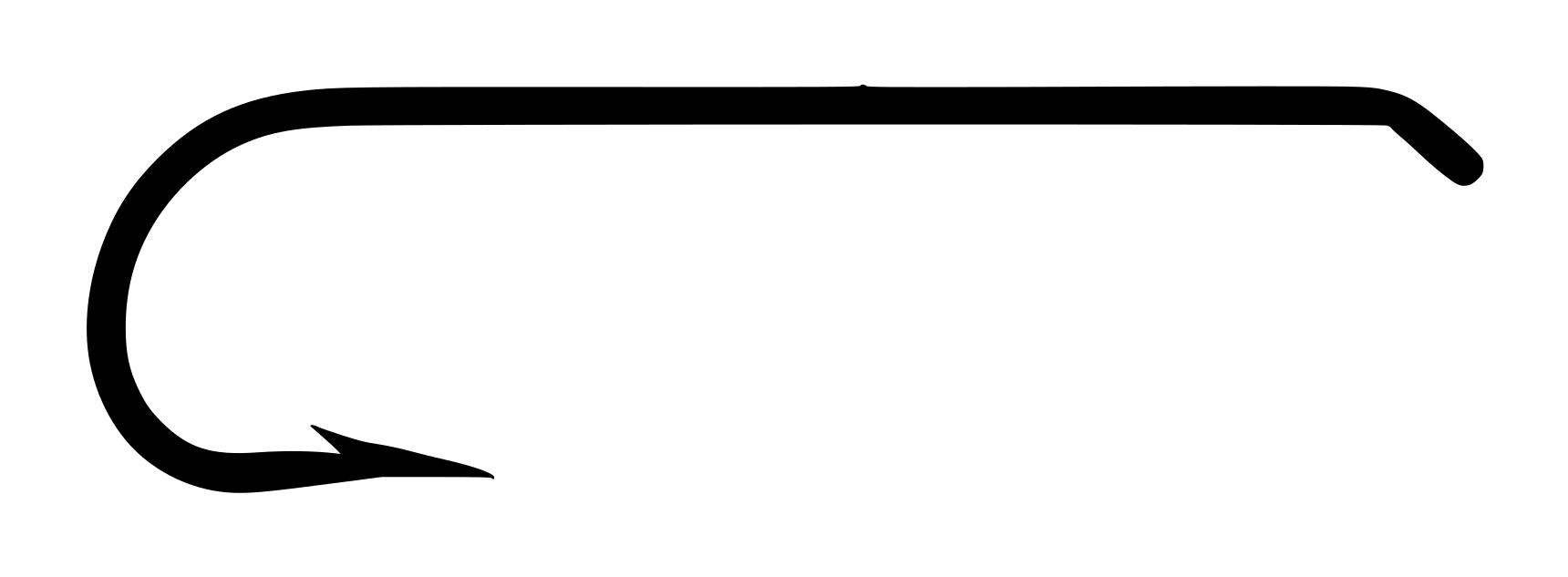
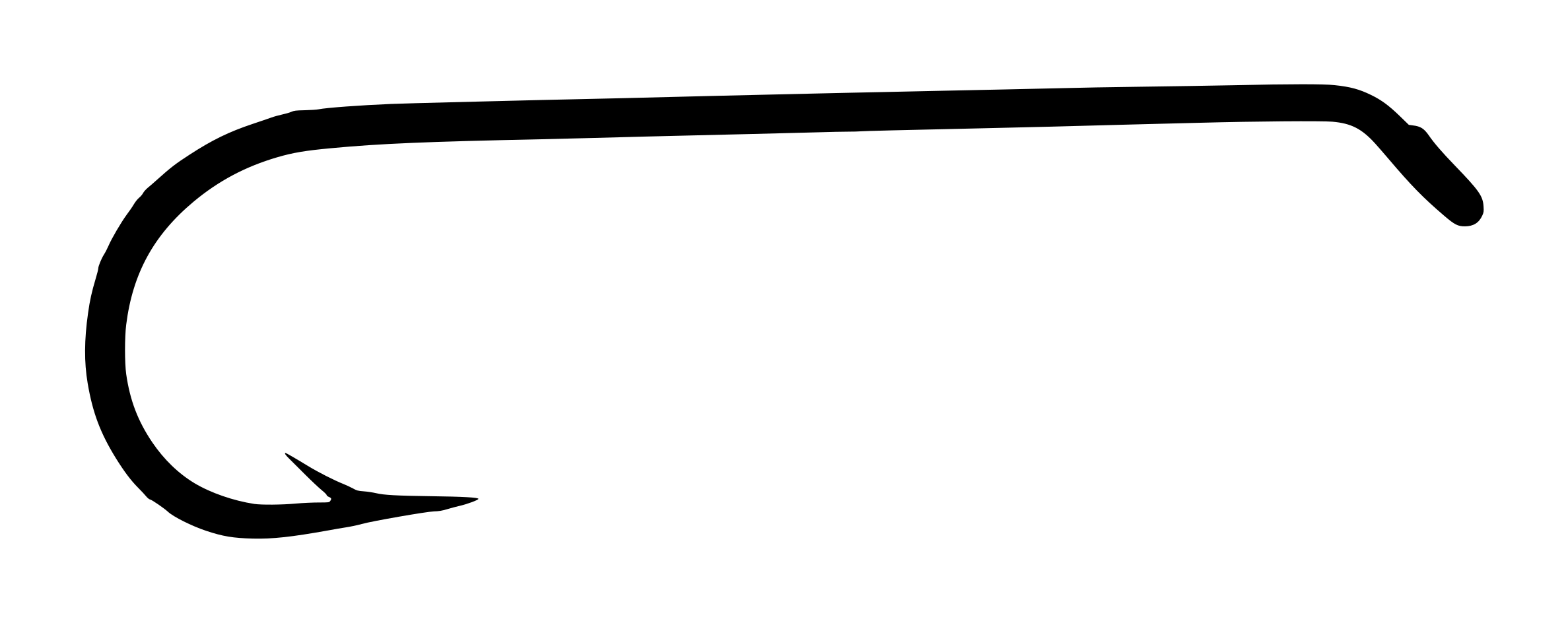
- Overall Length
- 17.3 mm
- Shank Length
- 14 mm
- Gap Width
- 7.1 mm
- Bend Depth
- 12.7 mm E
- Wire Diameter
- 0.51 mm
- Weight
- Not available
- Shank-to-Gap Ratio
- ~2.4-2.6 : 1
- Confidence
- P Physical specimen
Grid-derived from photograph (1/10" grid)
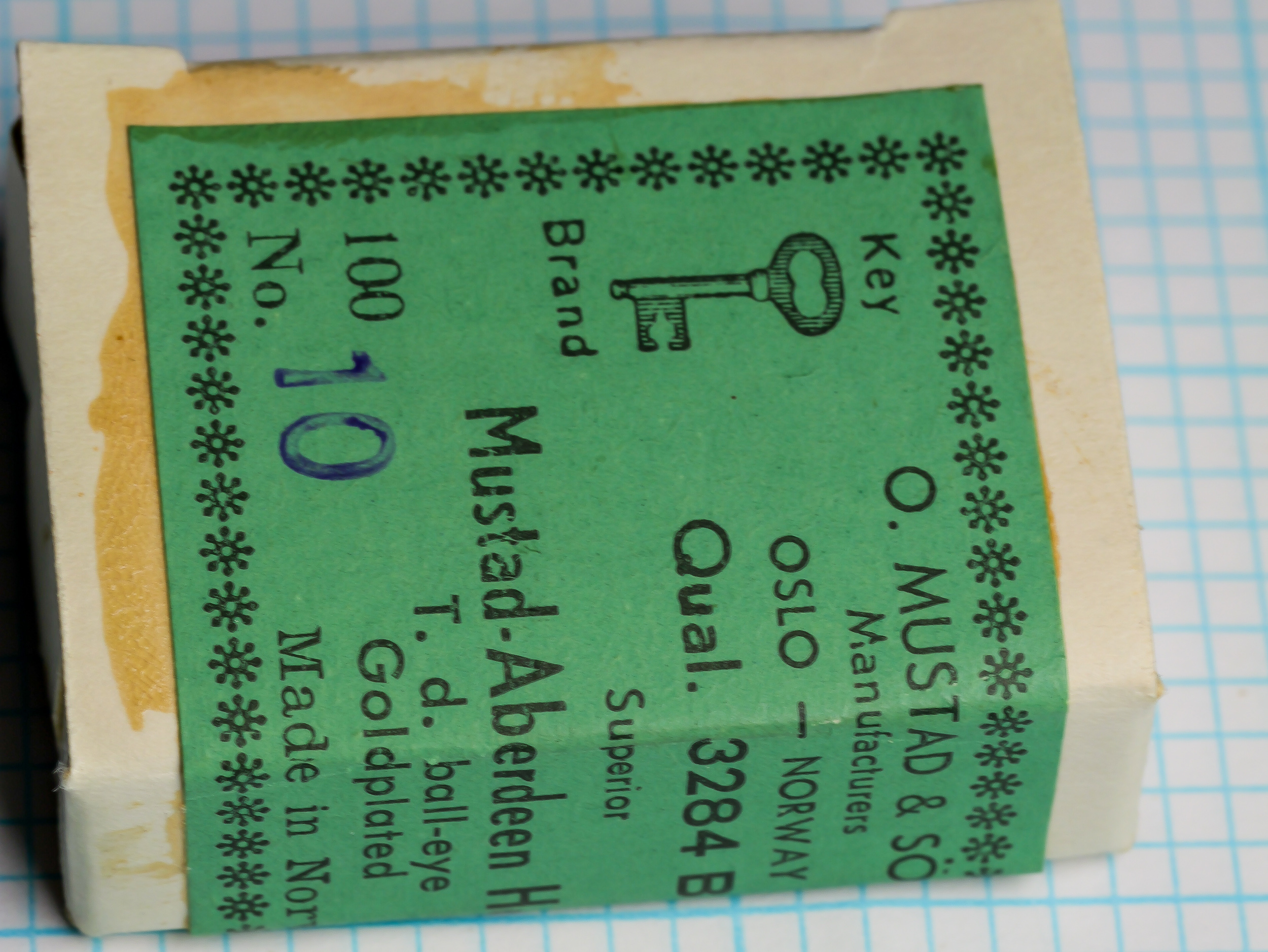
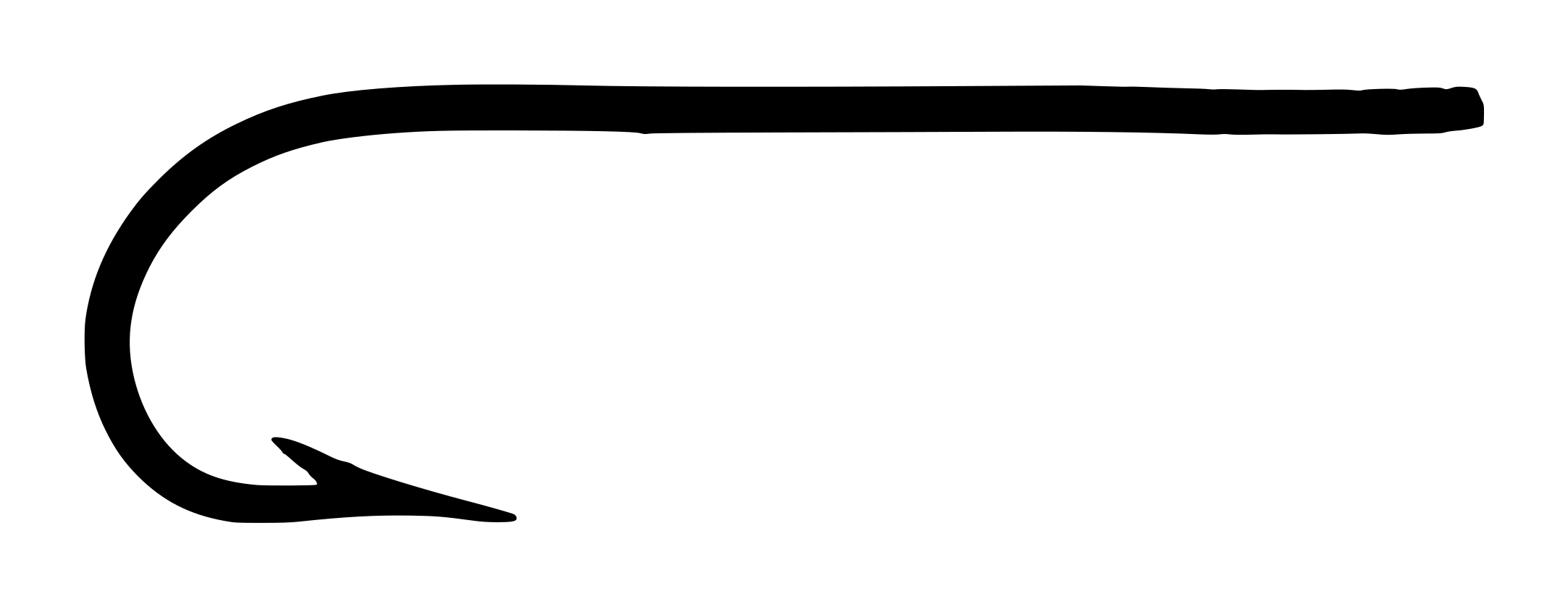
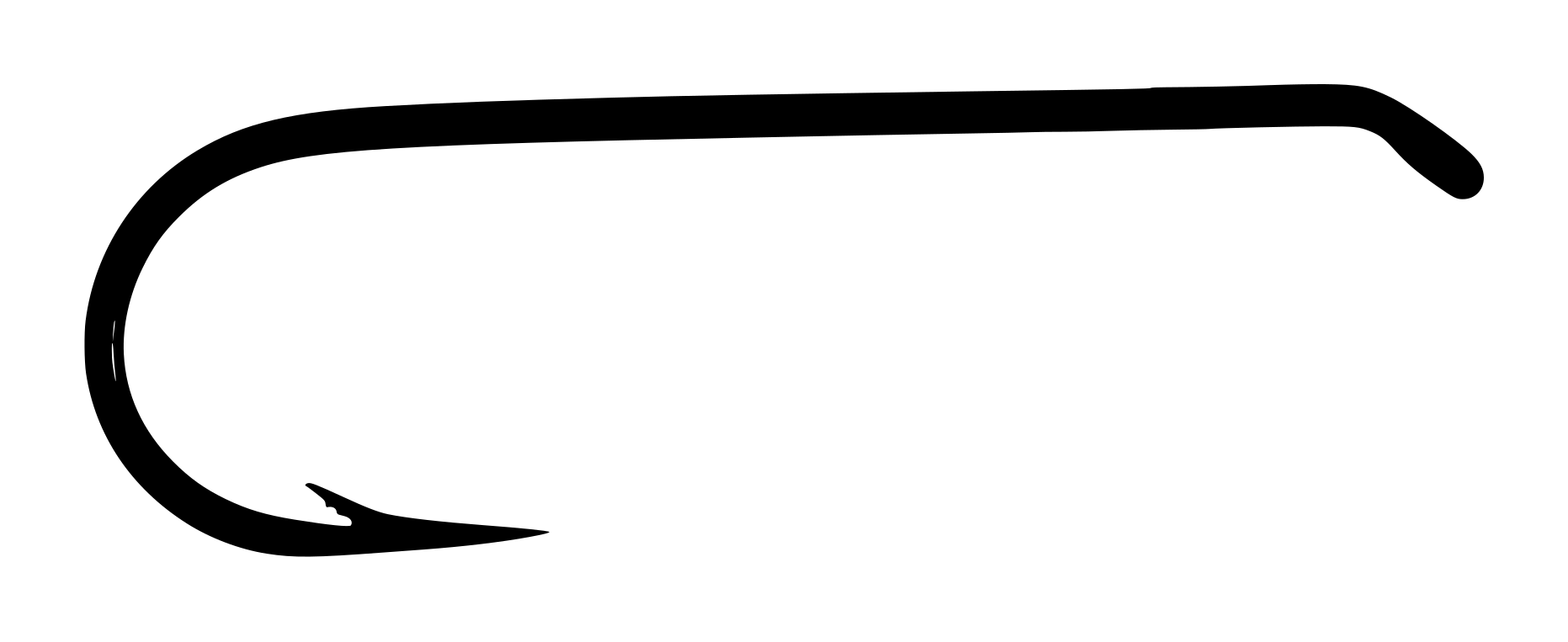
Mustad 3284 B is a long-shanked bait and streamer hook, featuring the wide Aberdeen bend, turned-down ball eye, and fine wire construction that distinguish the type. The gold plating—a departure from the standard bronzed variant—offers corrosion resistance and aesthetic appeal while preserving the defining geometry: a broad, continuous curve that reduces bait damage during rigging and permits the hook to bend under extreme loads rather than break. Originally derived from Scottish salmon-fly practice, the Aberdeen became the dominant panfish and general utility hook in North American baitfishing through the mid-twentieth century, and this specimen represents Mustad’s export-quality production during their period of international market expansion.
5 cataloged imagesSelect any record to load it above.
5 images shown
Aberdeen • Long Shank • Gold Plated • T.d. Ball-eye • Made in Norway
The Aberdeen’s wide bend geometry serves multiple functions: it provides ample bait threading space, reduces bait damage during rigging, and creates a mechanical advantage during hookset I. The fine wire construction allows the hook to bend under extreme loads rather than breaking, permitting retrieval from snags V.
The turned-down ball eye provides consistent line attachment and prevents line slippage better than tapered eyes I. Gold plating offers both aesthetic appeal as bait flash and superior corrosion resistance compared to bronzing or bluing I.
Grid-derived from photograph (1/10" grid)
This represents the earliest documented gold-plated Aberdeen variant in the garrenwood.com catalog, showcasing Mustad's mid-century finish innovations.
We have measurement for size 10. Know any others? Submit calipered measurements and we'll review and add them. Thank you!
O. Mustad & Son was founded in 1877 by Ole Mustad in Gjøvik, Norway, growing from a local nail and horseshoe operation into the world’s largest fish hook manufacturer V. By the early 20th century, the company had established global distribution networks and maintained quality standards that made ‘Mustad’ synonymous with fishing hooks in many countries V.
The Key Brand logo featured on this packaging was used extensively during Mustad’s mid-century export period, symbolizing the company’s role as the ‘key’ to successful fishing. The Oslo address reflects Norway’s capital city name change from Kristiania in 1925, helping date this packaging to the post-war export boom I.
The 3284 Aberdeen series represents Mustad’s interpretation of the classic Scottish Aberdeen pattern, introduced in the early 20th century for international markets I. The ‘B’ suffix designated the gold-plated variant, distinguishing it from the standard bronzed 3284 model I.
Aberdeen hooks originated in Scotland for salmon fishing with natural baits, but Mustad’s mass production made them widely available for general baitfishing applications V. The series remained in production through multiple decades with various finish options, becoming one of Mustad’s most recognizable patterns I.
Green paper label with decorative floral border, Key Brand logo with key illustration, Oslo (post-1925) address, letterpress printing, absence of barcode, and overall packaging style consistent with mid-century Mustad export packaging.
Originally designed in Scotland for salmon fishing, Aberdeen hooks found their greatest popularity in American panfish waters. The thin wire construction that allowed Scottish anglers to retrieve snagged salmon hooks proved perfect for bluegill and crappie fishing, where the hook would bend free from sunken timber and brush piles rather than breaking and losing the entire rig. This practical advantage made Aberdeen patterns standard equipment in American tackle boxes throughout the 20th century.
Classic Aberdeen pattern designed for live bait fishing V. The long shank accommodates long natural baits such as garden worms, ragworms, or small fish V. Originally developed for salmon fishing in Scotland, but widely adopted for panfish, perch, and general freshwater baitfishing I. The gold plating adds flash to attract fish and provides corrosion resistance P.
Streamer fly tying, especially patterns requiring gold body flash like Mickey Finn or Black Ghost. Long shank makes it suitable for tandem wet fly rigs.
Mickey Finn, Black Ghost, Muddler Minnow (gold body variations)
| Hook | Match Quality | Notes |
|---|---|---|
| Mustad 3261-GL | Excellent | Direct descendant with modern point technology and gold finish |
| Eagle Claw 214A | Very Good | Similar Aberdeen bend and shank length, bronze finish |
| Gamakatsu F11 | Good | Aberdeen style with modern materials and sharpening |
Moderate collectability due to mid-century packaging design and gold finish variant. Limited by common Aberdeen pattern and continued production.
Positive factors include the attractive green label design with floral border, Key Brand logo graphics, and gold-plated finish variant that was less common than bronzed versions P. The Oslo address and mid-century packaging style appeal to collectors of vintage tackle graphics I.
Limiting factors include the Aberdeen pattern’s continued production by Mustad and widespread availability of similar hooks from this era I. The 3284 was a high-volume production model rather than a specialty or limited-edition hook I. Packaging condition significantly affects value, with mint labels commanding premium pricing E.
Green paper label with decorative floral border in black ink, letterpress printed. Cream/beige cardboard box backing. Label features Key Brand logo with key illustration, O. Mustad & Son Manufacturers Oslo - Norway address, and complete hook specifications including 'Qual. 3284 B', 'Superior', 'Mustad-Aberdeen H', 'T. d. ball-eye', 'Goldplated', and 'Made in Norway'.
Values depend heavily on packaging condition and completeness. Mint condition labels with full hook count command premium. Individual hooks without packaging hold minimal collector value.
Vintage tackle shows, estate sales, online auctions. Occasionally appears in old tackle boxes at flea markets.
Look for the distinctive green floral border label and Key Brand logo. Verify ‘Oslo’ address (not Kristiania) for post-1925 dating. Gold plating should show warm yellow tone without tarnishing. ‘3284 B’ model code distinguishes from standard bronzed 3284.
Store in a cool, dry environment away from moisture to prevent tarnishing of the gold plating. Original packaging adds significant collector value — keep hooks mounted on the original card rather than loose storage. The green paper label is susceptible to fading and foxing, so avoid direct sunlight and high humidity. Consider archival storage boxes for long-term preservation of mint condition specimens.
If displaying, use UV-filtering glass to protect the label colors. Handle the card by edges only to avoid fingerprints on the label surface. The gold plating on unused hooks may show slight dulling over time but should not develop the green patina associated with bronze finishes.
| P | Photographically verified — Directly observable in the photograph(s) on this page. |
| V | Verified by documentation — Confirmed by manufacturer catalog, spec sheet, or published reference. |
| I | Inferred — A logical deduction from observable or documented evidence, not directly stated. |
| E | Estimated — An approximation based on visual comparison, proportional analysis, or limited data. |
| S | Speculative — A reasoned hypothesis that cannot be confirmed from available evidence. |
Claims with no notation are confirmed by multiple independent sources. All photographs on garrenwood.com are taken on a measurement grid where each square equals 1/10 inch (0.1″ / 2.54 mm).
Your cart is empty.