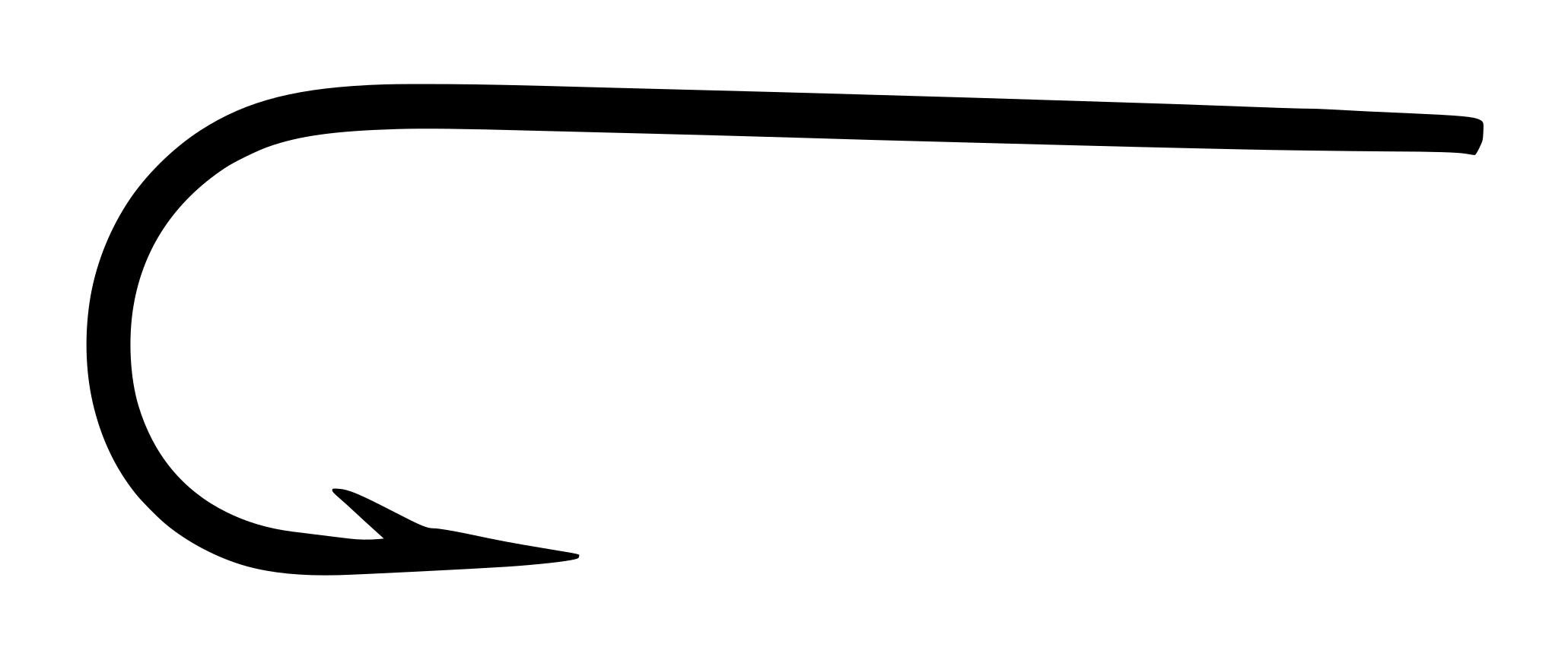
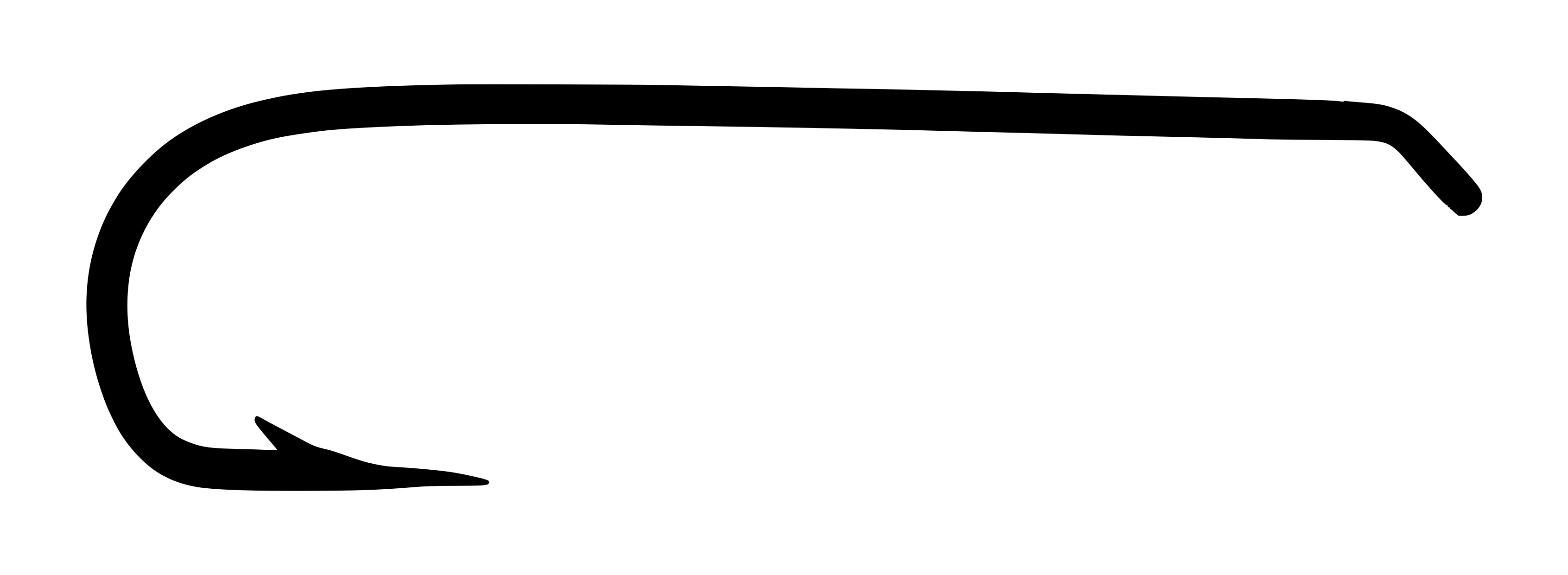
The Sealey 1752 is a fine-wire, turned-down-eye trout fly hook made by E. Sealey & Sons Limited at Brockhill Works, Redditch, England. The specimen shown is size 12 from a box stamped 1752.B, with a tapered turned-down eye, round bend, spear point, and bronzed finish. The box carries the ‘A Gladding Company’ attribution and the two-fish S logo, placing it in the Gladding ownership period of the 1970s I.
Measured proportions (shank-to-gap ratio about 2.9:1, wire 0.016″) indicate a moderately long shank of roughly 1X-2X long E on fine wire E. That profile suits small nymphs, soft-hackles, and longer-bodied dry flies. The ‘.B’ suffix on the end stamp most likely denotes the bronzed finish I.
Original turquoise box displaying Sealey brand marking and identifying the hook as English-made. The cream-colored disc logo contains a stylized S design characteristic of 1950s branding.
Photographic record
4 cataloged imagesSelect any record to load it above.
4 images shown
Sealey 1752 Hook Box Front LabelOriginal turquoise box displaying Sealey brand marking and identifying the hook as English-made. The cream-colored disc logo contains a stylized S design characteristic of 1950s branding.Open originalSealey 1752 Box Manufacturer AttributionLong face of the box detailing manufacturer information. The 'A Gladding Company' attribution establishes post-1949 acquisition and American ownership during production.Open originalSealey 1752 Box End Label Size and CountEnd label documenting size 12 and full quantity of 100 hooks per original box. Handwritten '1752.8' represents warehouse inventory code from Gladding ownership period.Open originalSealey 1752 Size 12 Hook SpecimenSingle size 12 Sealey 1752 hook on 1/10-inch measurement grid. The tapered eye points downward, the sproat bend is evident, and the bronzed warm brown finish is visible throughout the shank and bend.Open original
Technical profile
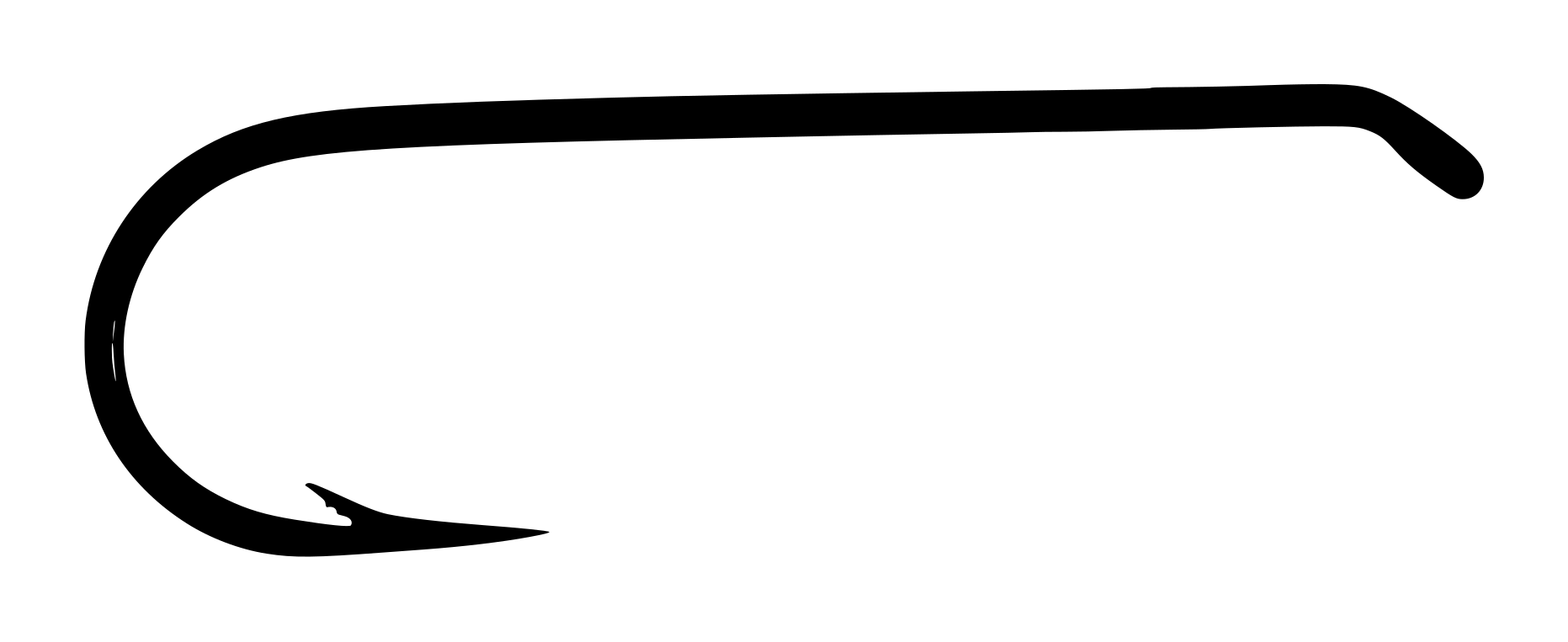
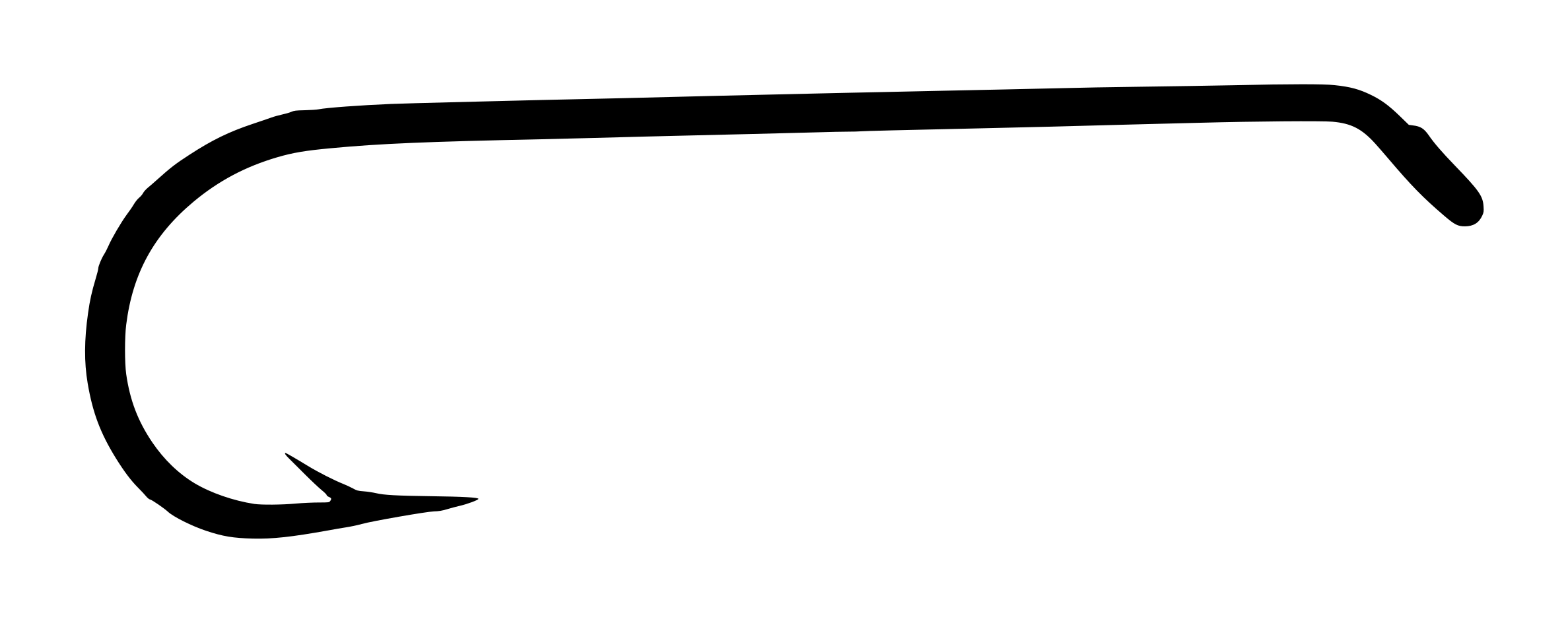
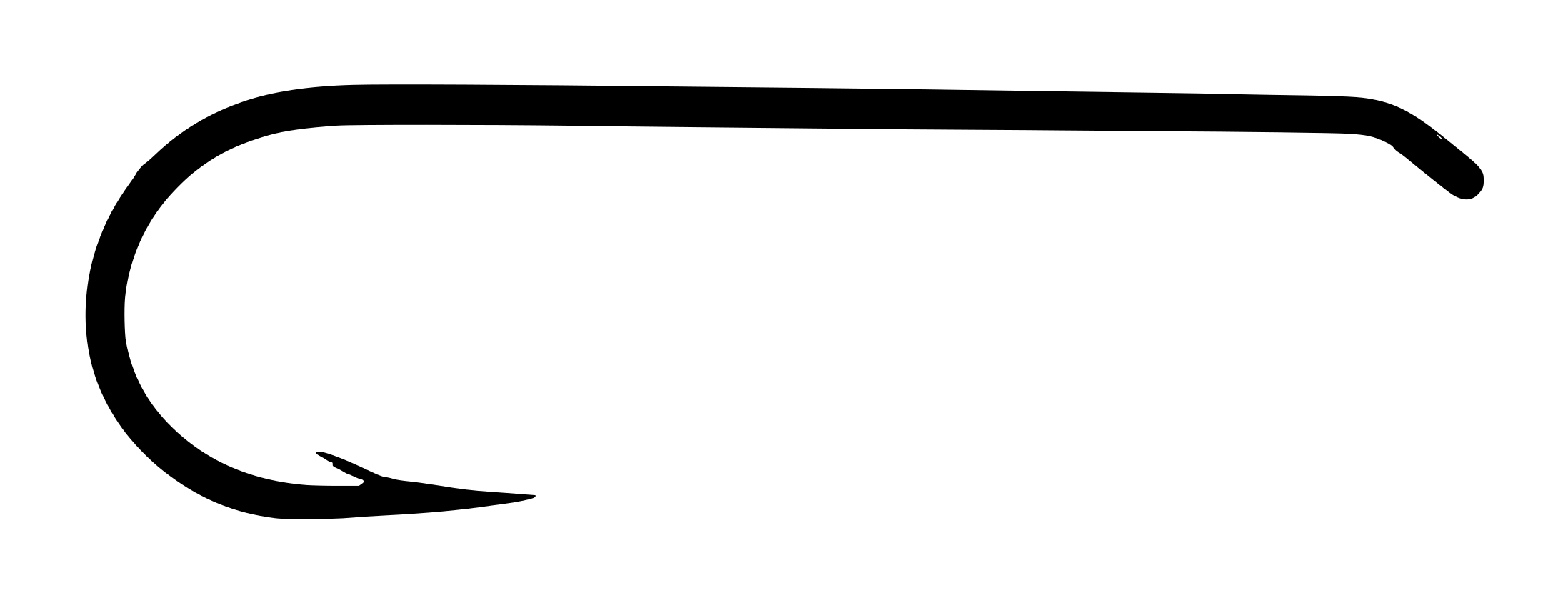
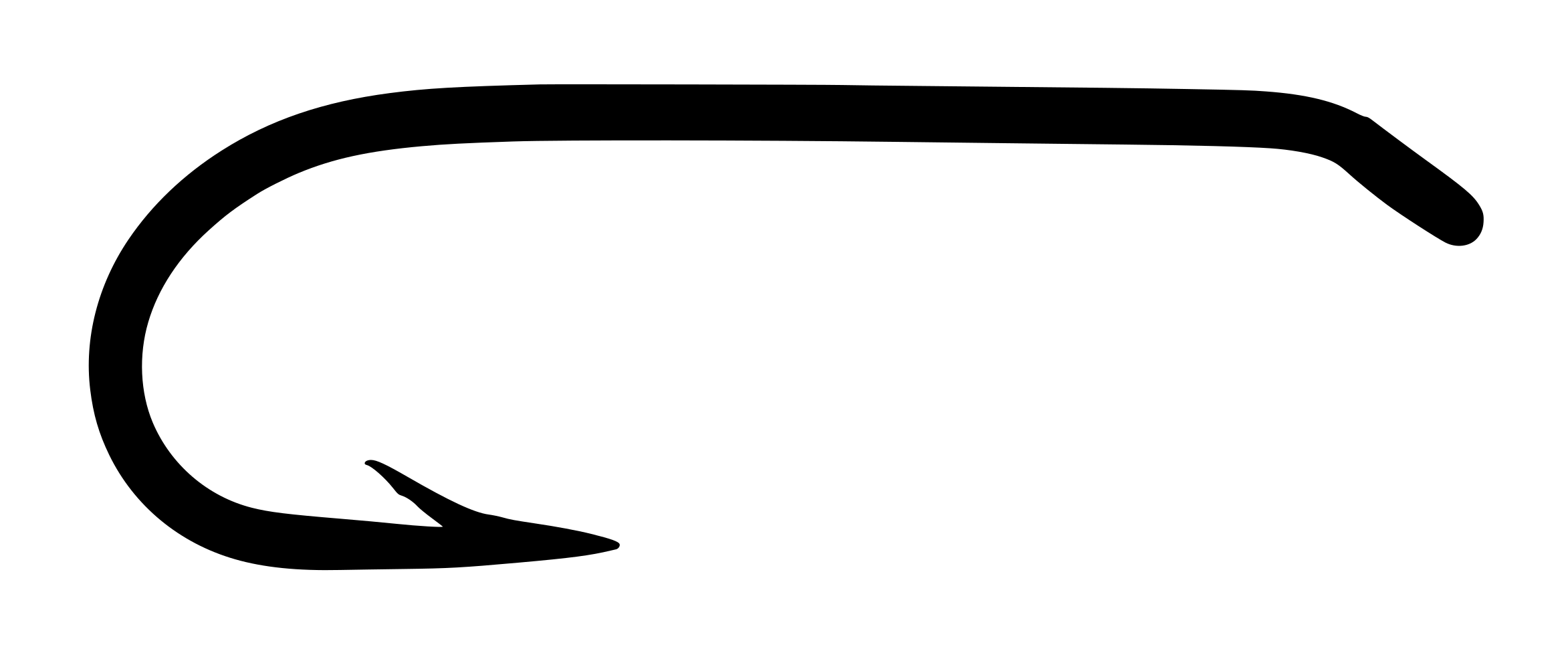
Tapered TDE | Round Bend | Fine Wire | Spear Point | Bronzed
Eye
Tapered Eye, Turned DownEye is turned down P. The shank narrows slightly toward the eye in the side photograph, consistent with a tapered eye P; the eye appears small and closed. A top-down macro photograph is needed to confirm the taper and the eye closure.
Wire
Fine (1X Fine), Round
Shank
3X Long — Plain
Bend
Round / Kendal, Standard gapRound bend: the curve is close to a semicircle of even radius from the end of the shank to the start of the point, and the point leg runs back roughly parallel to the shank P. It does not show the uneven, parabolic curve of a sproat bend. No offset is visible in this side view; a top-down photograph would confirm.
Point
Standard / SpearBarb is cut at moderate depth, roughly 0.09" behind the tip (E, grid-based). The point is straight from barb to tip, a spear profile P.
Finish
Bronzed — Confirmed (stated on packaging)Bronzed: warm olive-brown tone throughout the shank and bend P, clearly distinct from the glossy black of japanning or the blue-grey of bluing. Finish is even, with no visible flaking or bare spots at this magnification. The '.B' suffix on the end stamp is consistent with a bronzed designation I.
Hook shows no visible rust or corrosion, and the bronzed finish is even P. Box shows light fading, surface scuffing, and fraying at the corners and end-flap edges; all printing is fully legible P. Hook count has not been recorded, and the contents have not been confirmed as original.
The specimen has a spear point: in the side photograph the profile from barb to tip is straight, without the curved profile of a hollow point P. The barb is cut at moderate depth P. Measured wire diameter is 0.016″ (0.41 mm) at size 12, consistent with fine wire E.
A tapered eye is made by tapering the end of the wire before bending it round to form the eye, so the closed eye is slimmer than a ball eye formed from full-diameter wire. No welding or brazing is involved. The shank in the photograph narrows toward the eye, consistent with a tapered eye P; a top-down macro photograph would confirm it.
This entry documents the first catalogued example of a Sealey 1752 in Gladding-era packaging within the garrenwood.com database. The box carries a legible model stamp and Gladding attribution, recording Sealey's final period at Brockhill Works.
Own this hook? Help us measure it.
This pattern was made in sizes Not documented. We have measurement for size 12. Know the others? Submit calipered measurements and we'll review and add them. Thank you!
No Sealey catalogue listing for the 1752 has been located, so its introduction date, full size range, and available finishes are undocumented. The specimen’s end stamp reads 1752.B. The suffix matches the hook’s bronzed finish and most likely denotes it I. If so, other finishes may have carried other suffixes, but none has been recorded.
This example dates from the Gladding period of the 1970s I. Whether the 1752 was introduced under Gladding or carried over from Dunlop-era or Octopus-era production is not known. A dated Sealey or Gladding Sealey catalogue would settle the model’s introduction date and specification.
Era and Packaging Dating
The long face reads 'A Gladding Company.' Collector and trade accounts date Gladding's takeover of Sealey to the early-to-mid 1970s, following Dunlop Sports' ownership from 1960, which sets the earliest plausible date at c. 1972 I. The two-fish S logo on the top face replaced Sealey's Octopus trademark around 1963, which is consistent with a post-1963 date. The box still reads 'Made by E. Sealey & Sons Limited' rather than the later 'Gladding Sealey' name, which may point to the earlier part of the Gladding period S. Sealey's Redditch works reportedly closed around 1981, setting the latest plausible date for a Brockhill Works address I. The absence of a barcode is not a useful clue for British hook boxes of this period. Estimated range: c. 1972-1981 I.
From Octopus to Two Fishes
The two-fish S logo on this box was not Sealey's original trademark. For decades the firm sold hooks and rods under its Octopus brand, and collector accounts date the switch to the two-fish logo to around 1963. By the time this box was printed, Sealey had passed from Dunlop Sports to the American tackle group Gladding, whose name appears on the box's long face.
Design lineage and influence
The 1752 uses a round bend, the semicircular profile known in British tradition as the Kendal round bend. It is one of the most widely used trout-hook bends, and by the twentieth century it was standard across Redditch makers and at Mustad. The combination seen here (tapered turned-down eye, fine wire, round bend, and a moderately long shank) is a conventional twentieth-century fly hook pattern rather than a distinctive Sealey design.
Eyed hooks were established in England from the 1880s, decades before this hook was made, so the 1752’s eye reflects standard practice of its time rather than a move away from blind-eye construction. Comparable contemporary hooks include Mustad’s tapered-eye dry and nymph patterns in standard and 2X-long lengths.
Best matchRelated by Attribute
Computed automatically from catalog data — updated as new hooks are added.
Matches: Bend, Shank, Eye, Eye Orient., Point +5 moreDiffers: Wire: Fine (1X Fine) vs Standard; Gap: Standard vs Wide; Application: Dry Fly, Nymph vs Nymph, Streamer
Matches: Bend, Wire, Eye, Eye Orient., Point +5 moreDiffers: Shank: 3X Long vs 1X Long; Gap: Standard vs Narrow; Application: Dry Fly, Nymph vs Dry Fly
Matches: Bend, Gap, Eye, Eye Orient., Point +4 moreDiffers: Shank: 3X Long vs 2X Long; Wire: Fine (1X Fine) vs Standard; Forging: Round vs Forged +1 more
Matches: Bend, Gap, Eye, Eye Orient., Point +5 moreDiffers: Shank: 3X Long vs 2X Long; Wire: Fine (1X Fine) vs Extra-Fine; Application: Dry Fly, Nymph vs Dry Fly
No Sealey catalogue description of the 1752’s intended use has been located. Its features are fine wire E, a tapered turned-down eye, a round bend, and a moderately long shank E. On that basis the size 12 1752 suits small nymphs, soft-hackle wet flies, and longer-bodied dry flies I. The ‘English Fish Hooks’ wording on the box and the Gladding ownership suggest the line was marketed for export as well as the home market S.
Secondary Applications
Small soft-hackle wet flies, particularly traditional English patterns such as Partridge and Orange and Grouse and Claret.
Classic Fly Patterns
Light Olive, Pale Watery, Cahill, Blue-Winged Olive, Pheasant Tail Nymph, Hare's Ear Nymph, Partridge and Orange, Grouse and Claret
Modern Equivalents
Hook
Match Quality
Notes
Tiemco 101
Very Good
Poor match. TMC 101 has a straight (ring) eye rather than a turned-down eye, on a standard-length shank. Replace it with a turned-down-eye hook of similar shank length.
Partridge of Redditch L3A
Good
Fair match at best. The L3A is a standard-length, 4X fine, wide-gape dry fly hook on a Captain Hamilton bend with a down eye and bronze finish. Its bend, wire weight, and shank length all differ from the 1752.
Mustad 94840
Good
Close in eye, bend, and finish: tapered turned-down eye, round bend, fine wire, bronzed. It is a standard-length hook, so its shank is shorter than this specimen's.
Collector notes
Rated 5.5/10 — Sealey hooks are uncommon in original packaging, particularly in mid-range sizes (10-14), but are not actively sought by most fly tyers. Collector demand is modest, concentrated among Redditch specialists and British tackle historians. The combination of complete original packaging, full hook count, and readable branding pushes this example toward the upper end of its range.
Reference value
$12 – $28 USD estimate
Packaging condition
Good — moderate wear, legibleRecorded specimen
Packaging format
GW-E-01-boxCatalog code
The Sealey 1752 sits at the modest end of vintage hook collecting. Sealey-branded boxes turn up less often than Mustad or Partridge stock, but collector demand is limited: the hook has no named-pattern association, and modern hooks do the same job. Interest comes mainly from Redditch specialists and collectors of British tackle packaging E.
This example’s value lies mostly in its packaging. The intact box, with a legible Gladding attribution and a clear model stamp, documents Sealey’s final period. Gladding-era Sealey boxes are later and probably more common than Octopus-era packaging, which draws stronger collector interest S. Completeness also affects value, and this box’s hook count has not been recorded.
Packaging
Paper-covered cardboard box in turquoise textured paper with cream printing. Top face: cream circle containing a turquoise S formed by two fish within a diamond outline, with 'Sealey' and 'ENGLISH FISH HOOKS' in cream sans-serif below. Long face: 'MADE BY E. SEALEY & SONS LIMITED / BROCKHILL WORKS·REDDITCH·ENGLAND / A GLADDING COMPANY' in cream capitals. End: cream paper label reading 'SIZE 12 QTY 100' in heavy black block lettering, with the model number '1752.B' stamped in black ink directly on the box above the label; both appear rubber-stamped E. No barcode. Dimensions to be re-measured; the previously recorded 5.5" x 1.5" x 1.0" does not match the proportions of the top face. Light fraying at corners and end-flap edges.
Market Value Notes
Low ($12): Good condition — opened packaging, original label intact, box shows moderate toning, all or nearly all hooks present (95+ of 100), hooks show no corrosion.
High ($28): Excellent condition — box shows minimal toning, label sharp and readable, all 100 hooks present and bright, no missing items.
Premium factors: Complete original packaging with readable Gladding attribution; Sealey branding (rarer than generic Redditch hooks); full hook count; bronzed finish.
Platforms: eBay UK, vintage tackle dealers in south England, specialty online shops focused on Redditch hooks.
Confidence: E estimated — limited recent sales data available for Sealey branded hooks; estimate based on comparable Allcock and Partridge size-12 card pricing and adjusted downward for lower collector demand.
Where to Find
Sealey 1752 boxes appear infrequently on eBay UK (approximately one listing per 2-3 months when available). Specialist vintage tackle dealers in Redditch and nearby areas (Worcestershire, Gloucestershire) occasionally stock Sealey branded cards. Tackle fairs and swap meets in southern England (particularly those featuring Redditch hook specialists) are the most reliable venues. Bulk lots of old hook stock sometimes contain unopened Sealey boxes. North American eBay listings are rare; international shipping adds significant cost.
Collector's Identification Tips
Identify this Sealey 1752 box by four markers: (1) a turquoise box with the two-fish S logo, ‘Sealey,’ and ‘ENGLISH FISH HOOKS’ on the top face; (2) ‘MADE BY E. SEALEY & SONS LIMITED / BROCKHILL WORKS·REDDITCH·ENGLAND / A GLADDING COMPANY’ on the long face; (3) the model stamp 1752.B above a cream end label reading ‘SIZE 12 QTY 100’; (4) a bronzed, fine-wire hook with a tapered turned-down eye and round bend. The Gladding attribution separates this later packaging from earlier Octopus-brand and Dunlop-era Sealey boxes.
Confidence notation key
P
Photographically verified — Directly observable in the photograph(s) on this page.
V
Verified by documentation — Confirmed by manufacturer catalog, spec sheet, or published reference.
I
Inferred — A logical deduction from observable or documented evidence, not directly stated.
E
Estimated — An approximation based on visual comparison, proportional analysis, or limited data.
S
Speculative — A reasoned hypothesis that cannot be confirmed from available evidence.
Unnotated claims are the compiler’s synthesis; see Sources. All photographs on garrenwood.com are taken on a measurement grid where each square equals 1/10 inch (0.1″ / 2.54 mm).