The Mustad 3868 A is a classic long-shank sneck hook produced by O. Mustad & Son during the golden era of traditional wet fly and bait-hook manufacturing. Recognized by its distinctive sneck bend, bronzed finish, tapered down eye, and extended shank, the 3868 A was designed primarily for freshwater fly tying, traditional bait presentations, and classic streamer or lake fly patterns. Its elegant proportions and versatile profile made it a staple in both commercial tackle catalogs and home fly-tying benches throughout the mid-20th century.
What makes the Mustad 3868 A especially significant is its connection to the transitional period between hand-forged traditional hooks and modern chemically sharpened fly hooks. The pattern reflects an older Scandinavian and British-influenced sneck design philosophy, favoring a bend and long shank suited to elongated baitfish and wet fly silhouettes. The tapered turned-down eye also provided improved leader alignment and a refined appearance valued by classic fly dressers.
Collectors and traditional anglers continue to seek out the 3868 A because it represents a durable, highly fishable vintage hook pattern that still performs well today. Surviving examples are commonly found as “new old stock” in original Mustad packaging, and the hook remains appreciated among tiers recreating historic streamer, bait, and lake fly patterns from the early-to-mid 1900s. Within the broader Mustad catalog, the 3868 A stands as a representative example of the company’s extensive specialty hook lineup that helped standardize hook design across the global angling industry.
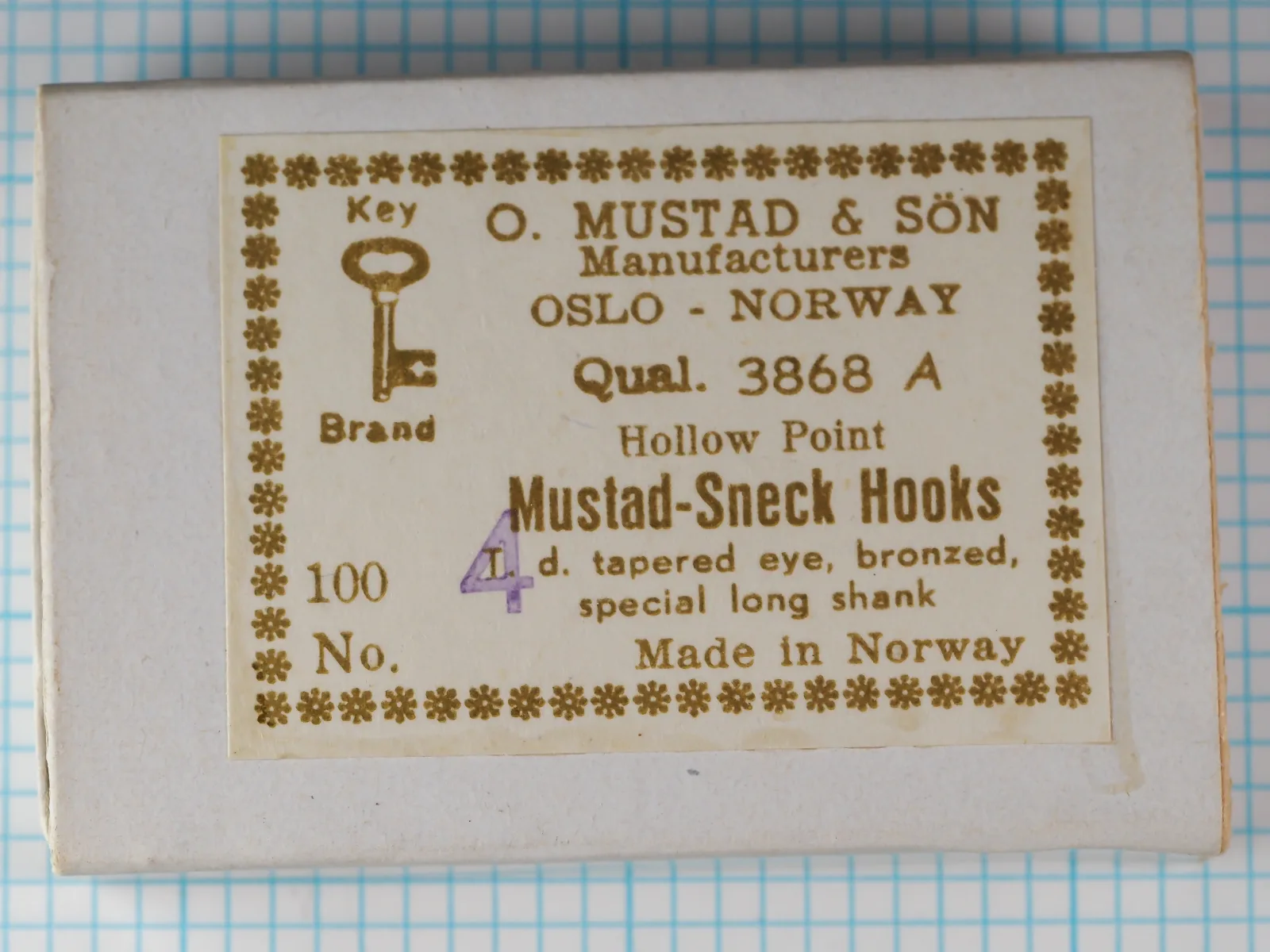
Vintage Mustad Hook Box Label - Model 3868 A
Photographic record
4 cataloged imagesSelect any record to load it above.
4 images shown
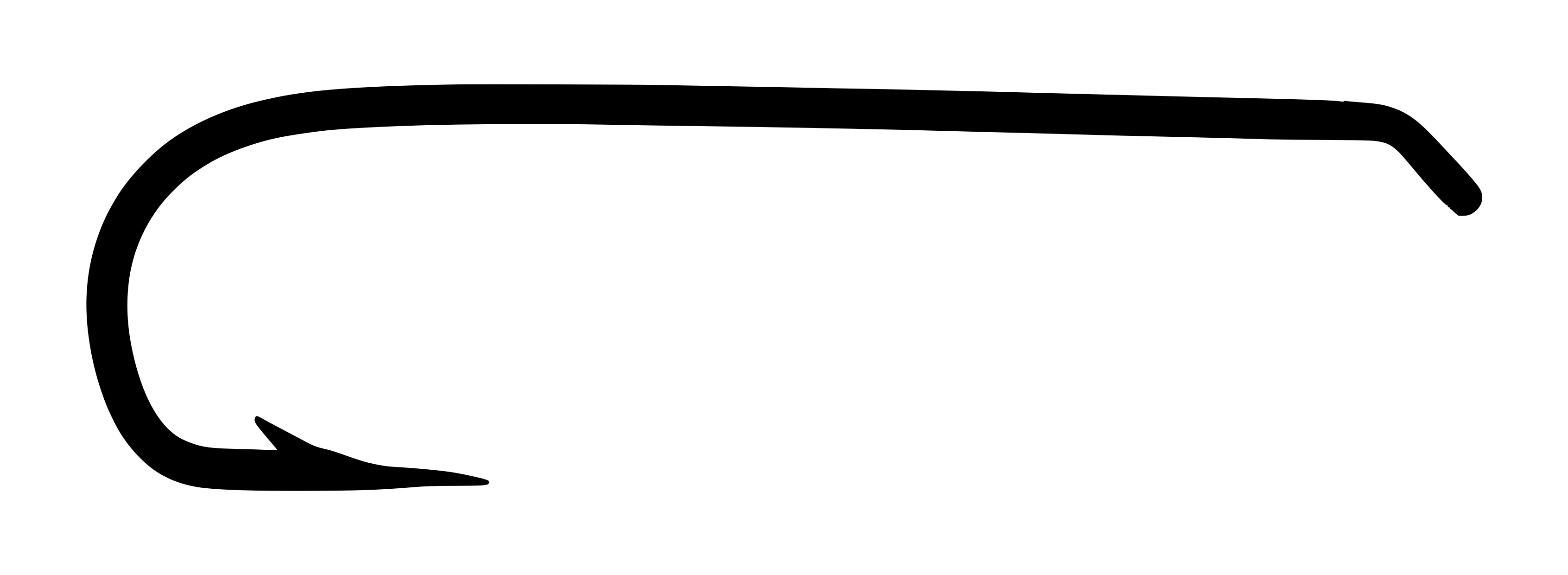
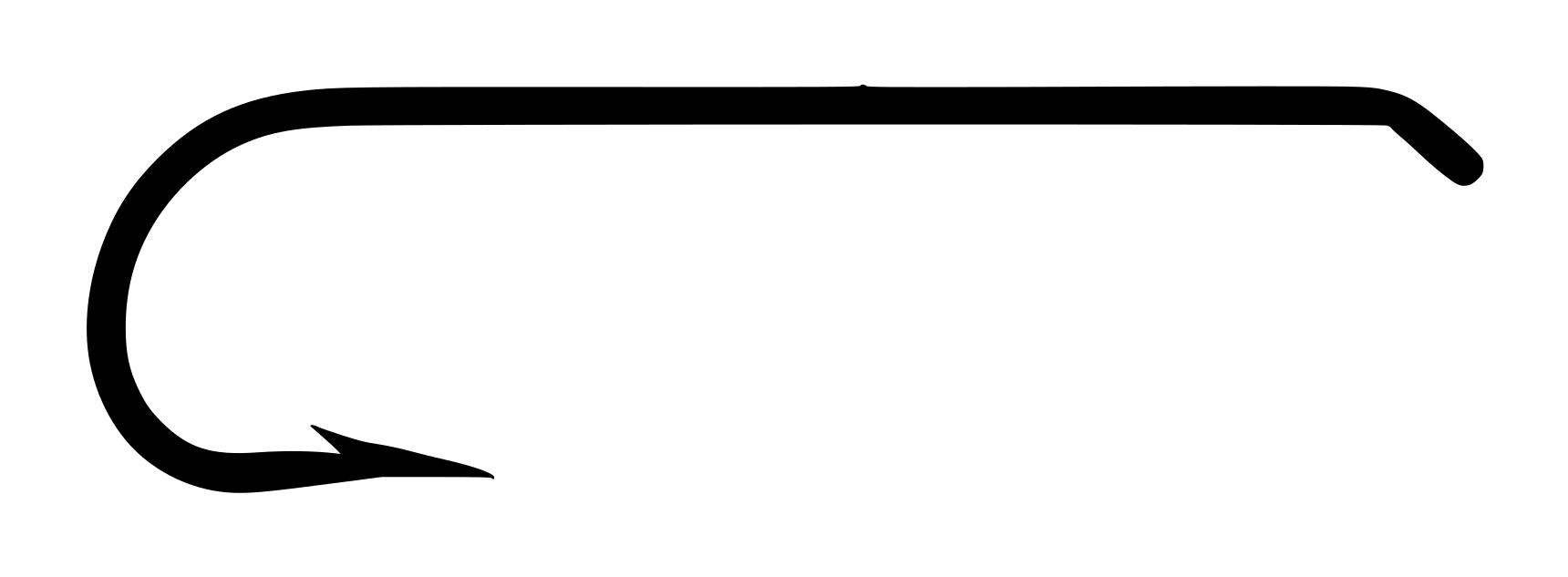
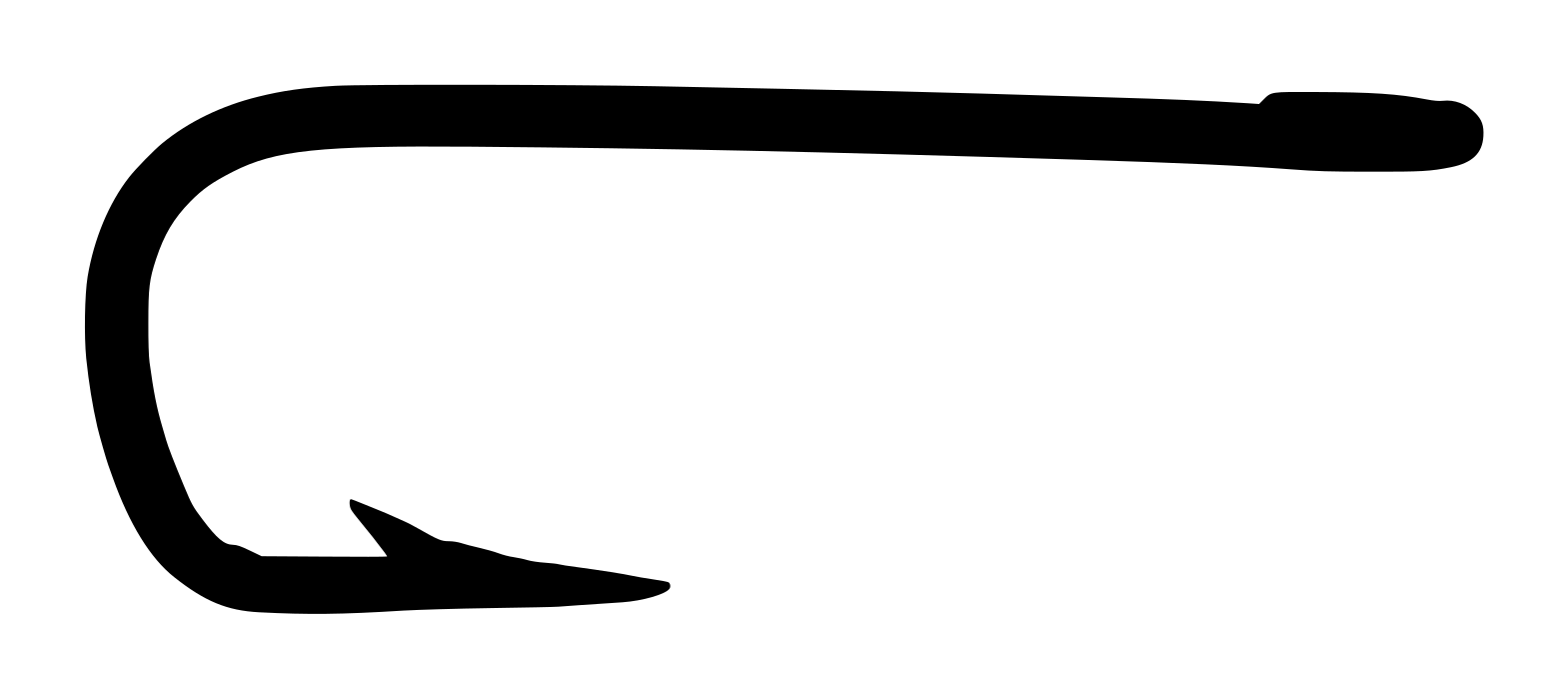
Vintage Mustad Hook Box Label – Model 3868 AVintage Mustad Hook Box Label - Model 3868 AOpen originalMustad 3868 A Hook Point Size 4Mustad 3868 A Hook Point Size 4Open originalMustad 3868 A Vintage Fly Hook – Size 4 Sneck BendMustad 3868 A Vintage Fly Hook - Size 4 Sneck BendOpen originalMustad 3868 A Vintage Fly Hook – Size 4 Sneck BendMustad 3868 A Vintage Fly Hook - Size 4 Sneck BendOpen original
Technical profile
Eye
Tapered Eye, Turned DownThe tapered eye is clearly visible as a turned-down configuration with intentional wire taper reducing mass toward the terminal loop P. This feature is characteristic of premium vintage fly hooks designed to minimize bulk in delicate head windings. The taper is gradual and symmetrical, indicating careful mechanical forming during manufacture.
Wire
Extra-Heavy (2X+), Round
Shank
Special Long — Plain
Bend
Sneck, Standard gapThe Sneck bend is distinctly square or rectangular in profile P, as opposed to the rounded Sproat or angular Limerick bends. The bend apex shows sharp internal corners with no significant radius relief, which is the defining characteristic of the Sneck pattern. The hook exhibits a moderate depth relative to the overall length, consistent with the special long shank specification. Wire set appears clean and perpendicular to the shank axis with no visible lateral offset.
Point
Hollow Point (concave inner face)The barb is short and close-cut, typical of vintage Mustad construction P. It sits at a steep angle from the shank and exhibits a sharp, defined edge. The barb placement is slightly offset toward the outer curve of the bend, which is standard for hollow-point hooks to maximize the effectiveness of the concave inner taper.
Finish
Bronzed — Confirmed (stated on packaging)The bronzed finish displays a warm, dark brownish-gold tone P, distinct from black japanning or bright steel. The patina is even and uniform across both specimens, indicating proper baked-lacquer application. The finish tone has a slightly muted appearance under magnification, typical of bronzed lacquer chemistry designed to mimic bronze hue while providing rust resistance without the reflectivity of bare steel.
Card label shows light toning consistent with age; paper exhibits minor creasing and edge wear typical of storage. Printed text remains legible and vibrant with no significant fading. The decorative border and Key Brand logo are clearly visible. Hooks themselves display bronzed finish with minimal oxidation and no corrosion pitting; patina is even and consistent across both specimens visible.
The hollow point geometry on the 3868 A is engineered to achieve initial penetration with absolute minimal applied pressure, making it ideal for soft-mouthed freshwater species and delicate presentations where a violent hook-set would tear friable tissue. The concave, dished-out profile from tip to barb creates an incredibly fine, razor-sharp tip that flares rapidly toward the barb. Once the tip penetrates past the barb, the hook holds securely in soft tissue without creating an overly large entry wound prone to tearing under the strain of a fight. The tapered eye reduces wire mass at the head, a critical feature for floating dry flies and buoyant wet flies, ensuring proper water surface interaction and preventing nose-first sinking due to excess steel weight. The special long shank extends the hook’s body-bearing capacity, allowing tyers to construct elongated profiles (streamers, long-bodied wet flies, extended-body nymphs) without requiring larger, heavier gape sizes. The bronzed finish provides excellent rust resistance through a specialized baked-on lacquer or chemical compound designed to mimic the appearance of bronze while sealing the high-carbon steel from moisture—a practical choice for freshwater and light saltwater work where stainless steel was not yet economically viable. The Sneck bend’s square geometry distributes load across multiple stress points rather than concentrating force at a single apex, theoretically improving longevity under repeated hard strikes, though the sharp internal corners were later criticized (without strong empirical support) as creating fracture stress points.
First Sneck bend hook documented in the garrenwood.com catalog. Represents one of the few surviving examples of this declining pattern from the mid-20th-century golden era of Mustad production, before industry consolidation and design standardization in the 1970s-1980s.
Own this hook? Help us measure it.
We don't have measured sizes for this hook yet. Own one? Submit calipered measurements and we'll review and add them. Thank you!
Historical context
mustad
O. Mustad & Søn was founded in 1832 in Gjøvik, Norway, initially as Brusveen Spiger- og Staltradfabrikk, producing metal goods including nails and steel wire. The company was reorganized by Hans Schikkelstad’s son-in-law Ole Hovelsen Mustad and his son Hans Mustad, who renamed the firm O. Mustad & Søn. The defining breakthrough came in 1877 when Mathias Topp invented the first fully automated hook-making machine, enabling continuous feed, cutting, bending, barbing, and pointing at unprecedented speed. Rather than patent the technology (which would require public disclosure), the Mustad family maintained rigorous corporate secrecy and restricted factory access, giving them an insurmountable competitive advantage over rivals in Redditch, England and the United States. By the 1950s, when this hook was manufactured, Mustad had secured approximately 50% of global hook production market share, with sales offices and manufacturing facilities across multiple continents. The company’s strategy of reverse-engineering regional patterns—cloning designs favored by local blacksmiths and anglers in specific geographic areas such as Cincinnati (American Midwest) and Limerick (Ireland)—and producing them with Norwegian industrial efficiency proved devastatingly effective in capturing localized markets globally.
Series History
The Mustad-Sneck Hooks series represents the company’s production of the classic Sneck bend pattern, one of the oldest documented hook designs originating in the British Isles. The Sneck pattern is characterized by its distinctive square or nearly rectangular bend, originally engineered to lock the fish’s jaw securely into the lowest, strongest point of the hook during combat. Unlike the rounded Sproat or sharp-angled Limerick, the Sneck’s square geometry was believed to resist twisting and reduce the likelihood of hook rotation during violent head shakes. The 3868 A variant specifically combines the Sneck bend with a special long shank, hollow point, tapered eye, and bronzed finish—a configuration optimized for classic British wet fly and streamer work. The Sneck pattern experienced a decline in popularity during the late 20th century, partly due to angler speculation that the sharp internal corners created stress concentration points prone to fracture, though Mustad’s tempering standards generally prevented such failures. This specific model represents the pattern during its period of mainstream production in the 1950s-1960s, before the market shift toward round-bend patterns (Aberdeen, Sproat) that dominated the fly-tying industry by the 1970s onward. The Mustad-Sneck series was eventually discontinued as demand waned, making surviving examples increasingly valued by collectors and traditional fly tyers seeking to recreate classic wet fly dressings.
Era and Packaging Dating
Label bears Oslo designation (post-1925), confirming manufacture after the 1925 Christiania-to-Oslo name change. The ornate gold-bordered Key Brand logo with decorative floral motifs and the specific typography and offset printing technique are consistent with mid-20th century Mustad export packaging. The card stock and print quality suggest offset lithography standard of the 1950s-1960s. No barcode visible (barcodes not adopted until 1974), which is consistent with pre-1970s manufacture. The label size and format align with Mustad's standard eight-line label system documented as in use through the 1960s. This dating places the hooks squarely in the postwar manufacturing expansion period before Mustad transitioned to plastic blister pack formats in the 1970s-1980s.
The Latch That Held History
The Sneck bend was originally named for Northern English and Scottish dialect, where 'sneck' means a latch or fastening mechanism—perfectly describing the hook's geometric function of locking a fish's jaw into the bend during combat. While the Sneck fell out of mainstream favor by the 1980s due to angler concerns about the sharp internal corners creating fracture points, these fears were largely unfounded; Mustad's rigorous tempering and heat-treatment standards made the hooks exceptionally durable. Today, the Sneck pattern survives primarily in the hands of traditional fly tyers who study 19th and early 20th-century fly-fishing literature and seek to tie classic British and Irish wet flies using historically accurate hooks—making the 3868 A a living bridge between Victorian angling heritage and modern fly-tying craftsmanship.
Design lineage and influence
The Sneck bend traces its design lineage to 19th-century British hook makers, predating the systematic industrialization of hook production. Its square geometry was a direct response to the mechanics of large-mouth fish species and the vigorous combat tactics of Atlantic salmon and sea trout, where the angular bend was theorized to provide superior jaw-locking capability. Competing contemporary designs included the rounded Sproat (developed as a compromise between the Sneck’s locking geometry and easier manufacturing), the angular Limerick (offering extreme jaw penetration through its sharp apex), and the wide-gape Aberdeen (optimized for delicate live bait presentation). When Mustad systematically reverse-engineered and produced the Sneck as part of its global market strategy, the company gave the pattern international distribution and standardized manufacturing. The 3868 A’s special long shank positioned it as a variant of the base Sneck, extending its application to streamer work and long-bodied nymph dressing. Downstream influence from the Sneck design is limited by the pattern’s eventual decline; however, its geometric principles—particularly the square bend and jaw-locking concept—informed later developments in conservation-focused circle hook design, where the inward-turned point serves a functionally similar role in reducing deep hooking injuries.
Best matchRelated by Attribute
Computed automatically from catalog data — updated as new hooks are added.
Matches: Bend, Wire, Gap, Point, Finish +3 moreDiffers: Shank: Special Long vs 1X Long; Eye: Tapered Eye vs Ball Eye; Eye Orient.: Turned Down vs Straight / Inline +1 more
Matches: Bend, Gap, Eye, Eye Orient., Point +4 moreDiffers: Shank: Special Long vs 1X Long; Wire: Extra-Heavy (2X+) vs Standard; Application: Wet Fly, Nymph, Streamer vs Wet Fly, Nymph
Matches: Bend, Gap, Eye Orient., Finish, Forging +2 moreDiffers: Shank: Special Long vs 4X Long; Wire: Extra-Heavy (2X+) vs Heavy (1X Heavy); Eye: Tapered Eye vs Ball Eye +2 more
Matches: Bend, Gap, Eye, Eye Orient., Finish +3 moreDiffers: Shank: Special Long vs 1X Long; Wire: Extra-Heavy (2X+) vs Heavy (1X Heavy); Point: Hollow Point vs Superior +1 more
The Mustad 3868 A is a premium vintage wet fly and streamer hook engineered for traditional dressing of elongated fly patterns. The special long shank accommodates extended body materials such as tinsel bodies, dubbed abdomens, and multi-feather wings characteristic of classic British and European wet fly traditions. Historically favored for reservoir fishing, river work with streamers, and traditional Atlantic salmon wet fly applications where a longer profile enhances bait imitation and line protection from sharp-teethed species.
Classic Fly Patterns
Traditional wet flies, Woolly Buggers, streamer patterns requiring extended bodies, classic British wet patterns
Modern Equivalents
Hook
Match Quality
Notes
Kamasan B980 Specimen Eyed
Good
Offers similar Sneck bend geometry and UK-origin heritage, but lacks the extended long shank of the 3868 A special configuration. Modern manufacture with consistent quality.
Mustad 9672
Moderate
3XL long shank modern Mustad streamer hook, but features round/O'Shaughnessy bend rather than Sneck. Functional equivalent for long-body streamer work but different geometry.
Tiemco 5263
Moderate
3XL long shank with round bend; functionally similar for streamer applications but lacks Sneck pattern heritage and British aesthetic.
Collector notes
The 3868 A is scarce and historically significant due to its combination of the archaic Sneck bend, premium tapered eye construction, and the post-WWII mid-century manufacturing era. Collector demand is moderate to strong among traditional fly tyers and British fly-fishing historians, but supply is limited because the Sneck pattern fell out of favor and was eventually discontinued.
Reference value
$8 – $20 USD estimate
Packaging condition
Good — moderate wear, legibleRecorded specimen
Packaging format
GW-M-VL-01Catalog code
Positive Factors: The Sneck bend is one of the most historically venerable hook patterns, carrying significant prestige in British angling tradition. The 3868 A represents a premium variant with tapered eye and special long shank construction—features indicating quality manufacturing. The mid-20th-century origin (1950s-1960s) is desirable among collectors seeking post-WWII industrial examples. The vintage paper box label in pristine condition adds substantial value, as original packaging is rare and highly sought. This is a working-grade hook with genuine historical fishing use, not a novelty or purely ornamental item. Traditional fly tyers actively search for Sneck bend hooks to recreate classic British and European wet fly patterns, creating steady demand.
Limiting Factors: The Sneck pattern’s decline in popularity means many anglers are unfamiliar with the design, limiting appeal to mainstream fly fishers. Not all fly-tying supply dealers stock Sneck patterns, reducing market visibility. The hook size No. 4 is moderate and less specialized than very small sizes (14-18) or very large sizes (1/0-3/0), both of which command higher collector premiums. Surviving examples, while uncommon, are not exceptionally rare—other Mustad models from the same era may be scarcer. The bronzed finish, while desirable, is less dramatic and collectible than japanned black or tinned finishes with strong visual presence. Competition from modern reproduction hooks (e.g., Kamasan B980) that offer similar function at lower cost may suppress demand among budget-conscious tyers.
Packaging
Vintage paper box label in the classic Mustad eight-line format. Kraft cardstock base with offset-printed gold and black ink. Decorative border featuring repeated four-petaled floral or cross motifs along all edges. Upper left quadrant displays the iconic downward-pointing skeleton key trademark with the text 'Key Brand' directly beneath. Primary text block is centered and reads: Line 1: 'O. MUSTAD & SÖN'; Line 2: 'Manufacturers'; Line 3: 'OSLO - NORWAY'; Line 4: 'Qual. 3868 A'; Line 5: 'Hollow Point'; Line 6: 'Mustad-Sneck Hooks'; Lines 7-8: 't.d. tapered eye, bronzed, special long shank' and 'Made in Norway'. Bottom left corner contains '100 No. 4' indicating package count and hook size. A handwritten purple numeral '4' appears in the center-left area, likely a retail stock mark or lot identification. The overall label design conveys premium quality through the ornate border treatment and precise typographic hierarchy.
Market Value Notes
Value range reflects a complete vintage box with 100 hooks and intact period-correct label in good condition. Loose single hooks typically trade at $0.10-0.30 each depending on condition. Original boxes have appreciated significantly in recent years due to interest in vintage tackle and traditional fly-tying materials. Premiums are highest when the box shows minimal label damage and all hooks are present and uncorroded. Dealer and specialty tackleshop sources command higher prices than general eBay sales. Geographic market variation is moderate; UK-based dealers and collectors show stronger demand due to British angling heritage connection.
Where to Find
Surviving boxes most commonly appear on eBay (UK and US auctions), specialist vintage tackle dealers such as Everard & Co or Three Forks Vintage Tackle, tackleshop estate sales, and British angling memorabilia fairs. Loose hooks occasionally appear in bulk vintage hook lots. Original boxes are rare; most specimens are encountered as loose hooks extracted from original packaging.
Preservation
Storage and Preservation
Store the complete original box in a cool, dry environment away from moisture and humidity. The bronzed finish is susceptible to patina development with exposure to moisture, though collectors often consider light patina desirable as evidence of age and authenticity. Store hooks on the original card rather than loose, as original packaging adds substantial value and protects hooks from oxidation and physical damage. Avoid contact with other metals (copper, brass) to prevent galvanic corrosion. If the box must be opened to access hooks, handle with cotton gloves to prevent skin oils from accelerating oxidation. The vintage paper label is fragile; avoid rubbing or bending it excessively. If light corrosion develops, do not attempt to polish or scrub the hooks, as this removes patina that collectors value. Store in a polyethylene bag with silica desiccant if the surrounding environment is damp. Periodically inspect for insect damage, particularly silverfish, which can feed on paper labels. Keep away from direct sunlight, which can fade the gold printing on the label.
Marking Analysis
Handwritten Marking and Lot Identification
A handwritten purple numeral ‘4’ appears in the center-left area of the label, positioned between the Key Brand logo and the primary printed text block. This marking was likely applied by a retail shopkeeper or wholesaler as a stock identifier, lot number, or inventory code V. Such handwritten marks are common on vintage tackle boxes and serve several purposes: price coding (particularly in pre-barcode retail environments), lot identification for wholesale transactions, or internal warehouse organization. The purple ink suggests use of a fountain pen or fountain-based ballpoint, consistent with mid-20th-century retail practices. The placement and size of the mark indicate it was applied after the box was originally packaged, as part of the secondary distribution or storage process. Such markings, while potentially reducing the aesthetic purity of the label, are authenticity indicators and do not diminish the hook’s value for use or serious collecting—indeed, they provide historical evidence of how the box was handled in the marketplace.
Primary Source
Eight-Line Label Format and Product Information
Source: Mustad Label: A Comprehensive Typology and Decryption of Vintage O. Mustad & Søn Hook Labels
The label adheres precisely to Mustad’s standardized eight-line typographic format documented in the Mustad Label reference, with each line performing a specific informational function: Line 1 establishes manufacturer authority (‘O. MUSTAD & SÖN’); Line 2 asserts primary manufacturing status (‘Manufacturers’); Line 3 provides geographic origin and chronological anchor (‘OSLO – NORWAY’); Line 4 introduces the quality code tier (‘Qual. 3868 A’); Line 5 defines the point geometry exclusively (‘Hollow Point’); Line 6 identifies the cloned regional pattern (‘Mustad-Sneck Hooks’); Lines 7-8 specify anatomical and finish modifiers (‘t.d. tapered eye, bronzed, special long shank’ and ‘Made in Norway’). This precise adherence to the label system demonstrates Mustad’s commitment to standardized global communication of technical specifications across linguistic and cultural boundaries. The presence of ‘Made in Norway’ reinforces the factory location (Oslo), supporting the post-1925 dating implied by the Oslo designation rather than the earlier Christiania name. The quality code 3868 A places this hook in the mid-tier range (3000-3999 block), indicating a ‘Quality’ hook manufactured to exacting standards, as opposed to economy (1000-2999) or premium (4000+) tiers.
Additional
The Sneck Bend in Angling History
The Sneck bend represents one of the oldest standardized hook geometries in angling history, originating among British craftsmen before the industrial era. The name ‘Sneck’ derives from Northern English and Scottish dialect meaning ‘latch’ or ‘fastening mechanism,’ reflecting the pattern’s geometric function: the sharp square bend at the hook’s base was designed to ‘lock’ the fish’s jaw securely into the lowest, strongest point of the steel. Unlike the rounded Sproat or the sharply angular Limerick, the Sneck’s rectangular geometry distributes load across multiple structural planes, theoretically resisting the twisting and rotational stresses that accompany a large fish’s violent head shakes. The pattern was particularly favored in British and Irish tradition for salmon and sea trout fishing, where the combination of heavy tackle, powerful fish, and prolonged battles demanded absolute hook security. However, during the latter 20th century, the Sneck fell out of fashion, partly due to angler speculation (lacking strong empirical support) that the sharp internal corners created stress concentration points prone to sudden fracture. Modern materials science suggests this concern was largely unfounded—properly tempered steel with Mustad’s manufacturing standards exhibits exceptional fracture resistance regardless of geometric corner radius. Contemporary traditional fly tyers and anglers pursuing historically accurate reproductions of classic British and European patterns actively seek Sneck bend hooks, recognizing the design’s proven effectiveness and cultural significance within fly-fishing heritage.
Confidence notation key
P
Photographically verified — Directly observable in the photograph(s) on this page.
V
Verified by documentation — Confirmed by manufacturer catalog, spec sheet, or published reference.
I
Inferred — A logical deduction from observable or documented evidence, not directly stated.
E
Estimated — An approximation based on visual comparison, proportional analysis, or limited data.
S
Speculative — A reasoned hypothesis that cannot be confirmed from available evidence.
Claims with no notation are confirmed by multiple independent sources. All photographs on garrenwood.com are taken on a measurement grid where each square equals 1/10 inch (0.1″ / 2.54 mm).