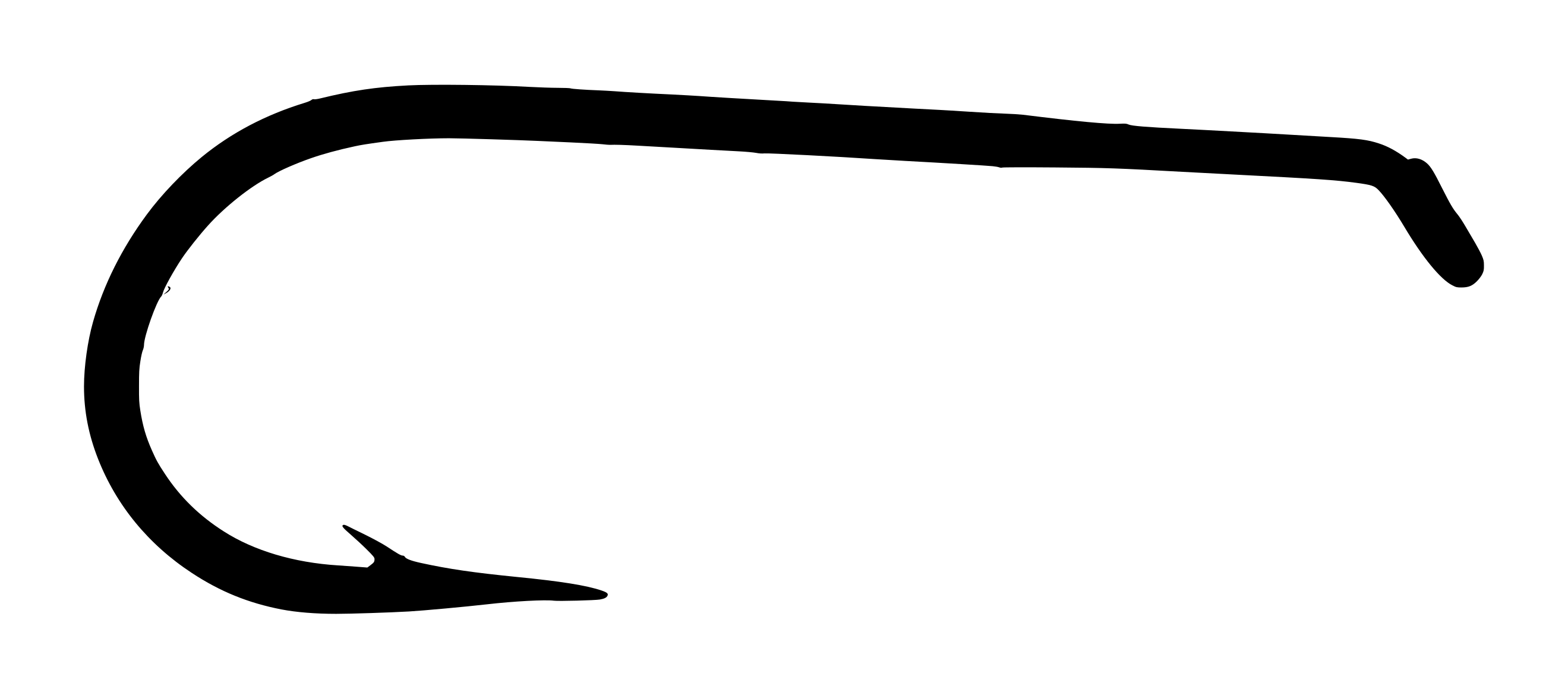
Mustad 3351 Sneck Hooks are a heavy-wire, 1X long wet-fly and nymph hook manufactured in Oslo from approximately 1920 to 1960, finished in bronzed steel with a turned-down tapered eye and kirbed point. The defining sneck bend geometry presents a tightly closed gap that concentrates hook penetration in minimal water disturbance, paired with heavy wire gauge to resist deformation during casting and the hookset. This combination made the 3351 a standard choice for tyers building segmented nymph patterns and soft hackle wets across Northern European and North American tackle shops, where Mustad’s industrial production method offered economical access to a geometry long established in Continental fly boxes.
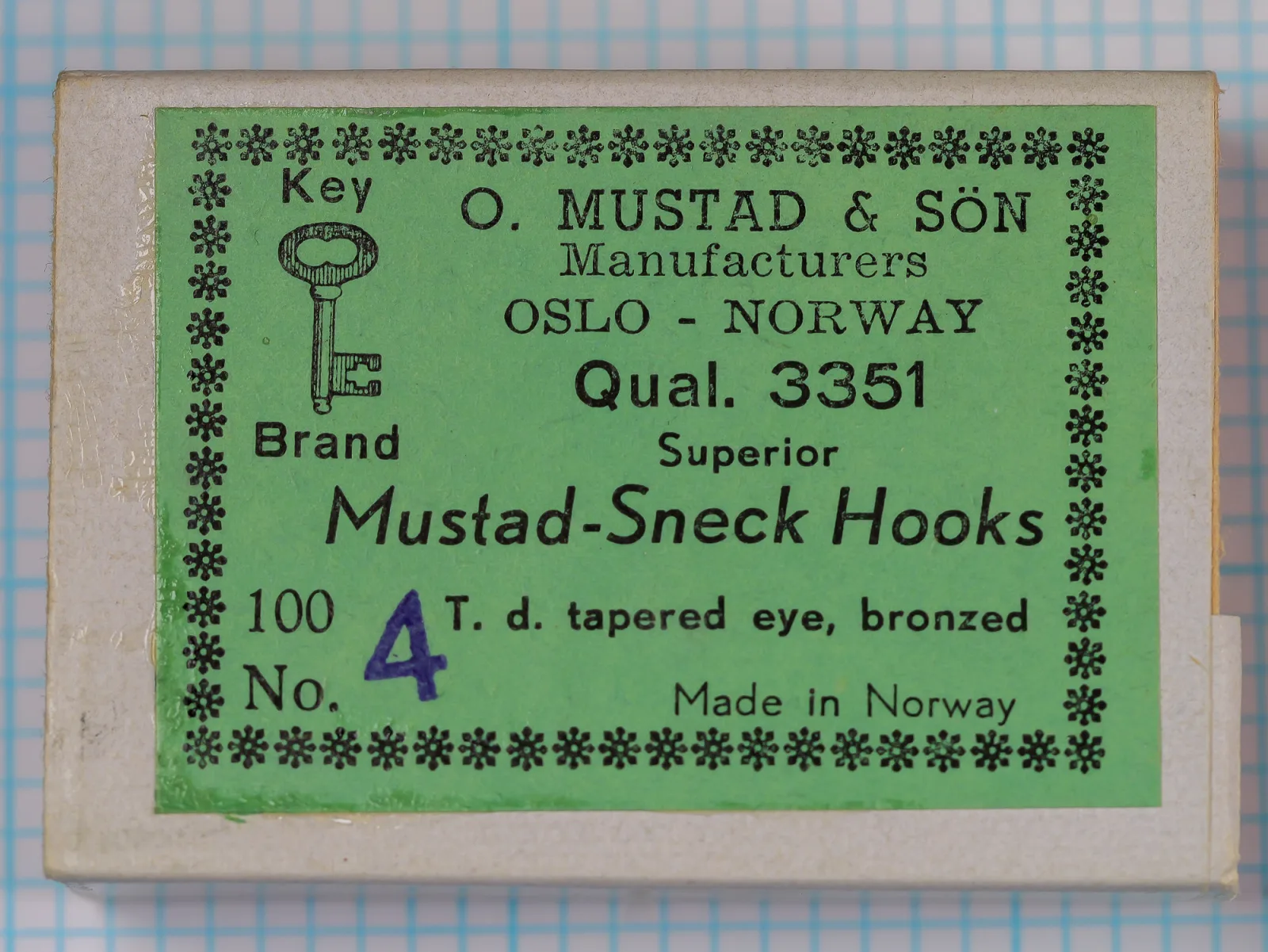
Original green package label for Mustad 3351 Superior Sneck Hooks, size 4, tapered eye, bronzed finish, manufactured in Oslo, Norway.
Photographic record
3 cataloged imagesSelect any record to load it above.
3 images shown
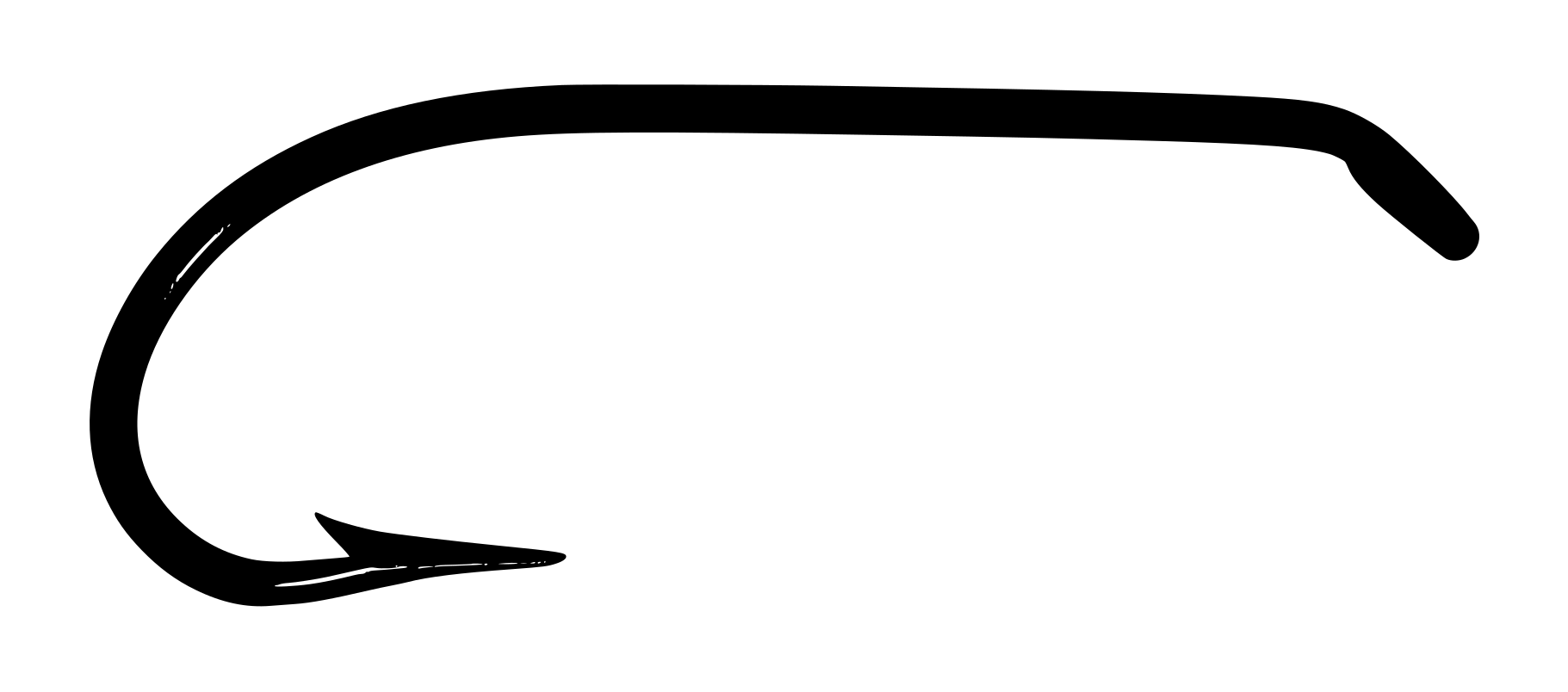
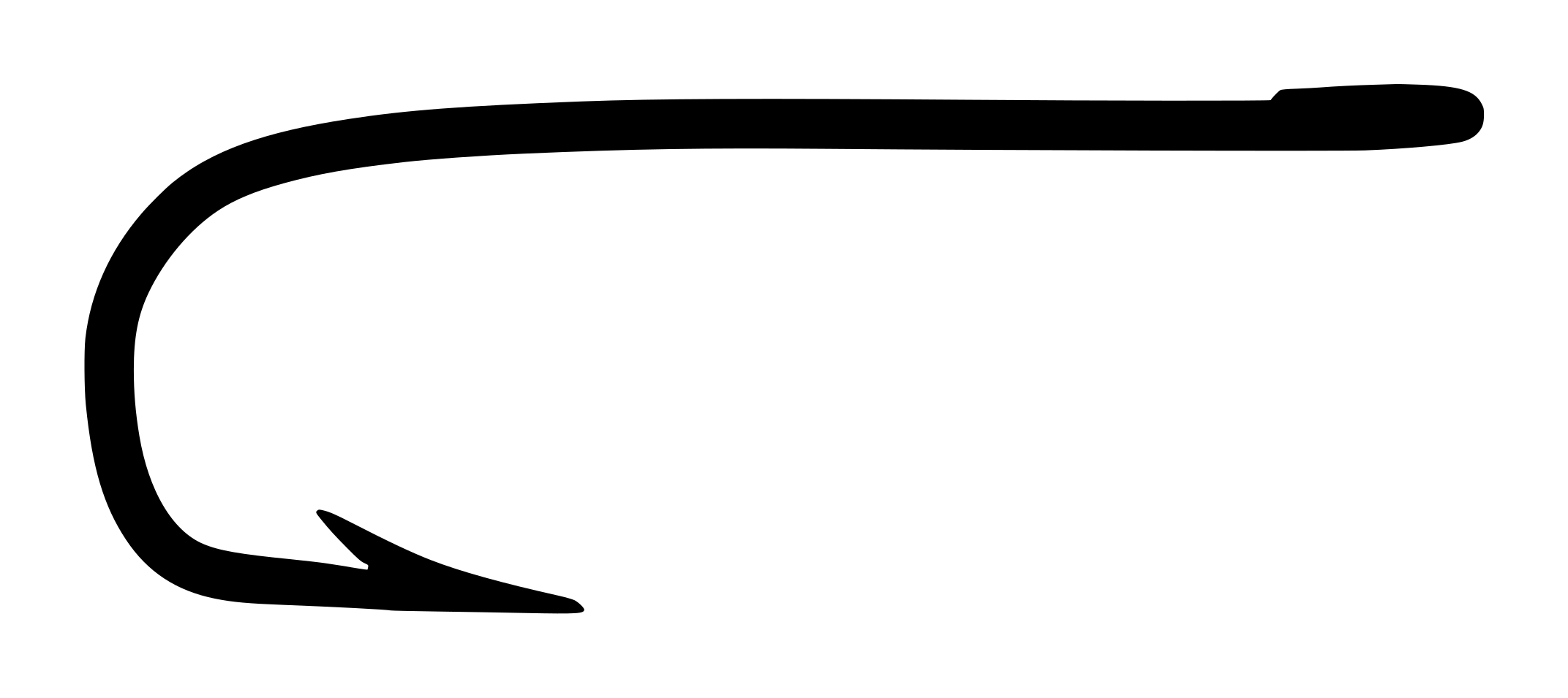
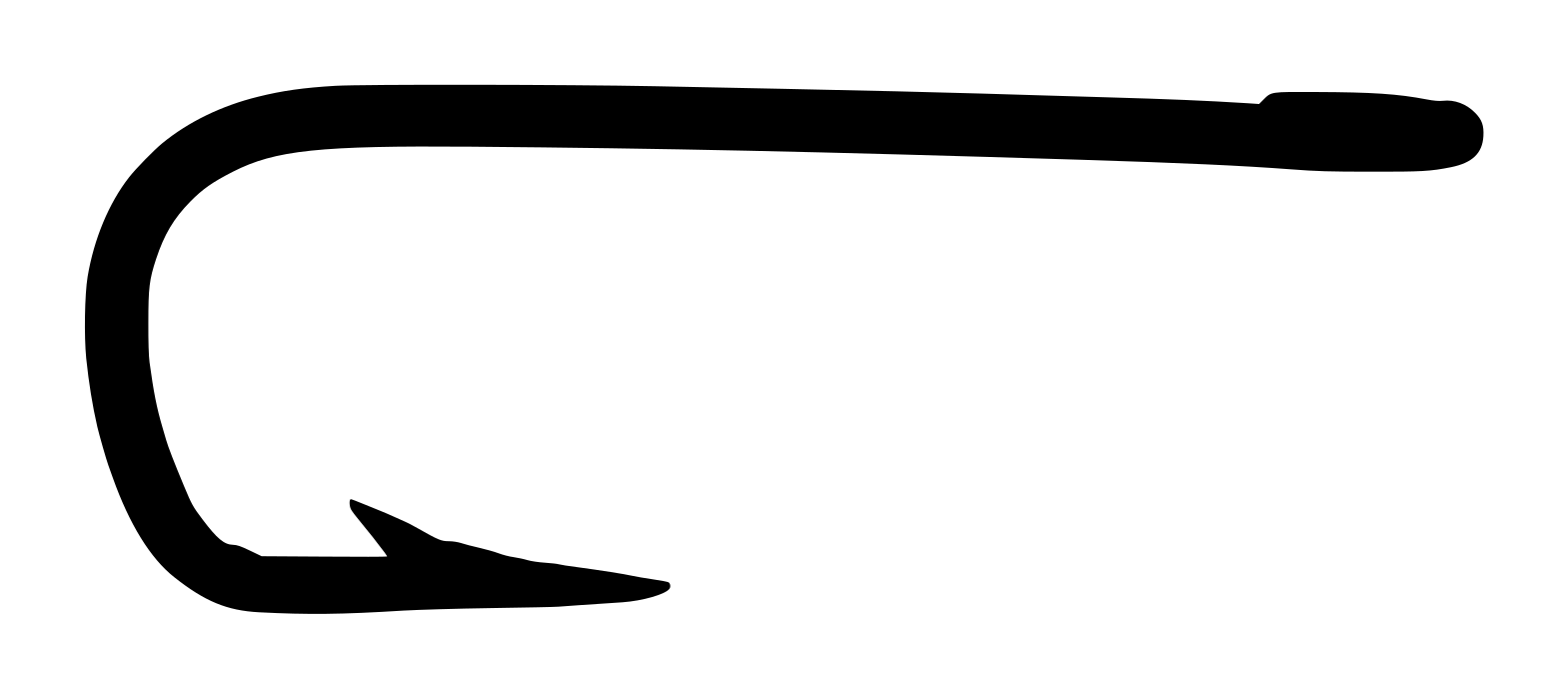
Mustad 3351 Sneck Hooks Original Package LabelOriginal green package label for Mustad 3351 Superior Sneck Hooks, size 4, tapered eye, bronzed finish, manufactured in Oslo, Norway.Open originalMustad 3351 Sneck Hook Profile DetailSide profile of a size 4 Mustad 3351 sneck hook showing the characteristic sneck bend and tapered eye construction.Open originalMustad 3351 Sneck Hook Full Length ViewFull-length view of the size 4 Mustad 3351 sneck hook displaying the complete bend profile and shank proportions.Open original
Technical profile
Turned Down Tapered Eye | Sneck | 1X Long | Heavy Wire | Superior Point | Bronzed
Eye
Tapered Eye, Turned DownTapered eye confirmed by packaging label text "T.d. tapered eye" V. Eye wire narrows progressively toward the loop opening, reducing bulk at the head — characteristic of tapered eye construction P. Eye sits in turned-down position typical of wet fly and nymph hooks. Taper angle and eye diameter appear standard for the wire gauge E.
Wire
Heavy (1X Heavy), Round
Shank
1X Long — Plain
Bend
Sneck, Standard gap, Offset / kirbedSneck bend presents tight, nearly closed loop with characteristic angular profile at the bottom. Point offset to left (kirbed) when viewed from above I. Bend depth relative to gap width is proportional to standard Sneck geometry E. Wire maintains uniform round profile through the turn with no visible forging or flattening of the bend itself P.
Point
Superior (near-straight inner taper)Barb is present (hook is barbed, not barbless). Barb sits close to the point, appearing as a short swept barb typical of Mustad manufacturing of this period PE.
Finish
Bronzed — Confirmed (stated on packaging)Bronzed finish confirmed by packaging label text and photographically verified as warm brown tone PV. Finish applied uniformly across visible specimen hooks showing no significant patina or corrosion. Wire texture visible beneath bronzed coating, indicating thin application method typical of Mustad production of this period. Color tone is warm brown-amber rather than cool grey, consistent with bronzed specification rather than blued or nickelled alternatives.
Box exterior shows toning of green label and cream cardboard with visible foxing on edges. Label edges slightly worn and curled. Box structure intact with lid closure sound. Interior condition not visible from external images. All visible 100-hook count present within box, displaying consistent bronzed finish free of corrosion or patina. Specimens show handling marks consistent with historical use or sampling from original stock.
The Sneck bend geometry presents a deliberately restricted gap — the distance between the point and the shank remains tighter than open-bend designs such as Sproat or Limerick. This narrowed gap concentrates hooking force on a smaller entry area, an advantage when fishing minute organisms (small nymphs, midge pupae) where hook penetration must occur with minimal leverage. The tight loop also presents a smaller profile in the water, reducing visual disturbance when approached quarry are particularly cautious.
The 1X Long shank classification extends the body-bearing surface by approximately 25% relative to a standard-shank Sneck, accommodating fuller nymph bodies and segmented abdomen construction without crowding materials at the eye. Heavy wire (1X Heavy) resists flexing during the hookset and provides strength for pushing through tough insect exoskeletons or weed. The turned-down tapered eye reduces head bulk, permitting neater, more economical head construction and reducing wind resistance.
The superior point classification indicates a near-straight inner taper from barb to tip, producing a geometry intermediate between the surgical precision of a knife-edge point and the sturdiness of a more-rounded spear. This taper geometry prioritizes reliable penetration while maintaining sufficient material thickness to resist point deformation under repeated casting stress or contact with streambed obstacles.
We have measurement for size 4. Know any others? Submit calipered measurements and we'll review and add them. Thank you!
Historical context
mustad
O. Mustad & Søn (Ø. Mustad & Søn) was established in Gjøvik, Norway, by Ole Mustad in 1832, later relocating manufacturing operations to Oslo. The company industrialized Norwegian hook production during a period when Redditch, England, held near-monopoly on high-volume hook manufacturing. Mustad’s strategy emphasized mechanization and economy of scale, positioning their hooks as affordable alternatives to hand-forged English craft hooks while maintaining acceptable quality standards.
By the early twentieth century, Mustad had secured substantial export markets across North America, Scandinavia, and Continental Europe. The Oslo factory incorporated then-modern wire-drawing and drop-forging equipment, permitting production runs in quantities that small English makers could not match. The company’s house brands — including Superior, Tandem, and Kamasutra — were marketed as tier-based offerings targeting different price points and specialist applications.
Era and Packaging Dating
No barcode present — strong pre-1974 indicator. Label printing method is offset with letterpress characteristics typical of early-to-mid twentieth century. Box construction (rigid cardboard with separate lid) and green label stock are consistent with 1920s–1960s production. Mustad's Superior line designation appears on early product packaging. "Made in Norway" printed statement (mandatory post-1920 for imports to English-speaking markets). Overall presentation and color reproduction methods place specimen solidly in pre-1970s manufacturing.
Design lineage and influence
The Sneck bend traces its parentage to eighteenth-century Irish and Scottish hook smiths, who developed the tight-loop geometry as a refinement of earlier Germanic bent-wire patterns. The design appeared in the catalogs of Redditch firms — particularly Allcock and Partridge — by the mid-nineteenth century, establishing the Sneck as a recognized standard alongside the Sproat, Limerick, and O’Shaughnessy forms.
Norwegian and Continental manufacturers adopted the Sneck during the late nineteenth and early twentieth centuries, recognizing its utility for the modest stream trout and grayling fisheries of Alpine and Scandinavian regions. Mustad’s inclusion of a Sneck in the Superior line represented an implicit endorsement of its proven utility — by the 1920s–1930s, the Sneck was no longer a novelty but an established working hook.
The introduction of modern tapered nymph patterns (particularly those associated with Frank Sawyer and the English chalk-stream tradition) in the mid-twentieth century accelerated demand for fine-wire Sneck hooks. However, as fly-fishing design evolved toward larger gaps and more aggressive point geometries in the latter twentieth century, the Sneck receded from mainstream catalogs, surviving primarily in traditional dressings and specialist markets.
Best matchRelated by Attribute
Computed automatically from catalog data — updated as new hooks are added.
Matches: Bend, Wire, Gap, Point, Finish +3 moreDiffers: Shank: 1X Long vs Standard; Eye: Tapered Eye vs Ball Eye; Eye Orient.: Turned Down vs Straight / Inline +1 more
Matches: Bend, Gap, Eye, Eye Orient., Finish +3 moreDiffers: Shank: 1X Long vs Standard; Wire: Heavy (1X Heavy) vs Standard; Point: Superior vs Standard / Spear +1 more
Rated 3.5/10. Common in established sizes (4–8) within loose-hook or standard-card formats; the manufacturer box variant raises appeal but remains subsidiary to the hook's base scarcity. Collector demand is modest and consists primarily of Mustad catalog completists and users of traditional wet-fly patterns. The 3351 competes with numerous other Mustad Superior offerings from the same period, fragmenting collector interest across a broad range.
Reference value
$6 – $18 USD estimate
Packaging condition
Good — moderate wear, legibleRecorded specimen
Positive factors: Original manufacturer box is rarer than card packaging and commands a premium. Period-appropriate Mustad branding and Oslo manufacturing address collector interest in early industrial European hook production. Warm bronzed finish and complete 100-hook count add authenticity. Pre-1974 production (no barcode) appeals to vintage-tackle specialists. The Sneck bend itself has sustained minor historical cult following among traditional wet-fly practitioners.
Limiting factors: Mustad’s industrial production volumes mean surviving examples remain abundant relative to Redditch craft-maker hooks. The Superior line was explicitly positioned as budget-tier, attracting less premium among collectors than Mustad’s named-collaborator designs. Size 4 is not particularly uncommon; smaller sizes (10–16) that command niche demand are less frequently encountered in original packaging. Heavy-wire, 1X Long geometry is specialized, limiting appeal to general collectors who seek standard-shank, standard-wire hooks.
Condition premium: Sealed or near-sealed boxes with untouched label and full hook count command the highest end of the value range. Opened boxes missing 5–10% of hooks fall to mid-range. Loose hooks or damaged packaging fall sharply below $3–5 per 100.
Packaging
Rigid manufacturer box (not card). Exterior: cream/tan cardboard with green printed label. Label features black ornamental border (repeated floral/asterisk pattern), black text. Printed content: "O. MUSTAD & SÖN / Manufacturers / OSLO - NORWAY" centered with key logo above. Lower section reads "Qual. 3351 / Superior / Mustad-Sneck Hooks / 100 / No. 4 / T.d. tapered eye, bronzed / Made in Norway." Label shows vintage offset printing with period letterpress elements. No barcode visible — strong pre-1974 indicator. Exterior shows moderate toning and minor edge wear consistent with age.
Market Value Notes
Low ($6): Box opened, approximately 90–95 hooks remaining, label toning, box edges worn but structure intact. High ($18): Sealed or near-sealed box, complete 100-hook count, label bright with minimal wear, box construction sound. Premium factors: Intact manufacturer box (not card) adds 3–4x multiplier over equivalent loose hooks. Complete hook count. Label condition and legibility. Original tissue or protective paper interior if present. Platforms: eBay UK and US (sporadic listings), UK tackle fair dealers, specialist Scandinavian fishing-tackle retailers. Confidence: E estimated — limited sold-listing data for this specific model; range derived from comparable Mustad Superior-line boxed offerings and applied proportionally to 100-hook quantity.
Where to Find
eBay (UK and US) occasionally stocks Mustad 3351 boxes; most are listed under generic "vintage fly hooks" searches rather than by model code. UK tackle fairs in Southern England (particularly those specializing in pre-1970s stock) feature Mustad boxed hooks with moderate frequency. Scandinavian dealers (especially Swedish and Norwegian online retailers) hold larger surviving stock due to domestic manufacturing and distribution. Specialist fly-fishing restoration dealers rarely emphasize Superior-line hooks, focusing instead on named collaborator or craft-maker models.
Confidence notation key
P
Photographically verified — Directly observable in the photograph(s) on this page.
V
Verified by documentation — Confirmed by manufacturer catalog, spec sheet, or published reference.
I
Inferred — A logical deduction from observable or documented evidence, not directly stated.
E
Estimated — An approximation based on visual comparison, proportional analysis, or limited data.
S
Speculative — A reasoned hypothesis that cannot be confirmed from available evidence.
Claims with no notation are confirmed by multiple independent sources. All photographs on garrenwood.com are taken on a measurement grid where each square equals 1/10 inch (0.1″ / 2.54 mm).