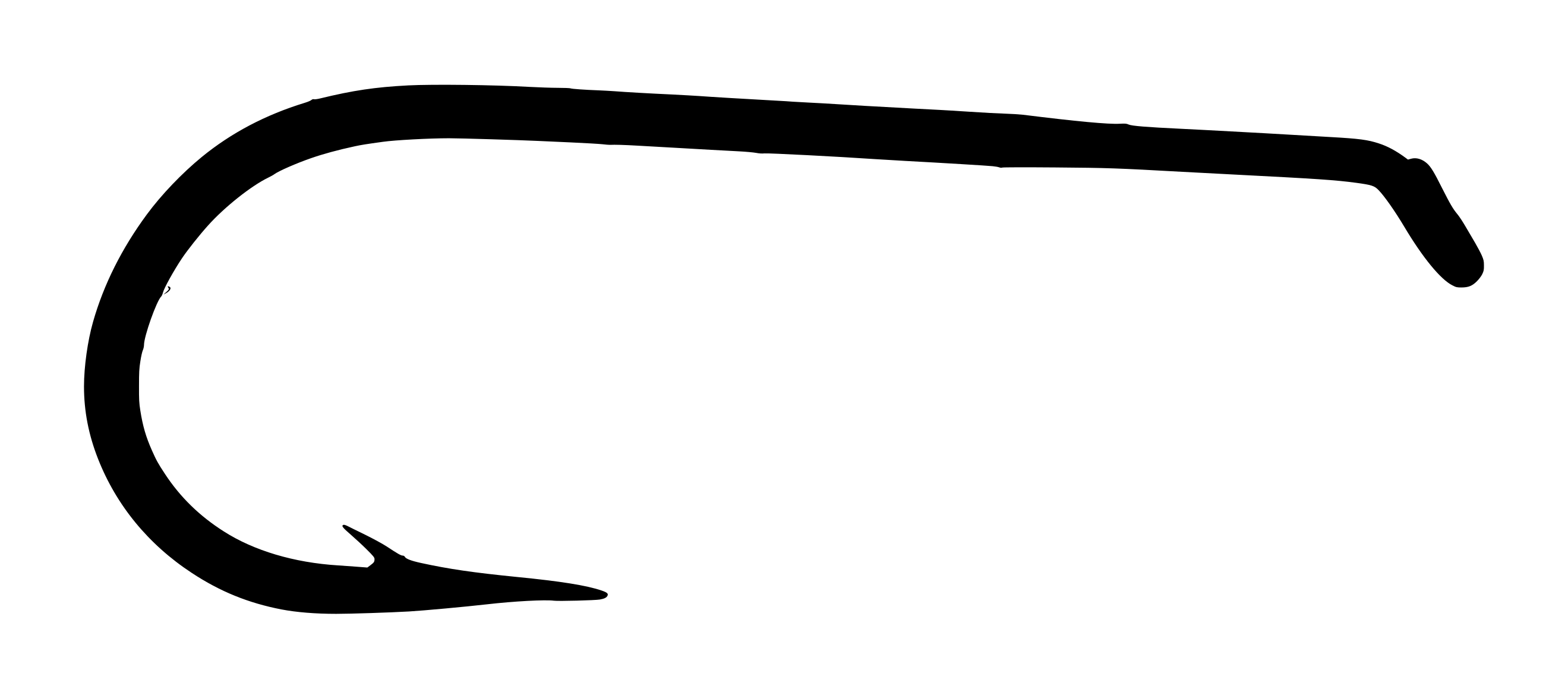
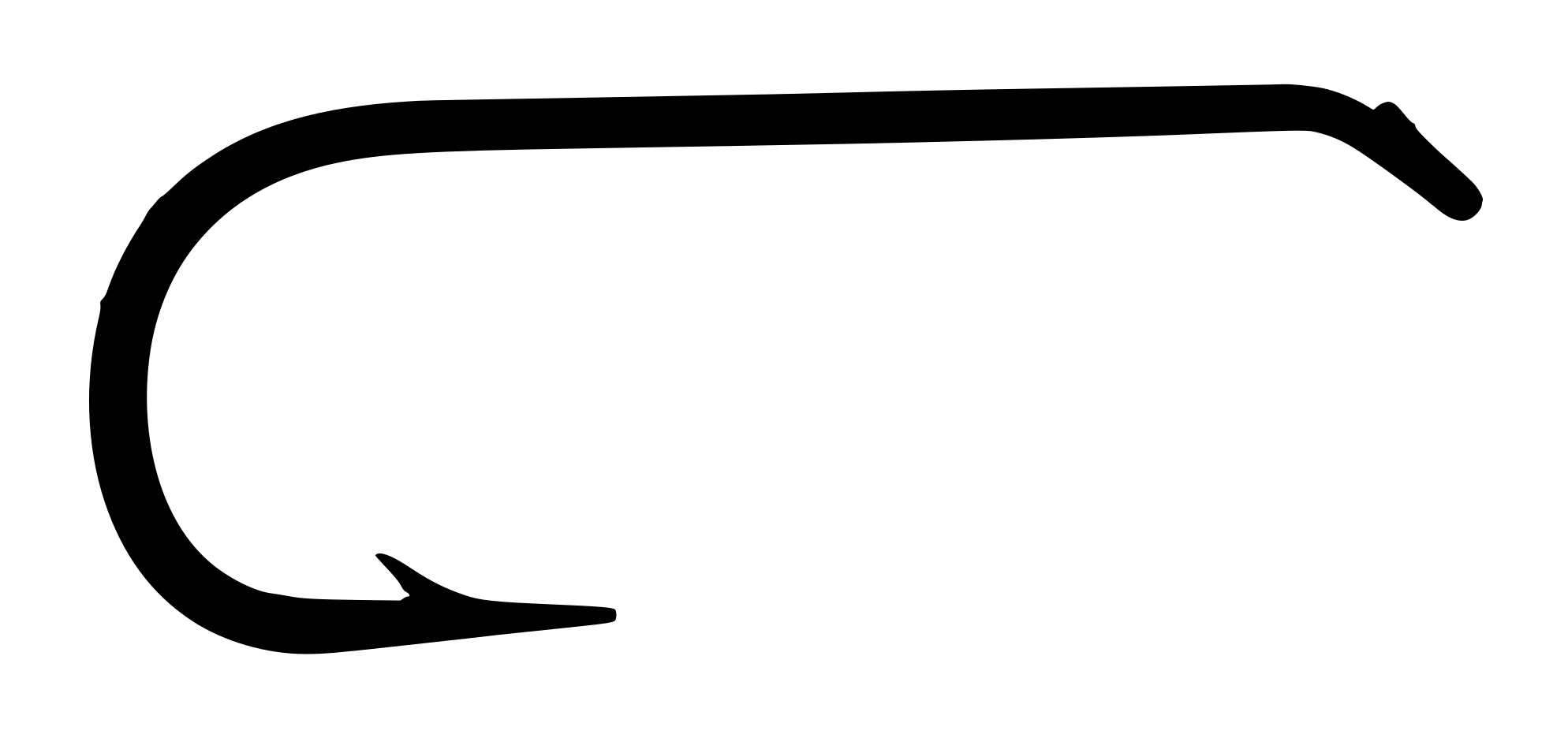
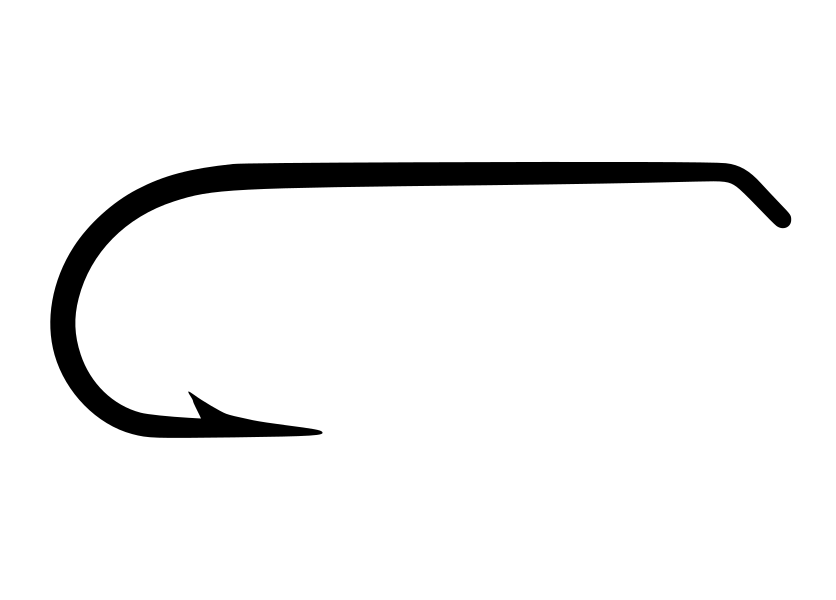
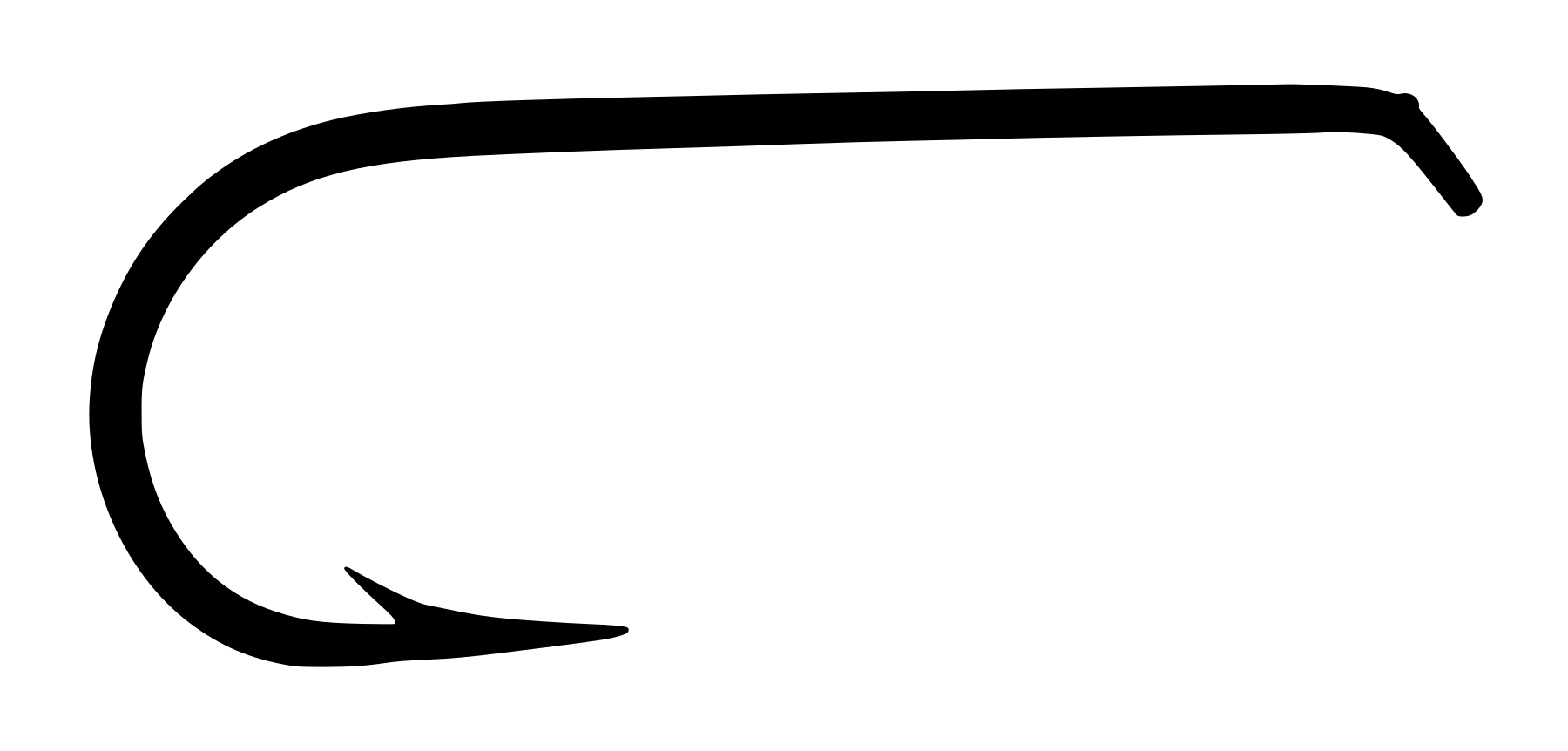
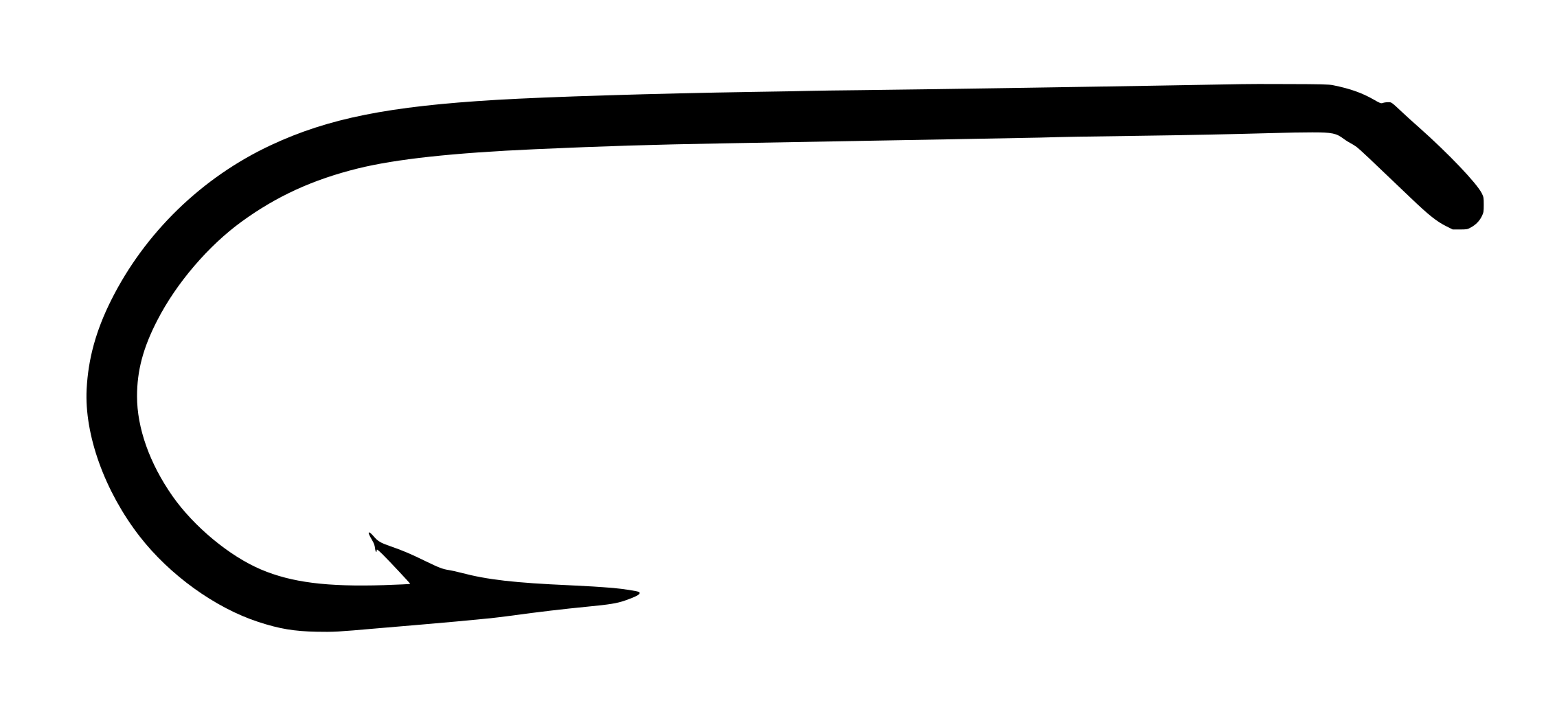
S. Allcock W173 TDE is a size 8 wet-fly and nymph hook manufactured in England during the period c. 1930–1960, featuring a perfect bend, turned-down tapered eye, standard wire gauge, and bronzed finish. The tapered eye design and long shank proportion made it a standard choice for traditional British trout-fly dressing, particularly among professional dressers who valued precision in eye construction and thread control. The W173 represents the core of Allcock’s catalog output for mid-century English fly tying, produced in high volume for both domestic and export markets.
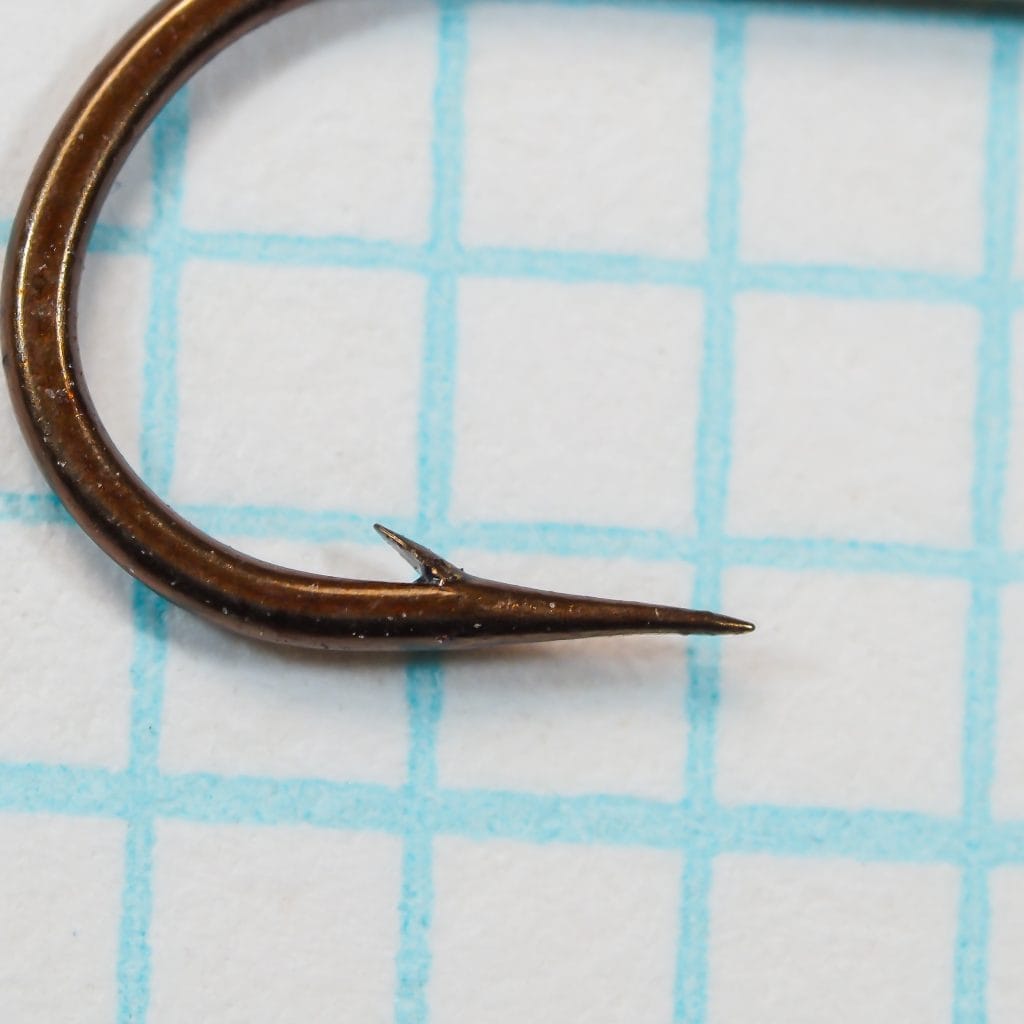
Close-up of the W173 point geometry showing the superior-point taper and small close-cut barb, with warm bronzed finish visible on round wire.
Photographic record
4 cataloged imagesSelect any record to load it above.
4 images shown
S. Allcock W173 Model Perfect Size 8 Point DetailClose-up of the W173 point geometry showing the superior-point taper and small close-cut barb, with warm bronzed finish visible on round wire.Open originalS. Allcock W173 Model Perfect Size 8 Full ProfileProfile view of the W173 showing the rounded Sproat bend, proportional gap, and turned-down tapered eye, with bronzed finish visible throughout.Open originalS. Allcock W173 Model Perfect Sales Card LabelOriginal sales card label showing the model designation, eye type, brand name, manufacturer information, and the complete hook arrangement (10×10 grid) on reverse.Open originalS. Allcock W173 Model Perfect Card Label DetailClose-up of the sales card label showing clear letterpress text, Allcock stag trademark, and full manufacturer and location information.Open original
Technical profile
TDE | Perfect Bend | Spear Point | Bronzed Finish
Eye
Tapered Eye, Turned DownTapered eye construction confirmed by researcher physical examination. Eye taper is smooth and gradual, reducing from standard wire diameter to a fine point at the eye opening. This design facilitates both loop-eye knots and direct line attachment. Turned-down angle places eye slightly below the shank plane, typical of wet-fly and trout-fly hooks of the era. P
Wire
Standard, Round
Shank
1X Long — Plain
Bend
perfect, Standard gapPerfect bend
Point
Standard / SpearBarb is small and close-cut, positioned immediately below the point taper. Barb angle is swept slightly rearward, typical of superior-point geometry. Barb does not protrude dramatically and maintains the streamlined profile necessary for delicate fly presentation. P
Finish
Bronzed — Confirmed (stated on packaging)Bronzed finish confirmed on packaging label. Warm brown tone visible in specimen photograph under direct light, with slight steel grain texture showing through the coating. Finish is uniform across the wire with no pitting or rust bloom. Warm tone distinguishes this bronzed hook from silvery nickelled or blued alternatives. VP
Specimen hook is bright and clean with no corrosion, verdigris, or patina development. Original sales card packaging is in excellent condition with bright pink cardstock, clear black letterpress text, and no tears, fading, or water damage. All 100 hooks are present on the card.
This is a representative example of mid-20th-century British wet-fly hook production. No exceptional records are set; the W173 is well-documented in surviving Allcock catalogs and is one of hundreds of similarly standard hooks in the garrenwood.com database.
Own this hook? Help us measure it.
We have measurement for size 8. Know any others? Submit calipered measurements and we'll review and add them. Thank you!
The ‘Model Perfect’ line was Allcock’s flagship range of general-purpose fishing hooks. Unlike specialty patterns bearing designer names or regional traditions (e.g., ‘Partridge O’Shaughnessy’), Model Perfect hooks were marketed as universally suitable, reliable workhorses available in dozens of sizes and eye/shank combinations. The W173 is a wet-fly variant of the Model Perfect range, designed for soft-finned fish (trout, grayling) and paired with delicate fly patterns.
The W designation appears consistently in Allcock’s numbering system for wet-fly hooks, with variations in eye type (straight eye, turned-down eye, ball eye) denoted by suffixes or parallel model numbers. The ‘173’ suggests a position in a systematic catalog arrangement, though the exact organizational logic is not fully documented in surviving sources. Model Perfect hooks remained in production across several decades, with packaging formats and finishes evolving to match contemporary manufacturing standards and marketing trends.
Era and Packaging Dating
Packaging evidence: pink/mauve sales card with black letterpress printing is typical of S. Allcock pre-war through mid-1960s format. No barcode (pre-1974 strong indicator). Logo style shows the Allcock trademark stag — consistent with this era. Paper stock is thin, hand-finished card, typical of 1930s-1950s. Size notation as '100' (not modern size sequence) and 'Rustproof' claim (common pre-1970) both support mid-20th century. No postal code format on card; company name in all capitals with full 'Ltd.' designation typical of 1930-1960 period. TDE tapered eye construction was standard for British wet-fly patterns from 1920s through 1960s.
The Pink Card Revolution
The pink/mauve cardstock color of Allcock sales cards was not arbitrary — it was a deliberate branding choice. In the mid-20th century, Allcock used this distinctive color to make their cards stand out on tackle shop shelves alongside the white, yellow, and blue cards of competitors like Partridge and Milward. The color became so iconic that experienced anglers and tackle dealers could identify an Allcock card from across a shop counter. When Allcock was eventually absorbed into larger manufacturing groups, the loss of this distinctive packaging aesthetic was mourned by traditionalists as the end of an era of Redditch hook manufacturing independence.
Design lineage and influence
The Sproat bend itself was developed in Scotland in the mid-19th century as a refinement of earlier round-bend designs. By the early 1900s, it was adopted by Redditch manufacturers as the standard wet-fly hook bend, eventually becoming so dominant that generations of anglers equated ‘Sproat’ with ‘wet fly.’ The W173 inherits this tradition directly.
Competing designs from the same era include Partridge’s ‘L3A’ (still in production), Harrison Bartleet’s various wet-fly models, and Mustad’s ‘C49S’ line. The tapered eye design reflects a broader shift in the 1920s–1940s toward lighter, more refined fly presentation — earlier hooks often featured ball eyes or straight eyes that added bulk to the finished fly.
The W173 has no documented downstream influence on modern designs; it represents a stable, mature point in hook evolution rather than an innovation. Its legacy is in the millions of trout caught on its design and in the habits of traditional fly tyers who still prefer tapered eyes and Sproat bends for their delicate, precise work.
Best matchRelated by Attribute
Computed automatically from catalog data — updated as new hooks are added.
The W173 is designed for traditional wet-fly fishing, particularly on small to medium streams and rivers. Size 8 is suited to medium-sized nymphs, soft hackles, and small wet-fly patterns imitating aquatic insects in emergent and post-emergence phases. The tapered eye and moderate gap make this size ideal for patterns using single-strand floss or silk dubbing bodies. Historically, hooks like the W173 were paired with classic patterns such as Greenwell’s Glory, Partridge and Orange, and March Brown — patterns that remain in use among traditional fly tyers.
Secondary Applications
Light bait fishing, small live-insect rigs, grasshopper imitations on dry-fly rigs
Classic Fly Patterns
Greenwell's Glory, March Brown, Partridge and Orange, Soft Hackle variations, Small Nymphs
Redditch-heritage wet-fly hook (post-Mustad acquisition), tapered eye, traditional bend geometry
Mustad C49S
Good
Mustad wet-fly hook, similar size range, though Norwegian manufacture and different eye taper profile
Collector notes
Rated 6.0/10 — common in larger sizes but becomes genuinely uncommon in size 8 and smaller. Model Perfect W173 has modest collector appeal among Redditch specialists and traditional wet-fly tyers; collecting demand is casual rather than passionate. Complete original sales card in excellent condition adds meaningful premium over loose hooks.
Reference value
$8 – $22 USD estimate
Packaging condition
Excellent — minimal wearRecorded specimen
Packaging format
GW-ALLCOCK-CARD-MP-01Catalog code
The W173 is a mass-produced hook with no special design pedigree, no named collaborator, and no functional innovation. It is a standard-issue wet-fly hook competing against hundreds of similar offerings from Partridge, Milward, Harrison, and other Redditch makers. This limits collectability to a baseline of historical interest and Redditch manufacturing nostalgia.
What moderately increases appeal: (1) Complete original 100-hook sales card in excellent condition — pink cardstock is iconic of Allcock’s mid-20th-century aesthetic; (2) Bronzed finish, which is warmer and more visually distinctive than blued or nickelled alternatives; (3) Size 8, which represents a ‘sweet spot’ for traditional trout flies and is more useful to working fly tyers than very small or very large sizes; (4) Tapered eye construction, which is preferred by specialists in traditional fly tying even though modern hooks dominate current practice.
Limiting factors: (1) No barcode or postal code means pre-1974, but this is merely ordinary age — not rarity; (2) Allcock hooks, while respected, never achieved the cult following of Partridge or the industrial ubiquity of Mustad; (3) Loose hooks have minimal value (£1–3 each); complete carded sets are necessary for meaningful premiums; (4) Condition of the card is critical — torn, faded, or incomplete cards drop value by 40–60%; (5) Smaller size variants (12, 14, 16) are genuinely scarce but less desirable to collectors who prefer larger-scale display.
Packaging
Sales card format — pink/mauve cardstock, approximately 3.5" × 2.25" (89 × 57 mm). Black letterpress printing on both sides. Obverse features: Allcock stag trademark (upper left), model code 'No. W173' (center top), eye type designation 'TDE' (center), phrase 'Tapered Eye' (below designation), brand name 'Model Perfect' in large serif font (center), product claim 'Rustproof' (below brand), manufacturer line 'S. ALLCOCK & CO., LTD.' (lower center), location 'REDDITCH, ENGLAND' (below manufacturer), 'SIZE' label (lower left), quantity marking '100' (lower right). Reverse shows individual hook outlines arranged in 10 rows × 10 columns, with hooks mounted on thin wire staples or thread loops. No barcode, no postal code, no phone number — all consistent with 1930–1960 era. Paper stock is thin, cream-toned, with slight yellowing from age. Letterpress impression shows good ink saturation with no printing defects.
Market Value Notes
Low ($8): Good condition — sales card opened, all or most hooks present, light wear to card edges, finish bright
High ($22): Excellent/Mint condition — sealed or near-sealed card, complete count of 100 hooks, no fading or creasing, pristine finish
Premium factors: Complete hook count, original sealed packaging, bright pink cardstock with clear text, size 8 (not too common), bronzed finish distinction
Platforms: eBay UK, eBay US, specialist tackle dealers, UK vintage tackle fairs
Confidence: E estimated — limited transaction data; this model rarely appears on eBay sold listings; values derived from comparable Allcock Model Perfect cards and Redditch wet-fly hook market observation
Where to Find
eBay UK and eBay US occasionally; specialist Redditch hook dealers (UK-based); UK tackle antique fairs in Midlands and South; online dealer inventory varies seasonally. Complete cards appear 2–4 times annually; loose hooks more regularly. Search terms: 'Allcock W173', 'Model Perfect W173', 'Allcock wet fly hook'.
Preservation
Storage and Preservation
Store the original sales card in a cool, dry environment away from moisture and direct sunlight. The pink cardstock is prone to fading if exposed to prolonged UV light; acid-free archival storage boxes are ideal for long-term preservation. The bronzed finish is susceptible to patina development with humidity exposure — many collectors view slight patina as desirable and indicative of age, but active corrosion should be prevented by maintaining 40–50% relative humidity.
Keep hooks on the original card rather than removing them. The cardstock itself is part of the collectible value, and loose hooks are worth significantly less. If any hooks are missing from the card, do not attempt to replace them with modern substitutes, as this will reduce the historical integrity. Avoid contact with other metals (steel, iron) that could cause galvanic corrosion. Do not clean the bronzed finish with abrasive methods; a soft dry brush is sufficient for dust removal.
Handle the card by the edges only. The letterpress ink is durable but can be smudged with fingerprints. Store flat rather than upright to prevent bending of the cardstock. Periodic inspection (annually) is recommended to monitor for early signs of humidity damage or insect activity in storage areas.
Primary Source
Packaging Claims and Manufacturing Standards
Source: S. Allcock & Co., Ltd. Model Perfect W173 Sales Card, Redditch, England, c. 1930–1960
The label prominently features the claim ‘Rustproof,’ which reflects manufacturing philosophy of the 1930s–1960s era. This claim does not mean the hooks are stainless steel (which was not commonly used for fishing hooks in this period due to brittleness and cost), but rather that the bronzed finish provides corrosion resistance superior to bare steel or poor-quality finishes. Bronzed hooks, when properly finished and stored, develop a protective patina oxide layer that slows further corrosion — a property well-understood by Redditch manufacturers and a key selling point over cheaper alternatives.
The designation ‘TDE’ (Turned-Down Eye) and ‘Tapered Eye’ are explicit manufacturing specifications, not marketing hyperbole. This level of precision in labeling reflects Allcock’s commitment to matching hook to application — wet-fly fishers could confidently select by eye type, size, and bend family without guesswork. The ‘Model Perfect’ brand name itself suggests versatility (‘perfect’ for many uses) rather than specialty positioning, consistent with the W173’s role as a workhorse hook rather than a rare or innovative design.
The size notation ‘100’ refers to quantity per package, not hook size. This indicates a bulk sales card suitable for tackle dealers or serious fly tyers. Single cards of 100 hooks at typical 1950s retail prices (roughly 2–4 shillings) represented excellent value and was the standard format for professional and semi-professional users.
Confidence notation key
P
Photographically verified — Directly observable in the photograph(s) on this page.
V
Verified by documentation — Confirmed by manufacturer catalog, spec sheet, or published reference.
I
Inferred — A logical deduction from observable or documented evidence, not directly stated.
E
Estimated — An approximation based on visual comparison, proportional analysis, or limited data.
S
Speculative — A reasoned hypothesis that cannot be confirmed from available evidence.
Unnotated claims are the compiler’s synthesis; see Sources. All photographs on garrenwood.com are taken on a measurement grid where each square equals 1/10 inch (0.1″ / 2.54 mm).