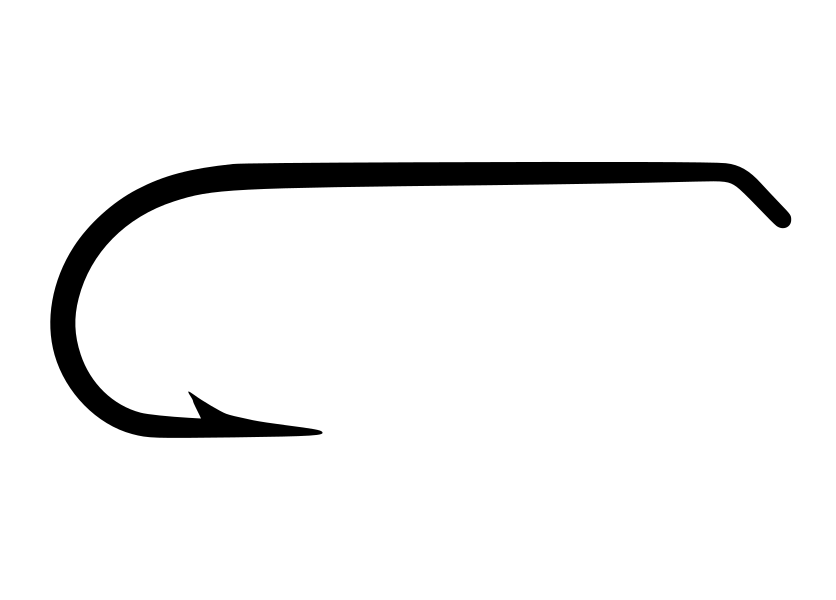
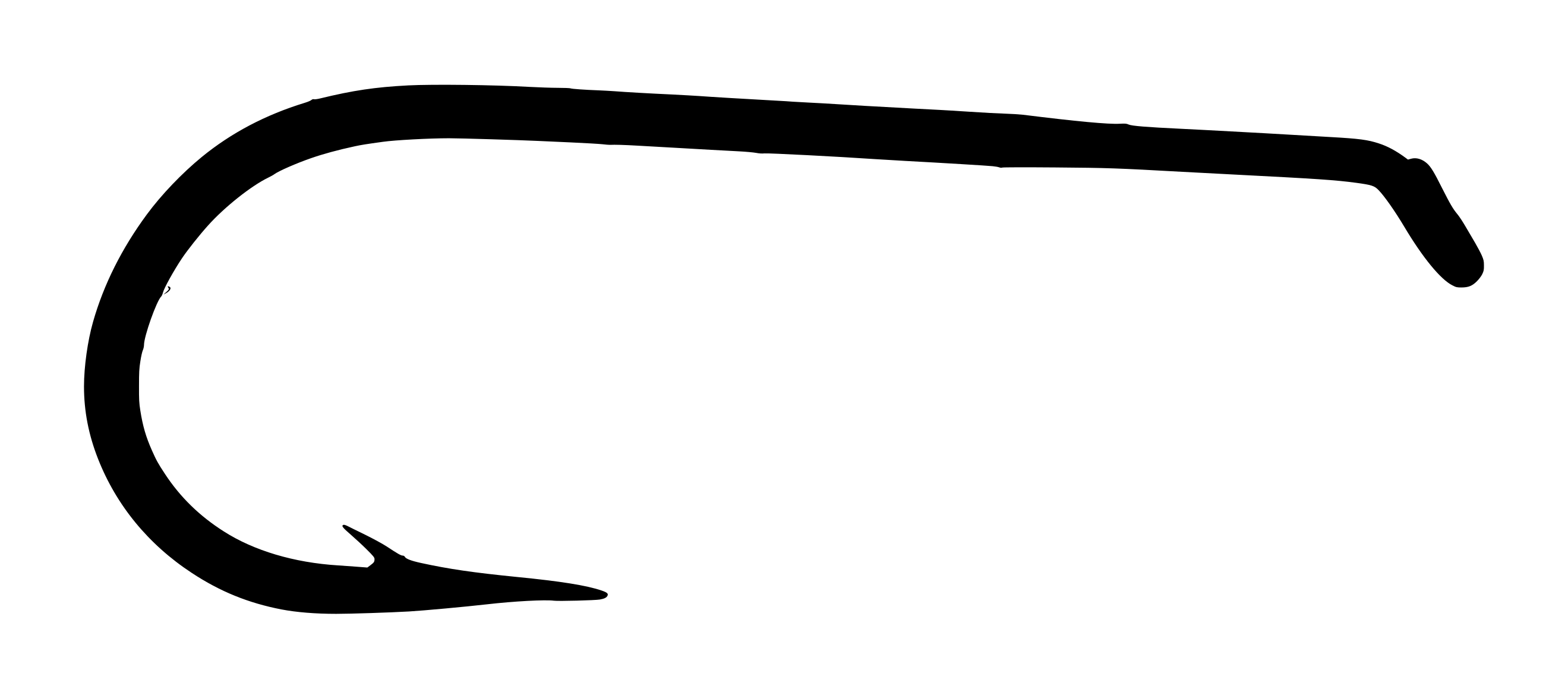
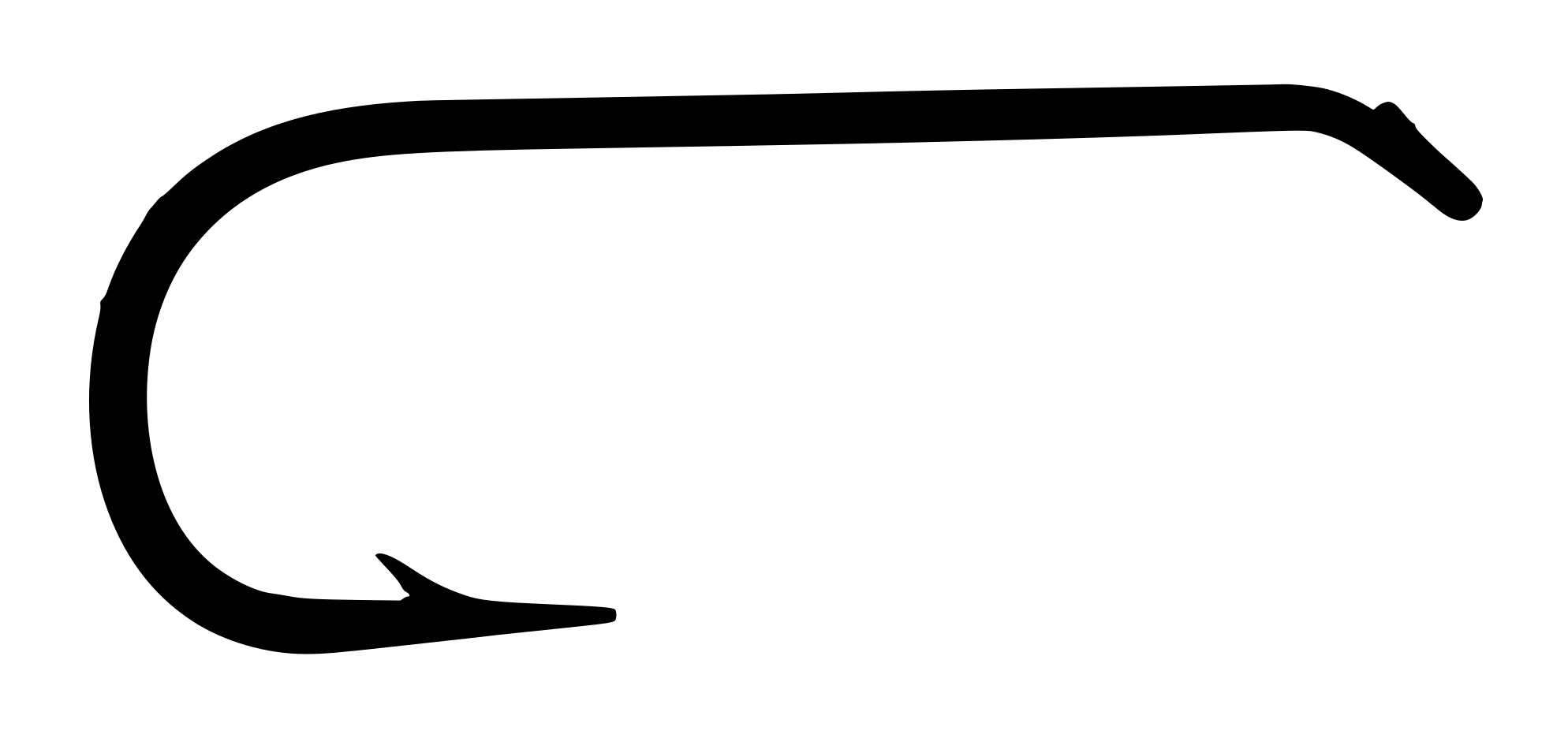
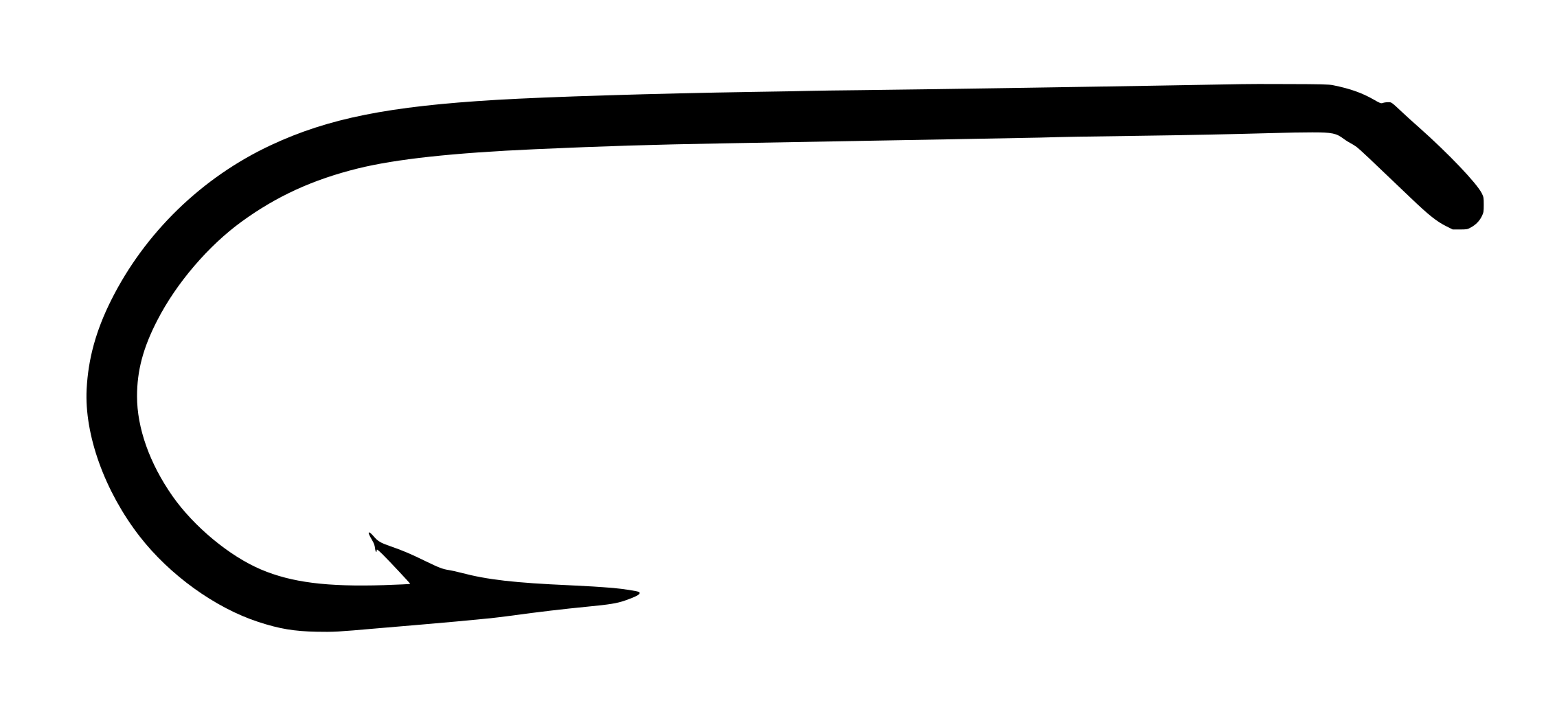
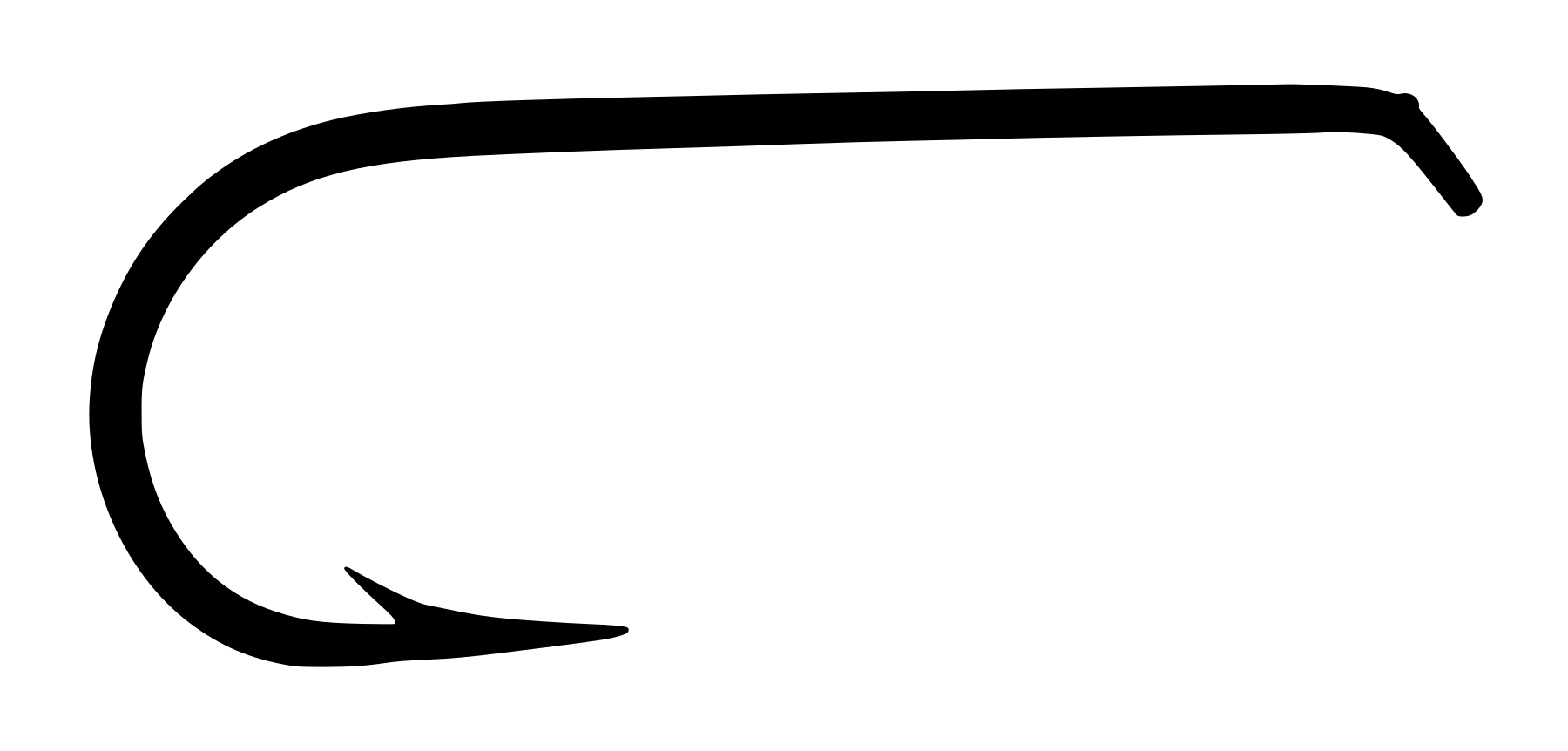
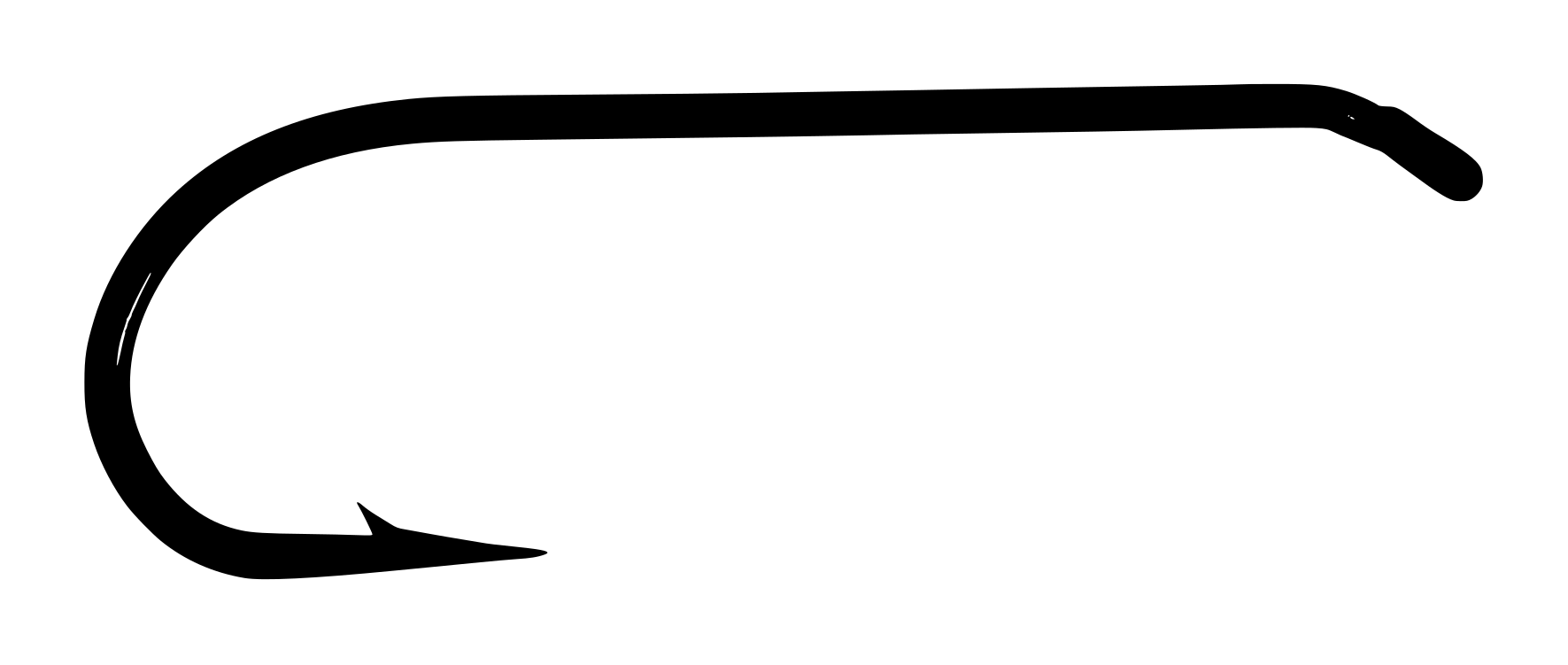
The Allcock W175 Model Perfect is a tapered-eye Sproat bend hook manufactured by S. Allcock & Co., Ltd. of Redditch, England, during the interwar period (c. 1920s-1940s). This fine-wire hook was designed for dry fly and light wet fly fishing, primarily in trout streams across the United States, Ireland, Canada, and other English-speaking markets.
The W175 is distinguished by its combination of a nearly-perpendicular tapered eye (turned-down tapered construction), rounded Sproat bend, and consistently applied bronzed finish. In size No. 10, the hook measures approximately 0.65″ (16.5 mm) overall with a 0.21″ (5.3 mm) gap — proportions typical of the Model Perfect line. The fine wire gauge (approximately 0.022″-0.024″) and hollow point geometry indicate a hook intended for delicate presentations and small fly dressing.
Era evidence is strong and multi-faceted: the pink laid-paper envelope, letterpress printing style, absence of any barcode or modern postal format, and the Allcock lion trademark all place this hook firmly in the interwar Redditch craft tradition. The Model Perfect designation represents a significant product line within Allcock’s catalog, marketed as an improvement over earlier round-eye designs for precision fly work.
For collectors, the W175 Model Perfect represents an important example of English tackle craftsmanship at a moment when Redditch manufacturers were refining production standards and international distribution networks. Complete original packaging in this condition is a significant asset to the value and historical authenticity of any specimen.
Side profile of Allcock W175 tapered eye hook, size No. 10, showing the characteristic bronzed finish and rounded Sproat bend on measurement grid.
Photographic record
2 cataloged imagesSelect any record to load it above.
2 images shown
Allcock W175 No. 10 Bronzed Sproat BendSide profile of Allcock W175 tapered eye hook, size No. 10, showing the characteristic bronzed finish and rounded Sproat bend on measurement grid.Open originalAllcock W175 Model Perfect Original PackagingOriginal pink Allcock envelope for W175 Model Perfect hooks, quantity 100, size 1X Fine. Shows period letterpress printing and lion trademark indicating Redditch manufacture.Open original
Technical profile
Eye
Tapered Eye, Turned Down
Wire
Fine (1X Fine), Round
Shank
1X Long — Plain
Bend
perfect, Standard gap
Point
Hollow Point (concave inner face)
Finish
Bronzed — Confirmed (stated on packaging)
The W175 Model Perfect combines three technical features that define its functional purpose: the tapered eye, the Sproat bend, and the fine wire gauge.
The turned-down tapered eye consists of a wire loop formed by tapering the eye wire smoothly from the hook shank diameter down to a finer point, then bending it downward at a near-perpendicular angle. This construction is more time-consuming to produce than a simple ball eye, requiring individual shaping at the forge and careful bending. The advantage is a smaller, more refined eye opening that reduces bulk in the fly head and allows for neater thread wrapping and fly finishing.
The Sproat bend is characterized by a rounded bottom curve with no angular points or offset. This geometry distributes stress evenly around the bend and provides excellent hold and penetration in the mouth of a fish — important for dry flies where the hook must set quickly and hold reliably during the fight. The rounded profile also turns smoothly in the water, avoiding the “catching” that can occur with sharper bends.
The hollow point (concave inner face with inward curve) contributes to penetration and hold. The inward curve creates a very fine edge along the point apex, allowing the hook to pierce fine tippet material and delicate fish tissue with minimal force. This geometry was preferred for dry fly work, where a delicate presentation and quick penetration were essential.
The fine wire gauge (approximately 0.022″-0.024″) keeps overall hook weight minimal, reducing the amount of material needed to keep a small fly afloat and making the hook responsive to fine tippet materials (3X to 5X nylon or gut). Fine wire is also easier to bend and shape during fly tying, a practical advantage for the hand-dressing techniques of the interwar period.
The Model Perfect line was Allcock’s branded series of hooks emphasizing refined eye construction and precision forging, introduced in the early 20th century. The designation “Model Perfect” was used across multiple bend families (Sproat, round-bend, and others) and wire gauges, with numeric model codes (W175, and others) assigned to specific combinations of eye type, bend, and gauge.
The tapered eye represented a key design innovation for this series. Unlike the round ball eye of earlier designs, the turned-down tapered eye offered several practical advantages: a smaller, more refined attachment point suitable for delicate fly dressing, reduced eye bulk that allowed for closer hook spacing in fly patterns, and what Redditch makers considered a more elegant and “perfect” appearance. The tapered eye became associated with precision fly work and dry fly fishing in particular.
The Model Perfect line remained in production throughout the interwar period and into the mid-20th century. Within the series, size ranges and wire gauges were carefully differentiated: the 1X Fine designation on the W175 packaging indicates this particular hook was pitched at fly fishermen requiring extra-fine wire for small, delicate flies. The series was gradually superseded by later Allcock designs and competing products from Mustad and other manufacturers as hook manufacturing industrialized in the post-war period.
Era and Packaging Dating
Pink envelope with printed packaging style consistent with Allcock interwar period. Letterpress printing on laid paper stock, typical of 1920s-1930s British tackle manufacture. Model Perfect designation and tapered eye construction represent Redditch tradition at peak. No barcode present. Trade address 'Allcocks, Redditch, England' and stylized Allcock lion mark indicate genuine period manufacture. Absence of zip codes, war-era paper rationing indicators, or modern postal formats suggests pre-1940s production.
The Redditch Golden Age
The Redditch tradition of English hook manufacturing dates to the late 18th century and reached its height in the early 20th century, when the town produced over 90% of the world's fishing hooks. S. Allcock & Co., alongside competitors like Partridge and H. Milward & Sons, employed hundreds of skilled craftspeople — many of them women — who performed individual forging, eye-bending, barb-cutting, and finishing operations by hand or with semi-mechanized tools. The tapered eye was considered a mark of superior craftsmanship, requiring additional skilled labor at the forge. During the 1920s-1930s, Redditch makers actively competed for international markets, particularly in North America, by promoting their hooks through catalogs, trade shows, and direct correspondence with fishing clubs and fly-tying guilds. By the 1960s, industrial competition from Norway (Mustad) and Japan had largely displaced the Redditch makers, though a few specialist producers continue to operate there today.
Design lineage and influence
The tapered eye on hooks evolved gradually in the late 19th and early 20th centuries as a refinement of the earlier straight ring eye and round ball eye. English makers, particularly those in Redditch, pioneered the tapered-eye construction as a way to reduce bulk in the fly head while maintaining structural integrity. The taper allows the eye wire to transition smoothly from the hook shank diameter down to a smaller, more elegant finishing point.
The W175 Model Perfect represents a mature refinement of this design tradition, arriving at a point when Redditch makers had standardized the tapered-eye process and integrated it into multiple product lines. Competing designs from the same era include Partridge’s tapered-eye hooks (notably the Cahill line) and H. Milward’s refined eyes. Norwegian Mustad, by contrast, favored the ball eye and straight ring designs, which were faster and cheaper to produce at scale.
Downstream, the tapered eye fell out of favor in the post-war period as industrialized production favored simpler, faster eye constructions (ball eyes and welded loops). Modern fly hooks rarely use the tapered eye; it is now considered a hallmark of vintage Redditch craftsmanship and is actively sought by collectors and traditionalist fly tyers. A few contemporary makers (notably Partridge of Redditch, which continues under new ownership) have reintroduced tapered-eye designs to meet collector demand and the preferences of fly-fishing traditionalists.
Best matchRelated by Attribute
Computed automatically from catalog data — updated as new hooks are added.
Matches: Bend, Wire, Gap, Eye, Eye Orient. +5 moreDiffers: Shank: 1X Long vs Standard; Point: Hollow Point vs Standard / Spear; Forging: Round vs Forged +2 more
Named patterns specifically associated with this hook. Leave blank if none formally documented. Do not speculate — only include patterns with a confirmed association.
Modern Equivalents
Hook
Match Quality
Notes
Tiemco TMC 100
Good
Modern dry fly hook, tapered eye, similar proportions, fine wire. Not identical but closest contemporary equivalent.
Partridge M45 (if still in production)
Good
Redditch maker continuing tapered-eye tradition; historical continuity but different bend profile.
Mustad 94840
Moderate
Mustad dry fly hook with ball eye and similar wire gauge; lacks the tapered eye refinement of W175.
Collector notes
Rated 4.5/10 — Allcock tapered-eye hooks in interwar packaging are uncommon but not rare; scarcity increases substantially for original sealed envelopes and smaller sizes. Collector demand is moderate among Redditch specialists and interwar tackle historians. The W175 Model Perfect is less well-known than Partridge or Milward contemporaries, which moderates the rating.
Reference value
$12 – $28 USD estimate
Packaging condition
Very Good — light wear, fully legibleRecorded specimen
Packaging format
GW-ALLCOCK-ENV-01Catalog code
Positive Factors: The W175 Model Perfect represents genuine Redditch craft-era manufacture with excellent documentation (original pink envelope with complete printed specifications). Interwar dating (1920s-1940s) and named product line carry historical significance. Tapered eye construction is refined and less common than ball-eye or round-bend hooks from the same era. Complete original packaging adds substantial premium — sealed or near-sealed envelopes are increasingly scarce. The bronzed finish is warm and historically authentic, showing appropriate patination consistent with age.
Limiting Factors: Allcock, while respected, is less sought-after than Partridge of Redditch or H. Milward & Sons among advanced collectors. Production volumes were significant — this was a commercial product line, not a rare specialty design. Size No. 10 is common within the range; larger sizes (2/0-5/0) or very small sizes (16-20) command higher premiums. The Model Perfect line itself lacked the cachet of some competing contemporary series (e.g., Partridge’s “Bartleet” or “Cahill”). Single hooks or small quantities on incomplete cards are readily found; complete original cards (100 hooks) are scarcer.
Most Desirable Variants: Sealed or intact original envelope in excellent condition. Complete count (all 100 hooks present). Smaller sizes (14, 16, 18) within the tapered-eye line are less common than size 10-12. Original tissue or wrapper inside envelope (rarely observed). Allcock boxes (fewer survived than envelopes) containing this model.
Condition Premium: Packaging condition is critical: sealed envelope or near-sealed (original flap intact, minimal toning) can command 50-100% premium over opened card with worn packaging. Hook condition is less critical (rust or patina on bronzed finish is acceptable and often expected) but bright, unoxidized hooks are preferred. Missing hooks reduce value proportionally (each hook ~1-2% of card value).
Packaging
Pink laid-paper envelope with printed Allcock lion trademark and model information. Letterpress printing in red and black ink. Dimensions approximately 2.5" × 1.5" (63 × 38 mm). Text reads: 'W175 / Qty. 100 / ALLCOCKS / TAPERED EYE / MODEL PERFECT / USED: U.S.A. / IUNA, CANADA [incomplete] / MUSHROOM HOOKS / 1X FINE / ALLCOCKS, REDDITCH, ENGLAND'. Paper shows age toning and light creasing consistent with period storage. Original envelope construction with flap closure and printed border frame intact.
Market Value Notes
Low ($12): Good condition — opened envelope, all or most hooks present (95+ count), packaging worn but intact, no significant staining. High ($28): Excellent/Mint condition — sealed or near-sealed envelope, complete count verified, minimal toning, hooks bright or appropriately patinated, original paper/tissue intact. Premium factors: sealed envelope, complete 100-count, small sizes (14-18), original tissue wrapper, Redditch packaging with pristine printing. Platforms: eBay UK (primary market for Allcock interwar hooks), specialist tackle dealers, annual Redditch collectible fairs. Confidence: E estimated — limited market data for this specific model; values derived from comparable Allcock tapered-eye cards and interwar Redditch tackle pricing. Single hooks from incomplete cards typically $0.50-2.00 each.
Where to Find
eBay UK search for 'Allcock W175' or 'Allcock Model Perfect'; eBay US occasionally lists. Specialist dealers in Redditch memorabilia and vintage English tackle (UK regional tackle shows). Online forums: Classic Tackle Collectors Facebook group. Annual Redditch heritage fairs and tackle auctions. Significantly rarer in North American markets; US eBay instances are infrequent.
Collector's Identification Tips
Allcock W175 hooks are identified by the model code “W175″ printed on the original pink envelope packaging. The tapered eye construction is immediately recognizable compared to the ball eye or straight ring eyes of competing hooks. The bronzed finish is warm brown with visible steel grain, distinct from the cool silver-grey of nickelled or tinned finishes. The Sproat bend profile — rounded at the bottom with no offset or angular points — is characteristic of this family. Size No. 10 is a relatively small, delicate hook; the overall length should measure approximately 0.65″ (16.5 mm) and gap approximately 0.21” (5.3 mm). Original packaging in pink laid-paper stock with letterpress printing is a strong authenticator; reproduction or later-era Allcock packaging uses different paper stocks and printing methods.
Preservation
Storage and Preservation
Store the W175 envelope in a cool, dry environment away from direct sunlight and humidity. The bronzed finish naturally develops a patina over time; this darkening is a signature of age and authenticity, and collectors generally view it as desirable. However, exposure to high humidity can accelerate oxidation and corrosion. Keep the original pink envelope closed or loosely wrapped to protect hooks from dust while maintaining air circulation.
If the envelope is sealed or nearly sealed, do not open it unless absolutely necessary for documentation purposes. The integrity of the original packaging is a major value driver. Store hooks on the card or in the envelope rather than loose, which prevents damage to the barbs and eye, and preserves any original tissue or paper wrapper inside.
Avoid contact with other metals, particularly ferrous materials or copper-based alloys, which can create galvanic corrosion on the steel. Do not store near de-icing salt, vinegar, or other corrosive substances. For long-term display, use archival-quality storage boxes with acid-free tissue paper. If hooks show signs of surface rust or corrosion, gentle cleaning with a soft brush or cotton cloth is acceptable; do not use abrasive pads or chemical solvents, which can remove the finish and reduce value.
Primary Source
Packaging Text and Historical Claims
Source: Allcock W175 original pink envelope, printed text, personal collection of researcher
The W175 envelope bears several elements of historical significance. The printed text reads: ‘W175 / Qty. 100 / ALLCOCKS / TAPERED EYE / MODEL PERFECT / USED: U.S.A. / IUNA, CANADA [partially visible] / MUSHROOM HOOKS / 1X FINE / ALLCOCKS, REDDITCH, ENGLAND’.
The “TAPERED EYE” designation is a direct marketing claim positioning this product as a refined improvement in eye construction. The “MODEL PERFECT” branding was Allcock’s way of signaling quality and precision in an era when manufacturers competed heavily on claimed superiority. The notation “1X FINE” refers to the wire gauge — a standardized British hook gauge system indicating extra-fine wire. “MUSHROOM HOOKS” is unclear in the visible text; this may refer to a sub-series or application, though the term is not standard in Redditch nomenclature and may indicate a regional market designation.
The geographic claims — “USED: U.S.A. / IUNA, CANADA” — suggest intended markets. IUNA is not a standard abbreviation; this may be a postal or business registry code. The repeated emphasis on “ALLCOCKS, REDDITCH, ENGLAND” serves as a quality and authenticity marker, leveraging Redditch’s international reputation for precision hook manufacturing. The pink paper stock and letterpress printing are consistent with interwar British commercial printing practices and are not typical of later post-war envelope designs.
Marking Analysis
Handwritten Marks and Annotations
No handwritten marks, price annotations, or stamps are visible on the W175 envelope in the provided images. The packaging is clean of manuscript inscriptions, retailer marks, or personal identification. This absence of secondary annotations is consistent with wholesale-packaged stock that was distributed to retailers or mail-order dealers without individual pricing or owner markup — a common practice for bulk-packed hook envelopes in the interwar period.
The envelope shows light age toning and minor creasing consistent with archival storage, but no evidence of heavy handling, writing, or commercial markup. This cleanliness adds to the appeal for collectors, as it suggests the envelope came from a bulk lot or wholesaler’s stock rather than a retail shelf that may have been written on or price-marked.
Size Note
Size No. 10 Measurement Verification
The W175 is documented as Size No. 10 on the original packaging. Caliper measurement confirms overall length of 0.65″ (16.51 mm) and gap width of 0.21″ (5.33 mm). These dimensions are consistent with the British/Redditch standard for No. 10, which typically ranges 0.63″-0.68″ overall and gap 0.20″-0.23″. No anomaly is present; the specimen matches the intended size designation precisely.
The proportions are also consistent with the tapered-eye, Sproat-bend design intent: a relatively slender, delicate hook suitable for small dry flies and nymphs in the size 10-14 range. The 2.2:1 shank-to-gap ratio is typical of this hook family and design era, indicating a hook with good hook-setting efficiency and fly-holding capacity despite the fine wire.
Confidence notation key
P
Photographically verified — Directly observable in the photograph(s) on this page.
V
Verified by documentation — Confirmed by manufacturer catalog, spec sheet, or published reference.
I
Inferred — A logical deduction from observable or documented evidence, not directly stated.
E
Estimated — An approximation based on visual comparison, proportional analysis, or limited data.
S
Speculative — A reasoned hypothesis that cannot be confirmed from available evidence.
Unnotated claims are the compiler’s synthesis; see Sources. All photographs on garrenwood.com are taken on a measurement grid where each square equals 1/10 inch (0.1″ / 2.54 mm).