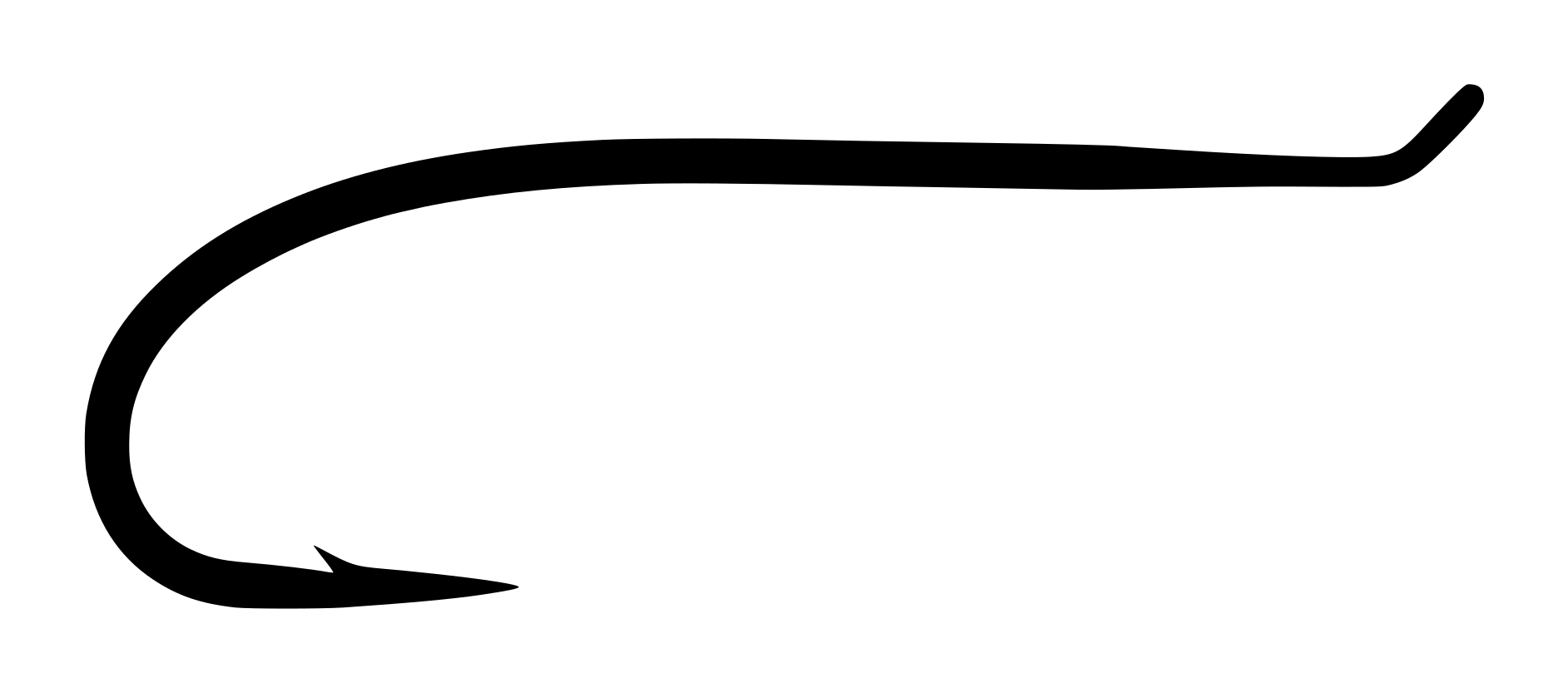
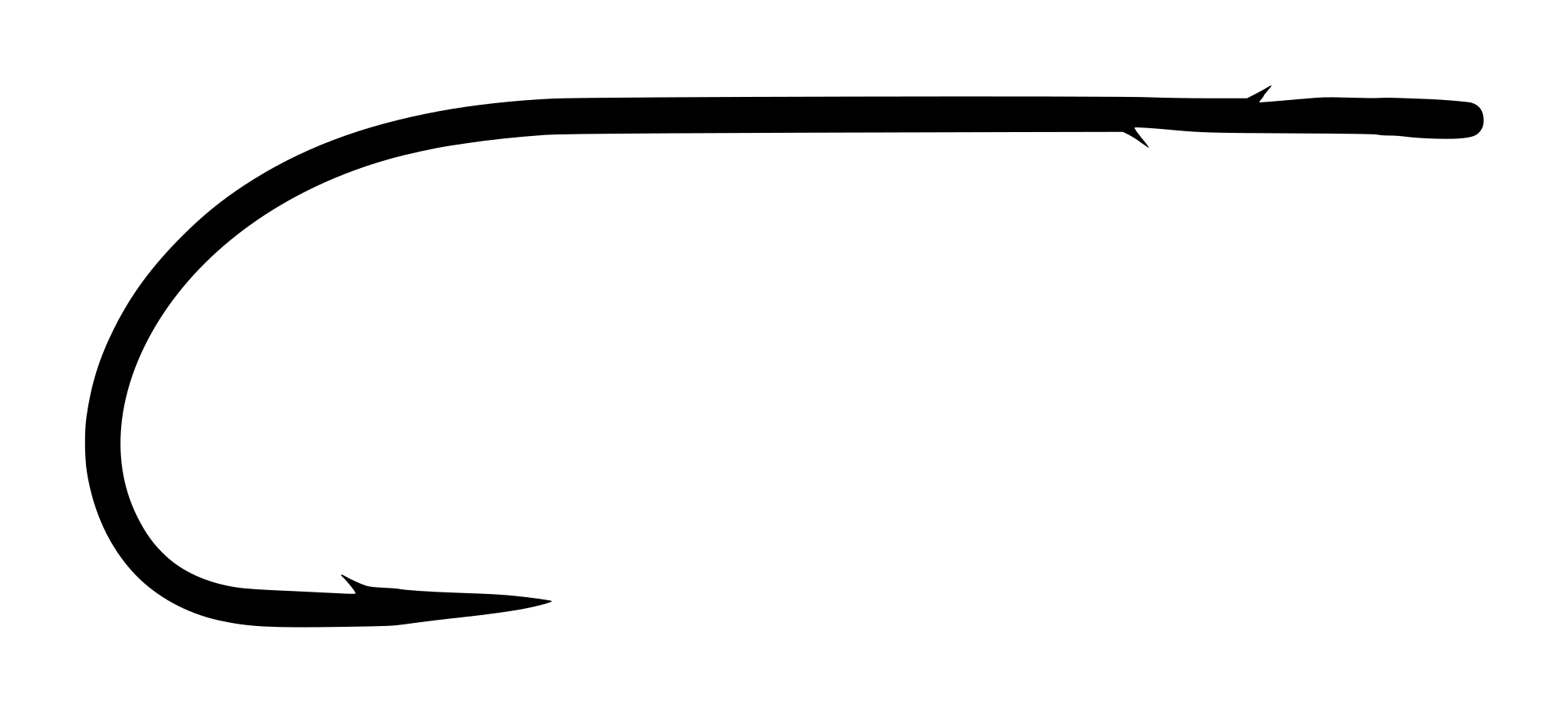
O. Mustad & Son 3851 Sneck Hook, size 13, extra-heavy wire, 1X long shank, bronzed finish. Original manufacturer box of 100 hooks with period letterpress label. Made in Oslo, Norway, circa 1950–1970.
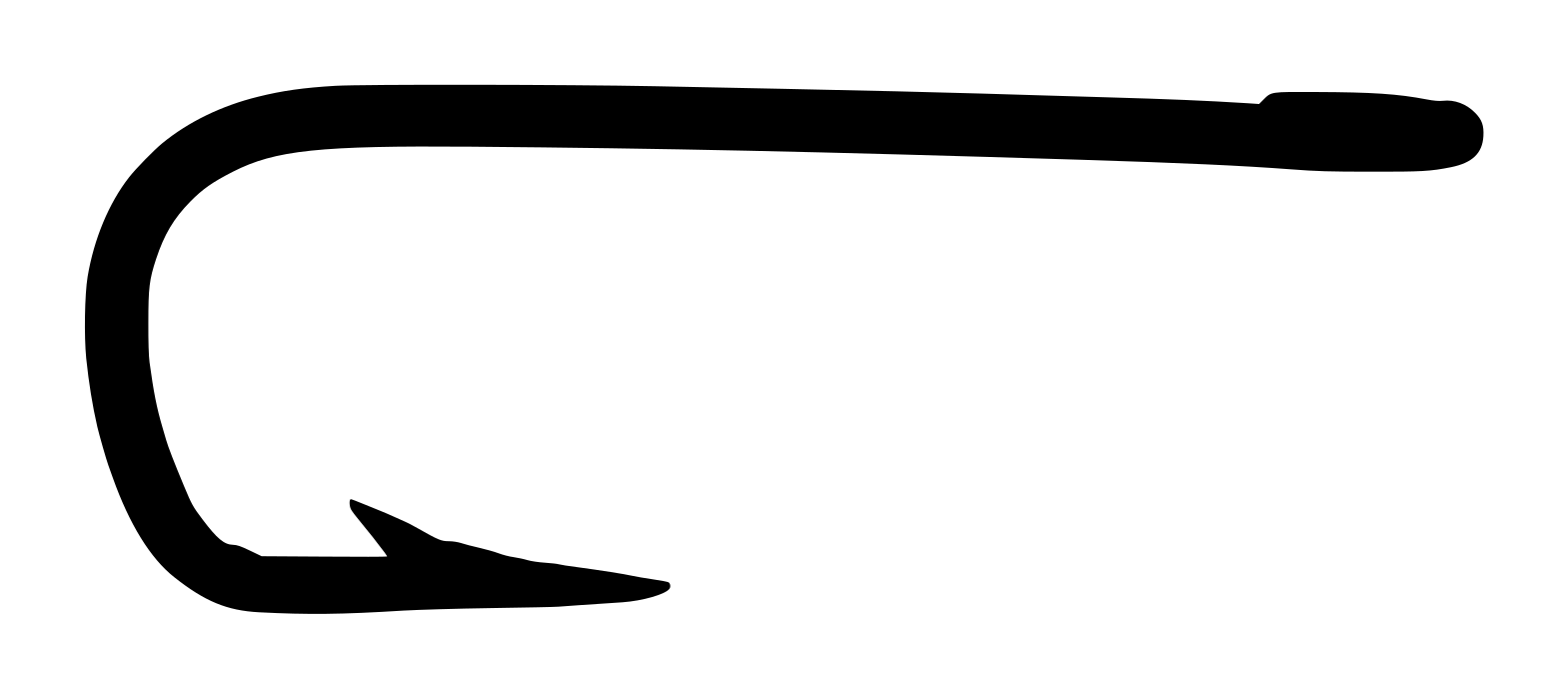
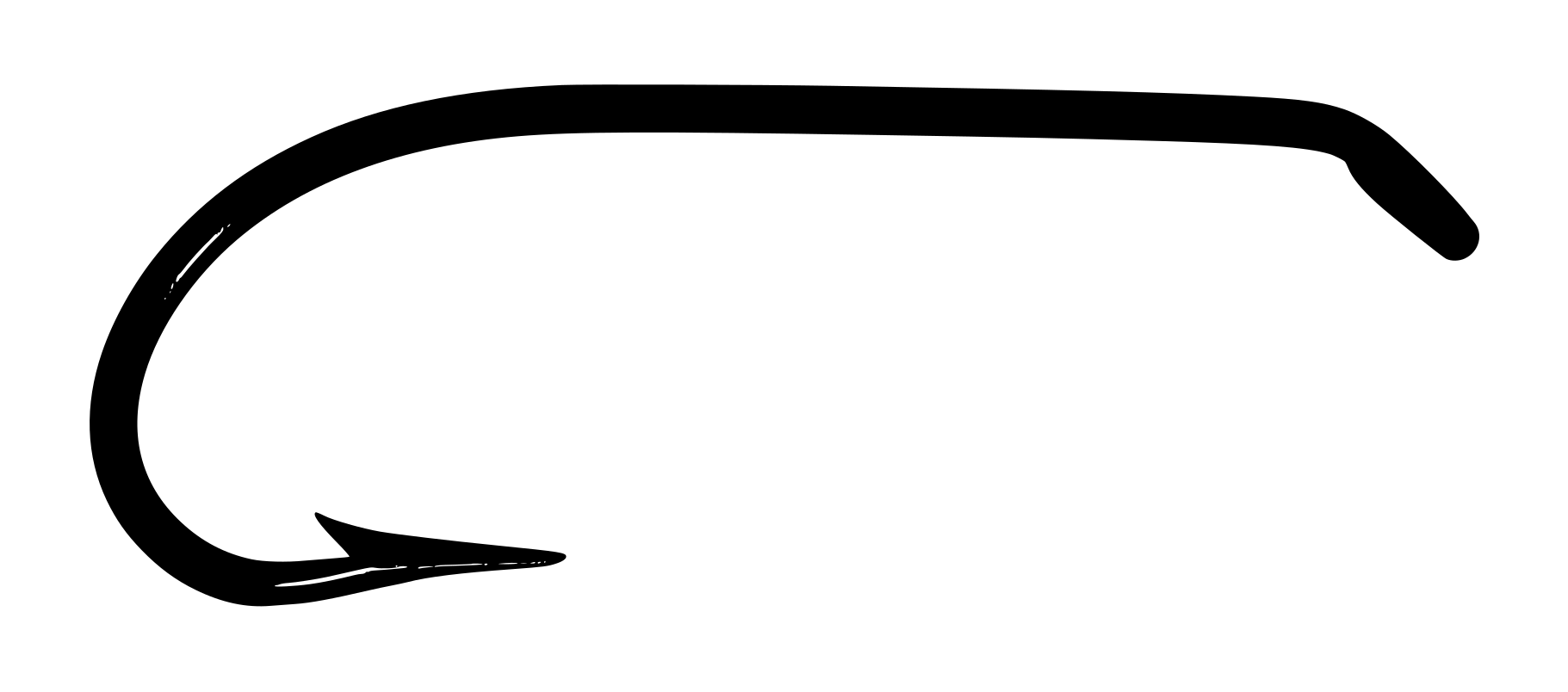
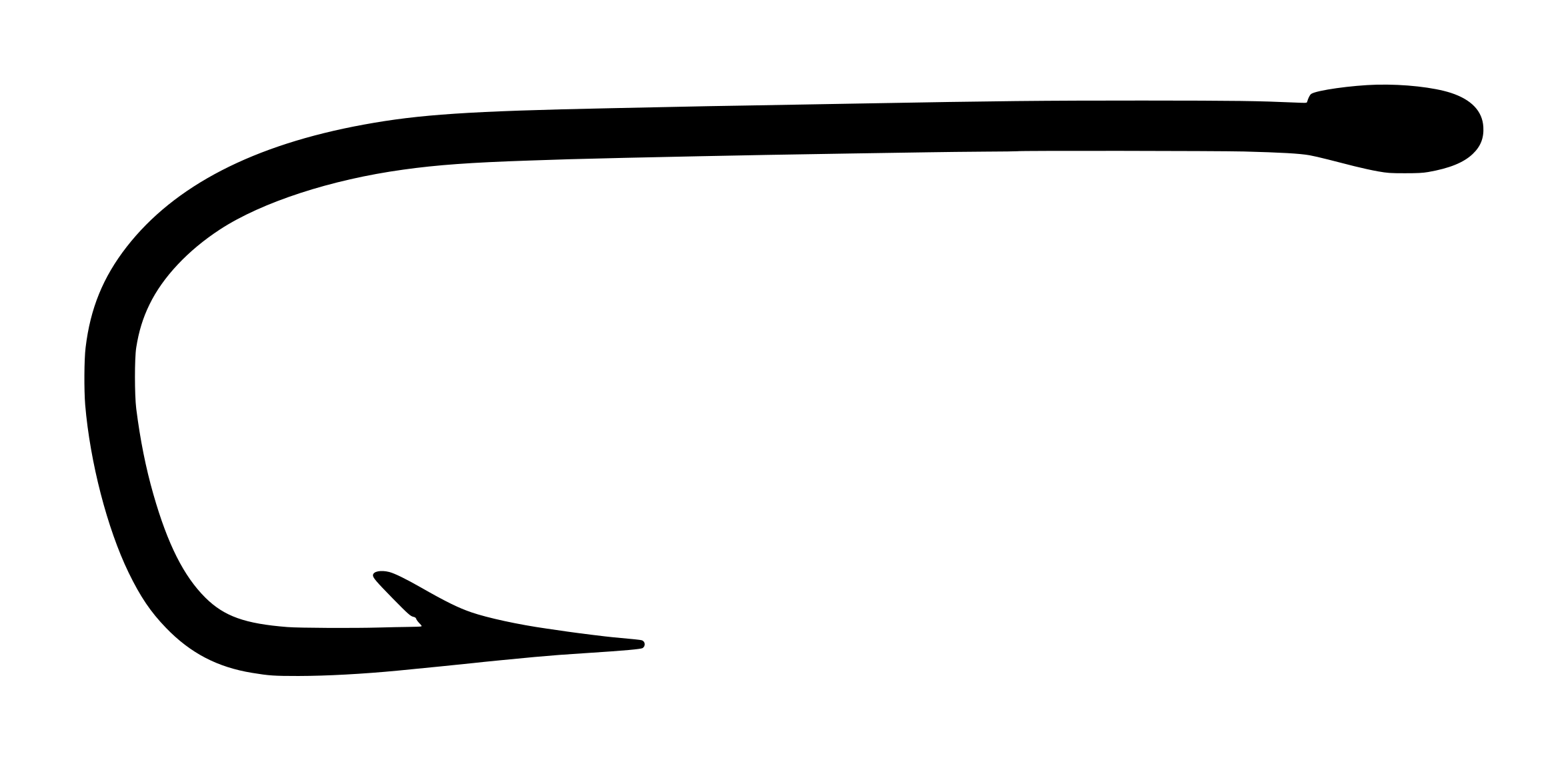
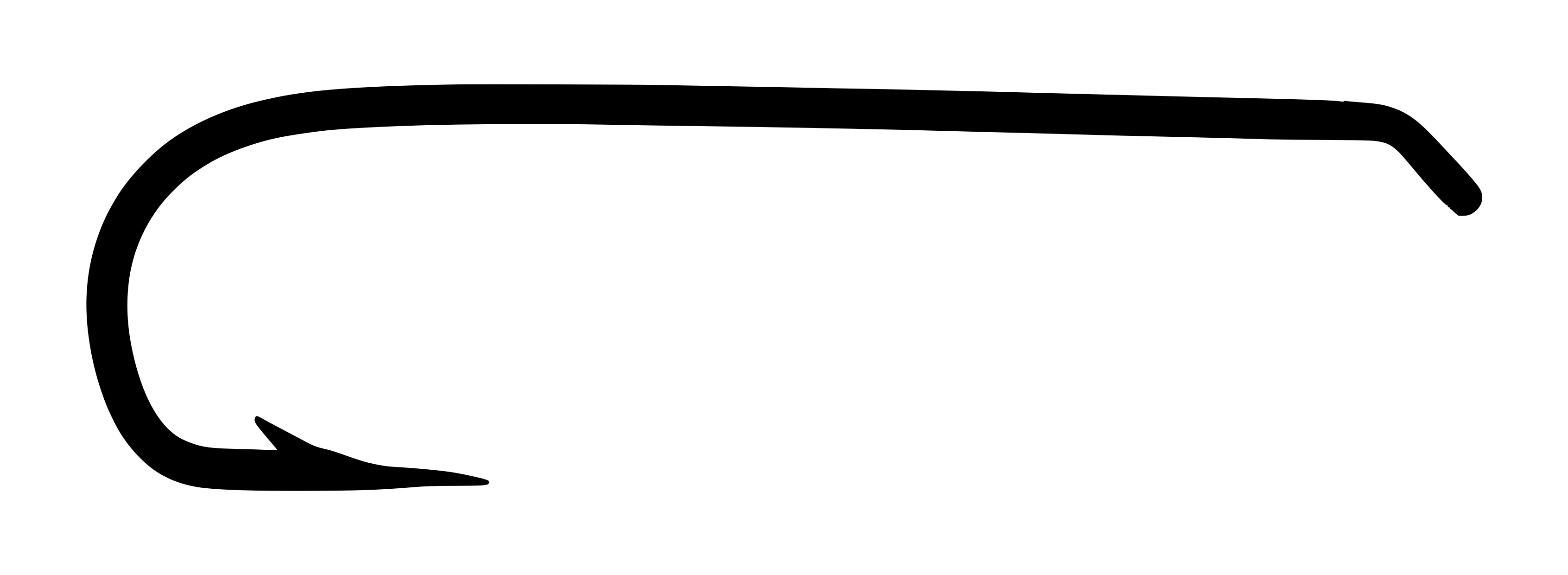
The Sneck bend is a compact, refined hook profile favored for traditional nymph patterns. The straight-eyed ball eye and 1X long shank make this suitable for weighted nymphs and general subsurface fly work. Extra-heavy wire gauge provides durability for larger nymphs and faster currents.
Distinguishing features: kirbed offset (point angled left), straight eye orientation, hollow point geometry, and characteristic Mustad snowflake-bordered label in warm cream stock. The box format is significantly rarer than sales cards and adds premium value to the package.
This entry documents a vintage mid-century Mustad nymph hook in original packaging. Boxed Mustad examples of this era are consistently sought by collectors focused on Norwegian manufacturing, period fly-dressing archives, and traditional nymph design.
Original Mustad packaging for model 3851 sneck hooks, size 13, ringed bronzed finish. Box label printed in Oslo, Norway.
Photographic record
2 cataloged imagesSelect any record to load it above.
2 images shown
Mustad 3851 Sneck Hooks Box LabelOriginal Mustad packaging for model 3851 sneck hooks, size 13, ringed bronzed finish. Box label printed in Oslo, Norway.Open originalMustad 3851 Sneck Hook ProfileSize 13 Mustad 3851 sneck hook, side view. Bronzed finish, ringed eye, hollow point geometry visible.Open original
Technical profile
Straight / Inline Ball Eye | Sneck | 1X Long | Extra-Heavy (2X+) Wire | Hollow Point | Bronzed
Eye
Ball Eye, Straight / InlineBall eye with uniform wire diameter loop, clean formation. No taper, no looped construction. Eye sits inline (straight) to the shank plane. Wire junction clean, suggesting good quality control on assembly. P
Wire
Extra-Heavy (2X+), Round
Shank
1X Long — Plain
Bend
Sneck, Standard gap, Offset / kirbedThe Sneck bend profile is compact and slightly angular at the apex, with a shallow bow and refined curve compared to the fuller Sproat. The offset kirb (point angled left from eye-shank perspective) is consistent with European nymph tradition and aids natural presentation. The depth-to-gap ratio suggests a standard gap width relative to the extra-heavy wire diameter, confirming the bend is proportionally compact rather than gaping. P
Point
Hollow Point (concave inner face)Barb is present (not barbless manufacture). Cut position and angle typical of mid-century Mustad standard barb profile — close to shank, moderate length. Barb geometry consistent with the extra-heavy wire gauge. P
Finish
Bronzed — Confirmed (stated on packaging)Bronzed finish in warm brown/amber tone visible in photograph, consistent with Mustad's mid-century bronzing process. Color temperature is distinctly warm, not cool silver-grey. Finish appears uniform across the visible surfaces; patina development minimal despite age, suggesting storage in dry conditions. Warm brown tone confirms bronzed classification rather than blued or nickelled. P
Box label shows warm cream tone with light foxing at edges consistent with age. Printing remains legible with no significant wear. Lid corners show minor compression creasing. Hooks within box appear bright bronzed with no visible corrosion. Two hooks confirmed present by visual inspection.
The hollow point geometry is a purposeful design choice. The concave inner face (inward taper from barb to tip) creates a knife-edge contact point that aids penetration and reduces the force needed to set the hook in the harder mouth structure of nymphs and larger subsurface flies. The geometry is distinct from the Superior point’s near-straight inner face and was standard across European nymph hooks of the era.
Extra-heavy wire (2X+ gauge) is essential for weighted nymphs and for resistance to deformation in faster water. The round wire profile distributes stress evenly and resists bending, critical when tying with lead wire or heavy dubbing bodies. The 1X long shank provides proportional space for body construction without excess length that would catch debris.
The ringed (marked) shank feature — surface notches or ridges — serves a practical function in thread grip, preventing slippage during the tying process. This was particularly valued by professional fly tiers working at volume, though it is most effective with waxed natural silk or nylon thread.
The straight eye orientation (inline, not turned down or up) is typical of utility nymph hooks and allows the hook angle to align directly with the eye-shank plane, useful for patterns where thread-body alignment matters. The ball eye is a robust, economical construction that resists deformation.
First documented entry for Mustad 3851 in the garrenwood.com catalog. Documents a boxed Norwegian-made nymph hook from the post-war manufacturing era, establishing baseline reference for size 13 specifications and 1950–1970 Mustad box packaging formats.
Own this hook? Help us measure it.
This pattern was made in sizes 13 (V). We have measurement for size 13. Know the others? Submit calipered measurements and we'll review and add them. Thank you!
Historical context
mustad
O. Mustad & Son, founded by Ole Mustad in Gjovik, Norway, in 1832, became one of the world’s largest industrial fishhook manufacturers by the mid-twentieth century. The company’s Norwegian factory achieved global distribution through aggressive export trading and competitive pricing, capturing significant market share across British, American, and European markets from the 1880s onward.
The Oslo address visible on this box label reflects Mustad’s administrative headquarters, though primary manufacturing remained in Gjovik. By the 1950s, Mustad’s product range spanned from fine dry-fly hooks to heavy saltwater patterns, with particular strength in affordable, utility nymph and streamer designs.
The “Ringed” designation on the label refers to a surface-marking feature intended to aid thread grip — a practical detail that typified Mustad’s engineering focus on functional fly-tying efficiency over ornament. The company’s competitive dominance throughout the mid-twentieth century was built on reliable, workmanlike designs and standardized production that prioritized consistency over specialization.
Series History
The Mustad-Sneck line represents one of several Sneck-pattern variants offered by Mustad in the post-war era. The Sneck bend itself — a compact, slightly squared profile with shallow bow — originated in the Redditch tradition but was widely adopted by industrial manufacturers including Mustad, Allcock, and others for economy nymph and bait patterns.
The 3851 was available in a range of sizes and wire weights across Mustad’s product catalogs of the 1950s–1960s. This particular specification (size 13, extra-heavy, 1X long, ringed, bronzed) represents one variant within a broader Sneck family that included lighter versions for delicate dry-fly work. Sneck patterns declined in market visibility after the 1970s as specialized nymph designs (such as curved-shank and jig-hook variations) gained prominence, though the Sneck never disappeared from Mustad’s roster.
The box format confirms this as a full-count package intended for retail sale or professional fly-tier distribution, rather than a sampler or special edition. Production likely spanned the entire 1950s–1960s period before the model was eventually discontinued in favor of more contemporary designs.
Era and Packaging Dating
Packaging shows letterpress printing typical of pre-offset era; no UPC barcode (absent until 1974); "Made in Norway" text and Oslo address consistent with Mustad's post-war Gjøvik facility era; snowflake border motif and card stock type typical of 1950s–1960s Mustad boxes; absence of modern postal coding formats supports pre-1970s dating. Likely mid-1950s to early 1960s based on printing process and paper stock.
The Norwegian Alternative to Redditch
In the mid-twentieth century, Mustad's competitive edge rested partly on its ability to supply commodity patterns at volume. The Sneck Hook represents that philosophy: a proven European design rendered affordable through Norwegian industrial production. Fly-tiers in post-war America who could not source Redditch-made hooks found Mustad's versions reliable and price-accessible, enabling the expansion of nymph fishing across American trout streams during the 1950s–1960s. This Sneck pattern, in its simple brown-finished box, was the working angler's alternative to the prestige Redditch makes, and its ubiquity made it invisibly important to the democratization of fly tying.
Design lineage and influence
The Sneck bend originated in the Redditch tradition, evolving from the rounded bend profiles of the nineteenth century into a more angular, compact variant by the 1930s–1940s. Edgar Sealey and S. Allcock both offered Sneck patterns in their Redditch catalogs, establishing the design as a standard specialty profile.
Mustad’s adoption of the Sneck in the post-war era represented industrial scaling of a craft design. The company’s interpretation maintains the essential profile — compact, slightly angular apex, shallow bow — while standardizing it to their production tolerances and wire-gauge ranges.
Competing designs for nymph work included the Sproat (rounder, fuller bow), the Limerick (more angular, deeper), and later the curved-shank and jig-hook variants that gained market dominance from the 1970s onward. The Sneck occupied a middle ground: more refined than the Aberdeen, less aggressive than the Limerick.
Best matchRelated by Attribute
Computed automatically from catalog data — updated as new hooks are added.
Matches: Bend, Shank, Gap, Point, Finish +4 moreDiffers: Wire: Extra-Heavy (2X+) vs Standard; Eye: Ball Eye vs Tapered Eye; Eye Orient.: Straight / Inline vs Turned Down +1 more
Matches: Shank, Gap, Eye, Finish, Forging +4 moreDiffers: Bend: Sneck vs Kirby (offset); Wire: Extra-Heavy (2X+) vs Heavy (1X Heavy); Eye Orient.: Straight / Inline vs Turned Down +1 more
Matches: Bend, Gap, Eye, Eye Orient., Point +4 moreDiffers: Shank: 1X Long vs Standard; Wire: Extra-Heavy (2X+) vs Standard; Finish: Bronzed vs Blued +1 more
Matches: Bend, Wire, Gap, Point, Finish +3 moreDiffers: Shank: 1X Long vs Special Long; Eye: Ball Eye vs Tapered Eye; Eye Orient.: Straight / Inline vs Turned Down +1 more
The Sneck Hook was designed as a general-purpose nymph pattern suitable for trout streams and traditional European nymph work. The extra-heavy wire and 1X long shank are optimized for weighted nymphs and for use in faster water or rocky habitat where durability matters. The straight eye and modest gap provide clean thread clearance and proportional space for lead wire, dubbing, and tail fiber without excess material that would create drag or catch bottom structure.
Historical use in Norwegian and Scandinavian fly-tying tradition aligned this pattern with weighted nymph work for grayling and brown trout in rocky streams. The size 13 — a standard utility size for subsurface fly construction — places this hook in the small-to-medium nymph range, suitable for patterns roughly 0.35″–0.45″ overall.
Secondary Applications
General utility subsurface tying; soft-hackle wet flies; small terrestrial imitations; bait-fly hybrids using fur or dubbing bodies.
Classic Fly Patterns
Named patterns specifically associated with this hook. Leave blank if none formally documented. Do not speculate — only include patterns with a confirmed association.
Modern Equivalents
Hook
Match Quality
Notes
Tiemco TMC2488
Very Good
Modern curved-shank nymph hook; extra-heavy wire, standard shank; similar strength profile but curved geometry for contemporary nymph design.
Daiichi 1710
Good
Contemporary standard-weight nymph hook in similar size range; hollow point; straight eye; lighter wire than the 3851 but functionally equivalent for most modern nymph patterns.
Partridge CS50
Very Good
English-made curved-shank nymph; extra-heavy wire; direct successor to the Sneck aesthetic in modern form.
Collector notes
Rated 4.5/10. Mustad industrial production limits rarity, but Sneck bends in extra-heavy wire with boxed packaging and size 13 are less commonly encountered than standard Aberdeen or Sproat models. Collector demand is moderate among nymph specialists and those seeking traditional Norwegian-made patterns.
Reference value
$12 – $28 USD estimate
Packaging condition
Very Good — light wear, fully legibleRecorded specimen
Packaging format
GW-MUS-BOX-01Catalog code
The 3851 Sneck Hook represents a specialty nymph pattern from Mustad’s mid-century product line. Scarcity is driven by (1) the box format itself — manufacturer boxes are less common than sales cards and command 2–4× the card equivalent; (2) size 13, which is outside the typical mass-market range of 6–12; (3) the extra-heavy wire gauge, which reduces demand compared to standard-weight versions. Positive factors include the complete original box in very good condition, with all 100 hooks claimed on the label. The bronzed finish and 1X long shank are appropriate for nymph construction and would appeal to historical fly tyers. Limiting factors include modest collector demand for this particular bend family — the Sneck is less iconic than the Sproat or Limerick — and the fact that Mustad industrial hooks generally do not command premium prices even in period packaging. Boxes in this condition typically sell better than cards, but only within a modest market segment. Condition of the box is the primary value driver; any missing hooks or damaged lid would reduce value substantially.
Packaging
Rigid manufacturer box with separate lid. Off-white/cream cardstock with gold/tan letterpress printing. Box label: "Key Brand O. MUSTAD & SON Manufacturers OSLO — NORWAY Qual. 3851 Hollow Point Mustad-Sneck Hooks 100 Ringed Bronzed No. 13 Made in Norway". Decorated with gold snowflake border motif. Size label "13" handwritten in purple ink on front label. Box dimensions approximately 3.5" × 2.25" × 0.75". Paper stock typical of pre-1970s box construction. No barcode visible.
Market Value Notes
Low ($12): Good condition — box opened, 95+ hooks present, light wear to lid and label.<br />
High ($28): Very Good condition — box complete with all 100 hooks, label intact, minimal creasing.<br />
Premium factors: Complete hook count, manufacturer box format, size 13 availability, bronzed finish, original label legibility.<br />
Platforms: eBay (UK and US), specialist tackle dealers, online auctions.<br />
Confidence: E estimated — limited comparable sales data for boxed Mustad Sneck hooks in size 13. Values based on typical Mustad box pricing (2–4× card equivalent) and size/finish desirability. Market for specialty Mustad nymph patterns is modest.
Where to Find
eBay UK and US (search: "Mustad Sneck", "Mustad 3851"), specialist vintage tackle dealers in England and Scandinavia, online auction sites (Catawiki, LiveAuctioneers). Boxed examples appear at irregular intervals; complete boxes more rare than loose or carded versions.
Collector's Identification Tips
Look for: (1) Mustad letterpress label with snowflake border and Oslo address — key indicator of 1950s–1960s manufacture; (2) “Ringed” notation on label — surface marks visible on shank under magnification; (3) Bronzed finish in warm brown tone (not cool silver); (4) Manufacturer box format rather than sales card; (5) “Qual. 3851” or equivalent model code printed on label; (6) “Made in Norway” text; (7) Size label in Mustad’s standard gauge system (size 13 is small-to-medium); (8) No barcode — confirms pre-1974 manufacture.
Size Note
Size 13 Context
Size 13 occupies an unusual position in the Mustad sizing system. The standard commercial range for nymph and wet-fly hooks typically spans sizes 2–12, with occasional offerings in 14–16 for smaller patterns. Size 13 falls between the standard range and the micro sizes, making it a specialty size not commonly stocked in volume.
This rarity contributes to the collectability of this specimen. Fly-tiers seeking to reproduce historical nymph patterns from Scandinavian sources often hunt for size 13 hooks specifically, as nineteenth- and early-twentieth-century European sizing conventions sometimes favored this size for medium-small subsurface work. The extra-heavy wire gauge at size 13 is an uncommon combination — most extra-heavy offerings in the Mustad line began at size 2/0 or 1/0 for salmon work, making this nymph-scale extra-heavy a specialty item.
Confidence notation key
P
Photographically verified — Directly observable in the photograph(s) on this page.
V
Verified by documentation — Confirmed by manufacturer catalog, spec sheet, or published reference.
I
Inferred — A logical deduction from observable or documented evidence, not directly stated.
E
Estimated — An approximation based on visual comparison, proportional analysis, or limited data.
S
Speculative — A reasoned hypothesis that cannot be confirmed from available evidence.
Claims with no notation are confirmed by multiple independent sources. All photographs on garrenwood.com are taken on a measurement grid where each square equals 1/10 inch (0.1″ / 2.54 mm).