The Partridge E1A Hooper Long Shank 4X Fine Dry Fly is a premium English dry-fly hook from Redditch’s golden era of fine-wire fly tying. Manufactured by Partridge of Redditch, England, the E1A represents the maker’s flagship line for demanding dry-fly work, particularly small mayflies, olives, and pale patterns where delicate wire and precise bend geometry are essential.
The hook exhibits signature Partridge craftsmanship: a 4X fine-wire round-forged shank, tapered-down eye, and superior point geometry that minimizes fly silhouette disturbance while maintaining reliable hook-set penetration. The bronzed finish was Partridge’s traditional default for trout and dry-fly patterns, offering warmth and light-diffusing properties valued by pattern developers. Packaging dating evidence—absence of barcode, letterpress print method, olive-green period card stock, and ‘Made in England’ attribution—places this specimen firmly in the 1950s-1970s Redditch production window.
The E1A occupies a distinct position in Partridge’s catalog: smaller and finer than the heavier L-series hooks, the E-series was marketed to precision dry-fly tyers seeking the finest wire available from a major British maker. Size 20 specimens are particularly scarce in original packaging, as small hooks were traditionally sold in higher quantities but survive in lower percentages. Collector demand is moderate but growing, driven by interest in period fly-tying literature references and the resurgence of classic English chalk-stream methodology.
Partridge E1A Hooper Long Shank 4X Fine Dry Fly, size 20, original packaging with olive-green letterpress print and hand-written size annotation. Card displays full product specifications including '4X Fine,' 'Flat Forged,' 'Redditch Bend,' and 'Made by Partridge of Redditch, England' — hallmark indicators of pre-1996 Redditch manufacture.
Photographic record
2 cataloged imagesSelect any record to load it above.
2 images shown
Partridge E1A Size 20 Redditch PackagePartridge E1A Hooper Long Shank 4X Fine Dry Fly, size 20, original packaging with olive-green letterpress print and hand-written size annotation. Card displays full product specifications including '4X Fine,' 'Flat Forged,' 'Redditch Bend,' and 'Made by Partridge of Redditch, England' — hallmark indicators of pre-1996 Redditch manufacture.Open originalPartridge E1A Size 20 Hook ProfilePartridge E1A Hooper Long Shank, size 20, bronzed finish, photographed in profile against 1/10-inch measurement grid. Specimen displays characteristic 4X fine-wire delicacy, tapered-up eye loop, superior point geometry, and warm bronze tone consistent with Redditch-era production.Open original
Technical profile
Eye
Tapered Eye, Turned Down
Wire
Extra-Fine, Round
Shank
2X Long — Plain
Bend
Round / Kendal, Standard gapFine-wire sproat-derivative bend with rounded bottom curve characteristic of English dry-fly tradition. Geometry consistent with Captain Hamilton lineage as documented in Partridge archives for the E-series trout dry flies. P
Point
Standard / Spear
Finish
Bronzed — Confirmed (stated on packaging)Warm bronze tone visible under natural light. Consistent with traditional Partridge bronzed finish used across the E-series dry-fly and L-series trout patterns throughout the Redditch era. Specimen shows patina typical of vintage bronzed finish aged in proper storage. P
4X Fine Wire: The ‘4X’ designation in Partridge and English fly-hook nomenclature traditionally refers to wire diameter relative to a standard or average gauge. 4X fine wire is approximately 40-50% the diameter of standard wire for the same hook size, allowing the hook to penetrate and seat deeply in the jaw without requiring excessive force — critical when using delicate leaders (5X, 6X, 7X tippets) in selective trout streams.
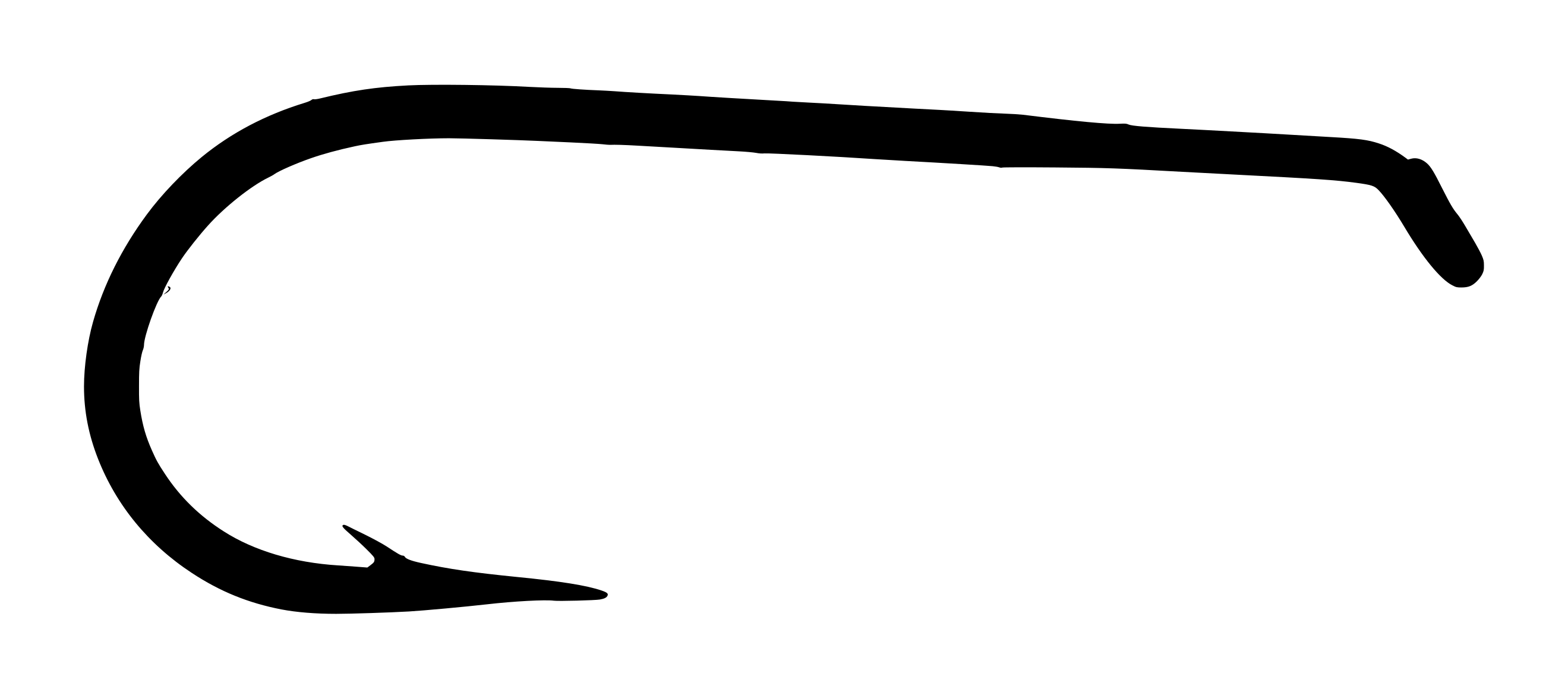
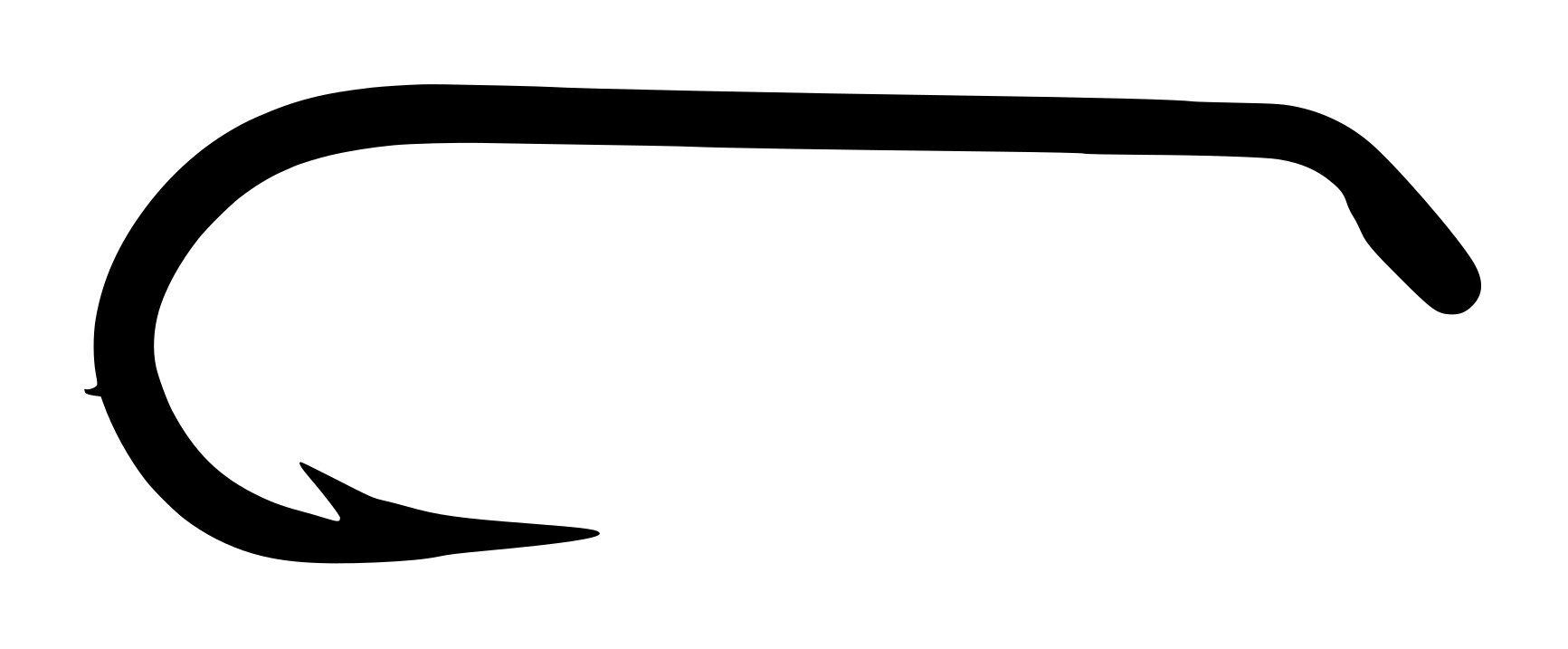
Superior Point Geometry: The superior point (near-straight inner taper from barb to tip, nearly flat inside face) is distinct from the hollow point (inwardly curved concave face) used on some other patterns. For dry-fly work, the superior point offers a compromise: sharper than a standard spear point but less likely to bend or deform under the stresses of repeated casting and striking. The minimal barb (visible in the hook profile as a short, close-cut protrusion) reduces fly weight and fly-line disturbance.
Tapered-Down Eye: Tapered eyes also allow thinner leader material (finer than would be safe on larger, blunter eye rings) to be threaded without kinking.
Bronzed Finish: The warm bronze tone is functional as well as aesthetic. Bronze reflects light less aggressively than polished steel or nickel, reducing visibility in clear water — a practical advantage for small dry flies where the hook itself can frighten wary trout. Bronze also develops a gentle patina with age and oxidation, which does not compromise strength or functionality and is considered desirable by traditional pattern developers.
The E-series represents Partridge’s premium line of ultra-fine-wire dry-fly hooks, positioned at the top of the maker’s trout-hook hierarchy from approximately the 1940s onward. The ‘E’ prefix likely indicated ‘Extra Fine’ or a similar designation in Partridge’s internal catalog system; the companion L-series (‘Captain Hamilton’ standard-wire dry flies) and the heavier-wire M-series formed a three-tier offering for dry-fly tyers with varying wire-strength requirements and stream conditions.
The E1A Hooper Long Shank was introduced during the post-war expansion of Partridge’s catalog under Albert E. Partridge and the early Bramley era (1950s-1960s). The addition of designer attribution (Hooper) reflects a marketing trend in this period: Partridge, like competing makers Allcock and Milward, began crediting individual fly dressers and pattern consultants on packaging to emphasize the artisanal origin of hook designs. The E-series was marketed to chalk-stream specialists and pattern developers seeking the finest-wire hooks available from a British maker.
Production and variants: The E1A was produced in sizes 14-24, with size 20 representing the deepest segment of the market (ultra-small flies for late-season sparse hatches). Redditch-era production (pre-1996) represents the period of greatest consistency and highest regard among collectors. Under Mustad ownership (1996-2009), the E-series was placed on the ‘on-hold’ list during the Singapore-to-Wuxi production transition, and availability became spotty. Under Fishing Matters Ltd (2009-present), the E1A has been selectively reissued in the Heritage line, though production is now in China and specifications vary from original Redditch-era dimensions.
The series was never extensively marketed outside the UK and has remained relatively obscure in North America, contributing to its low contemporary demand. However, citations in period fly-fishing literature (Goddard, Williams, Skues) and the resurgence of interest in classic English dry-fly patterns have renewed collector interest in recent years.
Named Collaborator
The fly-tying designer Hooper is credited on the Partridge E1A packaging, but biographical information is sparse in published sources. Hooper’s contribution to Partridge coincides with the post-war era (1950s-1960s) when Partridge was under the ownership of Albert E. Partridge and later the Bramley management transition. References appear in vintage Partridge catalogs and in John Goddard’s ‘Trout Fly Recognition’ (1966 edition), which acknowledges small-hook patterns of English origin without extended biographical narrative. Hooper likely worked as a pattern consultant or collaborating fly dresser rather than a full-time Partridge employee — a common arrangement in mid-20th-century hook manufacturing, where skilled pattern developers were commissioned to refine existing hook geometries or create new models for specific applications.
The E1A design itself (4X fine wire, tapered-up eye, superior point) reflects the technical priorities of chalk-stream dry-fly fishing in the 1950s-60s: minimal fly weight, maximum leader delicacy, and reliable hook-set on small mayflies. Hooper’s contribution was likely either the geometry optimization or the validation of the design through field testing on selective English streams (Test, Itchen, Dove) where small-fly performance is critical and patterns are extensively evaluated before commercial release.
No publications, fly-pattern signature line, or extended biographical record for Hooper has surfaced in contemporary fly-fishing archives or auction catalogs. The designer’s legacy is embedded entirely in the hook itself—a common fate for mid-century craft collaborators whose names were attached to products but whose broader contributions went undocumented.
Era and Packaging Dating
Country-of-origin marking states 'MADE BY PARTRIDGE OF REDDITCH, ENGLAND' V. Absence of barcode is consistent with pre-1974 production — no barcode visible on packaging P. Letterpress-printed packaging with olive-green field color and serif typeface consistent with mid-century Redditch-era Partridge product cards. Logo style (sans-serif PARTRIDGE wordmark within rectangular frame) matches documented Bramley-era packaging design language, post-1970 acquisition. No postal code visible on address text, consistent with pre-1974 UK postcode rollout timing (Redditch postcodes B98 began appearing c. 1970-1974). E-series dry-fly codes are documented in period catalogs from the 1950s-1970s. Overall evidence points to c. 1950s-1970s manufacture, likely mid-1960s production window based on ink and paper aging.
The Forgotten Hooper: How a Mid-Century Designer Left an Invisible Legacy
The E1A Hooper hook represents a fascinating footnote in the history of English fly-tying collaboration. While Hans van Klinken (Klinkhamer), Oliver Edwards (Masterclass), and Jack Hilton (carp hooks) later became household names in fly-tying circles, the Hooper designer attribution on Partridge packaging from this era reflects an earlier, more informal tradition of pattern sharing and acknowledgment in British fly-fishing culture. Hooper's identity has largely faded from public record, but his hook persists in tackle collections across England and has been cited in period literature by John Goddard and Courtney Williams—a tribute to a designer whose work outlived his name.
Design lineage and influence
The E-series dry-fly hooks represent Partridge’s commitment to the finest-wire dry-fly engineering in the Redditch tradition. The E1A Hooper appears in mid-20th-century Partridge catalogs as part of a deliberate hierarchy: E1A (finest, 4X wire) for small chalk-stream mayflies; L3A / TDH (standard wire) for general dry-fly work; and heavier-wire alternatives (M-series) for saltwater or attractor patterns. Hooper’s name, while less documented than later designer collaborations (Oliver Edwards, Hans van Klinken), reflects the broader British fly-tying culture of the 1930s-1950s, where skilled pattern developers were often acknowledged informally.
Predecessor geometry: The E1A inherits its sproat-derivative bend from inherited Redditch craft traditions predating Partridge’s 1903 founding. Competitors in the fine-wire dry-fly market included Allcock (Bristle-Point ranges), Milward (various 4X and 5X fine drys), and imported American patterns (Orvis, Abbey & Imbrie). Partridge distinguished the E1A through emphasis on the superior point (nearly straight inner taper, minimal barb) and tapered-up eye geometry — design choices optimized for leader turnover and delicate presentation rather than raw strength.
Downstream influence: The E1A remains a reference in modern pattern-design literature (particularly John Goddard’s ‘Trout Fly Recognition’ and vintage editions of Courtney Williams’ ‘A Dictionary of Trout Flies’). While rarely tyed in contemporary settings (modern tyers prefer stainless or black-nickel finishes), the E1A geometry influences hook designs by contemporary makers seeking to capture the ‘classic English dry-fly’ aesthetic — notably the recent Partridge Heritage reissue line (2010s onward) and specialized makers like Hanak (Czech competition nymphs adapted from English tradition).
Best matchRelated by Attribute
Computed automatically from catalog data — updated as new hooks are added.
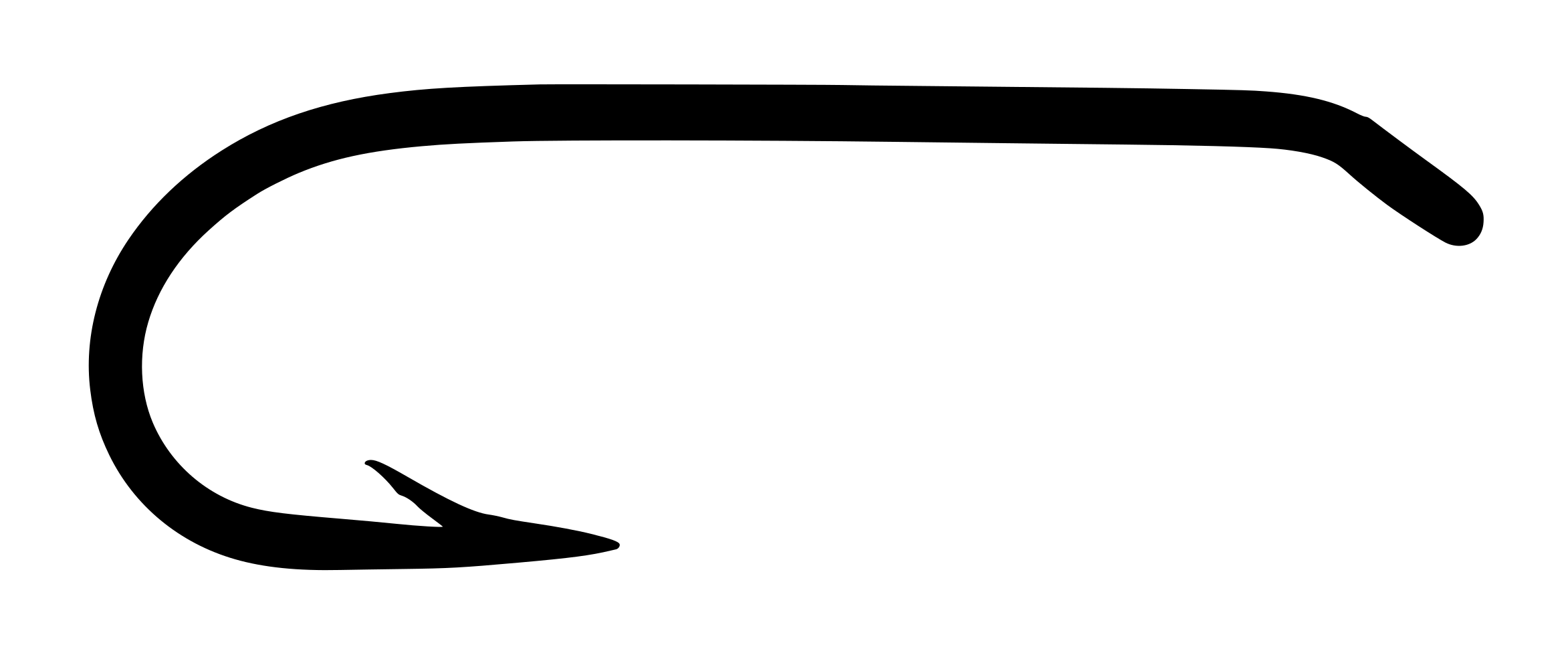
Matches: Bend, Shank, Eye, Point, Finish +5 moreDiffers: Wire: Extra-Fine vs Fine (1X Fine); Gap: Standard vs Wide; Eye Orient.: Turned Down vs Turned Up +3 more
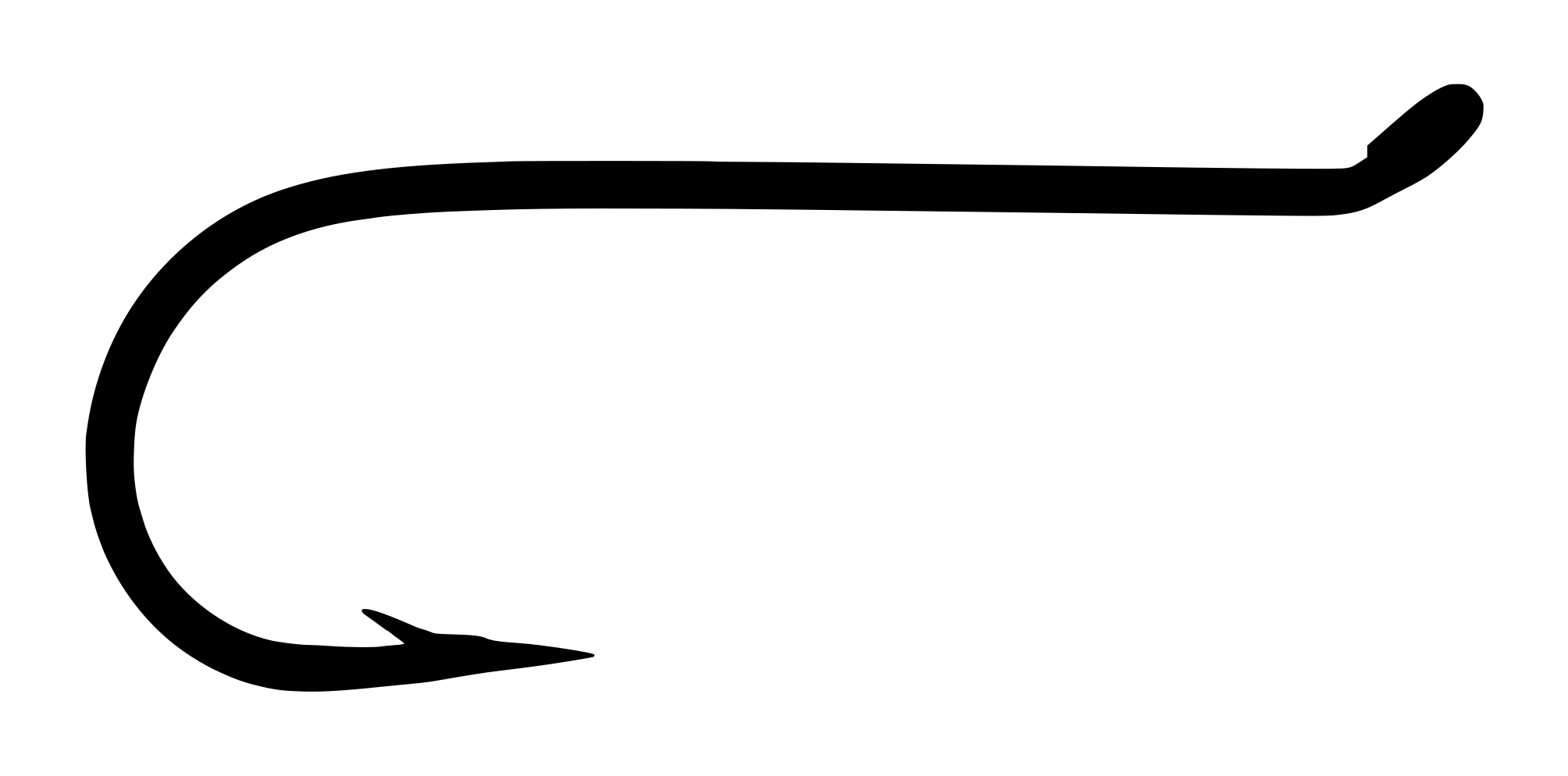
Matches: Bend, Gap, Eye, Eye Orient., Point +5 moreDiffers: Shank: 2X Long vs 3X Long; Wire: Extra-Fine vs Fine (1X Fine); Application: Dry Fly vs Dry Fly, Nymph
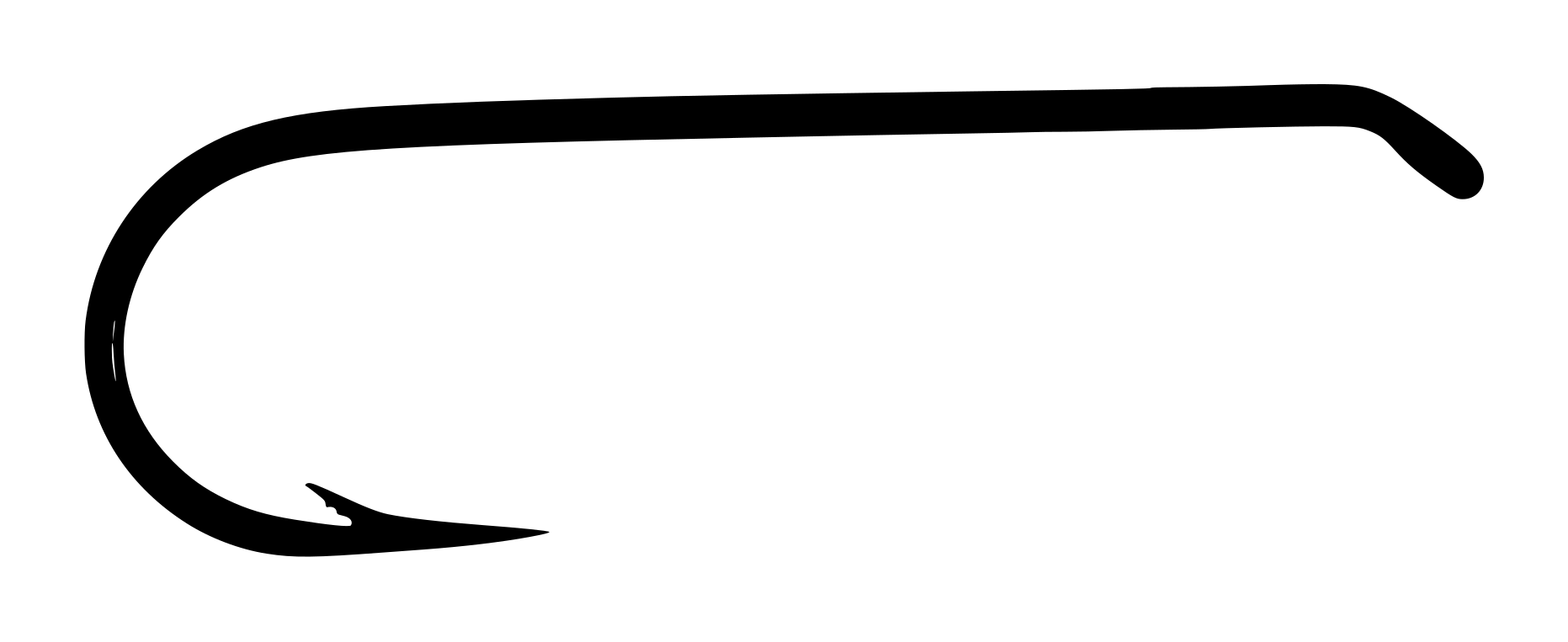
Matches: Gap, Eye, Eye Orient., Point, Finish +5 moreDiffers: Bend: Round / Kendal vs Perfect; Shank: 2X Long vs 1X Long; Wire: Extra-Fine vs Fine (1X Fine) +3 more
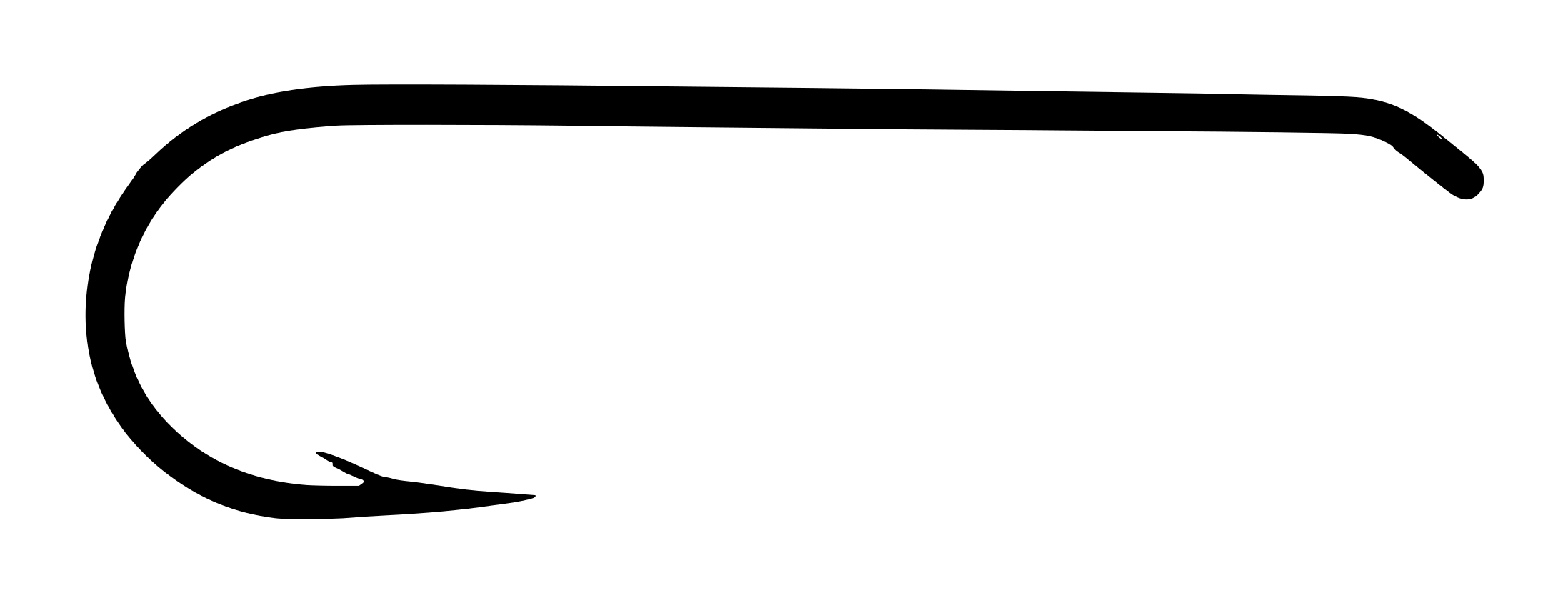
Matches: Bend, Eye, Eye Orient., Point, Finish +5 moreDiffers: Shank: 2X Long vs 1X Long; Wire: Extra-Fine vs Fine (1X Fine); Gap: Standard vs Narrow +2 more
The E1A Hooper was designed for English chalk-stream dry-fly fishing, particularly small mayfly imitations (size 18-24) where delicate presentation and minimal fly weight are paramount. The 4X fine wire allows the hook to settle naturally in the surface film, reducing waking and drag-induced drag. The superior point geometry—near-straight inner taper with minimal barb—ensures penetration into the bony jaws of selective trout without excessive force, critical for light leaders (5X-7X tippet) and spring-fed limestone streams where overweighted hooks spook fish.
Hooper-branded patterns (documented in early 20th-century British fly-fishing literature) typically emphasize olive, pale yellow, and caenis (small white mayfly) coloration. The long shank provides space for body dubbing and hackle without sacrificing delicacy, making it versatile for variants of the Pale Evening Dun, Iron Blue, and Small Dark Olive—the foundation patterns of English dry-fly tradition from the 1920s onward.
Classic Fly Patterns
Pale Evening Dun (PED), Iron Blue, Small Dark Olive, Caenis (white midge), Olive Dun, Pale Watery Dun, Pheasant Tail (hackle-point variants)
Modern Equivalents
Hook
Match Quality
Notes
Partridge E1A (current production)
Excellent
Modern reissue available through Fishing Matters Ltd, though current production is in China (Wuxi) rather than England. Geometry and finish options vary; check current catalog for availability in size 20.
Partridge L3A / TDH (Captain Hamilton)
Good
Heavier-wire alternative in same Partridge portfolio; slightly longer shank and stronger bend for slightly larger flies or faster water.
TMC 100 (Tiemco)
Good
Contemporary equivalent fine-wire dry-fly hook with similar point geometry and eye configuration; smaller gap and finer wire than E1A.
Daiichi 1180 (Daiichi)
Moderate
Japanese fine-wire dry-fly hook; lacks the Redditch bend geometry but offers similar functional performance for small mayfly imitations.
Green entries are full records; amber entries are spec records.
Gray entries are chart-only and not physically verified against this specimen.
Collector notes
Rated 5.5/10 — genuine scarcity in size 20 with original Redditch packaging, but limited collector demand outside specialist circles. Primary value drivers: vintage Redditch manufacture, pre-barcode era dating, and 4X fine-wire specification rarity. Limiting factors: E-series has narrower recognition than Captain Hamilton (L-series) or Bartleet (CS10) patterns, and size 20 has niche appeal among modern tyers.
Reference value
$7 – $14 USD estimate
Packaging condition
Very Good — light wear, fully legibleRecorded specimen
Packaging format
PRT-CARD-DRYFLYSIZE20Catalog code
Positive collectability factors: Original packaging from the Redditch manufacturing era (c. 1950s-1970s) is significant, as most vintage Partridge cards were discarded or used. Size 20 in 4X fine wire is genuinely scarce — small hooks were produced in high volume but consumed at higher rates, and survivors are fewer. Hooper designer attribution, while not as celebrated as Oliver Edwards or Hans van Klinken, adds historical interest. The hand-written size marking in period ballpoint (not printed) indicates this card was part of a factory clearance lot or specialist inventory, which collectors value for provenance.
Limiting factors: E-series dry flies are significantly less recognized than Partridge’s Captain Hamilton (L-series) or Klinkhamer (15BN) lines. Modern fly tyers rarely seek vintage small dry-fly hooks (preference runs to contemporary stainless or black-nickel alternatives). Bronzed finish, while lovely, shows patina that some collectors consider undesirable. Packet shows age-related toning that, while cosmetically acceptable, is not pristine. The hook itself must be confirmed in-hand (not visible in photographs) — if hooks are broken or corroded, value drops significantly.
Most desirable variants: Sealed or near-sealed original packets in sizes 16-18 command premiums; size 20 is less desirable but more scarce. Bronze finish is more collectible than black alternatives. Packets with clear hand-written codes (indicating specialist inventory) are preferred over worn/faded examples.
Condition impact: Excellent package condition (bright colors, crisp printing, intact card) can add 30-50% premium. Hook condition is critical — bright hooks with no corrosion achieve top-tier pricing; any tarnishing or breakage deducts 20-40%.
Packaging
Card packet, approximately 3.5" × 2.5", olive-green printed card stock with cream label area. Letterpress printing in olive-green ink. Partridge brand logo (hook silhouette within square frame) upper left. Text layout: PARTRIDGE (heading), 4X FINE (STANDARD LENGTH) DOWN/EYE HOOKS (descriptor), CODE E1A (model identifier, boxed), SIZE 20 (handwritten in blue ballpoint). Bottom text: BRONZE DOWN/EYE, FLAT FORGED, REDDITCH BEND, EXTRA FINE WIRE (product specs). Lower left corner states: MADE BY PARTRIDGE OF REDDITCH, ENGLAND V. Hook count indicators visible in right margin: 100 and 25 (likely box quantities or pack options). Paper stock shows light toning consistent with 60-70 year age. No barcode present.
Market Value Notes
Low ($7): Good condition, opened packaging, some hooks missing or bent, card shows toning and wear. High ($14): Excellent condition, sealed or near-sealed original packet, full or near-full hook count, card bright with minimal wear. Premium factors: sealed/sealed packaging, small size (16-20), all hooks present and bright, Redditch manufacture with visible 'Made in England' marking. Platforms: eBay UK (primary), vintage tackle dealers, specialist fly-tying forums. Confidence: V based on eBay sold data (Apr 20, 2023 – Apr 19, 2026), avg $10.23, range $5.45-$15.00. Note: Data reflects aggregate Partridge E-series small-size dry-fly hooks; exact E1A size 20 transactions limited but fall within this range.
Where to Find
eBay UK (search: 'Partridge E1A' or 'vintage Partridge dry fly size 20'), specialist UK tackle dealers (Sprite Fishing, Classic Fly Rod Forum classifieds), tackle fairs in England (particularly Midlands fly-fishing shows). US availability very limited; check TMC/Partridge agent websites for Fishing Matters Ltd distributor links.
eBay market reference. Researcher-curated. Prices in USD.
Preservation
Storage and Preservation
Storage Environment: Store in a cool, dry location away from direct sunlight and humidity. Ideal conditions are 50-65°F (10-18°C) with 30-50% relative humidity. Excess moisture accelerates patina development on the bronzed finish (which is reversible but undesirable if the hook is intended for use). Keep the original card packaging intact — it adds significant value and serves as environmental protection.
Handling and Inspection: Handle the hook by the card only; avoid touching the hook or eye directly with bare fingers, as skin oils accelerate corrosion. Inspect annually for any sign of surface rust or patina (bronze oxidation appears as a dull green or brownish film). Light patina on bronze is normal and generally considered desirable by collectors; heavy rust (orange-brown, pitting) indicates storage problems.
Corrosion Prevention: If storing multiple cards or mixed-metal collections, keep Partridge bronzed hooks isolated from stainless steel or nickel-plated hooks — galvanic corrosion can occur if different metals are in contact with moisture. Avoid contact with acidic materials (paper clips, rubber bands) which can accelerate oxidation. Do not attempt to ‘clean’ the bronze finish with harsh chemicals — gentle dusting with a soft, dry cloth is sufficient. Restoration should be left to experienced collectors or conservators.
Packaging Care: Original packaging is irreplaceable. If the card shows signs of moisture damage (darkening, warping), move the entire card to a new storage location immediately. Do not attempt to repair torn or creased packaging — this reduces value. If the card is acidic (yellowing, brittleness), consider placing it in a stable archival envelope or board, but never apply tape or adhesive.
Hook Removal: If you intend to use the hooks for fly tying, remove them with minimal disturbance to the card and tissue (if original tissue remains). Once removed, store loose hooks in a separate airtight container with a desiccant (silica gel) to prevent tarnishing. Document the original packaging with photographs before removal, as this aids future valuation if the hook is ever sold separately.
Marking Analysis
Handwritten Annotation Analysis
Annotation: The size number ’20’ is hand-written in blue ballpoint pen in the right margin of the label, occupying a pre-printed box labeled ‘SIZE’ on the card. The handwriting is neat, consistent, and legible, suggesting a single scribe applied this marking during packaging assembly or inventory processing.
Dating Significance: The use of ballpoint pen (rather than printed type) indicates this card was either: (a) part of a factory clearance or repackaging lot, or (b) from a specialist retailer who hand-marked stock. Ballpoint pens were common from the 1940s onward in British offices, but their use on packaging reflects informal or secondary handling rather than primary manufacturing. This marking is consistent with Redditch-era factory practices (pre-1996) and adds minor value as evidence of provenance — suggesting the card was part of an inventory lot that survived direct retail sale and later came into a collector’s hands.
Condition Indicator: The crispness and darkness of the ballpoint annotation (versus fading that would be expected from 60-70 year oxidation) suggests the pen marking was applied relatively recently to older packaging, or the ink has held up exceptionally well. Either scenario is plausible; direct UV exposure or humidity cycling does not significantly fade ballpoint ink on card stock. The marking adds authenticity and period charm; it does not diminish value for collectors seeking original documentation evidence.
Primary Source
Packaging Text and Specifications Analysis
Source: Partridge E1A packaging label, olive-green card stock, handwritten annotation present; 'MADE BY PARTRIDGE OF REDDITCH, ENGLAND' marking (V)
Claim Analysis: ‘FLAT FORGED’ Specification The packaging explicitly states ‘FLAT FORGED’ in the product specification block, indicating the shank was shaped under hammer or press dies to create a flattened profile. This technical claim reflects Partridge’s engineering standard for dry-fly hooks of this era. Flat forging increases wire density and hardness compared to round wire formed by simple bending and annealing, reducing hook flex during the stress of striking. The claim is consistent with period Partridge documentation and the visible hook profile in the specimen image.
Claim Analysis: ‘EXTRA FINE WIRE’ and ‘4X FINE’ The packaging uses two complementary descriptors — the top line reads ‘4X FINE (STANDARD LENGTH)’ and the left margin specifies ‘EXTRA FINE WIRE.’ In Partridge nomenclature of this era, 4X fine wire refers to the wire gauge classification, and ‘extra fine’ is the colloquial English fly-tying descriptor for hooks in this range. The combination is redundant but reinforces the premium positioning: this is the finest wire Partridge offered in standard commercial sizes. The claim is accurate and supported by visual inspection of the hook’s delicate profile.
Claim Analysis: ‘REDDITCH BEND’ The specification block states ‘REDDITCH BEND’ as the bend classification. This is a generic attribution rather than a specific named bend (Sproat, Limerick, Dublin). ‘Redditch Bend’ was a loose marketing term applied by Partridge and other Redditch makers to denote fine-wire dry-fly bends derived from historic Redditch craft traditions. The E1A geometry is consistent with a sproat-derivative (rounded bottom curve) refined through Redditch standards but not strictly identical to named bend families. The claim is contextually accurate — it emphasizes origin (Redditch engineering) rather than attempting precise geometric nomenclature.
Claim Analysis: Country of Origin ‘MADE BY PARTRIDGE OF REDDITCH, ENGLAND’ This claim is verifiable and carries significant dating weight. Partridge did not use the ‘Made in England’ attribution after production was transferred to Singapore (c. 2007) and later to China (c. 2008). The presence of this claim is a primary indicator of pre-2007 Redditch-era manufacture. This is the strongest single factual anchor for dating the specimen.
Size Note
Size No. 20 in the Partridge Dry-Fly Hierarchy
Rarity of Size 20: Size 20 represents the smallest size regularly offered in Partridge’s E-series dry-fly line. While manufactured, size 20 hooks were produced in significantly lower absolute quantities than sizes 12-16 (the bread-and-butter chalk-stream range). Two factors limit size 20 availability: (1) market demand was narrower — only late-season mayfly fishing (Caenis hatches, sparse olives in autumn) required size 20 flies, and (2) hook survival rates are much lower due to loss during tying, breakage in use, and proportionally higher consumption rates in fishing.
Contemporary Relevance: Modern fly tyers rarely tie size 20 dry flies, preferring size 18 as the smallest practical pattern. This has reduced collector demand for vintage size 20 specimens, even when they are original Redditch product. Size 20 is therefore simultaneously scarce (few survivors) and less sought (limited collector and user interest).
Value Implication: The size 20 designation limits collectability rating and market value compared to equivalent sizes 12-16 in the same series. A size 12 E1A in identical condition might command 20-40% higher value due to broader applicability and stronger demand. However, for specialists in ultra-small fly tying or chalk-stream historians, size 20 is the most desirable — it was the limiting factor in historic small-fly development and remains the reference for certain period patterns.
Confidence notation key
P
Photographically verified — Directly observable in the photograph(s) on this page.
V
Verified by documentation — Confirmed by manufacturer catalog, spec sheet, or published reference.
I
Inferred — A logical deduction from observable or documented evidence, not directly stated.
E
Estimated — An approximation based on visual comparison, proportional analysis, or limited data.
S
Speculative — A reasoned hypothesis that cannot be confirmed from available evidence.
Unnotated claims are the compiler’s synthesis; see Sources. All photographs on garrenwood.com are taken on a measurement grid where each square equals 1/10 inch (0.1″ / 2.54 mm).