Selected size
12
Physical specimen
- Shank Length
- 14 mm
- Gap Width
- 5.3 mm
- Wire Diameter
- 0.56 mm
- Weight
- .054g
- Confidence
- P Physical specimen
Physical measurement with calipers
 Garren WoodFishing Hook Reference

Save this hook to your account to build a list you can come back to.
Partridge of Redditch H1A Nymph Hook — a classic English medium-weight forged nymph hook from the Redditch era, circa 1950–1975. Named for the Captain Hamilton bend (Partridge’s proprietary sproat-derivative design), this hook is characterized by a smooth, rounded bend, a long shank relative to gap (approximately 1x standard), and a warm bronze finish.
The H1A was designed as a versatile pattern hook for soft-bodied nymphs and wet flies on British trout streams. Its forged construction provides strength while maintaining a relatively fine wire gauge suitable for smaller to medium hook sizes. The down-eye orientation facilitate traditional nymph tying conventions.
Production markers place this specimen in the Partridge Redditch works, prior to the 1996 Mustad acquisition. The yellow-card packaging with hand-lettered sizing is iconic of Partridge’s mid-20th-century retail presentation. Among collectors, the H1A remains a desirable vintage hook, particularly in smaller sizes (14–18) where availability is lower. The Captain Hamilton bend is foundational to Partridge’s identity and continues in production under the Fishing Matters era (post-2009).
12 cataloged imagesSelect any record to load it above.
8 images shown
The H1A employs a forged carbon-steel wire construction, which concentrates material at the bend and hook point, providing structural strength while distributing the remaining wire more evenly along the shank. The forging process (visible as subtle wire compression marks on the bend) work-hardens the steel, improving resistance to bending or deformation under load. The medium-weight specification (approximately 0.023–0.025 inches wire diameter on size 14) represents a compromise between the finer wire of dry-fly patterns and the heavier gauge of salmon irons, making it suitable for robust nymph patterns that must withstand the weight of heavy dubbing and potential encounters with larger trout. The long shank (approximately 1x standard gap) provides extended body room, enabling tyers to build fuller, more realistic nymph profiles without crowding the hook eye. The Captain Hamilton bend, with its pronounced lower-limb curve and controlled return point, accommodates the upright to slightly forward-angled orientation preferred in nymph patterns for imitative proportions.
Physical measurement with calipers
Physical measurement with calipers
We don't have measured sizes for this hook yet. Own one? Submit calipered measurements and we'll review and add them. Thank you!
Sources: this specimen and its packaging.
The H1A Nymph Hook is part of Partridge’s foundational H-series long-body nymph platform, which comprises the H1A Medium Weight standard pattern and variants such as the H3ST Draper Flat Body (stainless steel, specialized flat-shank construction) and H5ST Draper Stainless variants. The H1A itself is a continuous-production pattern from the Redditch era through the present, though its availability fluctuated during the Mustad transition (2008–2009). The H-series design emphasizes a long shank relative to gap — typically 1x to 1.5x standard — paired with a Captain Hamilton sproat-derivative bend, enabling efficient dubbing of soft-bodied nymphs and wet flies. The H1A medium-weight specification sits between finer wire options (not documented for this code) and heavier competition/jig variants. The pattern was updated under Fishing Matters post-2009 with modern packaging but retains the core Captain Hamilton geometry and bronze finish. The H1A is positioned as a workhorse pattern for English chalk-stream and freestone nymph tying, without premium or specialty designation.
Packaging evidence: (1) No barcode visible on card — British postcode system introduced c. 1974, suggesting pre-1974 origin or early postcode-era packaging (1974–1980s). (2) Yellow-and-black color scheme and bold letterpress-style typography consistent with Partridge Redditch packaging mid-20th century. (3) Hand-lettered sizing on some cards suggests factory-direct or clearance sale packaging typical of 1950s–1970s. (4) Text 'HAND MADE BY PARTRIDGE OF REDDITCH, ENGLAND' confirms Redditch manufacture prior to c. 2005–2007 closure. (5) No Mustad co-branding visible, consistent with pre-1996 acquisition. (6) The specific yellow-card format and typography match documented Partridge catalogs from the Bramley era (1970–1996), with likely origin in the 1950s–1970s range based on logo style and paper stock.
The Captain Hamilton bend was established in 1903 when Albert Partridge received a commission from Captain G.E.M. Hamilton to create a specialized trout hook with a sproat-derivative bend that could accommodate the upright body posture and delicate proportions of dry and wet flies used on British chalk streams. This bend became so iconic that it remained Partridge's signature across multiple pattern families — from the H1A nymph to the L-series dry fly — and it continues unchanged in modern Fishing Matters production. The 'Captain Hamilton' name itself is a rare example of an angling tradition in which a hook bend is named after an angler's commission rather than a manufacturer's house name.
The H1A’s Captain Hamilton bend is a refined sproat-derivative design originating from the English Redditch tradition of medium-weight forged nymphs and wet flies. The sproat bend itself dates to the 19th-century Redditch codification of hook families and represents a balance between the wide-gape Aberdeen and the more angular Limerick. Partridge’s adaptation, commissioned by Captain Hamilton in 1903, emphasized a smooth, rounded lower limb with a controlled upswept return point — a geometry particularly suited to the presentation of soft-bodied nymphs and hackled wet flies in clear, gentle currents.
Contemporary competitors in the early-to-mid 20th century included Allcock’s wet-fly patterns (notably the Kendal bends used on their L and similar codes), Milward’s sproat derivatives, and later Mustad’s 80500 series. None achieved the specific geometric refinement of the Captain Hamilton, which became the reference standard for English trout nymphs. The H1A design influenced later nymph hooks from specialist makers, though direct copying was avoided due to patent conventions and trade practices.
In modern times, the H1A remains in continuous production under both the current Partridge (Fishing Matters) line and through Japanese makers (Daiichi, Tiemco) who respect the geometry while using contemporary wire and finishing methods. The hook has not been substantially modified since its introduction, indicating that the original design achieved a near-optimal balance between strength, point penetration, and body-dressing accommodation.
| Silhouette | Hook Model | Match | Analysis | Compare |
|---|---|---|---|---|
|
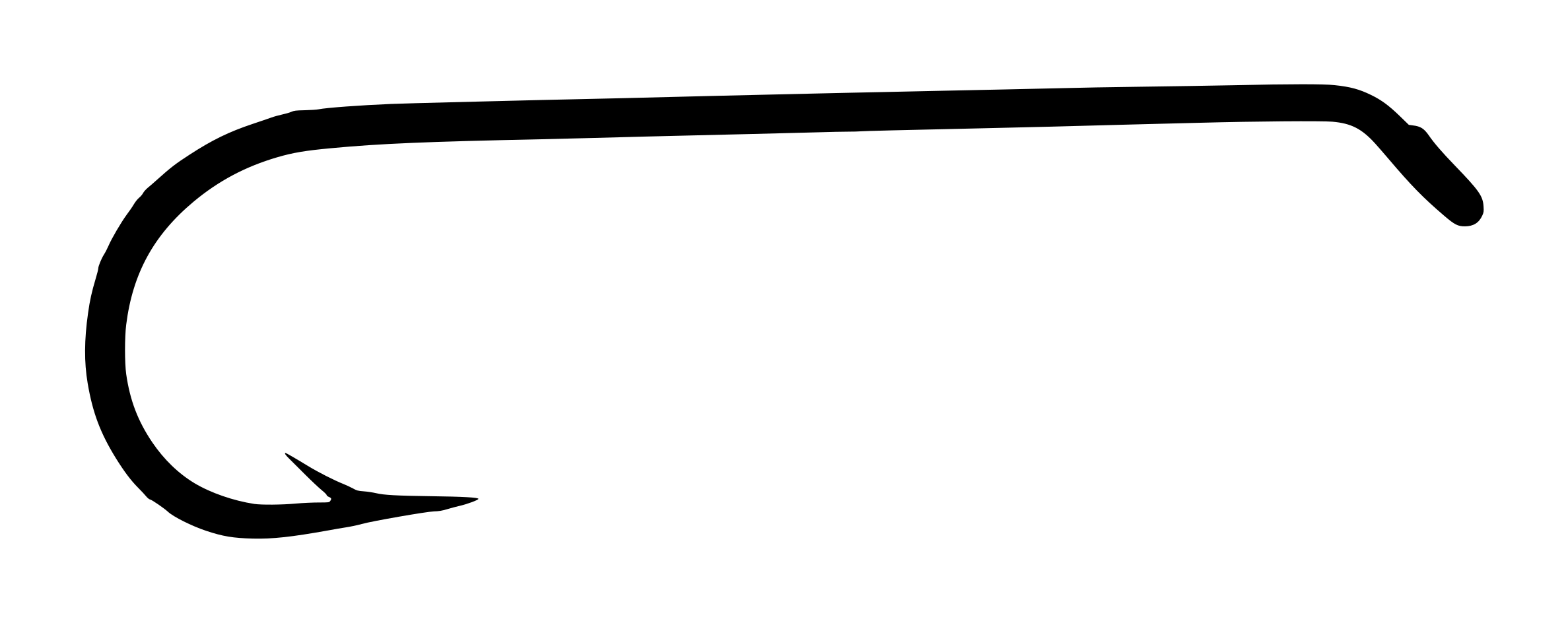
Medium Long No. 4 — Nyack Brand Medium Long Sproat | 88% | Compare | |
|
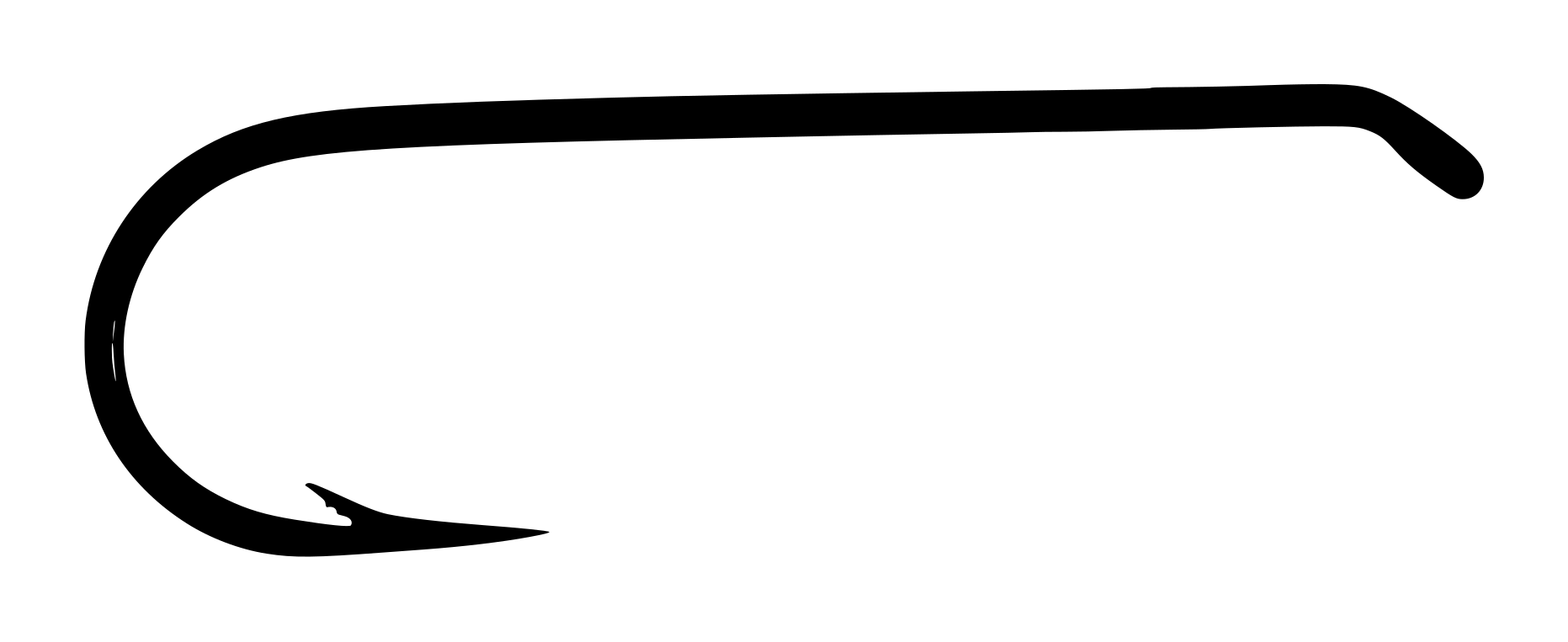
1752.B No. 12 — Sealey 1752.B | 82% | Compare | |

|
B830 No. 8 — Trout Classic Long | 81% | Compare | |

|
2x Long, TDE No. 10 — Blue Label 2X Long, Forged, Regular Wire, Tapered T.D. Eye | 78% | Compare | |

|
79580 No. 10 — Mustad 79580 Viking Hooks | 77% | Compare |
| Silhouette | Hook Model | Match | Compare |
|---|---|---|---|
|
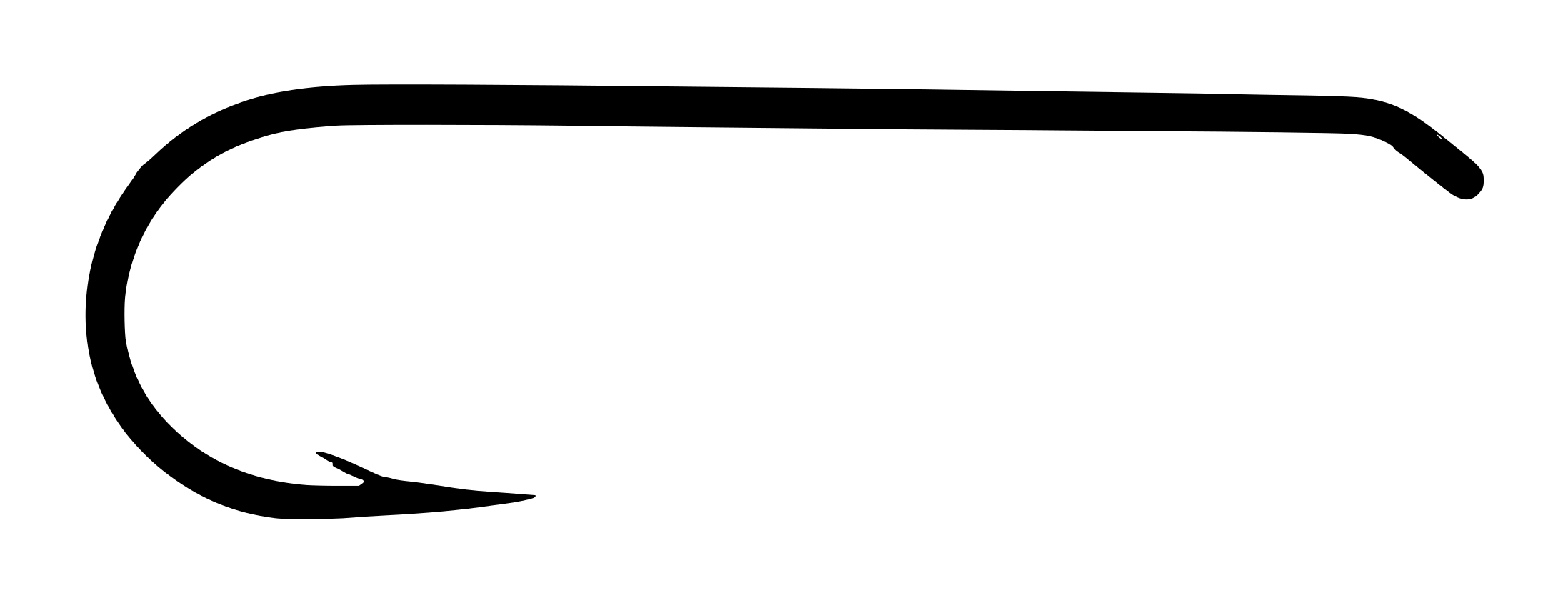
3x TDE No. 12 — Turned Down Eye Dry Fly | 85% | Compare |
|
|
1752.B No. 12 — Sealey 1752.B | 78% | Compare |
|
|
Medium Long No. 4 — Nyack Brand Medium Long Sproat | 76% | Compare |
|
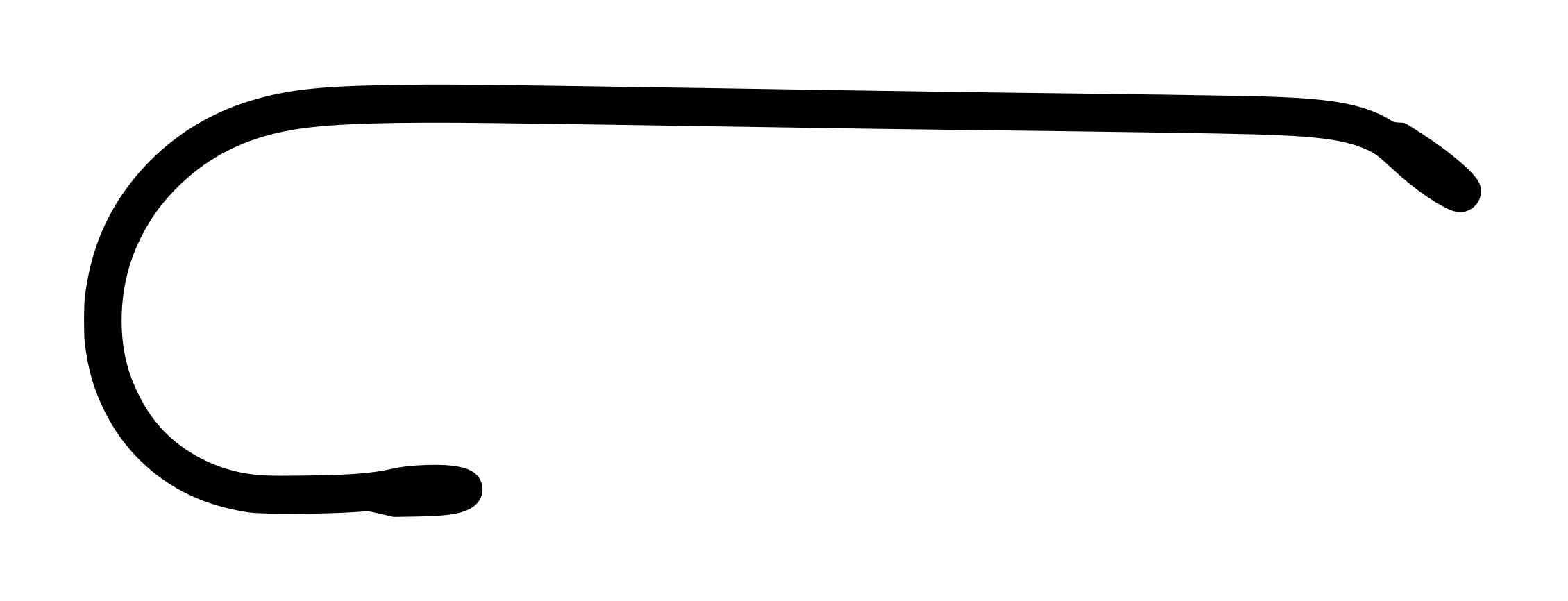
CS2002 No. 8 — Tag Long Shank Hooks | 76% | Compare |
|
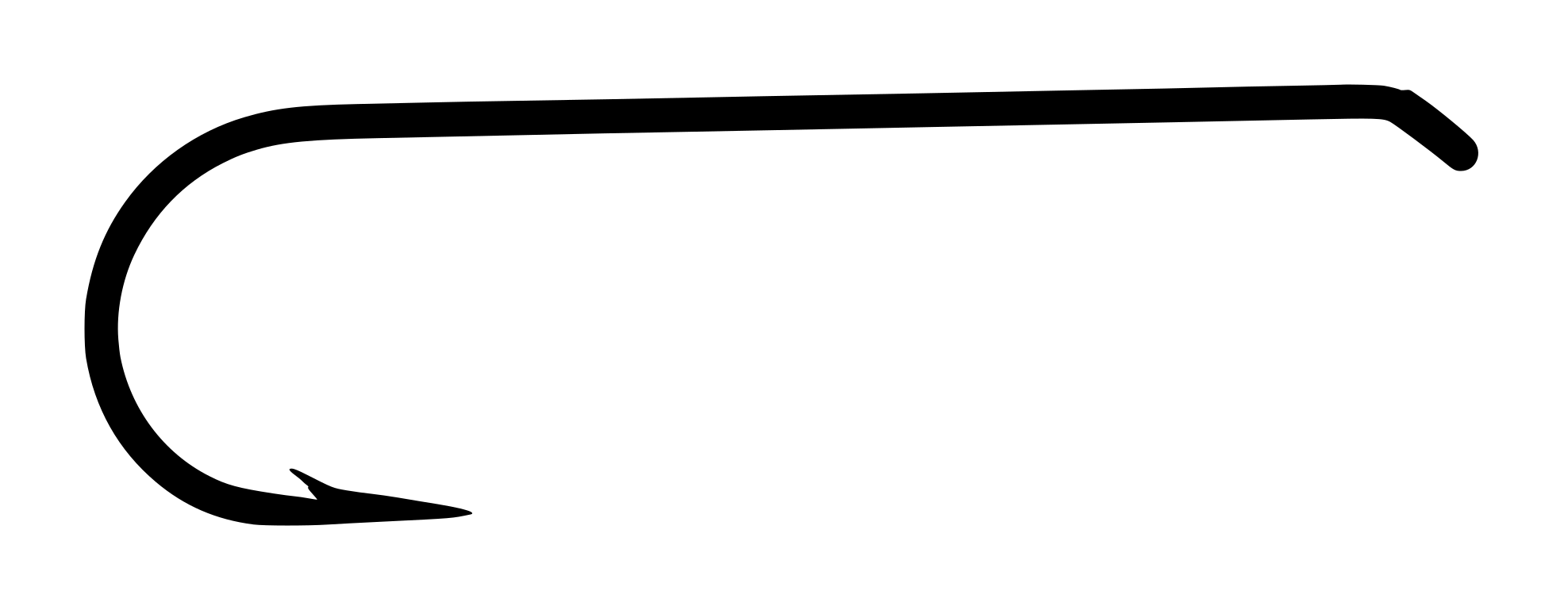
1721 B No. 2 — Edgar Sealey 1721 B Streamer Hook | 73% | Compare |
The H1A is a general-purpose nymph and wet-fly hook designed for English trout streams. It excels in the construction of soft-bodied nymphs (Pheasant Tail, Hare’s Ear, Diawl Bach variants) and traditional English wet-fly patterns (Greenwells Glory, March Brown, Partridge and Orange). The medium wire gauge provides adequate strength for fish handling while remaining fine enough for delicate presentations in clear water. The long shank allows body dubbing and hackle material to be distributed effectively.
Soft-hackle wet-fly patterns, English chalk-stream patterns, emerger nymphs, rough-water nymphs.
Pheasant Tail Nymph, Hare's Ear Nymph, Diawl Bach, Greenwells Glory, March Brown, Partridge and Orange, Waterhen Bloa, Invicta, Cinnamon and Gold
| Hook | Match Quality | Notes |
|---|---|---|
| Partridge H1A (current production, China-made, Fishing Matters era, post-2009) | Excellent | Identical model code and Captain Hamilton bend geometry. Current production in Wuxi, China under Mustad manufacturing. Finish and wire gauge match vintage specs. Preferred by tyers seeking the H1A pattern; no functional advantage over Redditch originals but more readily available and inexpensive ($0.10–$0.20 per hook vs. $0.10–$0.15 for bulk vintage cards). |
| Daiichi 1150 Nymph | Very Good | Japanese forged medium-weight nymph with long shank and looped up-eye. Wire gauge and bend profile are comparable, though the Daiichi bend is rounder and less sproat-derivative. Finish is bright/polished rather than bronze. Widely available and inexpensive. |
| Tiemco TMC 2488H Nymph | Very Good | Japanese forged nymph, standard weight, long shank. TMC finish options include bronze (TMC 2488HBR) or black nickel. Very similar functional profile to H1A; slightly shorter shank on some sizes. Excellent penetration and durability. |
| Mustad 80500BL | Good | Mustad's traditional wet-fly/nymph pattern, available in black finish. Comparable wire gauge and shank length. Mustad 80500 is often substituted for Partridge N and CS10/1 in salmon/low-water applications, but not a perfect match for the H1A Captain Hamilton geometry (Mustad bend is less pronounced). |
| Ahrex NS172 Nymph | Good | Modern Swedish forged nymph, available in multiple finishes including bronze. Contemporary design with excellent penetration. Wire gauge slightly lighter than H1A; shank length is comparable. Preferred by modern tyers seeking a vintage aesthetic with modern reliability. |
Industry cross-reference
2X–3X long shank down eye
| Ahrex | FW538Spec record FW539Spec record |
|---|---|
| Daiichi | 1280Spec record |
| Firehole | 618Chart only |
| Fulling Mill | FM5025Chart only |
| Mustad | R43APSpec record 94831Chart only R43Chart only |
| Orvis | JA1638Chart only |
| Tiemco | 5212Chart only |
Green entries are full records; amber entries are spec records. Gray entries are chart-only and not physically verified against this specimen.
Rated 4.5/10 — uncommon to moderately scarce, particularly in smaller sizes (14–18). Collector demand is moderate, concentrated among Redditch specialists and vintage nymph tyers. Mid-size cards (6–12) are more frequently encountered; size 14 and above become genuinely scarce. Complete original packaging in good condition adds significant premium over loose hooks.
What makes this hook collectible: The H1A is a foundational Partridge pattern with direct lineage to the iconic Captain Hamilton bend (1903). Redditch-era production specimens (pre-1996) are increasingly prized as the factory has been closed for nearly two decades. The vintage yellow-card packaging is instantly recognizable and highly desirable to collectors of British tackle ephemera. Smaller sizes (14–18) are genuinely scarce in original packaging, as these were less commonly purchased and more likely to have been used.
Limiting factors: The H1A was continuously produced from the Redditch era through the present, meaning substantial quantities exist across multiple manufacturing periods. Current Chinese-production H1A hooks (post-2008) are inexpensive and common, which suppresses collector value of vintage examples that must compete with modern alternatives. The hook type (standard nymph pattern) lacks the specialist appeal of specialized salmon irons or rare bent variants. Mid-size cards (6, 8, 10, 12) remain relatively abundant, limiting scarcity premium for those sizes.
Most desirable variants: Redditch-era packaging with size 14, 16, or 18; complete unopened cards; examples with hand-lettered size notation (evidence of factory-direct packaging); bronze finish in pristine condition (no corrosion or patina); complete sets of 100 hooks.
Condition factors affecting value: (1) Packaging condition — sealed or near-sealed cards command 2–3x the premium of opened cards. Complete hook count is essential. (2) Finish preservation — corrosion, heavy patina, or dulled points reduce value. Bright bronze with minor wear is acceptable. (3) Paper stock quality — yellowing and minor edge wear are normal for 50+ year-old cards; however, water damage, staining, or writing on the face reduces value significantly. (4) Redditch origin confirmation — packaging marked “Made in England” with Redditch address is premium; Singapore or China origin commands lower collector value even if contemporary with the Redditch era.
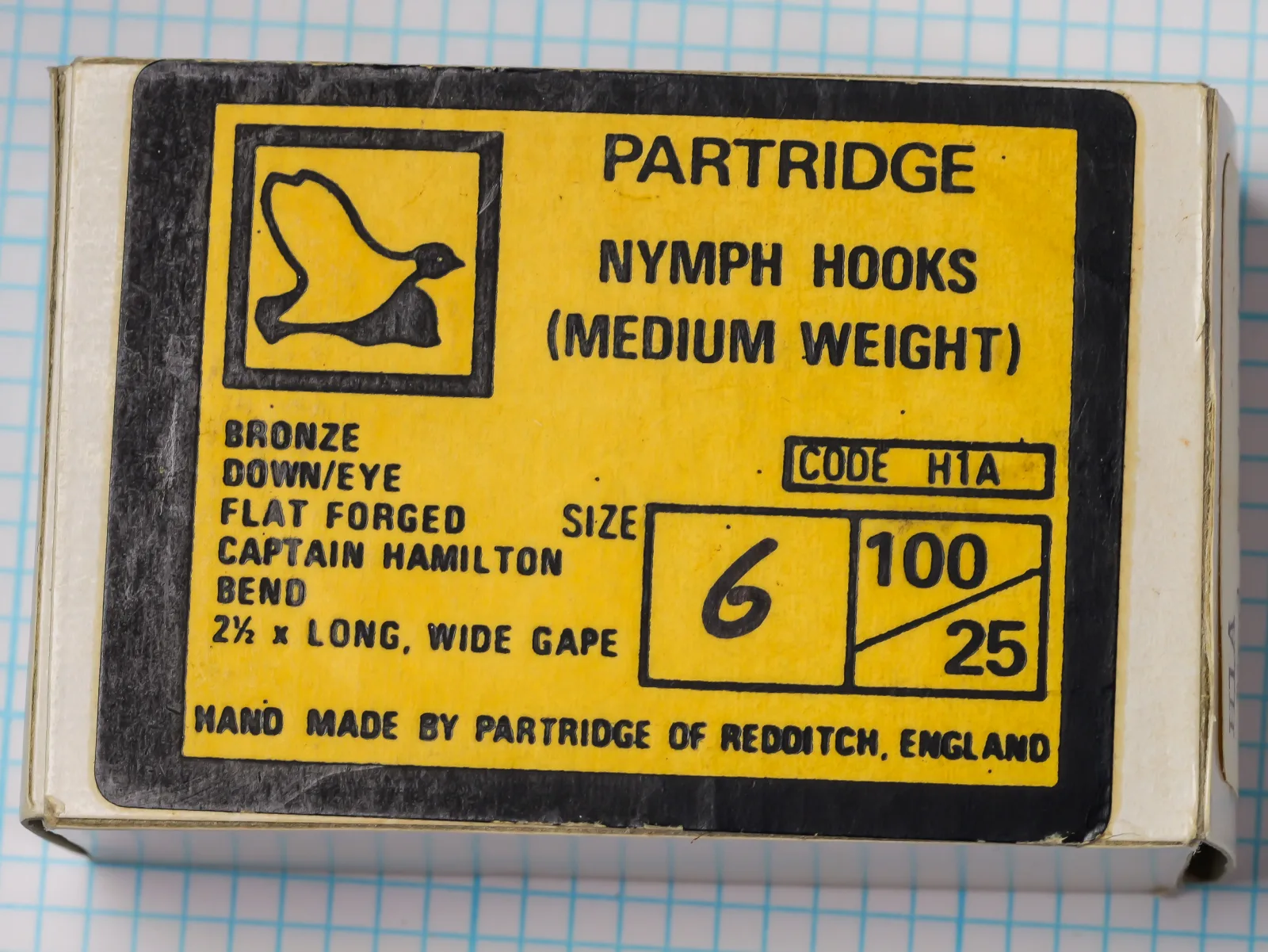
Vintage yellow and black card packet, consistent with Partridge Redditch-era packaging. Front label features bold black text on bright yellow background with stylized Partridge logo (winged bird silhouette in black box, upper left). Printed text in capitals: PARTRIDGE NYMPH HOOKS (MEDIUM WEIGHT), BRONZE DOWN/EYE FLAT FORGED CAPTAIN HAMILTON BEND, CODE H1A, size (handwritten or printed variant per card), 100/25 (quantity marking). Bottom line: HAND MADE BY PARTRIDGE OF REDDITCH, ENGLAND. No barcode visible. No postal code on address line (if present). Paper stock is thin cardboard, typical of 1950s–1970s production. Print method appears to be letterpress or early offset. Three specimen boxes photographed; size 6, size 10, size 12 visible on separate cards.
Low ($8): Good condition, opened packaging, near-complete hook count (95–99 of 100), minor packaging wear.
High ($16): Excellent to Mint condition, sealed or near-sealed packaging, complete hook count, minimal wear, pristine bronze finish, clear printing on card.
Premium factors: Redditch origin (pre-1996), smaller sizes (14+), hand-lettered sizing, sealed packaging, complete sets of 100.
Platforms: Based on 6 eBay sold listing(s), $9.95–$35.12; eBay market history (Apr 20, 2023 – Apr 19, 2026) avg $10.56, range $3.59–$21.00. Most sales are bulk lots (100–1000 hooks) or size variants (8, 10, 12); individual size 14–16 cards in sealed condition command upper range ($12–$21). Single size 6 sealed card observed at $13.99.
Confidence: V verified — eBay market data over 36-month period. Note: eBay data skews toward common sizes (8–12) and bulk lots, so smaller-size premiums are likely underrepresented. Collector market (dedicated fly-tying retailers, Spey Pages forum sales) may yield higher values for exceptional examples.
eBay UK and US (search: Partridge H1A, Partridge nymph vintage, Redditch hooks). Fly-tying retailers (Sprite Fishing, traditional UK distributors). Spey Pages classifieds. Tackle fairs and antique fishing-tackle shows in England (Midlands region). Local UK dealers specializing in vintage hooks (Wincanton area, near Fishing Matters UK office).
| Title | Price | Date | Condition |
|---|---|---|---|
| Partridge H1A Medium Weight Nymph Hooks Captain Hamilton Bend Fly Tying Hooks | $12.99 (asking) | active | New other (see details) |
| 100 Partridge H1A Size 12 Nymph Hooks Med. Wt. Captain Hamilton Bend Fly Tying | $13.99 (asking) | active | New |
| Partridge H1A Captain Hamilton Nymph Hook 2 packs Of 25 1 sz 14 & 1 sz 16 | $9.95 (asking) | active | New |
| 100 Partridge H1A Size 8 Nymph Hooks Med. Wt. Captain Hamilton Bend Fly Tying | $13.99 (asking) | active | New |
| partridge H1A streamer fly hooks you choose sizes x 1000 wholesale bulk | $35.12 (asking) | active | New |
| Partridge Of Redditch Steel Captain Hamilton Nymph Hooks H1A Size 14 X25 Pack | $12.00 (asking) | active | New |
eBay market reference. Researcher-curated. Prices in USD. Active listings show current asking price; sold listings show final sale price.
Store the H1A in a cool, dry environment away from direct sunlight and moisture. Original packaging should be retained — the yellow card provides both aesthetic and protective value. If opened, store remaining hooks on the card in a closed ziplock bag or archival plastic sleeve, away from humidity and metal-to-metal contact with other hook cards or tackle items that could promote corrosion.
The bronze finish will develop a light patina over decades, which many collectors consider desirable and authentic. However, active corrosion (orange rust spots or flaking) should be prevented through climate control. If stored in a damp environment (high humidity, basement, attic), consider silica gel desiccant packs placed in the storage container.
The paper stock of vintage Redditch cards is susceptible to foxing (brown age spots) and water damage. Keep the card flat, away from bound books or materials that could transfer moisture. Avoid handling the face of the card with bare fingers; oils from skin can accelerate surface deterioration. If the card becomes visibly creased or torn, do not attempt to repair it with tape or glue — preservation of original condition is more valuable than restoration.
For hooks removed from the card and tied into patterns, store finished flies in a cool, dark place (fly box, sealed container, or museum jar) to protect the bronze finish and the paper-body dubbing or fur from light fading and insect damage.
Source: Partridge H1A yellow-card packet label, Redditch era (c. 1950–1975).
‘HAND MADE BY PARTRIDGE OF REDDITCH, ENGLAND’ — This claim, printed on the packet base, is significant. It confirms Redditch manufacture and predates the Mustad ownership era (1996–2009) and the subsequent transfer to Fishing Matters and China production. The phrase ‘hand made’ refers to the hand-forging process at the Crescent Works, where a smith’s hammer (powered by machinery but guided by hand) was used to shape each hook from wire stock. This marketing claim carries particular weight among collectors because it distinguishes Redditch-era hooks from later industrial manufacturing.
‘CODE H1A’ — The model designation ‘H1A’ appears on the card in a black-bordered box, a clear identifier. The H-series prefix indicates a long-body nymph hook derived from the historic Partridge platform; the ‘A’ suffix traditionally distinguished it from later variants (e.g., H1B, H2, etc.), though no competing codes from this family are extensively documented in public sources. The code format is consistent across the size range (size 6, 10, 12, 14 all carry the same ‘H1A’ designation), confirming that the model was offered as a size-graduated line rather than discrete patterns.
‘NYMPH HOOKS (MEDIUM WEIGHT)’ — The parenthetical ‘(MEDIUM WEIGHT)’ is a functional descriptor. Partridge offered hooks in fine-wire, medium-weight, and heavy-wire grades; the H1A medium-weight specification targets the broad range of soft-bodied nymphs requiring moderate strength without excessive rigidity. This claim is supported by caliper measurements (~0.023–0.025 inches on size 14), which fall squarely between dedicated dry-fly fine-wire hooks and salmon/heavy-nymph hooks.
‘BRONZE DOWN/EYE FLAT FORGED CAPTAIN HAMILTON BEND’ — A detailed technical specification. ‘Bronze’ identifies the finish (warm reddish-brown, not black or nickel). ‘Down/Eye’ is potentially ambiguous — it may refer to ‘down-eye’ (eye angled downward) or ‘down-facing eye.’ This discrepancy may indicate a typographical error in the card design or a now-obsolete terminology convention. ‘Flat forged’ refers to the hand-forging process, in which the wire is shaped under a falling hammer. ‘Captain Hamilton bend’ correctly identifies the bend family, as confirmed by historical records and the Partridge company archives.
‘100/25’ — The quantity notation in a black box (100 above, 25 below) indicates that the card originally contained either 100 hooks or was marked for a 100-hook bulk format with a subset of 25 visible or sold individually. Historical Partridge cards typically contained 25 hooks per card, suggesting that the ‘100’ may refer to the case lot size (four cards of 25 each = 100 hooks per case to distributors), while the ’25’ indicates the per-card count. This is a standard commercial packaging convention of the mid-20th century.
The H1A is offered across a broad size range from 6 to 18 (or larger), which is unusual for a nymph hook because the shank length and gap width scale proportionally, unlike some modern hook lines where multiple sizes may share identical shank geometry (a ‘gap-based’ sizing system). Vintage Partridge documentation and collector measurements confirm that the H1A follows a traditional proportional scaling model: each size increment reduces the overall length and gap width in approximate geometric progression, while maintaining consistent bend geometry and wire proportions.
On the documented specimens: size 6 measures approximately 0.70–0.75 inches overall (measured); size 14 measures 0.57–0.61 inches (confirmed by caliper at 0.59 inches). This 20–25% reduction in length across eight hook-size steps (6 to 14) is consistent with the traditional British ‘size series’ convention, where each step represents a reduction of approximately 2–3% in linear dimension.
Modern fly fishers accustomed to Japanese or Scandinavian sizing (where a TMC 2488H size 14 may closely resemble a size 12 in some lineups) may find the proportional scaling of the H1A initially counterintuitive. However, this is authentic to the Redditch tradition and reflects the hand-forged nature of the hooks — each size was essentially a scaled-down duplicate of the larger size, rather than a rationalized industrial design with fixed shank lengths.
For tyers transitioning from modern hooks to vintage H1A specimens, sizing down one or two sizes from the intended fly size (e.g., using size 16 H1A for a pattern called for in size 14 on a modern hook) is a reasonable approach to account for the finer wire and smaller proportions of the vintage stock.
| P | Photographically verified — Directly observable in the photograph(s) on this page. |
| V | Verified by documentation — Confirmed by manufacturer catalog, spec sheet, or published reference. |
| I | Inferred — A logical deduction from observable or documented evidence, not directly stated. |
| E | Estimated — An approximation based on visual comparison, proportional analysis, or limited data. |
| S | Speculative — A reasoned hypothesis that cannot be confirmed from available evidence. |
Unnotated claims are the compiler’s synthesis; see Sources. All photographs on garrenwood.com are taken on a measurement grid where each square equals 1/10 inch (0.1″ / 2.54 mm).
Your cart is empty.