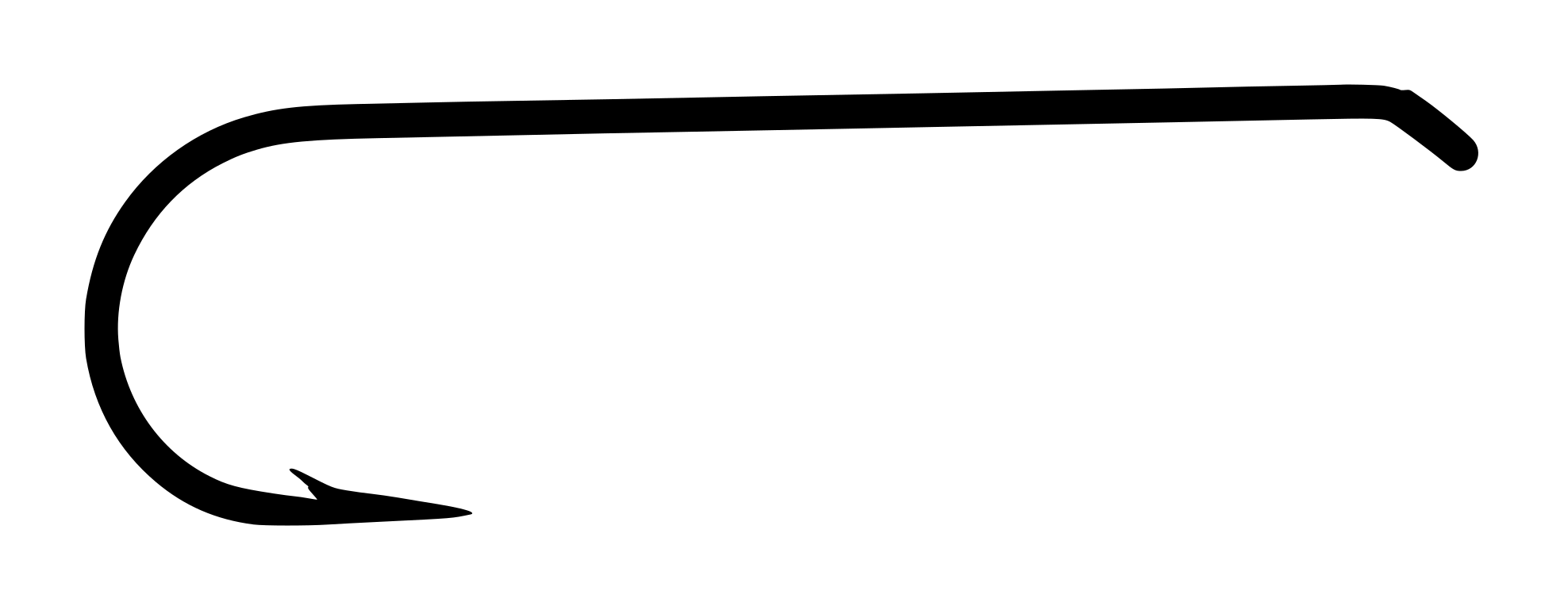
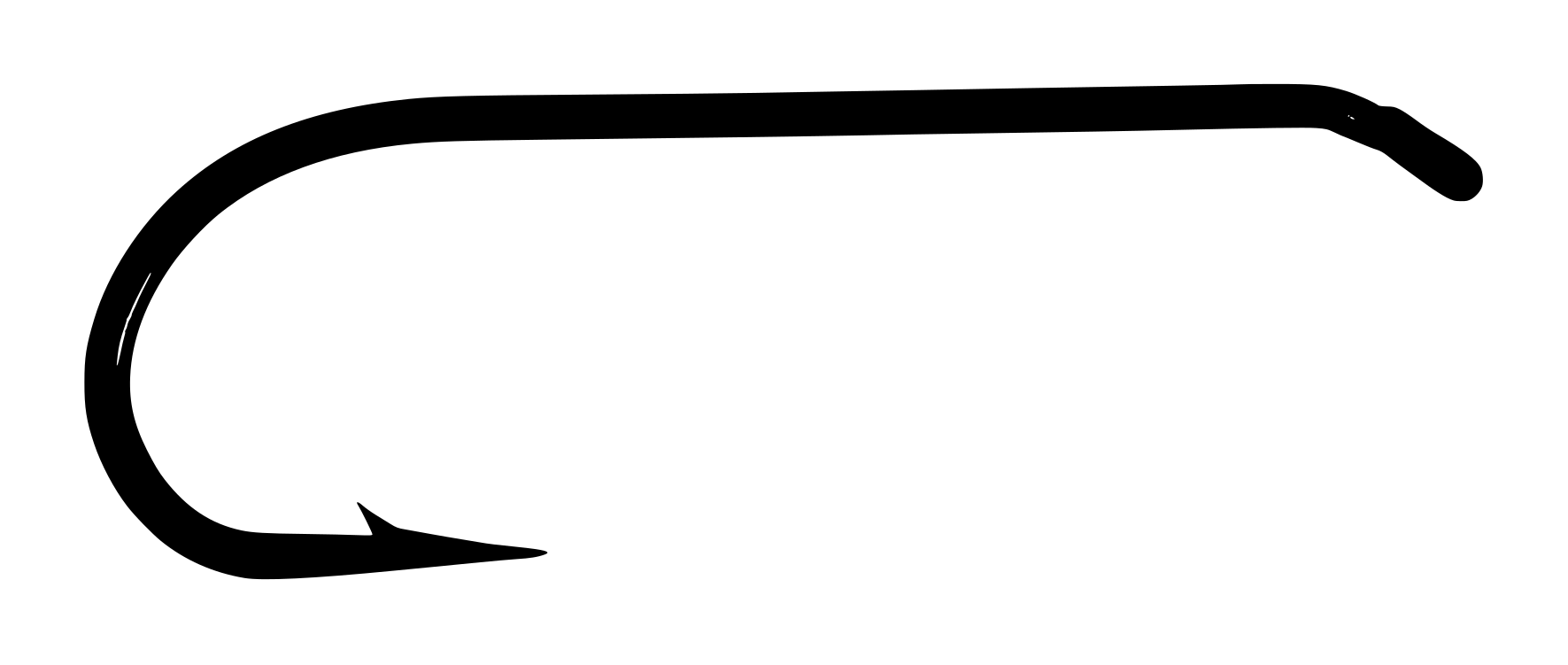
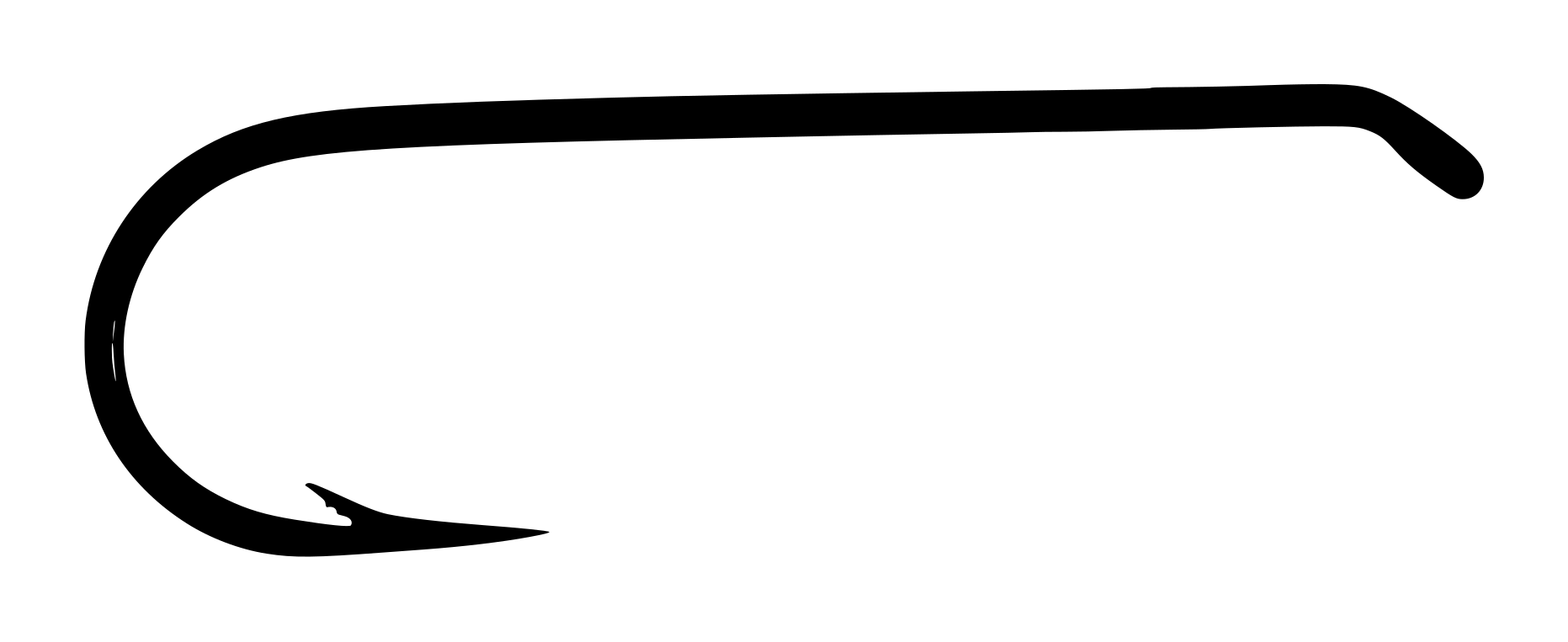
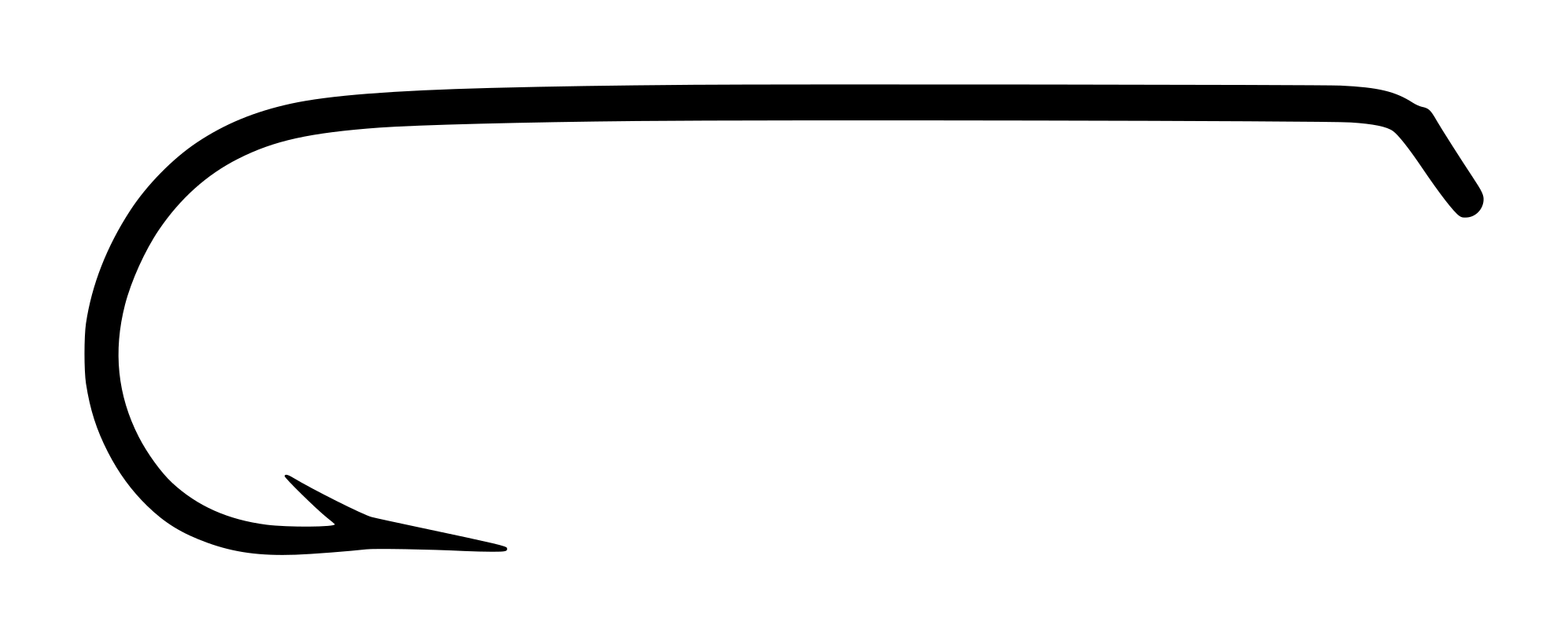
The Edgar Sealey 1721 B is a bronzed, 2X long, turned-down-eye hook with a round bend, from the Redditch firm Edgar Sealey & Sons. The size 2 specimen shown measures approximately 1.46 inches overall P and has a fine-looking wire, a long spear point and a raised cut barb.
The long shank and down eye suit wet flies, nymphs and shorter streamers; no Sealey catalog description stating its intended use has been found. The hooks came in a blue slide box of 100 with a cream paper label: pattern, size and quantity are stamped, while a later hand added “967/” (possibly 9671) and “2XL” in violet ink. The box is estimated to date from roughly 1950–1975 E.
Collecting significance: Edgar Sealey hooks are less commonly encountered than Allcock or Mustad equivalents, and boxed examples of this pattern are not often seen E.
Original packaging for Edgar Sealey 1721 B streamer hooks, Size 2. Hand-annotated label indicates 2XL shank length and 100-hook quantity.
Photographic record
2 cataloged imagesSelect any record to load it above.
2 images shown
Edgar Sealey 1721 B box label, Size 2, c. 1955–1965Original packaging for Edgar Sealey 1721 B streamer hooks, Size 2. Hand-annotated label indicates 2XL shank length and 100-hook quantity.Open originalEdgar Sealey 1721 B Size 2 streamer hook, bronzedEdgar Sealey 1721 B Size 2 streamer hook with bronzed finish and straight eye. The round Kendal bend shows the characteristic geometry of mid-century British streamer patterns.Open original
Technical profile
Turned Down Ball Eye | Round / Kendal | 2X Long | Fine Wire | Spear Point | Bronzed
Eye
Ball Eye, Turned DownTurned-down eye, angled roughly 35–45 degrees below the shank line E. Eye construction (ball vs tapered) cannot be confirmed from the side-on photograph; the related Sealey 1752 B is recorded with a tapered eye, so a top-down view is needed to confirm ball construction.
Wire
Fine (1X Fine), Forged
Shank
2X Long — Plain
Bend
Round / Kendal, Narrow gapRound bend with a fairly even radius, the point running roughly parallel to the shank P. Offset (kirbed or reversed) and forging of the bend cannot be assessed from this side-on photograph; the forged profile recorded for this entry needs confirmation from a top-down view I.
Point
Standard / SpearBarb present, cut from the wire and standing noticeably proud of the point P, seated roughly 0.15" behind the tip E. Point is a long, finely tapered straight spear P.
Finish
Bronzed — Inferred (photographically likely)Warm brown bronze tone, uniform across shank, bend and eye P. The label does not state the finish. Wire texture remains visible beneath the finish, consistent with bronzing rather than japanning P. No rust or finish failure visible on the specimen shown.
Box lid and base show light surface toning and minor edge wear consistent with age and storage. Blue finish shows warmth variation and light scuffing on edges. Adhesive label is secure, inks remain legible despite age. Interior condition not photographed; hook count stated as 100 per label, not verified open.
The 1721 B combines a 2X long shank, round bend, turned-down eye, long spear point with a raised cut barb, and bronzed finish P. The wire appears fine for a size 2 hook in the photograph E; a caliper measurement is needed to classify it precisely, and no documented “1X fine” specification has been found. The entry records the hook as forged, but forging cannot be confirmed from a side-on photograph; a top-down view of the bend is needed I.
The eye is turned down at roughly 35–45 degrees from the shank E. A 2X long shank on a down-eye, round-bend hook is a common general-purpose fly-tying format, suited to wet flies, nymphs and shorter streamer and bucktail patterns.
Size & scale lab
Known manufactured size range:
2 P — only size documented; full manufactured range unknown
This pattern was made in sizes 2 (P) — only size documented; full manufactured range unknown. We have measurement for size 2. Know the others? Submit calipered measurements and we'll review and add them. Thank you!
The model code appears on the label as “1721,B” P. No Sealey catalog listing for pattern 1721 has been located for this entry, so its introduction date, catalog description and full size range are undocumented. The meaning of the ‘B’ suffix is unconfirmed; one possibility is a finish code, since other Sealey boxes are reported to carry finish letters (an ‘S’ for silver on S 4320 boxes) and this specimen is bronzed S. The factory-stamped size and quantity, with a separate hand-added “2XL” note, suggest a trade box of 100 supplied to a stockist or fly-tying dealer I. Sealey is reported to have made hooks until 1981, so the pattern could have remained available beyond the 1960s, but no dated reference confirms how long it was produced S.
Era and Packaging Dating
Firm dating evidence is limited. Edgar Sealey & Sons is reported to have made hooks from around 1930 until its Redditch factory closed in 1981, which sets the outer bounds I. The plain blue slide box with a stamped paper label and no branding on the photographed face is consistent with mid-twentieth-century British trade packaging, but no dated Sealey box of this style has been identified for comparison E. The handwritten '2XL' and '967/' notes appear to have been added after packing, probably by a stockist I, and do not date the box. The absence of a barcode on one photographed face is not meaningful evidence, since trade boxes often lacked barcodes. Range given as c. 1950–1975 E pending a dated comparison box or catalog listing.
A Mustad Number on a Sealey Box?
The printed parts of this label (pattern 1721,B, size 2 and quantity 100) were stamped at the factory, but someone later added two notes by hand in violet ink: '2XL' and a number that reads '967/', possibly '9671'. Mustad's pattern 9671 was a familiar 2X long, down-eye, round-bend bronzed fly hook, so the note may be a dealer's cross-reference translating the Sealey pattern into the Mustad number customers already knew S. If so, it is a small record of British hooks being sold alongside the Norwegian patterns that were widely used by fly tyers of the period.
Design lineage and influence
The round bend, 2X long shank and turned-down eye represent a standard mid-century fly-hook format rather than a distinctive Sealey design. Comparable 2X long, down-eye, round-bend bronzed hooks were made by other makers of the period, including Mustad’s pattern 9671; the handwritten “967/” on this box may be a stockist’s cross-reference to that pattern, though this cannot be confirmed S. No documented influence of the 1721 B on later hook design has been found, and no successor pattern has been identified.
Best matchRelated by Attribute
Computed automatically from catalog data — updated as new hooks are added.
Matches: Bend, Shank, Eye, Eye Orient., Finish +3 moreDiffers: Wire: Fine (1X Fine) vs Standard; Gap: Narrow vs Standard; Point: Standard / Spear vs Hollow Point +2 more
Matches: Bend, Shank, Eye Orient., Point, Finish +5 moreDiffers: Wire: Fine (1X Fine) vs Heavy (1X Heavy); Gap: Narrow vs Standard; Eye: Ball Eye vs Tapered Eye +2 more
Matches: Bend, Shank, Eye Orient., Point, Finish +4 moreDiffers: Wire: Fine (1X Fine) vs Standard; Gap: Narrow vs Standard; Eye: Ball Eye vs Tapered Eye +1 more
Matches: Bend, Wire, Eye Orient., Point, Finish +3 moreDiffers: Shank: 2X Long vs 3X Long; Gap: Narrow vs Standard; Eye: Ball Eye vs Tapered Eye +2 more
No Sealey catalog description stating the intended use of the 1721 B has been located. Its 2X long shank, round bend, turned-down eye and fine wire suit wet flies, nymphs and shorter streamers and bucktails I, giving room for tinsel or dubbed bodies and hackle while keeping the hook light. Traditional wet flies, bucktails and marabou streamers of the period are typical of the patterns tied on hooks of this format I.
Secondary Applications
Small salmon wets, saltwater baitfish imitations, large nymphs
Collector notes
Rated 4.5/10 — Edgar Sealey hooks are less often encountered than Allcock or Mustad. The original box adds interest over loose hooks or card packaging; the hook count is unverified. Size 2 is a standard size, so no size-specific scarcity premium applies. The main limiting factor is modest collector awareness of Sealey fly hooks relative to Redditch's larger makers.
Reference value
$12 – $28 USD estimate
Packaging condition
Very Good — light wear, fully legibleRecorded specimen
Packaging format
GW-ES-BOX-01Catalog code
Positive factors: Original slide box with factory-stamped label, in very good condition; period handwritten annotations that may record a stockist’s cross-reference; photographically confirmed bronzed finish; Redditch maker with an established following among British tackle collectors.
Limiting factors: Pattern 1721 has not been located in the Sealey catalogs consulted for this entry, which limits authentication certainty. The maker’s name is not visible on the photographed label face. Size 2 is a standard size with no rarity premium. No published fly pattern association or named designer credit. The hook count and the condition of the hooks inside the box have not been checked.
Most desirable variants: Boxes with the maker’s name or Octopus branding present; clear, legible labels; hooks confirmed bright and uncorroded; documented sizes other than 2, which would help establish the pattern’s range.
Condition factors affecting value: Box integrity (sleeve and tray intact), label legibility, and hook count and condition all affect value. A torn or separated box, a faded label, a short count or rust on the hooks would each lower value; no sales data is available to quantify these effects for this pattern E.
Packaging
Two-part slide box: blue-covered card sleeve over an inner tray (I — tray ends visible at the open sleeve ends). The top face carries a cream paper label (not foil). Stamped in black block type: '1721,B' (pattern), 'SIZE 2' and 'QTY 100' P. Added by hand in violet ink: '967/' at upper left (possibly '9671') and '2XL' at upper right, with the stamped size '2' circled P. No maker's name is visible on the photographed face; a faint pale mark on the lower side panel may be printing and should be photographed. Interior not photographed. Board and label show light edge wear and toning consistent with age.
Market Value Notes
Low ($12): Very Good condition, box opened, hook count near complete, minor box wear, label legible.
High ($28): Excellent condition, box unopened or nearly so, count confirmed, minimal wear to box and label, hooks confirmed bright.
Premium factors: Original box (vs. loose hooks or card), legible label, full count and bright hooks, maker attribution visible on the box.
Platforms: eBay UK, UK tackle auctions, specialist vintage tackle dealers.
Confidence: E estimated — no recorded sales of the 1721 B were found. Estimate anchored to boxed Redditch hooks of similar age and condition, adjusted for lower collector awareness of the Sealey brand.
Where to Find
eBay UK (search 'Edgar Sealey hooks', 'Sealey Octopus hooks' or 'Sealey 1721'), UK vintage tackle dealers and auctions, Midlands tackle fairs, and British sporting memorabilia dealers. Less common on eBay US or international platforms.
Collector's Identification Tips
To identify an Edgar Sealey 1721 B: (1) The label should carry the stamped pattern code “1721,B”, with size and quantity stamped in the same style; handwritten notes like those on this box were probably added by a stockist and will vary between examples I. (2) Look for the maker’s name or Octopus branding elsewhere on the box, since the pattern label alone does not identify the maker. (3) The box shown is a blue slide box with a cream paper label; compare against other documented Sealey boxes. (4) The finish should show a warm brown bronze tone under neutral light; cool silver-grey or glossy black indicates a different finish or pattern. (5) Hook geometry: round bend, 2X long shank, turned-down eye at a fairly steep angle, long spear point with a raised cut barb. (6) Loose hooks carry no maker’s mark, so attribution depends on the packaging. (7) Only size 2 is documented so far; other sizes are unrecorded rather than known to be rare, and are worth documenting if found.
Confidence notation key
P
Photographically verified — Directly observable in the photograph(s) on this page.
V
Verified by documentation — Confirmed by manufacturer catalog, spec sheet, or published reference.
I
Inferred — A logical deduction from observable or documented evidence, not directly stated.
E
Estimated — An approximation based on visual comparison, proportional analysis, or limited data.
S
Speculative — A reasoned hypothesis that cannot be confirmed from available evidence.
Unnotated claims are the compiler’s synthesis; see Sources. All photographs on garrenwood.com are taken on a measurement grid where each square equals 1/10 inch (0.1″ / 2.54 mm).