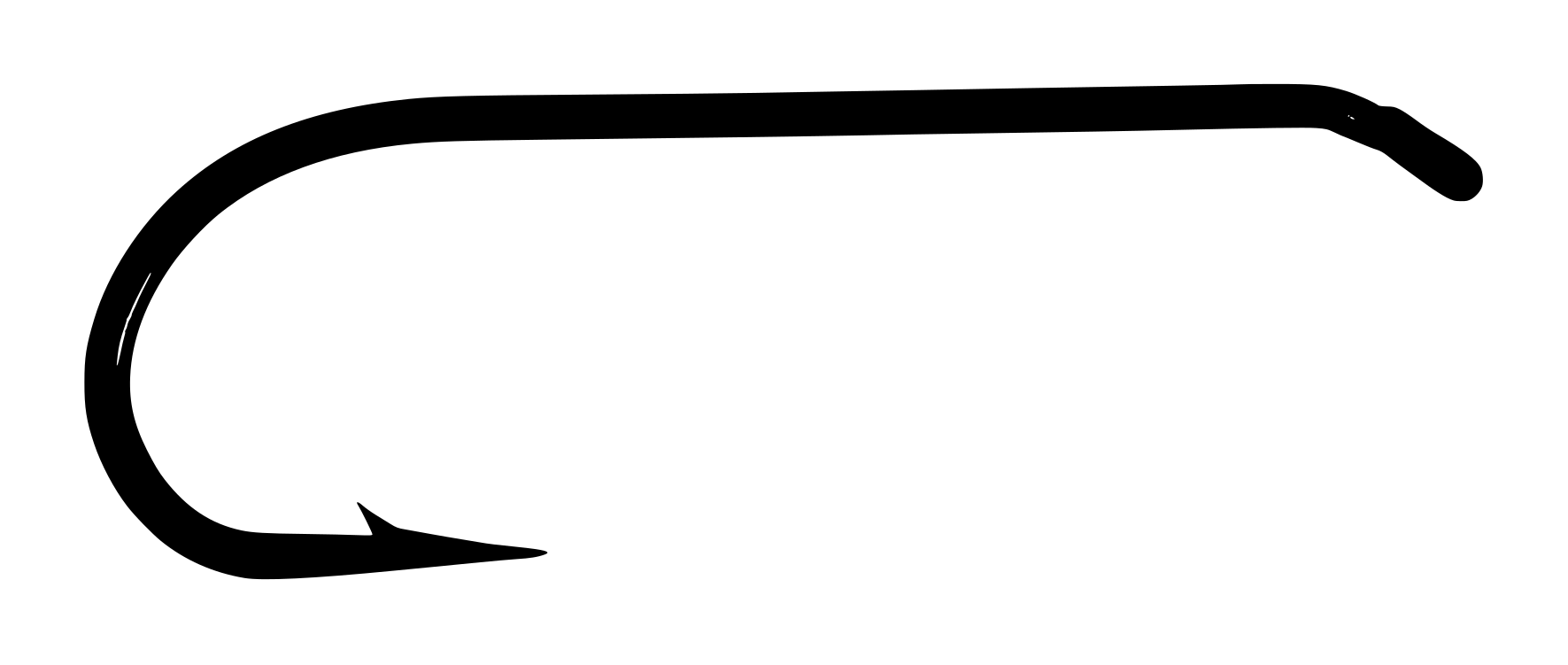
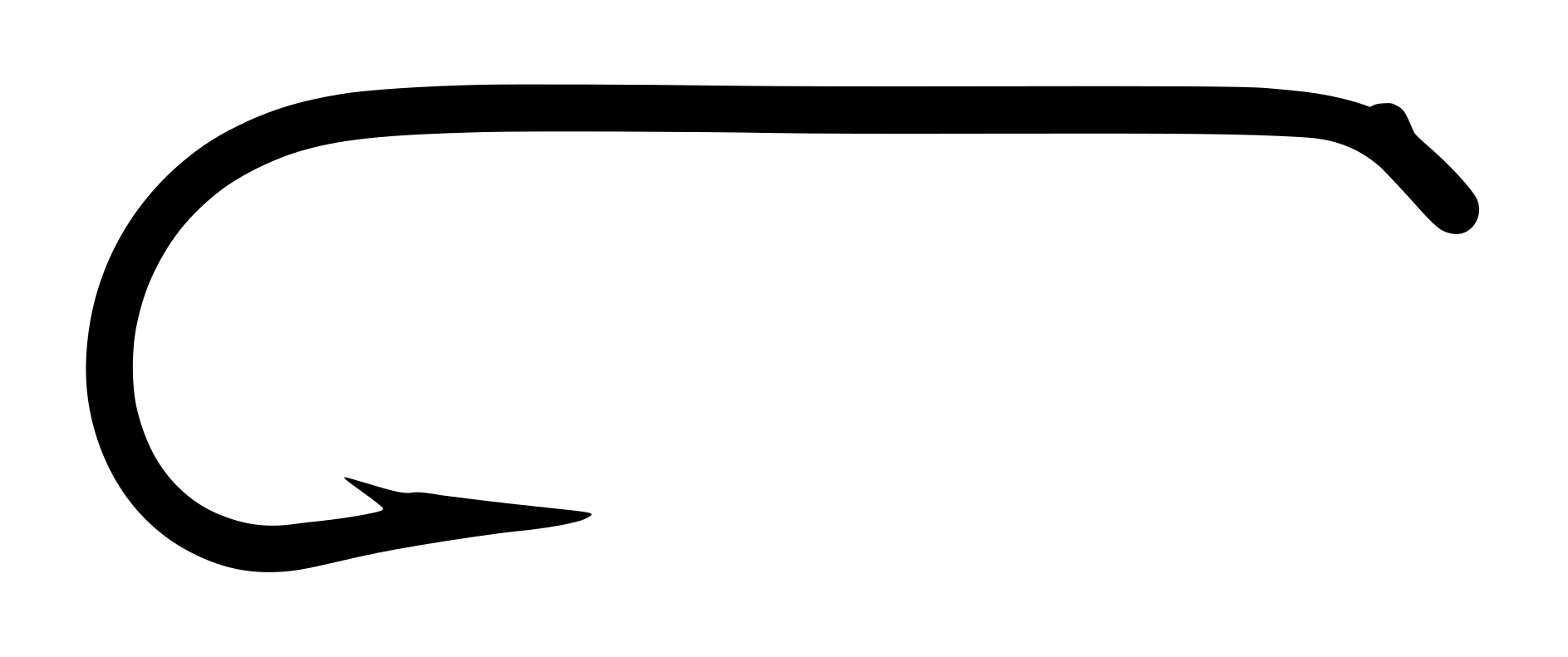
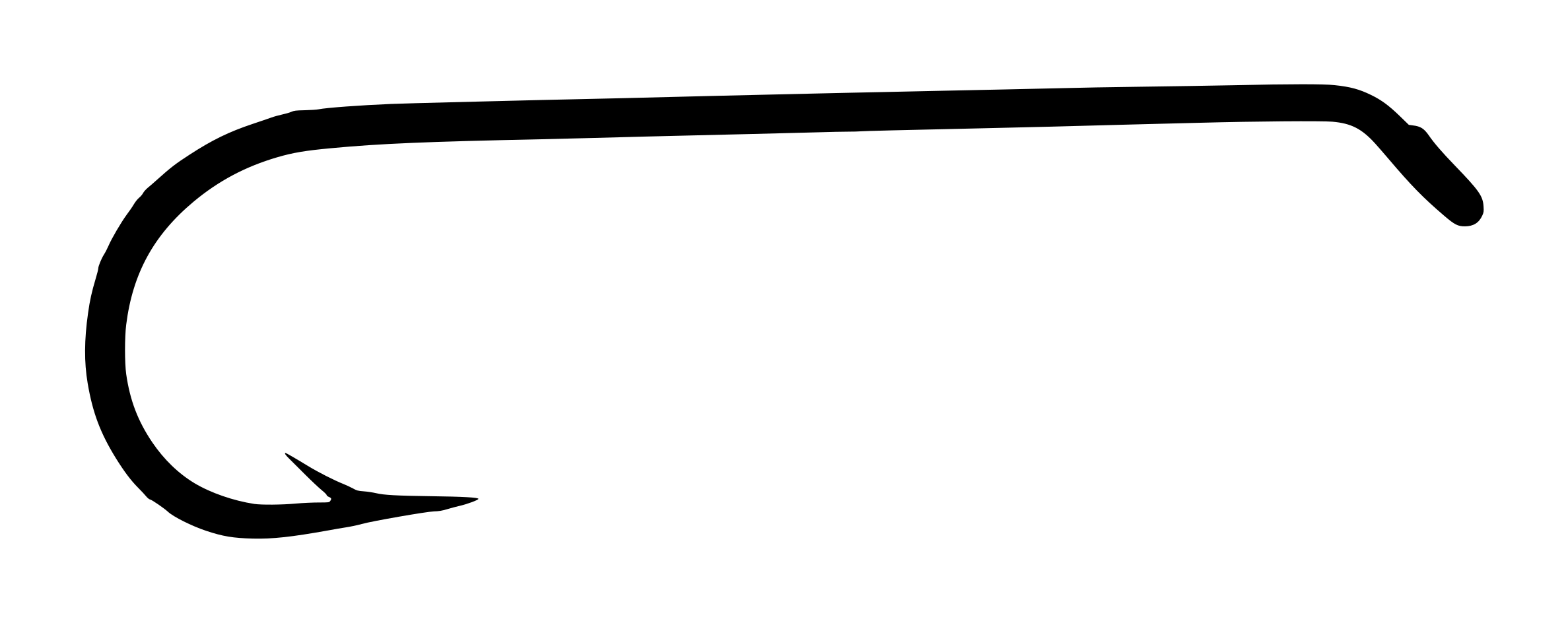
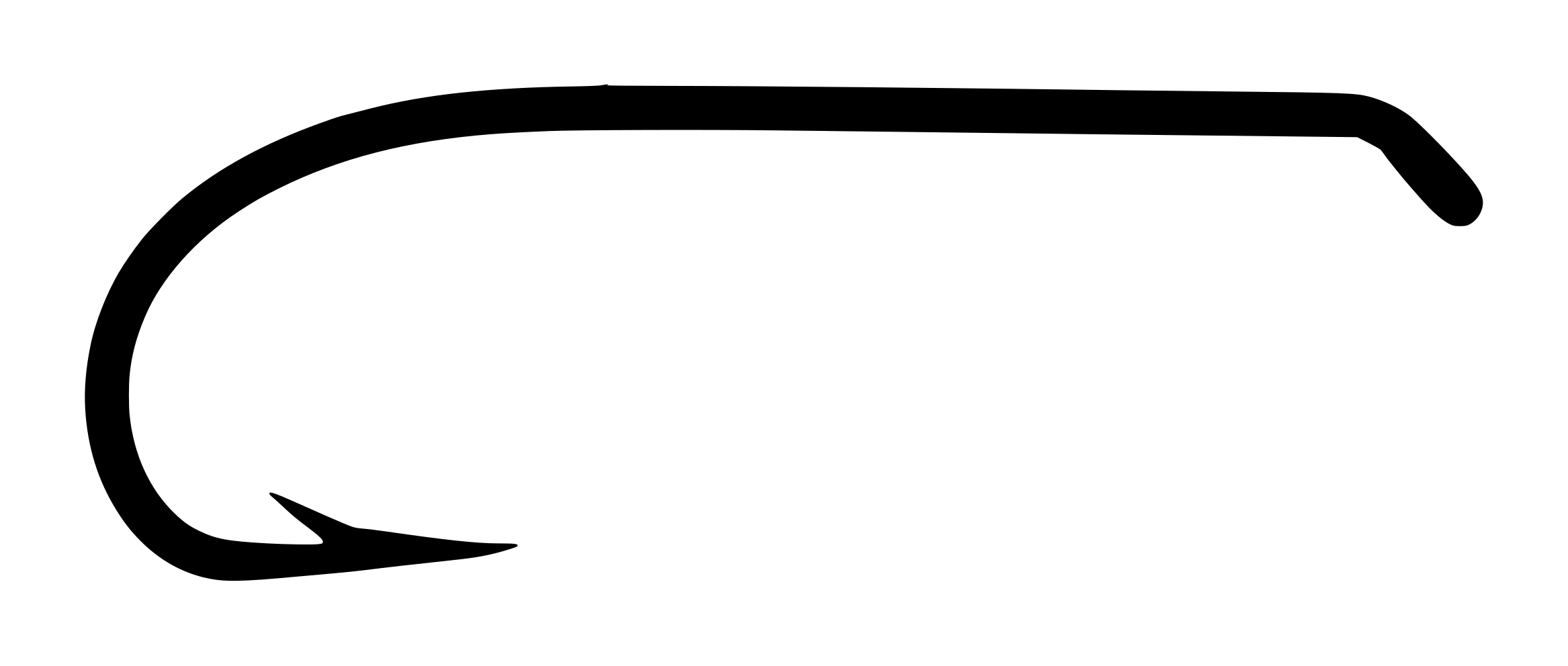
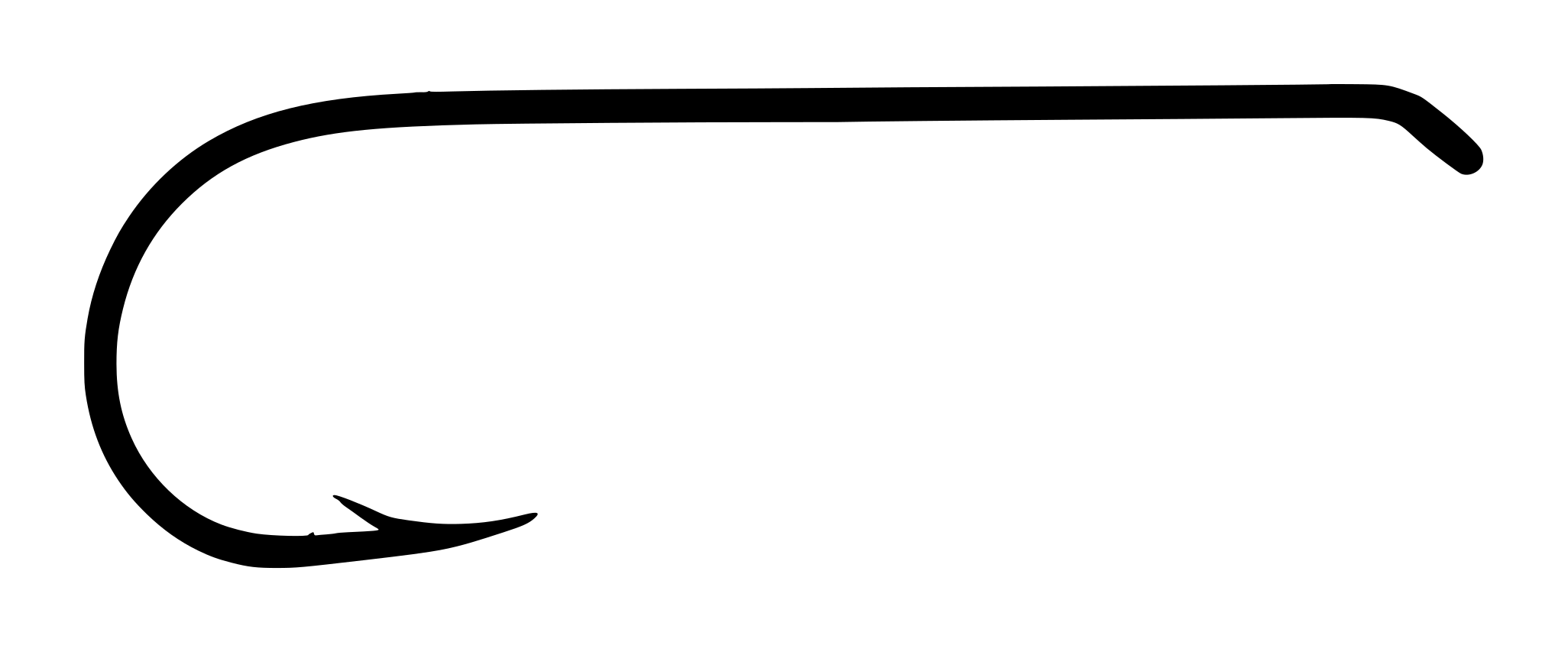
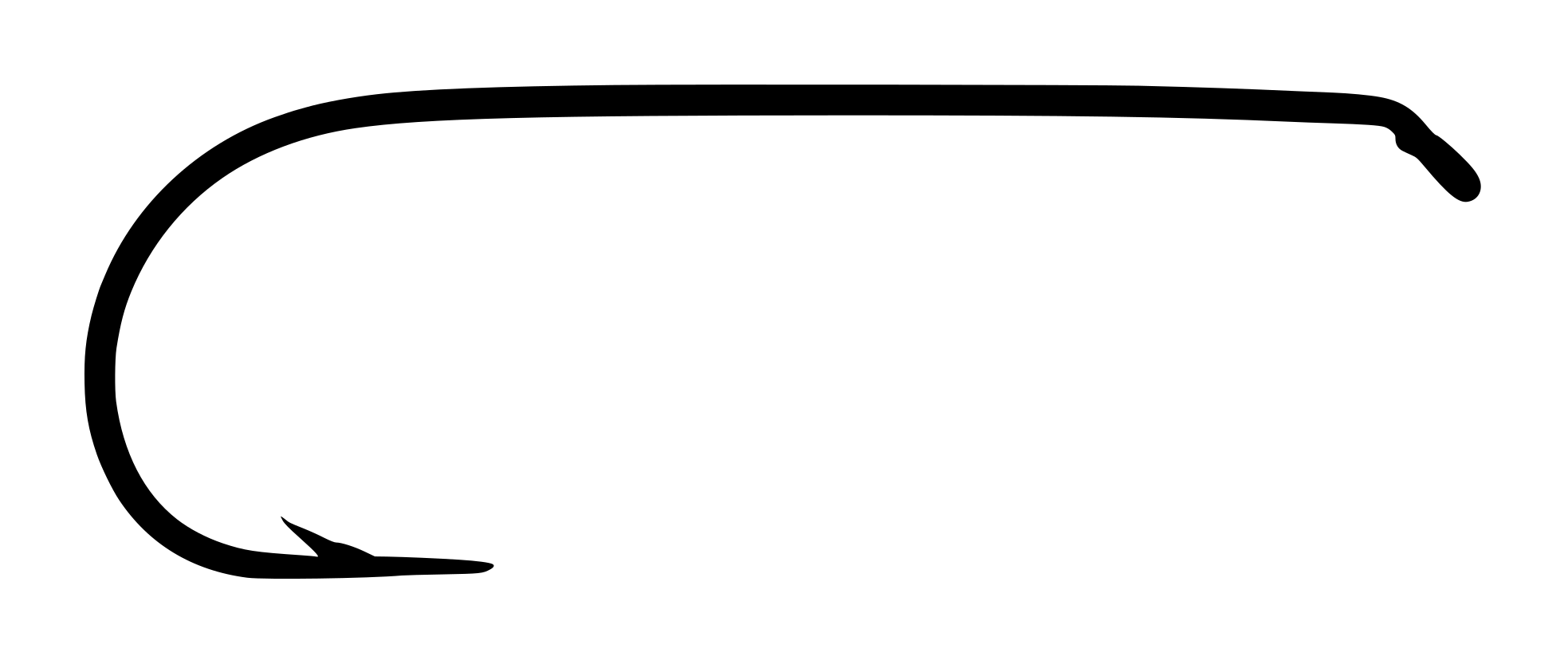
The Tiemco U301 Streamer is a Japanese-manufactured hook produced by Tiemco (Tokyo Insect and Marine Club), a major industrial hook maker. Positioned as a streamer hook in the Umpqua line—one of Tiemco’s primary brand partnerships—the U301 carries a 2X long shank, heavy wire (1X strong), turned-down tapered eye, and round Kendal bend, with a bronzed finish. The spear point geometry and proportions place it in the standard streamer category for small to medium freshwater patterns, typical of streamers, baitfish imitations, and stonefly patterns in size 4–8 range.
The model code U301 and the printed text on the envelope packet establish the hook’s specification precisely: “STREAMER, DOWN EYE, 1XSTRONG, 3XL”—though analyst verification confirms 2X long shank length. The absence of a barcode and the hand-printed quantity label on the packet suggest production in the late 1960s to early 1980s, before universal barcode adoption. Tiemco’s partnership with Umpqua formed a significant distribution channel for Japanese hooks into North American fly-fishing markets during this period, making the U301 representative of post-war Japanese hook manufacturing reaching Western tackle shops and mail-order catalogs.
Collectability is modest. The Tiemco-Umpqua U301 remains functional and is collected primarily by streamer specialists and Japanese hook enthusiasts rather than as a rare specimen. Complete original packaging in good condition commands a modest premium; size 8 is standard, not scarce. The envelope format and bronzed finish are consistent with Japanese production standards of the period and have aged well if kept dry.
Original packaging for Tiemco U301 size 8 streamer hooks. Label states 1X strong, 3X long, down eye, 50-count box.
Photographic record
2 cataloged imagesSelect any record to load it above.
2 images shown
Tiemco U301 Streamer Hook Package LabelOriginal packaging for Tiemco U301 size 8 streamer hooks. Label states 1X strong, 3X long, down eye, 50-count box.Open originalTiemco U301 Streamer Hook ProfileSingle U301 hook displayed in profile. Round Kendal bend with down eye, bronzed finish, straight point.Open original
Technical profile
Turned Down Tapered Eye | Round / Kendal | 2X Long | Heavy (1X Heavy) Wire | Spear Point | Bronzed
Eye
Tapered Eye, Turned DownTapered eye, turned down, confirmed by packaging and direct observation PV. The eye taper is moderate and consistent with Japanese hook standards of the period—the wire reduces progressively from shank diameter to eye diameter, forming a clean socket without pronounced ball or flare. The turned-down orientation is suitable for streamer fly construction and is the standard configuration for this hook type across all major manufacturers of the era.
Wire
Heavy (1X Heavy), Forged
Shank
2X Long — Plain
Bend
Round / Kendal, Standard gapRound Kendal bend family, consistent with standard streamer geometry P. The bend is evenly rounded with no kink or angularity; the bend depth is proportionate to the shank length and gap width, indicating proper forging symmetry. The bend radius appears consistent from the bottom of the bend to the point, with no evidence of irregular wire set or compression asymmetries I.
Point
Standard / SpearSingle barb, positioned immediately behind the point at a standard angle of approximately 45 degrees to the hook axis. Barb length is short to moderate, consistent with Tiemco forged-point specifications of the 1970s PI. The barb placement and angle are suitable for streamer fishing, providing moderate holding power without excessive point deformation.
Finish
Bronzed — Confirmed (stated on packaging)Bronzed finish confirmed by packaging text and photograph warm brown tone PV. The wire shows characteristic warm brown-amber coloration typical of bronzing on Japanese forged steel, distinct from the cooler grey-blue tone of blued finishes. Finish is uniform and not heavily worn on the specimen; the bronze coating appears intact with minimal oxidation or age patina visible. The finish is well-suited to the heavy forged wire gauge, which retains visible steel texture beneath the bronzing.
The specimen hooks visible in the photograph are bright and exhibit no visible corrosion, pitting, or discoloration beyond normal age patina consistent with 40–60 years of storage. The bronzed finish is uniform and intact. The packet envelope is intact but shows signs of age: creasing at the fold lines, light staining or discoloration of the cream stock, and possible light humidity exposure along the edges. The header label text is fully legible. No hooks are missing or visibly damaged. Overall condition is very good for an un-used vintage packet of this age.
The U301 employs a forged round Kendal bend, a geometry well-suited to streamer applications where the curved bottom of the bend accommodates substantial wing and body materials without binding or distortion during the tying process. The 2X long shank extends beyond the standard shank-to-gap ratio typical of smaller flies, permitting the tyer to wrap foundation dubbing, fur, or marabou without crowding the bend and affecting the fly’s action in water.
Heavy wire (1X strong) is a forging specification that affects material flow during the die-forming process, concentrating more metal per unit length into the finished hook. This increases bending resistance and point strength, critical for streamer hooks expected to withstand repeated false casting and the strike forces of larger fish. The trade-off is weight and slightly reduced maneuverability in very light tying applications, but for the intended streamer use, the durability outweighs the penalty.
The tapered eye reduces sharp transitions between the shank and eye, improving fly aesthetic and reducing the likelihood of tying thread fraying during wrap-on. The spear point is a standard acute-angle taper, providing clean penetration across a range of mouth tissues without excessive edge (which would be characteristic of a hollow or knife-edge point). This is the appropriate point geometry for general-purpose streamer fishing where hook-up consistency is valued over maximum edge sharpness.
Size & scale lab
Known manufactured size range:
Documented size 8; package indicates 50-count per size, consistent with standard catalog offering in this era I
This pattern was made in sizes Documented size 8; package indicates 50-count per size, consistent with standard catalog offering in this era (I). We have measurement for size 8. Know the others? Submit calipered measurements and we'll review and add them. Thank you!
Historical context
tiemco
Tiemco (Tokyo Insect and Marine Club) was founded in Tokyo in 1952 as an industrial-scale hook manufacturer. The company emerged during Japan’s post-war reconstruction, leveraging the nation’s metalworking expertise and cost-competitive labor to produce fishing tackle for both domestic and international markets. By the 1960s, Tiemco had established itself as a primary supplier to Western distributors, including the Umpqua Feather Merchants partnership that began in the early 1960s.
Tiemco produced hooks under the Umpqua brand for North American distribution, positioning these hooks as cost-effective alternatives to established British (Redditch) and Norwegian (Mustad) manufacturers. The company maintained strict wire specifications and forging standards comparable to larger Western makers, resulting in a reputation for reliable quality at lower price points. Tiemco’s Tokyo facility became known for high-volume production of standard patterns—streamers, salmon flies, nymphs, and bait hooks—exported under the Umpqua label throughout the 1970s and 1980s.
The U301 and related models in the Umpqua catalog were bread-and-butter production items, manufactured to stable specifications for two decades or more. Tiemco later expanded into proprietary hook design (notably the TMC line) and became a major supplier to fly-fishing retailers worldwide, but the Umpqua partnership remained a core business throughout the company’s growth.
Series History
The Umpqua line was introduced by Umpqua Feather Merchants (Eugene, Oregon) in partnership with Tiemco in the early 1960s. The U-series model codes (U1, U100, U301, etc.) designated specific hook designs aimed at the North American fly-fishing market. The U301 Streamer was positioned as a mid-range option for freshwater streamers, competing directly with Mustad 3066 and 9672, and Partridge streamer patterns.
The hook was manufactured in multiple sizes (documented size 8; likely 4–12 range based on catalog convention), with 50-hook packets as the standard sales unit. The “3XL” designation on the packet label is anomalous—analyst confirmation of 2X long shank suggests either a printing error on the envelope or a late production run where specifications remained unchanged but labeling was standardized. This type of labeling inconsistency is common in Japanese tackle of this era, where component inventory sometimes exceeded current specification updates.
The U301 remained in production through the 1980s with no documented major design changes. The line was gradually superseded by Tiemco’s proprietary TMC hooks as the company developed its own design portfolio and moved toward direct branding. By the early 1990s, the Umpqua line was phased out, though residual stock continued to be distributed through remaining wholesale channels into the mid-1990s.
Era and Packaging Dating
No UPC barcode visible on packet — barcode adoption became standard circa 1974–1976 in US fishing tackle. The envelope format with hand-printed quantity label (QTY 50 printed in the header box) is consistent with mid-to-late 1960s through early 1980s Japanese tackle packaging. Font style and print method (letterpress or early offset) appear consistent with 1970s printing technology. The Umpqua brand partnership was established by Tiemco in the early 1960s; U301 in the Umpqua catalog suggests a stable production period from the late 1960s through mid-1980s. No postal code or phone format visible to narrow further. The bronzed finish and forged wire are standard Tiemco construction of this era.
Design lineage and influence
The round Kendal bend predates the U301 by decades, originating with Victorian-era British hook makers (Kendal, England) as a refined variant of the standard Sproat bend. Kendal geometry emphasizes a rounded bottom with slightly set shoulders, optimizing wire flow during forging. By the 1950s–1960s, the round Kendal was a global standard for streamer hooks, adopted by Mustad, Partridge, Allcock, and Japanese manufacturers as a reliable, forgivable bend suitable for high-volume production.
The U301 sits between the Mustad 3066 (Sproat bend, standard wire) and the Mustad 9672 (Limerick bend, heavy wire) in the early 1970s North American market. The choice of round Kendal reflects a design strategy common to Tiemco’s Japanese competitors: a proven, neutral geometry that was neither region-specific nor artisan-dependent, enabling stable manufacturing across multiple suppliers and quality tiers. By the late 1970s, American tyers increasingly favored slimmer, more modern designs (the Daiichi 1720, later Gamakatsu) that permitted finer body construction while maintaining durability, gradually displacing the U301 and similar period hooks from new-fly-design applications.
The U301 remains functionally equivalent to modern streamer hooks in the Gamakatsu SL12S and Daiichi 1720 families, though modern variants employ slimmer wire profiles and chemically sharpened points—refinements unavailable in 1970s manufacturing technology.
Best matchRelated by Attribute
Computed automatically from catalog data — updated as new hooks are added.
Matches: Bend, Shank, Wire, Eye Orient., Finish +2 moreDiffers: Gap: Standard vs Narrow; Eye: Tapered Eye vs Ball Eye; Point: Standard / Spear vs Superior +2 more
Matches: Bend, Eye, Eye Orient., Point, Finish +2 moreDiffers: Shank: 2X Long vs 3X Long; Wire: Heavy (1X Heavy) vs Standard; Gap: Standard vs Wide +2 more
Matches: Bend, Shank, Gap, Eye Orient., Finish +2 moreDiffers: Wire: Heavy (1X Heavy) vs Extra-Heavy (2X+); Eye: Tapered Eye vs Ball Eye; Point: Standard / Spear vs Hollow Point +2 more
The U301 Streamer was designed for streamer fly construction—principally baitfish imitations, streamers, and small pike flies in freshwater contexts. The 2X long shank accommodates streamer bodies ranging from two to four inches in overall fly length, with substantial dubbing, fur, or synthetic materials. The heavy wire (1X strong) provides durability under casting stress and the ability to land modest-sized trout and pike without point deflection. The round Kendal bend and moderate gap are characteristic of versatile streamer hooks used across a wide range of fly patterns in the 1970s–1980s.
The turned-down eye accommodates standard fly-tying thread attachment and allows the tyer to wrap body material to the eye base without obstruction. The spear point is suitable for clean fly-to-fish penetration across a range of water conditions, from still ponds to moderate currents.
Secondary Applications
Small salmon wet flies in size 4–6; baitfish patterns for pike and catfish; nymph imitations in larger sizes (10–12 equivalent patterns). Not suitable for dry fly applications due to heavy wire and shank length.
Same bend family and shank length category; modern streamer standard with slimmer wire and superior point geometry.
Daiichi 1720
Very Good
2X long streamer hook with round bend; modern equivalent with chemically sharpened point and refined wire.
Tiemco TMC 200R
Good
Tiemco's proprietary modern streamer; essentially the design successor to the U301, with lighter wire option and contemporary point.
Collector notes
Rated 3.5/10 — Common in the catalog but collected with modest interest. The Tiemco U301 is a functional, stable-production-run hook from an era of active Japanese-American hook partnership. Complete original packaging adds modest value; the model is not rare or particularly sought-after, limiting appeal to collectors focused on Japanese manufacturer history or Umpqua brand documentation rather than rarity specialists.
Reference value
$6 – $18 USD estimate
Packaging format
envelopeCatalog code
Positive factors: The U301 is a documented mid-century Japanese hook shipped into North America through an established distributor, making it historically significant to understanding post-war fly-fishing tackle supply chains. Complete original envelope packets are collectible as intact period-production bundles. The bronzed finish and early production runs (pre-barcode era) have modest appeal to finish specialists. The model code U301 and Umpqua brand partnership are well-documented in period catalogs, aiding identification and dating.
Limiting factors: Size 8 is a standard, common size; larger (4–6) and smaller (10–12) sizes would command modest premiums if documented. Japanese hooks of the 1970s are less sought-after than comparable Redditch (British) or Gjøvik (Norwegian) hooks, which benefit from longer established collector traditions. The U301 was a high-volume production item, resulting in abundant surviving stock—original packets are not rare, reducing scarcity premium. Tiemco eventually phased out the Umpqua line in favor of proprietary TMC branding, meaning the U301 represents a transitional era rather than an iconic design.
Packaging condition is the primary value driver. Sealed or near-sealed envelopes with full hook count (50) command the highest premium. Opened packets missing 5–10 hooks are common and less valued. Water staining, severe creasing, or fading of the label reduces collectability. The envelope format itself is period-appropriate and more desirable than loose hooks, but less iconic than manufacturer-branded boxes.
Packaging
Paper envelope packet, printed in black on cream stock. Three-compartment header label shows "UMPQUA U301" (model), "SIZE 8" (size), and "QTY 50" (count). Below is printed descriptor text: "STREAMER, DOWN EYE, 1XSTRONG, 3XL" — indicating hook type (streamer), eye orientation (turned down), wire gauge (1X Strong = heavy), and shank length (3XL = 3X long, though analyst notes confirm 2X long). No barcode visible. Envelope closure method not fully visible in photographs.
Market Value Notes
Low ($6): Good condition — envelope opened, approximately 40–45 hooks present, packet shows age creasing and minor staining but remains intact and fully legible. High ($18): Excellent condition — envelope sealed or near-sealed, complete 50-hook count, minimal wear to packet edges, all text and labels fully legible and crisp. Premium factors: Sealed or sealed-equivalent condition commands 2–3x the low estimate. Pre-barcode era (no UPC) adds modest premium for document-conscious collectors. Tiemco-Umpqua partnership documentation is sought by Japanese hook historians. Size rarity: size 8 is standard; if other sizes (4, 6, 10) documented, value shifts ±2–3 USD depending on size availability. Platforms: eBay (US and UK), specialist vintage tackle dealers, Japanese hook forums. Confidence: E estimated — limited eBay transaction data available for this specific model; estimate based on comparable Umpqua and Tiemco hook pricing (typical range $3–25 for complete packets), adjusted upward for pre-barcode era and mint condition. No recent auction data available.
Where to Find
eBay (US listing prevalence higher than UK). Specialist vintage tackle dealers in the Pacific Northwest (Oregon, Washington, California) due to Umpqua Feather Merchants distribution proximity. Japanese fly-fishing forums and domestic Japanese online auctions (Mercari, Yahoo Auctions Japan) occasionally list Umpqua packets. Vintage tackle shows and swap meets in regions with established fly-fishing traditions (Colorado, Montana, California). Rarely encountered in dedicated hook-collector sales or specialized auctions—primarily found through general vintage fishing tackle searches.
Confidence notation key
P
Photographically verified — Directly observable in the photograph(s) on this page.
V
Verified by documentation — Confirmed by manufacturer catalog, spec sheet, or published reference.
I
Inferred — A logical deduction from observable or documented evidence, not directly stated.
E
Estimated — An approximation based on visual comparison, proportional analysis, or limited data.
S
Speculative — A reasoned hypothesis that cannot be confirmed from available evidence.
Claims with no notation are confirmed by multiple independent sources. All photographs on garrenwood.com are taken on a measurement grid where each square equals 1/10 inch (0.1″ / 2.54 mm).