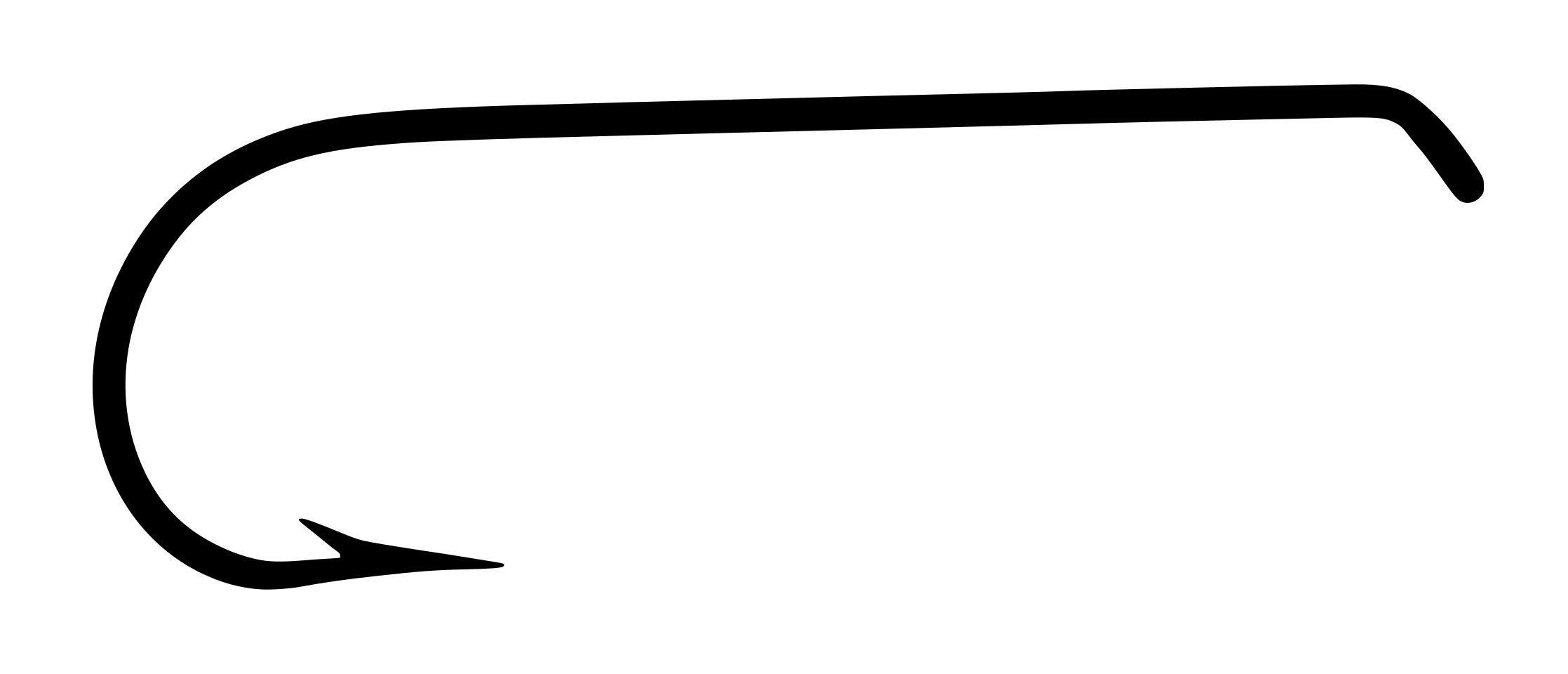
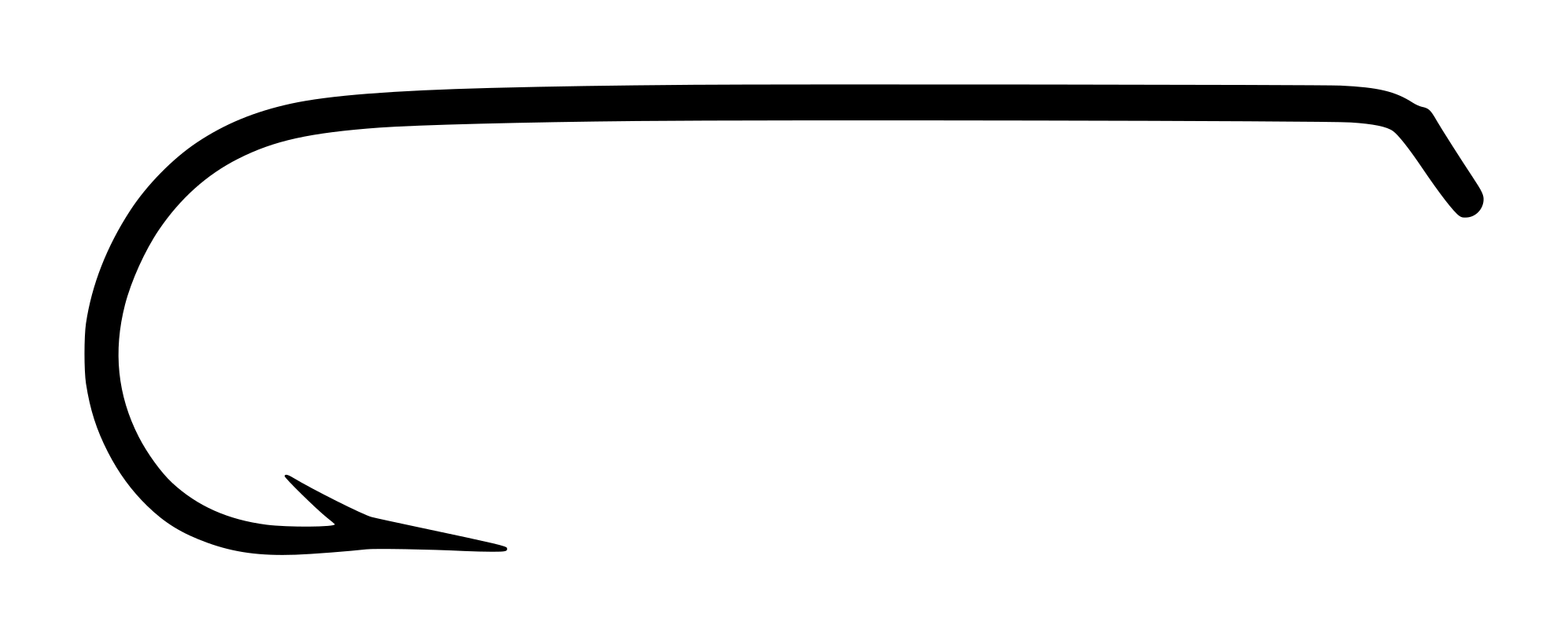
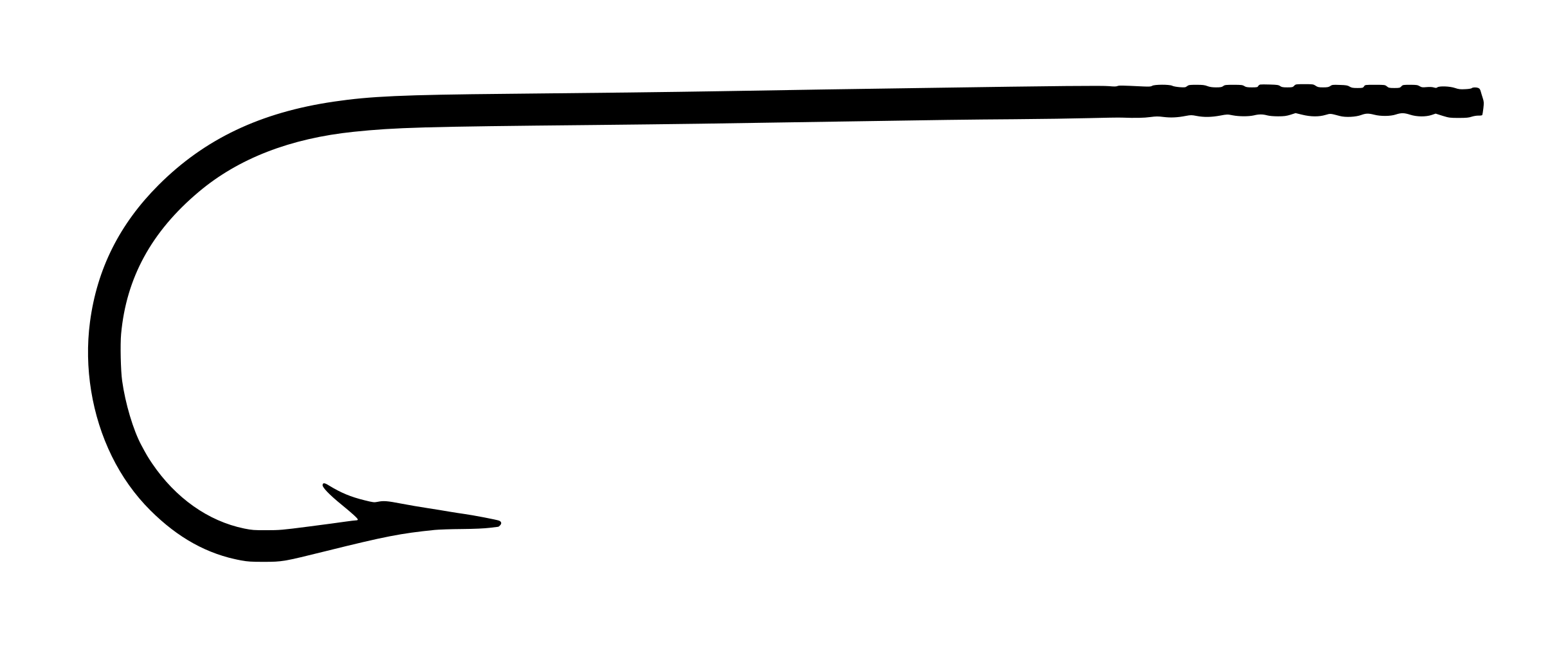
The Eagle Claw Model 213 is a standard-shank Sproat-bend hook manufactured by Wright & McGill Co. of Denver, Colorado. This size 2 specimen comes from a 100-hook sales card dating to the 1940s-1950s, as evidenced by the letterpress packaging and absence of barcode.
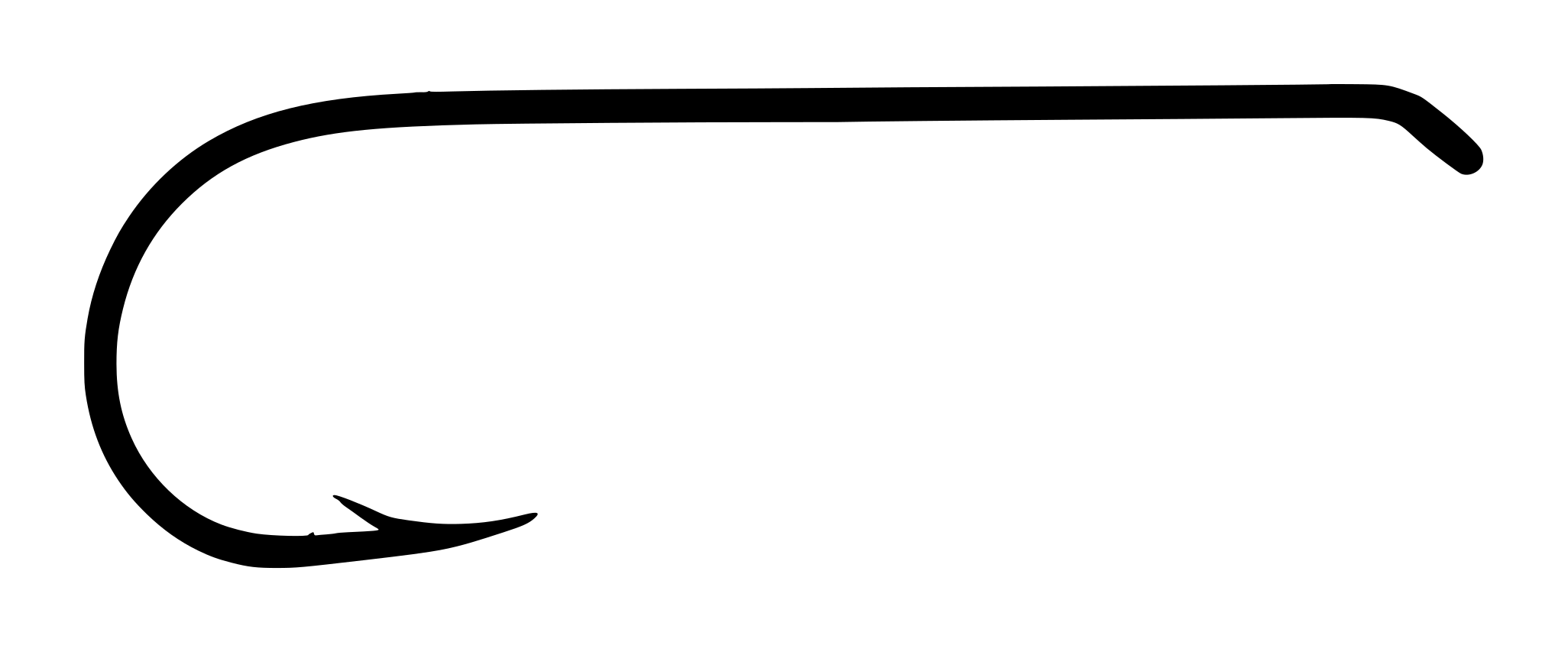
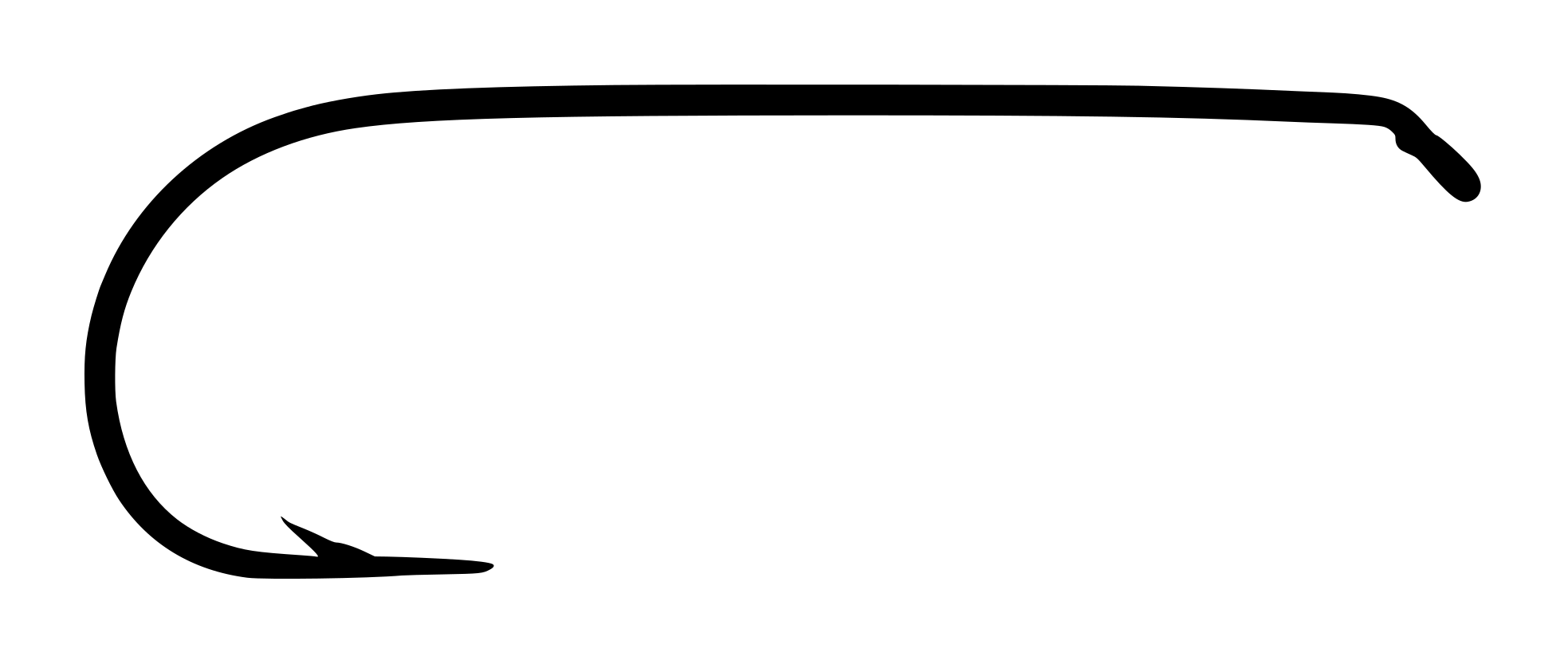
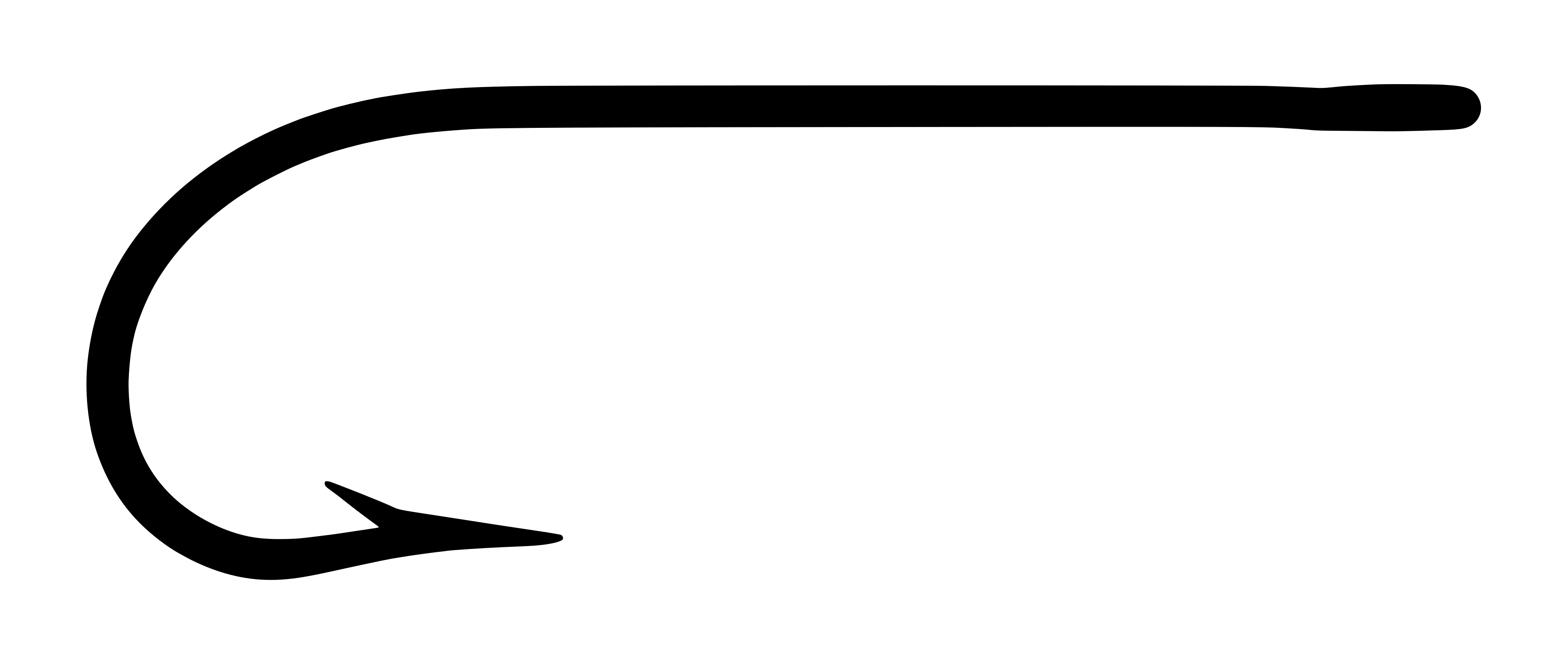
The hook features a turned-down ball eye, standard wire gauge, and a bronzed finish with visible steel grain. The hollow point and moderate bend depth made it a versatile choice for both dry and wet fly patterns of the mid-twentieth century. The Sproat bend form was particularly favored for traditional American trout flies.
Wright & McGill hooks are widely collectible among American tackle historians, though this particular example is common in the larger-size range. The original kraft-bordered card in good condition represents a solid mid-century production example of a manufacturer known for consistent quality and accessible pricing.
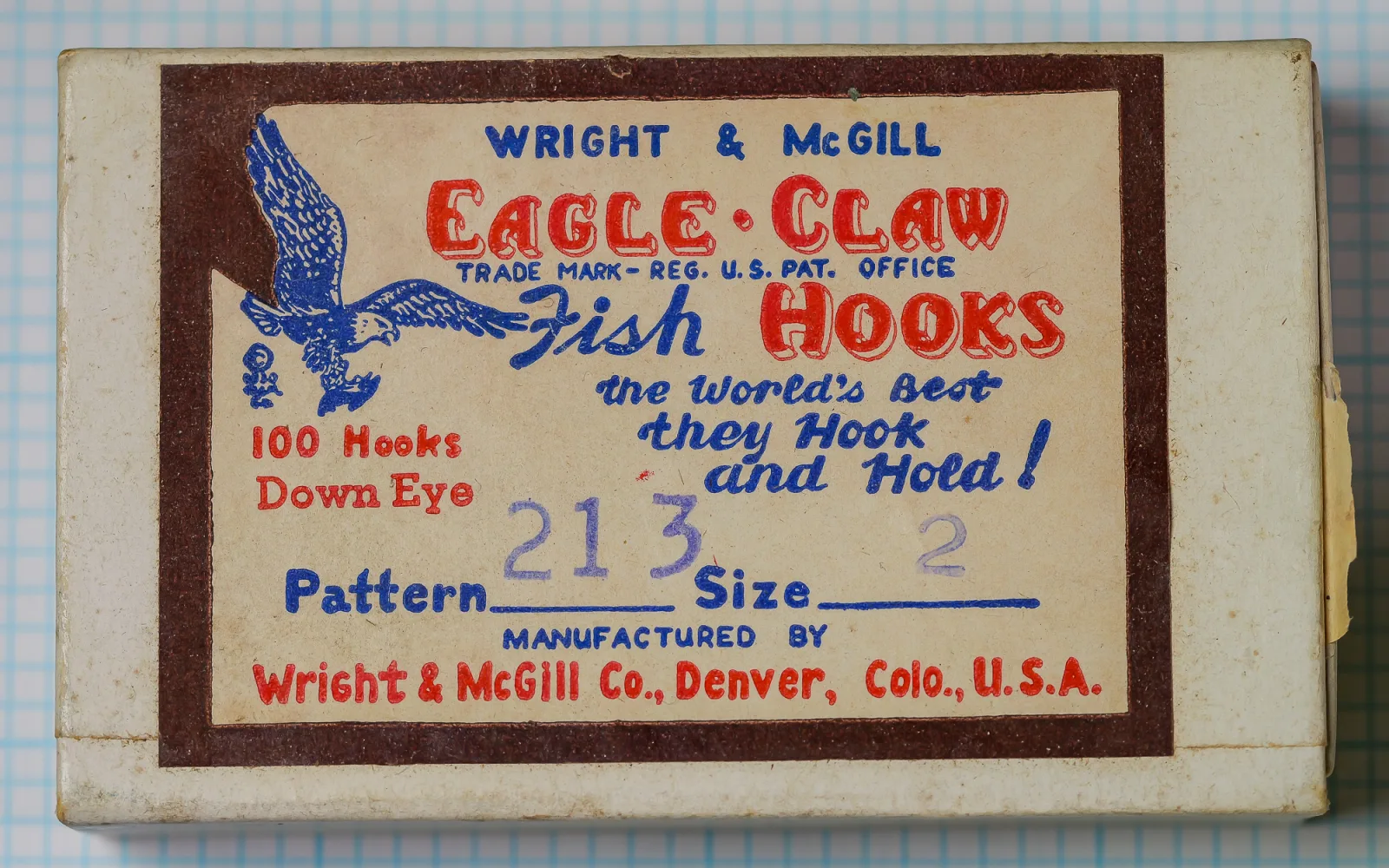
Original sales card front showing the Eagle Claw logo, letterpress printing in blue and red, manufacturer details, and 100-hook package notation. Pattern 213, Size 2 handwritten on card.
Photographic record
3 cataloged imagesSelect any record to load it above.
3 images shown
Wright McGill Eagle Claw Model 213 100-Hook CardOriginal sales card front showing the Eagle Claw logo, letterpress printing in blue and red, manufacturer details, and 100-hook package notation. Pattern 213, Size 2 handwritten on card.Open originalWright McGill Eagle Claw Size 2 Side ProfileSide profile view of the hook showing the Sproat bend form, turned-down ball eye, and bronzed finish tone. Photograph on measurement grid.Open originalWright McGill Eagle Claw Size 2 Front ProfileFront view of the hook emphasizing eye construction and overall profile. Shows the turned-down ball eye, shank straightness, and point symmetry.Open original
Technical profile
Eye
Ball Eye, Turned DownTurned-down ball eye with smooth construction typical of Wright & McGill production. No visible defects or irregularities in the eye loop P.
Wire
Extra-Fine, Round
Shank
2X Long — Plain
Bend
Kirby (offset), Standard gapRounded Sproat bend with moderate depth. Wire is set straight without offset. Bend symmetry is clean P.
Point
Hollow Point (concave inner face)Standard short swept barb, moderately sized and close-set. Characteristic Wright & McGill barb geometry P.
Finish
Bronzed — Confirmed (stated on packaging)Warm brown bronzed tone with visible steel grain texture characteristic of bronze finish. Uniform finish across the wire P.
Specimen hooks are bright with minimal patina. No corrosion or damage visible on photographed hooks. Wire integrity is excellent. The bend and point show no signs of brittleness or stress. All visible hooks appear to be in factory condition.
The hollow point geometry provides a concave inner taper that promotes a sharp leading edge and consistent hook penetration. The Sproat bend, characterized by a rounded bottom curve rather than angular shoulders, distributes pressure evenly across the bend radius and reduces stress concentration during the hook set. The combination of standard wire gauge and moderate bend depth creates a hook capable of holding larger fish without excessive stiffness for smaller patterns.
The turned-down eye allows the fly body to extend naturally to the eye without the forced taper required by upturned designs, making it the standard eye orientation for American dry fly construction of this era. The bronzed finish provides corrosion resistance superior to bare steel while maintaining a warm tone that blends naturally in water.
This entry documents one of the largest examples of the Eagle Claw Model 213 in the garrenwood.com catalog and confirms the mid-century production dating through packaging evidence.
Own this hook? Help us measure it.
This pattern was made in sizes 2-16 (V). We have measurement for size 2. Know the others? Submit calipered measurements and we'll review and add them. Thank you!
The Eagle Claw line was Wright & McGill’s flagship hook series, marketed as an all-purpose selection suitable for both fly and bait fishing. The series included numbered patterns (213, and others) corresponding to bend families and intended applications. The Model 213 specifically was a general-purpose trout and panfish pattern offered in sizes 2 through 16, designed to cover the standard range of American fly-tying applications from the 1930s through the 1960s.
The packaging format evolved over time, but the core product remained consistent: a reliable Sproat-bend hook with turned-down eye, standard wire gauge, and bronzed finish. The 100-hook card format was standard for mail-order and retail sale, allowing fly tyers to stock a full season’s worth of a single pattern at modest cost.
Era and Packaging Dating
Packaging shows no barcode (pre-1974 strong indicator). Card design with brown kraft border and letterpress printing on cream stock is consistent with 1940s-1950s production. Logo style (eagle graphic, serif typeface) matches Wright & McGill branding from this period. Handwritten pattern and size numbers visible on card. Phone format and manufacturing byline placement support mid-century dating. The text 'Reg. U.S. Pat. Office' without patent numbers suggests pre-1950s practice.
The Eagle Claw Standard
Wright & McGill's Eagle Claw brand became so ubiquitous in mid-twentieth-century American fly boxes that multiple generations of anglers grew up with no other hook brand. The 100-hook card sold for under a dollar in the 1950s, making it the working fly tyer's standard hook. The brand outlasted many competitors and remains in production today, making it a true American fishing institution spanning eight decades.
Design lineage and influence
The Sproat bend form originated in the nineteenth-century English tradition and was adopted by American manufacturers as an efficient all-purpose profile. Wright & McGill’s version maintained the essential characteristics of the European original while adapting manufacturing tolerances to suit mail-order distribution. The Model 213 competed directly with Mustad’s hooks in the American market, offering comparable geometry at price points accessible to working anglers.
The turned-down eye became standard on American production hooks during the 1930s-1950s period, superseding earlier looped and blind-eye designs for fly fishing. By the 1960s, the basic form of the Eagle Claw Model 213 had become so established that it required no significant design changes, only incremental improvements in manufacturing precision.
Best matchRelated by Attribute
Computed automatically from catalog data — updated as new hooks are added.
Matches: Shank, Gap, Eye Orient., Point, Forging +3 moreDiffers: Bend: Kirby (offset) vs Sneck; Wire: Extra-Fine vs Fine (1X Fine); Eye: Ball Eye vs Tapered Eye +1 more
Matches: Bend, Shank, Eye, Point, Forging +2 moreDiffers: Gap: Standard vs Wide; Eye Orient.: Turned Down vs Straight / Inline; Finish: Bronzed vs Black Japanned +2 more
Matches: Bend, Shank, Gap, Eye, Finish +3 moreDiffers: Wire: Extra-Fine vs Standard; Eye Orient.: Turned Down vs Straight / Inline; Point: Hollow Point vs Superior +2 more
A general-purpose trout and panfish hook designed for small wet flies and dry flies. Size 2 was used for standard dries and moderate-bodied wets, typical of mid-twentieth-century American trout fly dressing. The Sproat bend and hollow point provided reliable hook-up characteristics for traditional fur and feather patterns.
Secondary Applications
Light streamer work and general purpose utility fly tying.
Rated 3.0/10 — Wright & McGill produced Eagle Claw hooks in substantial volume and they survive in good numbers, particularly in larger sizes like size 2. Collector interest is modest among American tackle historians. The original packaging adds a modest premium, but complete cards are relatively easy to locate.
Reference value
$6 – $18 USD estimate
Packaging condition
Good — moderate wear, legibleRecorded specimen
Packaging format
WM-C-01Catalog code
Positive factors: The packaging itself is charming and well-executed, with clear letterpress printing and attractive blue-and-red color scheme. The 100-hook card format is substantial and appears complete. The hooks themselves are in factory condition with no corrosion. For a collector of mid-twentieth-century American tackle, the Eagle Claw brand has genuine historical significance as a widely recognized and respected maker.
Limiting factors: Size 2 is a common size in the Eagle Claw range. Larger sizes (4, 6, 8) command slightly more interest than size 2 or smaller sizes. The bronze finish, while correct, is less distinctive than rarer finishes like polished or gold plate. Similar cards appear regularly on eBay and in tackle dealer lots, limiting uniqueness.
Condition premium: Cards that retain original tissue wrapping or show minimal toning command 20-30% premiums. A fully sealed, never-opened card would be valued at the high end. Missing hooks reduce value proportionally (approximately 1-2% per missing hook from a 100-hook card).
Packaging
Sales card format with 100 hooks. Kraft paper outer border in dark brown with cream inner card stock. Typography in blue and red letterpress ink. Blue eagle graphic in upper left. Model shown as Pattern 213, Size 2, handwritten in ink. Text reads 'WRIGHT & McGILL / EAGLE CLAW / FISH HOOKS / the world's best they Hook and Hold / 100 Hooks Down Eye / TRADE MARK - REG. U.S. PAT. OFFICE / MANUFACTURED BY / Wright & McGill Co., Denver, Colo., U.S.A.' Card shows light toning and minor edge wear consistent with age but structure is intact. The original tissue overlay may be partially missing or deteriorated.
Market Value Notes
Low ($6): Good condition, opened card with most or all hooks present, light toning to packaging, normal wear.
High ($18): Excellent condition, card intact with minimal wear, near-complete hook count, clear original printing.
Premium factors: Original tissue wrap intact, sealed condition, complete 100-hook count, size 4 or 6 (more desirable than size 2), rarer finishes if any (e.g. nickel).
Platforms: eBay (US and UK), occasional American tackle dealer listings, regional estate sales.
Confidence: E estimated — based on typical Wright & McGill eagle claw card sales; limited specific sold listings available. Common variant within series; data reflects standard size 2 in good-to-excellent condition.
Where to Find
eBay US (search 'Wright McGill Eagle Claw' or 'vintage fly hook cards'). eBay UK occasionally carries British stock. American tackle dealers and generalist antique dealers routinely stock Wright & McGill cards. Regional fly fishing antique fairs (especially in western US states) often feature Eagle Claw inventory. Estate sales in trout fishing regions frequently include unopened or partial cards.
Preservation
Storage and Preservation
<p>Store the card in a cool, dry environment away from humidity and direct sunlight. The bronzed finish will develop a natural patina over time; some collectors consider this desirable aging while others prefer to halt the process. If concerned about further oxidation, store the card in an acid-free archival box or acid-free glassine envelope. Avoid plastic bags, which trap moisture and accelerate corrosion.</p><p>Keep the card flat in a horizontal position to prevent stress on the hook attachment points. If removing individual hooks for tying, use tweezers rather than fingers to avoid oil transfer to the wire. Do not attempt to clean the hooks or packaging — any restoration will reduce historical and monetary value. Original tissue wrapping, if present, should be left undisturbed even if deteriorated.</p><p>Display away from other ferrous metals to prevent galvanic corrosion. A climate-controlled location (around 50% relative humidity, 65-70°F) is ideal. If the card begins to show active corrosion (rust bloom, green verdigris, or white bronze oxide powder), consult a conservator before handling further.</p>
Marking Analysis
Handwritten Markings
<p>The card exhibits handwritten notations in blue or black ink indicating Pattern 213 and Size 2, inscribed directly on the printed label area. These hand-marked size and pattern codes were standard practice on Wright & McGill cards during the 1940s-1950s, suggesting either: (1) hand-assembly of the card at the factory before automated labeling became standard, or (2) marking by a wholesaler or retailer to clarify contents for inventory purposes.</p><p>The handwriting appears consistent with fountain pen or brush lettering of the period. The placement and style do not suggest collector annotation or later modification — they are consistent with original production marking. Such handwritten details are minor indicators of authenticity and period manufacture.</p>
Confidence notation key
P
Photographically verified — Directly observable in the photograph(s) on this page.
V
Verified by documentation — Confirmed by manufacturer catalog, spec sheet, or published reference.
I
Inferred — A logical deduction from observable or documented evidence, not directly stated.
E
Estimated — An approximation based on visual comparison, proportional analysis, or limited data.
S
Speculative — A reasoned hypothesis that cannot be confirmed from available evidence.
Unnotated claims are the compiler’s synthesis; see Sources. All photographs on garrenwood.com are taken on a measurement grid where each square equals 1/10 inch (0.1″ / 2.54 mm).